
If you’ve spent any time online over the last decade, you’ve likely seen some wild stuff about QAnon, the “great replacement theory,” reptilian shape-shifters, flat earth, the Denver International Airport being the headquarters of the Illuminati, and so on. They’re everywhere. No matter what happens, conspiracy theories survive and come back again and again. Like roaches.
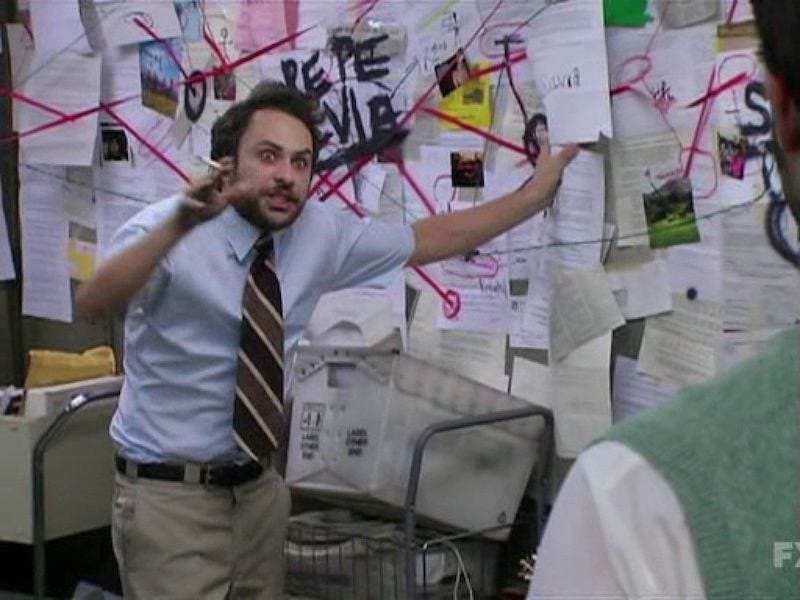
Chemicals get the same treatment. We have Alex Jones shouting about how the government is putting chemicals in the water to “make people gay,” chemtrails, and the government putting chemicals in the water to make us dumb. There are many more.
In my work on everyday environmental chemical exposure and associated health effects, the same education gap and limited critical thinking skills show up as “chemophobia.” (I found this paper on chemophobia, education, and critical thinking through a social justice lens fascinating.) Chemophobia is an extreme and/or irrational fear of chemicals, and we can thank social media influencers who pump out sensational, fear-based hot takes online for a lot of it. (And, reader, I’m sure that I contributed to some of this myself in my early years talking about this.) All chemicals are bad if you don’t know how chemicals work. See what I did there?
Don’t get me wrong—I’m not a chemist, and there is absolutely gobs more for me to learn about chemistry. But we shouldn’t have to be chemists to understand whether something that we are surrounded by might hurt us in some way.
Adjacent to chemophobia is the idea that chemicals are either “good” or “bad”—“toxic” or “non-toxic.” This is the result of 1) binary thinking, and 2) the aforementioned knowledge gap: without the understanding of how to ask anything more specific, “is this toxic?” is kind of the only question available.
This isn’t a dumb question—it’s honest—and it comes from people who are genuinely unsure. Sometimes we don’t know enough to even know what questions we should be asking!
Here are just a few of the questions like these I’ve received over the years:
Is using a neoprene mouse track pad safe?
Can I store my Christmas ornaments in plastic boxes?
Is my non-toxic shampoo safe if it comes in a plastic bottle?
Again, not dumb questions—there are legitimate issues attached to each, and they were asked in the context of “if I use this/do this/buy this, will I be harmed?”—but these aren’t the right questions to ask. To get closer to understanding whether something might actually be harmful, we need to ask better, more specific questions—ones that consider the context of exposure: dose, exposure route, timing, duration, and who is actually being exposed.
This is where education and critical thinking skills come in, because when both are employed, you’re 1) able to zoom out and see the context in which an exposure happens, and 2) ask questions that get you closer to an answer. I have a lot to say on both of these, but I’ll save it for another post lest I indulge my ADHD brain too much; this post will never end, and will instead meander from topic to topic, and by the time I get to my point, I’ll have lost you. Example: the previous sentence).
If you don’t know enough about a given chemical, don’t consider how we actually interact with it, but also understand that some chemicals can be highly toxic, it’s easy to assume that everything is equally toxic.
To counter this blanket assumption, I found myself saying “not every exposure is a 4-alarm fire,” over and over and over again, going on a decade. A single glass of water with low-level arsenic? Not really a problem; drinking low-level arsenic for decades? Not good.
On social media, discussion of environmental exposures has been pushed to extremes; either everything is toxic and killing us, or nothing is toxic, calm down, everything is safe.
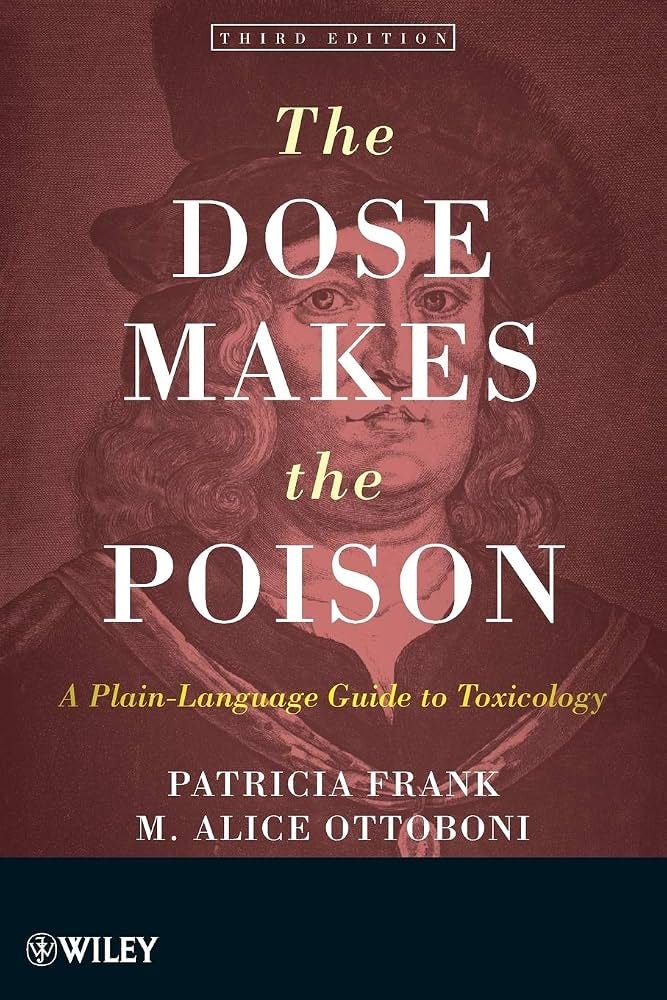
Authors Patricia Frank and M. Alice Ottoboni, authors of the book The Dose Makes The Poison - A Plain Language Guide to Toxicology, write about this:
“There are two diametrically opposed dangers in news media toxicology and its offspring, poison paranoia. One is the cry-wolf syndrome. When an alarm is sounded frequently and without regard to degree of emergency, the alarm becomes meaningless and therefore, is not effective when a true emergency exists. It is well known that to call everything bad, in effect, is to call nothing bad. If safe and sane use of chemicals in our homes, work, and recreation spaces is to be furthered, there must be understanding, cooperation, and support on the part of the public. A public blasé about harmful effects of chemicals is a public disinterested in making any changes in use practices relating to chemicals. Such a public attitude would be tragic.“
And this is the whole point: if we decry everything as toxic, then really, nothing is. If we cry wolf enough times, it becomes very easy, and frankly a relief, to tune everything out.
This is a big reason why there are so many people paranoid about seed oils in food, or afraid to touch cash register receipts with their bare fingers and instead use their shirt, or shouting about how your leggings are giving you cancer.
But this is also why the other extreme exists: people who’ve stopped believing that our everyday chemical exposures are worth even thinking about, and shrug it off entirely. You’ll see it in sci-comm accounts that wholesale dismiss things like pesticides and smear anyone suggesting this as a grifter.
Here’s where I think this extreme binary thinking, on both ends of the spectrum, harms us:
On one side, dismissing environmental health issues entirely risks the loss of interest and funding in the science we need to better understand exposures in the first place. It runs the risk of discrediting the work of scientists who are doing good and important work (see the work of Tyronne Hayes, who studies the herbicide atrazine and amphibians, and the heavy-handed attempt by the manufacturer to discredit him).
On the other side, people become overly paranoid, obsessed with every single tiny exposure, stressing themselves out and spreading fear and panic to others.
This is the casualty: the public conversation getting pushed to these extreme ends, and the real, actually-worth-paying-attention-to information that’s steeped in nuance, and “it depends” lost in the middle. It’s a frustrating time for anyone who is interested in this kind of thinking and information… the internet seems hell-bent on flattening complex ideas into “follow, like, and share!” content that’s far too easy to consume.
I don’t really know. I wish I did. The problem seems too big to solve, but if we can get enough people interested in the gray of nuance and asking better questions, maybe we can chip away at it? That’s my hope anyway. I’ve been thinking a lot about the way the conversation about toxics is had online right now, and how it’s evolved over the years since social media has taken root. This Substack, in addition to sharing information, science, and history related to environmental chemicals, is where I’ll be working through those thoughts. If you have a different perspective on this, or a different experience altogether, please share!
Until then, here’s a photo of my latest obsession:
If you know, you know. And if you don’t, ask me (no, really, I’m begging to talk about this little guy), and I will fill you in on everything we currently know about Jimothy. Long Live Jimothy!
Comments
Nothing yet. Say the first thing.
Sign in to join the conversation.