
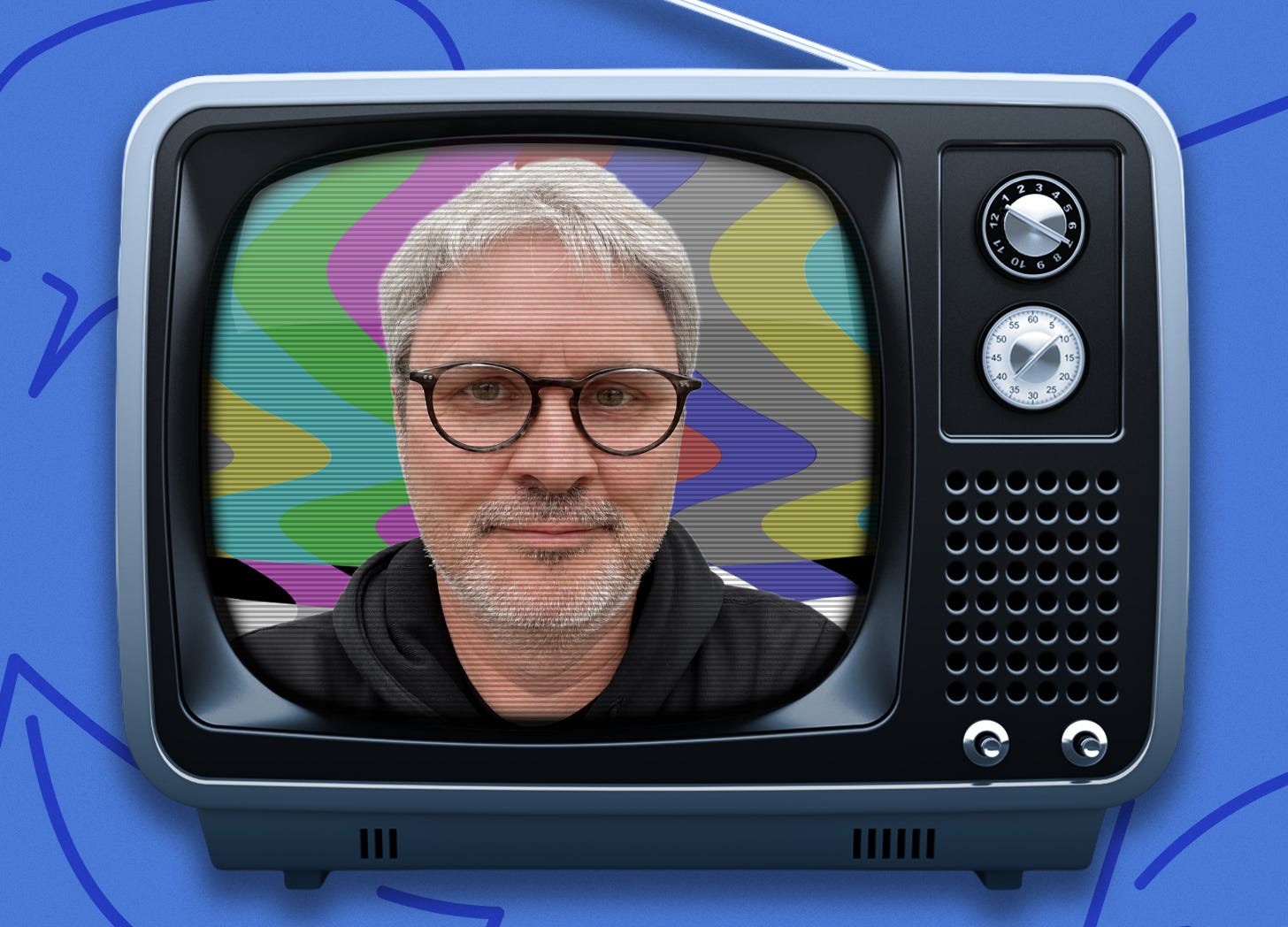
Steve Dowling has had a front-row seat at some of the most consequential communications moments in modern tech history. As VP of Communications at Apple for over 16 years, and later the first VP of Communications and Public Policy at OpenAI, he helped shape how two of the world’s most scrutinized companies talked to the world. Before that, he was a Washington producer and Silicon Valley Bureau Chief at CNBC. Today, he advises tech startups and co-hosts the podcast Communication Breakdown, which discusses strategies and tactics companies are using in high-visibility crisis and PR initiatives, with Craig Carroll, a long-time academic and founder of the Observatory on Corporate Reputation.
Steve was in the room for some of the most closely watched moments in modern tech history: the original iPhone launch, the debut of ChatGPT, and a string of announcements in between that most communications professionals would consider career-defining on their own.
What Dowling has accumulated across those roles isn’t just proximity to landmark product launches, but a finely calibrated sense of how audiences receive information, and how quickly things can unravel when communicators lose sight of that. The through line, he’ll tell you, was never the product. It was always the audience.
That instinct was formed long before Apple. Dowling came up in journalism, where wire stories scrolled past on a terminal and you’d catch them by slug. Twitter felt immediately familiar when it arrived—”the internet equivalent of a newswire,” he called it, a constant stream he recognized on sight. The wire ticker became social media. The daily news cycle became news by the minute. What’s changed isn’t the orientation, he says, but the speed—and it keeps accelerating. “Acceleration has been a constant,” he said. “And the curve just keeps getting steeper.”
That acceleration is exactly what makes the “going direct” era so seductive, and so dangerous. Dowling published a piece on Axios Communicators on the trend of companies bypassing traditional media to speak directly to audiences through owned channels. He’s not against it, per se—he compares direct channels to CliffsNotes, those bright yellow study guides with the fine print disclaimer that they were intended as supplements, not replacements. “There are lots of things that you can do with social media and going direct that you can’t do through the media filter,” he said. “But it’s just not a substitute.”
The more pressing issue is what companies confuse in the process. Going direct gives you distribution. It doesn't give you validation. "Don't mistake that for instant credibility. We need to remember why you have this function at all—which is to deliver information through the media, and that means embracing the editorial process." Companies that go on offense against unfavorable coverage tend to find out the hard way. "The success rate is just too low." And when the instinct tips into trolling, the damage compounds. "As soon as you post it, you think, ‘oh man, I wish I hadn't said that.’"
The two lines from his essay that landed hardest were, he says, the two most obvious things he wrote. First: companies crave media validation. “Admit it. That’s what you want. Because for everybody who’s in this business and has their way, that’s a win. They’re like, ‘see!’” Second, and blunter: “We need the press more than they need us. They’re going to keep doing their job. If you want a shot at influencing how your company is portrayed, you’ve got to participate.”
Dowling spent time at OpenAI and now advises AI companies, which gives him an unusual vantage point on the industry’s communications failures. His diagnosis is empathetic but pointed. The people building these products are often so deep inside the technology that they risk losing the ability to see it the way a normal person does. “The stuff that is mind-blowing to the average person is old hat to them.” That gap produces what he called, borrowing a phrase from a recent Cal Newport op-ed, “doom trolling”—AI executives skipping the present tense entirely and narrating apocalyptic futures, leaving consumers behind in the process. When companies make AI sound inevitable and totalizing, they strip away the very sense of agency that might make the public more receptive. “It makes it seem like we don’t have a choice.”
His prescription is straightforward: pull back, meet people where they are, and stop extrapolating. The communicator’s job, whether at a keynote or in a crisis, has never been to make the technology seem bigger than life. It’s to make it land.
And since JSA+Partners is such an avid listener of the Communication Breakdown podcast, a few of our favorite recent episodes include Comms on Three Continents, Missives You May Have Missed, AI Commencement, and Special Deliveries.
The open web is increasingly becoming a machine-to-machine environment. Cloudflare recently reported that bot traffic has eclipsed human traffic. AI-generated content now accounts for 35% of all newly published websites—up from effectively zero before ChatGPT launched in 2022. Agents sit between people and the information they used to find themselves. And as Fast Company’s Mark Sullivan wrote in February, we’re now approaching a “zero-trust reality” where content is “generated unless proven authentic.” Some would argue we’re already there—and the implications for communicators are becoming harder to ignore.
New Cornell research, highlighted in a recent 404 Media story, confirms that seeding a single Reddit comment with as few as 13 words of carefully phrased content is enough to impact what AI chatbots generate in their responses. The same goes for other user-generated content sites like Quora, Wikipedia, Facebook—giving people and brands direct incentive to pollute the spaces LLMs and human users alike have had, until now, every reason to trust the most. In sports, fake quotes and AI-altered photos of athletes spread rapidly on Facebook. More than half of long-form LinkedIn posts were estimated to be AI-generated in 2024—contributing to a growing “thought leaderslop” problem. The platforms are rightfully committed to moderating this, yet with so much to be gained—in generative search, engagement, thought leadership—anywhere information can be indexed will be difficult to fully address.
Trust and credibility, as a result, are becoming increasingly scarce—and that’s making them more valuable. More consumers are starting to take information online with a grain of salt, which is putting a greater emphasis behind people and institutions they can trust. The irony is that this moment has arrived after many years of American trust in mass media hitting new lows—last year, only 28% said they have a great deal or fair amount of trust in the mass media, down from 40% only five years ago. But in a zero-trust paradigm, that is poised to change.
This shift reinforces what many communicators are coming to believe: that the value of earned media is having a resurgence. Established outlets and known, accountable journalists look very different when the validity of information online is much less guaranteed—whether it’s Reddit threads that no longer promise an unbiased human opinion, or AI-generated stories without editorial oversight or fact-checking. Individual tastemakers on Substack, YouTube, and podcasts will also stand to gain ground, and any other spaces built on direct relationships with human-authored content.
Soon, these may be among the only places where real trust and reputation can be sourced and built; communicators should take note, as it’s likely LLMs soon will too. AI will need to become better at weighting credibility signals to stay useful, while the public is already in the process of doing this themselves.
“They used to be the cool kids invited to the afterparty, and now they’re hosting the afterparty.”
That’s how academic, entrepreneur and well-known podcast host Scott Galloway sees a small, but growing, cohort that has been influencing one of the world’s largest advertising and marketing events.
Enter: creators.
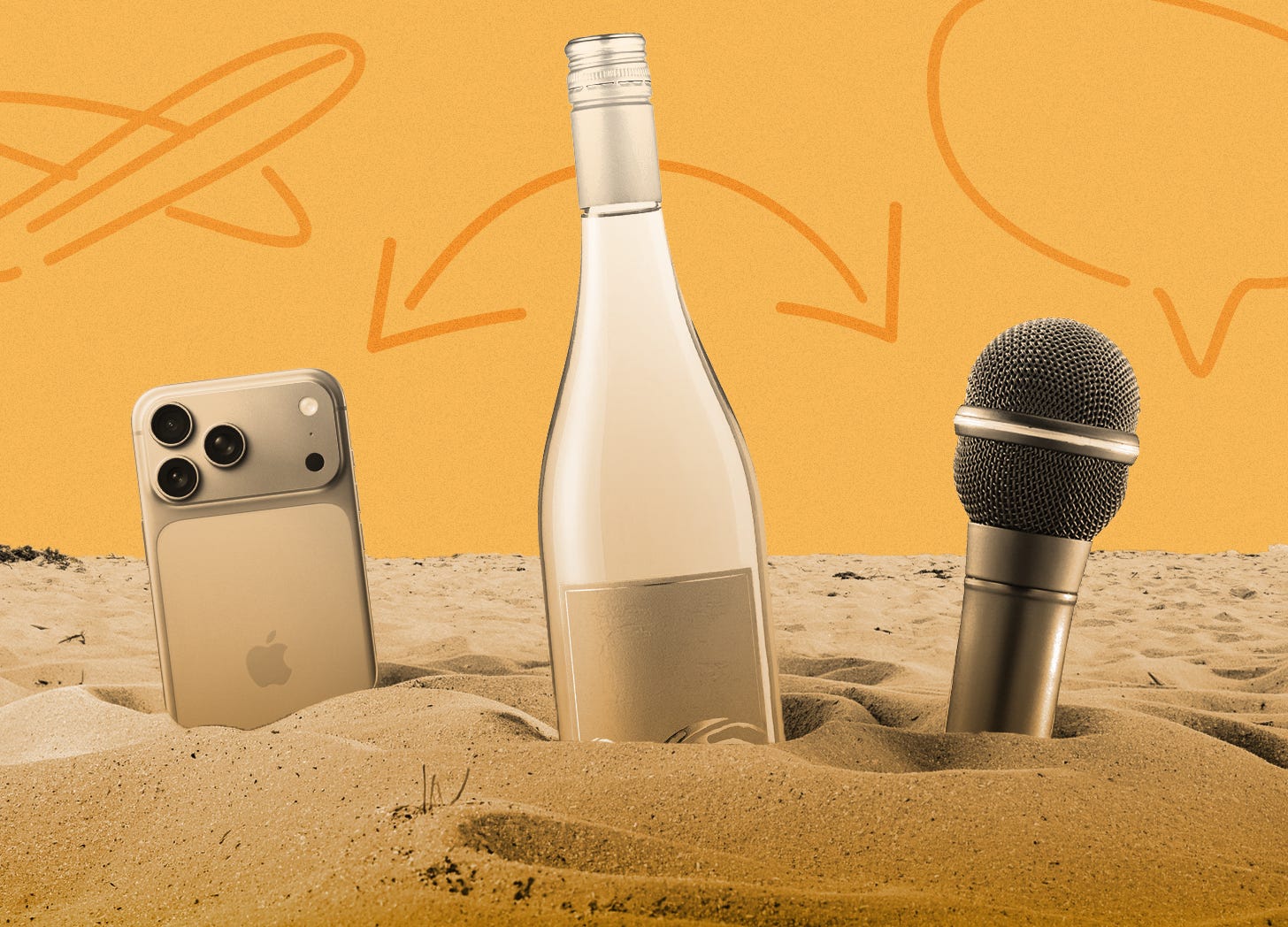
This year, the sheer number of attending creators continued to accelerate with an estimated 300 descending in Cannes—by that count, representing 2-3% of the event’s over 13,000 attendees. Despite their smaller scale, creators had an outsized influence (pun intended) on this year’s event.
As a result, the buzz around the Croisette is shifting with it. Cannes Lions and Adobe partnered to launch the LIONS Creator Beach, a new dedicated space for on-site creators to network and film content – and one of many creator-oriented hotspots. And creators not only showed up to own these spaces and speak on panels, but also brought with them an entourage of in-house and agency support to forge new partnerships and connections with brands.
As the worlds of entertainment, technology, sports, and marketing continue to converge, few destinations during Cannes Lions command as much attention as UTA Beach. This year, United Talent Agency made its largest statement yet, transforming its beachfront activation into a hub where some of the most influential names in culture, business, and media will come together to shape the future of creativity. It put “the full strength of [UTA’s] platform on display,” Cassandra Bujarski, Chief Communications Officer at United Talent Agency, told us. It was “intentionally designed to reflect the diversity of our business” – and creators turned out for it.
“From creators, sports and music to filmed entertainment, news, advisory and beyond—UTA Beach was where our clients, partners and industry leaders experienced the power of our platform firsthand,” she said. “Throughout the week, wherever you went on the Croisette, the conversation kept coming back to UTA—our presence, our clients and the impact we were making. More than a destination at Cannes, UTA Beach became a living expression of who we are today and where we’re headed.”
Creators now see a presence at Cannes as an investment in their careers. Studio B commercial lead Olly Lewis told Digiday that the event is flooded with a sea of senior executives “who are all wanting to hear more about the creator-native approach to brand building. Brands are looking to build more sustained co-authored collaborations, whether that’s building new IP or building scripted, episodic content and franchises.”
But another segment of guests is also increasingly calling Cannes home: communicators. This trend has been growing the last few years but was more present than ever. We saw it throughout this year’s programming—especially inside events and activations centered around building synergies between marketing, communications, and culture.
Yahoo’s Chief Communications Officer, Sona Iliffe-Moon, reflected on the week and the dozens of events and activations she participated in. “I left Cannes energized by the growing presence of communicators and creators on the Croisette. It feels like a sign of where influence is heading. One quote I kept coming back to was Coinbase CMO’s observation that ‘you can’t buy aura.’ At a moment when AI can generate almost anything, the most valuable assets may be the hardest to manufacture: authenticity, culture, and genuine human connection.”
What isn’t new for onsite communicators is Cannes’ continued role as a media hotbed, but the landscape is evolving beyond traditional outlets. Emerging media—including Scalable, The Ankler, Verified, ICYMI, and more—are scooping the event’s biggest stories with on-the-ground reporting.
Now more than ever, meaningful relationships are being built on the Croisette—whether at the multitude of activations, panels or one-on-one meetups. While Cannes is getting more crowded, creators and communicators have not only claimed a seat at the table, but they’re reaping the new benefits of this evolving landscape—all with an oversized glass of rosé in hand.
The LA Strong Comms Coalition (LASCC)—a cohort of PR professionals uniting to provide pro bono support to small businesses adversely affected by the Los Angeles fires—and founding member JSA+Partners recently released a free disaster comms playbook. The playbook aims to be a vital resource for comms pros looking to make an impact in the midst of a crisis – without having to start from scratch.
The new resource guides comms professionals through what they need to know about using comms for good amidst local or regional crises. It outlines the team’s approach to founding and organizing groups like the LASCC, identifying and onboarding pro bono clients, and a look at the coalition’s relief-oriented media strategy.
Read or download the playbook for free at jsapartners.co/lascc.
[Esports.gg] UEFN Community Awards 2026 crowns this year’s best creators and islands
[Employee Benefit News] As GLP-1 costs climb, more employers weigh dropping coverage in 2027
[IGN] Why The Back-to-Back Street Fighter 6 Evo Champion, MenaRD, Switched Off His Main in the Finals
[The Verge] Character.ai is adding new tools for chatbot creators
[PocketGamer.biz] New release roundup: King of Delivery 2, Daily Match, WWE Generations: Eras Collide, and more
[Palisadian-Post] Pali Trading Post Opens, Aims to Restore ‘Old-Palisades’ Charm
[Yahoo] Yahoo returns from Cannes with +261.76% YoY increase in stories secured
Story ideas, feedback, or just want to get in touch? Email us at contact@jsapartners.co or drop us a line on LinkedIn.
No posts
Comments
Nothing yet. Say the first thing.
Sign in to join the conversation.