
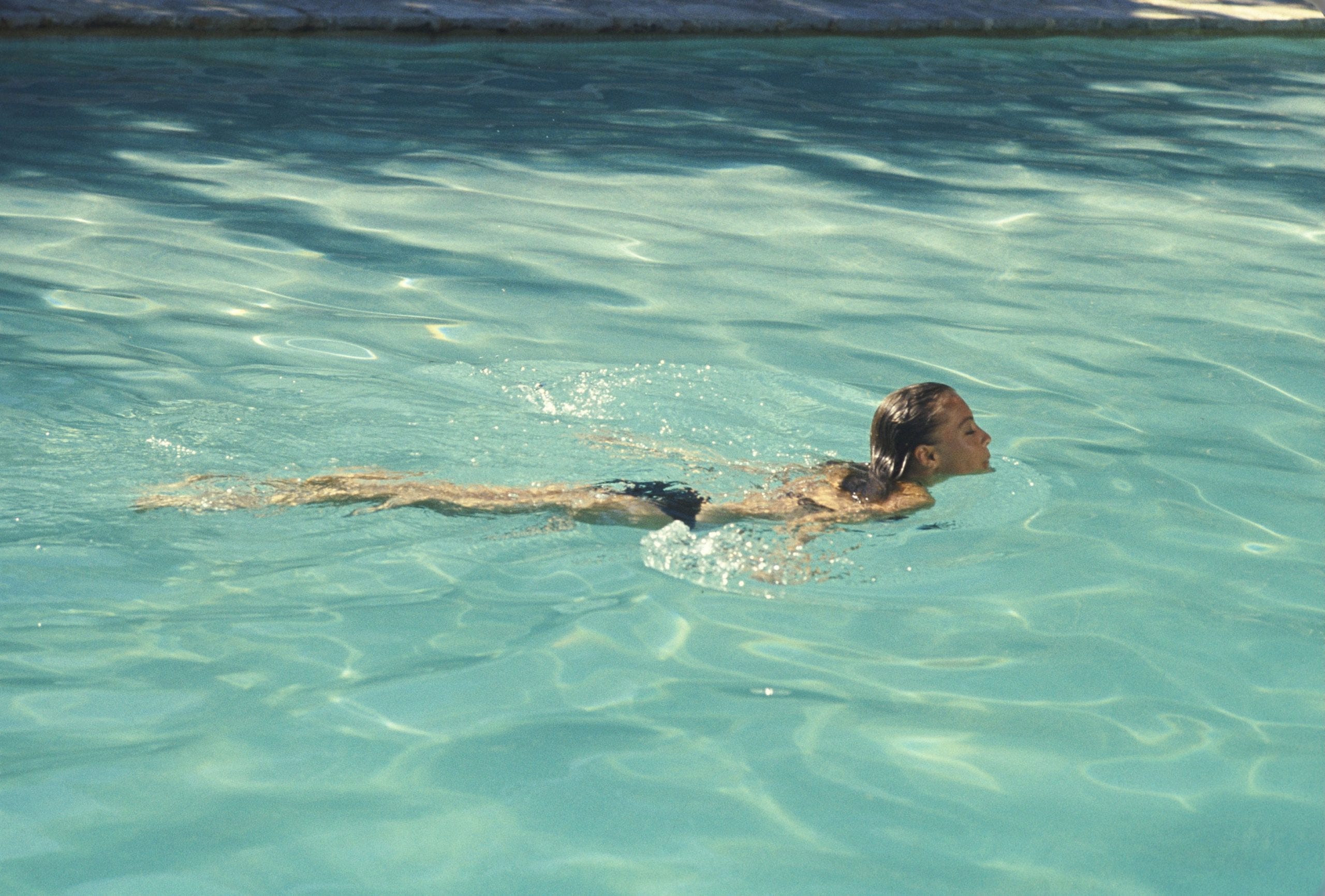
Few films capture the allure of a European summer quite like La Piscine. While Sydney winter has only just settled in, summer is very much on my mind. With all the Euro getaway references swirling, and the fact that we're about to escape the chill for a week, I wanted my first cinematic style piece to tap into that same sense of summer nostalgia — longing for a seaside sojourn and slow, languorous mornings spent relaxing poolside in an idyllic villa. There are a few films that came to mind, but ultimately I landed on La Piscine, the 1969 French film directed by Jacques Deray.
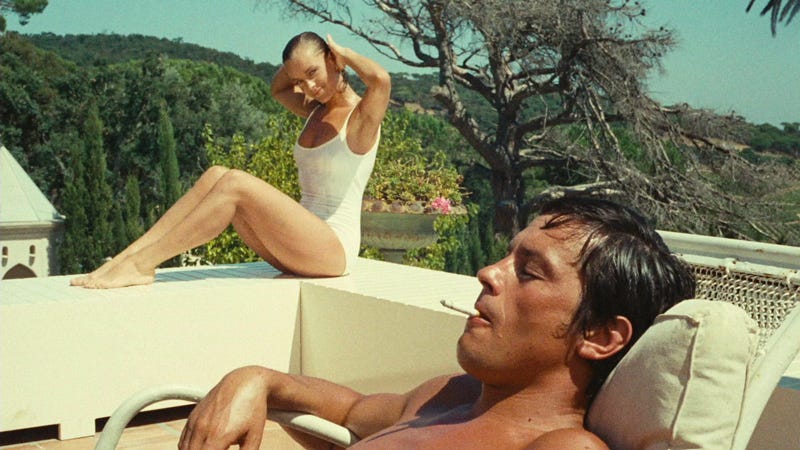
Technically, La Piscine is a slow-burn psychological thriller (that wasn’t without its controversy), but what I wanted to focus on was less the plot, and more the visuals. So much of the film’s success is in its atmosphere — the casting, the location, the sparkling blue tones, and of course, the clothes.
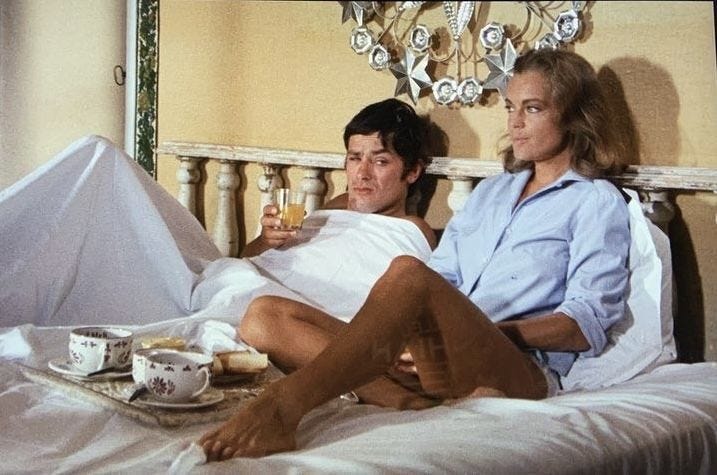
There is something captivating in the slowness of it all. Simply watching beautiful people, lounging on designer furniture against the pristine villa setting with the perfect topaz-blue pool near St. Tropez. It’s almost impossible to look away from the splendour of it all. Exactly the kind of sun-drenched, idyllic escape that lulls you into thinking this could be a light, beachy summer watch. Not a suspenseful thriller with a plot twist of an ending. And yet, what I keep coming back to is the production design and the wardrobe, the way they work together.
The film initially centres around Marianne (Romy Schneider) and Jean-Paul (Alain Delon), a seemingly picture-perfect couple, before Harry (Maurice Ronet) and his eighteen-year-old daughter, Pénélope (Jane Birkin) arrive and rock the boat.
The character building is so carefully complemented by the wardrobe. Schneider is all polish and control to Birkin’s youthful, effortlessly undone looks.
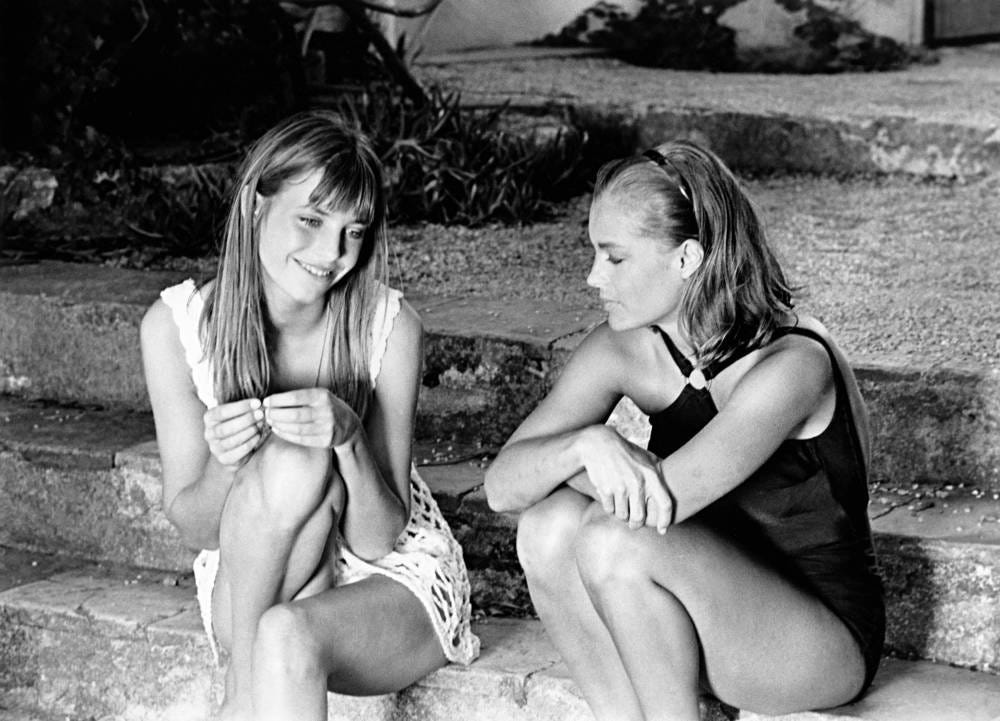
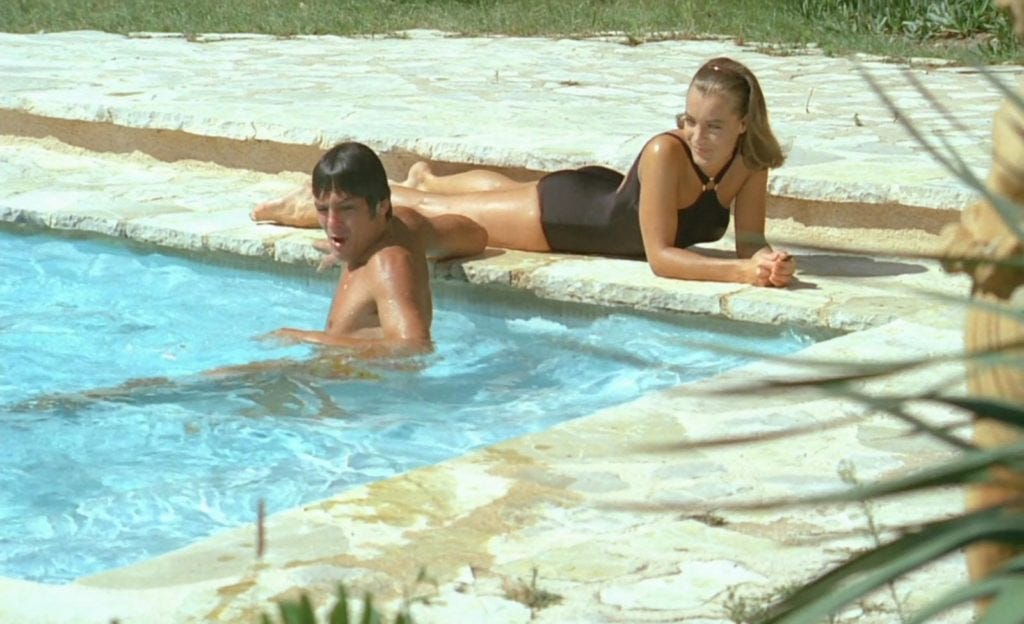
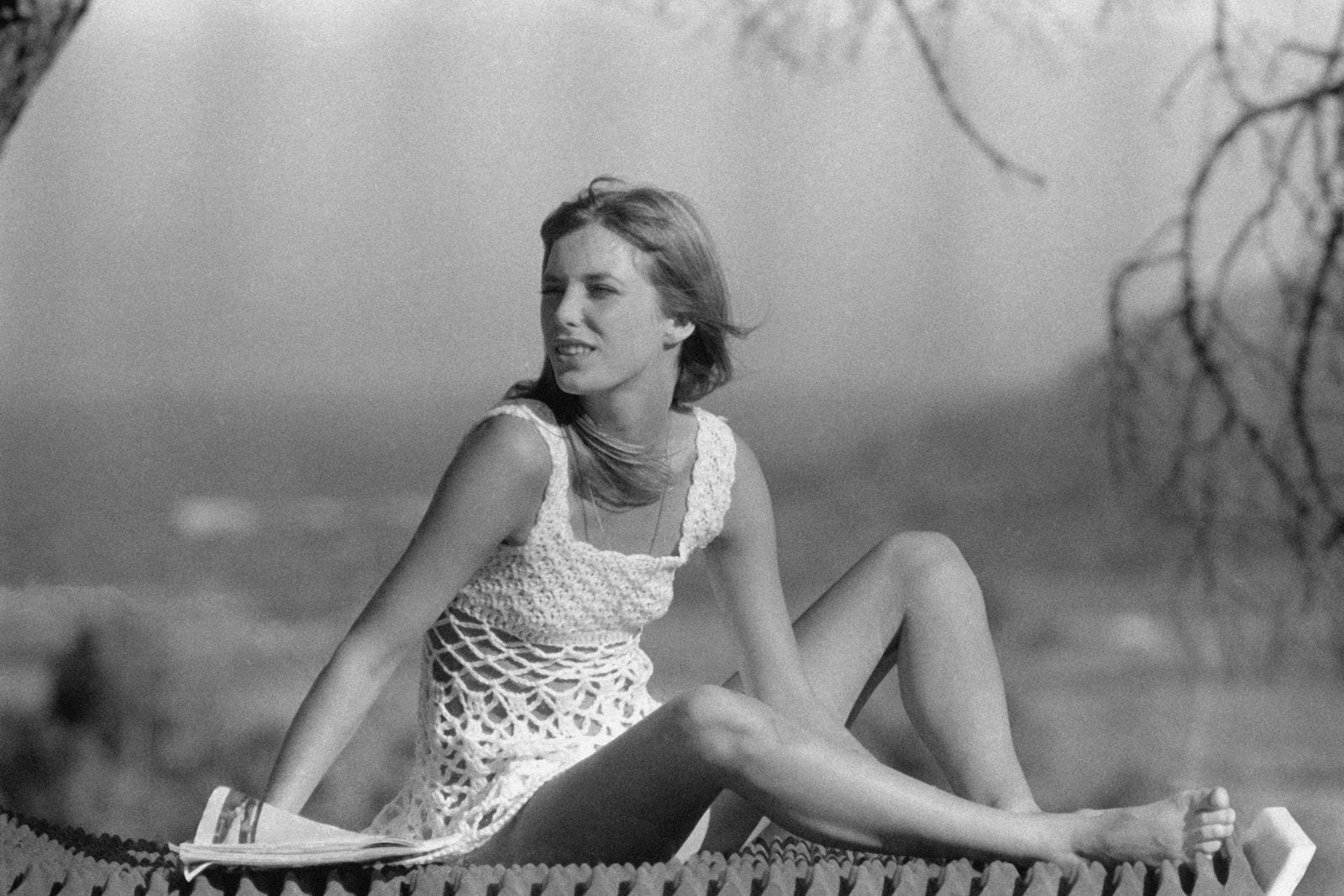
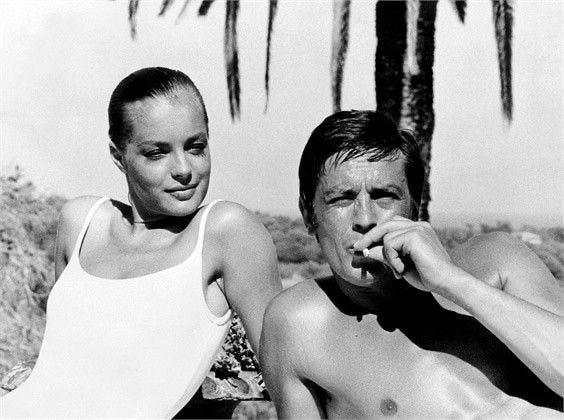
While there are some looks that are easy to place by the decade, perhaps what is most striking is that many of them could easily sit in a chic summer holiday wardrobe today. Birkin's crochet mini dress over a white bikini, or Schneider's minimalist one-pieces with her hair slicked back, are both looks I expect to see poolside this summer.
What makes the wardrobe feel relevant today isn't nostalgia. It's thoughtful curation. The silhouettes are simple, the palette is limited, and very little feels trend-driven. They're the same principles that continue to underpin great style today.
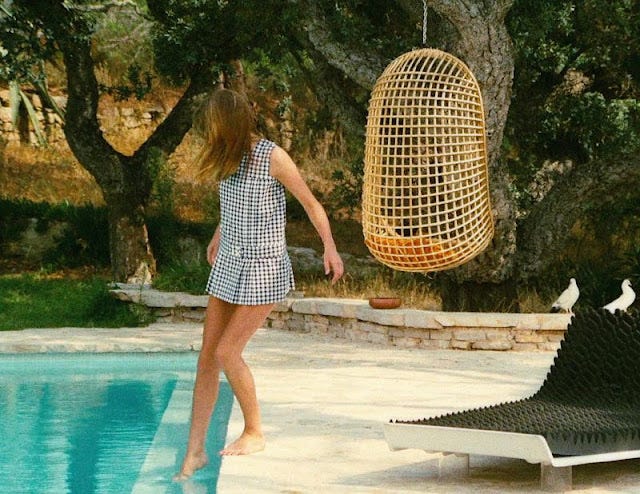
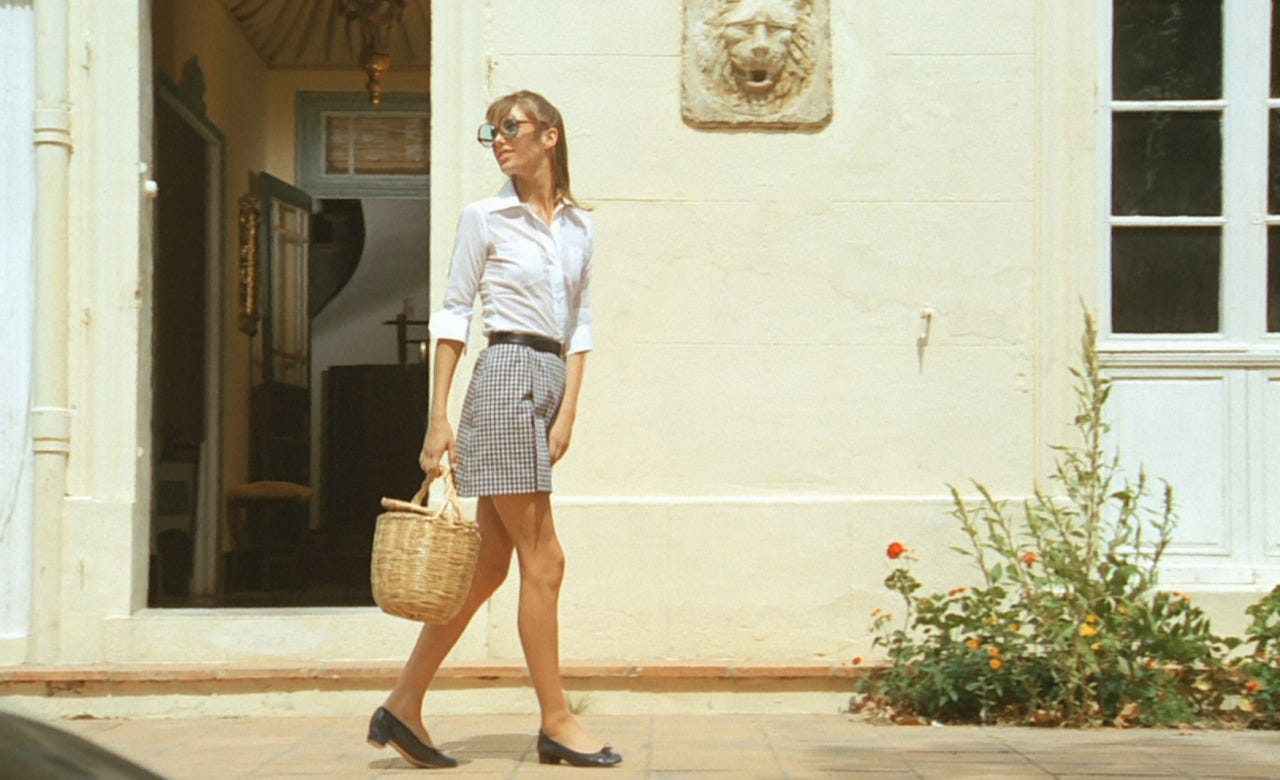
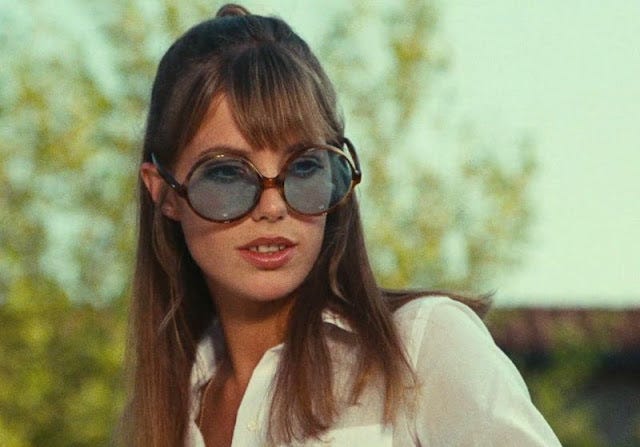
The gingham mini dress has become a famous reference, as has the gingham skirt paired with a collared white shirt, those sunglasses and Birkin's signature basket bag — looks that, decades later, hold strong in their stylistic relevance.
I bought a basket bag almost identical to Birkin's on a trip to Portugal nearly a decade ago and still reach for it. Last year, I also came close to buying a pair of gingham shorts... That's perhaps what makes these pieces stand the test of time. The gingham, the crochet, the basket bag; they feel less tied to trends than to a particular idea of a French seaside summer. Effortless, slightly undone, and equally at home in Saint-Tropez in 1969 as they are today.
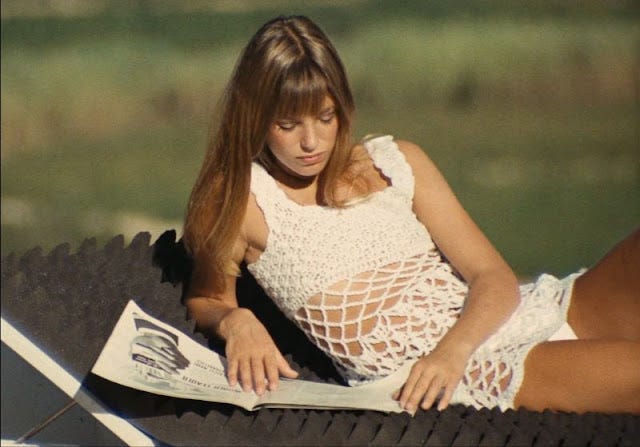
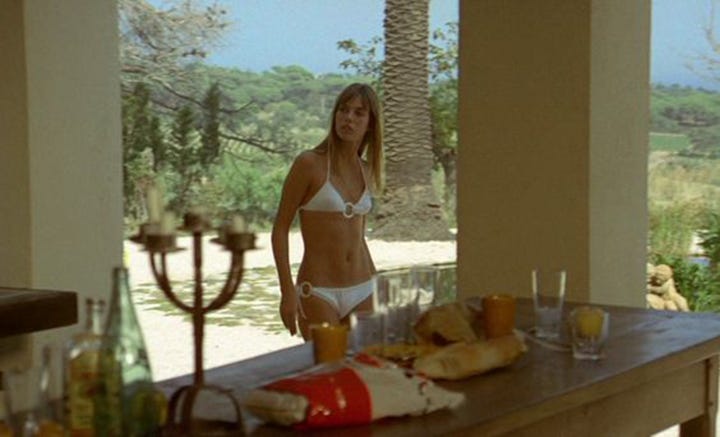
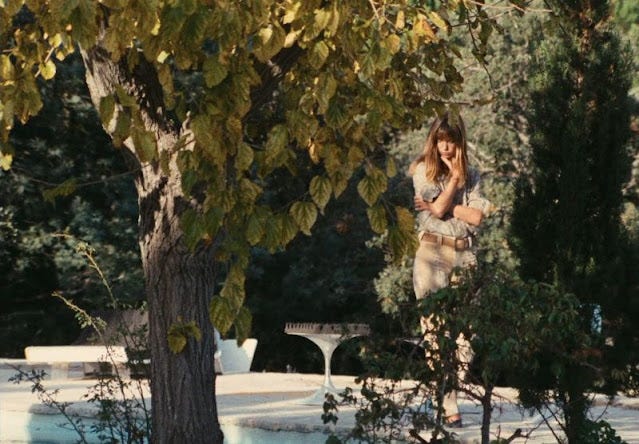
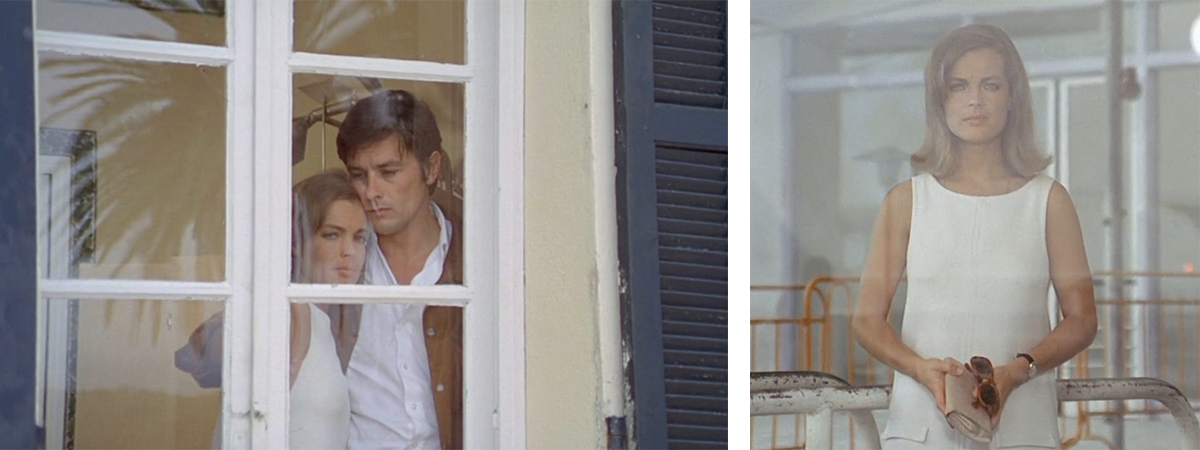
The contrast and juxtaposition are also framed so beautifully. From the black crochet mini dress on Birkin, to the white A-line look on Schneider, the scenes are composed to show the tension between Schneider's glossy confidence and Birkin's quiet bohemia. The wardrobe becomes another storytelling device, reinforcing the undercurrent of tension between the characters before it is fully expressed through the script. And can we talk about that lamp? It’s a classic Spirale Table Lamp designed in the late 1960s by Ingo Maurer for Design M, Germany. One can dream.
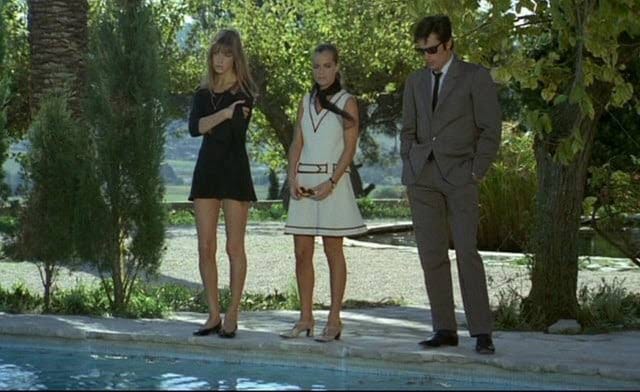
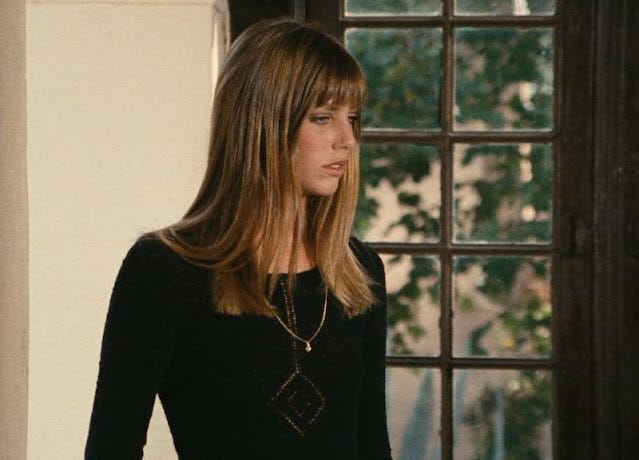
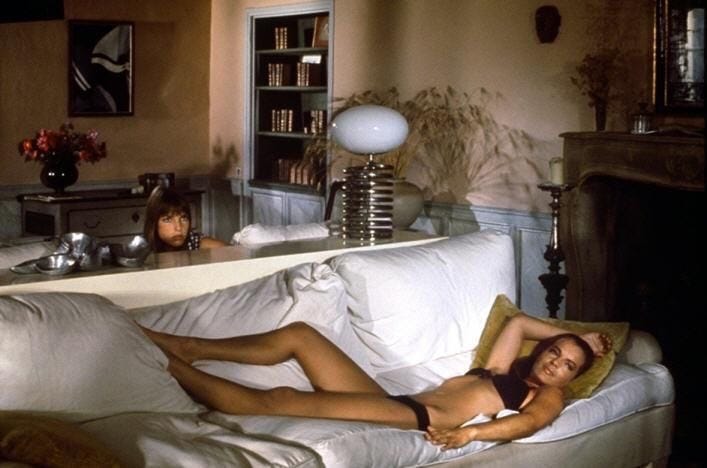
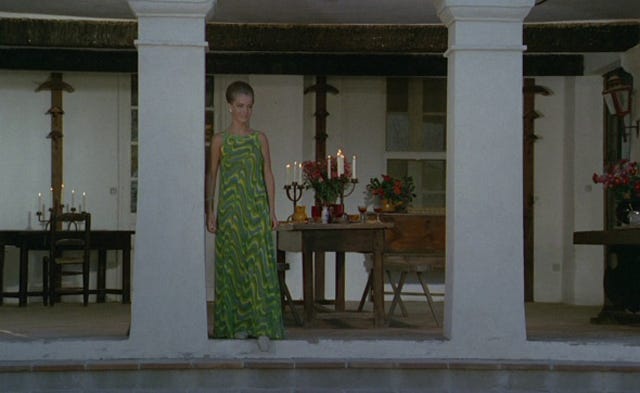
I'm of the mind that costuming plays such an important part in any film, but certainly looking back, it can be the defining factor in what makes a movie feel iconic. The wardrobe was coordinated by Christine Beytout, wife of producer Gérard Beytout, with many of the film's most memorable looks designed by French fashion designer André Courrèges (who had worked under Cristóbal Balenciaga before going out on his own). I love Schneider in the white shift dress, and I'm convinced I now need a white one piece for my upcoming trip.
And then there's the furniture and propping. From Roger Tallon's Metamorphic Trapezoidal Day Bed and the Brionvega Radio Cubo, to the bright yellow pop of Locus Solus outdoor furniture by Gae Aulenti, the already mesmerising pool area transforms into something more visually distinctive. It's a beautiful mix with some of the more antique pieces that feel right at home in a St. Tropez villa — and again, this balance of vintage and modern works so well with the costuming.
What makes these pieces feel contemporary isn't just that they're icons of design history. It's the seamless way that they’re integrated into the surroundings… Nothing feels curated for effect. The furniture functions as part of the atmosphere rather than an overt showcase of taste.
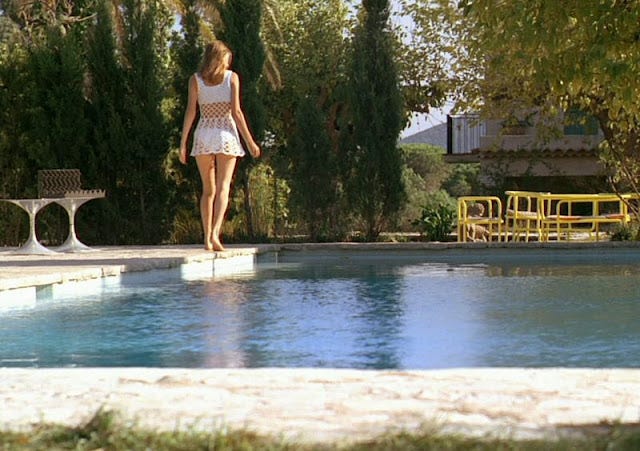
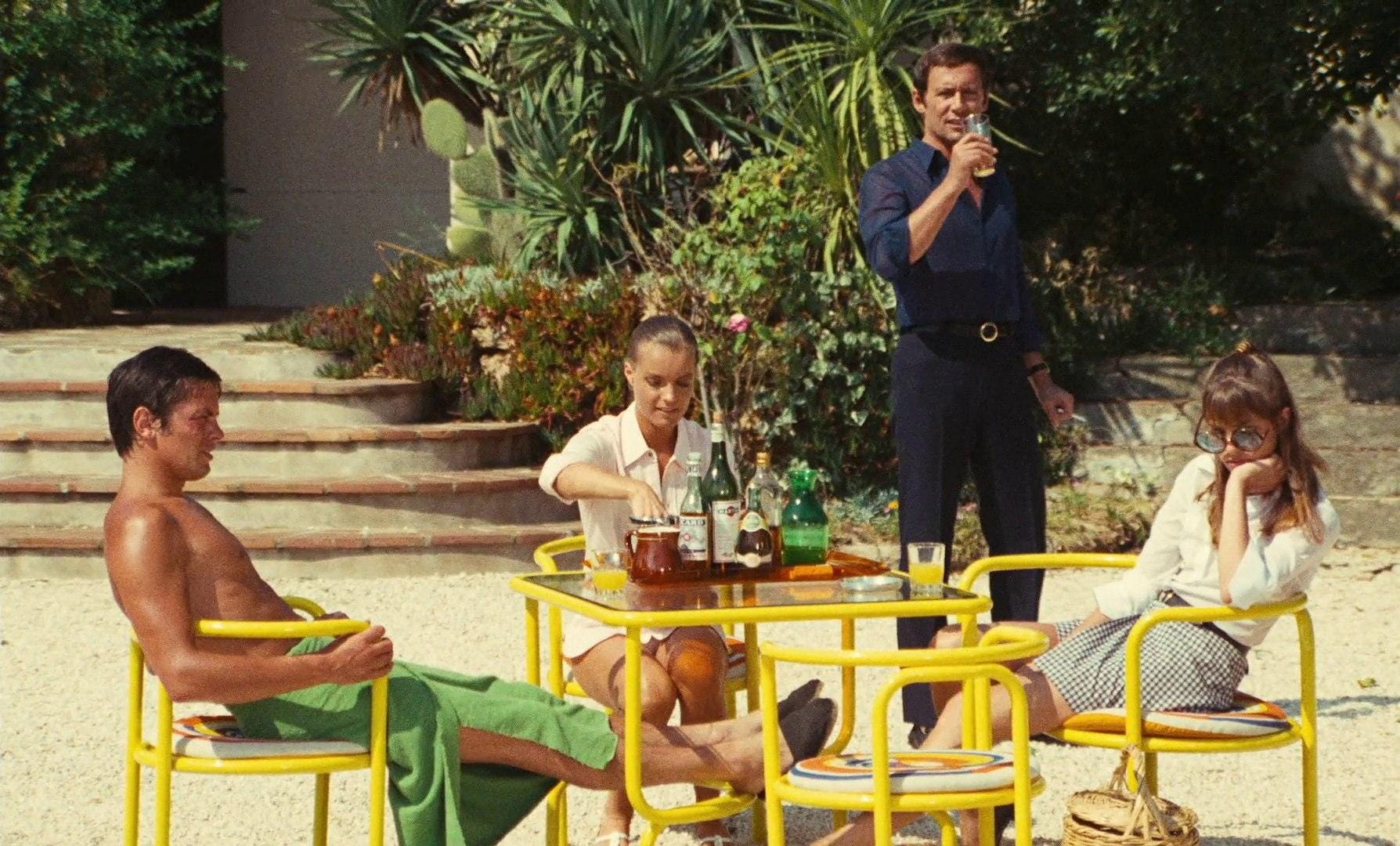
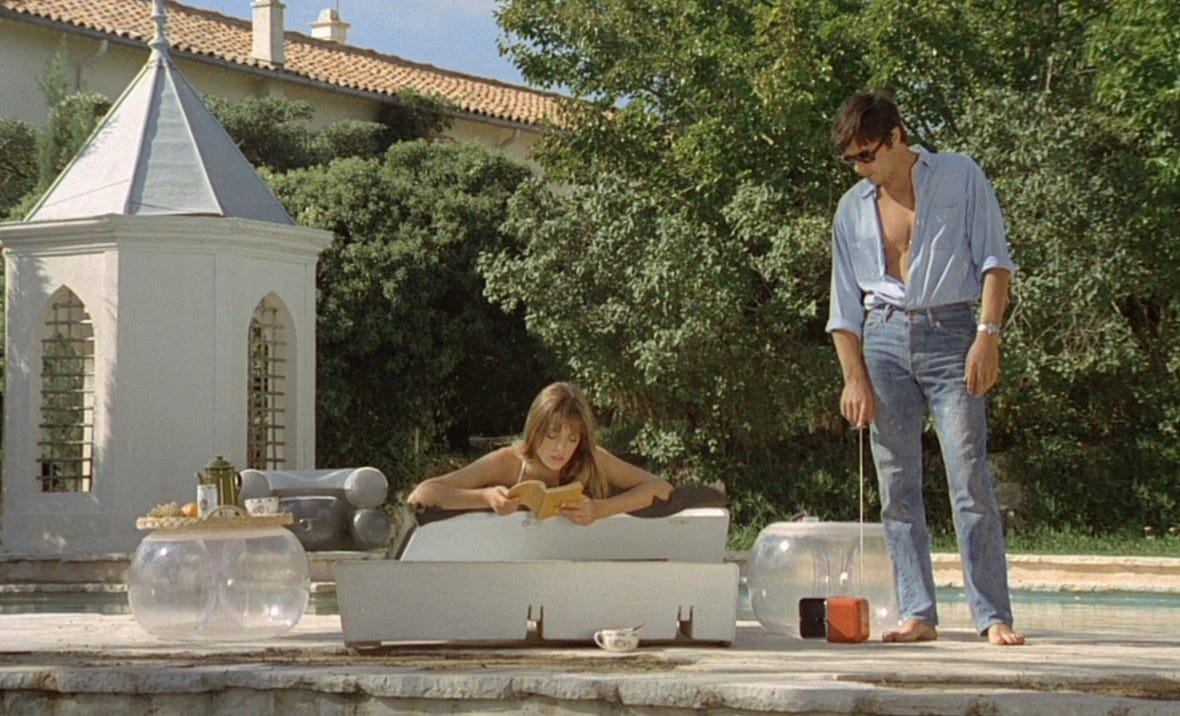
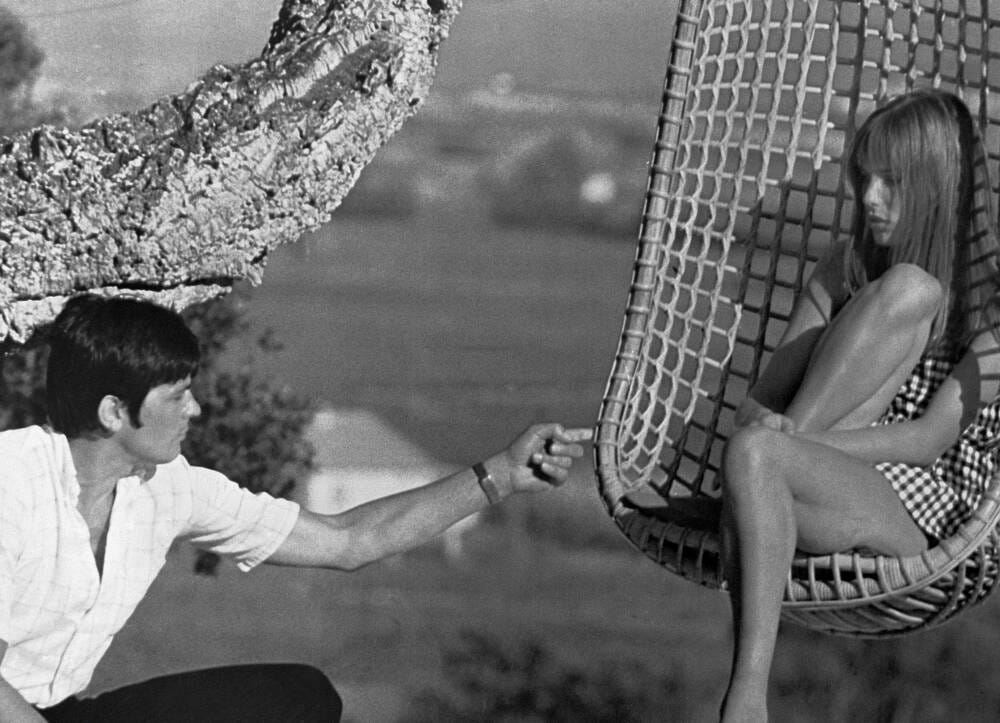
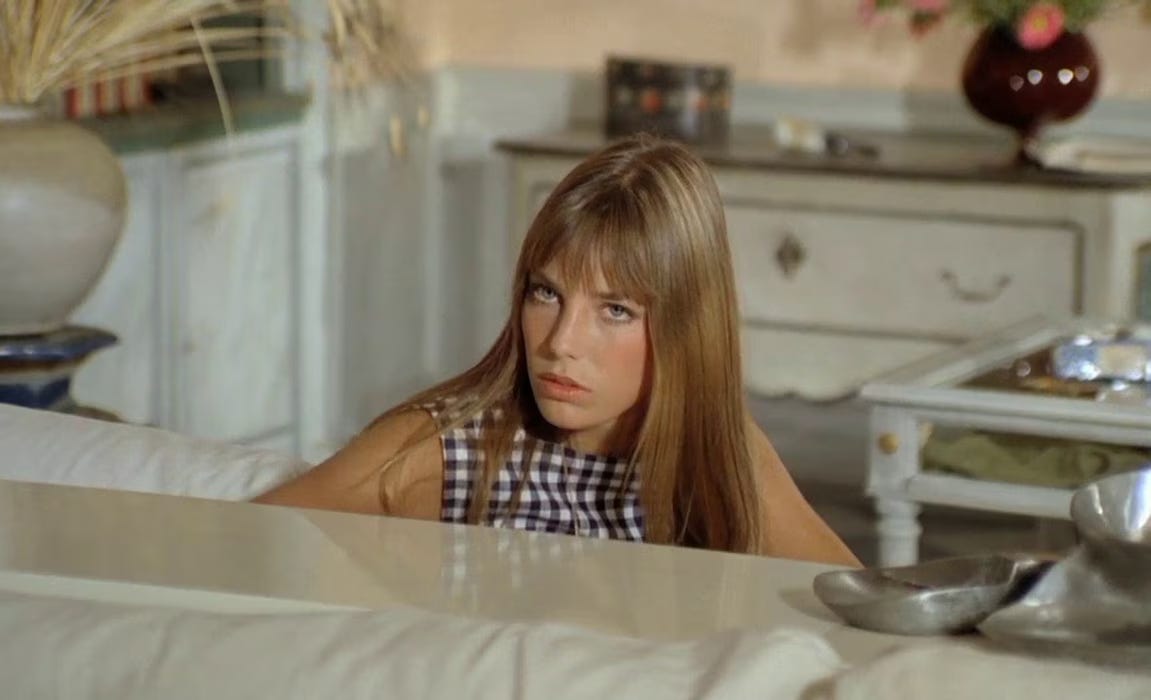
I adore the composition in so many of the stills I’ve included in this piece. There is such attention to detail in the framing — how the characters position themselves, careful placement of objects, just the right tones and of course, the perfect looks to complement every scene. Then there is the way Deray approached shooting the film, using long tracking shots and pans to follow characters as they lounge by the pool, languidly walk through the frame and swim in the water. The use of a telephoto lens adds a stylistic element, giving the effect of spying on the actors from a distance. Along with the partial obscurity of some shots behind glass panes or tree branches, it creates a certain intimacy — moments of visual beauty that you feel invited into.
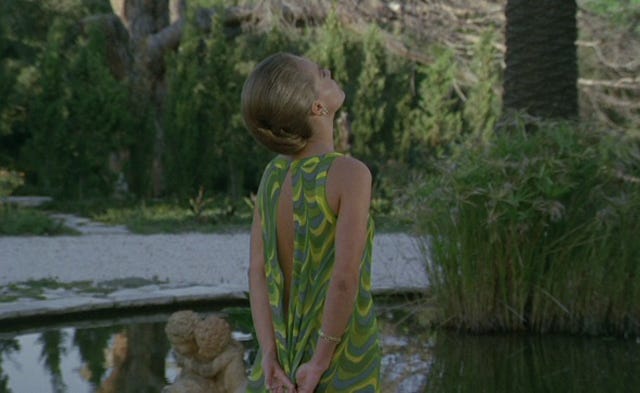
This dress is perhaps the most overtly 1960s look in the film, but I love it — especially the way the colours blend so beautifully into the landscape.
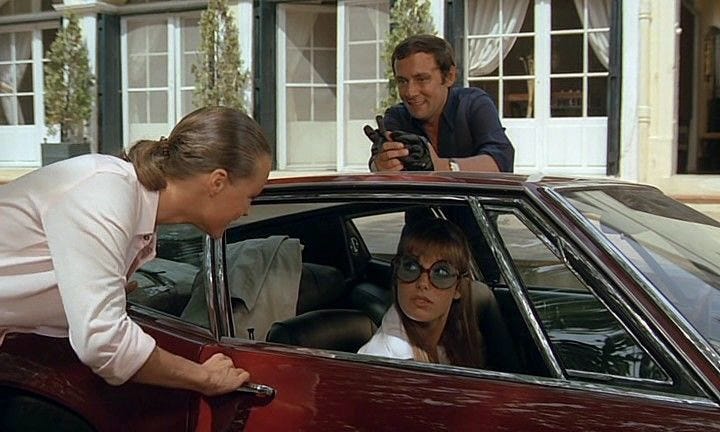
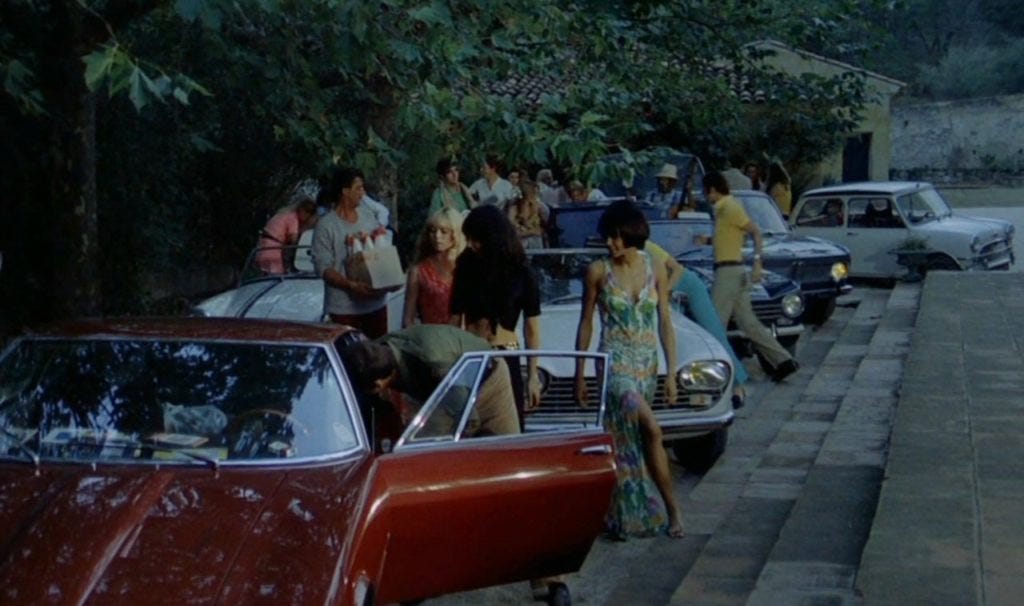
I also have to mention the car when talking about the film’s visual merits. The Maserati Ghibli belongs to the character of Harry (a music producer in the film) and lends its own contrast — a fast, racy, seductive model against the coastal backdrop of the South of France. Then there’s the slew of vintage European cars arriving for a party… very chic.
What makes La Piscine endure isn’t just the wardrobe, the music, the pool or the golden light over Saint-Tropez — it’s that Deray trusts his cast completely. Schneider and Delon bring something genuine to every scene (the chemistry is palpable, you can tell they had a personal history together), and it’s that emotional current running beneath all that surface beauty that keeps you watching.
More than fifty years later, the film remains a reminder that great style doesn’t have to be about excess. Whether in fashion, interiors or film, it's often restraint that proves most enduring.
Until next time,
T
No posts
Comments
Nothing yet. Say the first thing.
Sign in to join the conversation.