
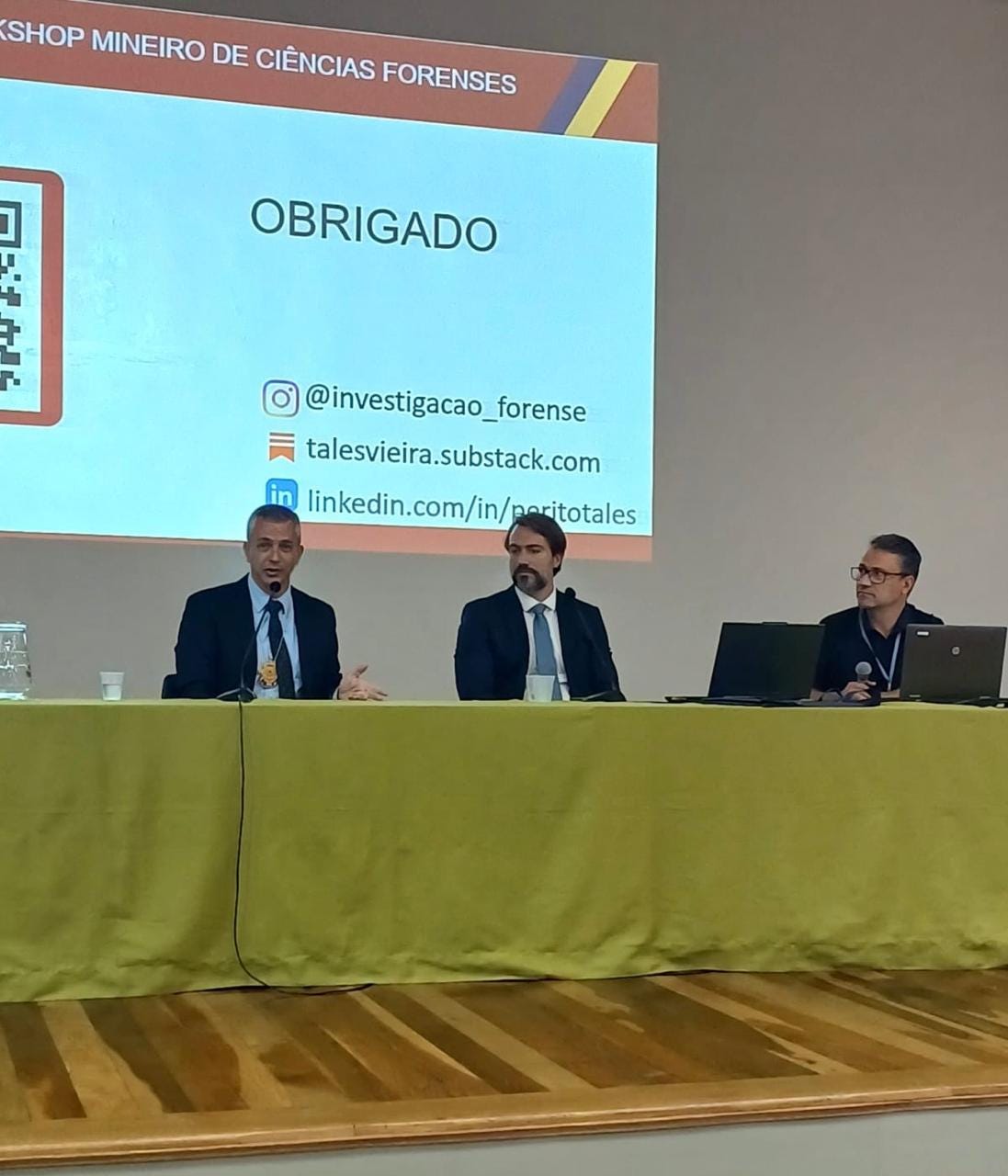
Last week, I had the privilege of returning to my alma mater, the Federal University of Minas Gerais (UFMG), to speak at the Workshop Mineiro de Ciências Forenses. It was a moment of coming full circle—standing in the halls where I built my scientific foundation, but this time discussing the future of technology in public safety.
I was invited to present a case study on “Strategic Management in Forensics,” specifically focusing on a recently published technical cooperation agreement between the Civil Police of Minas Gerais (PCMG) , Unilavras, and ARPA Rio Grande.
While the administrative breakthrough was significant—overcoming historical bottlenecks to foster innovation—the real highlight for me was demonstrating the tech stack we are building to solve these problems.
We are moving past the era of spreadsheets and paper trails. We are building software.
Here is a look at the three systems I presented and the architectural decisions behind them.
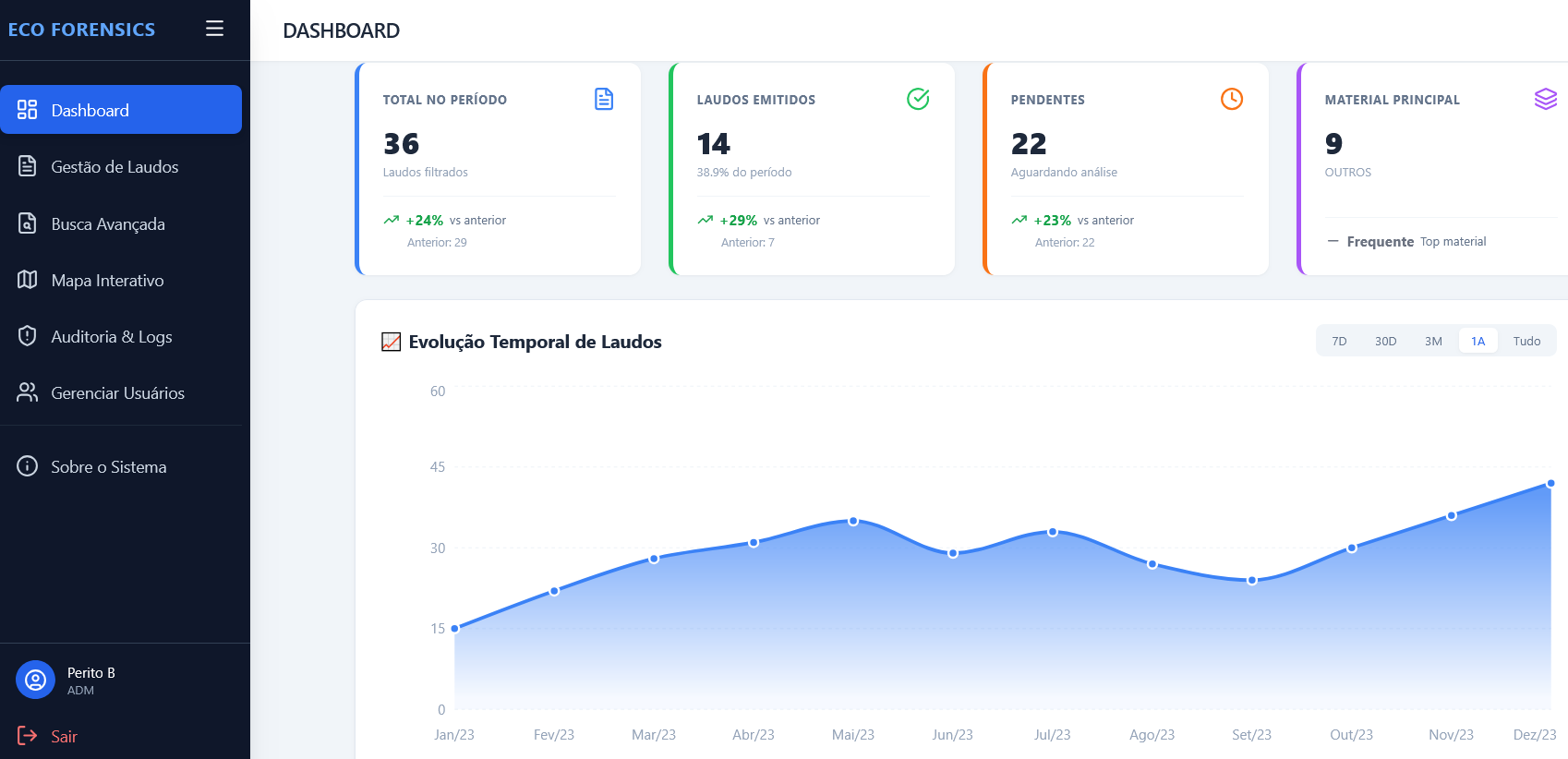
In forensic work, clarity is paramount. The cognitive load on an expert is already high; their tools shouldn’t add to it. For our first two solutions, we prioritized a polished, intuitive User Interface (UI).
Forensic Report Management System: This tool handles the digital Chain of Custody, enforcing controlled access logs, geoprocessing, and file integrity checks.
Digital Asset Verification System: An AI-powered tool for scanning file integrity and analyzing suspicious links.
For these, I chose TypeScript and React. Why? Because type safety matters when dealing with legal procedures, and React’s component-based architecture allowed us to build a responsive, “app-like” experience. We needed these tools to be visually attractive and easy to navigate for officers who may not be tech-savvy. The goal was to reduce friction: complex backend logic wrapped in a clean, modern frontend.
The third system required a completely different approach.
Complex Report Interpreter: This tool uses Machine Learning to parse and extract insights from massive volumes of unstructured forensic data.
For this, Python was the obvious choice due to its robust data science ecosystem (Pandas, Scikit-learn, etc.). However, the architectural constraint here was critical: Data Privacy.
We are dealing with highly sensitive criminal investigation data. Uploading this to the cloud for processing was not an option.
Therefore, I engineered this solution to run entirely locally. We leveraged Python’s ability to handle heavy computational lifting on the client side, ensuring that no byte of sensitive data ever leaves the secure environment of the forensic station. It’s a “Privacy by Design” approach that combines the power of AI with the strict security requirements of police work.
The partnership between the police, academia, and associations is not just about signing papers. It is about creating an environment where we can deploy modern tech stacks—TypeScript for usability, Python for data power—to serve society better.
We are not just managing cases; we are engineering justice.
No posts
Comments
Nothing yet. Say the first thing.
Sign in to join the conversation.