
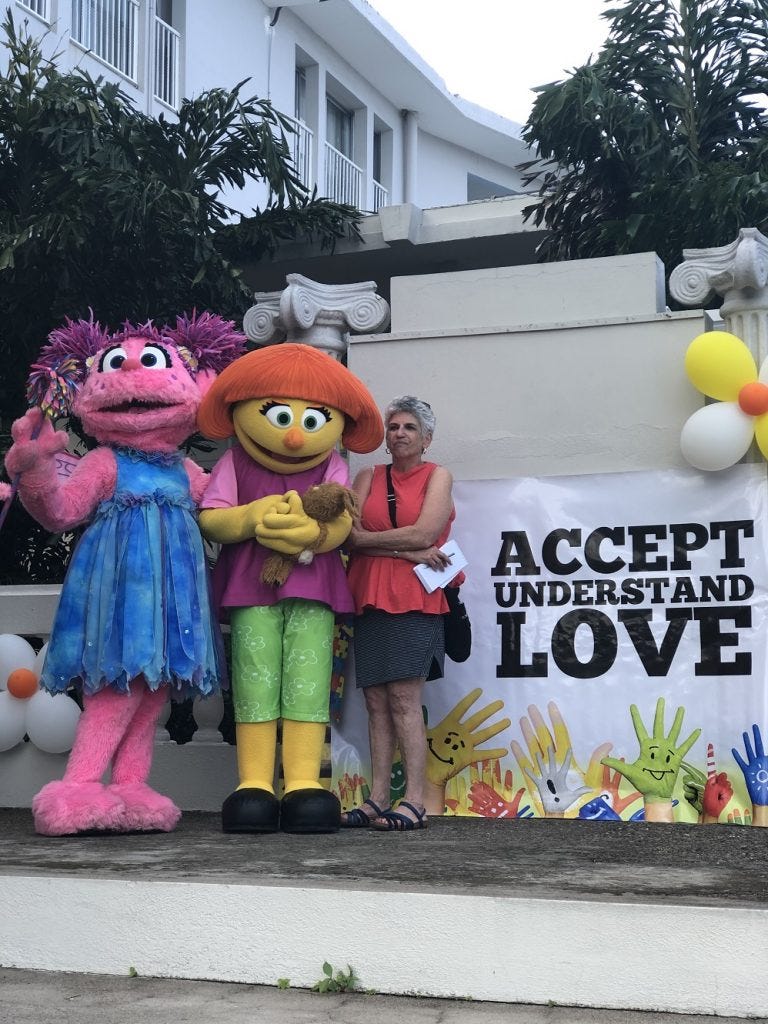
April is Autism Acceptance Month. Its purpose is to foster inclusion, understanding, and support for those on the autism spectrum and their families.
Science has yet to find a definitive cause for the disorder – and there are a lot of dubious theories out there, many promoted by Robert F. Kennedy Jr, the head of our nation’s Health and Human Services Department.
Autism Spectrum Disorder is a complex developmental condition that typically appears in early childhood and impacts on a person’s social skills, communication, relationships, and self-control. There is no single cause (not vaccines, medical research has determined, over and over!) Nor is the impact the same for everyone. One in six, experts say, have a sensory need or sensitivity. Millions of adults are on the autism spectrum but have not been diagnosed.
And if you’ve read that Autism is spreading, consider that it’s only in the past few decades that it has been identified and targeted for research. There is no evidence that it’s trending in any direction. Not enough data.
Autism in children often manifests itself in “meltdowns,” which spread anxiety and stress beyond the child to the parents and anyone nearby. Meltdowns you might witness at a restaurant, airport or theme park are the result of a child’s reaction to an overload of sensory issues, a change in routine, and inability to communicate, experts explain.
Autism is a “hidden disability,” unlike seeing a person in a wheelchair. “People are quick to judge, assuming the child is naughty and the parents are awful, when this is a family in crisis,” said Becky Large, a parent of a child on the Autism Spectrum and a longtime advocate and pioneer for inclusive travel as the founder of the Champion Autism Network (CAN) and the Autism Travel Club
“As if the situation isn’t hard enough, layer on the judgement of other people who know nothing about what we’re dealing with.” That’s one reason many families with an autistic child have been reluctant to travel, she said.
The good news is travel is becoming more accessible thanks to a plethora of awareness programs around the country. Museums, water parks, zoos, hotels, theme parks, and more, have trained staff, and many are now certified in autism and sensory sensitivities by Autism Travel (IBCCES. Download their Accessibility APP, which is location based and enables travelers to find accessible businesses and public locations for those with special needs.
Just recently, for example, San Diego has become a Certified Autism Destination which means visitors have multiple options to choose from including entertainment, recreation, and lodging. Certified and sensory-inclusive San Diego partners include Legoland, Sesame Place and the San Diego Zoo.
The bad news is that “Being aware of what is available remains a problem raised by those reaching out to the Autism Society National Helpline,” the Autism Society’s Candice Hopkins noted.
That’s why it is all the more important for the rest of us to not be judgmental and to help when the situation warrants it. “Give families space,” suggested longtime advocate Becky Large. “Avoid offering advice… offer to carry a bag, hold a spot in line.”
Even a supportive smile can help, she added.
For those traveling with a family member who is on the spectrum, be aware of the resources now available. Adaptive centers at snow resorts run winter and summer programs for those on the Autism spectrum. The National Ability Center in Park City, Utah, for example, has Personal care camps designed to support individuals with developmental disabilities. Most snow resorts have adaptive sports centers with summer as well as winter adventures including the Adaptive Sports Center of Crested Butte, Co and Vermont Adaptive Ski & Sports, often with scholarships available
Certified Autism Travel Professionals (CATPs), create stress-free,, sensory-friendly, and safe travel experiences including TravelAble that specializes in customized accessible travel including autism-friendly vacations and Autism on the Seas which works with many cruise lines.
Some resorts, including Beaches (a Sandals family brand) in Jamaica and Turks & Caicos have an array of assistance for these families, including sensory toys, a culinary concierge to support dietary restrictions, advanced training for staff, and an optional service of “One-on-One Beaches Buddy. The “buddy” is a staff member who is autism certified.
Things like putting on sunscreen or walking on sand—anything out of a structured routine—can prove difficult for a child on the Autism Spectrum, explained Thea Davis, a leader in Autism care with more than 20 years of experience who has raised a child on the Spectrum. (Visit The Spectrum for additional resources and information.)
“At home, my daughter benefited from consistent structures and routines-such as regular mealtimes, bedtime, play, and transitions-which helps regulate emotions and reduce anxiety,” she explained. “Travel can throw all of that out the window: new sights, sounds (like airport announcements or crowded spaces), smells, sleeping in a different bed, unpredictable schedules, and long periods of waiting or sitting still. For many children, this can lead to heightened anxiety, meltdowns, sleep difficulties, or safety concerns (such as wandering off or getting lost in busy places).”
It’s important for families to role play in advance, reinforce safety skills like staying close and positive reinforcement. Bring favorite toys, noise cancelling headphones and preferred snacks, suggests Davis.
Her daughter, she noted, is now in her twenties and loves to travel. The family is heading to Japan for two weeks.
The biggest advice: “Stay flexible, meet your child where they are…celebrate small wins and celebrate imperfections.”
That’s true for anyone traveling with kids.
No posts
Comments
Nothing yet. Say the first thing.
Sign in to join the conversation.