
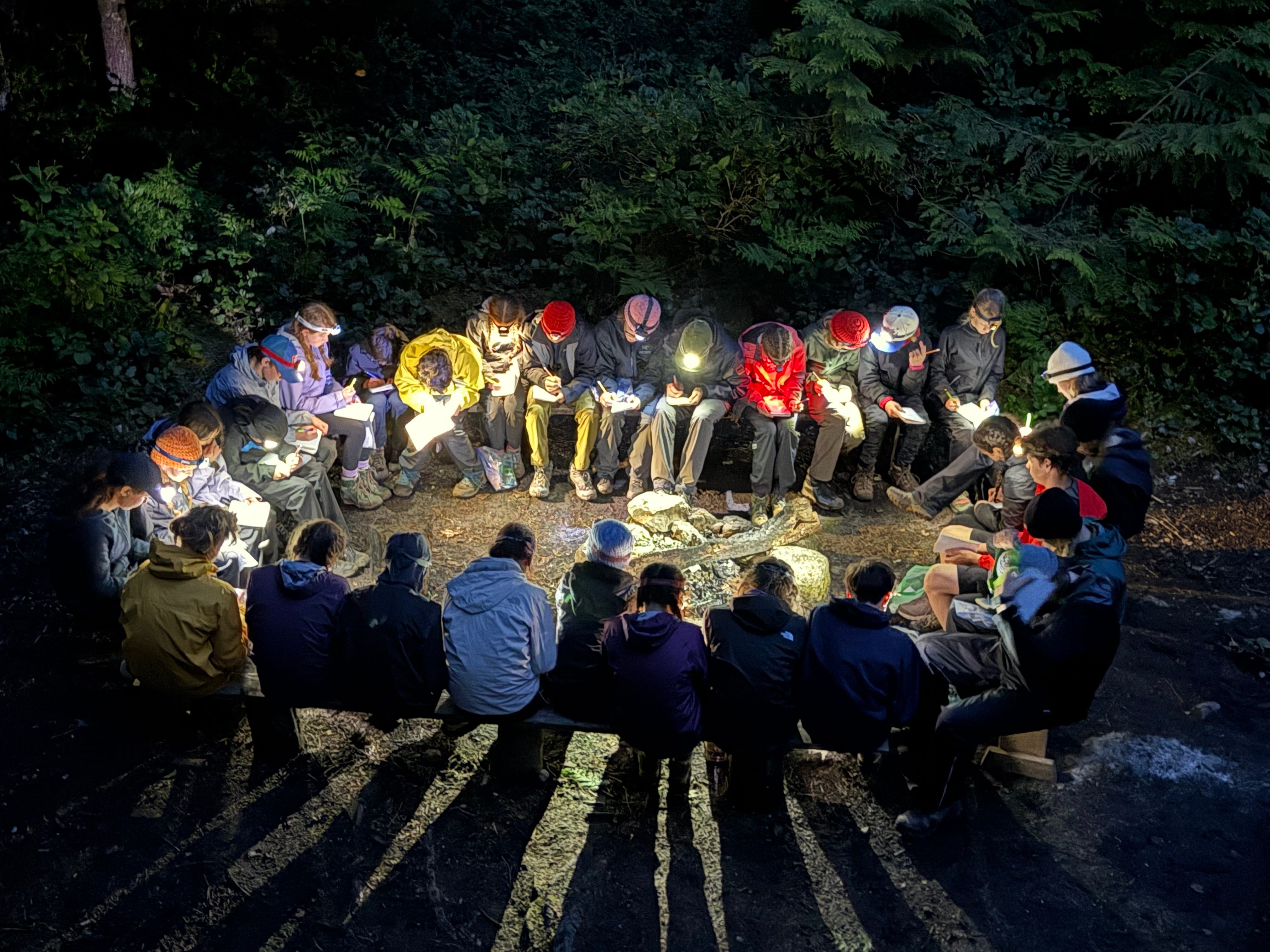
One of the goals of our Substack is to create space for conversations that help us think more deeply about outdoor learning, education, and leadership. While many of these reflections have come through our podcast, we’re excited to begin sharing written perspectives from educators and leaders whose ideas continue to shape this field. In this piece, Court Rustemeyer explores mentorship - not as a program or initiative, but as a relationship that often leaves a lasting mark on our lives. He is the author of Mentorship in the Wild, and is an amazing educator based in Alberta. I’ve been consistently inspired to see his work in action over the past decade.
– Colin, Executive Director
By Court Rustemeyer
Several years ago, I found myself reflecting on a question that has only become more important as my career has progressed.
Why do some experiences stay with us long after the details have faded?
Most of us can remember a teacher, coach, outdoor leader, colleague, or family member who had a profound impact on our lives. Yet when we think back on those individuals, we rarely remember the lesson they taught on a particular Tuesday afternoon. We often cannot recall the exact words they spoke or the activities they planned.
What we remember is how they made us feel.
We remember feeling seen. We remember feeling capable. We remember someone believing in us at a time when we were still learning to believe in ourselves.
In education, we spend a great deal of time talking about curriculum, assessment, outcomes, and achievement. These conversations matter. They help shape the experiences we create for young people. Yet I sometimes wonder if our focus on measurable outcomes causes us to overlook something equally important and far more difficult to quantify.
Relationships.
More specifically, mentorship.
Over the past twenty years as an outdoor educator, I have become increasingly convinced that mentorship is not something separate from teaching. It is not a leadership initiative, a special program, or an optional enhancement to the work. At its best, mentorship is woven into the fabric of everything we do.
As I was writing Mentorship in the Wild, I found myself returning to a question that I suspect many of us have considered at one point or another:
Who helped shape the person I have become?
For some, the answer comes quickly. A teacher. A coach. A parent. A colleague. An elder. For others, the answer is less obvious. Sometimes the most influential mentors are not the people who held formal leadership roles. They are the individuals who offered encouragement at the right moment, asked a thoughtful question, extended an invitation, or saw potential that we had not yet recognized in ourselves.
When we reflect on our own journeys, it becomes difficult to separate who we are from the people who helped us along the way. None of us arrive at our current destination entirely on our own. Our paths are shaped by countless interactions, conversations, experiences, and relationships that influence the choices we make and the directions we choose to pursue.
This is one of the reasons I believe mentorship holds such an important place in education and outdoor learning. Mentorship reminds us that growth is rarely a solitary pursuit. While learning often feels personal, development almost always happens in relationship with others.
The mentors in our lives do more than share knowledge. They expand what we believe is possible. They introduce us to new perspectives, challenge our assumptions, and help us see opportunities that may have otherwise remained hidden. In many ways, mentors act as guides, not because they provide a map, but because they help us develop the confidence to continue exploring.
That idea feels particularly relevant today. In a culture that often celebrates independence and individual achievement, it can be easy to overlook the networks of support that exist behind every success story. Yet when people are invited to share their journeys, mentorship almost always appears somewhere along the trail.
Outdoor learning offers a unique environment for these relationships to develop. Shared experiences have a way of accelerating trust and connection. A day spent outdoors often reveals more about a person than weeks spent together inside a classroom. Challenges emerge. Uncertainty appears. People learn to rely on one another. In these moments, mentorship becomes less about instruction and more about presence.
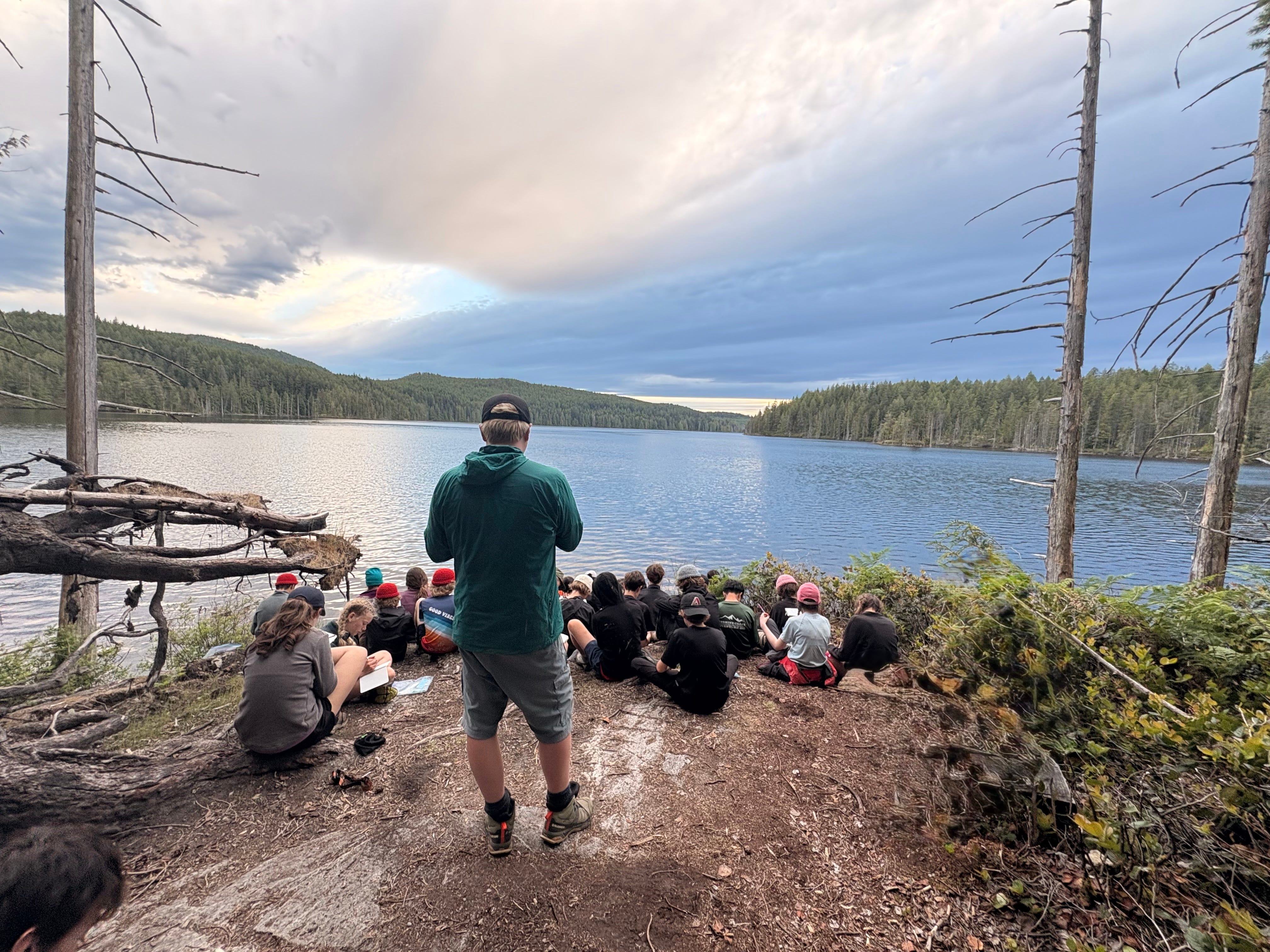
Some of the most meaningful mentoring moments happen quietly. They occur when an experienced student helps someone struggling with a backpack. They appear when a colleague takes the time to encourage a new educator. They emerge during conversations on a trail, around a campfire, or while waiting for a group to catch up. Often, they are so ordinary that they go unnoticed at the time.
Yet years later, these are often the moments people remember.
Students rarely tell stories about a worksheet, a lesson objective, or a carefully designed assessment. They tell stories about people. They remember who encouraged them when they were uncertain. They remember who trusted them with responsibility. They remember who helped them see strengths they did not yet recognize in themselves.
Perhaps this is why mentorship remains such a powerful force in education. At its core, mentorship is an act of belief. It is one person helping another recognize possibilities that may still be hidden from view.
“Mentorship isn’t about perfection—it’s about presence. It’s about walking alongside someone and saying, ‘I believe in you, and I’ve got your back.’”
— Mentorship in the Wild
At some point, however, something interesting happens. The people who once benefited from mentorship begin to find themselves in positions where others are looking to them for guidance. The relationship shifts. Without necessarily noticing it, we move from being mentored to becoming mentors ourselves.
I suspect many educators can relate to this feeling. One day you realize you are no longer the newest teacher, the youngest leader, or the least experienced person in the room. Someone is watching how you respond to challenges. Someone is learning from your example. Someone is benefiting from a conversation that you may not even remember having.
This transition carries with it both responsibility and opportunity.
The responsibility is obvious. Our words, actions, and attitudes have influence. The opportunity, however, is what excites me most. We have the chance to become part of someone else’s story in the same way others became part of ours.
When I look back on my own journey, I realize that many of the most important turning points can be traced to a person rather than a place. A conversation. An invitation. A moment of encouragement. Someone who helped me see possibilities I could not yet see for myself.
As educators, outdoor leaders, and lifelong learners, we have the opportunity to offer that same gift to others.
The trail ahead may belong to them, but sometimes all it takes is someone willing to walk alongside for a while.
While writing Mentorship in the Wild, I kept returning to a simple realization: mentorship isn’t an add-on. It’s the heart of the work.
Long after the lessons have faded, relationships remain.
The people who shaped us may never fully know the impact they had. A conversation they barely remember may have altered the course of a life. A simple act of encouragement may have provided the confidence someone needed to take the next step.
Perhaps that is the quiet power of mentorship. It rarely announces itself in the moment. More often, its impact is only visible when we pause and look back on the journey.
And maybe that leaves us with one final question:
Who helped shape the person you have become?
And just as importantly…
Who might be asking that same question about you one day?

Guest Article by By Court Rustemeyer.
You can find Court's book 'Mentorship in the Wild: A Guide to Leadership, Adventure & Wonder' at: www.courtrustemeyer.com
No posts
Comments
Nothing yet. Say the first thing.
Sign in to join the conversation.