The Gap Trap!
Shame does its best work in the space between where you are and where you think you should be. Season 33 opens on the gap trap, and on the unimpressive little move that gets you out of it.

Live Last read · last published · next check
Shame does its best work in the space between where you are and where you think you should be. Season 33 opens on the gap trap, and on the unimpressive little move that gets you out of it.
"I can't focus" is too big to fix. Pete and Nikki put on their detective hats to break an ADHD challenge down to the actual roadblock, so you can solve the real problem instead of blaming the whole thing on ADHD.
The words you use every day are quietly shaping what you think you're capable of. Pete and Nikki dig into a few simple language shifts that can change how you talk to yourself, and how you connect with everyone else.
If you've got ADHD, odds are you get a lot more done than you give yourself credit for. Pete and Nikki talk about flipping the script from deficit to appreciation, and a simple practice for actually noticing what you do.
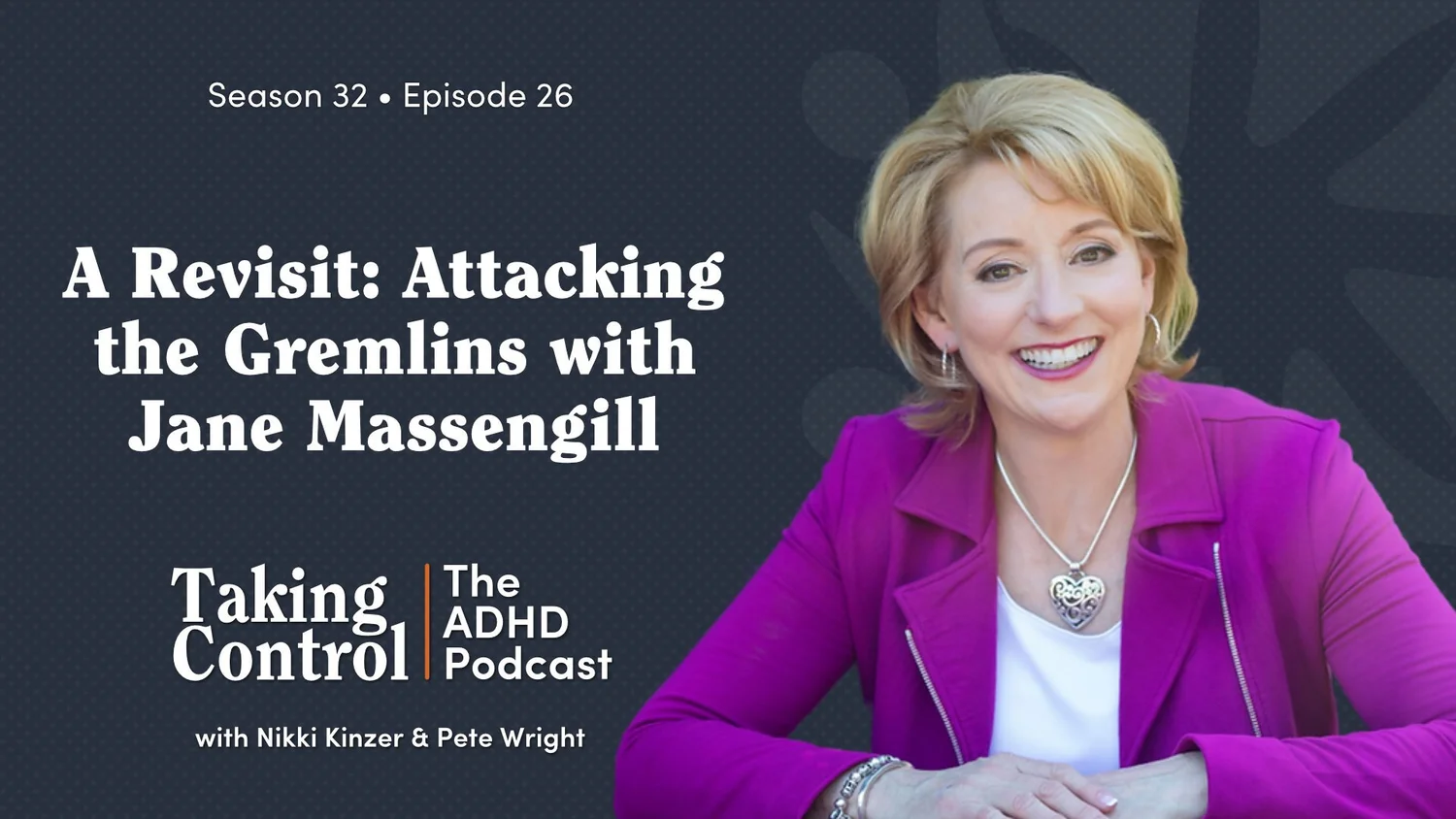
Coach Jane Massengill joins us to talk about the harsh inner voice a lot of us with ADHD live with, and where it actually comes from. She shares a simple practice for noticing that self-talk and starting to loosen its grip.
Your brain is great at counting what you didn't finish and terrible at noticing what you did. In the Season 32 finale, we trade the scorecard for one quieter skill — and it may be the one that carried the whole season.
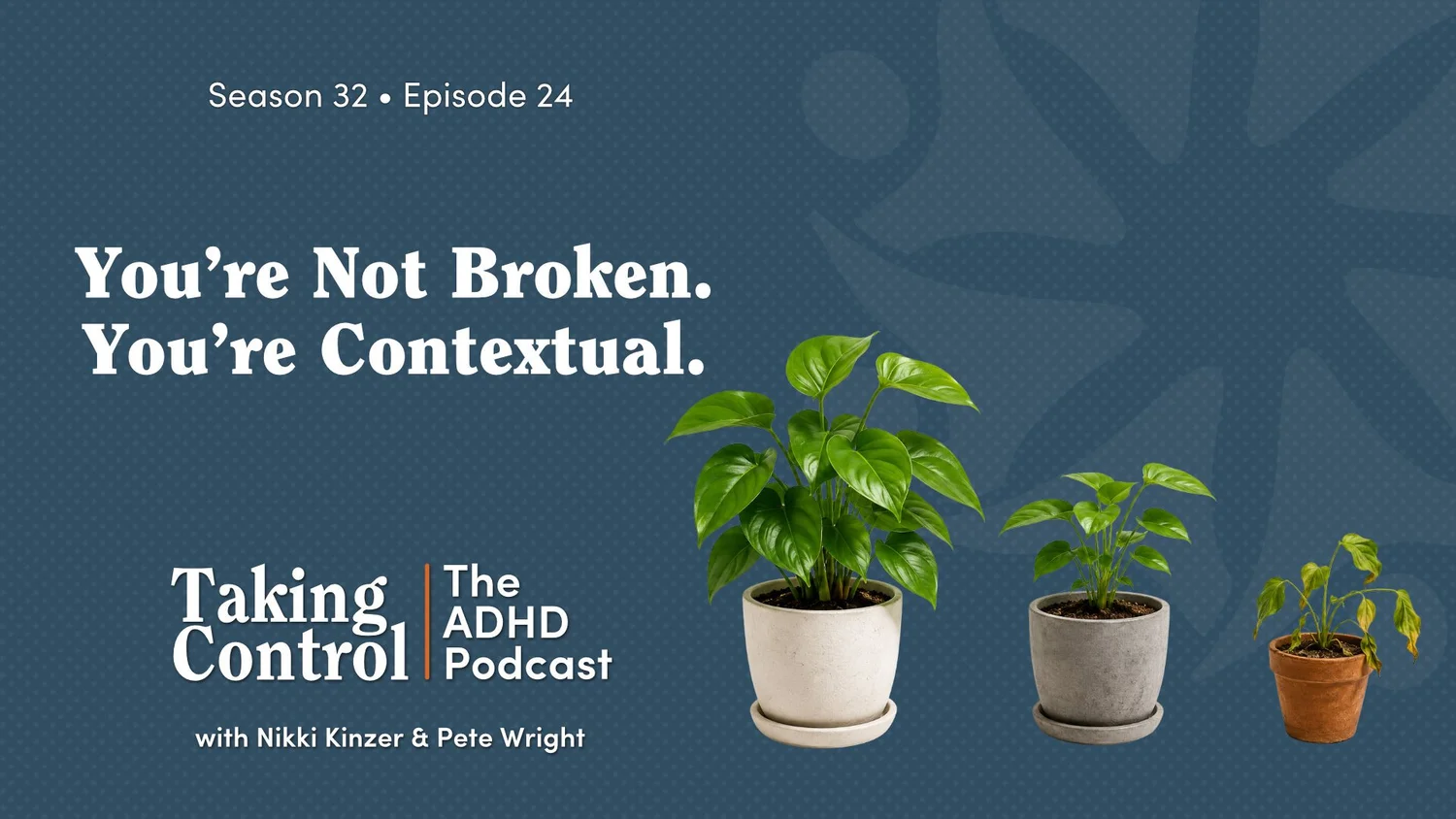
You can lose six hours to the thing that grabs you and still can't make yourself answer a two-line email. Same brain, different room — and this week Pete digs into why that gap says a lot more about your environment than it does about you.
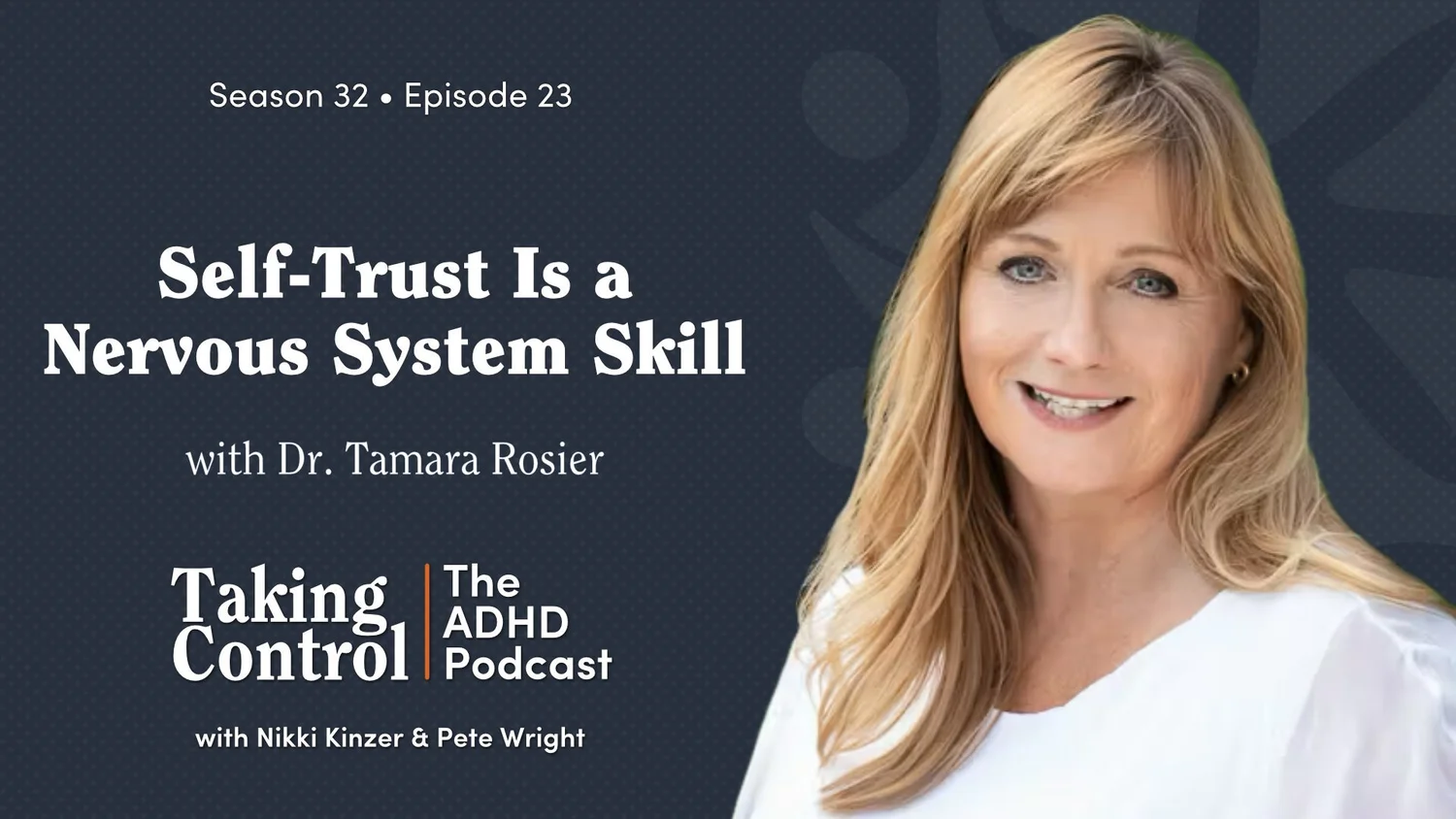
After enough broken promises to yourself, some quiet part of your nervous system stops believing your plans. Dr. Tamara Rosier returns to show us how self-trust actually gets rebuilt — one small, repeatable correction at a time.
You signed a rule about your own worth before you could even read it — and for the ADHD brain, it got written in permanent ink. This week, we read the fine print and start figuring out how to rewrite it.
"Good enough" can sound like permission or accusation — and ADHD brains often hear both. This week, Pete and Nikki untangle the difference between settling, ending, and finishing on purpose.