
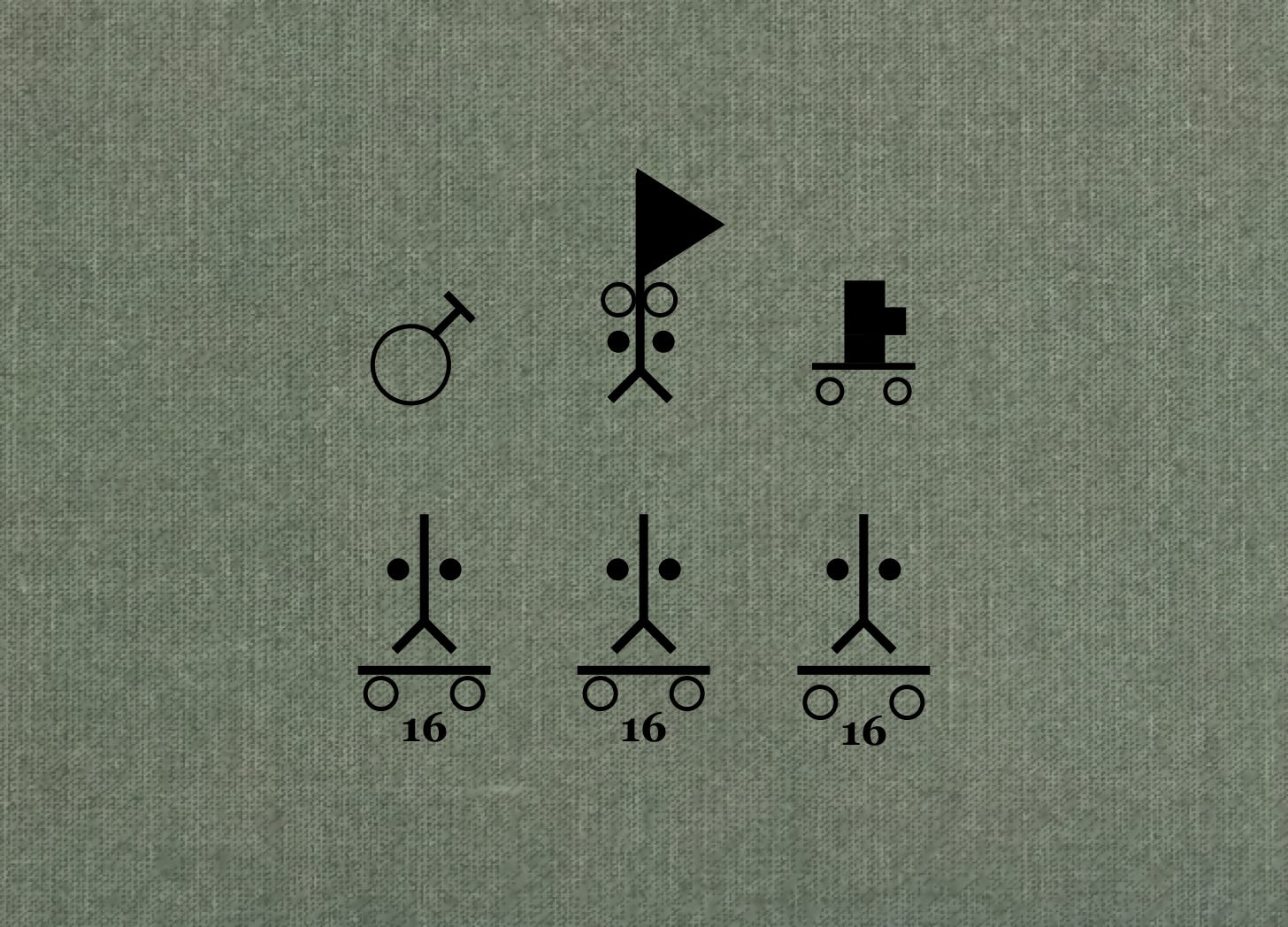
On 6 October 1936, the Army High Command (Oberkommando des Heeres) published a graphical catalog of deployable units serving in the German Army on that date. Most of these took the form of infantry, cavalry, field artillery, tank, and pioneer outfits of types familiar to students of the early years of the Second World War. Two battalions, however, stood out from this otherwise conventional crowd.
Styled as ‘motorized machine gun battalions’, these outliers provided muscle-powered army corps with mobile reserves of rifle-caliber firepower. To that end, each battalion of that type consisted of a headquarters, a communications platoon, a motorcycle platoon, and three fully motorized machine gun companies. (Each of the latter broke down into four four-piece platoons, each of which employed four heavy machine guns.)
On 4 March 1936, theMilitary Weekly (Militär Wochenblatt) published an exercise in alternative history in which Gustav Ponath described the services a motorized machine gun battalion might have performed for one of the component army corps of the German Eighth Army during the Tannenberg campaign of 1914.
A decision game based upon that speculation will soon appear in the pages of The Tactical Notebook.
Sources
Gliederung der Truppen des Heeres ab 06.10.1936, German Documents in Russia, Akte 91 page 18
Related Reading
No posts
Comments
Nothing yet. Say the first thing.
Sign in to join the conversation.