
Everybody wants a meaningful life. Fewer people ask how we ought to spend our time to make it that way. We build elaborate value systems, declare all the things that matter to us… and then go on to regular life, consisting of a healthy dose of commuting and emailing.
We tend to treat meaning as something located in the realm of abstract life plans, like identity, our values, and what life projects define us. The truth, however, is that life is not lived in the abstract. It’s lived moment to moment, hour to hour, through routine, habit, and constant choice. If life is lived actively, then the achievement of meaning is inseparable from the temporal structure of our lives. In other words, how to spend time is more fundamental than the values or identities which we hope to embody. After all, one can only exhibit a certain value, like kindness, by structuring their life around activities that are, well, kind.
In her book Doing Valuable Time, Cheshire Calhoun frames this as “leading a life,” or choosing how we spend our time in accordance with our normative outlook. She breaks this down by proposing an exhaustive fourfold distinction of how we spend time, Primary (time spent on ends pursued for their own sake), Filler (time spent idling and waiting), Entailed (instrumental time-spending as a result of pursuing primary ends), and Norm-Required Spending (socially required spending). Calhoun points out an interesting tension which arises from adopting this framework: Most, if not all our time is not primary spending, but instead entailed and filler spending, expenditures that feel opposed to good living. What do we do about this?
Calhoun’s picture ends up being normatively neutral, meaning there are no specified ends worth pursuing with our finite time. We know we want to spend time on things which we pursue for their own sake, but we’re not sure how to decide which things are worth it! Here is where we can call on the ancient wisdom of the Greek philosopher Epicurus, who can clarify which ends are worthy through what I call his normative ranking of desires.
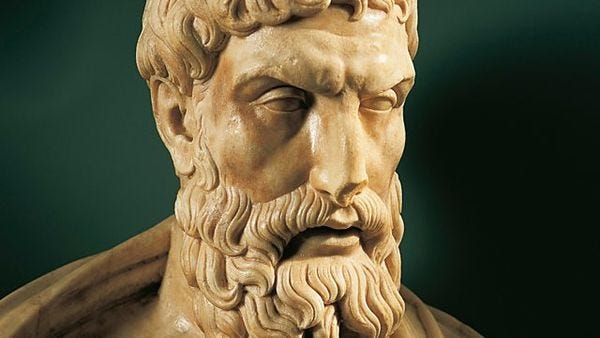
This is my roadmap: Epicurus’ philosophy of desire can be understood as a theory of rational time-use, as well as a substantive normative filter on Cheshire Calhoun’s structural account of time expenditure, offering a solution to her tension between primary spending and the pressures of filler, entailed, and norm-required spending. In §II I lay out Calhoun’s fourfold distinction of time-use. In §III I reconstruct Epicurus’ taxonomy of desires. In §IV I argue that his desire-based philosophy and views on death can be viewed as a normative theory of rational time-use. In §V I outline a view on how Calhoun’s pluralism about agents’ normative outlook can be constrained by a sort of Epicurean audit on the central projects of their life, and how an adoption of Epicurean ethics can envelope non-primary spending into the primary spending definition, thus dissolving Calhoun’s tension claim.
Returning to Calhoun’s fourfold taxonomy of time expenditure, we can give more specificity on what each type of time spending entails.
Primary Spending (PS): Time devoted to activities that are desired ends, done non-instrumentally, and are connected to one’s normative outlook.
Examples of PS include time with friends, writing, making music, when such activities are taken to be worth including in one’s future time and life non-instrumentally. This is what we want to be spending our time on.
Filler spending (FS): Time spent which includes what we do with time that cannot be used in primary spending, but “still has to be spent in some way, if only by taking a nap.”
FS arises when we wait, when we’re too tired or unmotivated to “much of anything else,” when we simply do not have the ability to spend our time in the primary sense, or even when we have too much time on our hands. Drawing a thicker line between PS and FS, we can say that PS is what we hope there will be time to do or what we intentionally make time to do, and that FS is that time which we wouldn’t waste our precious hours on “were it not for the excess time on our hands.”
Entailed spending (ES): Time spent that we are committed to as a result of our primary expenditures.
Oftentimes, what we choose to primary-spend our time on entails a considerable amount of time spent on other instrumental things/activities to position us to primary spend. E.g., if a professor at a city college lives in the suburbs, they might spend an hour commuting to work from their suburb, to then spend an hour grading, before they actually begin to write about the philosophy they’re interested in. Perhaps they lose the papers they were meant to grade, and must spend thirty minutes finding them. All of this is ES.
Norm-required spending (NRS): Time spent devoted to complying with social, moral, legal, or institutional norms or obligations.
Filing tax returns, going to prison, and attending a sexual assault awareness training, are all examples of NRS. These expenditures too can express a sort of mixed status. For some, filing a tax return is an activity worth making time for in life, while for others, it’s a useless undertaking, even if the underlying norm is agreeable. From Calhoun’s taxonomy, we can extract a structural thesis:
Structural Claim: For any temporally extended human life, an agent’s total time is necessarily allocated to either PS, FS, ES, or NRS.
Calhoun explicitly claims that “the meaningfulness of a life is a function of one’s primary time expenditures,” and remarks on how PS “answers to your assessment of what is worthwhile to include in your life for its own sake.” Tying in FS, ES, and NRS, she says that a meaningful life isn’t just one’s amount of PS, but also how much FS, ES, and NRS is being avoided. Viewing our lives through a temporal lens, we realize that much of our lives come with a high degree of FS, ES, and NRS. This conflict in life is what drives Calhoun’s thesis. I will call this the tension claim.
Tension Claim: Even when an agent’s macro life plan is meaningful, their everyday structure of time may be controlled by FS, ES, and NRS which disconnect the agent from their ability to enjoy PS and live a meaningful life.
Calhoun’s taxonomy is certainly useful in describing how we spend time and illustrates the phenomenology of the tension which agents experience in pursuing what they love, however, what she does not supply is a substantive criterion for which ends ought to be treated as PS, such that resulting FS, ES, and NRS is worth its cost. This is where an Epicurean theory of desire can guide us and help to resolve the tension claim, and the problem of ES, FS, and NRS.
Epicurus believed that “pleasure [is] the beginning and end of the blessed life.” Life’s goal, to an Epicurean, is achieving ataraxia which is the freedom from mental disturbance, or peace of mind, as well as aponia, which is the absence of physical and mental pain. Achieving these states depends on how we manage the different types of desire. I will adopt Emily Austin’s framing of Epicurean desire from her book, Living for Pleasure: an Epicurean Guide to Life as natural, extravagant, or corrosive. First is what Epicurus calls natural and necessary desires, or what I will call for simplicity, natural desires.
Natural Desires (ND): The elements necessary for life, for happiness, and for freeing the body from anxiety/pain.
Food, water, shelter, medicine, and friendship are all examples of natural and necessary desires which free the body from pain. Beyond these, some desires related to happiness arise from reflecting on the project of achieving ataraxia, and result from rational reflection on one’s values. Epicurus says that as rational and social beings, we have needs unique from other animals. We are able to view our lives with full temporal range and puzzle ourselves with the questions of how to organize socially, how to make sense of the universe around us, and how to face death. Therefore, we need to satiate our curiosity and develop a basic understanding of the world around us in order to reach ataraxia, because without one, we live in peril worrying ourselves with life’s mysteries. Moreover, as social creatures we need a community willing to compromise and commit itself to mutual cooperation.

Extravagant Desire (ED): Lavish versions of ND, which can provide pleasure, but too frequently sought after can disrupt the aim of ataraxia.
Extravagant desires are what Epicurus calls natural and unnecessary. These desires aren’t always bad, they’re just more lavish versions of natural ones. This might be a decadent glass of wine, or a nine dollar flavored coffee with added syrup. Unfortunately, we often let these extravagant desires rule our pursuits, leading us to ignore ND. Furthermore, extravagant desires when frequently indulged upon can raise our bar for pleasure, making freedom from anxiety harder to achieve. Going after extravagant desires can distract us from fostering the more meaningful relationships in our life and lure us into pursuing the things meant to be savored for only once in a while.
The most destructive desires of all are those that are unnatural (contrary to human flourishing) and unnecessary, what I will call corrosive desires.
Corrosive Desires (CD): Desires which aim at objects without empirical verifiability or natural limitation.
Corrosive desires make pursuit of notions such as wealth or power, things that can’t be exactly outlined or described as having a beginning and end. Their limitless nature makes them never fully achievable, and thus forces us to be perpetually pursuing them. Constant pursuit with no end is anxiety manifest, requires constant effort, and becomes causes existential exhaustion. Desiring something like power, due to its difficulty to attain, causes competitiveness in people and thus brings out their worst characteristics. Corrosive desires consume all other desires, and risk jeopardizing natural desires, like a gambling addiction wrecks one’s ability to buy food or pay rent.
Epicurus’ most recognizable argument comes in Letter to Menoeceus when he discusses death, and it will help us set him up as a philosopher of time-use. It goes something like this: death is nothing to us, because all good and bad consists in sense-experience, and death is the privation of sense-experience, therefore, we need not be afraid of death because no pain exists when we die. Being mortal is a matter of contentment, not by having unlimited life, but by quelling the anxiety attached with the yearning for immortality.
In the Principal Doctrines, he adds that “infinite time contains no greater pleasure than limited time if one measures by reason the limits of pleasure.” Taken together, these claims show how Epicurus reshapes achieving the good life as a problem of structuring our necessarily finite time for life tranquility, echoing Calhoun.
Temporally focusing Epicurus is reinforced by his established insistence that desire is the guide for our every choice, and when harnessed correctly is our route to tranquility. Moreover, since any commitment to pursue or avoid an end is, in effect, a commitment to structuring portions of one’s life around certain activities that support that end, then it is natural to treat those commitments as decisions about how to allocate one’s finite time.
A choice or an avoidance can be understood as a momentary, isolated act, but oftentimes we exhibit choice or aversion over longer periods of time. Pursuing careers and maintaining relationships, are long-term commitments aimed at achieving pleasure, and are temporally extended in that they occupy our hours and days, recurring and displacing alternative ways in which we could be spending our time otherwise. When Epicurus ranks desires as ND, ED, or CD, he is not only classifying certain mental states, but also implicitly ranking ends, practices that express one’s desire, and ranking those time-consuming pursuits which an agent might devote their lives to. We can distill this to a principle:
Epicurean Time-Use Principle: rational agents ought to allocate their finite time primarily to secure and foster ND, treat ED with caution, and stop completely from structuring their time around attaining CD.
Considering that Calhoun is agnostic on which ends may be worth spending primary time on, the question becomes: is there any non-ad hoc way to constrain which projects chosen by an agent may count as primary?

The Epicurean Time-Use Principle suggests that rational agents should allocate their finite time first and foremost to activities that secure ND and avoid the structuring of life around CD. We can now combine this with Calhoun’s framework and create what I will call the Epicuren audit of life’s projects.
Epicurean Audit Condition (EAC): Let P be a project, any way of life, or long term commitment that per Calhoun’s framework is eligible to organize PS. An Epicurean audit consists of three components:
Desire-basis: Do the desires that motivate taking up P stem from ND or do they essentially involve ED and CD?
Time-Cost: Does the characteristic time structure of P reasonably generate high levels of ES and NRS that threaten an agent’s ability to secure ND, or are those non-primary expenditures manageable?
Stability: Given that our lives are finite, does structuring future time around P make it more likely that one’s future life consists of undisturbed pleasure rather than consistent anxiety?
The Epicurean claim is that if a project passes the audit, it can be ratified as a legitimate primary end, assuming, of course, it’s grounded in ND and that the non-primary time costs don’t predictably ruin ataraxia long-term. Projects organized around CD will predictably fail one of the three audit conditions, and they should not be installed as primary, even if they seem central to one’s normative outlook. Let’s make this slightly more formal in an audit principle:
If a project P is such that adopting it as a central end would expectantly commit one to spending large amounts of finite life engaging in time-use that undermines the satisfaction long-term of ND, then P is not a rational candidate for PS.
If Calhoun’s account is such that a P occupies PS only because it aligns with an agent’s normative outlook, then her pluralism is too lax as it comes to achieving ataraxia.
Therefore, a Calhounian framework benefits from the EAC which filters out certain projects as ways of living opposed to tranquility, even if the agent endorses them sincerely.
This sort of hybrid view allows for Calhoun’s appeal to agent values to be maintained but treated as defeasible. If a person has a normative outlook that stems around CD-led time-use, then their values must be revised.
The EAC has operated as a way of choosing which projects structure PS, but the audit also has an upshot for Calhoun’s tension claim. As Calhoun emphasizes, ES and NRS are value-ambiguous as it comes to leading a life, because in one sense they are how we have chosen to live our lives, but only as a product of pursuing other things we see as meaningful. FS is likewise ambiguous. It’s guided by choice and expresses value indirectly, even if it’s time wasted waiting to return to PS.
Epicurean ethics suggests a way in which we can re-sort the ambiguity of these time-spending categories. Consider some amount of ES or NRS, T. If T is necessary to sustain a primary end that the Epicurean audit has already verified as natural and necessary, then Epicurus gives us reason to treat T not as some necessary evil, but rather as an albeit indirect manifestation of the same rational ends which make the PS warranted. The agent can then redesign that chunk of time T not as an undesired waste but as a use of their time on the very activities which they want to constitute their life, even if the activity in T is rather uninteresting. I will call this the Envelopment Claim:
Envelopment Claim: If one accepts the Epicurean Time-Use Principle, then any FS, ES or NRS that are necessary to satisfy ND and aren’t themselves structured by CD can be enveloped into PS. They are derivatively meaningful components of a future plan of time expenditure.

Two things occur once this perspective is realized. First, the ambiguous chunks of time, like commuting to work, can be reclassified as primary ends, because they are vehicles to goods that Epicurus treats as necessary. Second, much of FS, ES, and NRS are not endured but abandoned as the results projects which reflect ED and CD. For example, long email chains networking and social climbing to enter a corrosive career will be disregarded. On the Calhoun-Epicurus hybrid view, the right response is to question one’s status drive role completely, not to rationalize the least pleasant byproducts of what we’re pursuing.
We can now see how exactly the EAC addresses Calhoun’s tension claim. The resulting hybrid view can be stated as such:
Hybrid Time-Use View: Agents should begin from their own normative outlooks in determining what they take to be worth doing with their time. However, they should subject their central projects to an Epicurean audit, reject those projects which are unsuitable for PS and grounded in CD or predictably undermine the satisfaction of ND. For the projects which survive, the non-primary expenditures they entail can be enveloped into PS assuming they are truly necessary to securing ND.
From Calhoun and Epicurus we learn that meaning in life is not a matter of deference to what an agent currently sees as reflective of their values, or a matter of following an externally created list of objectively important projects. Rather, it’s the structured, temporally prudent process of revising one’s ends and use of time in light of the finite fact of our existence, and the necessity of securing natural desire.
Works Cited:
Austin, Emily A. Living for Pleasure: An Epicurean Guide to Life. New York: Oxford University Press, 2022.
Epicurus. “Letter to Menoeceus.” Translated by Cyril Bailey (1926). PDF, Manchester University. Accessed December 2, 2025. https://users.manchester.edu/Facstaff/SSNaragon/Online/texts/316/Epicurus,%20LetterMenoeceus.pdf.
Epicurus. “Principal Doctrines.” Translated by Cyril Bailey (1926). PDF, Manchester University. Accessed December 2, 2025. https://users.manchester.edu/Facstaff/SSNaragon/Online/texts/316/Epicurus,%20PrincipleDoctrines.pdf.
Epicurus. Vatican Sayings. n.d. PDF, Columbia College, Columbia University. https://www.college.columbia.edu/sites/default/files/Vatican%20Sayings.pdf.
No posts
Comments
Nothing yet. Say the first thing.
Sign in to join the conversation.