
At the time of writing this essay, no artificial intelligence has on its own discovered a major scientific theory or settled an open mathematical conjecture. DeepMind’s AlphaProof and AlphaGeometry reached a silver-medal score at the 2024 International Mathematical Olympiad, however, the problems were translated into formal mathematical language by human hands before the system saw them. Gemini Deep Think earned a gold-medal score in 2025, both in end to end and in natural language. This is impressive, but it’s not important in terms of meaningful scientific/mathematical discovery. Olympiad problems are problems with knowable answers. They are set by humans to be solved. FunSearch produced new lower-bound constructions for the cap-set problem, which remains open. It found larger instances of a known kind of object rather than closing the question entirely. Google’s “AI co-scientist” reproduced in two days a hypothesis about gene transfer that took a laboratory years to develop. Yet, this result was a rediscovery of an unpublished result curated by domain experts.
There’s a pattern here. AI searches, it optimizes, and recombines within a problem space that a human has created for it. Mathematician Terence Tao describes AI as, “very good at scouring big lists of problems for low-hanging fruit” while warning of “scattered successes among a big sea of unreported failures.” It’s clear that AI isn’t making breakthroughs on its own. Scaffolding from a human is necessary. But is that scaffolding eliminable? Could an LLM discover anything mathematically or scientifically significant by itself? To answer this question one needs to clarify what exactly discovery is. This lets us ask whether conditions for discovery are structurally possible for the type of artificial intelligence that is prevalent today.
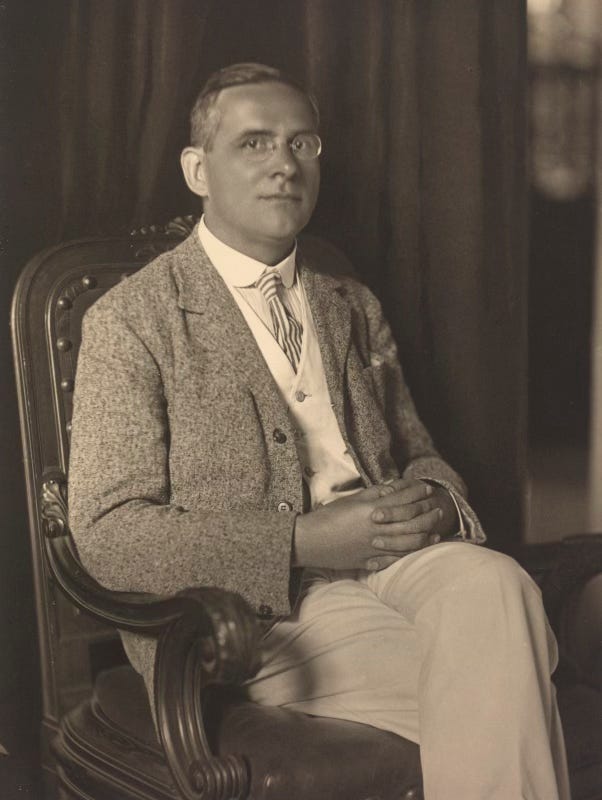
Discovery in science and mathematics turns on the distinction and intimate relation between acquaintance and cognition, at least according to philosopher Moritz Schlick. Acquaintance is having a perceived expanse or datum as it presents itself. Cognition is the conceptual identification of what is given in experience. It operates on concepts, which I follow Schlick in defining not as private mental content, but public terms whose meaning is fixed by their place within a wider web of definitions, observations, classifications, and laws. For example, the concept “water” doesn’t get its meaning from the mental image we have of water. It gets its meaning from its place in a conceptual network like: water is H20, H20 consists of two hydrogen atoms and one oxygen atom, water freezes at 0 degrees Celsius, and so on. Discovery is not an encounter with something new, a platonic truth unearthed before our eyes, it’s a successful placement of a new thing within an intelligible order of concepts. An encounter becomes a discovery when the new item is identified as something. Schlick calls this recognition. It’s finding concepts which we have already designated within the new to subsume the unfamiliar under familiar concepts (Schlick, 1913/1980, p. 171).
Here’s an example: suppose a scientist notices that bacteria have failed to grow around a patch of mold in a petri dish. The visual encounter is acquaintance. The mold is in a patch, it’s a cleared ring, and now the scientist has a failed bacterial culture. The scientist hasn’t really discovered anything yet. It becomes a discovery when the scientist identifies what’s happening as something. The mold seems to be producing a substance that inhibits bacterial growth! That act of identification is cognition. The new datum is placed carefully within the intelligible network of concepts on mold, bacteria, antimicrobial effect, etc. Discovery is not the finding of the bacteria. Discovery is the recognition that the weird mold belongs under a conceptually ordered relation, that it kills or prevents bacterial growth.
Let me be more clear as to what cognition is for Schlick. It is conceptual, but it is not “free-floating” so to speak. Concepts function as signs for objects, qualities, and relations that we are acquainted with in experience. The concept “water” and all of the sub-concepts subsumed under it collectively create the sign for that clear liquid we all know and love. Signs are attached to the reality we share. So, Schlick is saying that at a lower level we have acquaintance with the given and above it conceptual correlation, which is cognition proper. The empirical sciences are in the upper level, given that they traffic in concepts, but they are fastened to the lower level.
This yields what I call Schlick’s Principle: To discover, in the empirical sciences, is to extend cognition. It is to bring what is not known yet under a determinate (and hopefully economic) correlation of concepts that are anchored in acquaintance with the world. From this principle, I derive three conditions for an artificial intelligence which could discover autonomously:
C1) The system must correlate the unknown with familiar concepts, in a way that determines it and orders it into an existing body of knowledge (Erkennen).
C2) The concepts so deployed must be based in, non-derivatively, the system’s own acquaintance with the given (Erkennen must end in Kennen).
C3) Conditions C1 and C2 must be satisfied by the system itself, not supplied on its behalf by a human interlocutor.
According to Schlick, integration of new knowledge (discovery) must take place in the fashion of C1 and C2. For AI to discover in the same way, it must also pass C1 and C2, alone. So can it? Here’s my argument:
P1) For AI to be able to make autonomous scientific discovery, it must satisfy C1, C2, and C3.
P2) The empirical sciences concern the physical world, and their concepts are signs whose content is fixed by acquaintance with the kinds of things they designate.
P3) AI can satisfy C1 but not C2, because concepts are anchored in our acquaintance and not the system’s.
C) Therefore contemporary AI cannot make genuine autonomous scientific discovery. It can satisfy C3 for C1 but not for C2. The acquaintance is borrowed, and hence the scaffolding is the structural human supply of C2.
When the AI co-scientist rediscovers a hypothesis, it correlates concepts already present in the open literature. When a human checks that the hypothesis is in fact about bacteria, against bacteria, the human is supplying the acquaintance which the AI does not have. The machine does the upper level work (perhaps better than us now), but the lower tier remains humans.
There’s some good and some bad from this. First, the reduction and correlation work, which fills much of the administrative labor in boring 9-5 jobs as well as normal science can be absorbed by AI. We knew this already. It’s what people are freaking out about. Scientists who learn to wield AI in this way will gain enormously (less data crunching more data interpretation). But choosing which phenomenon to attend to, interpreting the results, judging when a concept accurately maps on to the world, is the part that resists mechanization.
What if C2 can be engineered? What if a machine can be given an acquaintance comparable to ours? Vision language action models such as Physical Intelligence’s π0 and Deep Mind’s Gemini Robotics explicitly pursue “embodied reasoning” in the physical world. I wouldn’t be too worried, though, given that the gap between such systems and our rich, integrated, affectively toned, temporally thick experience is very wide. Whether it’s even closable is an open question, and our lifeworld is not obviously the sort of thing that decomposes into channels. Moreover, the machine would also need to be able to reason from sense to concept. This type of reasoning between levels is certainly complex and it doesn’t seem easy to replicate how good we are at it. Who knows though… Maybe if we could give it acquaintance and sense to concept reasoning then it could even be useful, you know, a machine that could make scientific breakthroughs which improve our quality of life? Right?
Mathematics is where I suspect AI will travel much further. If one believes mathematics to be non-empirical (which I suspect most of us do), for example if one is a logicist, a formalist, or a structuralist, then C2 may not be binding or important. In Schlick’s view, a domain that requires no acquaintance with the physical world is a domain that lives entirely on the upper level, in the manipulation of stipulated concepts and their unique correlations. The argument looks like this:
P1) If mathematical cognition does not require acquaintance with the physical world, then autonomous mathematical discovery requires only C1 and C3.
P2) Contemporary AI satisfies C1 within formal systems and is improving at C3 for it.
C) Therefore, if P1’s antecedent holds, a sufficiently capable system could in principle carry out mathematical discovery autonomously, end to end.
In theory, AI, if ever smart enough, should be able to make significant progress in mathematics. That’s a strong claim that I’m unsure about, but I’ll leave it there.
Suppose a sufficiently advanced system, working only with ideal stipulated concepts cannot settle everything. Several explanations present themselves, some being more instructive than the others:
First, mathematics might turn out to be a humanistic discipline. It could be that math is a human social-historical practice rather than a free-standing formal object. Why? Because the failure to solve mathematical conjectures could imply that the machine needs acquaintance skills in order to have complete mathematical understanding. Reuben Hersh argued that mathematics is “what mathematicians do,” a simple yet profound claim that math is a cultural construction and neither Platonic nor purely formal. Lakatos argued through the history of the Euler polyhedron formula, that proof is dialectical, and a quasi-empirical process of conjecture and refutation, with pure deductivist views hiding “the struggle, the adventure.” If they are right, then “doing mathematics” includes choosing the problems we want to solve and refining the concepts in some sort of public communication, activities that require a human form of acquaintance.
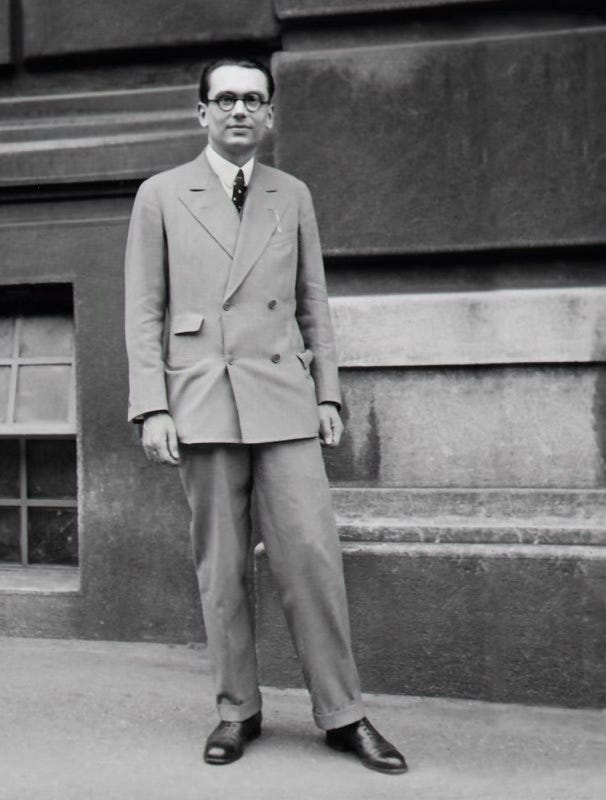
Maybe AI ends up finding something similar to a Gödel result. Maybe there are absolutely undecidable propositions in capital-M mathematics not just based in Peano Arithmetic. This is just a fun conjecture. Gödel’s proof is not a proof about minds or reasoning, it’s about effectively axiomatized formal systems of a certain kind. LLMs are not such systems. But I can dream! What’s actually interesting from Gödel is the fact that the only “intelligence” so to speak which could acknowledge the Gödel sentence was the human. We can see its self-referential and contradictory nature, which the system can not see of itself. Mathematics may need us to see its problems for it, and without acquaintance or strong self-reference skills, AI may be unable to do that. Only time will tell.
To conclude I want to acknowledge what my argument hinges on. If you reject Schlick’s picture of acquaintance and cognition, then you’re likely to reject my findings about discovery in math and science. However one must acknowledge that, at least as of now, we have something (acquaintance) which distinctly separates us from AI. We are embodied and LLMs are not, at least in the Schlickian sense. They therefore cannot reason between or undergo recognition from the given world to the world of conceptual order and back. This process and interchange is what gives life to scientific discovery and hypothesis. For mathematics, I’m a little less sure AI needs to be in the lifeworld in order to make meaningful contributions. Regardless, as AI progresses, unsolved questions in cognition and foundations of mathematics from generations past will continue to resurface, and we may begin to finally see some answers.
Schlick, M. (1980). General theory of knowledge (A. E. Blumberg, Trans.). Springer-Verlag. (Original work published 1918)
Thanks for reading Sensible Philosophy! This post is public so feel free to share it.
No posts
Comments
Nothing yet. Say the first thing.
Sign in to join the conversation.