
Three generations of my family were making their way through customs, more or less together, when I stopped being able to account for everyone’s whereabouts. One of us had darted off to ask somebody a question about something. Another was locked in a low, patient argument about who did and did not have access to the club. A third was reserving a row of seats and running the small negotiations a reserved row requires. The younger kids were bouncing off the stanchions. And somewhere in the middle of it I remembered that this beautiful chaos was the entire reason we were there: my parents, fifty years married this summer, and the rest of us hauled into one airport to celebrate it, about to shuffle down the jet bridge and fly off to go look at some fucking glaciers. Grandpa took one look at the whole operation and walked to the other side of the airport.
I had my earbuds in for most of it. My love of listening to podcasts in transit while navigating the wonderfully chaotic schedule that comes with raising young children is how I ended up the target persona for an idea Sam Altman gleefully shared with his millions of followers.
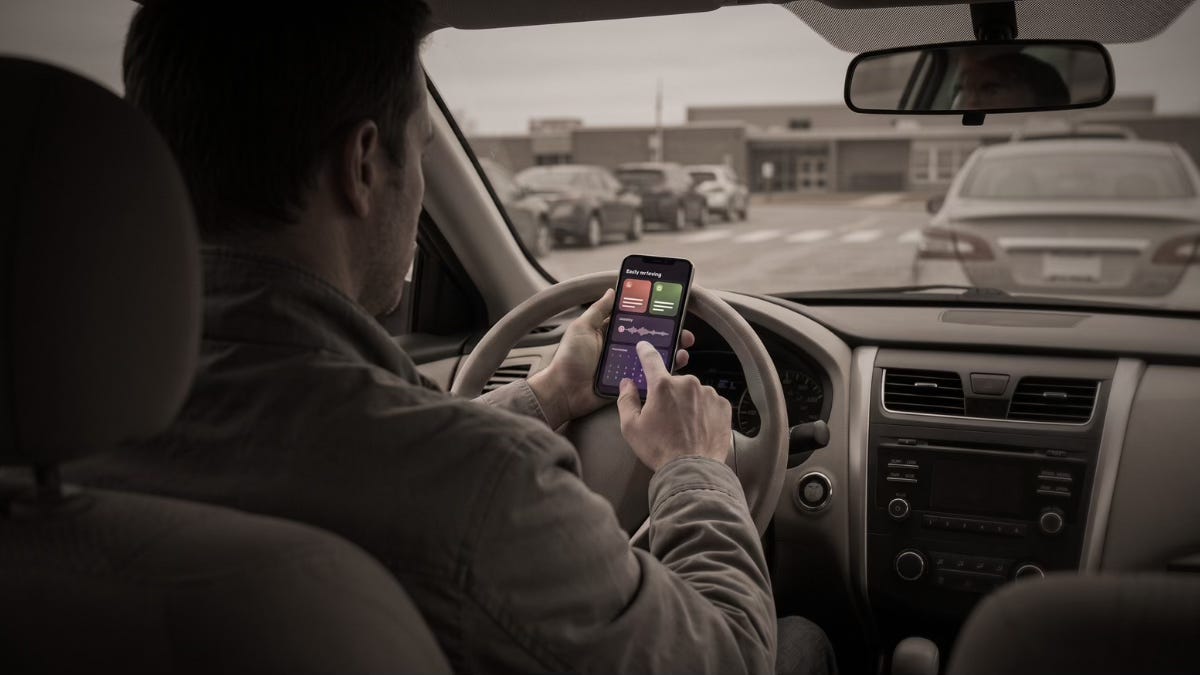
On the first of August, the OpenAI CEO shared what he called “a cool use case” for the company’s new ChatGPT Work agent. Connect your family calendars, tell it what your kids are into, and every morning on the drive to school it generates a podcast: one kid’s soccer game that afternoon, another kid’s birthday coming up, a little news. A briefing on your children, read aloud, before you drop them off. The reply that buried the original post came from Alex Hirsch, the guy who made Gravity Falls. He clapped back for seemingly everyone at once when he said, “What if you just talked to your children?” It outran Altman’s post by something like thirteen to one, the whole internet agreeing at once that something was off.
I have written before that this cohort’s read on what AI can do is a kind of mirror: a flattering reflection of how these people already think, mistaken for an oracle about the world. This is the next turn of that same screw. It is not only their read on the technology that is a self-portrait. It is their idea of a good time.
Watch what a person reaches for when you hand them a tool that saves an hour and ask what would be cool to do with it. The answer is a confession. It says, with more honesty than any mission statement, what that person believes their life is made of. Altman looked at a machine that can generate nearly anything, and the delightful thing his mind landed on was a standing daily report on his own child. Not more time with that child. A better feed of data.
That is the self-portrait. And what it develops, once you hold it up to the light, is a load-bearing confusion about what a human relationship actually is.
The bad idea turns revealing when you add one bit of context. Altman’s son was born in early 2025. He is not yet two. There is no school day yet, no soccer game, no afternoon to be briefed on. The scene Altman narrated so warmly is one he has never lived a single morning of. He pictured a bustling houseful of school-age kids; he has one child who cannot yet talk. So this is not the coping mechanism of a parent drowning in three schedules. It is a vision, drawn up in advance, of how a man intends to know a child before there is anything to know. I have done a few thousand of the pickups he is describing. He has done none. And the use case he reached for, sight unseen, is the one that would put a machine between him and his kids.
The briefing cannot carry one thing, and it happens to be the whole thing.
A kid’s school day is not the lesson in ELA or the final score of the game. It’s the joke a new friend cracked on the way to the bathroom. It’s the way your daughter’s eyes go wide and her hands start moving when she reaches the part she has been saving up all afternoon to tell you. It’s the half-second where your son goes quiet before he mentions the thing that actually stung, meaning the real news of the day is not in the sentence but in the pause in front of it. None of that survives conversion into a summary. It cannot. A briefing is a list of what happened. A relationship is what passes between two people in a room while one of them tells you—clumsily, out of order, lighting up in all the wrong places—what happened and how it made them feel.
You are not connected to a child because you received accurate information about her day. You are connected when you watch her tell it. The information is the least of it. The information is, frankly, the part a machine can have.
And it is not only children. Think of the friend who calls to tell you how their interview went, where the meaning sits in the third sentence, the one where the voice drops. The partner whose day you read not from a recap but from the set of their shoulders in the doorway. The parent whose “I’m fine” is the least informative and most important thing they will say to you all week. None of it transmits. The people we love do not send us the data; they tell us, and the telling is the thing. Miss it and you can be perfectly briefed and still have no idea who just walked past you and what they are carrying.
We are not our metadata. We are bodies in rooms, reading each other’s faces, catching the thing that lives under the words. A parent who has the report and missed the telling is holding the one part of the relationship that was never the point and has lost the only part that was. That Altman could look at this and see something cool is the tell. Not a sad workaround, not a last resort for a brutal week. Cool. He is blind to the entire arena where a parent and a child meet, because that arena has no digital output. It produces nothing you could pipe into an agent. It is just two people, near each other, embodied, in a relationship.
It is the best use of this technology turned inside out. The good use case takes the robot out of the human: it clears the drudgery so you can go be with your people. This one takes the human out of one of the most important places where being a present and caring human is the entire point.
The far less dumb version of Altman’s idea is not “replace the conversation.” It is “prepare the parent.” Same calendars, same interests, but instead of a broadcast that stands in for connection, a quiet briefing meant only for you: the cleats are in the trunk, the birthday is three days out and you have bought nothing, pickup moved to 3:15. That version does not replace the talk. It stages it. It hands a tired adult the right question to walk in the door already holding. Greg Brockman, Altman’s own president, reached for roughly this distinction: people would rather have AI hand back a little time than sit in the middle of their relationships. He is right that there is a difference, and the prepared parent is a better product than the broadcast one.
But look at what even the good version has already given away. It still treats the child as a system to be briefed on before arrival, something to be staged and handled. It makes the briefing better. It never stops to ask whether the relationship was a briefing to begin with. And the texture I just described (the pause, the moving hands, the joke on the way to the bathroom) is what no briefing contains, however well built, because that texture exists only in the telling, and the briefing is the thing you get instead of the telling. Prepare-versus-replace is a real argument about how to build the product. It is being held one level above the thing that is wrong, which is the quiet belief that the people you love are a feed you have fallen behind on.
This is no longer one man and his child.
As Altman was telling parents how to spend the hour AI saves them, Meta's chief technology officer was telling his own workforce they would not be getting one. At an internal Q&A, an employee asked Andrew Bosworth whether all this new AI productivity might bring back “Meta Days,” a few extra days off the company used to give. Bosworth’s reply: “Stop asking about Meta Days. It’s very dumb.” The freed-up time, he said, ought to go into building more and cooler things for users. He softened it later, allowed that he’d come down too hard. But he had already said the quiet part, and it is the same part.
Set the two answers side by side. Altman fills the freed hour with a simulation of his kids. Bosworth confiscates it for output. One spends the time on a report of the relationship; the other says the time was never yours to spend. They rhyme, because they answer the same question the same way. Whatever the efficiency is for, it is certainly not for you to sit on a curb with the people you love and do nothing anyone could measure. The saved hour goes back into the machine, as more product or as a sharper dashboard aimed at your own children. It never once becomes the afternoon.
That is the shape of the bargain on offer, and it needs no villain to hold it up. It needs only a ledger that cannot see the afternoon, because the afternoon has no output, clears no ticket, bills no one, leaves no artifact behind. Presence has never once appeared on a productivity chart, which is why it is the first thing the optimization comes for and the last thing anyone is compensated for losing. At the office and at the kitchen table, by the same logic, the hour you were promised is repriced as someone else’s gain. Efficiency was never going to hand you your life back. It was never built to.
My parents did not reach fifty years by staying briefed on each other. They got there the slow, unscalable way: in rooms, across decades, catching the thing under the words a few hundred thousand times. There is no summary of that. There is no agent that could have delivered it. The whole of it lived in the telling, which is only another way of saying it lived in the hours nobody was allowed to optimize.
So the useful question is not whether the podcast is a good product. Someone will ship the prepared-parent version, and on its own terms it will work fine. The question this episode actually puts to you is quieter, and worse. It’s not whether a machine can brief you on the people you love. It’s whether you have already come to treat them as something you should be briefed on in the first place.
So watch what you reach for, the next time a tool hands you an hour. And watch what you reach past. The cost is not the hour. It is the afternoon you let collapse into a summary, the person you started keeping up with instead of knowing, the someone you love who became, without your ever once deciding it, a performance to review and a dataset to stay current on. No machine did that to them. You did, in the ordinary morning you decided the report was the part worth having. The people in the next room were never asking to be tracked and reported on. They were asking you to stay in the room.
✦ ✦ ✦
And now for my closing ritual: Thesis & Texture
Each week, I end with two book recommendations. One that sharpens how we think about technology, systems, and power. Another that holds what systems can’t: the texture of being human.
Because building good systems while living a beautifully full human life requires both.
The Thesis: The Extinction of Experience by Christine Rosen. Rosen’s argument is the structural version of this essay: that we are trading direct, first-hand, embodied experience for its mediated representation, and calling the trade an upgrade. She is precise about what gets lost in the swap that a summary can’t hold, which is the arena Altman has revealed he can’t see.
The Texture: The Names by Florence Knapp. In the wake of a catastrophic storm, a woman walks into a registrar’s office to name her newborn son, and the novel splits into three lives according to the name she chooses, following the boy and his mother and sister across thirty-five years down each branch. It is a book about the one thing no one can be briefed on in advance: who a child becomes, and who you become beside him. Understated, precise, and quietly devastating. A New York Times bestseller and one of the most talked-about debuts of the year.
No posts
Comments
Nothing yet. Say the first thing.
Sign in to join the conversation.