
Antwerp-based designer Julie Kegels is quickly joining the ranks of the other great Belgian designers that came before her, with collections that demonstrate the unique blend of straightforward functionality, unconventional tailoring, and visual witticisms the fashion of the region is known for, but in her own way.
Following the debut of her Dress Code collection, Kegels took System’s Houssem El Ghoul around her studio to speak through her process, the struggles of being a young designer today and the designs she is most proud of. She also shares her favourite spots in the city to unwind and refresh her creative inspiration when she’s not working in the studio.
System: What does your space reveal about how you work?
Julie Kegels: There is a lot of natural light in our studio. It’s very inspiring during the summer because there is this natural light that you want to play with and use to create something more fresh. During the winter, it’s very dark here, so it’s also [inspiring] to create something more dark and heavy at that time of year.
Everyone is working in the same space– from accounting, e-commerce, to something creative– so everyone is together and sees everything happening at the same time. We’re a very young team, and everyone is working together on this brand in their own way, but when you’re here, you also learn what is going on in every department. I think that can be interesting.
Usually the space is not this clean. You can really let yourself go and create something from scratch. I’m sitting here most of the time with my boards and my little desk, and we actually fit quite a lot of people here every day. As you can see, it’s a very old building. It used to be a warehouse, and you have all these very old details. During the winter it’s super cold, and during the summer very hot, but it’s worth it because we’re so happy to be here with all the space and light.
What conditions do you need in order to produce something meaningful?
I’m very happy to come to the office every day because it gives me a lot of inspiration. The atmosphere is very fruitful.
Which part of the creative process do you find the most difficult?
When something feels forced, I like to try it again. But if it feels forced again, then I leave the idea behind. Maybe the next season it comes again and feels better or more fitting to the whole concept.
What are you working on right now? We’re actually creating something very simple at the moment because I needed that after last season. One idea appears throughout multiple garments, and at this moment it really feels right. It’s very refreshing to focus on that.
Last season there were a lot of ideas and concepts. I think that also has something to do with winter. You’re inside and thinking a lot, bringing ideas together. But now, it’s summer again, and there’s a lot of light. It creates butterflies in the belly.
What defines your brand today?
Transformation. What’s very important for the brand is that we can all switch between roles throughout the day. You can be a warm mother in the morning, then you go to work, and you’re a businesswoman, and at the end of the day you have to be social and go to a dinner.
I think that’s also something the clothes stand for. There will always be contrasts, and there will always be imperfections.
Can you walk us through some of the pieces around the studio?
This was from the Dress Code collection. It was about how interiors can give you an image of success. It was inspired by a book by Judith Price, in which she says that if you have a layered wooden wall or this kind of chair, combined with this colour of carpet, you can be successful.
I thought it was funny, so we started translating it into garments. This full look is made from upcycled wool blankets. The shoes are layered leather with a wood print inspired by the interiors Judith Price was talking about.
This is a leather bag we made that looks like a cushion. The goal was also to blend into your interior and create cosy moments between days. It’s made in the same leather as our Icon Chair. The Icon Chair is a blend of iconic chairs from design history. We wanted people to think they recognised it, but actually it’s a mix of different chairs in one design.
A piece very close to my heart is this double-layered silk organza with glitter inside. It’s bio glitter. I think it’s also a symbol for the JK woman because she’s always on the go, always on the move. Very transformative, very flexible, but also stubborn at the same time.
We found a lot of vintage photos with lace dresses and lace skirts. At that moment, I was really tired of lace, so we cut out all the lace and kept the negative shape that remained in the garments.
The thong socks started from a sock I had in my archive. It wasn’t beautiful at all. Then we thought about making it more corporate and elegant, and now I wear it every day. Every collection starts from the same pump shoe, but each season we add something different on top of it.
This is our double bag. It has two components. You can keep them together or separate them and organise your belongings.
The boob stickers came from leftover lace after we cut the lace away from garments. I made a collage from the leftover lace, scanned it and printed it onto boob tape. For me, it’s actually a replacement for a bra without all the technical parts.
How do you reconcile creative intent with commercial pressure?
At the beginning of the process, I just let myself go and don’t think about commercial theories or anything. But I’m very lucky to have Mauranne [Ricaille] in the team, who looks at the merchandising plan. At the end we’re checking if there are enough dresses, enough skirts, enough jersey and whether there is a balance in the collection. In the beginning it’s very important to be free and follow your heart and your gut, but of course we also use merchandising.
What has changed most in the way you work since you started?
When we start a collection, I first talk with [design director] Philemon Hahlweg, my best friend, about how we feel or about things that we just experienced. It can be something that inspires you at the supermarket or at an exhibition. Then we collect all kinds of research material. It can be a vintage garment, a visual, a movie or an artwork. We talk and talk and talk, and then we have a story. We want to be honest with that story and follow it.
Then we translate it into garments and do a lot of try-outs. Experimentation is very important in the process, and also serendipity. When you see something and your heart goes faster, then you know.
I work with a lot of people that I know from the Academy here in Antwerp. I’ve known them for a long time. In the beginning, we were working in the living room of my parents. It was [my associate and right-hand woman] Mauranne Ricaille and me. Already being here is such a big change. It’s another atmosphere, more people, and that makes a huge difference.
Are there places in Antwerp that have become part of your routine?
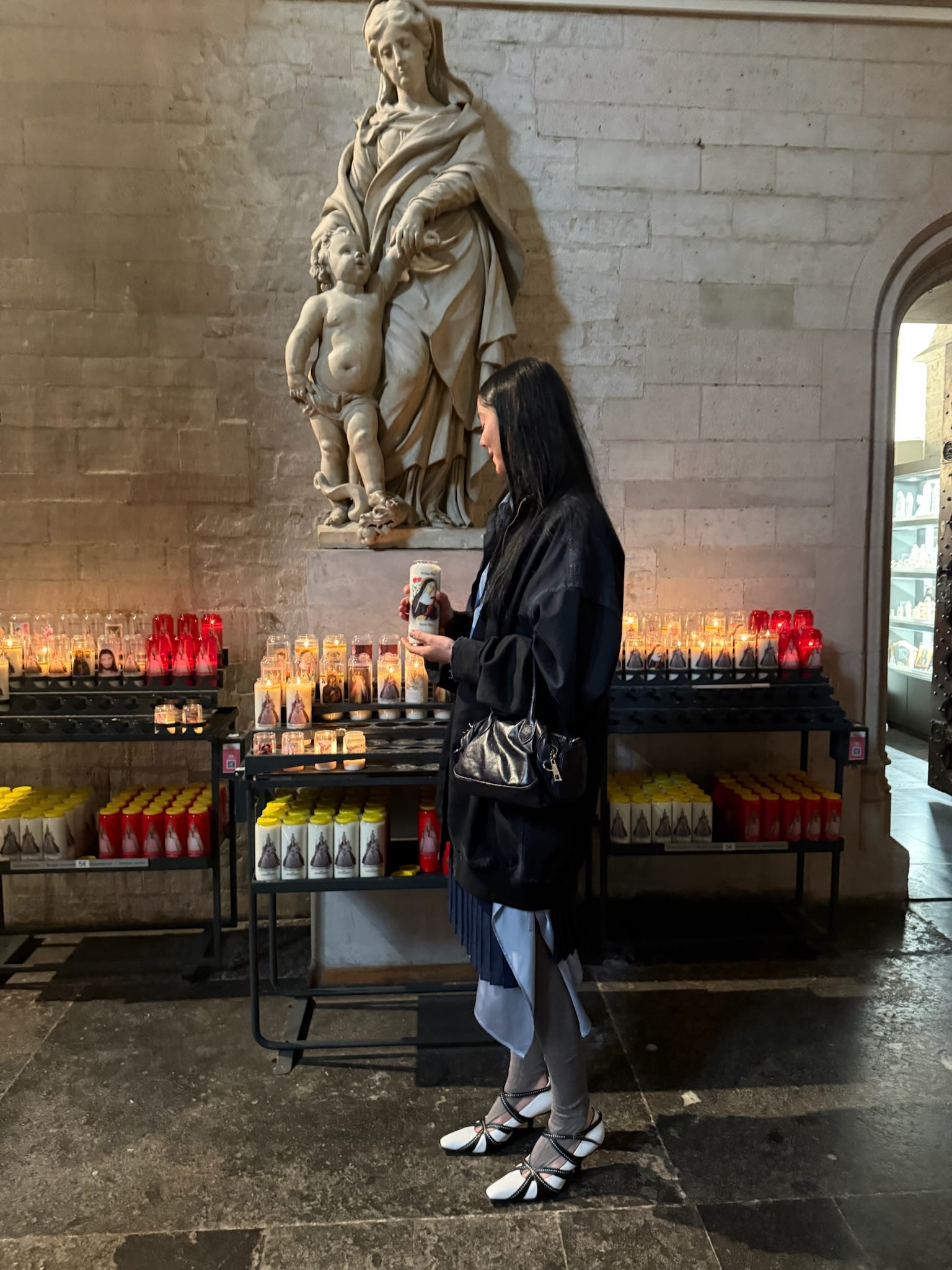
I often go to a cathedral in Antwerp that is a short walk from my studio. I pass by there a lot with my sister to burn a candle and wish for some luck. For example, before a show, we go there, burn a candle and hope for good weather.
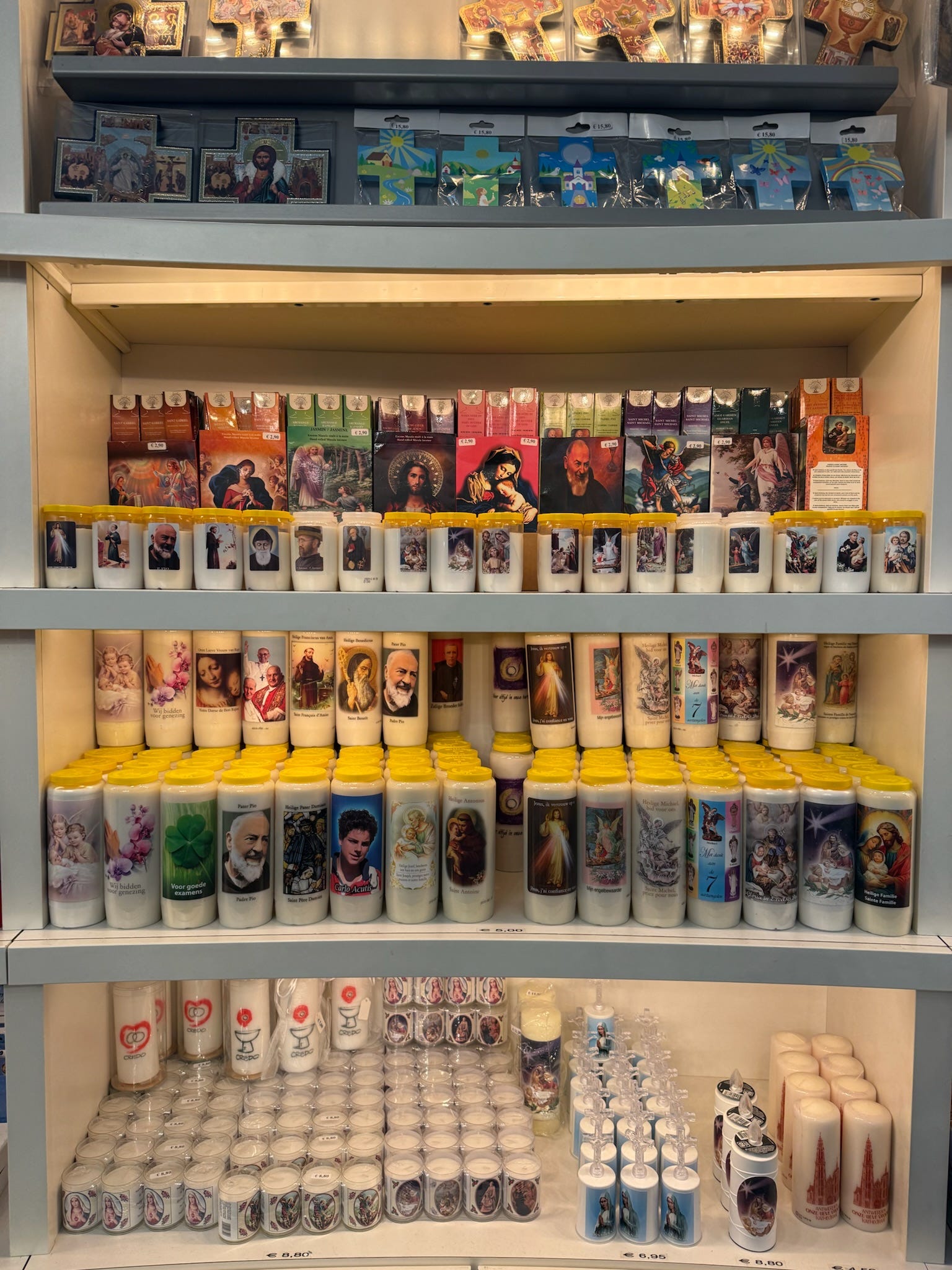
And Café Corso. It’s at the Vrijdagmarkt in Antwerp, and it’s a café where I love to come. It feels very raw, but they have the best beer on earth.
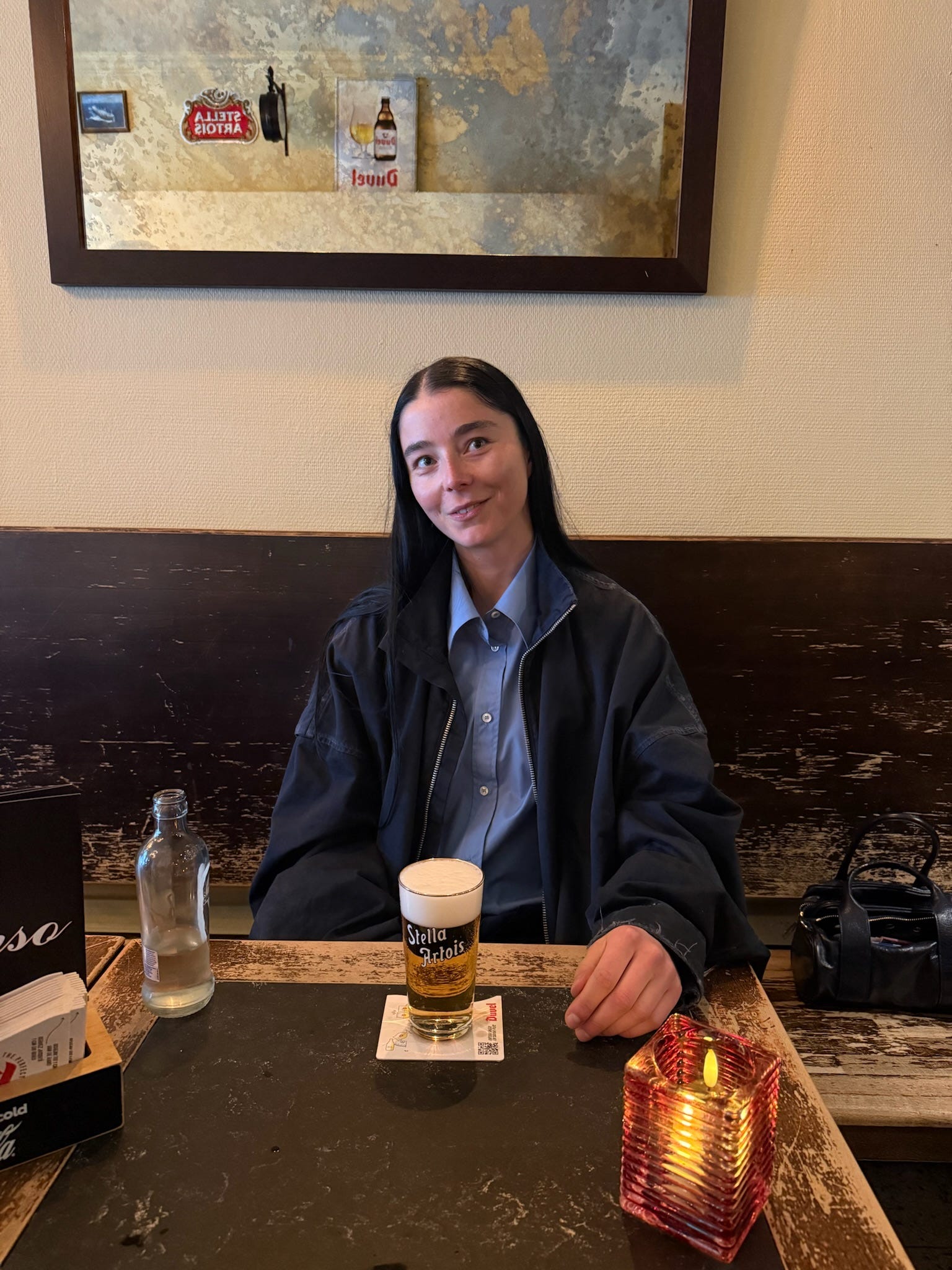
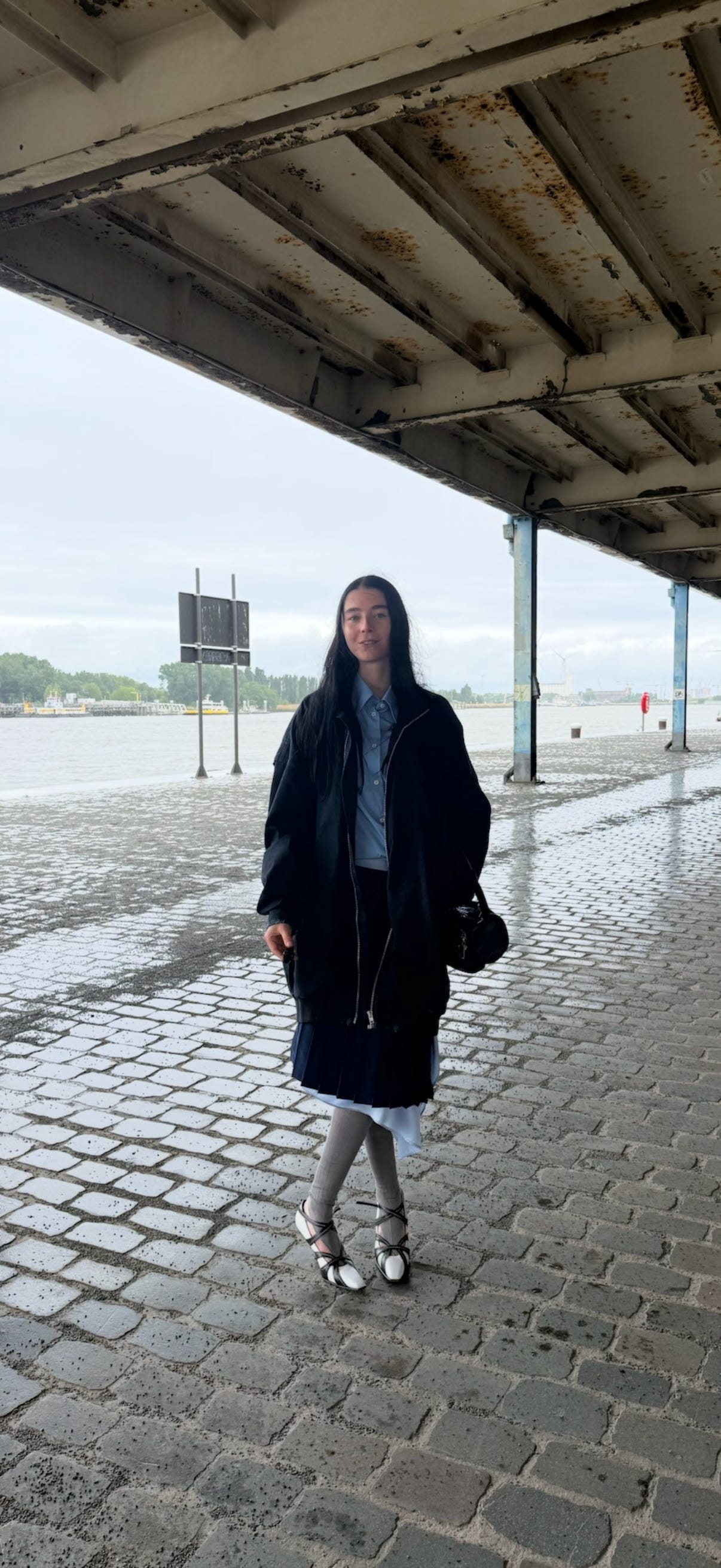
The river is a place where I come quite a lot in Antwerp because I just love it. It has something very raw and very grey, which gives you the inspiration to go outside, create something with your hands and dream.
What kind of future are you building towards, realistically?
We’re still a young, very small team. There is so much that we have to do every day and only 24 hours in a day. It would be amazing to have more helping hands, but for me it’s a dream what we’re doing now, and I hope to continue building the brand the way we are building it at the moment.
What does success look like to you now, compared to before?
I think being very confident in what you’re doing and being true and honest to yourself while creating and also building a brand. That’s what success is to me.
No posts
Comments
Nothing yet. Say the first thing.
Sign in to join the conversation.