
“In youth we may have a new experience every hour. Apprehension is vivid, retentiveness strong, and our recollections are intricate, long-drawn-out. But as each year converts experience into routine, days and weeks smooth out into contentless units, and years grow hollow and collapse into each other.”
- William James from The Principles of Psychology
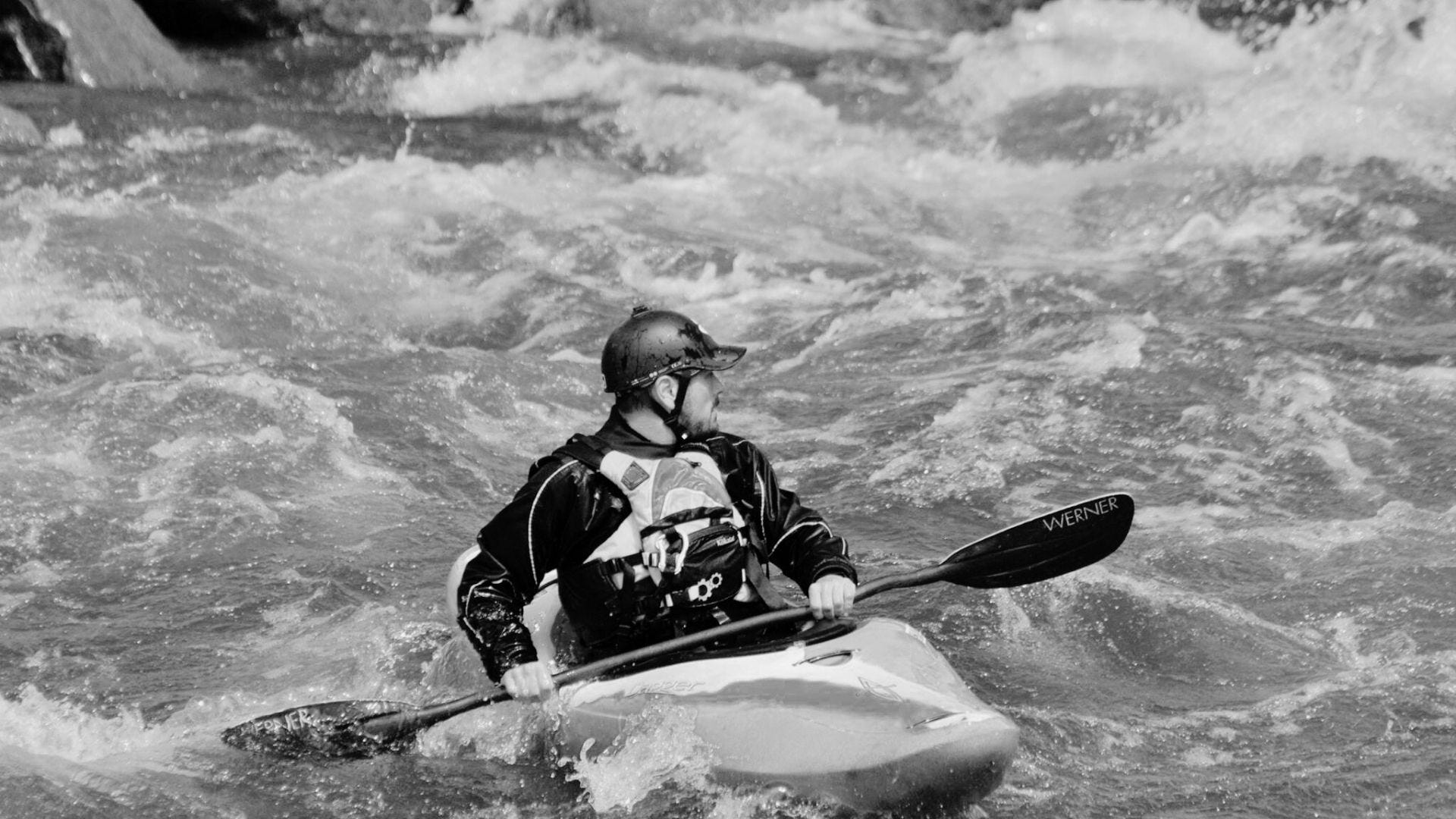
It’s 2013. I had just sold my startup and moved to a small mountain town to recover from what I call my epic burnout. Over the previous 3 years, I’d gone from a high-performing athlete to a shell of my former self — 20kg heavier, buried in stress & anxiety, and leaning on more than a few unhealthy coping mechanisms. But here I am, 3 months into my healing journey, doing the one thing I can always count on to reconnect with myself: whitewater kayaking.
Like the 40 days prior, I went for a solo paddle on my backyard river. But on this early summer day, something unusual happened. About an hour after launching, I paddled onto the riverbank at the takeout and suddenly wondered how I got there — as if I’d teleported from start to finish.
A few weeks later, it happened again. That 2nd time gave me a bit of a scare. I wondered: Did I have a stroke? Were all those concussions catching up to me? So I did what anyone in a small mountain village would, I asked my primary care doctor, Google.
What I found would profoundly change how I live today.
Turns out I was fine. Actually, better than fine. I had experienced a powerful case of altered chronoception — a shift in my subjective experience of time. I was so deeply immersed in the moment, focused on the river, that the hour passed by like a millisecond.
While those two experiences were intense, altered chronoception is something we all go through. Think of the last time you got lost in a great film or problem, hours flew by. Or when you were stuck in a waiting room or long bathroom queue, minutes felt eternal.
These time distortions might just be our ticket to a longer, richer life.
Now, I’m going to posit a hypothesis, my fellow fanboys and fangirls of… staying alive.
Here’s what I mean.
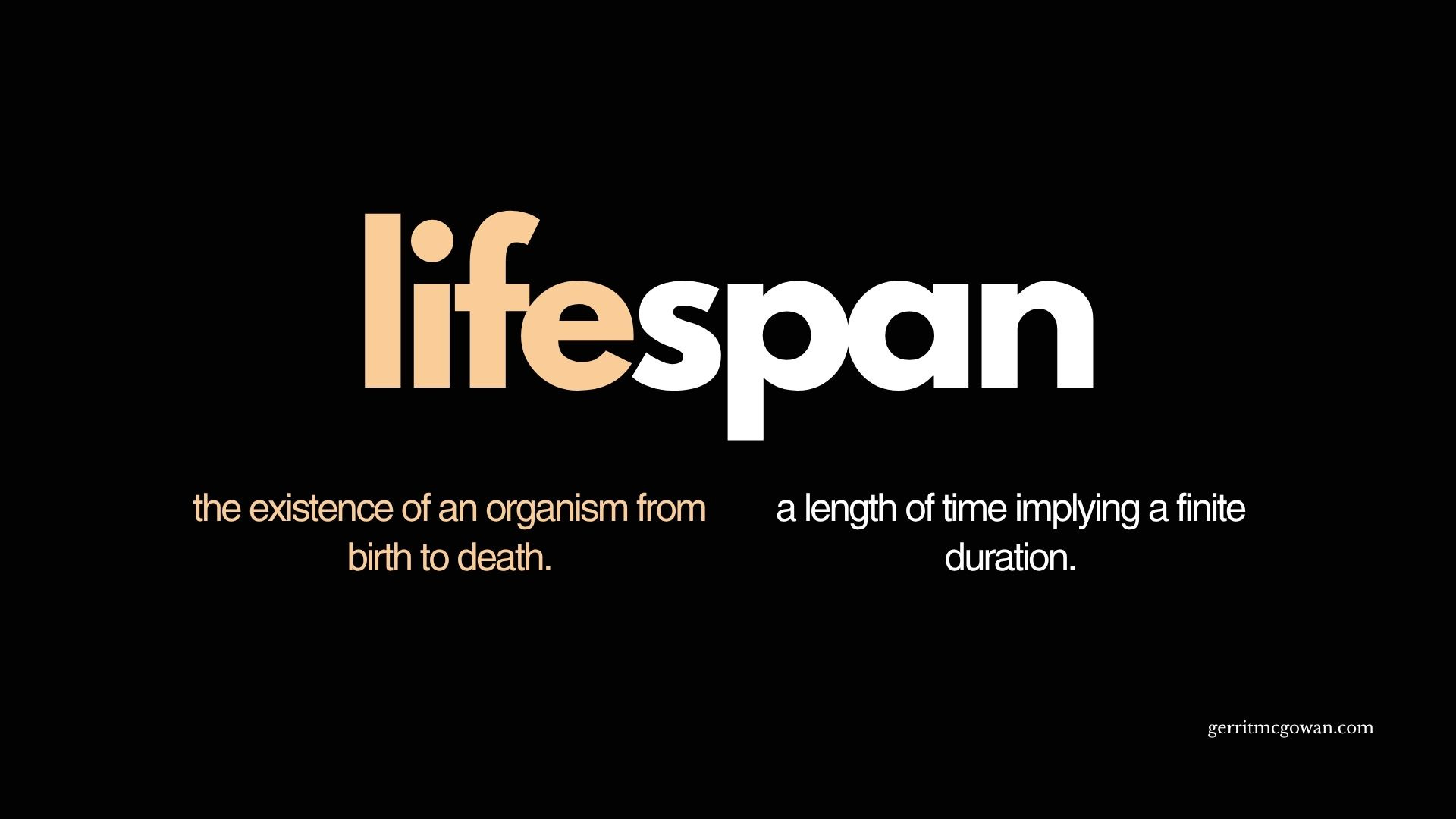
Life, as you know, is the existence of an organism from birth to death.
Span, meanwhile, refers to a finite length of time..
While most of the longevity discourse is concerned with life, little considers the span - how we each experience the time of our existence.
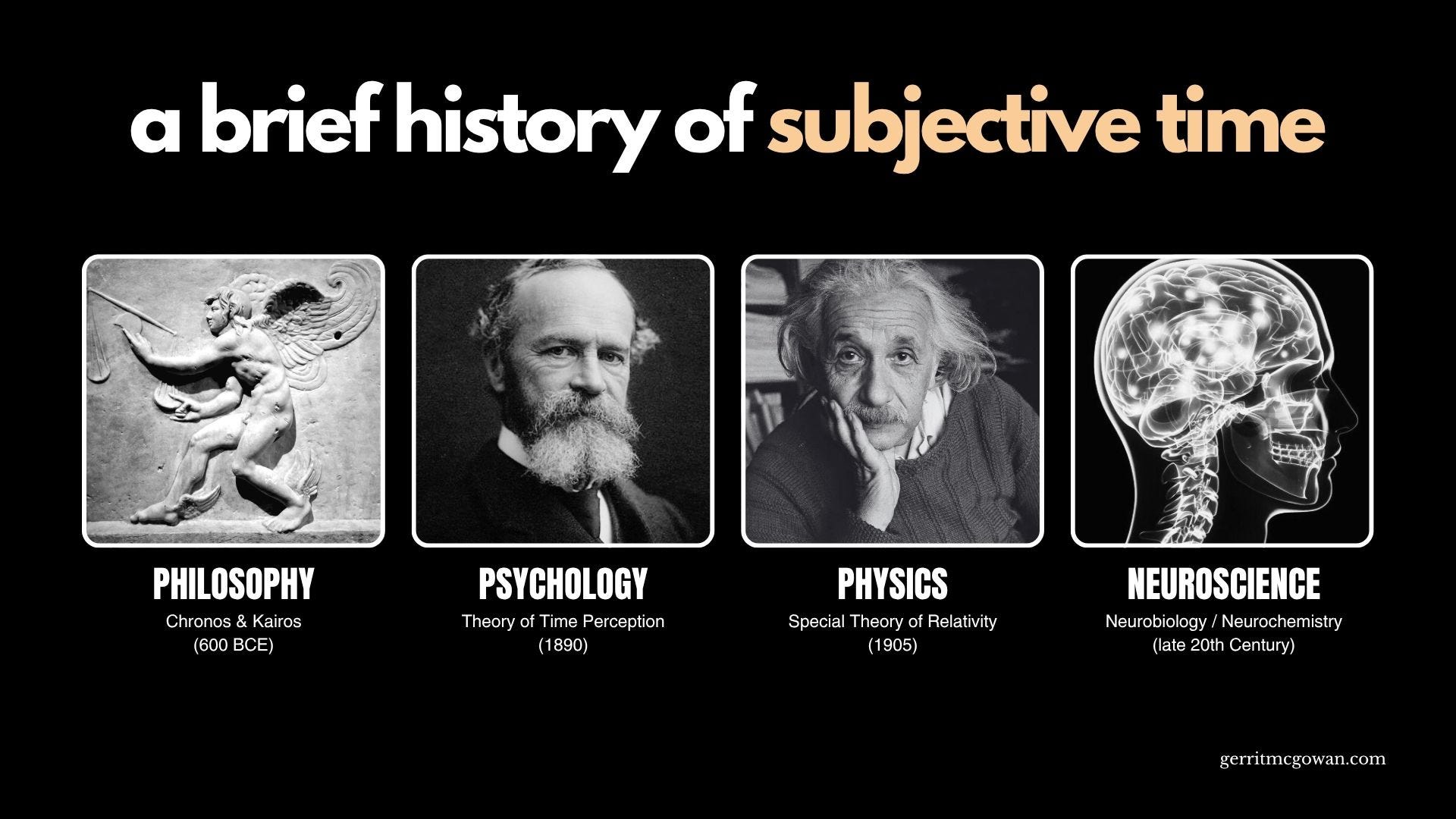
For millennia, philosophers and psychologists, physicists and neuroscientists, have written that time is relative, that our subjective perception is just as important as what we objectively measure by our clocks and calendars.
The ancient Greeks wrote of Chronos and Kairos: Chronos as quantitative time and Kairos as the quality and significance of time.
Later, psychologists like William James suggested that time is not an objective measure but a subjective perception determined by how much information processing occurs in the mind.
James theorized that the more information we process, the faster time seems to pass. The less information we process, the slower time seems to pass.
Einstein then taught us that time is relative, passing at different rates depending on the observer’s frame of reference. If you’re like me and physics is hard to wrap your head around, here’s how Einstein described it for us gorillas.
"Put your hand on a hot stove for a minute, and it seems like an hour. Sit with a pretty girl for an hour, and it seems like a minute. That's relativity."
Recently, neuroscience has taught us that our sense of time is shaped by our brain’s circuitry and chemistry.
Dopamine acts like its metronome. When it spikes from excitement, time speeds up. When it drops, time slows down.
In the brain itself, the basal ganglia and cerebellum act as internal timekeepers. Meanwhile, theta and gamma brain wave oscillations coordinate focus, memory, and sensory input.
Together, they shape how we perceive time.
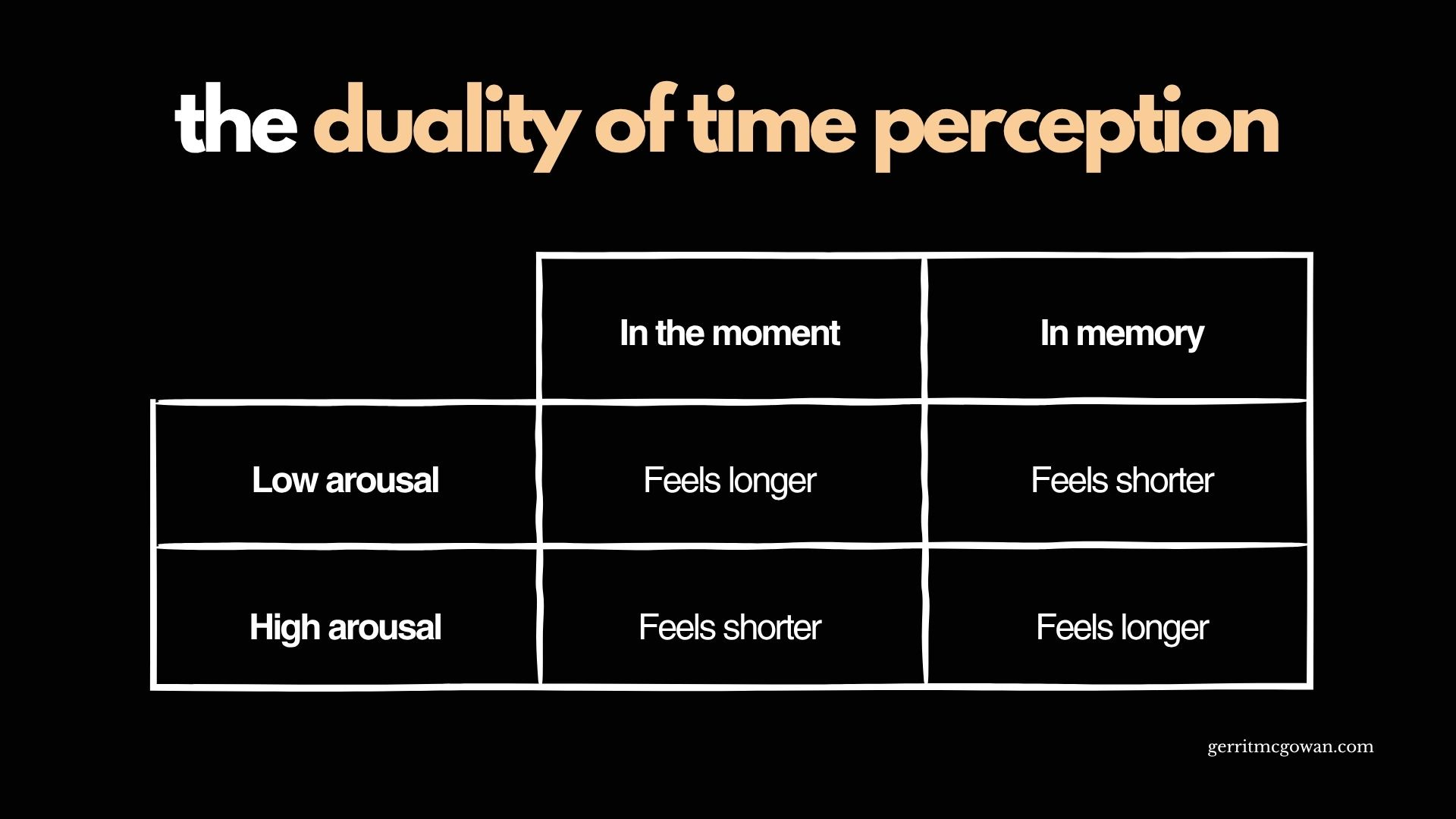
There’s also an interesting duality in how we experience time.
Exciting (high arousal) experiences fly by in the moment, but expand with rich detail in our memory.
Routine (low arousal) experiences, on the other hand, feel long as they unfold, yet fade to a blur in memory.
Think of it this way. Take a vacation, and while you’re immersed in the sights and experiences, time flies. But once you’ve processed all of the stimuli and encoded it into memory, that same vacation feels vivid and long.
On the flip side, a mundane workweek might drag on slowly, while in memory, that same period of time collapses into a single, short mental snapshot.
To prove this duality, researchers Marc Wittmann and Martin Paulus showed study participants either an exciting film clip or mundane historical footage. Afterward, those who watched the exciting clip overestimated how much time had passed, while those who watched the boring one underestimated it.
This revealed how we judge time in hindsight. In the moment, excitement makes time feel fast. But because our brains are processing so much stimulus, the experience feels longer in memory. Conversely, boredom drags slowly in the moment, but is merely a blip of time in our memory.
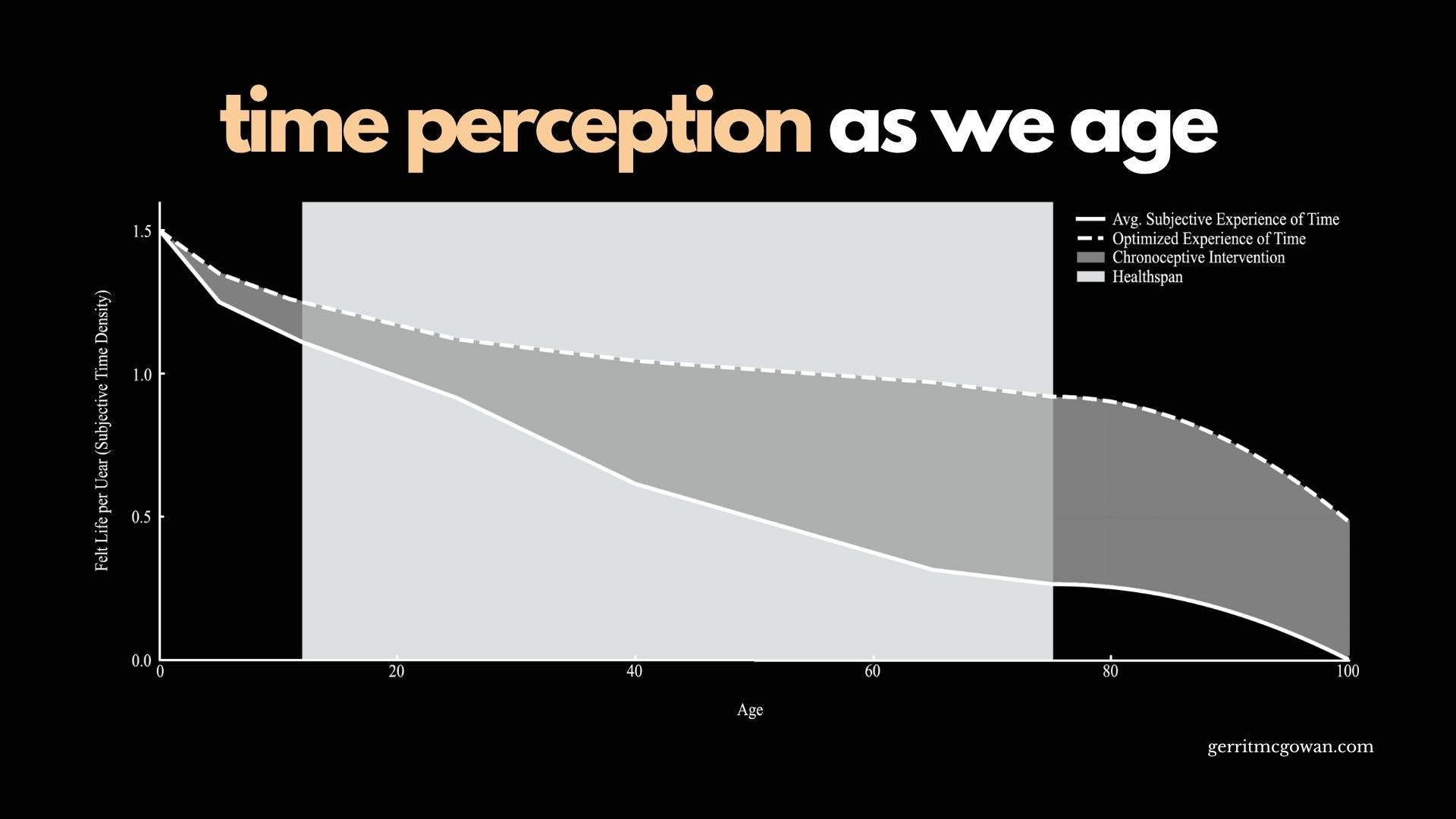
How we perceive time also shifts as we age.
William James was first to describe that as we age, time seems to speed up. When we’re young, life is packed with newness, each year feeling long and full. But the older we get, the more accumulated memories we have, so each new experience is only a small fraction of our total life experience.
You can see this from the graph.
The grey box in the center is our healthspan - the years when we're physically and mentally capable of productive pursuits.
The solid curve at the bottom shows how our perceived time speeds up as novelty declines throughout life.
The upper dashed curve paints a more compelling picture - a life with greater novelty, challenge, and meaning. This represents what’s possible when we live with the intention of making the years we have left feel longer, fuller, and more alive.
So what’s the key takeaway?
Well, you can follow a Bryan Johnson style Don’t Die approach to life, adhering to strict routines that tend to make your days feel slow, while months and years fade into obscurity.
Or you can seek novelty and rich experience as much as possible. Moments may fly by, but months and years are recollected as long and rich.
And like a much, much poorer version of Mr. Johnson, I have my own blueprint to make this happen.
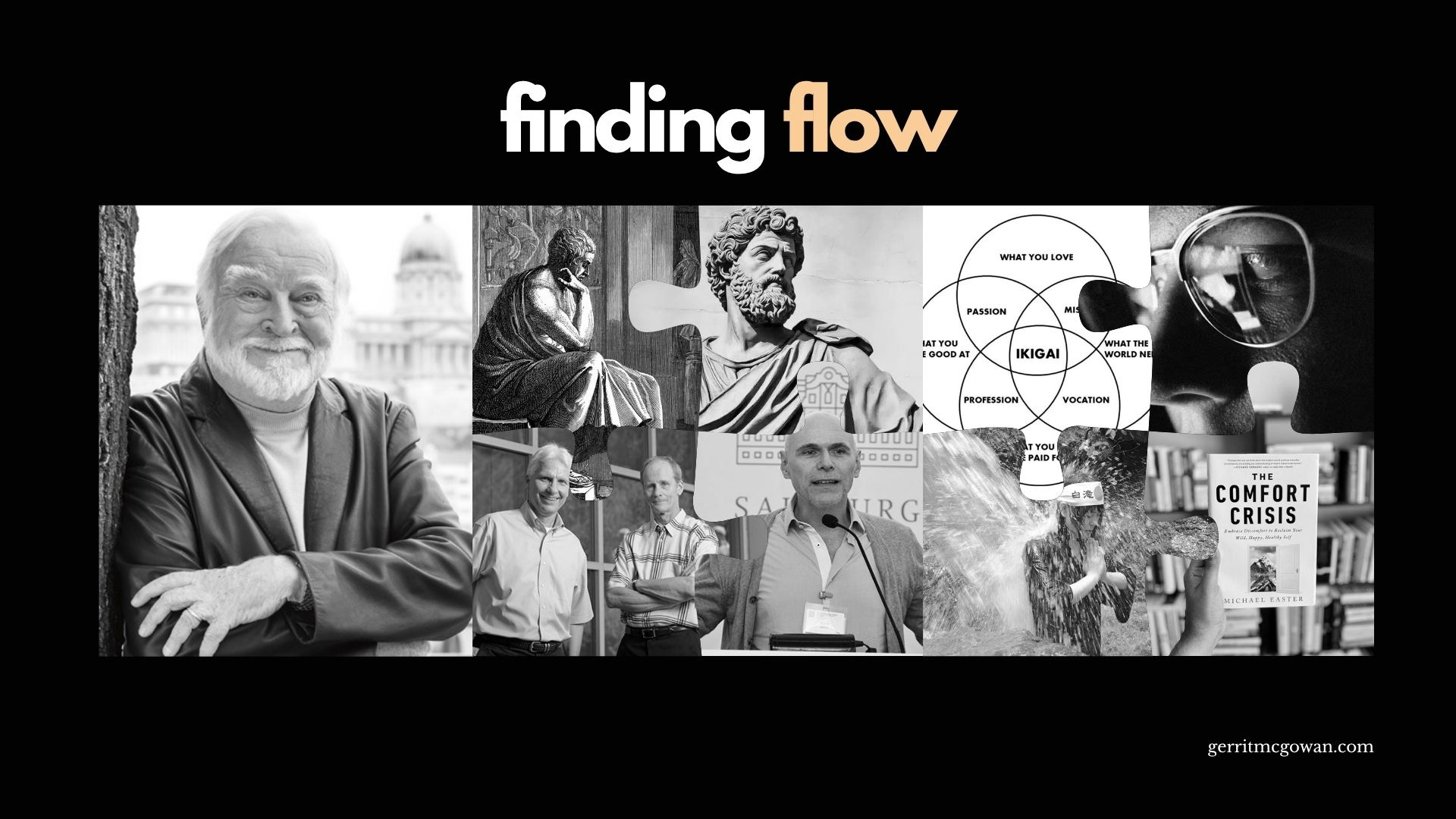
Flash back to 2013. After my second time-warping kayak experience, I became obsessed with understanding what happened. And with a little help from Dr. Google, I rediscovered a field I’d brushed up against years earlier, Mihaly Csikszentmihalyi’s groundbreaking work on flow states.
That rabbit hole pulled me deep. From Aristotlean virtue ethics and Stoic philosophy to modern psychology and neuroscience, I devoured everything I could about this mysterious state of deep immersion.
Then I did something unexpected: I paused my entrepreneurial career in my mid-40s to pursue a PhD, with research into the psychophysiology of flow.
And over those three years, everything started to shift. I began letting go of my obsession with health optimization and started chasing immersive, time-stretching experiences instead.
As a result, I’m now far more obsessed with losing myself in hard work, playtime with my daughter, wandering unfamiliar streets, and, of course, paddling whitewater rivers.
This renewed pursuit of novelty, challenge, presence, and meaning has made my life feel longer, fuller, like I’ve already lived a hundred years of experience, and I’m only halfway there.
I’m not alone in this pursuit of meaning. Just scroll social media: you’ll see talk of ikigai, dopamine detoxes, comfort crises, and misogi challenges — all different flavors of the same hunger, a deeper sense of purpose and meaning.
But for me, there’s no faster path to that feeling than flow.
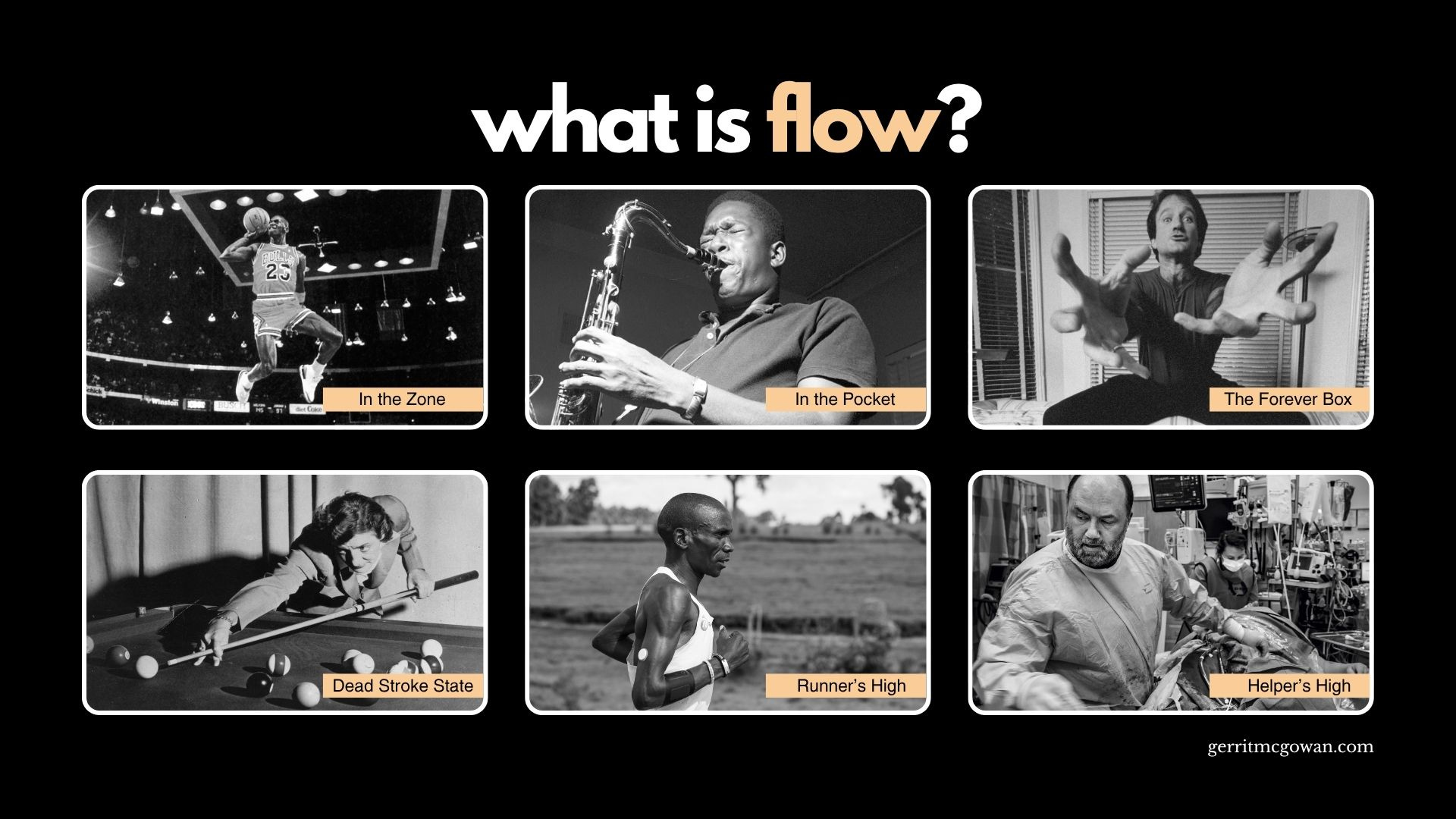
So what exactly is flow?
Flow is that fleeting, magical moment when you're so immersed in an activity that the world around you melts away; hours feel like minutes; tasks feel effortless; you're performing at your best and feeling great while doing it.
You may have heard of being in the zone or perhaps even experienced a runner's high. Yet flow can also happen in everyday life: like mowing the lawn or doing dishes, playing video games or doing math.
And here’s how it works.
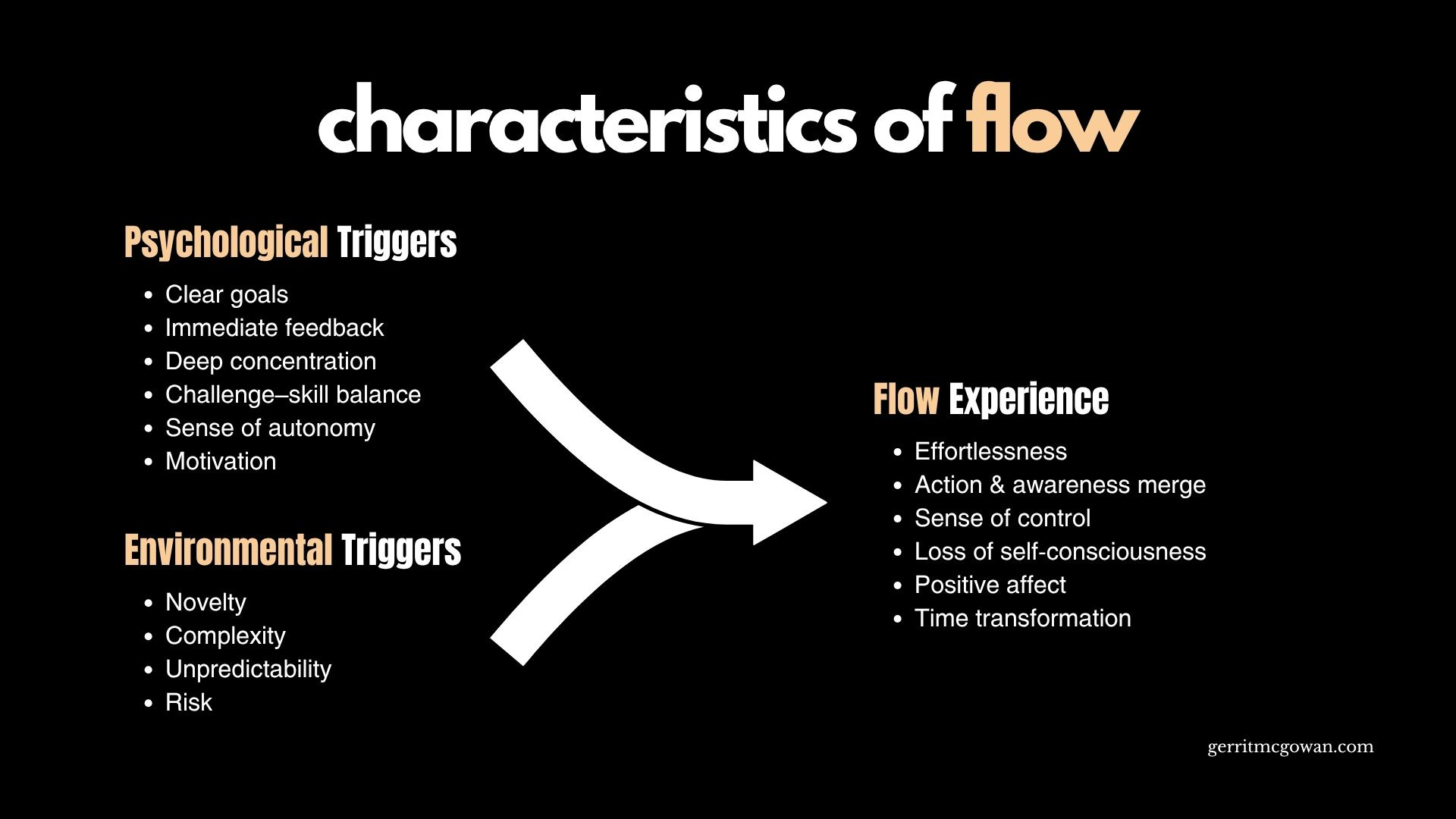
Flow is not only defined by its outcomes, but also the catalysts that make it possible: both the psychological and the environmental.
Flow begins when we know what we’re aiming for and receive enough real-time feedback that we can make adjustments along the way. It requires deep concentration and just the right level of difficulty - challenging enough to keep us from getting bored, but not so hard that it creates anxiety. Toss in a strong sense of autonomy and healthy dose of intrinsic motivation, and we become fully immersed in the task at hand.
The conditions of our environment can also help foster flow. Tasks with complexity and unpredictability — like navigating whitewater or improvising on stage — demand our full attention. Novelty keeps things fresh, while risk - whether physical, social, or emotional - raises the stakes and pulls us even deeper into the moment.
And when these triggers align just right, we enter a state where everything just clicks. Difficult tasks feel effortless and we act without overthinking. We feel in control, lose self-consciousness, and, if all goes well, experience time distortion - where the moment feels brief, but leaves a lasting, vivid impression in our memory.
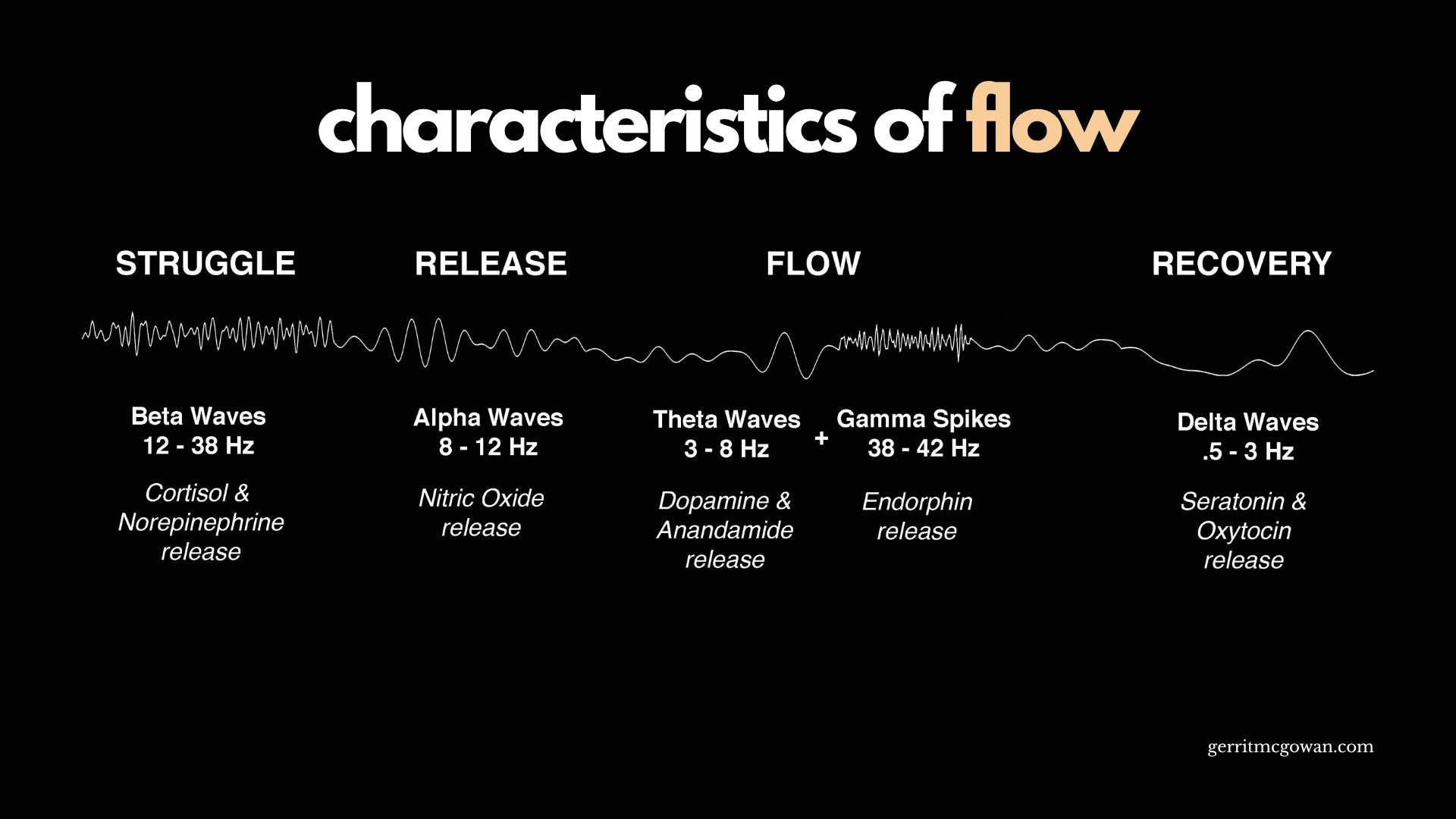
Flow isn’t just a psychological concept. It’s also a physiological state change in your brain. According to Dr. Herbert Benson’s work, the cycle in and out of flow moves through four distinct stages: Struggle, Release, Flow, and Recovery - each with distinct neuroelectrical patterns and neurochemical shifts.
In Struggle, your brain is in high Beta — focused, stressed, and effortful. Cortisol and norepinephrine flood your system to fuel attention and problem-solving.
Then comes Release, when your brain downshifts into Alpha, a relaxed, creative state. Nitric oxide helps flush out stress and primes the brain for deep immersion.
During Flow, your brain enters a mix of Theta waves (like in REM sleep or deep meditation), with occasional bursts of Gamma activity that mark moments of insight and cognitive integration. This is where breakthroughs happen.
Dopamine fuels focus, motivation, & the sense of progress, reinforcing the deep engagement that defines flow. Meanwhile anandamide, an endogenous cannabinoid, provides that euphoric feeling, which is essentially like getting high on your own supply.
Finally, in Recovery, Delta waves take over. Serotonin and oxytocin restore balance, and memory consolidation kicks in, encoding the vivid details that make flow experiences feel so rich and expansive.
To describe this physiological state change, neuroscientist Dr. Arne Dietrich coined the term transient hypofrontality. Under brain scans, he found that during flow, the prefrontal cortex, the region responsible for analytical thinking, sense of self, and time perception, temporarily downshifts. In its place, the evolutionarily older Mammalian Brain (tied to movement, memory, and motivation) lights up. As a result, we experience intense focus, effortless action, and a quieting of our inner critic. And when everything is just right, time transforms. That’s because when we’re in flow, we’re actually not thinking more — we’re thinking less, yet processing and encoding information more deeply than usual.
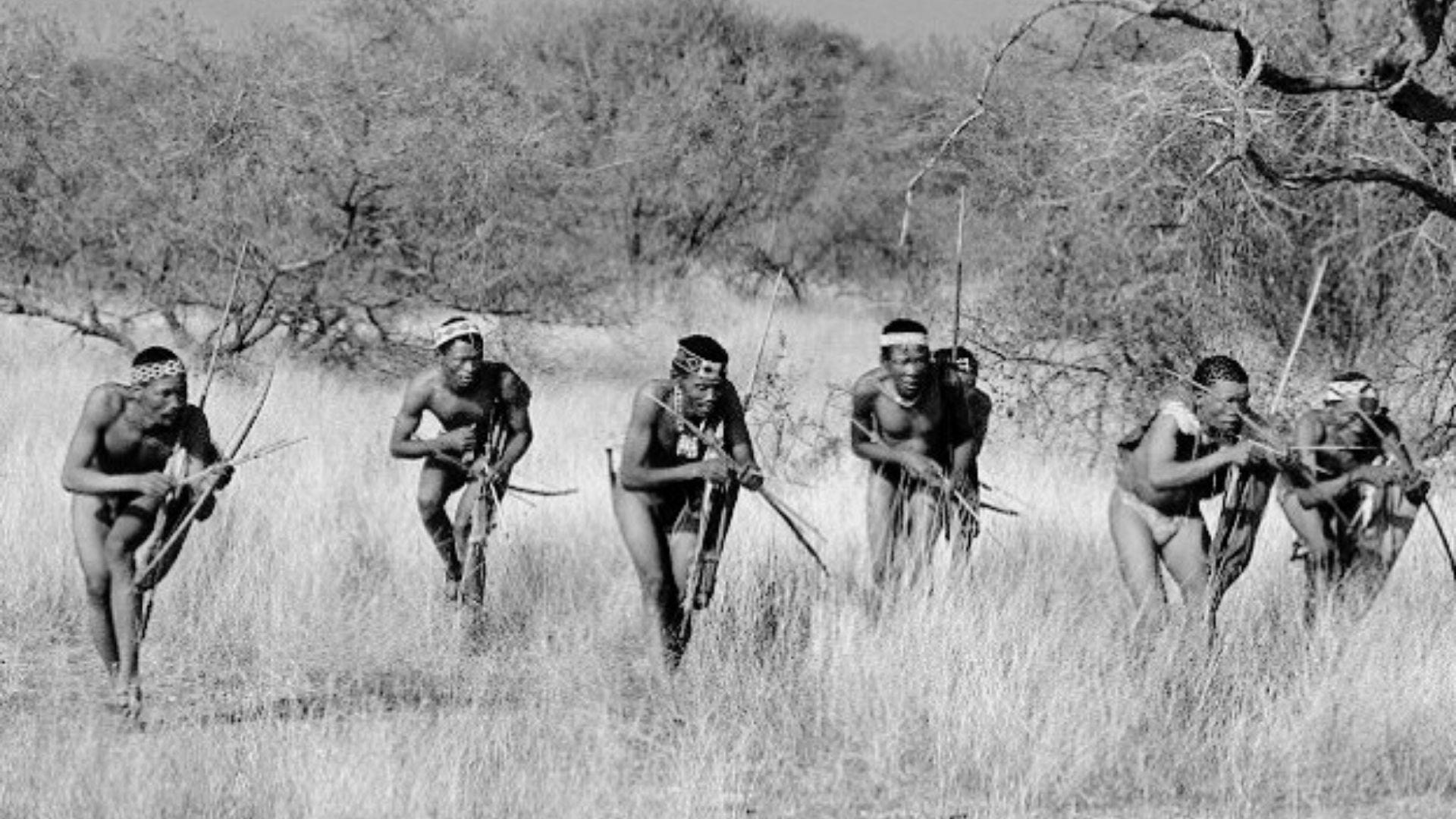
Flow isn’t just a neuro-psychological phenomenon either. It’s actually evolutionarily hardwired into our DNA. A 2002 study of the Ariaal people in Kenya helps to illustrate this.
Researchers compared two groups: nomadic herders and their recently-settled agricultural relatives. The nomads were more likely to carry the DRD4-7R allele, a gene variant linked to novelty-seeking and dopamine sensitivity.
Among the nomads, this trait was clearly adaptive. Carriers were better nourished and more effective in the attention-demanding hunter-gatherer environment. While in the settled group, that same genetic trait appeared maladaptive - contributing to more restlessness and disengagement in the more routine lifestyle.
This study suggests that our brains have evolved to seek novelty, complexity, and unpredictability, the very conditions that trigger flow & retrospective time expansion. But when those environmental catalysts disappear (like in our comfortable modern world) our natural pathways to deep immersion & engagement fade with them.
Now that you understand chronoception and flow's unique ability to expand subjective time, here are 8 simple and practical strategies to get you in that zone.
Seek novelty. Learn a new skill, visit new places, & shake up your daily routines. Time feels slower when your brain processes new experiences. That’s because novelty activates the hippocampus and enhances memory formation, making novel moments feel longer & more vivid in hindsight.
Be mindful. Slow down, focus on the present, and fully engage your senses. These practices sharpen attention and boost memory encoding, making each day feel fuller and more vivid
Limit distractions. Multitasking fragments time. Focus stretches it. When you give your full attention to one task, experience deepens and memory strengthens — helping time feel more meaningful, both in the now and in hindsight.
Do hard things. Run a marathon, master a craft, or push through a tough project. These hard-won moments release the cascade of neurochemicals that lock them into memory.
Take risks. Fear and uncertainty slow time. Public speaking, starting a business, or facing some other fear boosts awareness and floods the brain with cortisol and adrenaline - etching high-stakes moments into lasting memory.
Play. Play pulls us in. When we do things just for fun we find deep engagement. The balance of pleasure and challenge slows time and strengthens memory through immersion.
Foster meaning. Emotion stretches time. Rituals, profound moments, & peak experiences leave stronger imprints, because emotion activates deep memory, making time something we feel, not just count.
Hack your biology. Shift your chemistry, shift your clock. Exercise, cold exposure, breathwork, even psychedelics can slow time by altering our neurochemistry — sharpening focus, expanding awareness, and deepening memory.
So now we’ve covered how flow can stretch time subjectively — making the quality of our lives feel longer and richer. But here’s the crazy part, flow may actually extend the quantity of life as well — by protecting our brain, our body, and our long-term well-being.
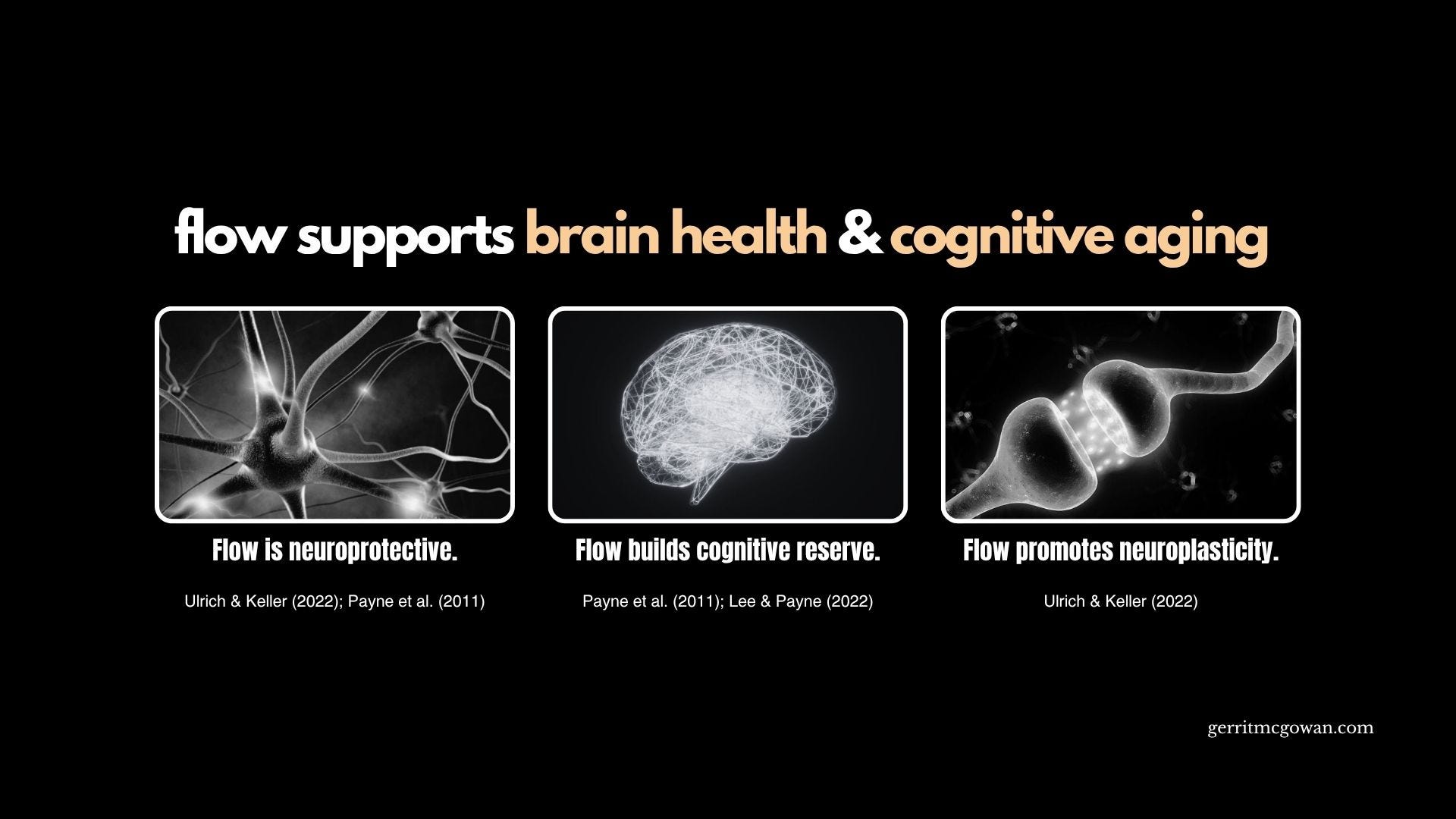
That’s because flow is neuroprotective. A 2022 neuroscience review showed how flow activates brain regions tied to focus and reward, reducing rumination and slowing cognitive decline.
Flow builds cognitive reserve. A 2011 study found that older adults who regularly enter flow build resilience against age-related decline.
And flow promotes neuroplasticity. Ulrich & Keller’s systematic review noted how flow strengthens attention and reward pathways linked to learning and memory, keeping our brain sharp and adaptable as we age.
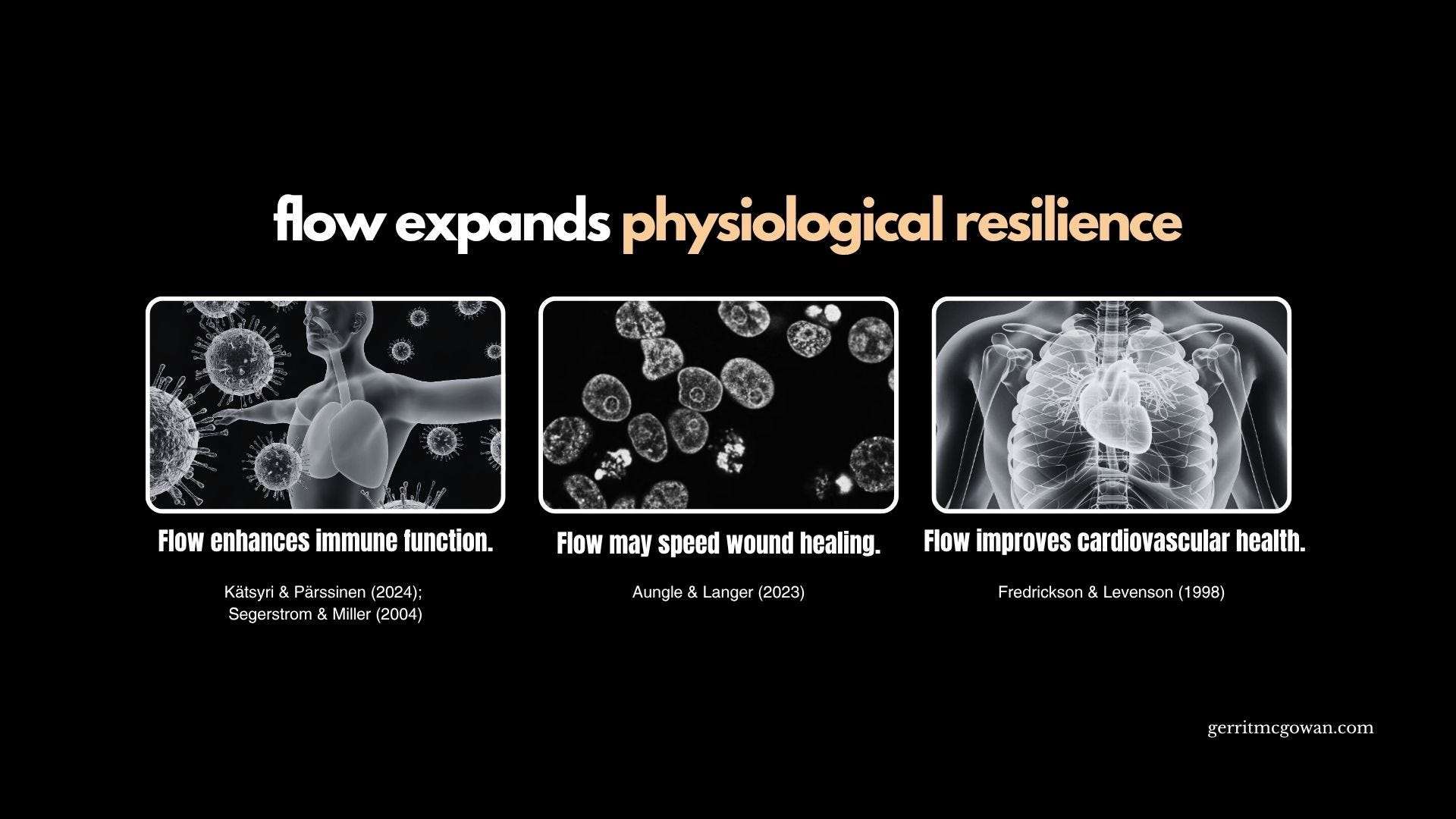
Flow has been shown to enhance immune function. A 2024 study in Nature Mental Health found that people with high “flow proneness” reported fewer health issues. That’s because norepinephrine released in flow binds to adrenergic receptors to modulate immune activity, while dopamine regulates endocrine functions, and endorphins modulate stress response.
Flow may even speed wound healing. In 2023, Aungle & Langer showed that perceived time affects wound healing, suggesting immersive states may promote tissue repair via psychological and physiological mechanisms.
And flow improves cardiovascular health. A 1998 study found that positive states speed cardiovascular recovery. Flow activates parasympathetic “rest-and-digest” responses after peak effort, a potential buffer against chronic cardiovascular stress.
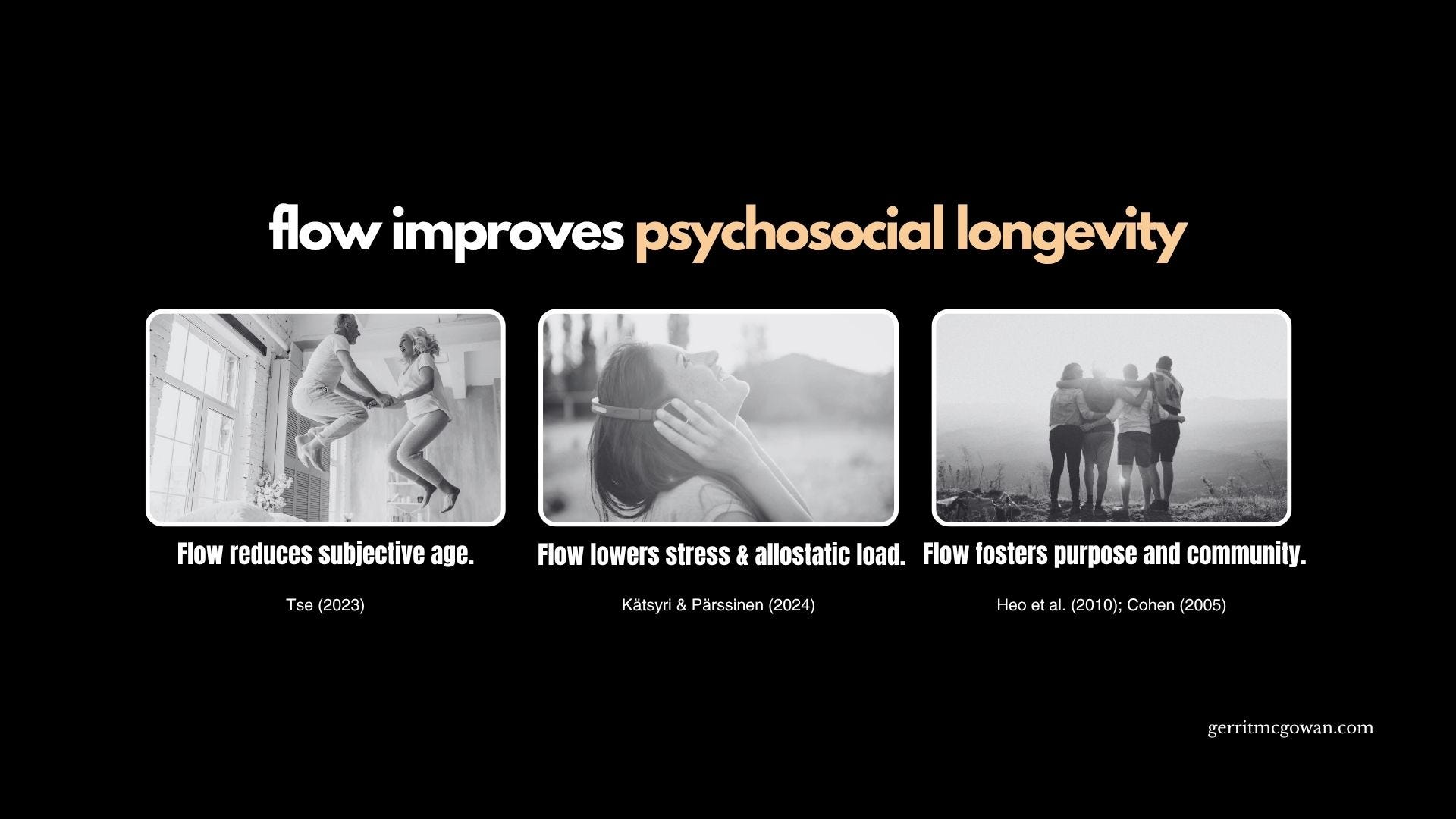
Flow is shown to reduce subjective age. In a 2023 study published in Aging & Mental Health, Tse found that older adults reported feeling significantly younger on days they engaged in flow-enabling, meaningful activities.
Flow reduces chronic stress and allostatic load. Another study showed that flow throttles back the brain’s default mode network, decreasing cortisol and lowering the burden of chronic stress on our body and mind.
And flow fosters purpose and community. Research has shown that flow-rich activities — whether individual or shared — fosters a deep sense of meaning and connection. Just ask any athlete or artist about their team and you’re likely to hear about their “brothers and sisters”.

Now, over the past 20 minutes, I’ve bombarded you with research suggesting that flow might just be the magical elixir for aging — a kind of panacea for living your best and longest life. But let’s be honest, life is messier and more complex than any one solution.
Still, flow offers us something rare, a simple, powerful framework for crafting immersive experiences. It helps us perform at our peak, warp time, and feel frikkin’ amazing while doing it!
But don’t forget, one day you will die.
So yes, do everything you can to delay that final breath. But just as importantly, work on making life feel longer. Fill your days with moments that make you feel wildly alive. Because it’s in those moments — when hours feel like minutes and minutes like seconds — that time stretches, not in length, but in depth.
That’s the true gift of flow - not just adding years to your life, but life to your years.
These are those magical moments where effort fades, self vanishes, joy elevates, and everything clicks - like dancing in the rain as if no one is watching, and finally realizing that you are the music.
As for me, this isn’t just theory — it’s daily practice. Flow pulled me out of burnout. It gave me direction when I was drifting. It reminded me what it feels like to be fully present and fully me.
So I’m not just sharing research. I’m sharing a very personal anecdote that has profoundly changed my relationship to time, to aging, and to life in general.
I hope it does the same for you.
Comments
Nothing yet. Say the first thing.
Sign in to join the conversation.