

Every month, Switch-Lit releases an original collection of five (5) story prompts to help launch your next collaborative fiction journey. Find the latest monthly collection on the Switch-Lit “Prompts” page, or explore our full archive of 100+ prompts.
This month’s theme: Weed
“Swéete April showers / Doo spring Maie flowers” is how the original saying goes in Old English. It came from the 16th century poet-farmer Thomas Tusser whose agricultural rhyme has settled into a well-worn aphorism of patience and optimism.
When you realize that weeds are simply the most wild of flowers, then May is also a month for controlled chaos and beauty askew. Ironically, Tusser’s compatriots are responsible for the undomesticated cultural growth of weeds in the centuries since:
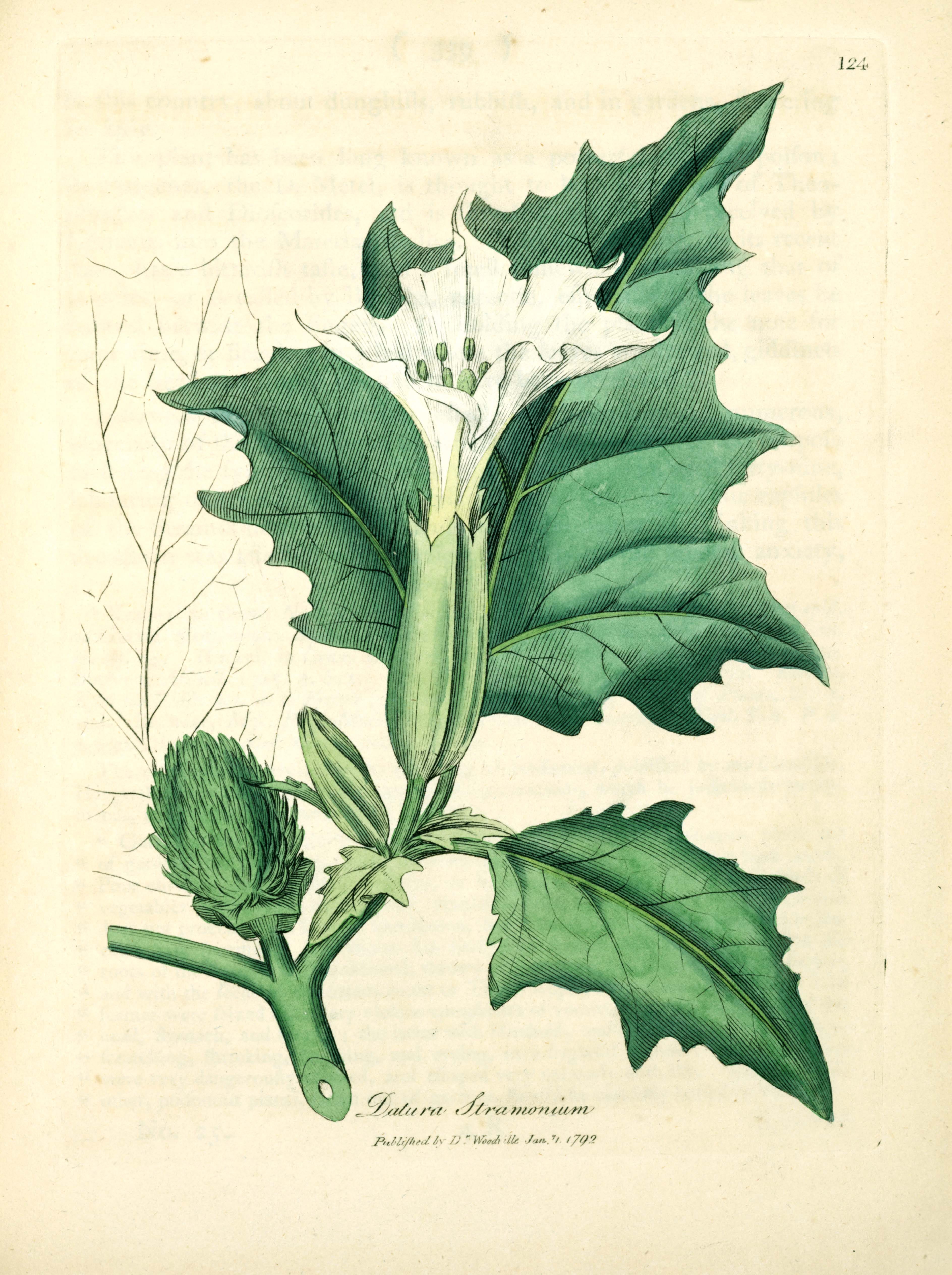
In 1676, a group of British soldiers were dispatched to restore order in the American colony of Jamestown. Lacking supplies, they gathered local greens to make a boiled salad, accidentally including the potent Datura stramonium plant (later dubbed “Jamestown Weed”, or “Jimsonweed” for short) which turned them into “natural fools” for one week. Confined by the colonists to prevent self-harm, the soldiers had no memory of the event, documented instead in Robert Beverley Jr.’s The History and Present State of Virginia (1705):
“It was observed that all their actions were full of innocence and good nature. Indeed, they were not very cleanly; for they would have wallowed in their own excrements, if they had not been prevented…
…One would blow up a Feather in the Air; another would dart Straws at it with much Fury; and another, stark naked, was sitting up in a Corner, like a Monkey, grinning and making grimaces at them.”
(Meanwhile, just west of Jamestown, Native American tribes were using the same weed for a ceremonial tea to perform Huskanaw, or “ritual deaths” for boys to forget their childhood homes, families, and identities so they may be reborn as adult warriors.)
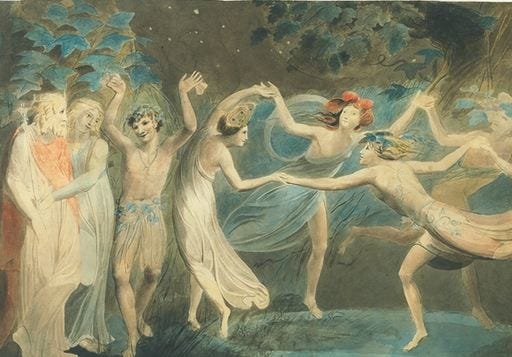
By the 18th century, Victorian era English poet Lady Mary Wortley Montagu brought floriography, or “language of flowers”, to Europe from her travels in Constantinople, Turkey. The interest in floriography, which uses flowers as a means for secret communication, spread like weeds because it gave coy and reserved Victorians a creative way to communicate their true feelings and flirtations. This cross-pollinating mix of flower and language renewed dandelion fairy lore, specifically dandelion weeds as “fairy clocks” or its seeds disguised as tiny fairies carrying messages to faraway lovers when wishfully blown away.
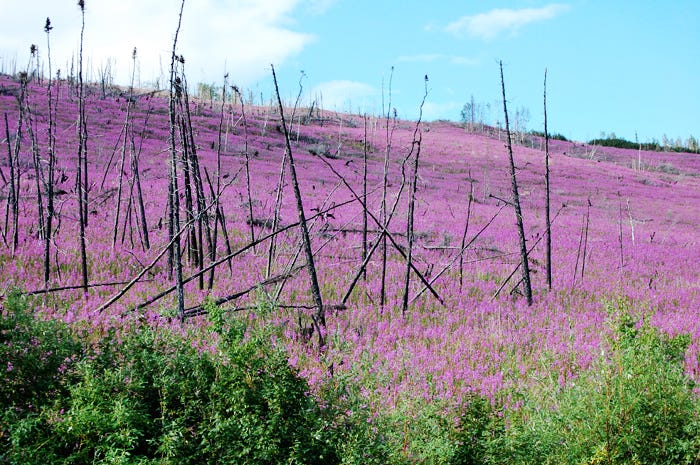
During World War II, the Chamaenerion angustifolium plant was already known in North America as “fireweed” for its ability to rapidly emerge after massive wildfires or volcanic eruptions, but earned the British nickname “bombweed” after it unexpectedly carpeted bomb sites across the UK in bright pink following the Blitz (local survivors of bombed German cities would also nickname it Trümmerblume, or “rubble flower”).

Such rapid emergence of color following a scorched earth event remains a warm reminder of nature’s resilience, hope, and blush.
Get lost in the weeds together,
– S••L
1/5
by Switch-Lit
2/5
by Switch-Lit
3/5
by Switch-Lit
4/5
by Switch-Lit
5/5
by Switch-Lit
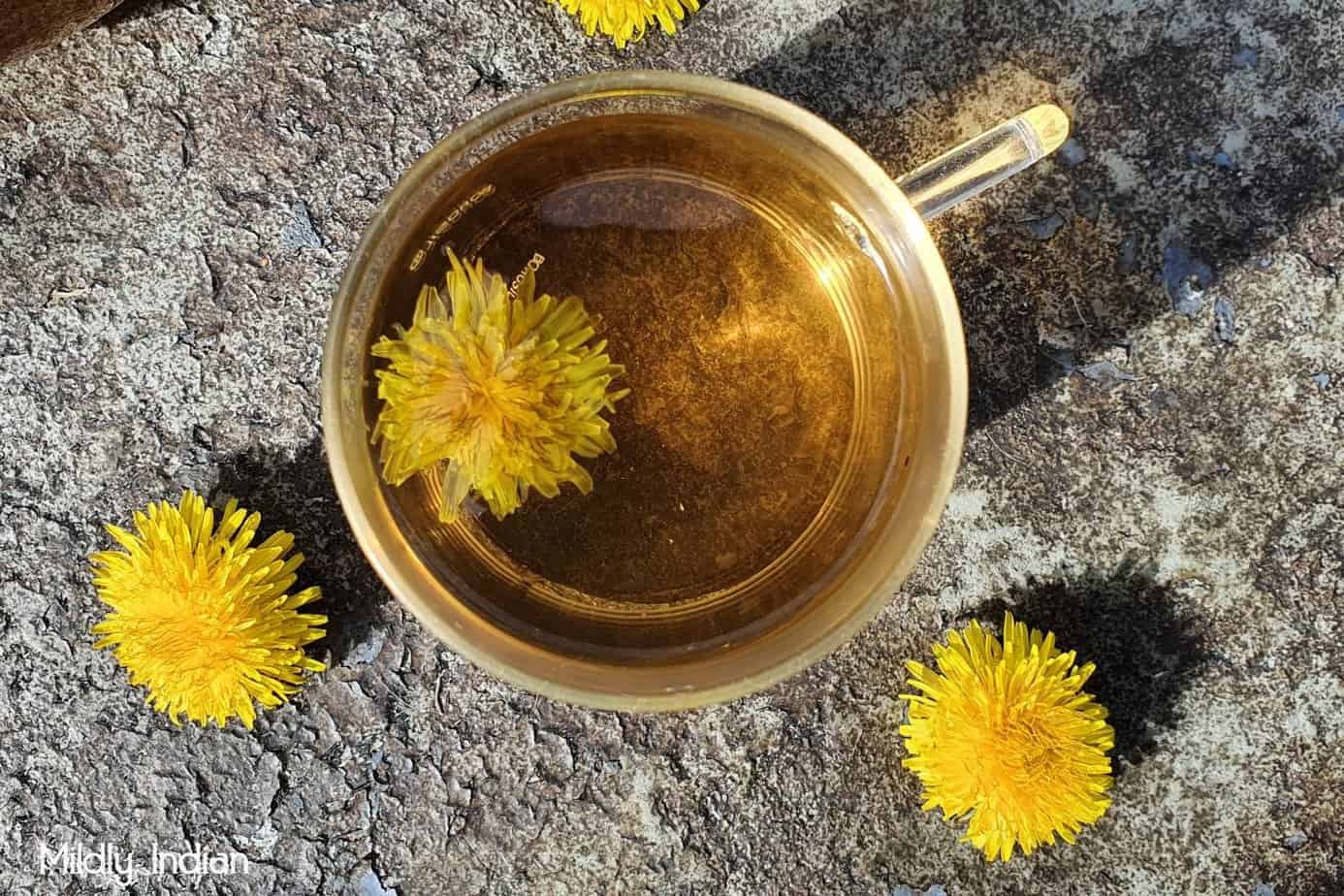
You can make mild-flavored tea from fresh dandelion weed flowers. Harvest them, wash them gently, and steep in hot water for 10-15 minutes. Use the yellow petals to avoid bitterness though whole flower heads offer more intense flavor and rich antioxidants. The roots are used for intense deep liver detox (hangover) and prebiotic gut health.
You can make also make naturally sweet and floral tea from fireweed flowers and leaves. Harvest them, wash them gently, and steep in hot water for 10-15 minutes. The tea is a nutritional powerhouse (packed with Vitamin A, C, calcium, magnesium, and iron) with restorative properties for the nervous system, immune support, and inflammation.
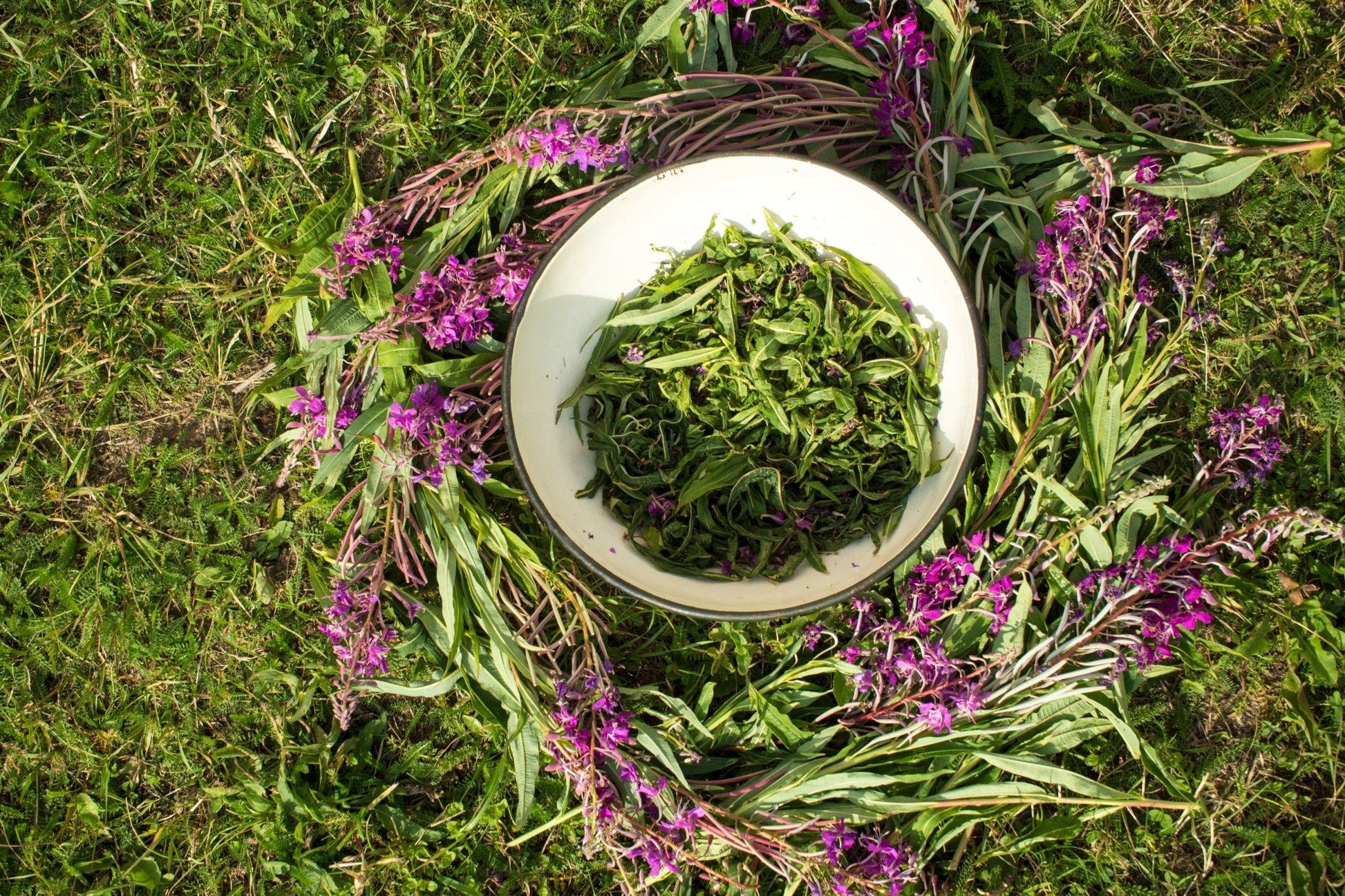
(We should probably skip the Jimsonweed tea 💀🍵)
Inspired by a monthly prompt, but need a writing partner? Join our monthly prompts Subrosa round to get paired with another Switch-Lit writer based on your sign-up preferences.
😶🌫️👹🥸🙈
Subrosa pairings are activated on a weekly basis (by Fridays at 12pm PST). Sign-up for this round ends on the last day of the month.

🃏 You can now also sign up as a “wildcard” writer to skip the weekly wait, get quickly paired without any preferences, and with a random partner on a “first come, first serve” basis. (This is a trial idea meant to help reduce “ghosting” in Subrosa pairings.)
Join the "Weed" Subrosa round 🌹
Born to live free,
Ridin' on a breezeOn a summer night tucked back in the weeds
Guess that's just meIn a bed of red roses, I'm the one growin'
Up on the wilder sideSo if you're tired of thorns,
I'm a little more…– “Dandelion” by country singer-songwriter Ella Langley
Switch-Lit is on a mission to manifest the collective imagination of diverse writing communities through the connective power of collaborative fiction, poetry, and prose.
🌹
No posts
Comments
Nothing yet. Say the first thing.
Sign in to join the conversation.