
“If you could pair any two authors, artists, or storytellers to take turns writing the next chapters of a single story, who would they be?
How might they navigate the tension of a shared page, back-and-forth, bridging their own everyday realities?“
Explore these “dream pairings” curated by Switch-Lit writers, and vote for the collaboration you’d most like to see brought to life.
S••L 🔮

Roald Dahl x Rem Koolhaas
Curated by: “Ahilya” (Berlin, DE 🇩🇪)
“One odd pair I’ve been considering is Rem Koolhaas and Roald Dahl. The reason is simple: I’m currently immersed in the work of both, yet they share no obvious connection or direct influence. What unites them is the way their writing offers a lens through which we perceive the world while quietly asking whether we are truly content with the environment we inhabit. Dahl’s fictional essays for adults, though written in the ’60s and ’70s, still provoke reflection on our own realities and remain surprisingly relevant today. Koolhaas, as an architect, produces sensational, almost fictionalized essays that compel us to think critically about the built environment and our impact on it. Bringing them together feels like mining for productive dissonance – a collision of imagination and structural insight that could yield something wholly unexpected.”
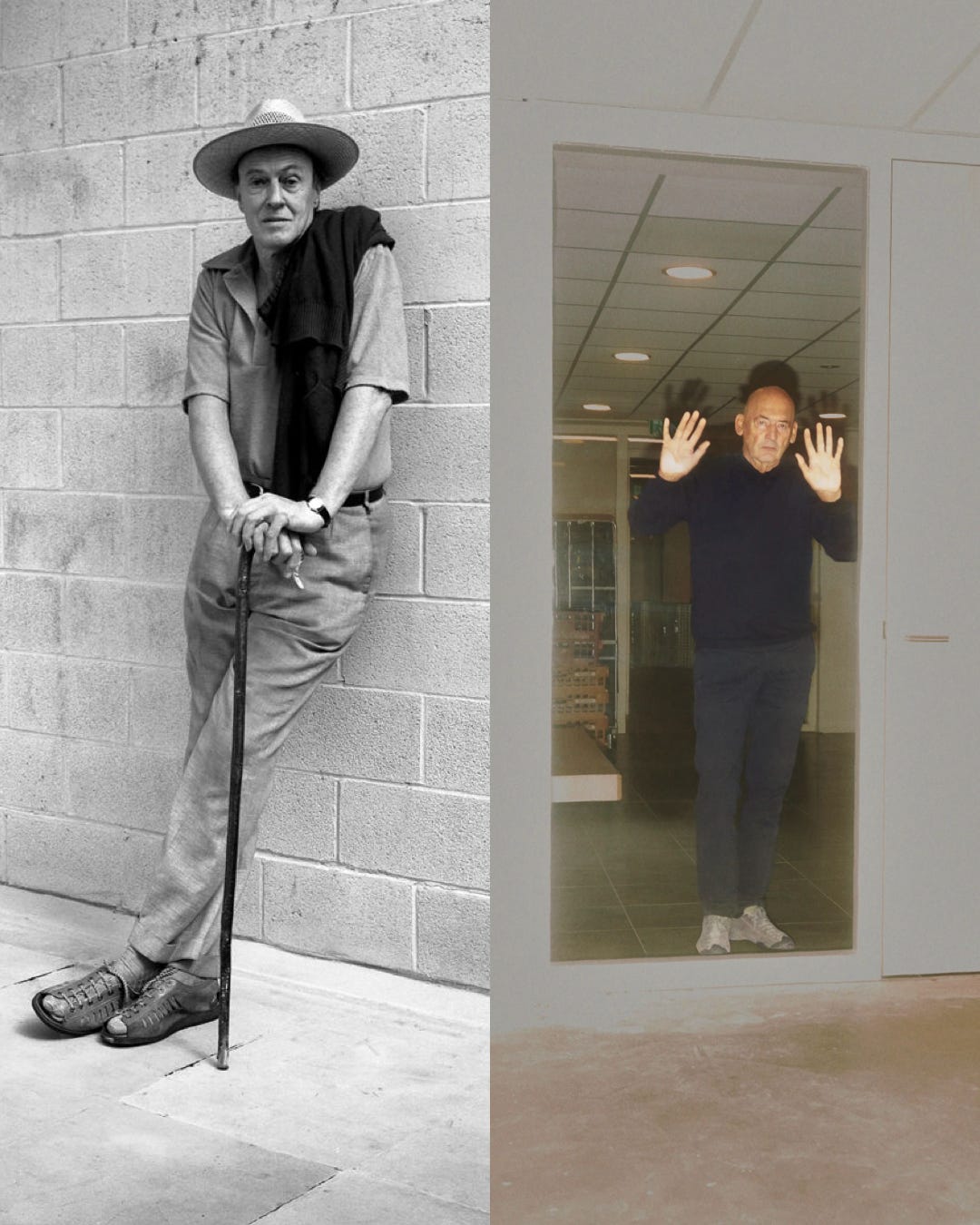
“The skyscraper transforms the city from a fabric of buildings into a collection of machines."
—Delirious New York (1978) by Rem Koolhaas“The body is a machine, nothing more. A delicate, complex machine, but a machine nonetheless."
—“William and Mary” (1959) by Roald Dahl
S T Y L O M E T R Y
(An AI-assisted stylometry analysis)
Synergy: Both men treat containment as a farce. Where Dahl masks adult malice inside fable-like prose that is terse, observational, devoid of sentiment, Koolhaas treats hyper-engineered urban density with the same cold, voyeuristic cynicism. They share a mechanical style: clipped sentences, dispassionate irony, and an obsession with systems that promise ultimate order right up until the moment they collapse into magnificent, absurd chaos. For both, human frailty is the ultimate design flaw in a wicked world.
Speculation: These two iconoclasts draft the script for an immersive theater production about a grotesque architectural megastructure that methodically devours its occupants to maintain zero net-carbon emissions. Set inside an interactive, AI-controlled skyscraper designed by Koolhaas, audiences literally step into Dahl’s techno-fable and become the characters. Produced by Punchdrunk, the British theatre company behind Sleep No More.

Mercè Rodoreda x Céline Sciamma
Curated by: “El” (Girona, ES 🇪🇸)
“I would pair the Catalan writer Mercè Rodoreda and French filmmaker Céline Sciamma to write a historical thriller like ‘Lizzie’ (2018)”
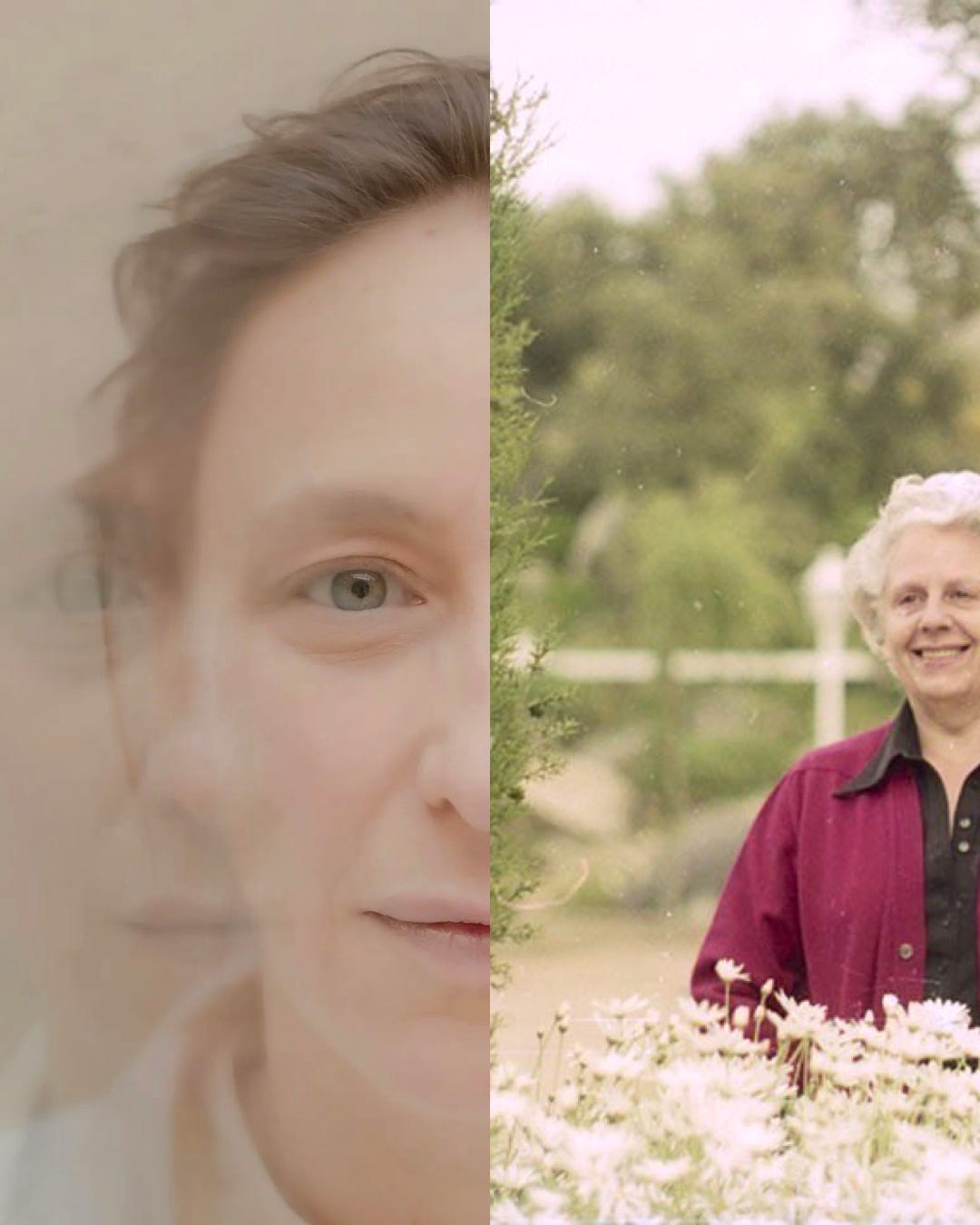
“She looked into the mirror, not to see if she was pretty, but to see if she was still there. To make sure her eyes belonged to her and not to the way others looked at her.”
—Aloma (1938) by Mercè Rodoreda“That’s the heart of the film: equality... a horizontal conversation. Also, the artist is not dominant — she is being looked at as much as she looks.”
—Céline Sciamma
S T Y L O M E T R Y
(An AI-assisted stylometry analysis)
Synergy: Both construct intimate, claustrophobic feminine inner worlds through a lens of quiet, devastating restraint. Where Rodoreda translates trauma into surreal, domestic symbolism—visceral, poetic, and emotionally raw—Sciamma uses a lingering, painterly visual prose defined by gaze, breath, and tactical silence. Their shared style relies on sensory detail over dialogue: objects, touch, and subtle shifts in landscape carry the crushing weight of unspoken longing, historical confinement, and female solidarity.
Speculation: These renegades of intimacy and masters of the female gaze would arrive at an annotated film treatment for their arthouse adaptation of the story of Lizzie Borden (produced by A24). Eschewing explicit gore, their take weaponizes Lizzie’s inner life while presenting her physical axe as a poetic object.

Frank Ocean x Johnny Cash
Curated by: “TW_Asipita” (Lagos, NG 🇳🇬)
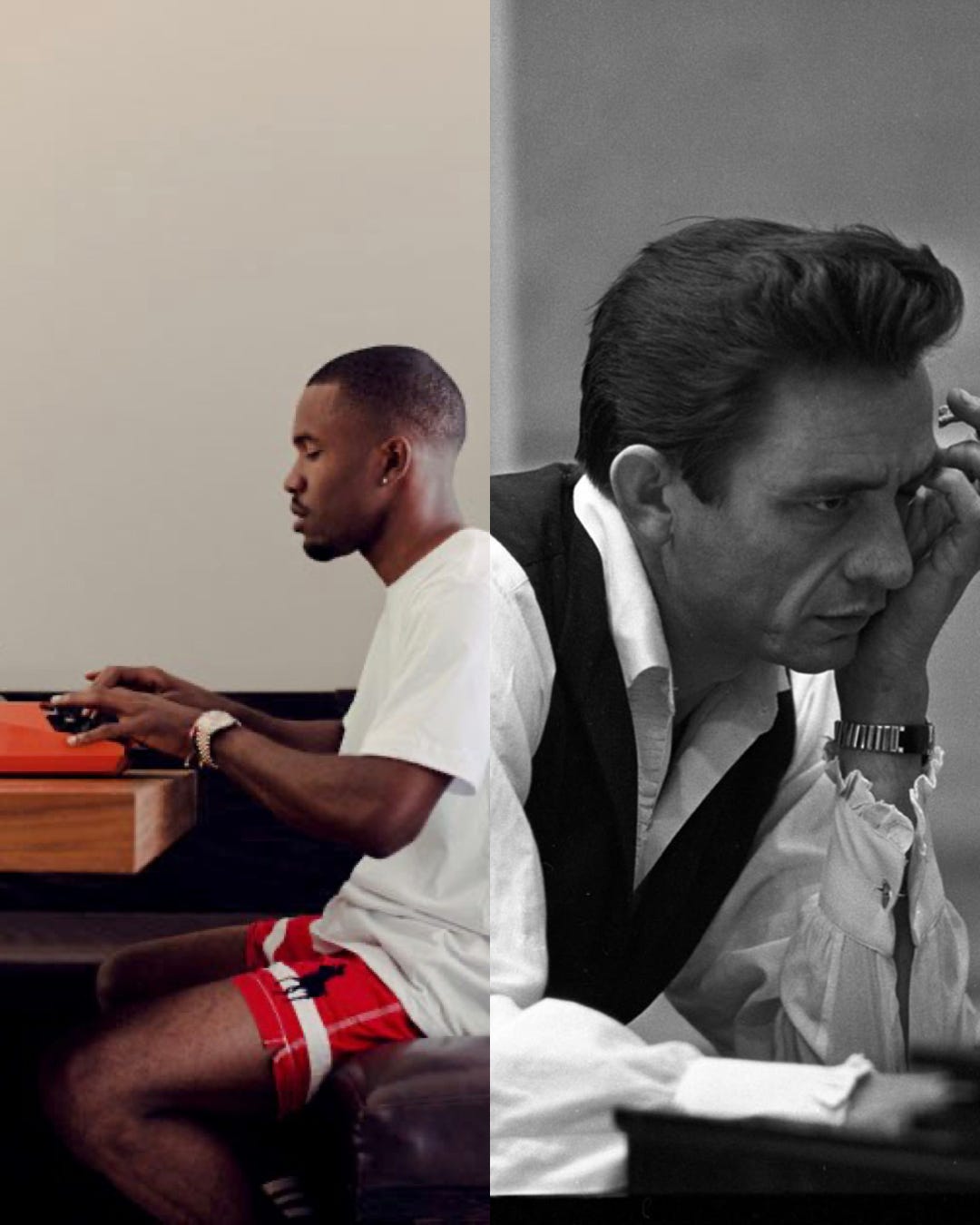
“We'll run 'til water runs our wells dry...
Bad religion
From this unrequited love
It's a one-man cult
And it's paying mind to a cult song."
— “Bad Religion” (2012) by Frank Ocean“You can run on for a long time...
Sooner or later God's gonna cut you down."
— “God’s Gonna Cut You Down” (2003) by Johnny Cash
A N A L Y S I S
(An AI-assisted stylometry analysis)
Synergy: Both Ocean and Cash chronicle the haunted American male psyche, stripping away its armor to expose a bruised core of vulnerability, longing, and sin. Cash filters moral existentialism and grief through a sparse, guilt-stricken country gospel, while Ocean crafts a smoky R&B minimalism driven by pitched vocals, stream-of-consciousness prose, and non-linear memory. Their shared power lies in extreme intimacy — quiet rooms, cars in the dark, and confessions delivered with the weight of a final testament.
Speculation: Frank Ocean and Johnny Cash naturally find one another in the fringes of gospel music to drop the six-track duet album Highway Gospel. Released exclusively on cassette tape, this spoken-word soundscape traces their separate night drives through the American South, weaving ambient tape hiss, flickering dashboard signals, and solitary organ chords in this holy back-and-forth between unrequited love and spiritual guilt before both drivers finally pull into the parking lot of the same roadside cafe.
How far could any two writers take a story worth sharing?
Submit your own "dream pairing"
What if one of them is you?
Switch-Lit’s mission is to manifest the collective imagination of diverse writing communities through the connective power of collaborative fiction, poetry, and prose.
🌹
No posts
Comments
Nothing yet. Say the first thing.
Sign in to join the conversation.