
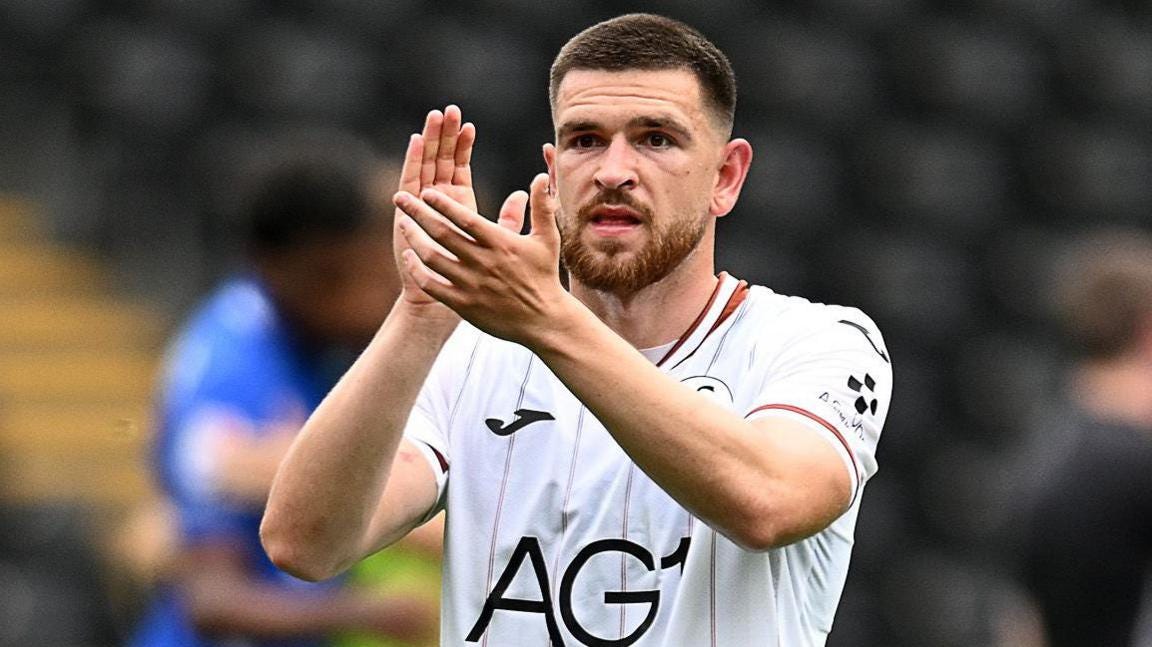
There’s been little for Swansea city fans to get excited about in recent seasons, but there is just a hint of optimism in the air this summer.
The club has spent a fair amount to bring in New Zealand World Cup star Elijah Just from Motherwell, Joseph Opoku from Zulte Watregem, Moussa Yeo from Red Bull Salzburg and Leo Walta from IK Sirius.
In addition, the experienced Ross Stewart and Stephen Welsh have arrived on free transfers from Southampton and Celtic respectively, while Tiago Parente was signed from Benfica on loan.
In fact, there have been quite a few seemingly positive changes in South Wales with chief executive Tom Gorringe talking about “numerous on and off field developments… as we look to make further strides as a club.”
The club decided to part ways with head coach Alan Sheehan in November after a disappointing run of results, even though he had started well after taking the reins the previous season.
His replacement was Vitor Matos, whose managerial experience was limited to a few months at Portuguese club Maritimo, though he had worked under Jürgen Klopp at Liverpool and Pep Lijnders at Red Bull Salzburg. Either way, results clearly picked up after Matos’ arrival.
After a lengthy process, Ben Stevens was appointed as new sporting director, arriving from Crystal Palace, where he had helped drive a highly successful, trophy winning period.
In addition, Jay Lefevre became head of recruitment, stepping up from the position of chief scout.
Perhaps most excitingly, Swansea have partnered with Jamestown Analytics, a sports data and player-recruitment firm tied to Brighton & Hove Albion owner Tony Bloom.
Tom Gorringe, said, “This partnership is a real coup for the club. Jamestown are widely regarded as leaders in data led player recruitment, and we have seen the success that many of their partner clubs have achieved over recent times. Jamestown only works with an exclusive list of clubs and we are honoured to now join that group.”
That list includes Hearts, Union Saint-Gilloise and Como, who have all greatly benefited from this association.
Swansea have attracted some famous new investors, including Luka Modric, Snoop Dogg and Martha Stewart.
Even though they have only bought minority stakes, Swansea’s owners believe that such celebrity partnerships will help boost the club’s global profile, describing the investments as “an endorsement of the club’s ambition and vision”.
More tangibly, this is a clear attempt to help drive commercial growth, in much the same way as Hollywood’s Ryan Reynolds and Rob McElhenney have done for Wrexham, another Welsh club.
Swansea had been owned by an American consortium since July 2016, when Jason Levien and Stephen Kaplan bought a controlling interest in the club.
However, in November 2024 they sold their 65% stake to three other existing shareholders, namely Andy Coleman, Brett Cravatt and Nigel Morris, who were joined by Jason Cohen, a business associate of Cravatt’s. Coleman has since stepped down as chairman.
According to the club website, Swansea Football LLC (controlled by Cravatt and Cohen) now own 82.7%, while Morris has 10.3%, leaving the Supporters Trust with 6.4% (including its protected 5% ownership position(.
In addition, the club announced a long-term strategic partnership with Shamrock Capital, a Los Angeles-based investment firm.
Although Shamrock has “committed significant capital designed to support Swansea’s strategic priorities and future growth”, the club has indicated that they will not become shareholders.
Cravatt and Cohen said, “We are very pleased to partner with Shamrock Capital in what we believe will be a highly productive relationship for Swansea City. Their involvement can assist the club in achieving its strategic business goals, while their expertise and knowledge within media, entertainment and sports sectors will be invaluable.”
Swansea City Women also secured “significant immediate investment” via the sale of a stake in the team. After moving to semi-professional status in 2023, the aim is to “further develop and professionalise the set-up in the short, medium and long term”.
Mechanically, the operation has been transferred to a new limited company in order to attract further external investment “from individuals who are passionate about developing the women’s game”.
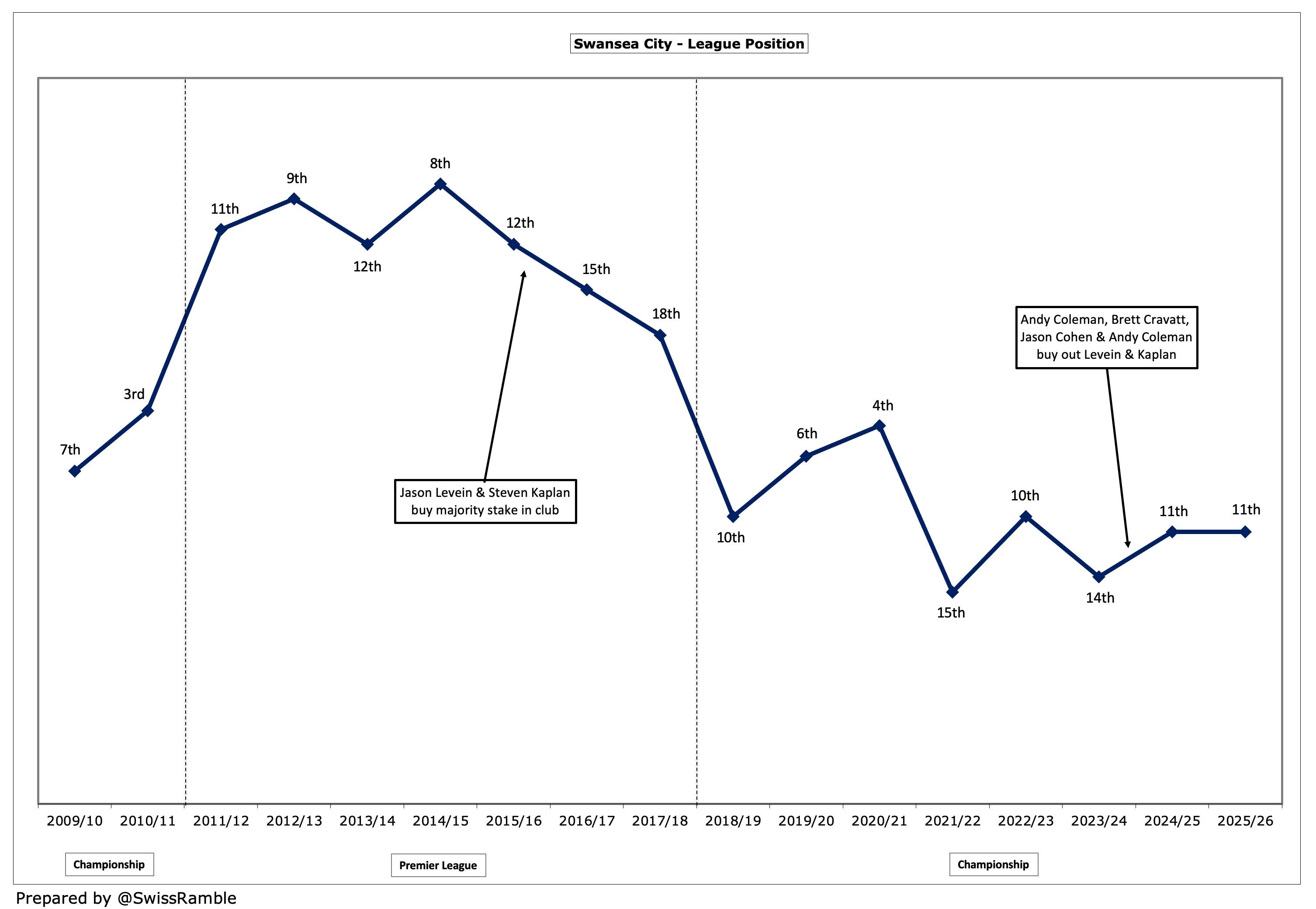
Swansea will hope to improve on last season, when they finished 11th in the Championship for the second season in a row. Cravatt and Cohen admitted, “There is no denying we have fallen below our own expectations. “
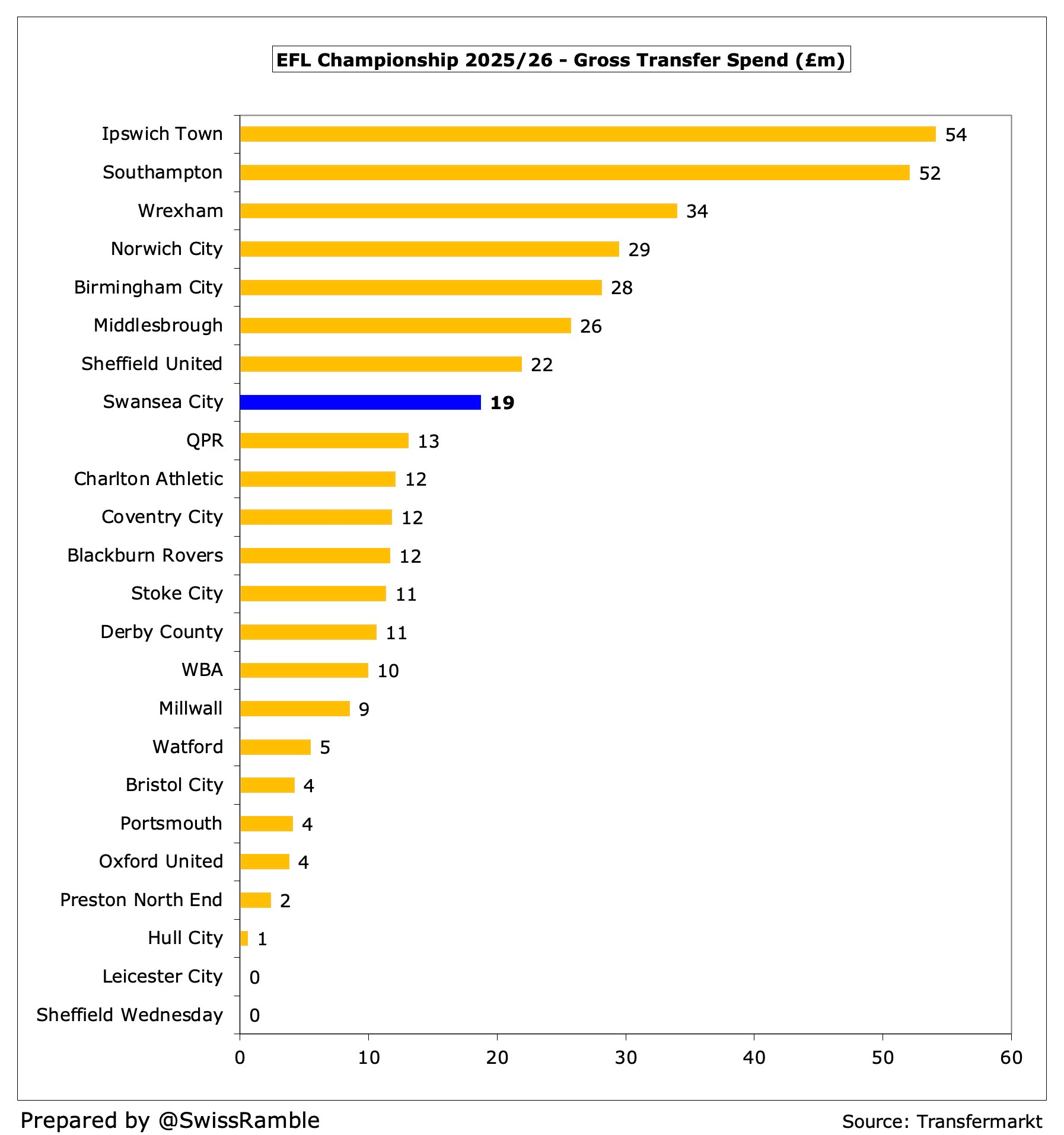
The owners would have expected to do better, given that they splashed out £18.7m on new signings, which was the club’s highest outlay since relegation from the Premier League.
In fact, this was the eighth highest in the Championship, albeit far below the likes of two relegated clubs, Ipswich Town £54m and Southampton £52m, as well as Wrexham £34m.
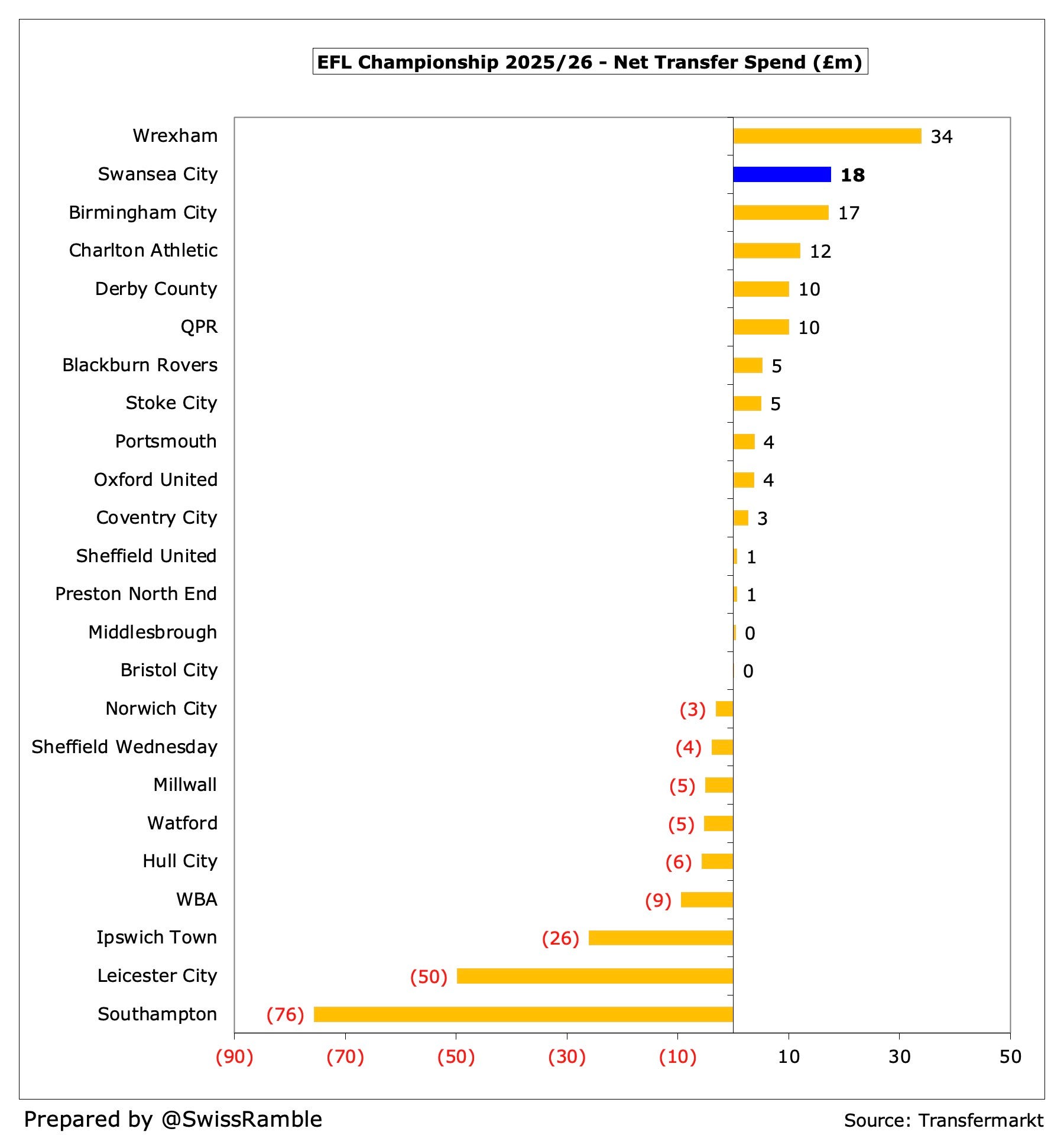
Indeed, Swansea’s net spend of £18m was actually the second highest in the division, only behind FC Hollywood.
The fact is that Swansea need to do something to break out of their current malaise, as next season will be their tenth in the second tier after relegation in 2017/18.
They had enjoyed seven seasons in the top flight, which included twice finishing in the top ten and qualifying for the Europa League when they won the League Cup in 2012/13.
However, there has been a steady decline after Levein and Kaplan bought a majority stake in the club. In fairness, the club twice came close to promotion, when they reached the play-offs under Steve Cooper in 2019/20 and 2020/21, but since then it has been mid-table mediocrity all the way.
The question now is how realistic are Swansea’s chances of improving their performances on the pitch?
Money usually talks in football, so this will partly depend on the club’s financial status.
The latest available accounts are from the 2024/25 season, which are obviously a full year out of date, but they should still give us a reasonable idea of their position, especially relative to other clubs in the Championship.
Comments
Nothing yet. Say the first thing.
Sign in to join the conversation.