
The last few years have been a bit of a rollercoaster for Oxford United, featuring promotion to England’s second tier for the first time in 25 years, followed by relegation to League One, as well as uncertainty around the stadium, numerous changes off the pitch, issues with the EFL’s financial regulations and most recently a transfer embargo.
Today’s article will try to explain what’s been going on, including a deep dive into the club’s finances.
Earlier this month the EFL placed Oxford United under a transfer embargo, which prevents the registration of new players, due to the club’s failure to comply with Salary Cost Management Protocol (SCMP) regulations
The club described this as a “temporary” issue, “With a commitment from shareholders to increase investment into Oxford United over the coming months, along with measures to reduce overall costs, the club will be compliant and in a strong position ahead of the January transfer window.”
This message was reinforced by chairman Dusan Bogdanovic, “To be absolutely clear, our shareholders remain fully committed to the club and will continue to provide the funding and support that they have consistently given throughout their ownership. That commitment has not changed.”
That said, it’s clearly not a great look, when the owners have not actually provided the funding that could have avoided this predicament, especially as they have been presented as very wealthy with a willingness to invest in the club. As the old saying goes, actions speak louder than words.
In fairness, the club has faced a number of challenges following relegation from the championship, as noted by the chairman, “Despite our best efforts, we were unable to retain our Championship status and are now working through the challenges that higher costs, reduced revenues and new financial rules present.”
Following relegation, Oxford had to comply with the EFL’s Salary Cost Management Protocol (SCMP) regulations, which apply in League One and League Two, as opposed to the Profitability and Sustainability Regulations (PSR) that are in force in the Premier League and the Championship.
The SCMP ratio is calculated as the sum of a club’s player related expenditure (less non-established U21s) and agent fees over revenue plus player trading income and an allowable equity injection.
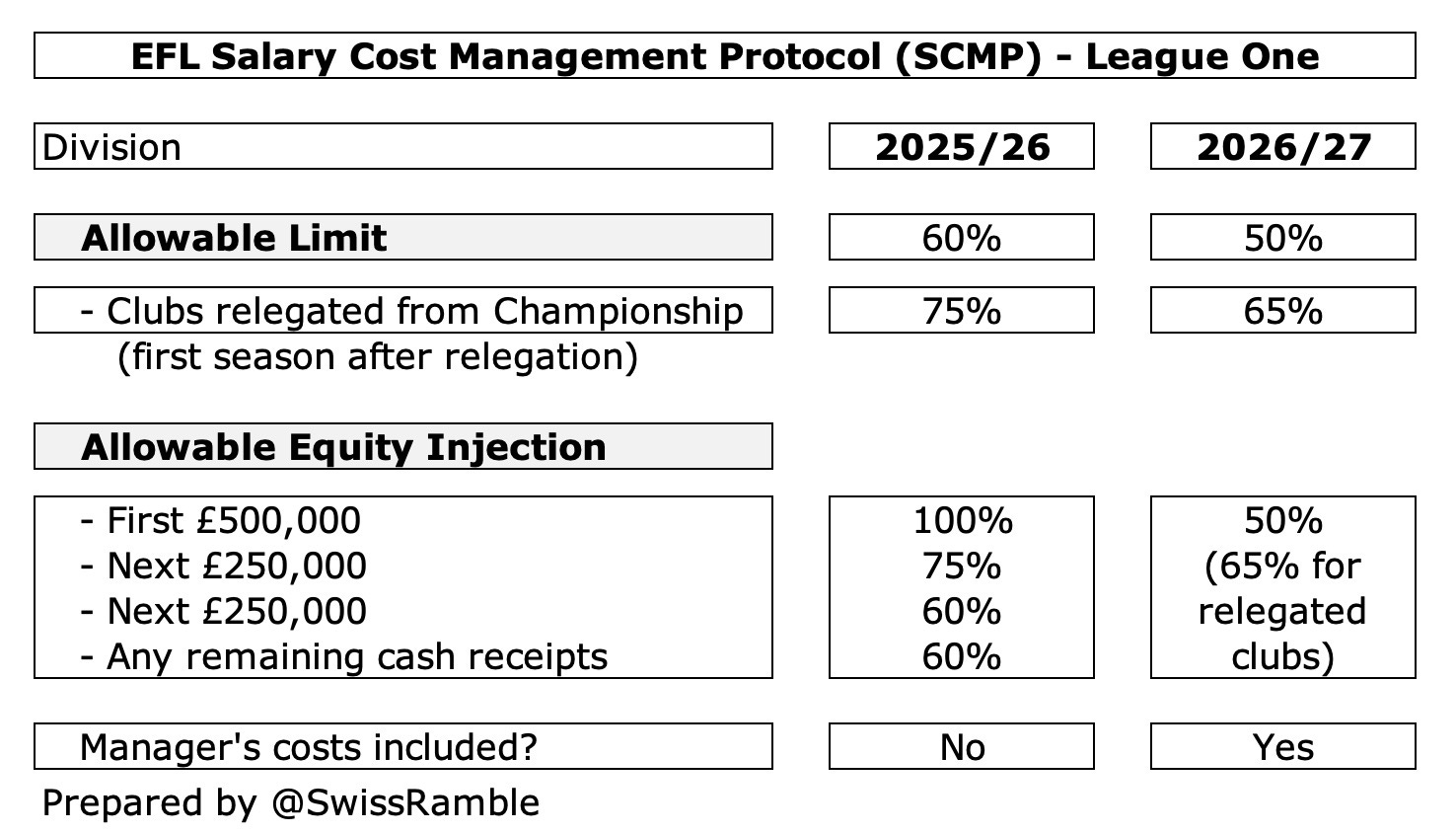
This ratio is higher for clubs that have just been relegated from the Championship, but the problem for Oxford is that the targets were tightened by the EFL following a rule change in May.
So the League One target was cut from 60% to 50%, while it was reduced from 75% to 65% for relegated clubs like Oxford.
In addition, League One clubs also approved a change to remove the staggered approach to equity injections, meaning that they are all included within the calculation at 50% (or 65% for newly relegated Championship clubs).
Finally, manager costs are now also included within the SCMP Calculation.
Although the EFL’s objective of “reducing losses and the reliance on owner funding” is laudable, the late moving of the goal posts appears to have caught Oxford unaware.
Or, more worryingly, the owners simply did not want to put in enough money to cover the budget shortfall against the SCMP target, at least not right now.
The inability to sign new players is hardly ideal for Aaron Ramsey, who was only appointed as Oxford’s new head coach on 23 June.
Comments
Nothing yet. Say the first thing.
Sign in to join the conversation.