
Spring is in full swing here in Southern Oregon. After a week of mostly sunny afternoons spent outside gardening, this week is all about rainy, cloudy, windy, chilly days watering the soil and plants deeply. Flowers are popping up every day. The lilacs are at peak bloom all around our neighborhood. At one corner where Ginger (my golden retriever) likes to spend lots of time sniffing, I’m engulfed in the sweet fragrance of three old grand lilac trees blooming pink, white and purple.
Spring, wind, and growth are all associated with the Wood element in Chinese naturalist cosmology. The Liver is considered the General of the body, responsible for the smooth harmonious flow of Qi (energy or the vital life force). The Liver energy governs the nervous system, tendons, ligaments, and eyes. It is also associated with our life vision and ability to plan and bring that to fruition through our decisions and actions.
In the Chinese medicine paradigm, every organ system has a direction or pattern of energy flow. The Liver energy is meant to stay even and stable around the horizontal midline of the body. When under stress or aggravated by heat, fire, and/or wind, the Liver energy goes upwards. This can cause things like the headaches and red, itchy eyes we often see with spring allergies. The distressed Liver energy can also attack the Spleen/Stomach centers causing digestive problems. Throughout the spring season, it’s good to continue eating mostly warming, cooked foods to support digestive health.
There is a mental/emotional component to each energetic system. Emotional imbalance is considered one of the main causes of disease in Chinese medicine so maintaining emotional harmony is essential to foster our well-being. The Liver and Heart systems are the most sensitive and vulnerable to stress. When the Wood energy is under stress we can experience degrees of irritation, frustration, anger, or depression. We can feel stubborn, argumentative, or just plain stuck.
Our wise ancestors recommend we maintain our equanamity and easy going nature as an antidote to the irritability that can arise in spring, when we’re out of balance, or when the world around us feels off kilter.
The good news is that most of the time, with awareness and compassion, we can exert our agency to change our attitudes. We can choose to process and let go of grudges, anger, or other emotions that actually cut us off from ourselves and our own heart. If the issues are more deep seated, then naturally it is wise to seek professional help.
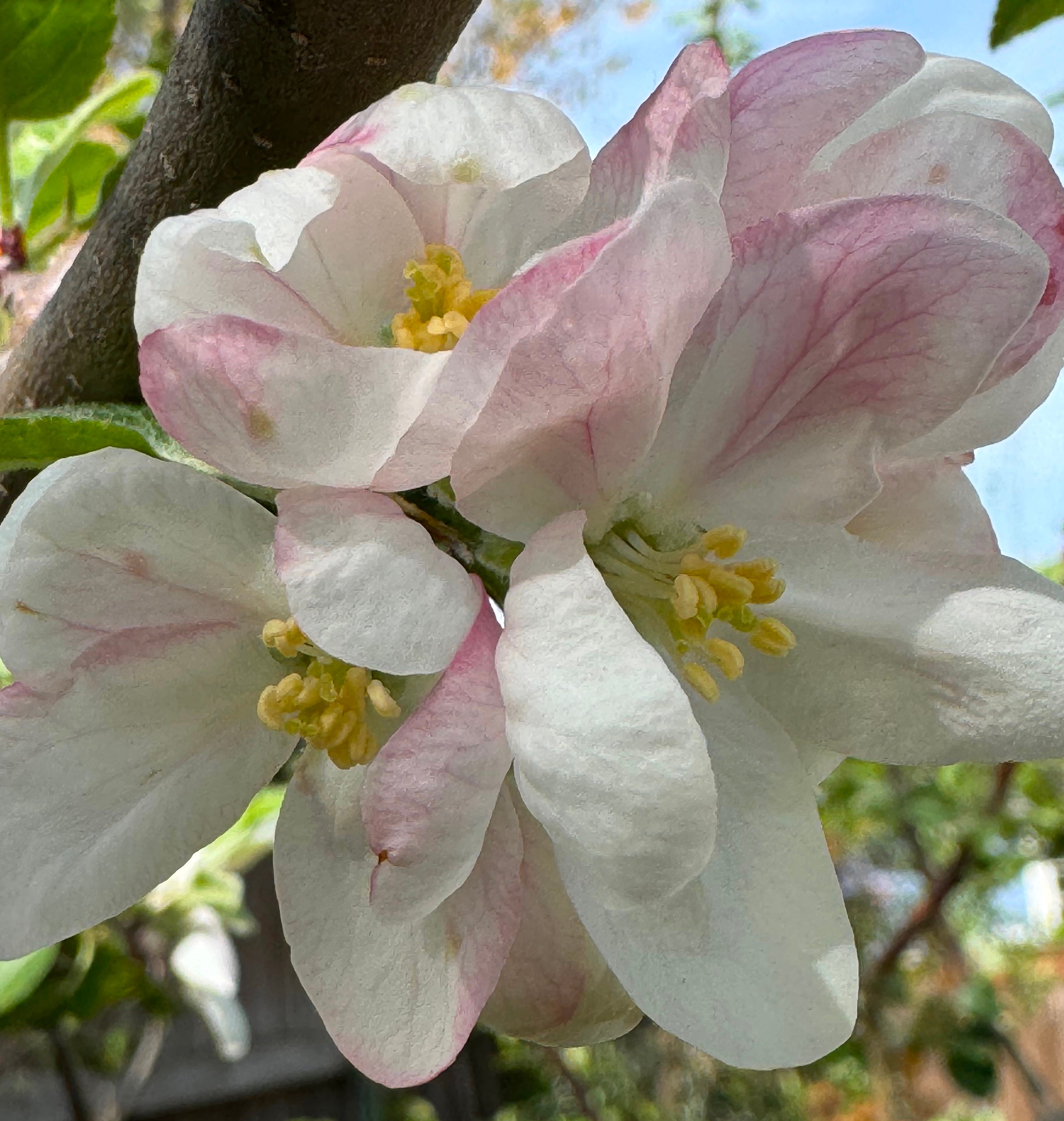
Spring is a time of rebirth and revitalization, a time of opening and unfolding on all levels. Green growing hollow bamboo, another symbol of spring, symbolizes resilience – flexibility and the ability to grow, adapt, and bend even with the winds of change. The positive qualities of the Wood element include benevolence, clarity, life vision, and bringing our vision to fruition. And our ability to cultivate maturity and resilience in our body, mind, attitudes, feelings, and actions. Neuroscientist Ruth Feldman suggests that resilience is the flowering of human maturity as we grow through life’s many challenges.
We can create, nourish, and grow conscious daily routines that evolve over time with the rhythms of our life and changing seasons. We can engage both stability and flexibility, like the bamboo, green and growing; strong and flexible. And, in letting go and letting be, we nourish our own heart. It’s like tending our garden. I know for myself, sometimes it feels like I’m constantly pulling weeds. Being consistent with pulling weeds keeps them from clogging the roots of other plants and over running the garden. I’ve certainly had times, especially in early spring, where the weeds get away from me and, as I carve them away, am delighted to rediscover my flowers and give my plants and their roots breathing room. And so it is with our own heart.
Weeding our gardens and our heart allows what we’ve intentionally planted to thrive and grow well. For us gardeners, spring is a time for weeding, cleaning and prepping our garden beds. But it’s also a time for creating our garden vision that we may have dreamed in winter and for planting. To me, spring is full of delight as tree leaves return and colorful array of flowers burst forth every day.
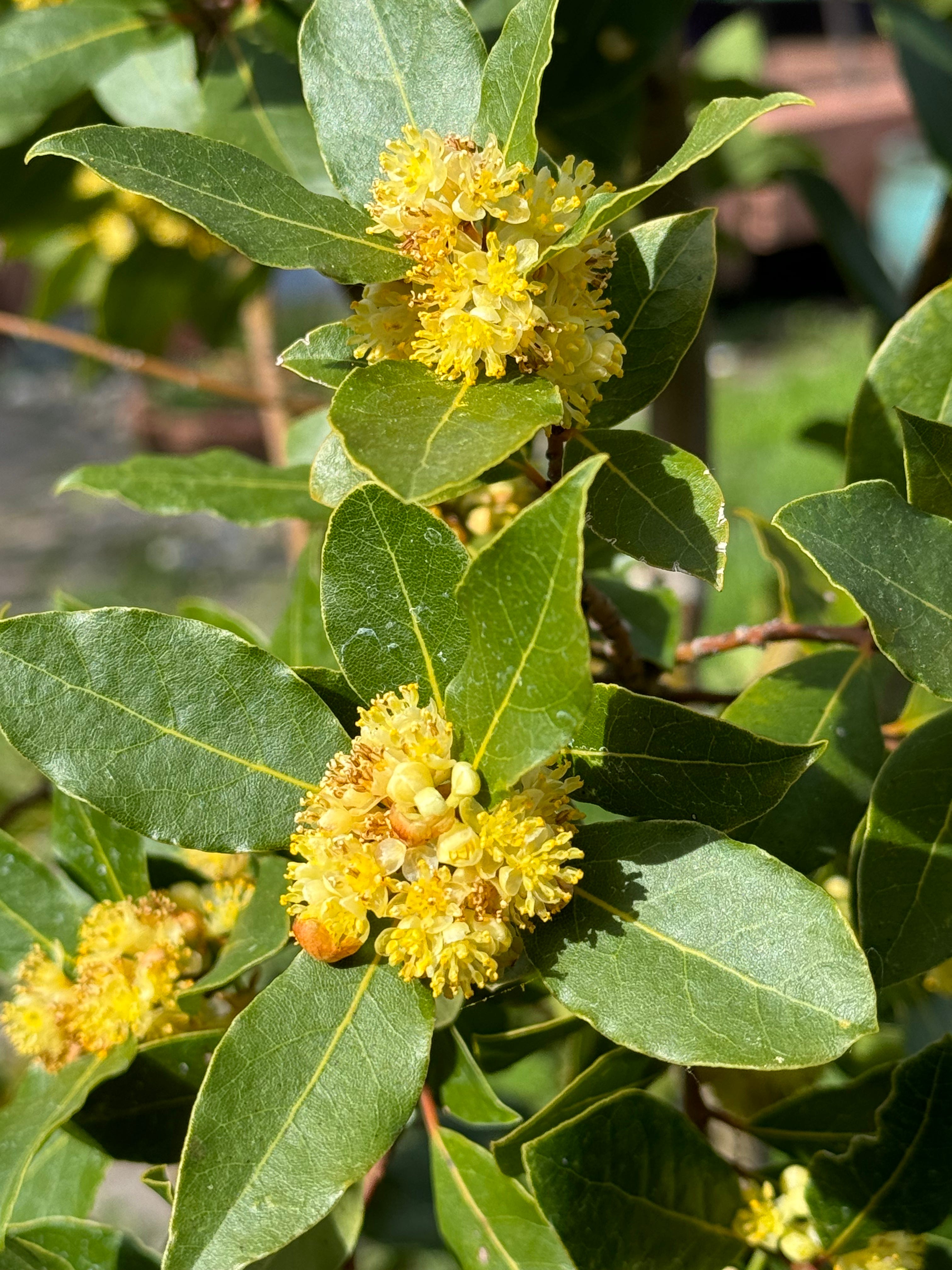
An old Chinese proverb teaches us to keep a green branch in our heart and a singing bird will come. As we attune to our spiritual nature, we cultivate and tend our spirit with loving awareness. Through all the stories and dramas of life, we keep our hearts green, growing, and flowering. Cultivating benevolence, a quality of kindness, ripples out into the world and supports our collective well-being and resilience.
What needs weeding in your heart? And what will you plant to nourish your heart’s vision this season? How can you can more fully enjoy the beauty of your heart’s garden and let your light shine out into the world?
With the change of season, it was time last week for me to make up a batch of my Spring Revitalizing herbal tea. I was really excited to discover herbs as a teenager and using herbs as food and medicine has been part of my life ever since. I avidly studied on my own and was also taught by a Naturopath who helped me to health. My knowledge overflowed to friends and family. Then I worked as an herbal and nutritional consultant in health food stores for years before I met my Chinese medicine teachers, helped found a school on the Big Island, and practiced Chinese herbal medicine along with nutritional medicine as part of my Acupuncture practice for decades. I used traditional Chinese formulations but also often blended Western, Ayurvedic, and Chinese herbs as tinctures, raw herbs, or powders for clients. At one point my pharmacy held several hundred herbs in different forms so that I could custom blend. Powerful medicine and fun times.
I’d love to share a magical, mineralizing, revitalizing herbal tea that I blended seasonally for myself and clients for a couple of decades. Part of the inspiration for it came from a very old formula to nourish hair and nail health that included herbs high in minerals. That is the base of the formula and over the years I add in herbs appropriate for each season. This is an herbal tea I drink almost every day.
You can easily create this at home. Most natural food stores have a bulk herb section. I blend the herbs together in a large bowl at home. It’s ideal to store them in a glass jar that lives in a dark cabinet to avoid too much light exposure which will age the herbs.
At my natural food coop, I just eyeballed the amount of each herb as I filled up many little bags. Then I brought them home, placed them in my big glass cobalt blue bowl and mixed them up. We are really fortunate here, because our coop stocks herbs grown locally on an organic farm. The colors of the herbs are more vibrant and I know that using herbs grown in my area are fresh and especially good for me.
The mineralizing, nutritive herbs Nettles leaf and Oatstraw (equal parts of each) provides the foundation of the herbal blend. Nettles is especially rich in protein, fatty acids, minerals, and vitamins. Oatstraw is also highy nutritive, especially high in the mineral silica which supports healthy skin and hair.
For Spring, I include lesser amounts of Lemon Balm and Milky Oat Seed (dried). Milky Oat Seed is one of my favorite herbs particularly because it is very nutritive for the nervous system. Both of these are gently calming to the nervous system and supportive of liver health; so quite specific for Spring season. I also added some yellow Calendula flowers for my lymph system, and a small amount of Dandelion root powder for my liver. My local store was out of the Milky Oat Seed (it’s seasonal, harvested later in the year) so I ordered some from Mountain Rose Herbs (not an affiliate link, I just appreciate them!), which offers a great selection of high-quality herbs and herbal products.
Then, I sprinkle in some power-packed dried berries to my bowl of herbs. Berries are packed with phytonutrients and are rich in flavonoids that benefit cellular, immune, and overall health. I always add several types of berries to my blend, depending on the season. Their flavor can be quite strong and they are potent, so a small amount of berries brings a lot to a tea blend.
For Spring, I use Schizandra berries and Bilberries. Schizandra, known as the five flavor herb in Chinese medicine, is a tonic for both the liver and respiratory system. This year, I’m excited to add some that grew in my garden! It took several years for the plant to produce some berries and I’m hoping their yield will increase this year. I’ve put up some extra supports for the vines as the plant has grown and spread.
Bilberries are well-known to support the liver, eyes, gut and immune health. This year I also included Rose Hips for their red color and vitamin C content.
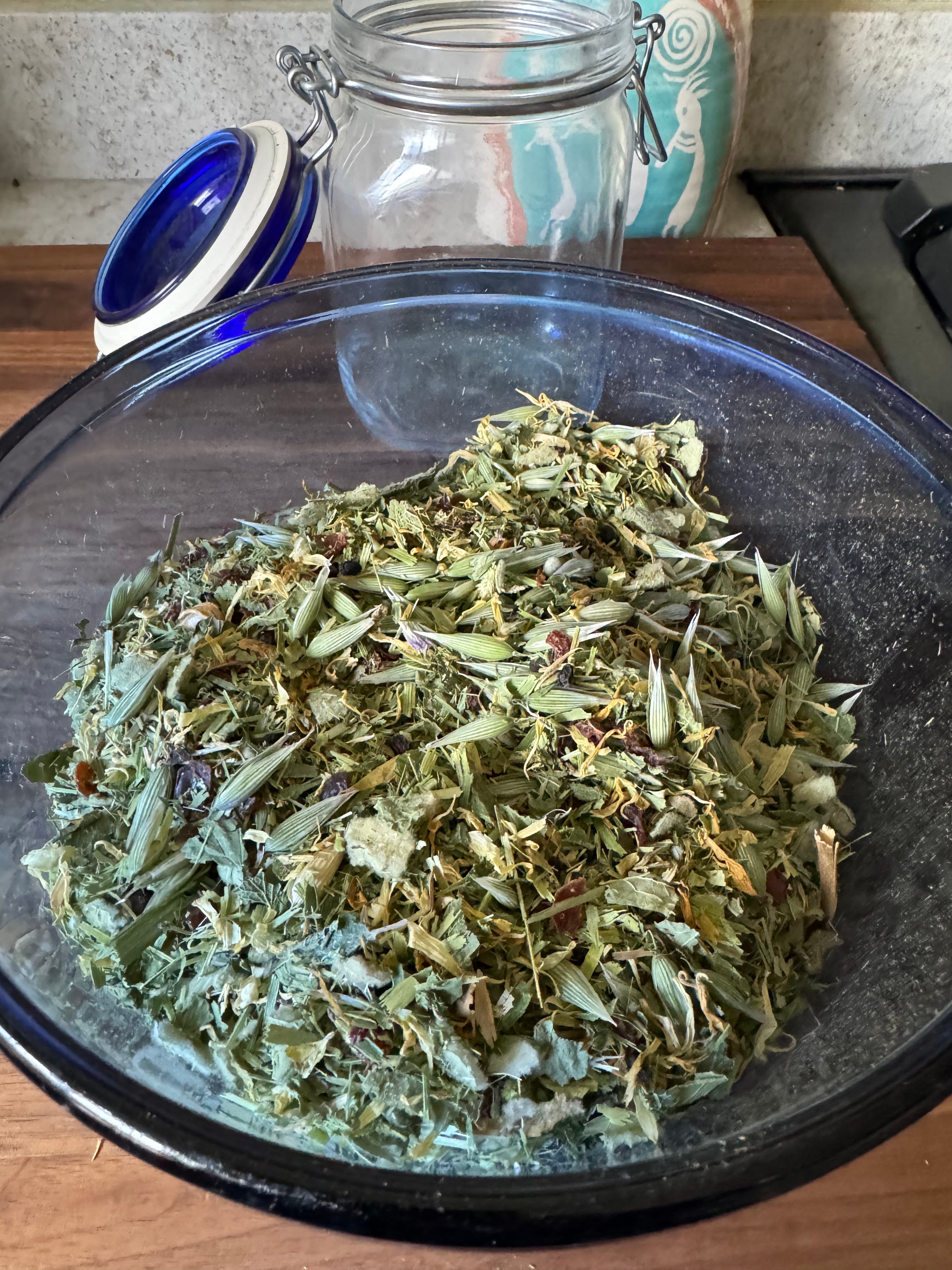
So to recap, here’s a summary of what I blended up last week. Feel free to include some of your favorite herbs. Take “one part” as your base measurement, whether it’s two ounces or four ounces or one cup. This is an herbal tea you can enjoy at home. When I made the tea at my clinic, for clients, I carefully weighed each herb. Making this tea at home, for myself, I eyeball the herbs, but then I’ve been making it for so long that comes naturally. Experiment and find what method suits you.
Foundation: Equal parts Nettle Leaf and Oatstraw (so one part each).
Spring herbs:
Lemon Balm: One-half to three-quarters part
Dandeliion Root Powder or finely ground: a quarter part or less
Calendula Flowers: a quarter part or less
Berries: A sprinkling of each: dried Schizandra Berries, Bilberries, Rose Hips.
A few other possible Spring herbs: Burdock root, Spearmint, Peppermint, Hawthorn berries.

This is how I make mine every day:
I put a small handful, probably about two tablespoons, of the herb blend in a one-quart mason jar. Then I pour hot water over the herbs and let them steep for several hours. My tea kettle is set to heat water to about 208 degrees so a little less or more is fine too. I often add a teaspoon of local honey for a little sweetness and let it dissolve in the hot tea blend. You can also steep for as little as 30 minutes to an hour.
Then strain off the herbs, pouring your tea blend into another quart mason jar or container of your choice.
I drink this throughout the day, knowing I’m getting in some great plant minerals and nutrients. But also this helps me get in a quart of water (albeit herbal water!) that I need to drink every day. Otherwise, I can keep going all day and forget to drink much, so this habit of herbal tea (or water) in a quart container really helps me, especially back when I was working in the clinic all day, but even now when I’m outside a lot.
Drink your tea slowly and reverently, as if this activity is the axis on which the whole earth revolves. Live the moment. Only this actual moment is life. ~ Thich Nhat Hanh
Revitalizing tea herbs provide us with such an abundance of vitamins, minerals, and plant nutrients (phytonutrients) unique to the plant kingdom that provide nourishment for all the cells, tissues, organs, and systems of our body. You can find most of these herbs in the bulk section of your health food store. Be sure to only purchase organically-grown or sustainably wildcrafted herbs. Create your own spring blend and enjoy!
from my heart to yours,
Suzanne
P.S. I’m a trained herbalist in Western and Chinese herbal medicine traditions who worked professionally as an herbalist for over three decades. Everything in this article is for informational purposes only and is based on my research, and personal and clinical experience.
Nothing in this article is intended to replace the services of a health professional nor does it constitute medical advice.
Please consult a professional herbalist if you would like more guidance in using herbs.
If you are ill please consult a physician.
Note: I do not subscribe to AI so everything I write is my own and all errors are mine as well.

Comments
Nothing yet. Say the first thing.
Sign in to join the conversation.