
A few years ago, I made a note (I keep Google Docs notes for myself) to look for people who died in my birthplace on my birthday, and to read their obituaries to understand what kind of world I was born into.
For today’s Hermitess Papers essay, I decided to follow through on this idea.
I went looking for seven women who died on or near the day I was born. I thought if I could find a few obituaries, then maybe I would learn something about women ahead of my generation.
Online archives did not cooperate. Obituaries are behind archived paywalls. Also, as we know, women’s lives and accomplishments have not always been recorded (history books are full of men and dates of wars). In years past, I might have chosen to search through:
a newspaper archive (in a library)
a community cookbook (like in Junior League archives)
diaries or letters (as found in older books)
a club newsletter (if available)
possibly even church records
Instead, I sat at my computer. I was at a loss as to what to share here and how to follow through on my idea. I began to think about the names babies received during the 1880s to 1900. They would have been approximately seventy-five to eighty-five years old in 1965. Not all dead, but certainly no longer young. Then I realized these people were part of what is called “The Lost Generation.” They are all dead now. The last person of this generation from the US died in 2016 at the grand age of 116!
Her name was Susannah. Of all the names!
In my history, women I never met in person are from this lost generation or possibly the next generation called “The Greatest Generation.” My grandmother Mary had a sister named Stella. I don’t think I met Stella, and if I did, I was too young to remember. I know I heard the name Dorothy in stories as a child. Was she too a sister of Mary? My maternal grandmother was Hildegard. I never learned the names of her siblings, or at least not that I can remember.
Lost to me. In my own family. Great stories of strength, resilience, and contributions.
What is lost in the stories that are not recorded, not shared, and not treasured? What is lost behind electronic paywalls on the internet?
What kinds of lives might these women have lived? Did any of them break barriers? Did they travel alone? Did they work outside of the home? Did they invent a recipe or grow a garden? Did they possibly migrate from a different country (my grandmother Hilda did) or merely a different county (my grandmother Mary did)? Were their faces ever photographed as children or young women? Possibly not. Photographs were not guaranteed for children of this generation, especially among common working-class families. Did one of them have a bowling score she remembered for the rest of her life? Where would I find a record of personal ambitions? And did they accomplish these dreams?
A life is much larger than the scale at which history records us.
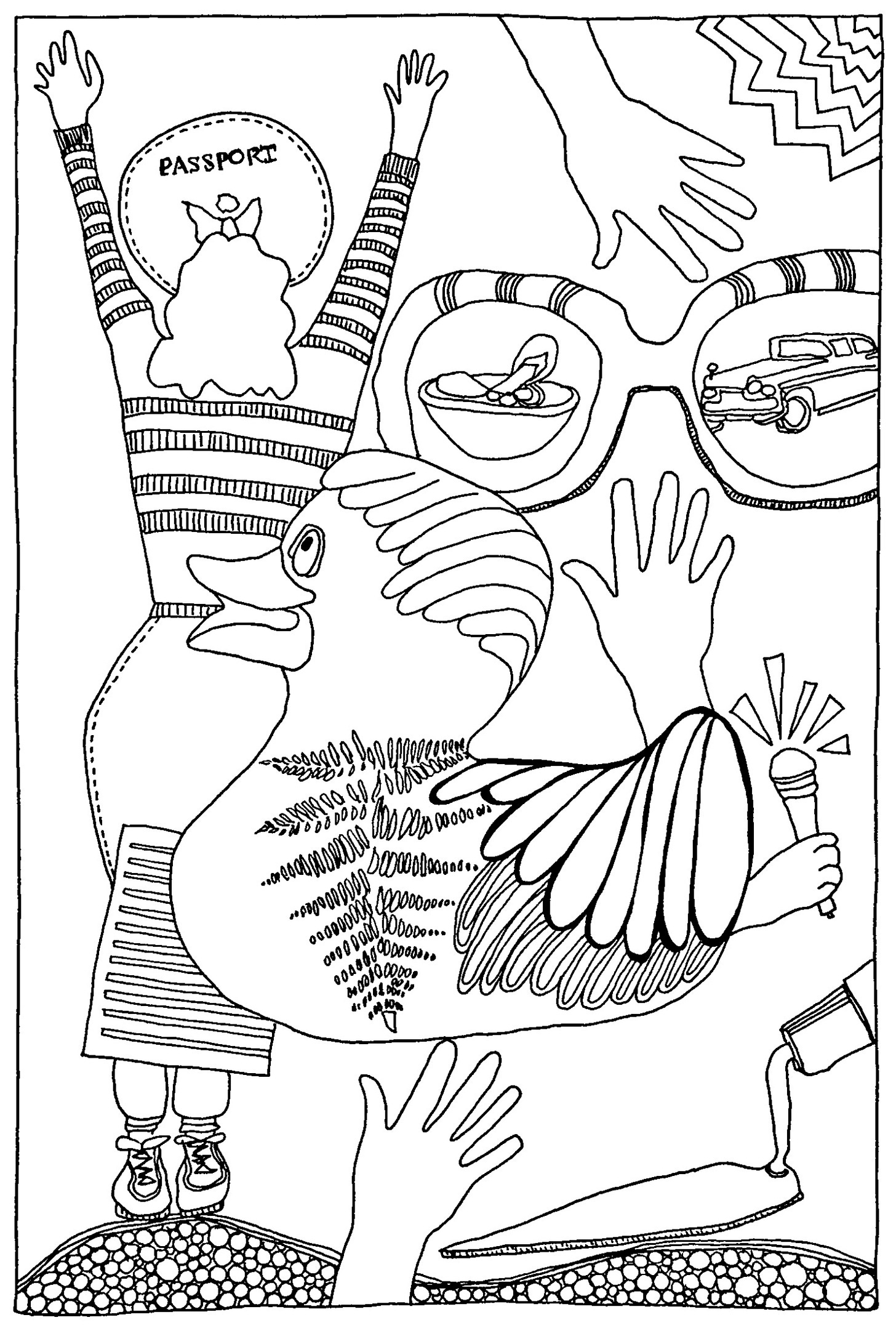
©2026, Suzanne Gibbs. Illustration for The Hermitess Papers.
Of course, some things were carefully recorded. Recipes tend to get saved. Below is a 1960’s typical potluck party recipe that AI helped me to find:
Ingredients
1 package (6 ounces) lime-flavored gelatin
2 cups boiling water
1 can (15 to 20 ounces) crushed pineapple
Cold water
1 cup cottage cheese
½ cup chopped walnuts or pecans
Method
Drain the pineapple, reserving the juice.
Dissolve the lime gelatin in 2 cups boiling water.
Add enough cold water to the reserved pineapple juice to make 2 cups. Stir this into the gelatin.
Refrigerate until partially set, about 1 to 2 hours.
Stir in the crushed pineapple and chopped nuts.
When the mixture is nearly firm, fold in the cottage cheese.
Pour into a gelatin mold or serving dish and refrigerate until completely set.
Unmold onto lettuce leaves, if desired.
Some stories are carefully recorded. Others have to be wondered toward.
Subscribe to The Hermitess Papers for weekly illustrated essays, poems, questions, and small acts of attention.
Comments
Nothing yet. Say the first thing.
Sign in to join the conversation.