
When I was a young person, the world was a scary place. I was an anxious kid, with high self expectations. And that required going out into the world—even if it made me feel physically ill to do it.
I’ll never forget my first day at university. I woke up nauseous, stumbled down the hall, and threw up. I wanted to crawl back into my narrow dorm room bunk and pull the duvet over my head. I was that scared. But I got dressed, and headed to class, fighting back tears, but determined. I would do this.
Thankfully, I had chosen the right place—a miraculously good place. It was a small liberal arts college, and my dorm was filled with the most beautiful of souls—curious and kind, nerdy and altruistic. I loved my time at Willamette University —it was a safe place where I was able to come out of my shell.
And it was also the place where my faith took a hard left.
I was raised in a mainstream Baptist church, but at 15 I decided to rebel—by getting even more religious! I left my parents’ sedate congregation, opting for one that was charismatic, rowdy, and had cool music. On the surface, it seemed more progressive, but in actuality, its politics and theology were much more conservative. I was struggling mightily with depression and anxiety, and this new congregation offered the safety and assurance of absolutes. It was a faith without ambiguity. We knew how the story would end. And I found that inspiring and comforting.
But it only took a few months of college before I started to discern the cracks in those fundamentalist absolutes. There were two major turning points for me.
The first, took place at an evening church service, midway through my freshman year. I knew at the time that I was standing at a precipice, that if I kept learning, my view of the world was going to have to change. And that was simply terrifying. The certainty I’d relied on for so long would have to soften, expand. It meant acknowledging that I did not know how the story would end.
I remember praying fervently, pleading for guidance. At that moment, I was prepared to leave school, to give up the full tuition scholarship I had worked so hard for. If that was what God wanted me to do, I’d do it.
I held out my hands, palms up, my future resting lightly on the tips of my fingers, ready to let it all go.
When the altar call came, I stumbled forward with tears streaming down my face.
An older woman stepped up to pray with me, and I still remember the feel of her arm around my shaking shoulders. She asked if I wanted to talk.
We went to a quiet corner, and I told her my fears, that what I was learning in college—in my biology classes, my history classes, my religion and philosophy classes—was challenging my faith. Should I drop out? I asked.
I don’t remember this woman’s name, but every once in a while I think of her, and this moment, when I held out my future and put it in her hands. I sat there, with all the earnest fervor of a deeply feeling eighteen year old, ready to be told what I ought to do.
“All truth is God’s truth,” She said. “Go back to school. Learn everything you can, with an open heart and an open mind. God won’t let you get lost. God is bigger than you think.”
I was almost disappointed—I had been prepared to make a grand gesture after all. But I was also relieved. Because as much as it scared me, I loved learning, and it would have broken my heart to drop out.
I can’t help but wonder what could have happened if someone else had come to pray with me that evening. It almost makes me dizzy to think about it—that young, impressionable me, perched on the edge of that cliff.
The second turning point came nearly a year later, when that church and I reached a moral impasse.
It was 1992, and my home state of Oregon was also at a turning point. Measure 9 was on the ballot, a deeply hateful piece of proposed legislation, that remains “one of the most comprehensive – and harshest – antigay measures put to voters in American history.” (Check out this great site that recounts this moment in history and the impacts of No on 9 protests, including photos and oral histories.) The act would have effectively made it illegal to be gay, codifying homosexuality in the same category as pedophilia. It was vicious, and ran counter to everything I had been taught about the radical compassion and unconditional love of Jesus.
The irony was that while this ballot measure sought to criminalize and penalize LGBTQ folks, it ultimately had the opposite effect. Queer folks who had been living quietly up til then took to the streets. Straight folks who had never given much thought to the matter suddenly realized that this ballot measure targeted our friends, siblings, coworkers, and neighbors. It brought LGBTQ rights into the streets and into daily conversation, and changed the landscape, ultimately, for the better.
For my part, I knew that Jesus never said a word about same sex relationships, though he had a lot to say about standing up for the powerless, and caring for the poor, the hungry, the refugee, the prisoner. I knew he preferred the company of the marginalized and maligned. I joined the No on 9 protests, linked arms with friends, and knew it was the right thing to do.
So when members of my church started vocally supporting Measure 9 I was horrified. I called my pastor, looking for reassurance. But he demurred, acknowledging that he found the proposed legislation “distasteful,” but that he did not want to speak out against it, for fear of retaliation.
I still remember the sad certainty that came over me in that moment. “I’m so sorry to hear that,” I said. “Because that means I can’t stay a part of this church.” This was no heroic protest. I’m not even sure I said it out loud. It was just a clarity that I could not be part of a community not grounded in compassion, care, and unconditional love.
I’m writing this on the last day of Pride Month (though I prefer to think of it as Pride Season, so we can keep this party going all summer long). And it’s got me thinking about the importance of joyful, determined celebration. Even in the midst of fear, and uncertainty, and unrelenting bad news. Look at those photos from the No on 9 rallies, and you see sorrow, but you also see a fierce, determined joy.
It’s the same thing I saw in April’s protests, and May’s protests, and the No Kings rally on June 14th, as we gathered—by the dozens or the tens of thousands—to protest the madness unfolding in our federal government. We are hurting, and afraid, and angry—and yet, when we get together, we can’t help but dance. Because when we get together, we can’t help but feel the love.
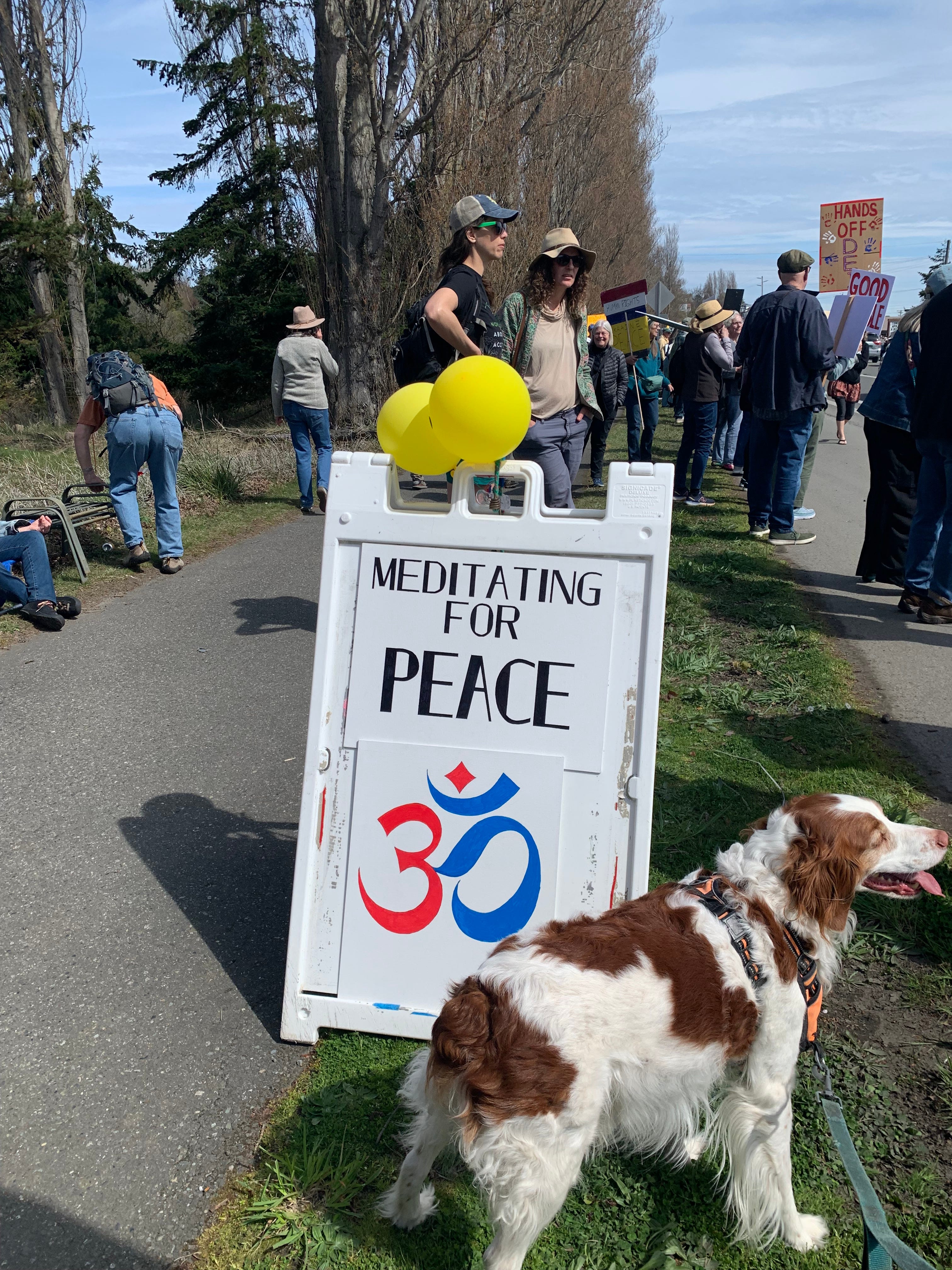
We insist on joy. It’s a moment to live into the yes, and. (Yes, things suck. And I’ll shake my groove thang anyway.)
We encounter these moments—personally and collectively—when we hold our future in our hands. I don’t mean clutching at it with sweaty palms, but holding it lightly, balanced on the tips of our fingers. These are moments just before we take that step into the scary and unknown. It’s the leap of faith that takes us into a world that is more complex, and complicated, and messy, but still grounded in the moral center we know to be true: that love is love, and water is life, and we would all do well to consider the lilies of the field.
These have been weeks of utter brilliance—warm evenings, misty hikes, waking up in a campsite beside a lake, catching up with friends, watching my child become an independent young adult—and I am full of gratitude. And at the same time, I am wracked with sorrow and outrage and fear. At insane legislation. At acts of war. At unmarked vans of armed vigilantes threatening people in my own neighborhood, claiming to be ICE but offering no proof, and terrorizing the vulnerable.
I hold joy and gratitude in one hand, and fear and anger in the other. They are both true.
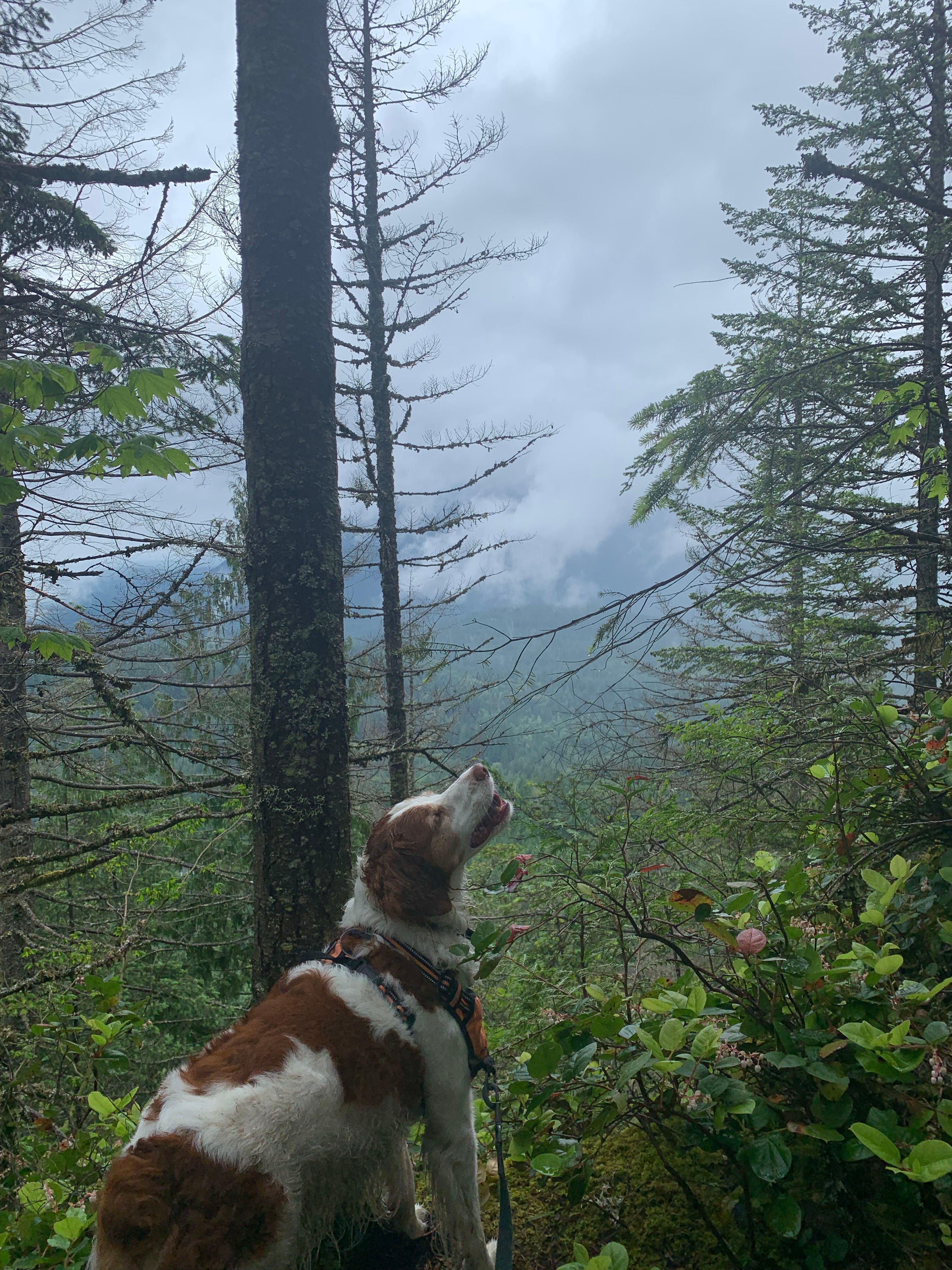
Ten years ago, I published an article about Kaúxuma núpika, a 19th century transgender prophet who traveled widely throughout the Columbia Plateau. I’ve been thinking a lot about this remarkable individual this month, because his life exemplified what it means to live at a turning point, and to embrace the messy complexity of determination in the face of uncertainty, of not knowing how the story will end. (Click the link to get free access to the article published in the Journal Theology and Sexuality.)
The name Kaúxuma núpika means “Gone to the Spirits,” and is the name he received after he died, and came back to life. Kaúxuma núpika journeyed to the spirit world, where he was given a vision, and informed that he would return to life a new person, with a new name and a new gender. Born female, Kaúxuma núpika lived the second half of their life as a man, going on to marry a woman and become famous as a scout and courier, prophet, and warrior. Stories tell of his supernatural abilities, his powerful spirit helpers, and his near-invinsibility. Knife wounds would heal instantly. He won every fight, navigated impossible terrain, and negotiated the peace.
Euroamerican settlers scarcely knew what to make of him. But he knew what to make of them.
He traveled the length of the Columbia, warning the people of coming days of devastation—of disease that would decimate communities, and the threats that white settlers posed to Native ways of life. But he also offered hope—a promise that the people could take the best of what settlers offered, and use it to renew the world.
It’s a remarkable story of a remarkable person, and one that sits within a wider tradition of sexual and gender diversity in Native North American cultures.
You’ve probably heard the term Two Spirit to refer to Indigenous folks whose identities fall outside of the gender binary. The term was adopted in 1990s from Anishinaabe teachings, but each Native culture has their own ways of understanding gender diversity. Scholars have surveyed hundreds of Indigenous North American languages, and found that every single one included terminology for gender diversity—many Indigenous cultures understood there to be four genders, some had as many as ten!
In Indigenous communities, gender diversity was (and in many places still is) not just tolerated, celebrated. These are identities associated with spiritual gifts, with unique abilities and ways of seeing the world, the power to cross borders and boundaries, to hold multiple truths at the same time, to broker peace, and care for orphans, to see into Spirit.
Kaúxuma núpika’s transformation was revealed in a vision.
What must that morning have felt like, when he returned to life, holding this new name, new gender, new calling in his hands? Was it joyful and liberating? Was it terrible and terrifying? Was it all of these things at once?
We are collectively at another turning point, when we have to hold our futures lightly, resting in open hands. When we have no choice but to lean into ambiguity and fearful unknowing, even as we remember the things that will always remain true.
That love is love, water is life, and we should consider the lilies of the field.
It’s a moment when we may need to give up everything that we have been, if we’re to be true to what we are. Yes, I am angry and afraid, and I will also choose to dance, with stubborn, determined joy.
If you’re in the Seattle area, come see me Thursday, July 17th at Seattle Climate Week! I’ll be joined by Loni Greninger (Vice Chairperson Jamestown S’klallam Tribe), Imam Jamal Rahman (Seattle Interfaith Sanctuary), Philip Saunders (People of Color in Green Spaces) and Pastor Erik Wilson-Weiberg (Ballard First Lutheran), for a fantastic panel discussing intercultural and interfaith approaches to climate anxiety. This is gonna be really good.
“Turn Anxiety into Action: Cultures of Hope in a Changing Climate”
Thursday, July 17th, 4:30-6:30pm
9Zero Climate Innovation Hub
July 21-24 I’ll be heading back out to Holden Village, where I’ll be teaching about comparative contemplative practice as tools for transforming climate grief. Can’t wait to get back up into the mountains and spend time with this beautiful community.
Thanks for reading Climate Anxiety and Spiritual Resilience! This post is public so feel free to share it.
Comments
Nothing yet. Say the first thing.
Sign in to join the conversation.