
the first essay from a collection on The Art of Living, as creatively explored through each of the twelve cosmic archetypes.
this one’s on the practice of evoking courage as an art of living, inspired by the season and archetype of Aries ♈︎
Sometimes, spring brings with her two types of snow.
There’s the snow of winter melting into spring.
And there’s what follows almost too soon after, a second snow. Cherry blossoms stirring, shaking themselves loose, all too easily, off the branches of trees that got to hold them, just for a little while.
The “cherry blossom snow storm”, or sakurafubuki (桜吹雪), is how this second snow is referred to in Japan.
Sometimes, I am lucky enough to find myself somewhere in the world where I get to encounter these two types of snow in the spring.
The beauty of snow birthing spring, followed almost immediately after by the wonder of spring birthing back into snow.
And I think about how not all breaking has to be violent.
I get to feel how not all birth has to be painful.
As a child, I was surprised when my mother told me that her birthing of me was painless.
“You came out of me, just like that. There was no pain.”
A little before or after this, my grandmother had said to me almost exactly the same thing about her birthing of four children — my mother, her two older sisters, and her younger brother.
I had one foot set in belief, while the other foot stayed in disbelief.
Perhaps, at that age, with the stories I had picked up from around me in life, I was somehow already carrying images, ideas, imprints of birth that were inseparable from pain.
Was there in fact no pain, or was it that my mother and grandmother did not feel the pain that was there?
Or was it something they carried in them that left no space for pain to make itself known to my mother and grandmother?
I didn’t yet know enough to ask, but after I was born, I came to brush up many times against the intricate textures of suffering that the women who birthed me each carried in their lives.
I couldn’t help but think that perhaps the ability to feel pain was necessary and important, after all.
Without pain, how does one know to press the “stop” button in times of emergency?
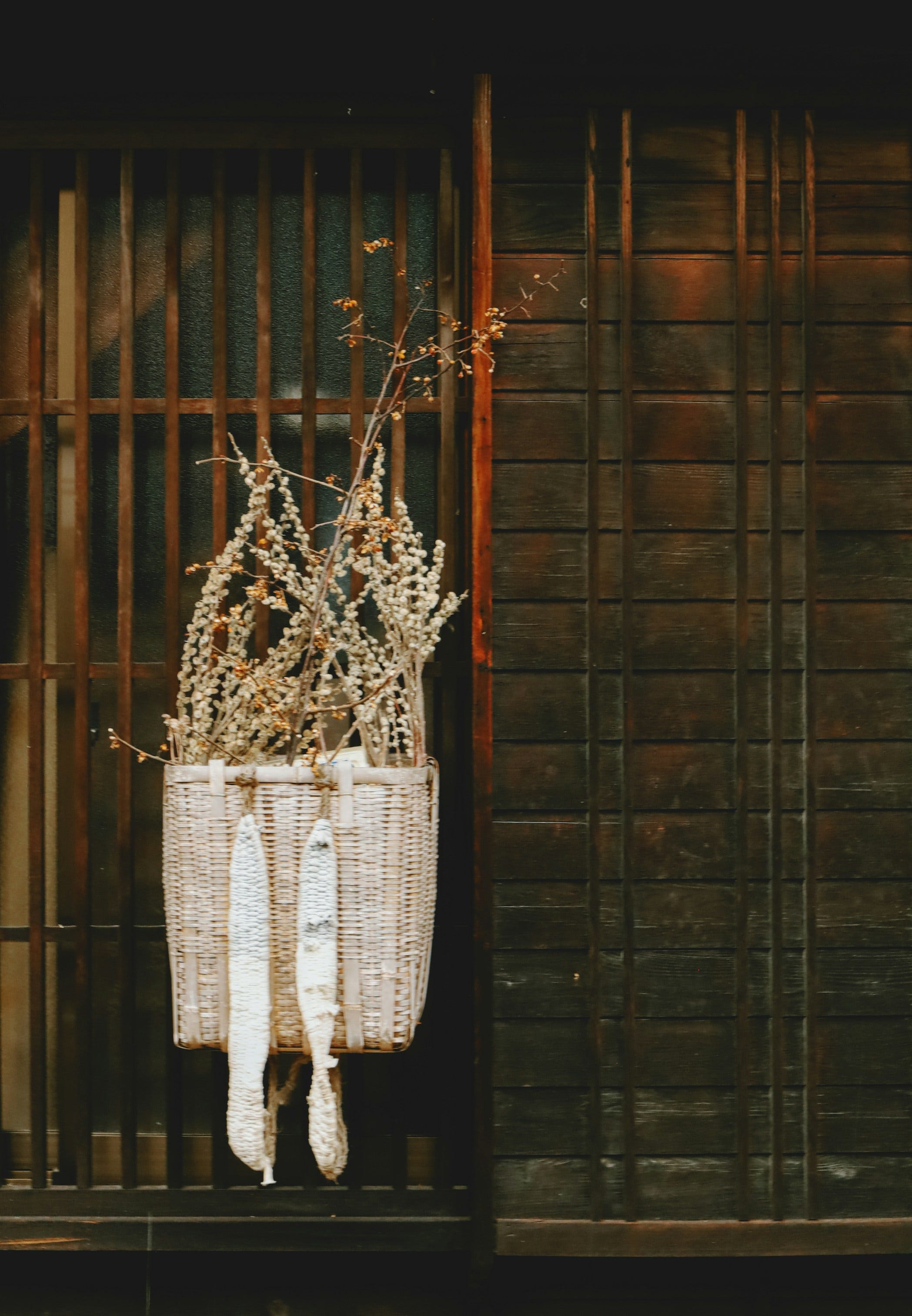
Can loudness be gentle?
Tiny raindrops are falling, onto a tin roof dance of giant echoes
Can quietness be violent?
Silence is falling, deafening with words left unspoken
Sometimes, I wonder if I am my mother’s daughter, because as much as she prides herself on never feeling pain, I have found myself equipped with a keenly developed sensitivity and aversion to sensory pain.
So much so that I pay lots of attention and direct a lot of energy to avoiding circumstances or activities that might bring me in contact with sensory pain.
Yet it has been said, that in every thing we resist grows the seed of what we become.
While fixated on avoiding and resisting the suffering of sensory pain, I stayed in unawareness that there was a different kind of pain gathering and forming in ways and places that were not perceptible by my senses.
On witnessing my flinching against life’s random encounters with sensory pain (despite the great care I took to avoid it), my mother would often say to me, “if you can’t even take this little pain, how are you ever going to bear the pain of childbirth?”
I think about the current and foreseeable absence of grandchildren in my mother’s life, and wonder if she can accept my answer to her question.
One afternoon, a rupture.
I cried my first cry as a baby, and my umbilical cord was cut, severing me physically from my mother.
On another afternoon, to the exact day thirteen years after my grandmother’s passing, and seconds after I published my last story (on navigating the cycles of life, death, living in between worlds, and rebirth), another rupture.
For reasons no one could explain or identify with certainty, I suffered a sudden, severe loss of hearing in my right ear.
What they could tell me was that there was a rupture somewhere in the transmission of sound, in the channel that was intended for sound waves picked up by my right ear to be carried to my brain for me to cognitively register as sound.
In the following weeks, I swallowed very strong prescription medication every day and hoped that my hearing would be returned to me.
I stopped hating the grating sounds of construction and demolition that had been going on for over a year right next to my apartment building, I stopped being annoyed with the incessant barking of all the neighbours’ dogs every night when I was trying to sleep, I stopped being bored by the sounds of doing the dishes that had led me to perpetually be streaming podcasts into my ears as a distraction.
What a privilege it had been, to have been able to hear with so much clarity and continuity all these sounds I had dismissed as noises that should be given no place in my life.
What I would now give to be able to hear every pile hammer slamming into the earth, every bark reverberating in the night air, every drop of soapy water falling into the stone kitchen sink.
During what was one of the scariest and most vulnerable periods of my life, my attention was also directed to other ruptures I had been trying to ignore.
Ruptures in communications with my family that couldn’t be repaired by the pressing of a metaphorical emergency stop button, even during such times.
Since I couldn’t hear well, and there was nothing for me to hear from my family, I spent my time instead with the flowers, trees, and birds in the park near my home.
I realized that I did not need to hear them for me to understand them. I simply needed to listen.
After some weeks of listening without being able to hear, I was grateful to have most of the hearing in my right ear returned to me.
I could not find the words for it at the time, but something had been born, quietly, out of this rupture.
And I needed to keep listening, not just hearing, in order to understand what had been born.
Starting at the time of the rupture in my hearing, I found myself wholly unable to write in the way I used to, for over a year.
I think it was partly because I was starting to find it unbearable that everything I tried to write ended up revealing a mother-shaped hole. And that no matter what I did, I just couldn’t find an answer for how to fill up that hole.
At the same time, other different ruptures emerged that I had to navigate. And my approach at the time was to push against these ruptures.
I pushed to try and reach as deeply into them as I could, to pull out explanations for their existence, which I could then use to seal up the cracks.
I kept trying to hear for answers from somewhere outside me, but I hadn’t been listening to understand that answers needed time and their own way to emerge from within me.
Perhaps the unbearability of it all was why my right ear stopped wanting to hear it. That was my most definitive way of telling me — stop, that’s more than enough for now.
I stopped, and I still couldn’t see what shape of self lay under or around the hole, which led me to fear that nothing existed apart from that gaping emptiness.
When I shared this with my writing mentor, Trivarna Hariharan, she invited me to explore —
What might it be to write not of the wound (or touch its centre), but write sideways?
For a long time, I could feel only the faint edges of what this might mean, unable to grasp beyond those edges.
With time, I came to see that, because I had been maintaining a perpetual and hovering sort of existence at the edges of the wound, perhaps I was already at the perfect vantage point to look at the wound from sideways, rather than face to face.
From sideways, it started looking less like the answer for the cause of all my problems, and more like a question to get compassionate and curious about.
In her book, Belonging — Remembering Ourselves Home, Toko-pa Turner writes that “originality comes when you stay close to emptiness, making it a welcoming place… learning the shape of it, and filling it with your questions.”
That is why, she realizes, “every great artist I know is obsessed with a question, and their artworks are less attempts to answer that question than they are exaltations of asking.”
“The poet doesn’t invent,” observed Jean Cocteau, the French avant-garde artist, writer, and filmmaker. “He listens.”
What would it be like to stop trying to patch up the hole, and instead learn to live graciously alongside it?
What would it be like to stop telling myself that I have fallen into too large a hole to ever be able to feel and live life fully, but instead listen out for how life wants to arrange itself around that hole?
“Every midwife knows that not until a mother’s womb softens from the pain of labour will a way unfold and the infant find that opening to be born.”
— Rumi
When a mother feels the pain of labour and softens against it, an opening is created for birth.
When pain exists but cannot be felt, the immense dam of not-feeling becomes an invisible wall of resistance against which all things that collide with it are smashed, spectacularly.
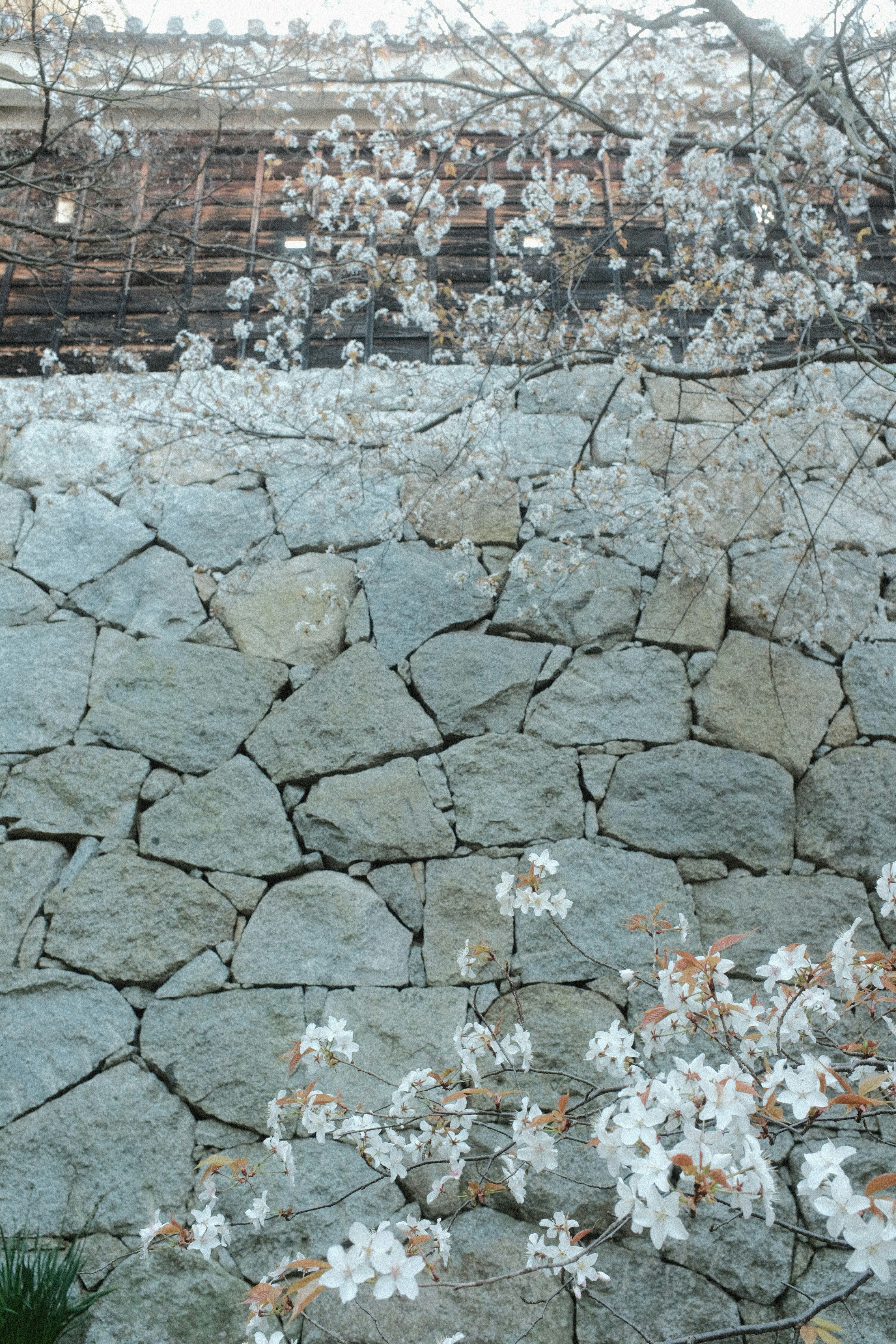
In Japanese traditional stone construction, a special design technique is used to allow ancient stone buildings and structures to stay resilient against impact from earthquakes.
The design involves positioning stones of uneven surfaces in a way that leaves gaps between them, allowing the irregular gaps and the high friction between the stones to absorb significant energy from shocks.
Stone resists impact through hardness.
Air absorbs impact through softness and yielding.
Yet, resistance concentrates the shock, while absorption dissipates it.
It is this capacity for meeting earthquakes with absorbent dissipation, rather than resistant concentration, that makes the ancient stone constructions able to withstand centuries of impact.
I begin to see that ruptures are not the same as annihilation. Something still remains behind for ruptures to form out of.
The inherent space-creating quality of the rupture is what absorbs that which is too much to be felt or met with directly during impact.
Perhaps rupture can be met with gentleness, by patiently holding the rupture in such a way for form to eventually emerge from fracture.
The fracture, the space between, is the form.
The rupture is a bridge formed out of space.
Contemplating the particular shapes of my own separation from my mother, from a life path as a mother, from the children that I wouldn’t be personally birthing into existence, I feel pouring out from these ruptures an immense flow of gratitude that I myself exist, that I have myself been born.
After a long battle against the cracks I carry, fighting them with anger and blame, I realize one day that those cracks can’t be empty — their existence is both sustained, and made perceptible, by the life that flows underneath and around them.
I am deeply grateful for my existence, complete with all its cracks. And this ability to feel, to experience the meaning of an existence with cracks is undeniably life, through and through.
A life I will forever be grateful to have been given, by my mother, and before that, my grandmother, and before that, all the women who came before the birth of my grandmother.
If my mother and grandmother’s memories of childbirth were painless, then I can be glad for them without needing to dig into why we all still suffered, anyway.
I am grateful for their softening into birth, into that moment of life and life-giving, even if (or maybe, especially because) what came after that was the slow-burning grief of a hardening against life.
“The storyteller is a survivor, after all. ‘I lived to tell the tale’ is not an idle saying…Storytelling is a fight against forgetting, against loss and even mortality. Every time a story is told about someone who’s dead, it’s a resurrection. Every time a story is told about the past, we’re doubly alive.”
― Michele Filgate, What My Mother and I Don’t Talk About: Fifteen Writers Break the Silence
Today, I read that a spider deploys various tools and ways to avoid getting stuck in its own web, including making only selected parts of the web sticky to trap its food, without also trapping itself.
Yet, even if rarely, spiders still do get stuck in their own webs sometimes if they are pushed (by forces of nature or man), if they fall on their backs, or if they are clumsy (I resonate).
In the process of shaking to unstick itself, the spider may rupture parts of its web. Rebuilding requires the spider to first consume the silk of the damaged areas of the web, so that it can digest and recycle the nutrients needed for weaving new threads and restoring its web.
I learn to unfold myself carefully out of the dense, sticky parts of the web woven from the threads of my and my family’s memories, ancestry, and history, while remaining connected to the web.
I learn that I can soften into curiosity and questions, while also not needing to keep excavating for all the answers to all the questions.
I learn that I can shake free when I get caught in the stickiness of my own web. I learn that I can leave some, even too many, questions unanswered.
I learn to forge a new beginning, while understanding and accepting that the past is not something to outrun (or something that can be outrun), but something whose pattern of impact teaches me how to design a responsive pattern of gaps and irregular stones to house that impact with safety and resilience.
After a rupture, I wait for the time it takes for a bridge to form, so I can cross it and return.
I grow towards the light today, not anymore out of a wish for my past to be different, but as a dedication to finding the bridges for returning to my present. As a devotion to shaping my own present and future. In my own voice, with my own hands.
I am learning to shape a present in which I can belong as I am right now.
It involves a lot of listening, without necessarily needing answers.
It involves a lot of making the choice not to leave my voice, my words, my dreams, my hopes and my fears.
It involves a lot of practising how to go away without leaving.
Stop leaving, and you will arrive, said Lao Tzu.
I birth my way back to arrive at a place where I fully am, where I am complete with my holes and cracks.
It is a place that is alive with the past in the present, and the present in the future.
It is a place that is alive with me, with my mother in me, with my grandmother in my mother in me.
𓍯𓂃
⋆˚₊ 𖤓☽˚.⋆
Thank you for being here with my words, and a special thank you to everyone who has stayed with A Tangerine Moon over the past year of my going away.
Thank you for trusting that while I had gone away, I hadn’t left.
I am grateful for you keeping your letter boxes open to my words, and I’m truly happy to be in conversation with you again ♡
✉︎. ݁₊ ⊹ . ݁˖ . ݁
☾₊ ⊹ Cosmic Conversations ☾₊ ⊹
thanks for reading and being part of the first edition of a new series on A Tangerine Moon, written for the existentially and cosmically curious.
Cosmic Conversations brings together creative exploratory life writing, archetypes, and astrology, as well as community discussion and storytelling around the intersection of these topics.
𖦹
The Art of Living —
A Creative Exploration through the Twelve Cosmic Archetypes
♈︎ Aries edition ♈︎
Cosmic Conversations is starting off with an essay collection on The Art of Living, as creatively explored through each of the twelve cosmic archetypes — Aries, Taurus, Gemini, Cancer, Leo, Virgo, Libra, Scorpio, Sagittarius, Capricorn, Aquarius, and Pisces.
Archetypes (named by Swiss psychiatrist Carl Jung, from the ancient Greek for “first principles”) are universal patterns in the human psyche that translate into patterns of human behaviour. They are deep psychological structures that form the foundations of our attitude towards life and our way of dealing with the world. They inform not only how we react to the world, but how we perceive it.1
The Art of Living series is an exploratory dialogue between the archetypal stories unfolding in the stars above, and the archetypal stories unfolding here below.
Each edition opens with a personal essay on the art of living, as inspired by one of the twelve cosmic archetypes. It also introduces the qualities of that archetype and my reflections on expression and embodiment of those archetypal energies in life.
The conversation stays open, and you’re invited to join in by sharing your own reflections and experiences in the comments.
𖦹
This edition of The Art of Living is inspired by the archetypal energies of Aries and this Aries season ♈︎.
It explores the expression and embodiment of the archetypes of Aries, and of Mars, Chiron, Saturn, and Neptune in Aries.
𖦹
The constellation of words and ideas that shaped this essay (a birth of snow from spring), was birthed under the New Moon in Aries.
Aries season is the month that the Sun spends travelling through the zodiac sign of Aries, which is from 20 March to 19 April this year.
New Moons mark the start of a lunar cycle, when the Moon and the Sun meet with each other in the same sign. It is a time of new beginnings, birth / rebirth, planting seeds and laying foundations for the future.
Even after the Moon and Sun depart Aries this month, however, the archetype of Aries continues to be highly active with the presence of Mercury and Mars (until May), Chiron (until April 2027), Saturn (until April 2028), and Neptune (until March 2039) — more on this below.
♈︎ Aries — the one who evokes courage as an art of living ♈︎
Aries is the archetype of the warrior, defender, survivor, heroine, pioneer, and leader. Aries represents life force energy, the will to live, the breaking of new grounds, and the assertion of self.
Forged in the element of cardinal fire, Aries embodies the power of the will to shape a life through initiation and instinct.
While Aries is associated with courage, courage is not something that is bestowed or that falls out of the sky into Aries’ hands. Nor is courage something that pre-exists in overflowing reserves in Aries.
Instead, what Aries does over a lifetime of experience is develop its capacity to evoke2 courage when the circumstances demand it, in response to the nature of the mountains (inner or outer) it finds itself faced with in life.
The word evoke comes from the Latin evocare, with vocare meaning “to call” (this is the same root for the word, “vocation”).
Evoke has the meaning of “calling up, conjuring, or re-creating through the imagination”. It implies a strong stimulus that arouses an emotion or an interest or recalls an image or memory.3
The qualities of the courage evoked depend as much on the qualities of Aries’ inner capacity, as on the qualities of the mountain that challenges it.
The courage that is evoked is birthed from the dialogue between Aries and the mountain it faces and chooses to climb (or not — sometimes Aries needs to rest first, and come back to the mountain later).
Aries can be found in the first crying breath of the one who receives new life to be born, and Aries can be found in the final muscular release of the one who births to give new life.
Aries is present in the women who have birthed me, and Aries is present in my claiming of the right to survive and to live well, despite (or perhaps especially because of) what was lost or broken in the process.
Mars — the one who breaks and cuts to preserve
Aries is ruled by the planet, Mars, named for the Greek war god, hero, and strategist.
Currently at home in the sign of Aries, Mars is associated with conflict (between the self and other, or the self and society), and also with desire, passion, willpower, courage, action, and separation.
Mars breaks and cuts, and is evoked by the part of us that desires to preserve the self, and to honour the individual being.
Chiron — the wounded healer whose past didn’t restrict his future
The Moon and Sun in Aries have been right next to Chiron, the asteroid named for the mythological centaur and teacher of all the Greek gods of Olympus.
Also known as the “wounded healer”, Chiron’s distinctive gifts for healing and teaching about healing were birthed from his intimate familiarity with painful wounds that affected him for much of his life.
Mercury, Saturn, and Neptune
Joining the gathering of the Sun, Moon, Mars, and Chiron in Aries at this moment are
Mercury — the messenger between worlds and caster of words as spells,
Saturn — the keeper of time and architect of enduring foundations and long-term stability, including through alignment of actions, words, and choices over time, and
Neptune — the bringer of unity, dissolution, mystery, compassion, dreams, intuition, imagination, creativity, divine love and beauty, and transcendence
⟢ What is being illuminated ⟢
My ascendant is in Aries, and Aries relates to my first house area of life (self, identity, vitality, physicality, motivation, and energy for existence).
The explorations I went on in the writing of "a birth of snow from spring", show me how this cosmic season has evoked for me the act of my return to self, the call to unity within myself and unity between my past, present, and future, the recognition of received gifts and callings borne from pain, the honouring of all that has survived by choosing to assert my will to shape my life in the way I dream of, through alignment of my actions, words, and choices over time.
I am shown that time has its own way of working —
to allow what was once hard to dissolve into softness,
to allow what was once channelled into denying or avoiding pain to be freed, to follow the call to live instead in celebration and creation of beauty.
I start to understand how life is built brick by brick —
with patience for the unfolding of time required for natural life processes,
with respect for the mysteries of life that bring us into full circle, of snow melting into spring, and spring blossoming into snow,
over and over again.
𖦹
How about you? What is your relationship with the archetypes of Aries and Mars, and where (which house) in life is Aries showing up for you?
I would love to hear your stories of rebirth or return to self, and what this season of life is evoking for you.
Gary Bobroff, Carl Jung (2021, Arcturus Publishing)
a word inspired by The Inner Sky, by Steven Forrest
from the Merriam-Webster Dictionary
Comments
Nothing yet. Say the first thing.
Sign in to join the conversation.