
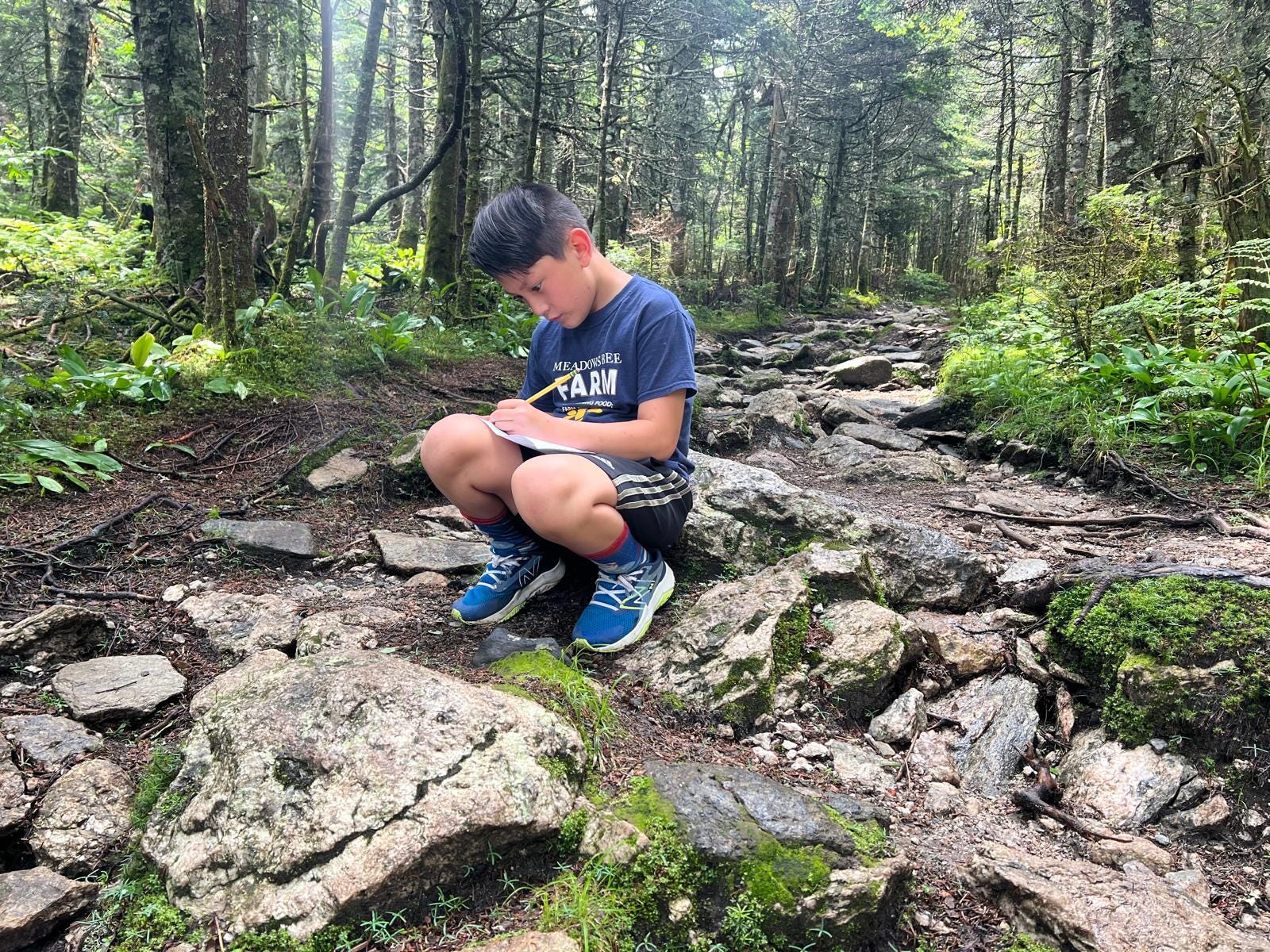
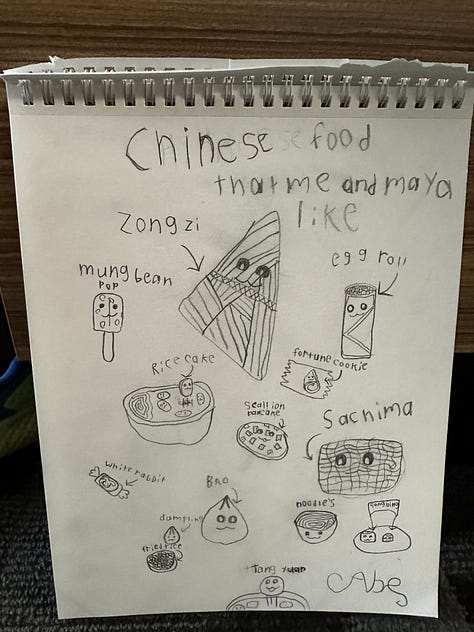
When Abe was four years old, he pointed to a restaurant we had never been to and said, “Pizza.” With no formal reading instruction, he had started to pick up sight words. Though he did attend school up to 1st grade, he largely started reading on his own. Absorbing facts is a huge motivation for reading.
Maya has had to work hard to read at home. A lot of her progress was made at bedtime, cuddled up with dad, reading the same Leap phonics books over and over. Words, for her, are a tool to access stories and connect to people in her life.
I have gotten to witness two totally different pathways to reading, and I wish there had been more resources to support a self-directed approach to literacy. I taught middle school reading and writing for years but knew very little about early literacy. Some key learnings that have shaped my approach:
Some kids pick up reading with very little adult guidance. Good for them! They are not the majority. Written language is a human technology. We are not hard-wired to read the way we are hard-wired for spoken language. Learning to read is a years-long journey, even for kids who seem to pick it up quickly. Think of it like riding a bike—at some point, explicit teaching is needed for most people. There’s a finite but long list of rules and exceptions we just have to memorize over time, e.g. B makes “buh.” (And there are hugely different approaches to teaching literacy among educators—that can be hard to untangle too.)
While data is limited, educators in self-directed schools report that pretty much all children will show interest in and learn to read eventually. Anecdotes abound of unschoolers who started to read as teenagers, quickly progressed to novels, and went to college. (Not that college has to be your goal.) I’ve personally seen many times that the later you learn a skill, the faster you can pick it up.
My variation of unschooling is not totally hands-off. I think about creating an environment where kids have access to many different activities and facilitating moments when they show interest in something. If you are using written language in varied ways in your life, your kids will understand that these skills are important. There are ways that you can make literacy skills authentically relevant even to young children: signs, schedules, story time, games, etc. One of my kids almost squeezed a tube of lotion onto their toothbrush—reading matters!
I explain types of literacy to my kids this way, to break down this idea that there’s a magical switch where someone who can’t read becomes someone who reads. I hate hearing, “But I/they can’t read.”
Reading pictures—We can all access storytelling, which is the purpose of written language! I love that wordless picture books are trending now.
Reading letters—Learning letters and the sounds they make is the beginning of phonics.
Reading words—Most kids start with “CVC” words like “cat,” where you combine a straightforward consonant, vowel, and consonant.
Reading sentences (and more)—They’re only words strung together, but they can very intimidating, especially for neurodivergent kids. We’ve found word games, I Spy books, and graphic novels to be accessible because they can appeal to older kids and present fewer words at a time than, say, a chapter book.
So how do you grow literacy skills in a way that aligns with unschooling and self-directed education? As always, following the child’s interests, giving them space to pursue a path that works for them, and facilitating when they’re ready. Which requires lots of experimentation! Here are some activities that have worked for us.
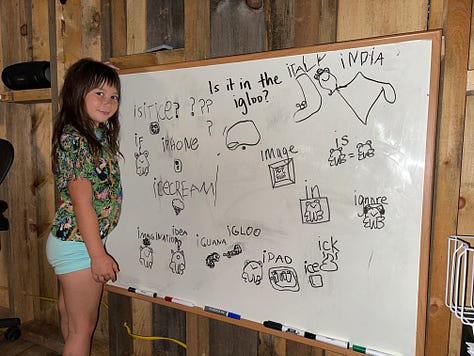
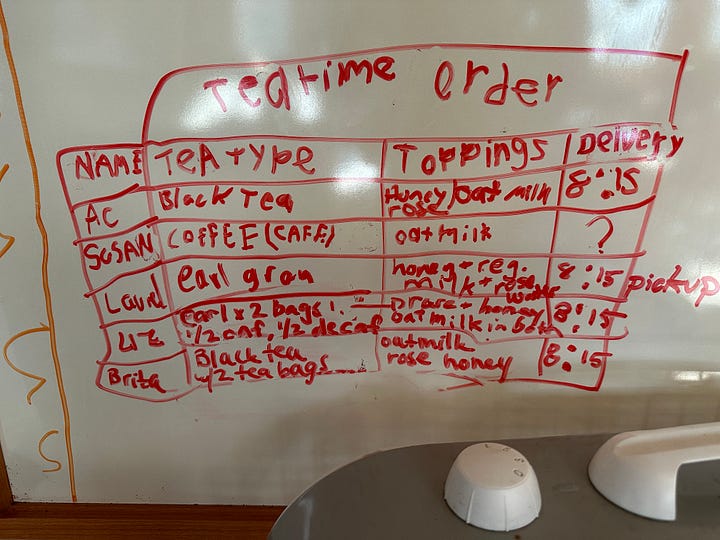
Physical space: We make weekly trips to the library and always have a combination of chapter books, graphic novels, and picture books around on a variety of topics. Hang up signs that you actually use, like a reminder to turn lights off. We update our calendar of activities and playdates regularly. For a stretch, we made “word walls” every night so there were always words on our whiteboard at home.
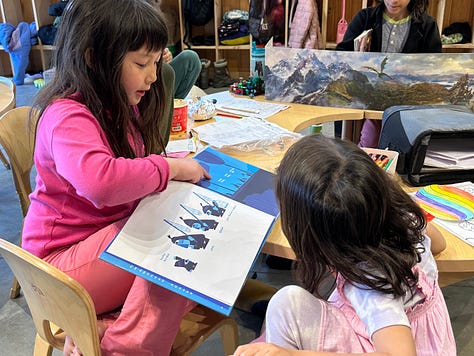
Service: Read to younger children. Volunteer at a local preschool—this is one of the most adorable things you can do. (How many dyslexic children in school get to build confidence by teaching letters and phonics to preschoolers?)
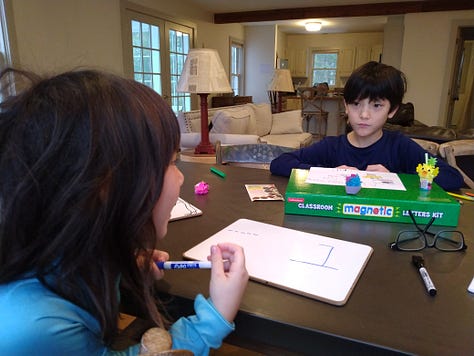
Play: Find ways that words are relevant to play. If you’re running a play store, make signs. Make a scavenger hunt or escape room with written clues. There are lots of great board games: Zingo, Scrabble, Scattergories: The Card Game, etc.
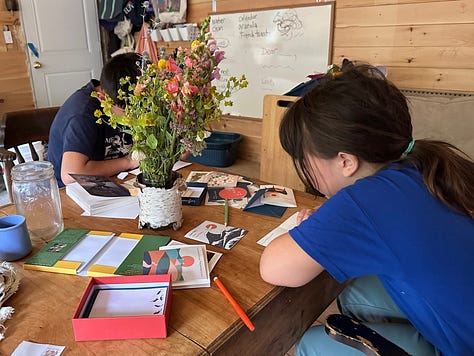
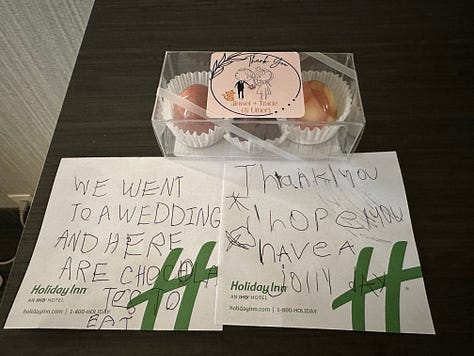
Relationships: Write letters and emails to friends and family. Words are for communicating with real lives humans who reply!
Facilitation: Years ago, my friend attended a workshop that taught parents to think of having 100 five-minute conversations instead of making one important speech on a topic. So much learning in our family happens in short, spontaneous conversations. If someone asks me for help spelling a word, I decode the phonemes instead of just spelling the letters. (“You’re right that ‘ee’ sounds like EE. In the word ‘read,’ ‘ea’ makes the EE sound.” Yes, English is the worst.)
Lessons: I have heard that older unschoolers who have not picked up reading will reach a point of frustration when they ask for explicit literacy instruction or a tutor. Unschooling doesn’t mean no adult-led teaching or no workbooks.
Let’s always remember that our goal is to support future adults who can connect to others and use enough reading and writing to contribute to the world in whichever role they end up in. Some of our kiddos will be using technological tools like speech-to-text to communicate. A self-directed approach to reading allows children to learn in a style that works for them, at their own pace. I and other educators have seen kids in school come to hate reading or avoid reading outside of school assignments. It is really magical when a child finds joy in reading for hours or spontaneously decides to write.
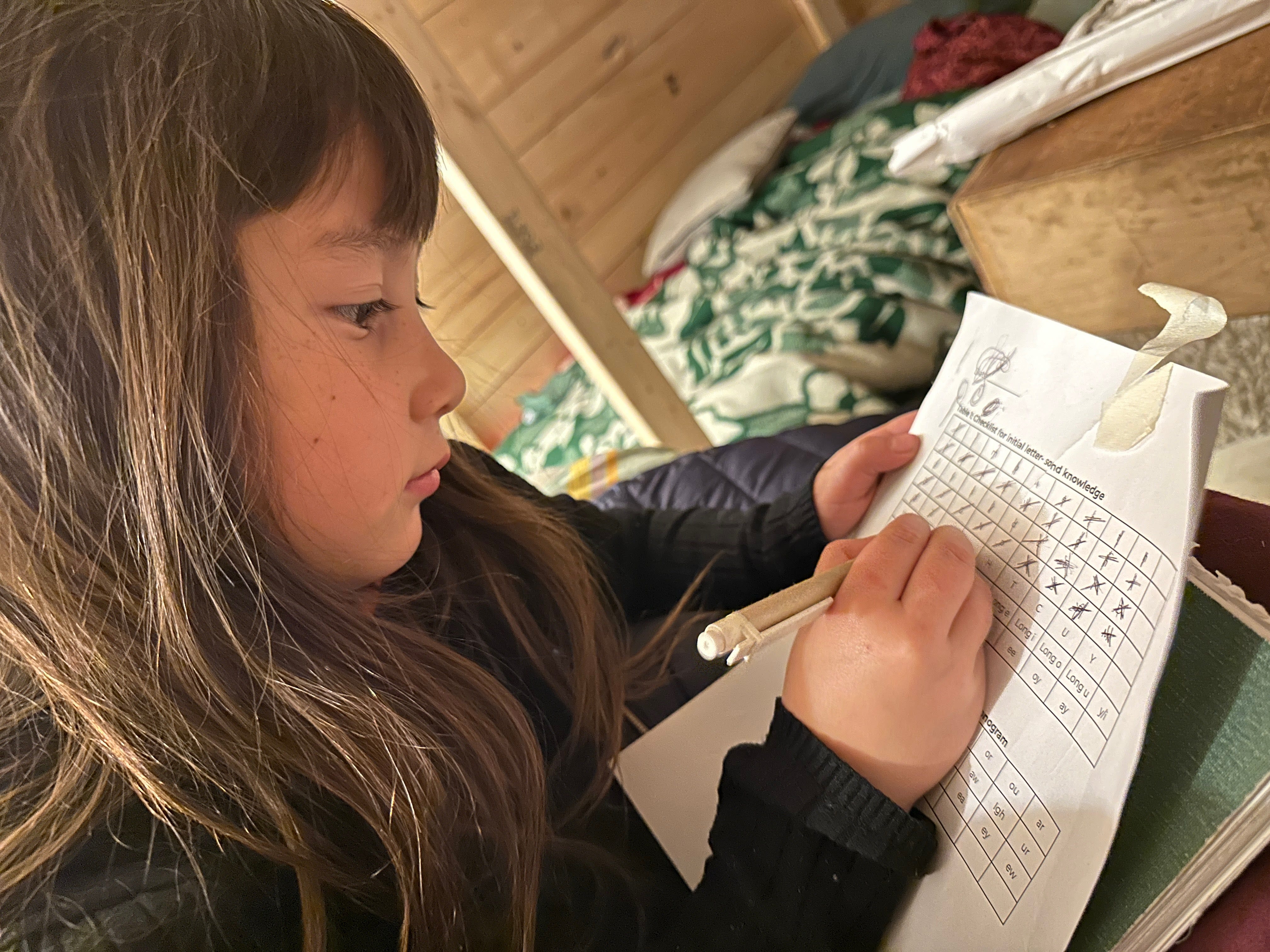
Suggested resources:
Nikolai Pizarro of Raising Readers trains homeschool parents to teach their kids to read. I joined one of her cohorts and found the coaching and lesson plans very helpful.
The Dyslexic Advantage presents brain research around dyslexia, which reveals a thinking style that is about so much more than reading. I’m most fascinated by the many stories of dyslexic people as struggling students in school vs. adults who have found their niche in society. Did you know Leonardo da Vinci and Anne Rice were dyslexic? Or that you can be a successful architect, engineer, or CEO while writing in all caps or not knowing your times tables?
No posts
Comments
Nothing yet. Say the first thing.
Sign in to join the conversation.