
A friend recently asked me about the age when my kids became self-directed.
My first thought was to several years ago, when we moved into a house with a yard for the first time. The kids, then 3 and 5, asked to go outside and told me, "Have fun by yourself!" It was a game-changing moment for me.
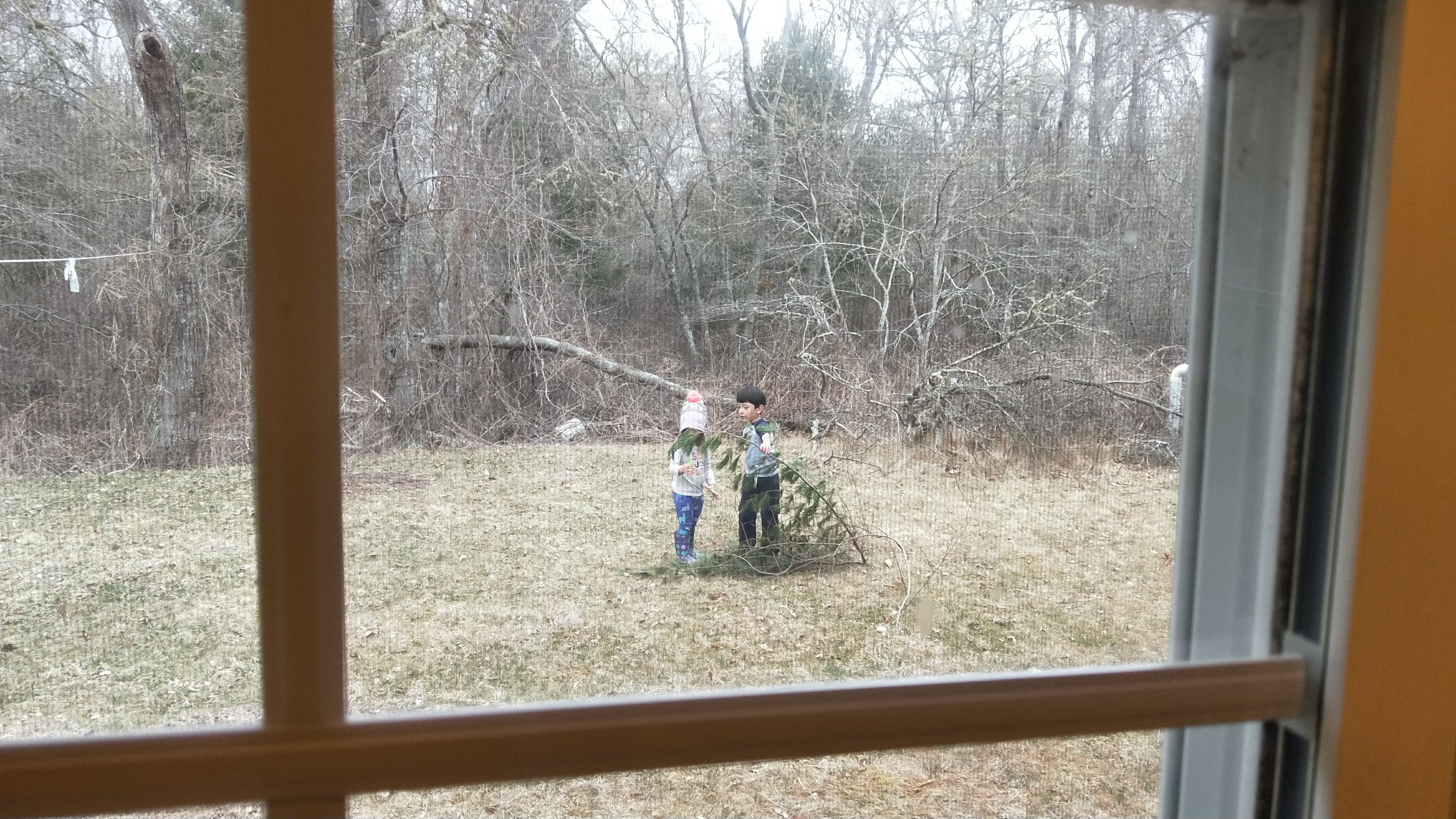
At 8 and 10, they can spend hours without adults: playing, reading, crafting, and generally setting their own agenda. We see this in our program, too—the kids are busy! My kids can also talk about what they’re learning, what they think they’re missing, and follow a list of tasks on their own. Is self-direction the moment when our kids leave us alone?
While a scope and sequence is anathema to unschooling, I am intrigued by the idea of rough milestones in this journey. As a working definition, let’s say that self-direction is the ability to identify your interests and choose them when they’re available. This can look many different ways, and adults may scaffold for different ages and abilities. At more independent stages, self-direction includes planning, reflection, and power over the availability of interests e.g. getting yourself to the necessary location. This is probably what you do as an adult!
Below is one possible way to break down the journey.
THE TODDLER YEARS: EXPLORING THE WORLD
What is your toddler interested in? How can you make it more easily available to them?
Toddlers are learning about and exploring the world around them. I wonder how a sense of possibility and agency at this age translate to self-direction later on.
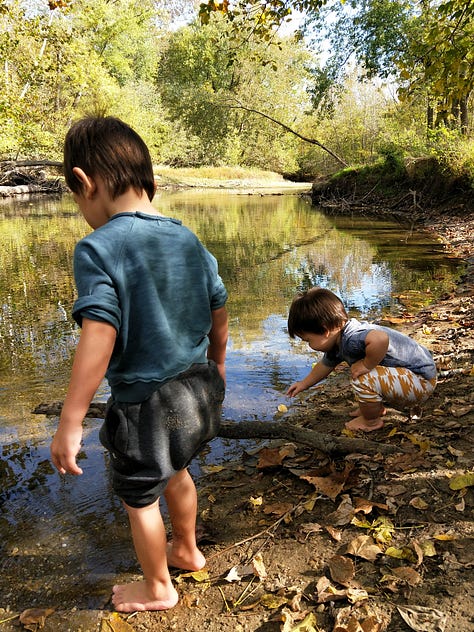
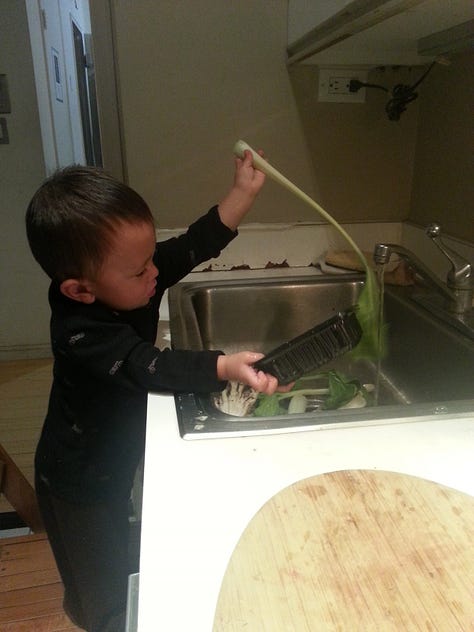
Sensory activities were big for us at this age: water, sand, dirt, clay. My mom’s trick was to set up a toddler at the sink to “wash dishes.” Pouring water between metal and plastic measuring cups and bowls was endlessly fascinating. Even better if you can go outside: Abe could spend an hour throwing rocks into a pond. We were lucky enough to live near the beach, where playing in the sand could last the entire day. Toddlers (and, really, all of us) belong outside. You won’t even need to clean up.
I remember fenced-in, toy-free playgrounds as places where I could sit back and do a crossword. Something about those play structures inspired a lot of independent play. Nature playgrounds were a real treat. And, of course, there are other kids there to play with. It probably made a big difference that I set a boundary to not play with my kids at playgrounds—I didn’t push swings or help climb or hover, etc. I was simply a chauffeur to a kids’ space.
What can you make self-serve without overwhelming your own tolerance for chaos? Tempera paint sticks and giant poster paper were our favorite art supplies. I hated paint because it required so much more adult support. Eventually, the kids could set up painting activities on their own if it was outside.
There’s huge overlap between self-direction and general independence. For example, our kids had floor beds so they could get in and out without help. I definitely tried to get my toddlers to pack their own school lunches, but I don’t remember if it worked. Similarly, if your child is engaged in something independently, try not joining. Let them do their own thing and play without adults. Let them not need you.
SUPPORTING BUDDING INTERESTS
What specific interests are developing? How can you collect resources to support them?
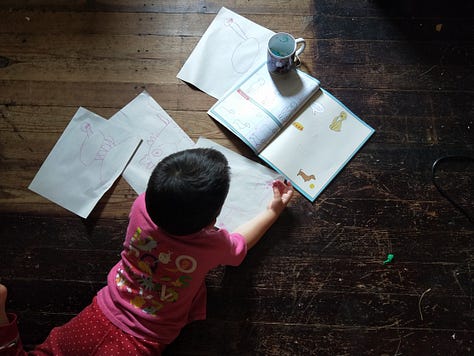
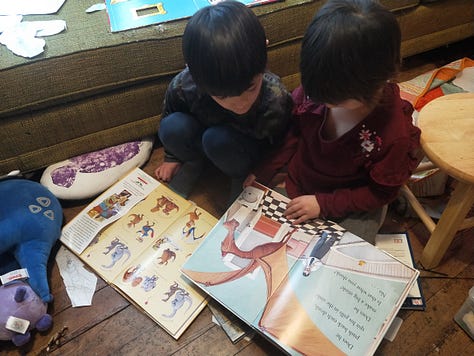
Even as toddlers, we start becoming fascinated by specific topics: construction vehicles, dinosaurs, dance, music, and so much more. Abe and Maya spent one afternoon finding backyard plants to match their stuffed dinosaurs’ diets, using a book from the library as a reference. I see this stage as one where adults can make resources available to children so that they have the choice to go deeper. Until they’re more independent, it’s really on us to provide this. (Not that we should exhaust ourselves trying to do everything.)
We love public libraries. You can browse and find books to support whatever interests are developing. My kids can spend hours reading, even if they are not fluent readers. I’m so glad that graphic novels offer visual stories for all ages, so we’re not limited to picture books.
Documentaries, videos, and online resources can offer vivid depictions of whatever you’re curious about.
I’m a big believer in field trips and travel. I do think that adults have a role in exposing kids to the wider world. Kids don’t know what they don’t know.
We learn a lot from people in our village: a friend who makes prosthetics, a local teacher who uses natural dyes, a neighbor who built a yurt.
Activity books and kits can also be in the mix at the right point.
Doing a project or learning something as a family may deepen an existing interest.
ACTIVE PURSUIT OF INTERESTS
What are the kids working on? How does your role as an adult need to change?
My kids are reaching a stage of independence where they can pursue their own interests and ask adults for help when they need access to a resource. They are very actively self-directed. Some behaviors I see:
Increasingly complex ideas and projects generated by the kids, like an herb garden that produces products to sell at a farmer’s market, or an essay about black holes, or a newspaper with assigned roles (editor, comics, photography, sponsors).
Accessing resources without adults: online research, going to the library on your own, emailing people directly. Some educators call this a shift from “learning to read” to “reading to learn.” Not that all resources require reading.
Working at a skill through extracurriculars: joining a sports team, trying out for a play, learning an instrument, etc.
More goal-setting and self-reflection
Adults as collaborators, resources, chauffeurs
PROFESSIONALIZATION OF INTERESTS
How do interests and skills translate into roles in the community?
Last night, we attended a musical starring a local homeschooler who I’ve seen in multiple productions over the last few years. I see teenagers pursuing apprenticeships, jobs, community college classes, and businesses as natural extensions of interests that have developed over time. If you can transport yourself to an activity by walking, biking, or driving, the world is your oyster! Eventually, we need to figure out how we fit into and contribute to our communities.
I want to mention that children who are “deschooling” (transitioning away from school) may need months or even years to learn/regain self-direction. They’ve spent years in an environment where their time is structured by other people down to the minute. (I know because I was trained to lesson plan down to the minute.) I wonder how deschooling can be scaffolded, and how that journey can be broken down.
I really believe that self-direction can be present at any age, whether you’re a toddler experimenting with mud or an adult juggling side hustles. Hope these sharings have been helpful.

No posts
Comments
Nothing yet. Say the first thing.
Sign in to join the conversation.