
We already know enough.
We know that ecological systems are under intensifying pressure. We know that economic insecurity, inequality and declining trust are damaging social cohesion. We know that small enterprises and local economies remain exposed to geopolitical disruption, concentrated market power, rising costs and financial constraints. We know that the Sustainable Development Goals have produced some gains since 2015 and yet, with 2030 approaching, global progress remains woefully inadequate. The United Nations’ 2026 SDG assessment is explicit: the next few years are decisive.
What we have lacked is not another diagnosis.
We have lacked a simple civilian operating system.
The McMasterPlan starts where every functioning civilization ultimately starts: with human beings taking responsibility for themselves, the places where they live, and the economic choices they make every day.
Heal Yourself.
Heal Your Community.
Help Heal Our Common Earth Home.
A primary mechanism is equally simple:
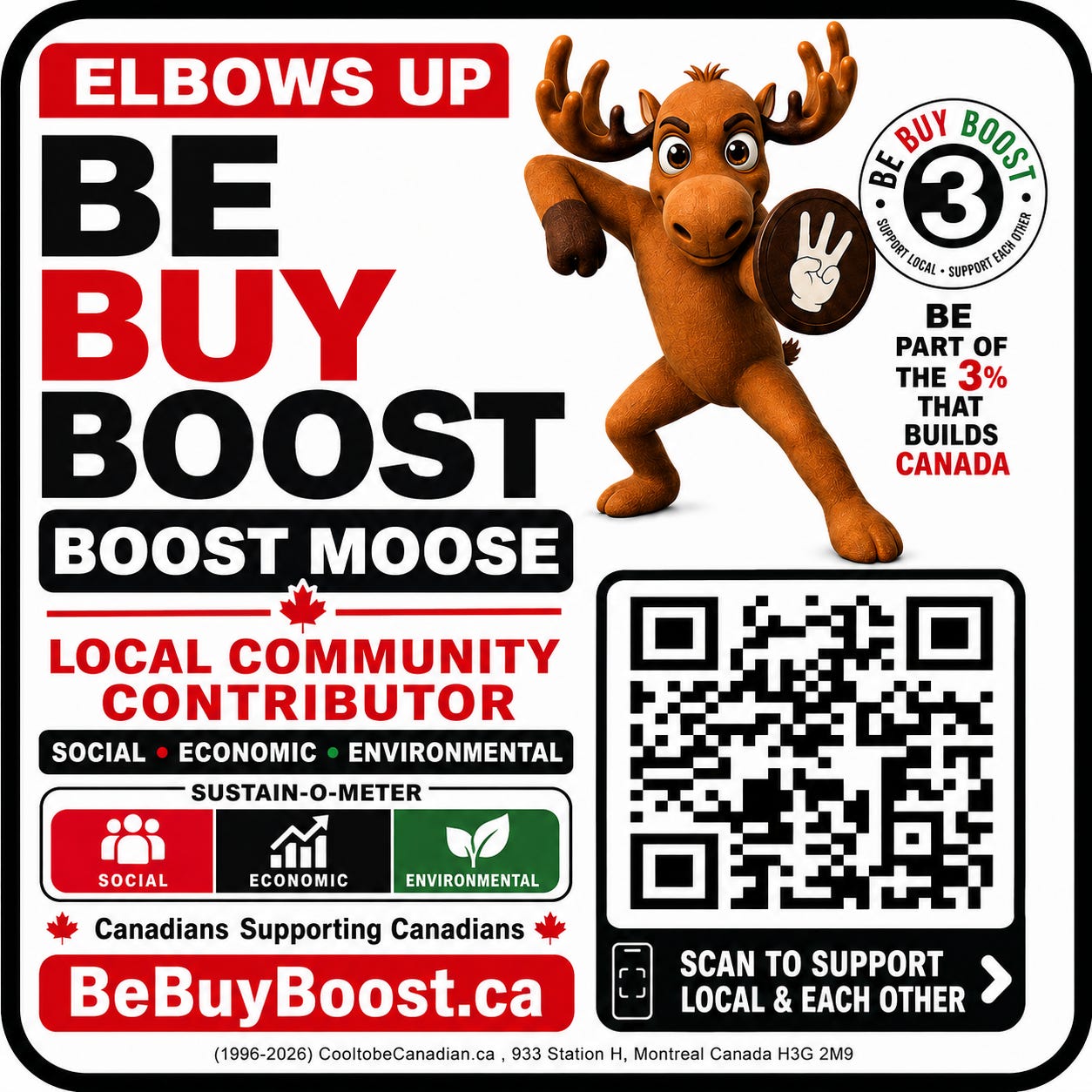
BE the responsible person your community needs.
BUY intelligently, deliberately and as locally as possible.
BOOST the people, businesses, skills, young entrepreneurs and local institutions that make your community worth living in.
This is not another transaction volume driven “shop local” advertising campaign. It is a proposal to reorganize everyday civilian participation around stronger direct relationships between people, merchants, producers, neighbours and places.
And Canadians are not waiting to become a pilot project.
Canadians are the pilot.
The original Cool to be Canadian work began in 1992. Be/Buy/Boost was developed in the 1990s as a practical community-development and youth-employment program. Archived material documents young people approaching merchants and manufacturers, promoting locally produced goods, connecting enterprises through the CoolCAtalogue and deliberately creating opportunities for local employers to discover young talent.
The later BeBuyBoost framework expanded the proposition into “Be – Part Of the Solution,” “Buy – from your Neighbours First,” and “Boost – Local Enterprise / Local Entrepreneurs / the 3rd Sector,” while explicitly advocating SlowSumption: buying more thoughtfully rather than confusing, ever-increasing, reactive and status-seeking consumption hoping for prosperity or happiness.
The Canadian relaunch is therefore not an experiment in whether the idea deserves to exist.
It is the activation of work that has been developing for more than three decades, now using technology that finally makes mass decentralized participation practical.
There is a structural problem underneath many apparently separate crises.
The farther economic power, information, ownership and decision-making move away from ordinary people, the less capable communities become of solving their own problems.
A person may live in a neighbourhood surrounded by commercial activity while remarkably little of that activity produces durable local capacity.
The food arrives from elsewhere.
The platform is owned elsewhere.
The payment processor is elsewhere.
The advertising system is elsewhere.
The data is stored elsewhere.
The franchise purchasing decisions are made elsewhere.
The commercial property may be owned elsewhere.
The profit leaves.
The customer relationship is mediated by somebody else.
When something breaks, residents discover that they have become extremely efficient consumers but increasingly weak producers, owners, repairers, organizers and neighbours.
The OECD’s recent work on place-based development reaches a compatible conclusion from a policy perspective: effective development has to respond to the actual conditions and opportunities of places rather than assuming a uniform solution works everywhere. It emphasizes locally integrated action across productivity, sustainability, inclusion and well-being.
The ILO likewise continues to use local market development, enterprise development, finance and community-based economic systems as tools for resilience and decent work, including current programs strengthening local markets and small enterprises in Kenya and elsewhere.
The evidence points toward a basic principle:
strong communities require functioning local economic ecosystems.
The McMasterPlan gives ordinary people a way to participate in building them.
The first problem is social.
People need to talk again.
That is the role of the Dialog Moose and the message:
Dialog NOT Division.
But dialogue without a practical subject eventually becomes another conversation about conversation.
So the Moose moves.
What is happening to prices?
Why did this local shop disappear?
Where was this product actually made?
Who owns this company?
Who employs local people?
Where can I get this repaired?
Why can nobody find an affordable local supplier?
What business does this neighbourhood desperately need?
Who among our young people could build it?
Who could teach them?
Who could finance the first equipment?
Who could become their first ten customers?
Now the dialogue has become consequential.
The Dialog Moose becomes the Community Boost Moose.
The familiar three-finger Sustainability Symbol gives the idea a human signal: Society, Environment and Economy held together rather than treated as three separate problems.
The Moose’s raised elbow adds another message:
Elbows Up! Be prepared to defend yourself against corporate, political or ideological bullying. (Canadians were recently threatened with take-over and occupation by the US regime, reacting with the symbolic aggressive/defensive Canadian hockey move of raising elbows.)
… and because friendly does not mean helpless.
Individuals and communities can be open, cooperative and generous while defending the people, enterprises, natural systems and productive capabilities on which their freedom depends.
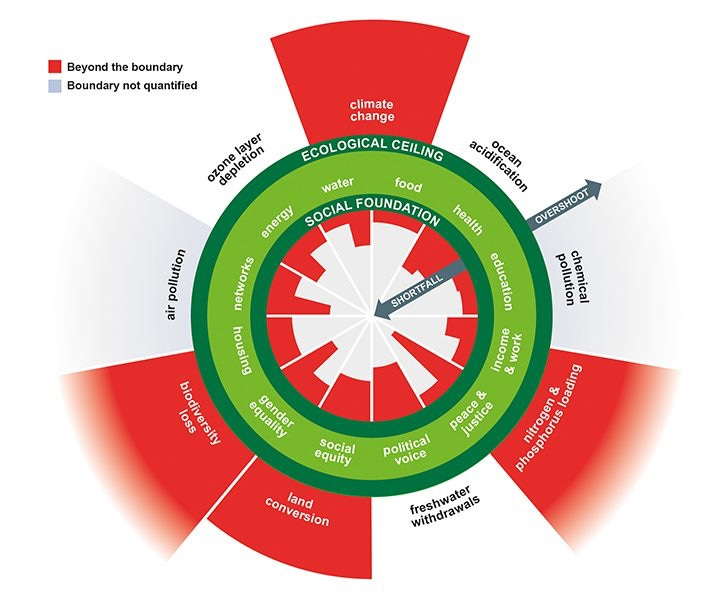
Kate Raworth’s Doughnut Economics has provided one of the clearest contemporary descriptions of the civilization-scale challenge: meet human needs above a social foundation without overshooting the ecological systems upon which life depends. Doughnut Economics Action Lab now documents local governments and communities around the world adapting that framework to places including Amsterdam, Brussels, Glasgow, Bad Nauheim, Ipoh and others.
The McMasterPlan asks the next pedestrian-level question:
What does that mean when I am standing outside a place of business?
The answer is the Sustain-O-Meter.
Not a government certification.
Not a corporate ESG report.
Not permission to publicly abuse a business.
the sticker is a visible invitation to ask whether the enterprise behind it contributes to the balance among:
PEOPLE — social and community well-being
PROSPERITY — productive economic well-being
PLANET — environmental well-being
The BeBuyBoost sticker becomes the Sustain-O-Meter.
The Community Boost Moose makes the enterprise recognizable from across the street.
The QR code becomes another form of transparency and access as the visitor approaches.
The physical enterprise remains the centre of the relationship.
That matters.
BeBuyBoost is deliberately designed to bring people off the small screen and through the business door.
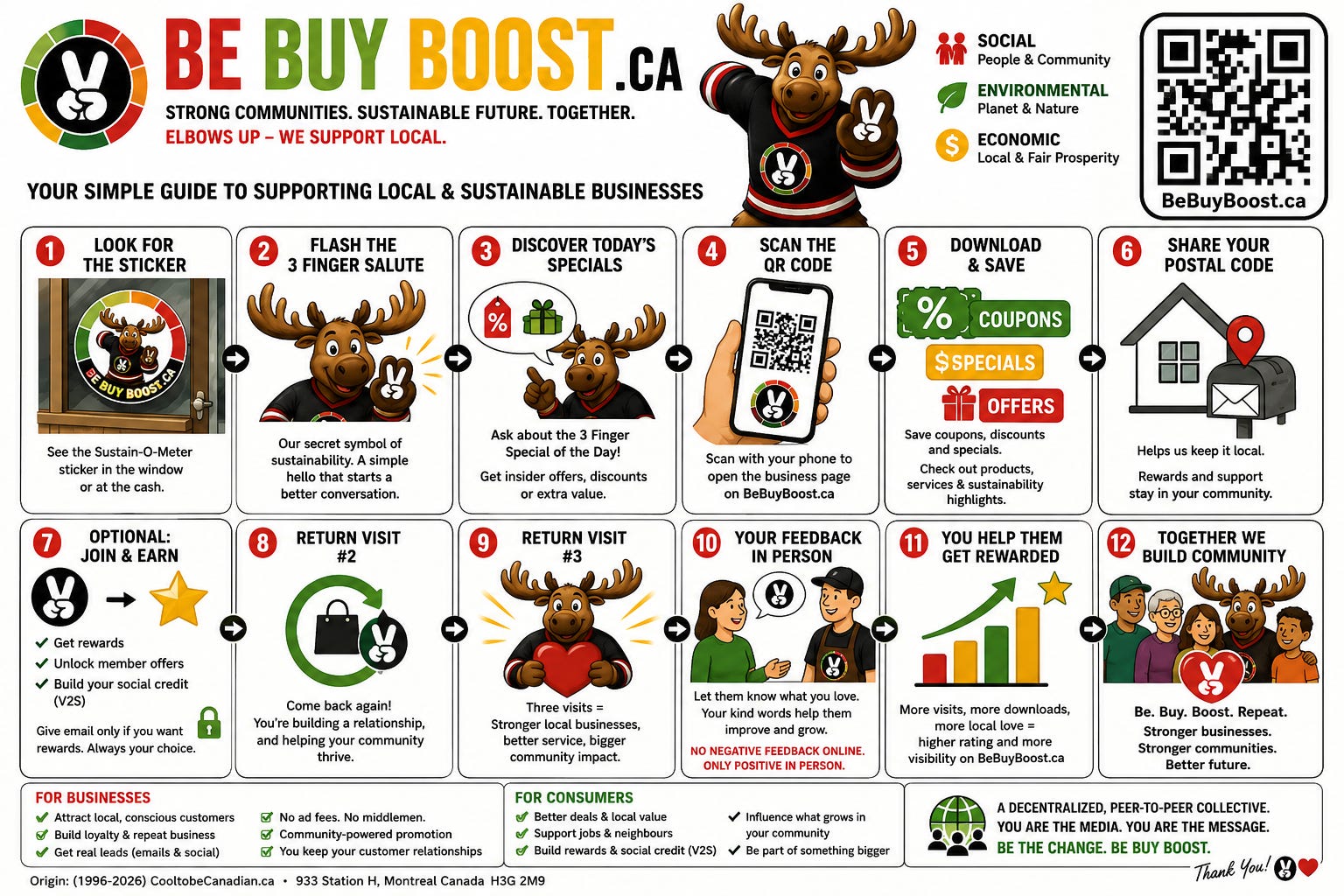
A participating community merchant places the BeBuyBoost Sustain-O-Meter at the entrance or cash.
A passer-by sees it.
The message from three metres away is uncomplicated:
BE • BUY • BOOST
the unique “Boost Moose” character
the BeBuyBoost.ca QR code
Up close, the person scans.
The merchant’s community inclusion opens to 24/7.
Inside or outside opening hours, the customer can see what the enterprise provides, its relative sustainability, how and what it contributes locally, specials, discounts, coupons, product information, repair options, events, job openings and related, complementary local businesses.
The merchant now has a reason to think outside opening hours and offer something worth returning for.
The goal is not a simple impression or walk by.
The goal is not a click.
Open or not, one visit discovers the proximity of enterprise solution.
A second visit solidifies product/place recognition.
A third begins a relationship.
From that point forward, the merchant is no longer purchasing anonymous “reach.”
The merchant is building a repeat customer.
A participating citizen enters a business and flashes the three-finger Sustainability Symbol.
Nothing complicated needs to happen.
The merchant recognizes it.
A conversation begins.
Perhaps there is a three-finger special.
Perhaps today there is an extra portion.
Perhaps an item approaching its best-before date can be offered rather than wasted.
Perhaps cash payment is preferable and some of the saved transaction cost becomes a customer benefit.
Perhaps the merchant says:
“Don’t buy that from me today. Maria two streets over has the one you need.”
That is not lost business.
That is a functioning local network.
And another person standing in line sees the gesture and asks:
“What does that mean?”
The participant has just become the advertising medium.
No centralized advertising campaign was required, and people remember were they learned useful things.
This principle is built into the Be Buy Boost architecture from the beginning.
A person who voluntarily gives an email or social media address to a merchant is establishing a relationship with that merchant.
That information is not a commodity to be resold to unrelated advertisers.
BeBuyBoost does not reproduce the business model it is trying to escape.
A participant may separately choose toparticipate in CooltobeCanadian.ca, become a citizen of ConscienceLAND or remain an anonymous member of the local Sustainable Consumer Collective.
That is another voluntary relationship.
This allows the digital layer to do something surprisingly radical:
get out of the way.
Technology should facilitate trust and connection
It should not replace trust and freedom.
BeBuyBoost does not need or desire to trace or track a complete consumer dossier.
One simple question is more useful to the decentralized collective:
Are you local?
Knowing the customer postal code can anonymously reveal whether an enterprise is primarily serving its immediate community, attracting people from surrounding communities, or filling a need important enough that people travel substantial distances to reach it.
Collect enough voluntary local demand signals and something more powerful emerges.
People keep searching for a service that does not exist.
Residents repeatedly leave the community to obtain the same product.
Merchants report a missing supplier.
Restaurants cannot source something nearby.
Parents cannot find a particular service.
A traditional cultural product has demand but no local producer.
That is not merely commercial search data.
A Sustainie is not simply a “green consumer.”
The Sustainie becomes an active economic participant in the community.
Sustainies learn to ask:
Can I buy this closer to home?
Can I repair it?
Can I share it?
Who makes it?
Where does the profit and value go?
Is there a better local substitute?
Could somebody here produce it?
Could something from my family’s culture create a new local product?
Can I introduce two people who should know each other?
This is particularly powerful in diverse communities.
A person arriving from another part of the world does not arrive empty-handed.
They bring knowledge, comparison, perspective.
Recipes.
Languages.
Skills.
Trading relationships.
Agricultural traditions.
Crafting or Manufacturing knowledge.
Design.
Repair practices.
Cultural preferences.
Unmet demand.
BeBuyBoost turns “diversity” from a bureaucratic, ceremonial word into economic intelligence.
Bring your world’s spice. Connect it locally.
Every independent enterprise already knows and lives things conventional economic statistics discover far too late.
What customers cannot find.
What has become too expensive.
What skills are missing.
What suppliers have disappeared.
What young people are looking for work.
What products people keep requesting.
What neighbouring enterprise deserves more customers.
The McMasterPlan turns those observations into a peer-to-peer distributed community information network.
The merchant does not merely sell.
The merchant reports and reflects opportunity to the community.
The customer does not merely consume.
The customer actively participates in revealing community opportunity and demand.
The CoolPatrol monitors trend.
The ConscienceLAND Coach connects people.
The Planetpreneur builds what is missing.
The Ambassador connects capital, relationships and opportunity.
The community becomes increasingly capable of solving its own problems.
All of this is already in place, little new is needed- only to connect the dots.
A business gap should not become another report.
It should become an immediate invitation to be filled.
WANTED: Someone in this community to solve this problem.
Perhaps a teenager can do it.
Perhaps a newcomer already knows how.
Perhaps a laid-off worker has the technical skill.
Perhaps a retired business owner can connect and coach them.
Perhaps twenty valued customers will pre-order.
Perhaps five respected merchants will commit to purchasing.
Perhaps the community Ambassador can arrange capital.
Instead of teaching entrepreneurship backwards - typically inventing a product and then desperately hunting for customers - in ConscienceLAND the community identifies unmet demand environment first.
Then it helps someone meet that opportunity prepared to succeed.
That is Planetpreneurship embedded in real life.
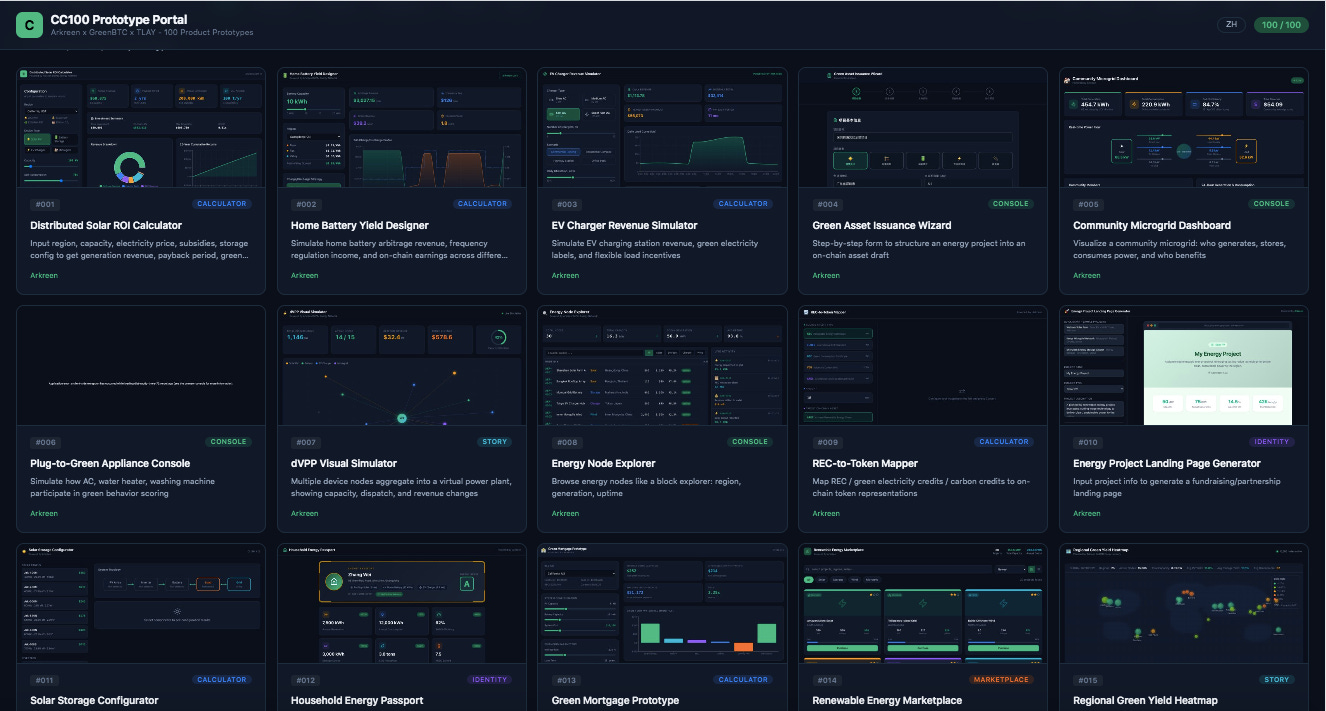
Centralized finance is excellent at financing things that fit established financial categories based on politics and Return On Investment (ROI).
Communities contain another class of opportunity - the 3 Returns On Investment in Society, Environment and Economy (3ROI) in balance:
The enterprise that needs $4,000, not $4 million.
The teenager who needs tools.
The newcomer who needs introductions.
The restaurant that would buy regularly from a neighbourhood grower if the grower existed.
The repair business that already has forty prospective customers.
Once the demand is visible, communities can deploy legal forms of pre-orders, membership, cooperative ownership, lending, investment, sponsorship, equipment sharing and mentoring appropriate to their own jurisdiction.
Money now follows demonstrated community usefulness or the ConscienceLAND 3ROI.com
That is far closer to productive, sustainable finance than speculation about what people might someday want.

Conventional economics recognizes a great deal of value only after somebody pays for it.
Communities know better.
Mentoring creates value.
Referring creates value.
Cleaning creates value.
Repairing creates value.
Teaching creates value.
Preventing waste creates value.
Saving trees creates value.
Helping a business survive creates value.
Finding a young person meaningful work creates value.
Connecting an immigrant skill with a local market creates value.
That is the purpose of V2S - Value to Society.
And it leads toward DonutTokenomics.
Not another speculative token.
Not another financial casino.
A recognition system for contribution.
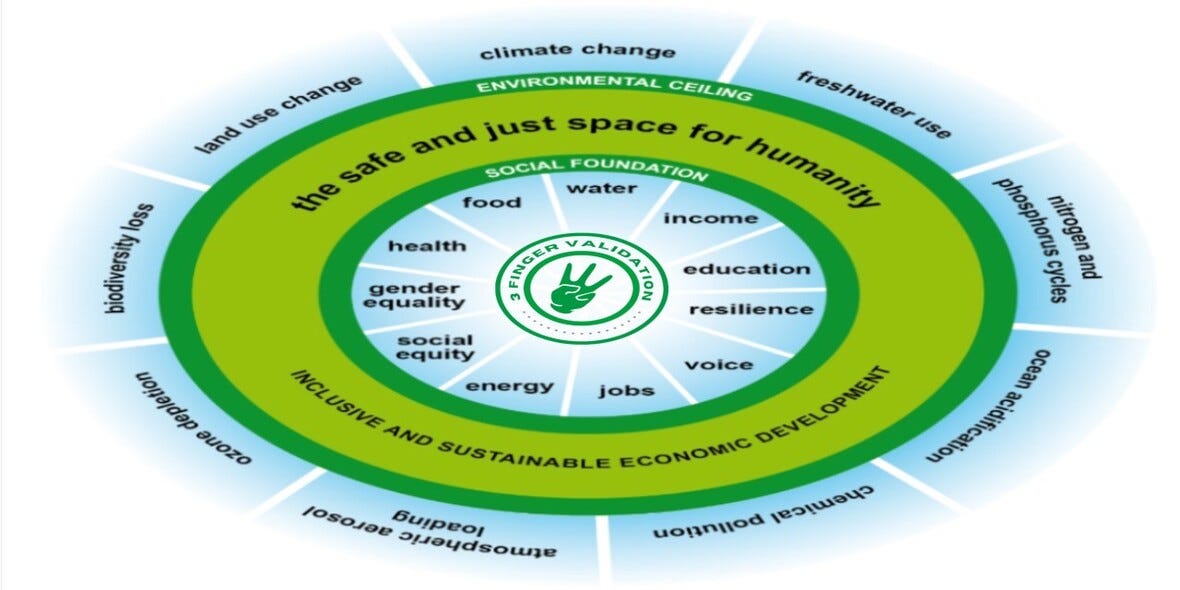
Kate Raworth’s Doughnut asks whether our economy can meet human needs within planetary boundaries.
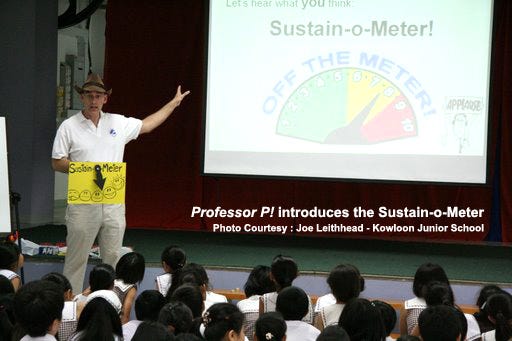
The ConscienceLAND Sustain-O-Meter asks how an enterprise contributes locally.
UN’s Sustainable Development Goal SDG#12 calls for sustainable production and consumption and included in ConscienceLAND’s Agenda2029.com
BeBuyBoost turns that inquiry into everyday behaviour.
V2S (Value to Society) recognizes the people contributing to help make it happen.
That is the missing layer between grand sustainability goals and lived community life.
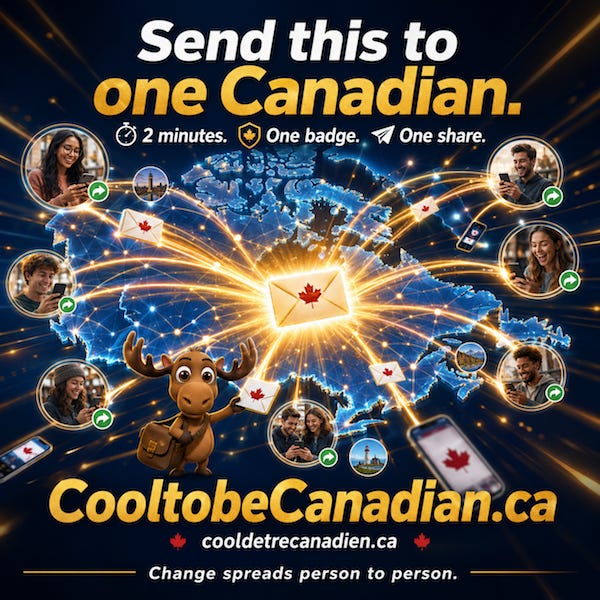
Cool to be Canadian has a particular advantage.
This idea already has cultural roots.
It already has history.
It already has Be/Buy/Boost.
It already has the Moose.
It already has a three-finger Sustainability Symbol.
And Canadians currently have a practical reason for people to examine origin and sustainability claims more carefully.
The federal Competition Bureau maintains distinct requirements for “Product of Canada” and “Made in Canada” claims and has strengthened its focus on misleading origin and environmental marketing.
BeBuyBoost does not replace those legal standards.
It asks a different question:
What does this enterprise actually contribute to Canadians and their communities?
That makes the Canadian relaunch an immediately understandable cultural doorway into something much larger.
The Moose is Canadian.
The mechanism is human.
The destination is borderless.
The next layer is not another centralized organization.
It is a Network Civilization.
Thousands of communities. Millions of people.
Different languages. Different cultures. Different local economies.
A shared operating proposition:
Heal Yourself.
Become healthier, more capable, less easily manipulated and more responsible for the consequences of your choices.
Heal Your Community.
Know your neighbours. Support useful local enterprises. Mentor. Repair. Create. Trade. Teach. Employ. Invest. Include.
Heal the Earth by living LOHHAS.
Pursue a Lifestyle Of Health, Happiness And Sustainability - because a civilization that destroys the biological, social or economic systems upon which its quality of life depends cannot remain happy for long.
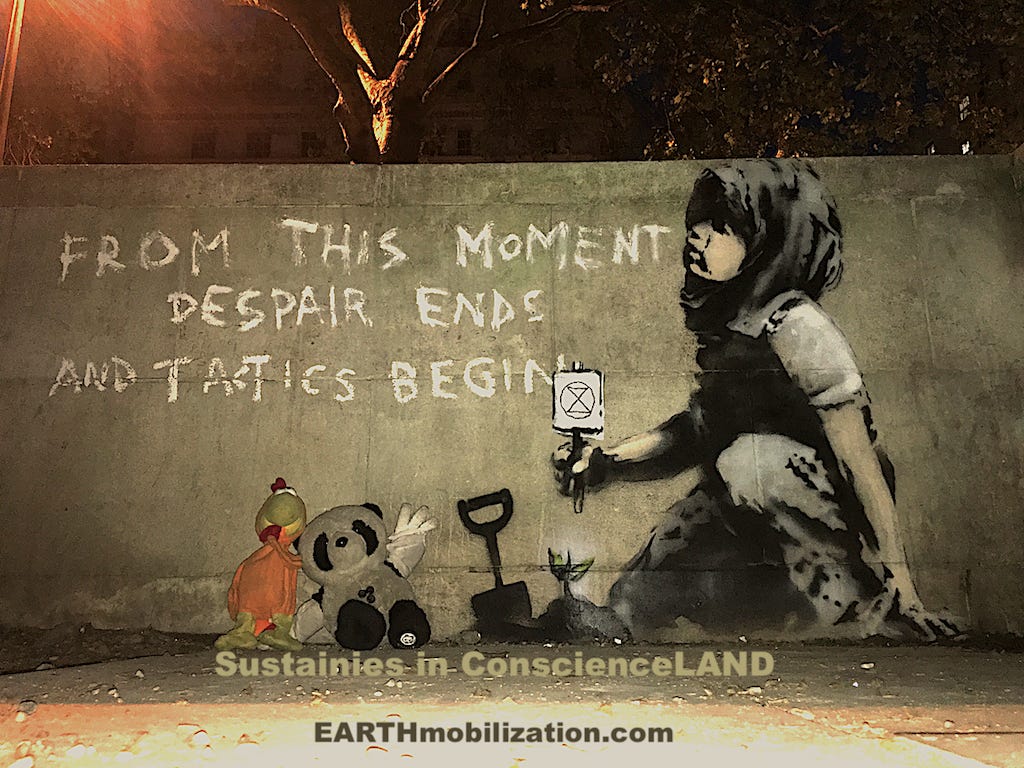
This is where EarthMobilization becomes literal.
Not millions of people marching toward one institution.
Millions of people improving the places where they already stand.
The first mobilization is Canadian.
CooltobeCanadian.ca introduces the cultural conversation.
Dialog Moose introduces “Dialog NOT Division”.
BeBuyBoost.ca turns the conversation toward practical local economics.
The Community Boost Moose and Sustain-O-Meter get distributed to independent merchants, markets, community events, schools, neighbourhood initiatives and participating individuals.
Every physical marker returns people to the same decentralized network.
No giant new advertising infrastructure is necessary only public ownership of the distribution and stewardship of the implementation.
Paraphrasing Canadian Marshall McLuhan - “The participants are the media” | “The user is the content.” | “We become what we attend to.” | “The consumer is the medium.” | “Content is the context of participation.” | “The audience is the apparatus.”
McLuhan’s core thesis - most famously captured in “The medium is the message” and “The user is the content” - was that technology shapes human association not through the information it carries, but through the environment and patterns of scale it introduces. In modern digital networks, the traditional boundary between viewer and broadcaster dissolves: the act of participating, engaging, and generating data turns the participant directly into the environment of ConscienceLAND itself.
BeBuyBoost.ca becomes the practical commercial gateway to sustainability.
The system identifies participating merchants, products, services, offers, jobs, local opportunities and community connections.
Existing resources are linked rather than unnecessarily recreated.
The GaiaCatalog | Cool.CA/TALOG becomes the discovery layer for sustainable, worthwhile products, services, places and people.
CooltobeCanadian.ca remains an initial cultural and participation doorway until other communities join the network.
ConscienceLAND becomes the deeper citizenship and community network.
EarthMobilization becomes the outward, decentralized, global mobilization.
Each property, GaiaPlot and GaiaPage has a job to do.
A merchant should be able to use the system without becoming a technologist.
Update specials.
Offer 3finger benefits.
Post a need.
Recommend another merchant.
Identify a job offer.
Ask about a missing supplier.
Offer mentoring.
The consumer should be able to participate just as easily.
Scan.
Discover.
Buy.
Return.
Refer.
Validate constructively.
The digital (enslavement) interaction ends where the face-to-face, peer-to-peer human interaction in the ConscienceLARP Live Action Role Playing game begins.
The network continually aggregates missing needs.
What are people searching for?
What are merchants importing unnecessarily or unsustainably?
What services are disappearing from the community?
What do newcomers need and want?
What do older residents need?
What are young people capable of supplying?
Those gaps become local Planetpreneur opportunities.
Instead of merely recording economic weakness, and allowing monopolies in, the network recruits local people and allies in other communitiespo to repair it.
The strongest accelerator is not an office tower, co-working or maker space .
It is a community that wants enterprise and Citizenship-As-A-Service to exist.
The Planetpreneur receives customers before advertising.
Mentors before consultants.
Local knowledge before market research.
Introductions before cold outreach.
Potential pre-orders before mounting debt.
The community becomes the host of Change Wednesdays, World Sustainability Cafe, Hackathons and SustainaFESTs as incubators.
In ConscienceLAND, a person doesn’t receive respect, recognition and status because they spend the most money.
The system is intended to progressively recognize and ultimately reward expression of Value to Society (V2S) through:
participation;
helpfulness;
mentoring;
local referrals;
environmental improvement;
community service;
responsible enterprise;
employment creation;
constructive participation.
That is V2S.
The social objective of “Value to Society” is not a surveillance score telling authorities whether somebody is “submissive, obedient and compliant” - instead, it’s a voluntary reputation score for conscious & useful participation in building and maintaining community.
Once communities organize locally, they can trade and cooperate globally from a position of greater strength.
A neighbourhood in Montréal can learn from a district in Barcelona.
A rural community can exchange practices with one in Kenya.
An Afripreneur can collaborate with a Latinopreneur counterpart.
Doughnut Economics has already demonstrated that a common framework can be adapted to very different places rather than imposing one uniform local solution.
The McMasterPlan follows the same fundamental logic:
common principles; local expression.
This is the final physical exam.
Not for one government.
Not for one ideology.
For us.
Can ordinary human beings recover enough agency to remain capable of governing their own lives, sustaining their communities and cooperating across borders?
Can commerce become more human without becoming less efficient?
Can technology connect people without owning them?
Can sustainability become something people practise rather than something institutions report?
Can young people inherit functioning communities rather than increasingly expensive access to systems they do not own?
Can we create economies that make health, happiness, community and ecological survival more valuable rather than less?
There is no reason to wait for somebody else to answer.
See the Moose.
Start the Dialog.
Be responsible.
Buy consciously.
Boost locally.
Build what is missing.
Teach someone else.
Then connect your community to the next one.
BeBuyBoost.ca
CooltobeCanadian.ca
Cooldetrecanadien.ca
EarthMobilization.com
ConscienceLAND
Be • Buy • Boost.
A Lifestyle Of Health, Happiness And Sustainability.
A Weapon Of Mass Inclusion.
A Network Civilization built by the people who actually have to live in it.
No posts
Comments
Nothing yet. Say the first thing.
Sign in to join the conversation.