
Corporate sustainability compliance faces a major paradox. On one side, shifting political climates and legislative changes create regulatory confusion. On the other side, global capital markets are intensifying demands for clear, auditable environmental and social data. Navigating this landscape requires moving past isolated compliance exercises and embracing an integrated approach to disclosure.
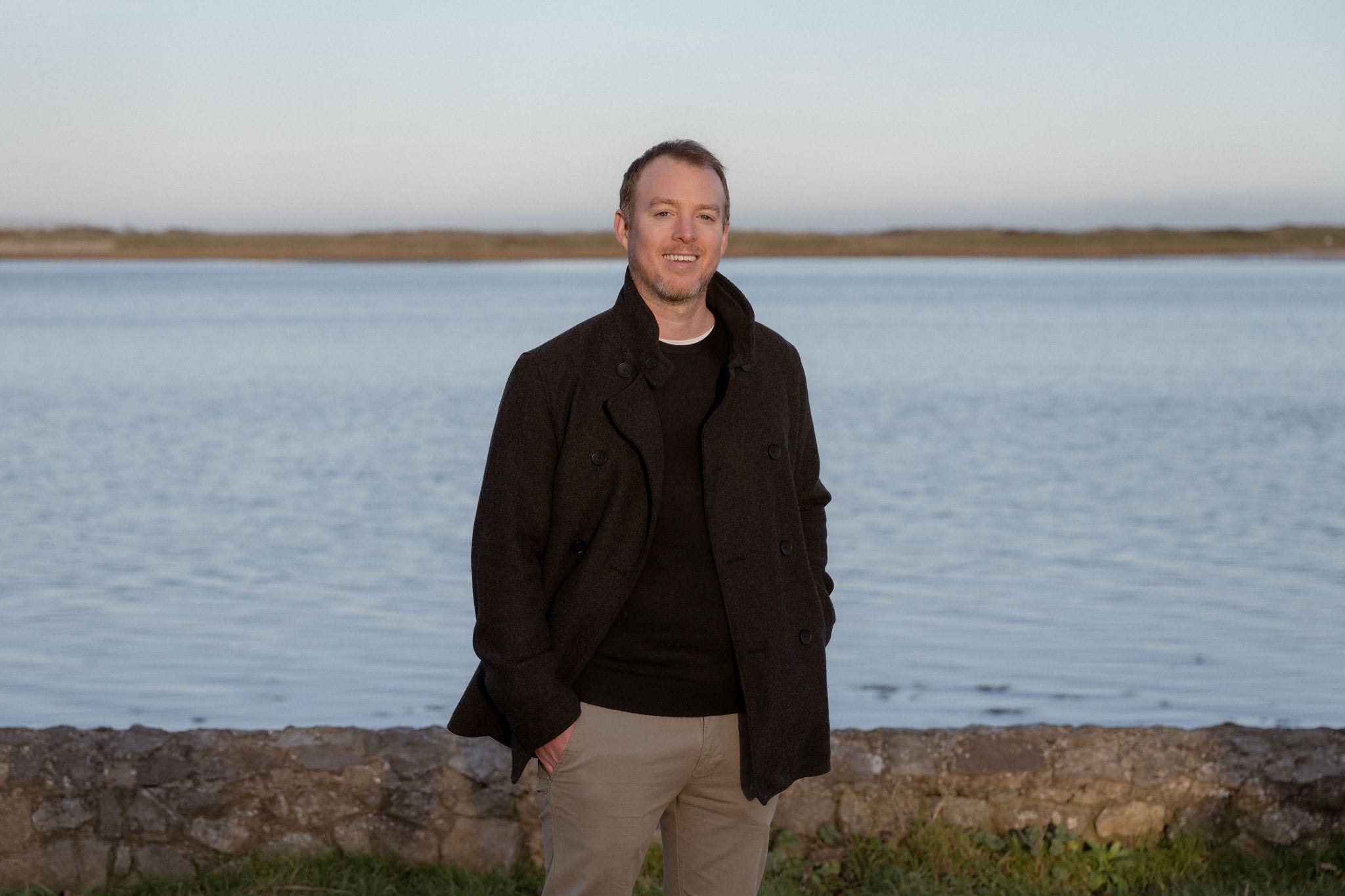
To understand how corporate leaders can adapt, we interviewed Brian Cahill, the founder and CEO of the Sustainability Reporting Institute. Previously operating as the CSRD Institute, his organization executed a major strategic pivot to mirror the changing realities of international corporate standards. Cahill provides an essential perspective about why that rebrand happened, what it reveals about how the field is evolving, and what it means for practitioners trying to navigate an increasingly complex landscape.
For nearly two years, the Sustainability Reporting Institute operated under a different name. In May 2024, it launched as the CSRD Institute, with training focused on the EU’s CSRD and the ESRS. With over 50,000 individuals completing the ‘CSRD Fundamentals’ course, their approach clearly hit a market need. But, the name change in March 2026 signals that the global sustainability reporting landscape has matured enough that a single regulation (or regional focus) no longer defines the field.
This evolution was driven directly by structural changes in European policy, specifically the introduction of the omnibus one package. This legislative intervention scaled back the initial scope of the CSRD, introducing sudden market ambiguity. Recognizing that modern sustainability professionals must manage intersecting requirements rather than a single regulation, the institute expanded its curriculum to cover the global compliance ecosystem.
“It became clear to us that professionals weren’t working solely within one standard or one framework alone,” Cahill says. “But across a growing ecosystem of reporting frameworks.”
Today, the institute offers structured certification tracks integrating multiple international reporting methodologies. While maintaining its technical courses on European frameworks, its updated curriculum covers international baselines, carbon accounting standards, and simplified reporting structures for smaller entities. Taught by expert practitioners in the field, these range from training courses that blend theory and practice to master classes with a practical approach, available both in live or on demand formats.
Sustainability reporting has become a core aspect of business operations. While political pushback against ESG frameworks fills headlines, the practical reality inside commercial capital markets tells a different story. Institutional lenders, commercial banks, and global insurance underwriters are rapidly accelerating requirements for structured, verifiable sustainability information before allocating capital. The market has settled into a dual system dynamic. In this environment, regional policy approaches may fluctuate globally, but practical market demands continue to converge on increasingly standardized, interoperable frameworks.
As it stands today, the sustainability reporting space remains young, and at this stage, professionals are coming to this work from everywhere.
Look at it this way: Finance and accounting teams are heavily involved because sustainability disclosure is entangled with financial oversight; legal and governance professionals are engaged because regulatory requirements keep shifting; supply chain managers care because they need to understand scope 3 emissions; HR teams are involved because social reporting is now material to investors; procurement is tracking supplier disclosures; compliance teams are mapping new obligations. Sustainability reporting affects all areas of business operations, and is becoming much more integrated with the financial reporting process.
“Sustainability reporting is becoming much more integrated with financial reporting processes,” Cahill explains. “It’s the wider reporting process across a team, across entire business operations.”
Sustainability reporting is no longer a specialist function. It’s becoming increasingly woven into core business operations. That means the training needs to serve not just ESG practitioners, but the finance directors, lawyers, and auditors who now work on these issues as part of their broader remit.
There are a broad range of professionals engaging with the training at the Sustainability Reporting Institute, not only those from ESG teams. The institute designs its curriculum with this diversity in professional experience in mind. There are different pathways to meet the needs of unique audiences, both in terms of jurisdiction and technicality. In terms of jurisdiction, there are CSRD trainings that target large European companies or ISSB guidance serves practitioners in jurisdictions adopting those standards globally, for instance. There are also three levels ranging from fundamental knowledge, to a deep-dive into detailed framework and regulation knowledge, to extreme detail for report preparers who require granular guidance on specific disclosures.
Additionally, amidst the uncertainty in this new sustainability reporting space, many of us are struggling to keep up to date with all of the regulatory changes, different standards, and updates across the landscape. Direct member feedback drove the institute to build something more alongside its training: a members-only hub with curated weekly updates on regulatory developments. This is curated intelligence on what has changed each week, which frameworks are being updated, where there are open comment periods, and what’s relevant to your jurisdiction.
When Cahill thinks about 2035, he imagines sustainability information treated with the same rigor and decision-usefulness as financial reporting. He also reimagines the reference to ‘sustainability’, picturing that such reporting becomes embedded into the core functions of a business across every department.
For investors, regulators, and stakeholders, this means that everyone would be working from a consistent baseline centered around high quality disclosures, reliable capital allocation, and better risk assessments across the board. From an impact measurement perspective, this means aiming for improved data quality and comparability across key realms like GHG emissions, transition plans, exposure to risk, broad sustainability reporting risks, and equal treatment to social standards.
That shift is already beginning. The fact that finance teams validate disclosures, legal interprets requirements, and board committees oversee both financial and sustainability performance isn’t anomalous. It’s the field maturing.
The Sustainability Reporting Institute’s expansion is one visible sign of this maturation. Other signs include regulatory convergence around interoperable standards, market demand for comparable disclosures, and capital providers enforcing discipline on reporting quality.
For organizations navigating this landscape, the combination of training, regulatory intelligence, and community that the institute provides reflects what many practitioners need right now: clarity on which standards matter for your business, practical guidance on implementation, and connection to a community working through similar challenges.
By 2035, environmental, social, and governance data may be fully absorbed into core business operations, standard risk management, and daily financial reporting cycles. Businesses that build deep technical capacity today will successfully eliminate information disparity and secure long-term efficiency. Be sure to check out the Sustainability Reporting Institute to learn more about how they can help prepare you and your team for the future of this evolving field.
This Week in Sustainability is a weekly email from Brightest (and friends) about sustainability and climate strategy. If you’ve enjoyed this piece, please consider forwarding it to a friend or teammate. If you’re reading it for the first time, we hope you enjoyed it enough to consider subscribing. If we can be helpful to you or your organization’s sustainability journey, please be in touch.
No posts
Comments
Nothing yet. Say the first thing.
Sign in to join the conversation.