
When the Artemis II crew woke on Saturday, they were approximately 169,000 miles from Earth and approaching the Moon at 110,700 miles. Mission Control woke them to Chappell Roan’s “Pink Pony Club.”
Days 4 and 5 is all about preparation for the most significant day of the mission: Monday’s lunar flyby.
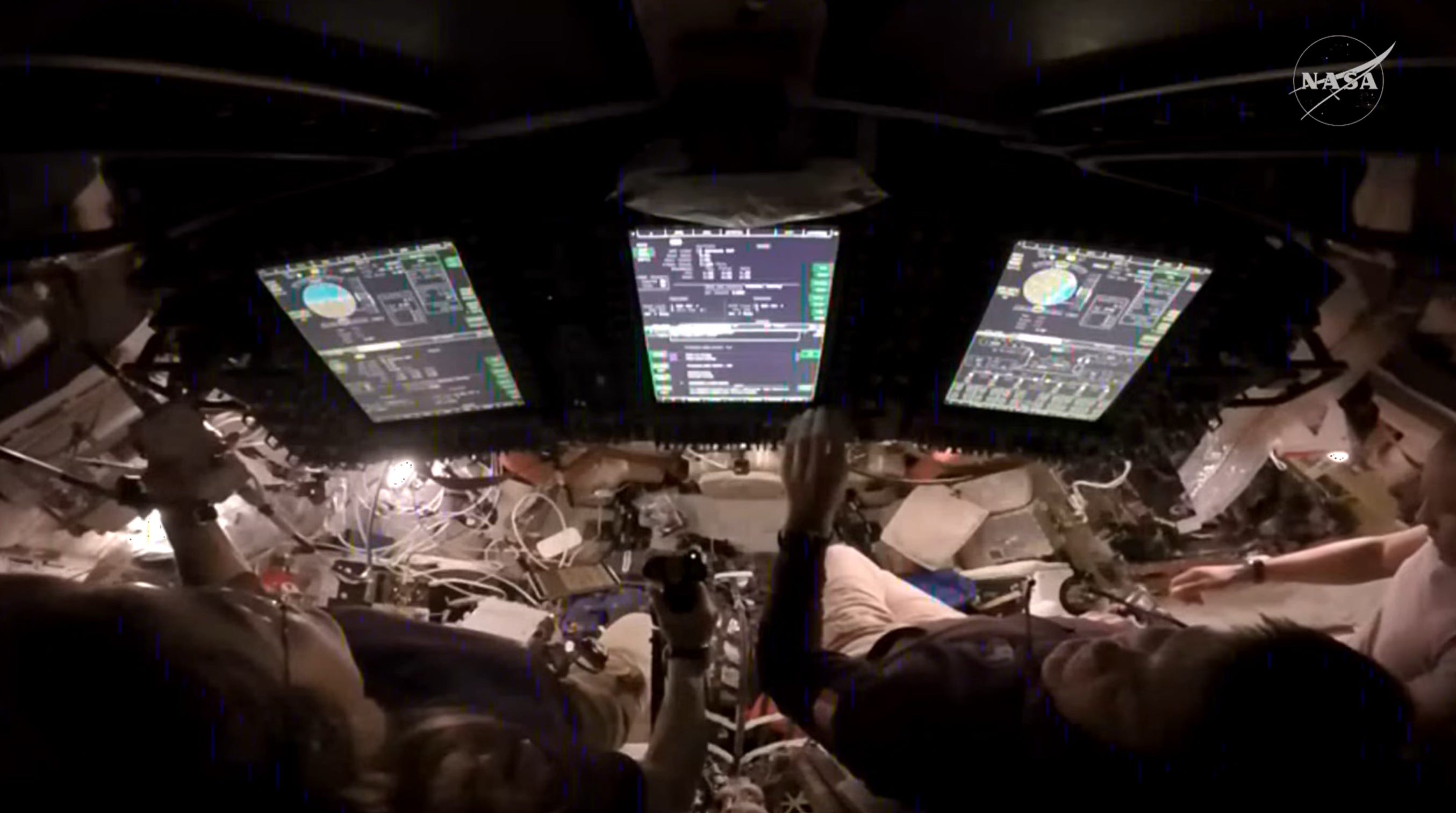
Saturday included a 24-hour acoustics test to help engineers characterise the sound environment inside the spacecraft.
Koch and Hansen took turns manually controlling the spacecraft for 41 minutes, testing two different thruster modes to give engineers more data about Orion’s piloting capabilities in deep space. Wiseman and Glover will repeat the same demonstration on Day 8 on the return journey, to give the ground teams as many perspectives as possible.
The crew also reviewed the lunar targeting plan: the list of surface features the science team has asked them to photograph and analyse during their six-hour flyby on Monday.
On Sunday, the crew have crossed what NASA calls the lunar sphere of influence. This is the point in space where the moon’s gravitational pull becomes stronger than Earth’s. Up until this point, Earth has been the dominant force acting on Orion. Beyond it, the moon takes over. They are now, gravitationally speaking, closer to the moon than to home.
Victor Glover mentioned that the temperature inside Orion is quite chilly, so much so that he wished they had brought different sleeping bags. Mission Control is working with the crew to warm up the cabin! 🥶
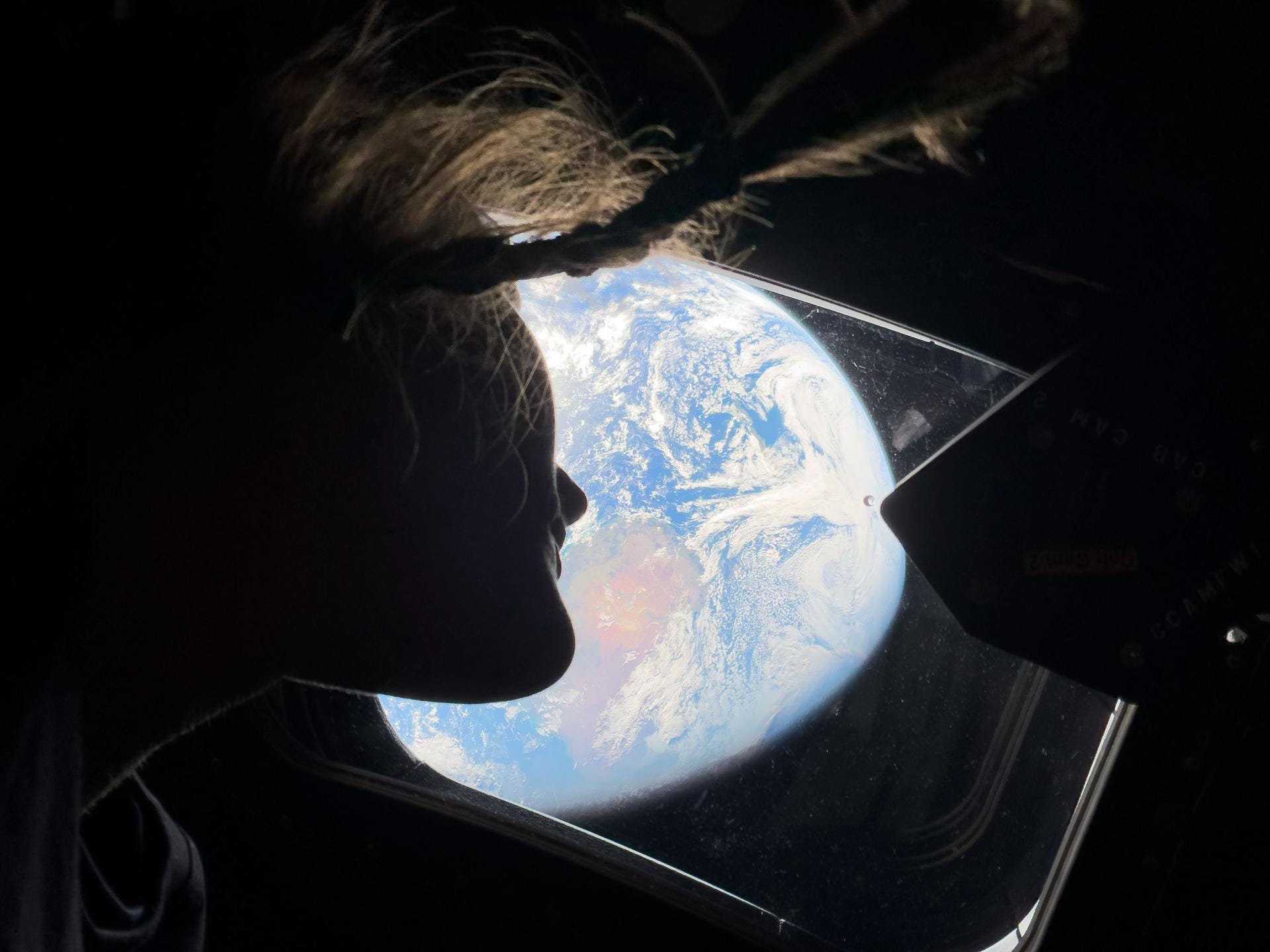
On Thursday evening, Mission Control reoriented the spacecraft as the sun was setting behind the Earth. Wiseman described what they saw: “I don’t know what we all expected to see at that moment, but you could see the entire globe, from pole to pole. You could see Africa, Europe, and if you looked really close, you could see the northern lights. It was the most spectacular moment, and it paused all four of us in our tracks.”
By Days 4 and 5, that view has changed. Earth is smaller. The moon is growing.
Christina Koch, looking back at Earth through Orion’s window on Saturday, described what she saw to Mission Control. She could make out entire coastlines of continents and the South Pole, her old stomping ground from her Antarctic research days.
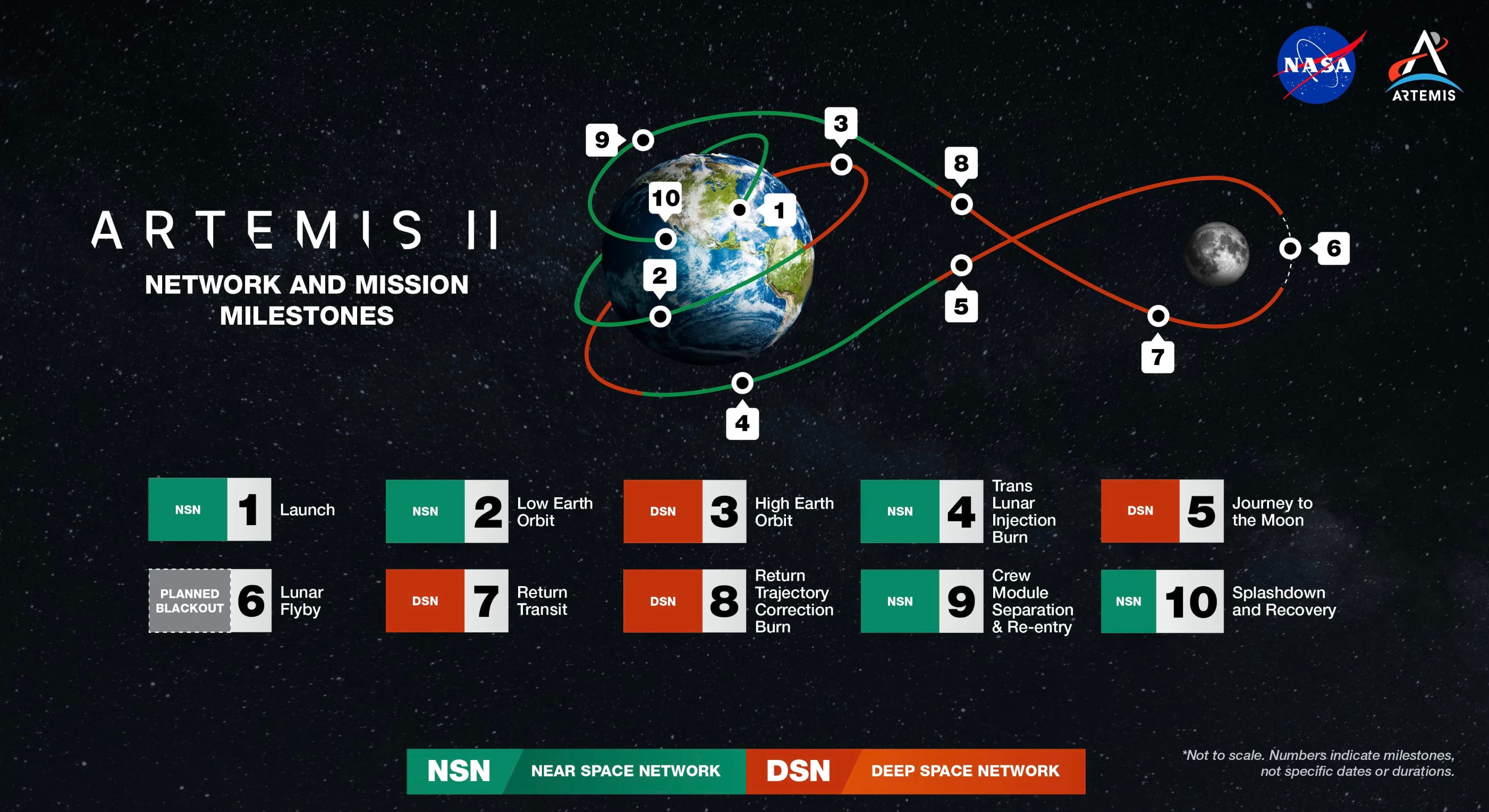
Throughout this mission, everything travels through a link between Orion and Earth. Not just voice but the crew’s vital signs, Orion’s systems data, photographs, video, flight plans, and updates from Mission Control all travel through NASA’s Deep Space Network. This is a system of three enormous antenna complexes positioned around the world in California, Spain and Australia. Each dish is roughly the size of two-thirds of a football field.
The geographic spread means that as Earth rotates, at least one dish always has a line of sight to Orion. The crew have continuous contact with Mission Control for almost the entire mission.
Artemis II is also testing a laser-based communications system called O2O, which is capable of transmitting data at up to 260 megabits per second, fast enough to send 4K video from the moon. Compare that to Apollo, which sent back the famously grainy footage of the first moonwalk using radio technology.
At the moon’s distance, even radio signals travelling at the speed of light take approximately 1.3 seconds each way, a round trip of about 2.6 seconds. If you were having a conversation, this would be a little like a delayed satellite phone call, but manageable. It is a preview of what communication will feel like as we go further. Every kilometre from Earth, that delay grows. On a Mars mission, it would be 40 minutes each way.
As Orion passes behind the far side of the moon on Monday, the moon itself acts as a physical barrier to all radio signals. There will be no voice, no video, no telemetry, no data on the crew or spacecraft. Nothing. Both the radio system and the new laser system are blocked because both require a line of sight to Earth that the moon will physically obstruct.
This blackout is expected to last approximately 41 minutes (point 6 on the map above)
Inside Orion, four people will be completely alone, further from Earth than any human in history, in total communications silence, passing over terrain no human eye has seen, with the sun disappearing behind the moon in a total solar eclipse.
The lunar flyby observation period begins at 2:45pm EDT on Monday (7:45pm BST), when Orion’s main cabin windows will be pointed toward the Moon.
At approximately 5:47pm EDT (10:47pm BST), the communications blackout begins: 41 minutes of total silence as the crew pass behind the far side.
When they re-emerge, at approximately 7:02pm EDT (midnight BST), Orion reaches its closest approach to the lunar surface: 4,066 miles above it. Three minutes later, at 7:05pm EDT, the crew break the human distance record, reaching 252,757 miles from Earth, surpassing Apollo 13’s record set in 1970 by 4,102 miles.
Follow along tomorrow for Day 6: the lunar flyby, the far side, the blackout, the record, and the solar eclipse. It’s going to be the most exciting day!
Days 4 & 5 of 10 🌙
Crew quotes drawn from NASA mission blogs, downlink footage and CNN mission coverage, April 4-5 2026.
Comments
Nothing yet. Say the first thing.
Sign in to join the conversation.