
Day 7 is the only off-duty day of the mission, or as close to one as spaceflight allows. In practice it was anything but idle. The crew woke to “Tokyo Drifting” by Glass Animals, 36,286 miles from the moon and 236,022 miles from Earth, and spent much of the day processing the most extraordinary experience of their professional lives.
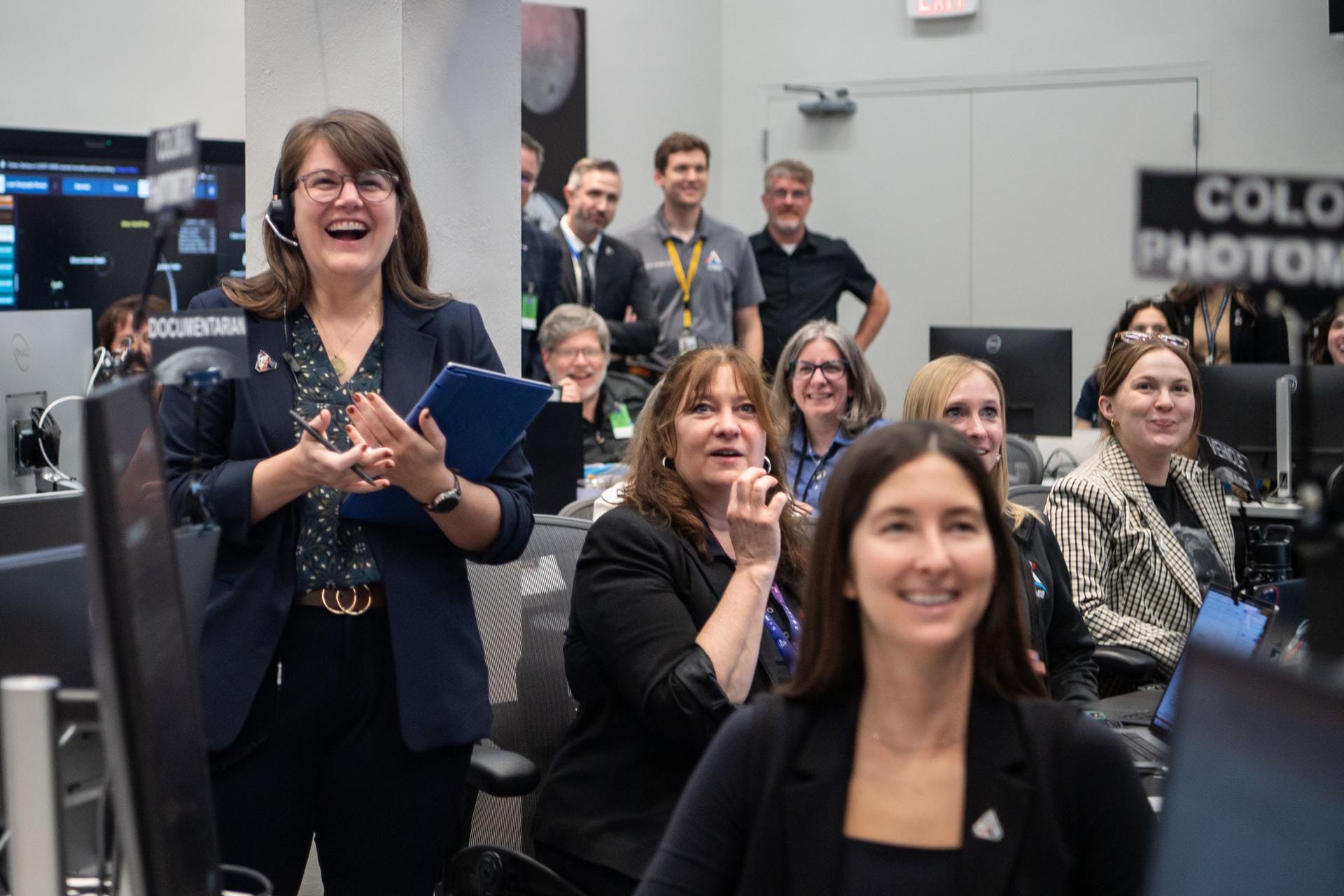
Before Orion travelled too far from the moon, the crew joined Dr Kelsey Young’s lunar science team for a debrief, gathering the crew’s impressions while Monday’s flyby was still completely fresh in their minds.
This timing is deliberate and really important. Memory of a novel visual experience is most vivid and most detailed immediately after the event. The science team wanted the crew’s raw, unprocessed impressions of what they saw: the colour variations, the textures, the features that caught their eye in ways that might not show up in the photographs, before the detail begins to fade and simplify in the way all memories eventually do. Our memories are notoriously inaccurate.
The science team described themselves as having been “absolutely buzzing” throughout the flyby, analysing the crew’s real-time observations from the Science Evaluation Room in Houston. If you watched any of the lunar fly-by on Monday night you will have heard the continuous observations by crew and comms from ground. Excellent teamwork and also exhausting on both sides to be that meticulous and in constant communication during their observation of 7 hours (minus the 40 minute comms blackout).
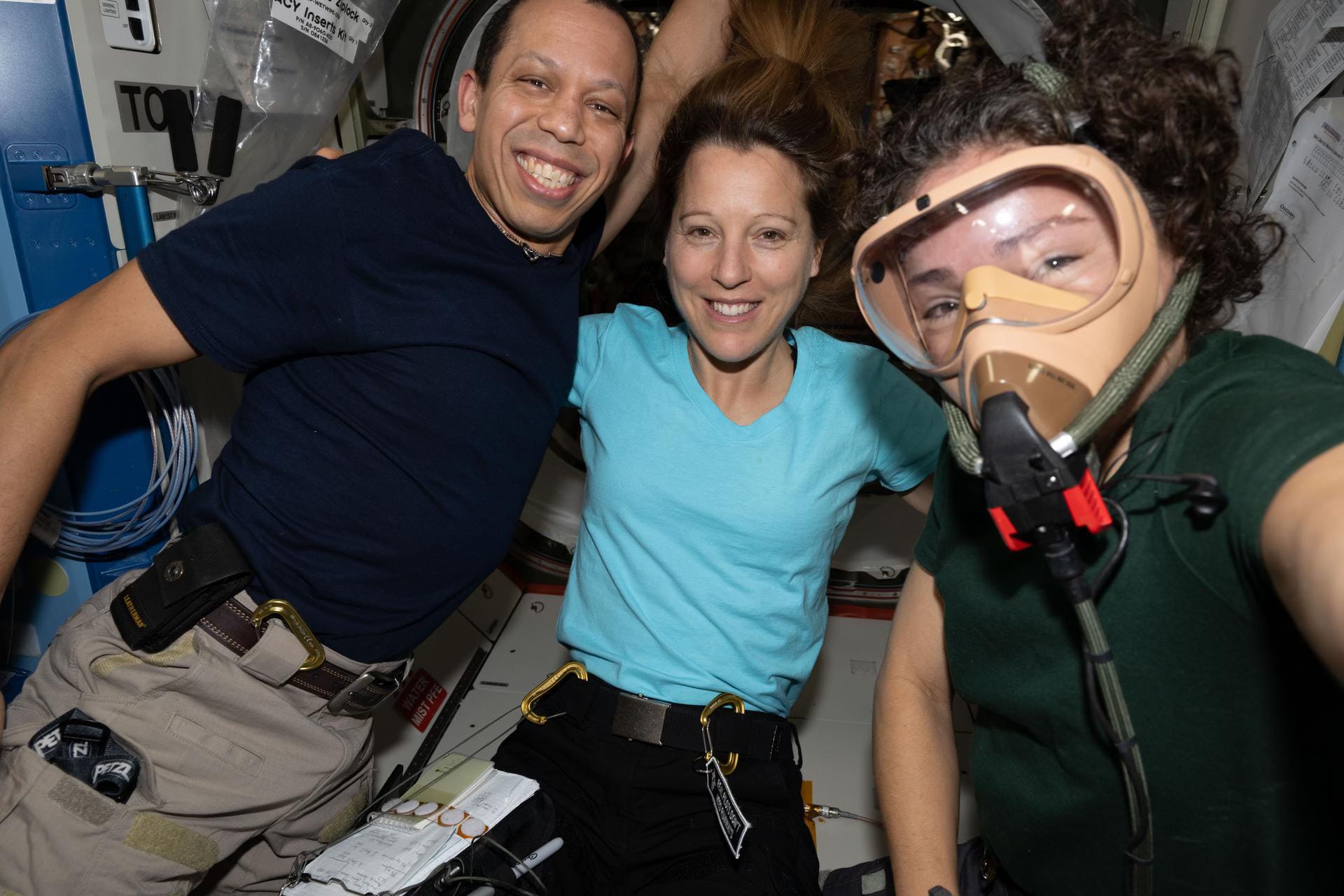
The crew then made a 15-minute audio call to the astronauts currently aboard the International Space Station: NASA’s Jessica Meir, Jack Hathaway and Chris Williams, and ESA astronaut Sophie Adenot (who I taught in 2023).
This is a first in human spaceflight. Never before have humans beyond low Earth orbit spoken directly with humans in low Earth orbit. The data travelled from Orion through the Deep Space Network to JPL in Pasadena, then to Houston, and back out to the ISS. This was a particular highlight for both crews and you can hear it in their voices:
Jessica Meir (on the ISS) to the Artemis crew: “We can tell that you guys are definitely experiencing ‘moon joy.’ I feel like even we are experiencing ‘moon joy’ right now.”
Wiseman to the ISS crew: “We have been waiting for this like you can’t imagine.”
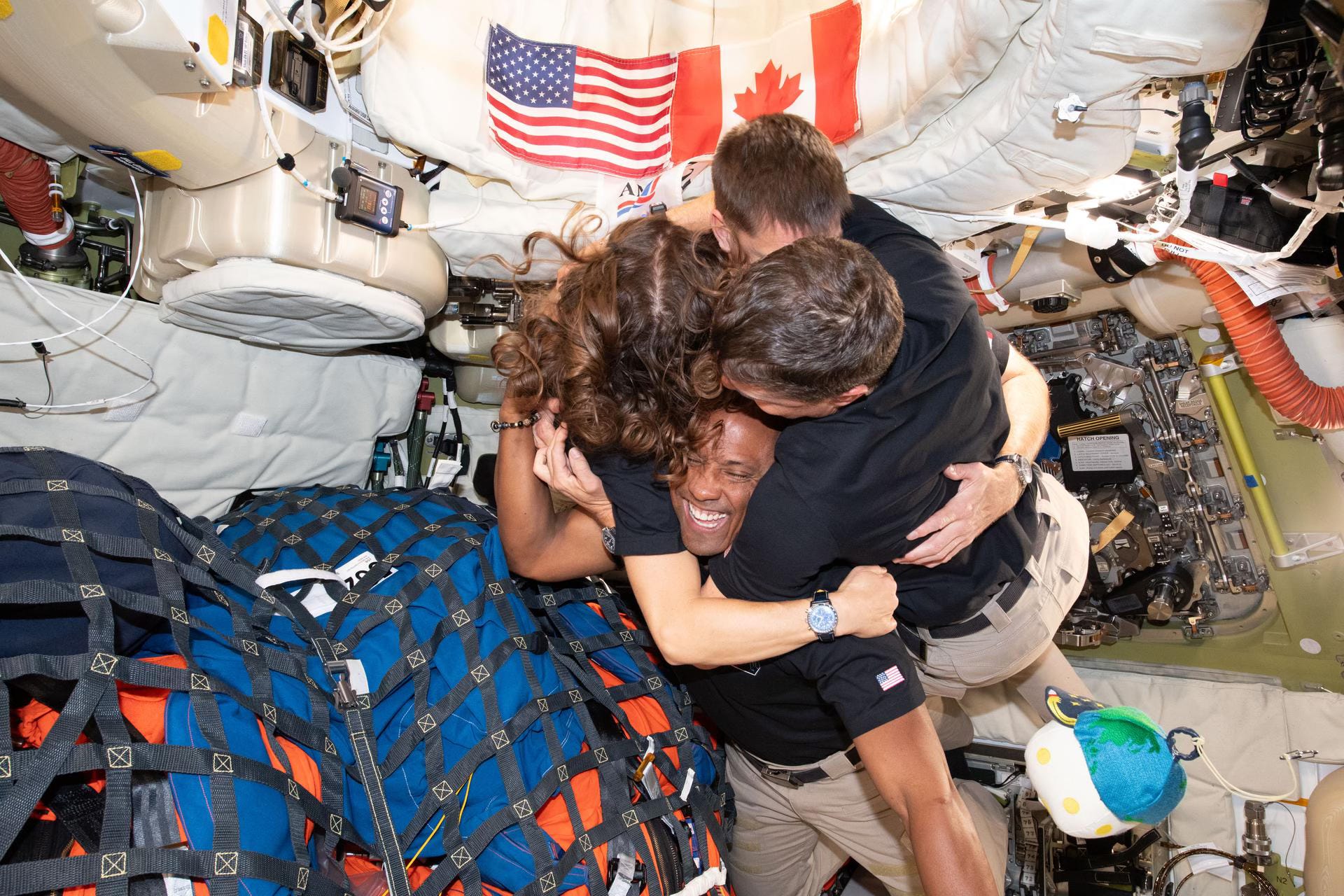
Koch to the ISS crew: “Every single thing that we learned on ISS is up here.” For Koch and Meir specifically, it was a space reunion as the two had been together on the ISS in January 2020 and done a spacewalk together.
Following the debrief, the crew had staggered off-duty periods, giving them time to rest and recharge before the final tasks of the mission.
What does time off look like in space 200,000 miles from home? NASA did not report much, which is appropriate for a crew that has been under 24/7 scrutiny for the last 7 days. These are private hours in an extraordinary place. What we know is that the crew have tablets loaded for the mission, and on the ISS these are normally loaded with films, music and books.
The research on crews that go to extreme environment agrees on this: unstructured time after a peak experience is not always restful. With the scaffolding of the mission absent for a time, but with so much more still to come, it will be hard for them to truly relax.
The day concluded with a 15-second trajectory correction burn: the first of three that will refine Orion’s path back to Earth. Fifteen seconds of engine firing to keep them pointed precisely at a Pacific Ocean splashdown zone for Friday.
Day 8 is a working day. The crew will conduct a radiation shelter demonstration (building a protective zone inside Orion against a potential solar flare) and repeat the manual piloting test that Koch and Hansen completed on Day 4, this time with Wiseman and Glover at the controls.
Two days after that, they come home.
Day 7 of 10 🌙
Sources: NASA Artemis II Flight Day 7 blog, Canadian Space Agency daily logbook, NPR, April 7 2026.
Comments
Nothing yet. Say the first thing.
Sign in to join the conversation.