
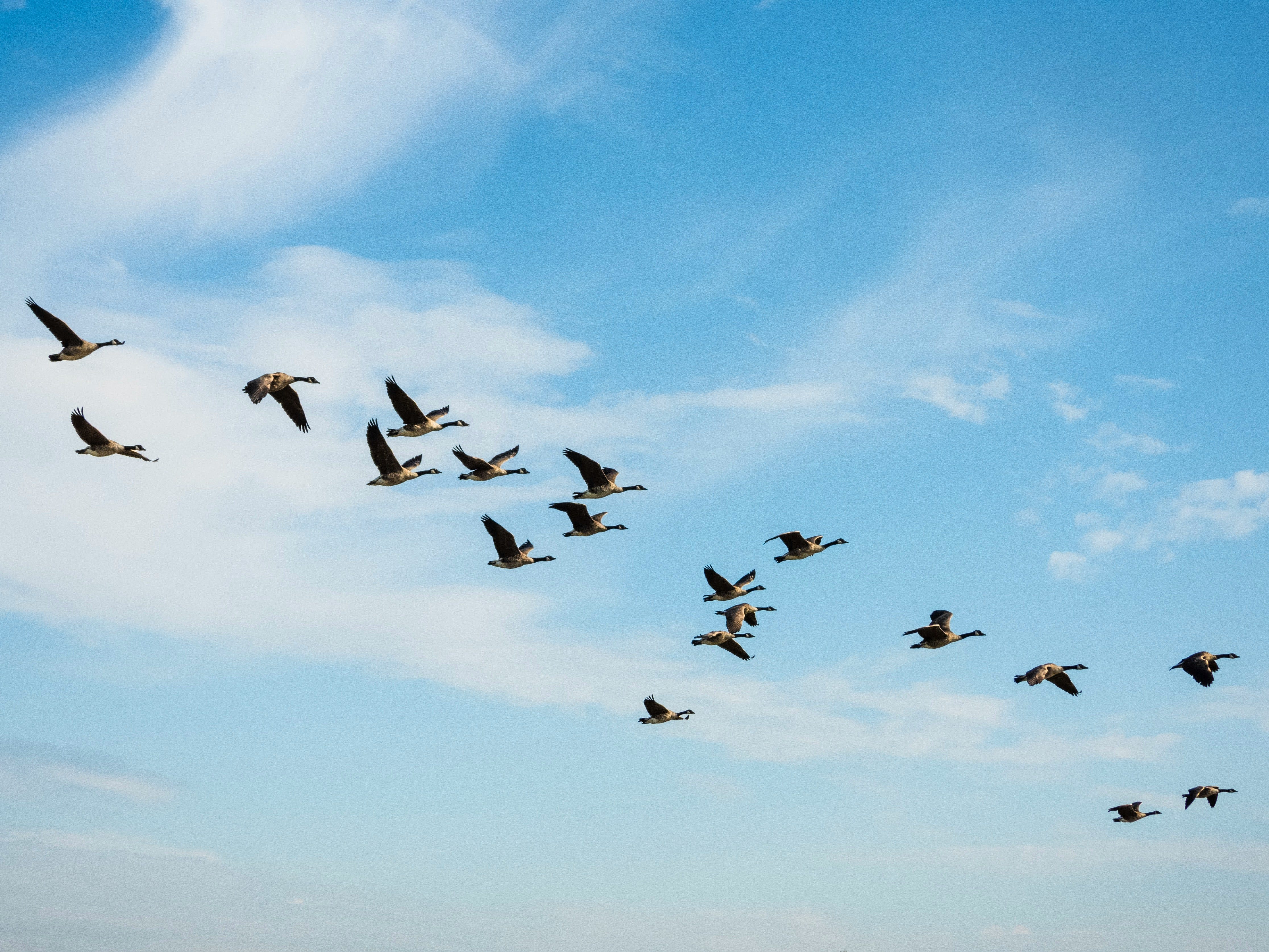
Things were raw and confusing for me – I was in a tough place – when I first encountered Mary Oliver. The poem was “Wild Geese,” and there’s a good chance you’ve heard it. It starts like this:
You do not have to be good.
You do not have to walk on your knees
for a hundred miles through the desert repenting.
You only have to let the soft animal of your body
love what it loves.
Tell me about despair, yours, and I will tell you mine.
Meanwhile the world goes on.Meanwhile the sun and the clear pebbles of the rain
are moving across the landscapes…
This was twelve years ago. The poem stopped me in my tracks.
You see I was trying, very very hard, to “be good.” To consider aright, pray aright, do all the right things. I was surrendered too, let me tell you; I was letting go and letting God. Had been for ages. But I felt stuck and exhausted.
What Mary tells us in this poem is: stop trying so hard. Instead, go pursue that which is objectively beautiful. Go seek beauty. Get outside yourself and engage with transcendence. Navel gaze less. Look out – and up, where the geese are.
This is the crux of natural law. The basic goods (one being beauty) exist out there; they’re real and objective and preeminent. They don’t change. They don’t depend on you or me or the mess we carry within us. As we seek them for their own sake, we begin to flourish. We begin to find ourselves, our place. That’s not all of it, but it’s the biggest part.
When Mary says “you only have to let the soft animal of your body love what it loves,” is she advocating for worship of appetites, for radical autonomy, for acceptance of vice? She is not. How do I know? Because Mary was also a pursuer of truth. We see this in her poetry, in the way her pursuit of beauty eventually led her to know God, and in the redemption she experienced as a result, healing (in her 70’s, no less) from her wounds and the traumas of her childhood. She was a private figure and told the story very seldom; I heard it from her own mouth here. It moved me. I think she was among the bravest women I know.
Because Mary pursued all the goods, she dwelt with truth and reason.

I recently watched a documentary called “Grizzly Man” that follows the life of activist Timothy Treadwell who spent 13 summers living with wild Alaskan bears until he was killed by one. And I thought of Mary. Like her, Tim loved beauty, animals, and the natural world, and he also built his life around observing them. But unlike Mary, he did not balance chasing beauty with pursuing the other goods. For starters, he didn’t embrace truth. He spun a narrative about bears, their capacity for friendship with humans, and his own role as a necessary protector the bears against predation by the US government – and his claims were patently false. He also spurned the goods of friendship and human life; he was unreasonable. So Tim’s story, and his untimely end, reflected tragedy more than wholeness or flourishing. It stands opposed to Mary Oliver’s in this way. She flourished in the end; he floundered – and was killed by the ill-conceived object of his worship, the bear.
The basic goods are beauty, knowledge (of truth), life, friendship, play, and practical reasonableness (basically wisdom). We need them all. We keep our pursuit of them in balance. We do not navel-gaze.
The end of the poem:
Meanwhile the wild geese, high in the clean blue air,
are heading home again.
Whoever you are, no matter how lonely,
the world offers itself to your imagination,
calls to you like the wild geese, harsh and exciting -
over and over announcing your place
in the family of things.
I have a place “in the family of things,” and it’s a good (not perfect) place. I do not need to be good, enacting a schoolmarm’s check list or becoming a guilt-ridden dullard.
Rather, I get to be a human, to be alive. I get to see sunsets and clouds and birds, to hear my dog’s whine and my child’s voice. I get to splash in creeks and jog through fields and play. I get to learn, to hear stories and read books and know things – to grow in truth. I get to love my friends and be loved by them. I ponder this incredible world (good and bad alike) and cultivate virtue and avoid vice – that is, respond with reason. There I find God, and what is most real.
This is flourishing. Thank you natural law.
If you’re reading this via email, please consider pressing the heart (♡) at the bottom or top of this email. It allows my work to get more eyeballs on it and that helps. «Also consider commenting, sharing, or subscribing! :)»
Thanks for reading For the Sake of the Good! This post is public so feel free to share it.
No posts
Comments
Nothing yet. Say the first thing.
Sign in to join the conversation.