
Wine writers are increasingly critical these days; lately, tasting notes have been a main target. I understand the frustration. But the truth is, we’re not the ones relying on them. We’re the ones judging them.


First off, I think it’s safe to say the majority of wine writers have never worked in wine retail, directly with actual customers. And it shows. There’s a big gap between writers, wine experts, and real customers. A lot of wine writers aren’t writing for the general public. Their audience is mostly other wine professionals, even if they believe otherwise.
This is where the disconnect happens. People share their opinions confidently, but they don’t know the reality of what is happening in wine shops. You can read trend reports and financial articles endlessly, but that won’t connect you to the real customer. Understanding why and how they buy wine is key, and the only way to truly learn that is by selling it directly to them.
I didn’t start my career life in wine, but I’ve spent years working in it from all sides: wine retail, on the sales floor with customers, distributor sales, buying, and managing wine shops. I know how people shop and what actually gets them to pick up a bottle.
And as much as wine writers I respect and admire want to dismiss tasting notes and call them boring or unnecessary, they matter. They matter a lot. The same goes for ratings, but let’s not even go there today.
From my experience, six out of ten customers depend on tasting notes and descriptions as much as they do on ratings when choosing what to buy. If they are not reading the shelf talkers we create in the shop, they are on their phones looking up reviews on Vivino. They want some kind of guidance, even if it’s imperfect.
I think it’s short-sighted to make broad claims against tasting notes (and ratings), especially if you’ve never worked directly with customers. Understanding their experiences is key. I say this as someone who doesn’t even like traditional tasting notes. I, like many others, think they are boring. But it isn’t about me, at least on the sales side of wine.1
Even a simple descriptor can make a difference. If someone sees “coconut” on a wine tag and they hate coconut, they will immediately say so. That moment opens the door to a real conversation. We can talk about where that coconut flavor comes from. We can help them understand oak, flavor, and what they might enjoy instead. Without that descriptor, that conversation never happens. In fact, they may dismiss that grape entirely in the future.
Wine writers tend to place a lot of trust in the people selling wine to consumers. In my experience, that trust is often misplaced. I’ve worked in wine shops, big and small, across the country, and the reality is inconsistent at best. It’s a low-paying job, and when people aren’t supported or invested, the level of knowledge and care can suffer.
I don’t think many wine professionals realize that most customers are walking into shops with little to no real guidance. At the last shop I worked at, almost everyone on staff knew very little about wine or even how to sell. They were hired because they were affordable and flexible, not because they had experience or training. And that’s not unusual.
There are some incredible shops with knowledgeable, passionate staff, but they are the exception. The reality is that many retail wine jobs simply don’t pay enough to keep experienced people around. When places like McDonald’s or even a car wash offer better pay, and even health insurance plans, people who care about wine eventually have to leave just to make a living. That’s exactly why tasting notes, ratings, and all the things wine professionals love to criticize still matter. They give customers something to rely on when real guidance isn’t there.

Remixing the tasting note
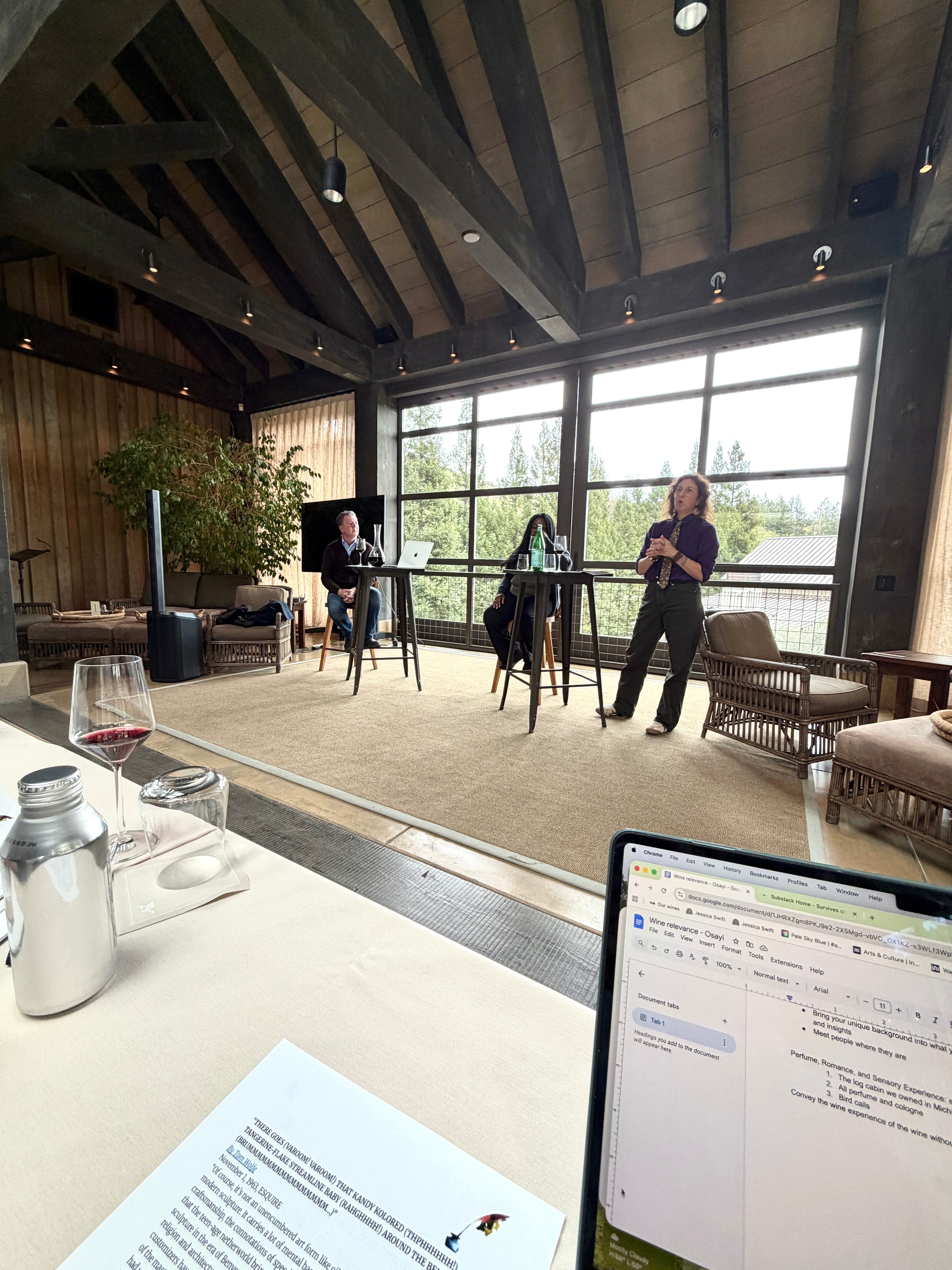
A few weeks ago at the Wine Writers’ Symposium, we had a writing exercise that tackled the dreaded tasting note. Now, you know my opinion from reading the beginning of this article. So here is the fun part for wine writers who are not thrilled with what I wrote above. There still is a place for updating the boring tasting note.

We were given a glass of red wine. We knew nothing about it, other than it was a red wine. We had three prompts earlier in our exercise which we wrote answers to. We then needed to describe the experience of tasting the wine without any wine descriptors and to use one of our answers from the prompts we were given earlier. You will most likely guess what I wrote for one of my prompt answers after reading my response.
My remixed tasting note of the unidentified red wine.
Sitting on a jam packed plane wearing my mask, I still can smell the dusty and stale cologne of the man two rows ahead of me. Whatever his intention, the man has no clue what an appropriate amount of cologne is. None. There is never an appropriate amount. The fact I am stuck behind this dank, damp, and oddly bright smell makes me wish I never boarded. Did he use rubbing alcohol to make the cologne last longer? How can it be bright but also be so dank and stale? Too much age? I guess it clearly was the right amount for him. However, I prefer balance and far less rubbing alcohol making my nose twitch. If I must have a smell near me at all. Maybe as I walk away once we have landed the smell will go away quickly. One can only hope. Or pray. But the longer I sit behind him, the more I now smell a slightly odd cedar plank. The cheap ones the grocery store puts their leftover almost rancid salmon on and sell it for thirty dollars a pound.

So, I took the brief to an extreme. But honestly it was the first thing that came out as I sipped the wine blindly. After some of us shared, we were told the wine was a Sangiovese. We did not know the year or producer, thankfully, I despise criticizing hard working winemakers. If you don’t know this about me, it is a bit shocking, but Sangiovese is a grape I do not like. I have tried so many, high end, middle of the road, many producers, even the Super Tuscans people rave about. For whatever bizarre reason, my palate does not agree with the grape. So it makes sense I had such a negative reaction to tasting the wine.
The interesting thing is that two other fellows who shared had a negative reaction as well. However, someone else adored it. We all have such different palates. For me, that is why the purpose of the tasting note for the customer is absolutely necessary to be boring, simple and to the point. But truly, if you write unique tasting notes, I am so excited to read them. I think other wine professionals are the audience that craves the unique tasting note. And maybe even those customers that also want to read a boring tasting note when buying wines. There is a place for both the boring standard tasting note and the remixed versions.
I would love to hear opinions on this topic, please comment if you want to share. Especially if you are a wine customer, lover, but do not work in the industry. Your opinions are seriously what I want to hear!

Comments
Nothing yet. Say the first thing.
Sign in to join the conversation.