
A few months ago, every conversation I had, whether on Reddit, in a Slack channel, or just with friends, felt electric. There was this collective rush, a feeling that we had all just been handed a superpower. We were typing things into a box and watching magic come out.
Now, the mood is different. It’s not anger, exactly. It’s fatigue.
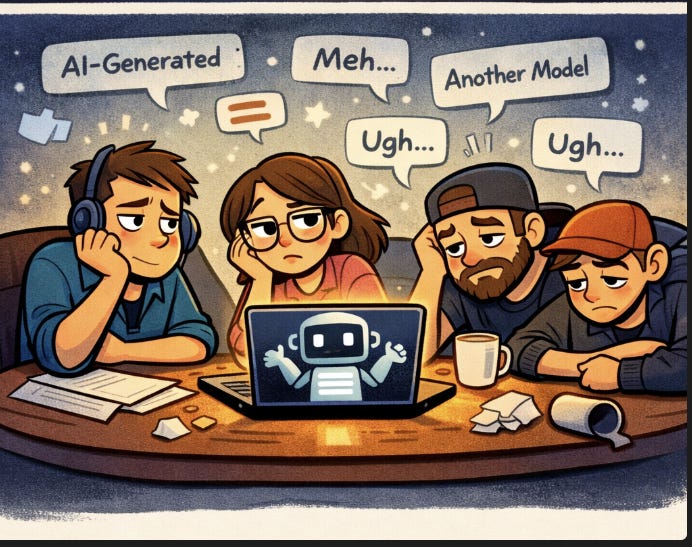
I see the eye rolls when someone mentions a new model. I see the exhaustion in the comments sections. The phrase “AI-generated” has gone from a badge of innovation to an insult for something hollow and generic. People are tired of the slop. They are tired of the hallucinations. They are tired of the hype cycle promising that the next version will finally fix everything.
I use these tools every single day to build software I couldn’t build a year ago. I rely on them. But I feel the fatigue too.
There is a growing narrative that the models are getting “lazier” or “dumber.” Maybe they are. But I have an uncomfortable suspicion that the problem isn’t the technology degrading.
I think we just ran out of easy questions.
When we started, we asked for summaries. We asked for email drafts. We asked for basic code snippets. The stakes were low, and the answers were binary: right or wrong. The AI crushed it.
But now we’re trying to do real work. We’re trying to build complex systems, plan careers, or solve problems where the answer isn’t a fact, but a choice. And suddenly, the magic button feels broken.
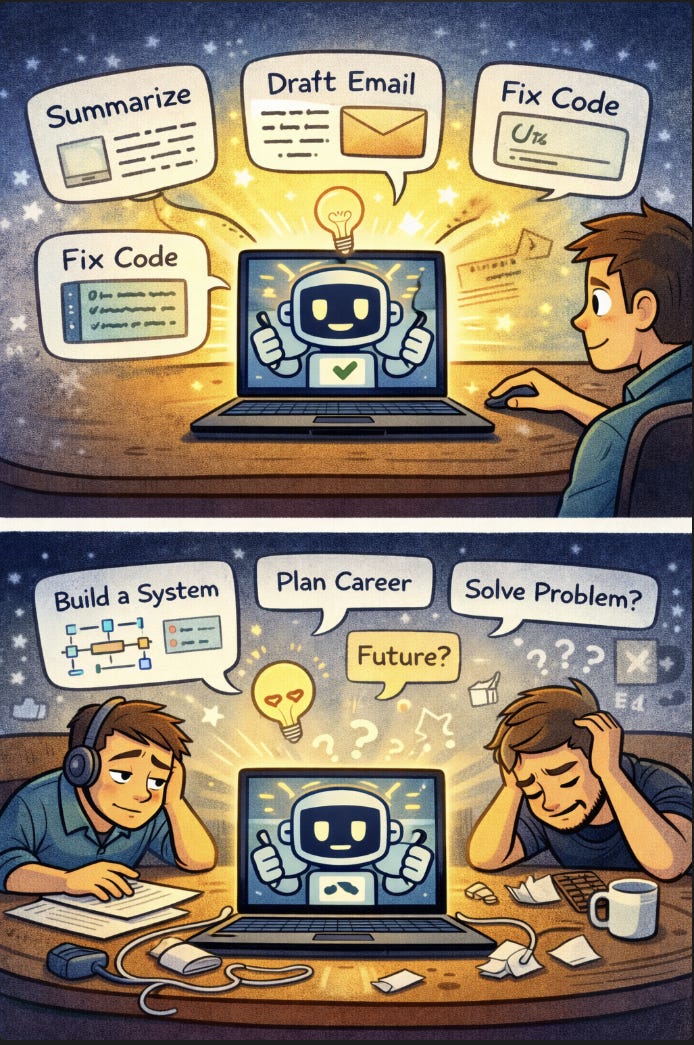
I found myself in this trap last Tuesday. I sat in front of a chat window for an hour, spiraling. I was trying to get the AI to architect a new feature for a project I’m working on. I typed paragraphs of context. It gave me back a confident, well-structured hallucination. I corrected it. It apologized and gave me a different, equally wrong answer.
By the end of the hour, I was exhausted. I blamed the model. Why can’t it just understand what I need?
But later, when I stepped away from the screen and tried to write down exactly what I wanted that feature to do, without the AI, just me and a piece of paper, I couldn’t do it.
I didn’t actually know.
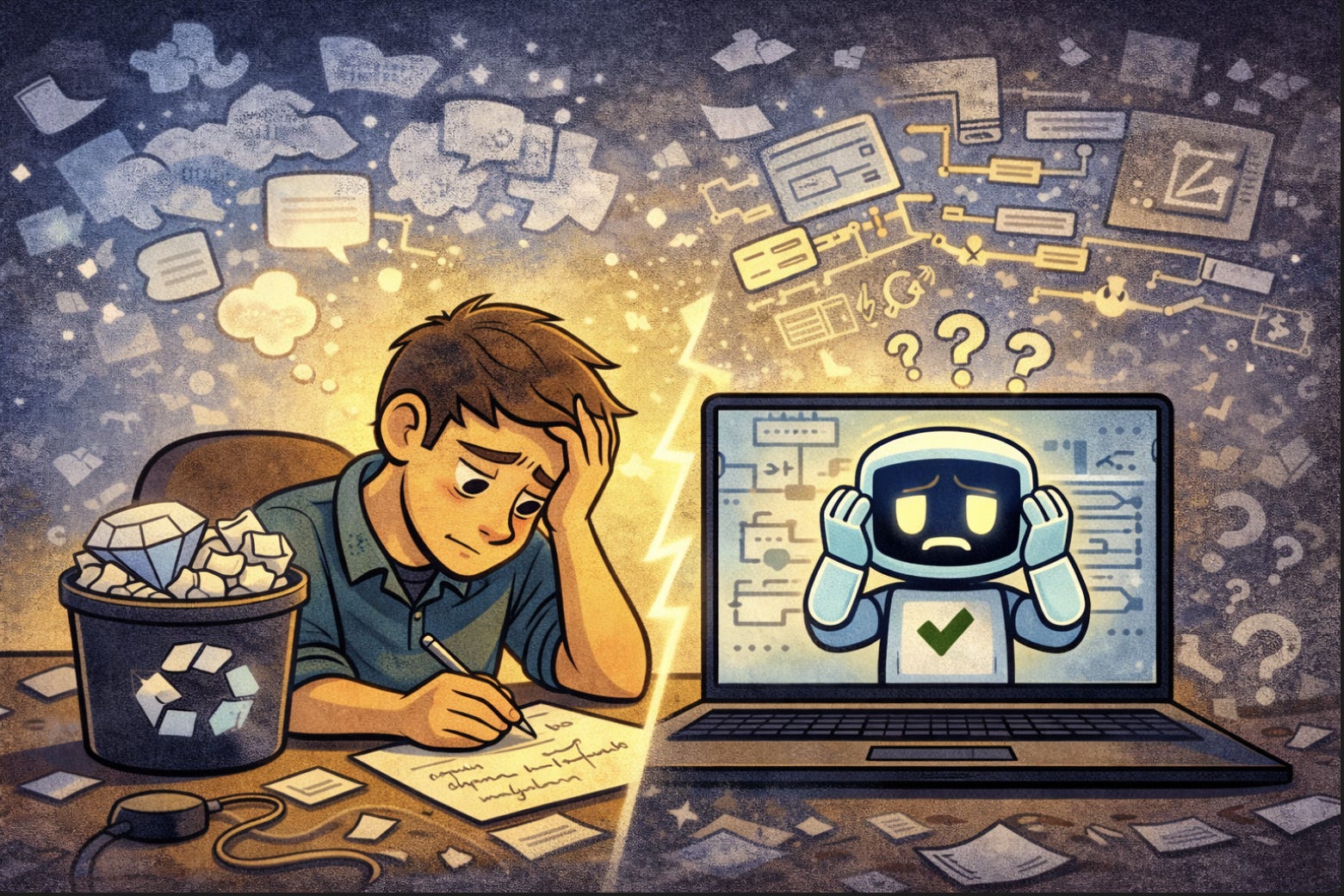
My intent was fuzzy. I had a vibe, not a spec. I was using the prompt box as a trash can for my own confusion, hoping the machine would sort through the garbage and find a diamond.
This is where the fatigue is coming from.
AI acts like a mirror. When you stand in front of it with clear intent, it reflects capability. But when you stand in front of it, confused, it reflects that confusion at you at high speed, polished into an answer.
We are drowning in high-fidelity noise because our inputs are low-fidelity thoughts.
We’ve been sold the idea that prompting is a skill. That if we find the right “magic words” or the perfect chain-of-thought structure, the machine will bridge the gap. But prompting isn’t the skill. Defining the problem is.
The hard part of the work was never typing the code or writing the sentence. The hard part was deciding why that code should exist or what that sentence needed to say.
We tried to outsource the clarity, and it didn’t work.
That’s why the output feels shallow. It’s shallow because our requests are shallow. We are asking for execution before we have established a structure.
I see this constantly now. People are generating entire apps that don’t solve a real problem. They are generating marketing plans for products that have no audience. They are moving incredibly fast, but they are just drifting.
Speed without structure just creates a bigger mess. And cleaning up a mess, especially a computer-generated one that looks correct, is infinitely more tiring than building it right the first time.
It makes sense that we’re tired. We thought we were getting a collaborator who would do the heavy lifting of thinking for us. Instead, we got a collaborator that demands we think more clearly than ever before, because it will punish us instantly if we hesitate or hedge.
It exposes our weak thinking. It doesn’t fix it.
I don’t think the AI revolution is over. I think the “toy phase” is over. We are waking up to the reality that having a power drill doesn’t make you a carpenter; it just helps you drill holes in the wrong wall faster if you haven’t measured first.
The skepticism is healthy. It means we’re stopping to look at what we’re actually building.
Is the tool actually failing us, or are we just tired of seeing our own lack of clarity reflected at us?
-Surukode
No posts
Comments
Nothing yet. Say the first thing.
Sign in to join the conversation.