
We’re back, and Brandon has recently returned from a trip to Nepal, so you’re the first to read the story and see the photographs!
If you’ve ever locked eyes with a female kudu that appears out of nowhere or had your heart stopped by a charging elephant, you’ll know how dramatic the bush can be. At Vic Falls, there’s the rush of movement and energy. In the ocean, there’s endless mystery. But mountains, especially big ones, are more like cathedrals, designed to humble humanity. They just sit there, silent and motionless, posing a simple question: is it true that the more insignificant you feel, the closer you get to realising how significant you are?
For decades, my mate Doz had longed to feed his heart and soul by hiking the Himalayas. For me, a spiritual Mother Naturalist, it was a no-brainer. Let’s do it! We chose Mardi Himal: a five-day 40km trek that begins with a jeep ride into the clouds, from the lakeside city of Pokhara to a place called Kande at around 1 700m. From there, you steadily gain in elevation until the final push on day four that takes you to the Viewpoint at 4 200m. In this part of the world, where anything under 2 500m (that’s two and a half times Table Mountain) is considered a hill, ours was a moderate little hike: Himalayas for beginners.
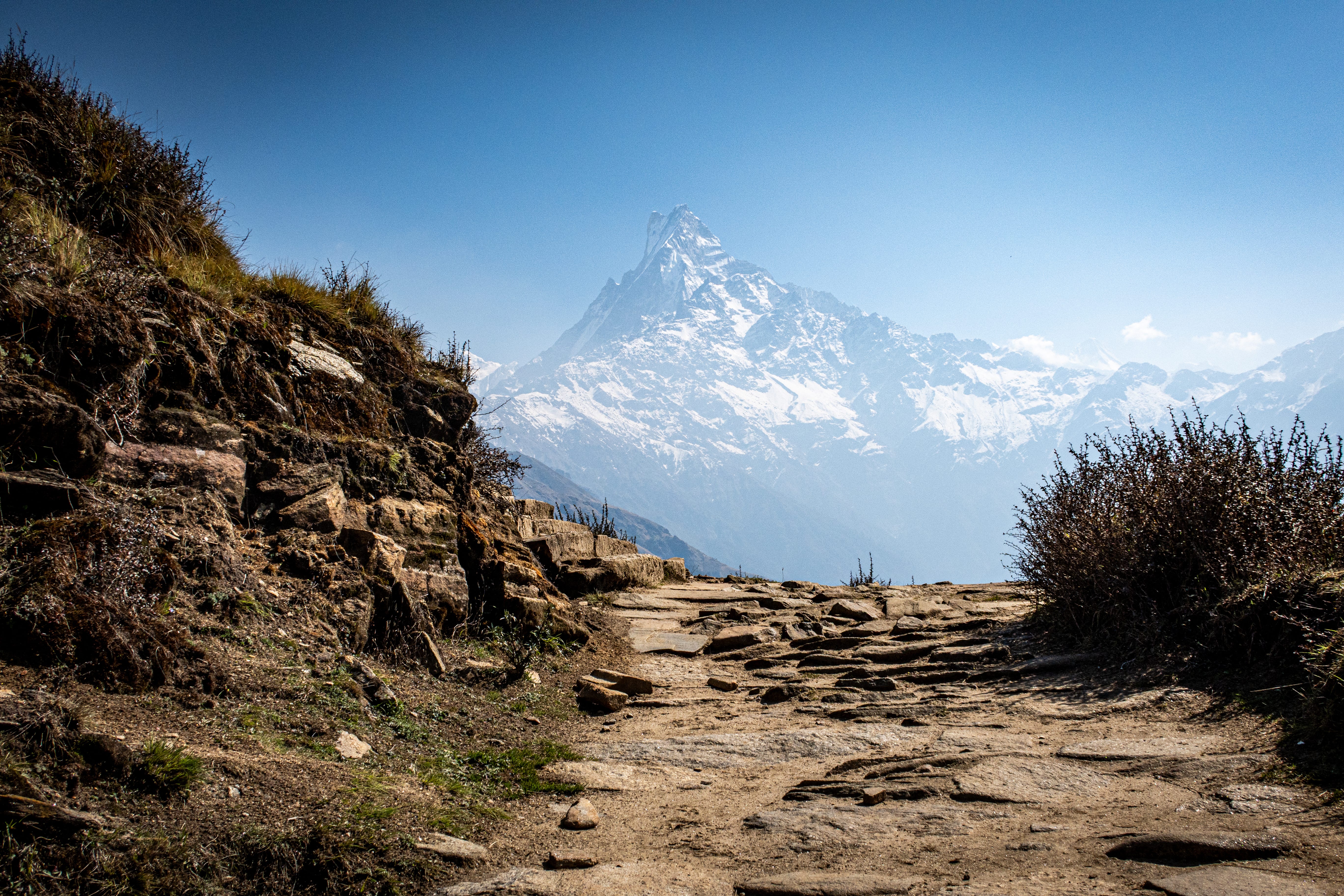
Still, you have to climb a mountain to see a mountain. And as you trek up and along the ridge that leads to Mardi Himal peak, there are two constant 7 000-meter-high companions that start off defining the skyline and end up right in your face: on the left, Annapurna South, and to the right, the unmistakable double-peaks of Machhapuchre, the sacred ‘Fishtail Mountain’ where climbing is forbidden.
The trail sits entirely within the Annapurna Conservation Area, and we trekked from camp to camp, overnighting at teahouses along the way. When asked what we should order at the end of a day, our Sherpa guide Sarki didn’t hesitate: ‘Dal bhat power – 24 hour!’ A tray of lentils and rice, served with spiced meat or veg, spinach, pickles and papad, it’s considered the national dish of Nepal and the ultimate trek-fuel.
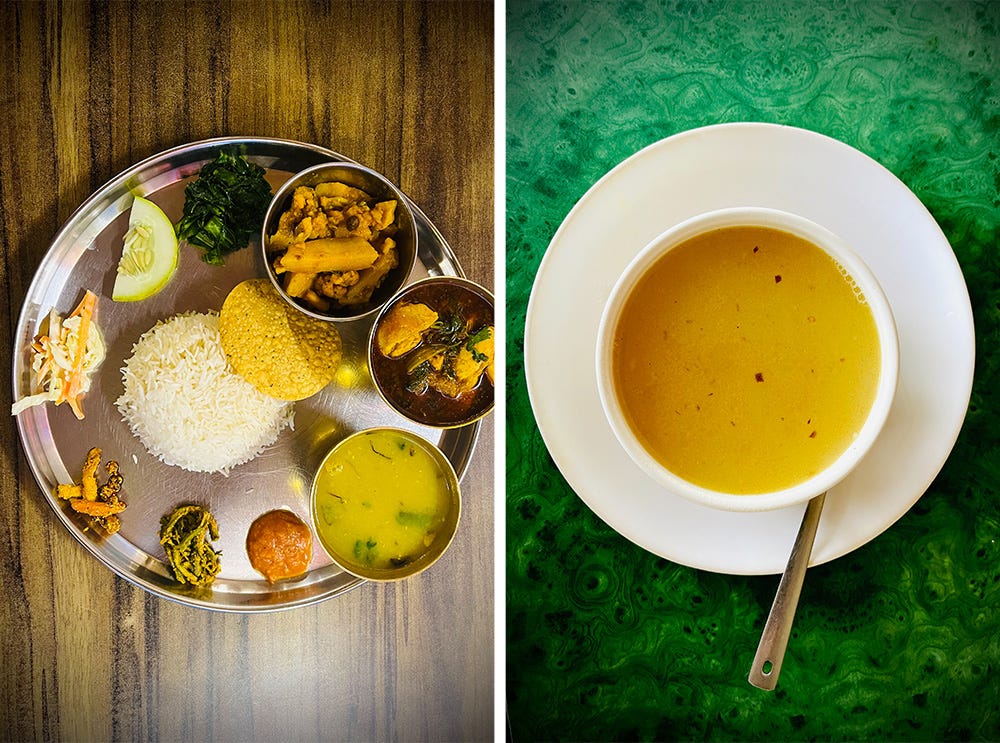
So we Dal bhatted ourselves up a seemingly endless staircase of silver-flecked schist. Mica deposits in the rock make the path shine back at you and coat boots and fingers with a shimmering dust. Although our core sustenance remained the same each night, it was seasoned by the personal touch of each cook and the occasional surprise, foraged at high altitude, like the Ningro or edible ferns at a camp called Pittam Deurali, cooked with homegrown garlic and toasted sesame seeds.
A second taste of the forest came when Sarki suddenly dropped his pack and dived into the undergrowth. He’d spotted some shrooms, and when we reached camp, they were treated like prized possessions, washed thoroughly and fried in a pan with onions. We felt like honoured guests to be offered a taste of their firm nuttiness – but only one small bowl to share, and only as a treat once we’d finished our lentils!
There’s a haze that sets in at this time of year in the foothills of the Himalayas that makes morning by some stretch the optimal time for hiking. With neither of us having huge appetites for breakfast, Doz came up with a simple plan. Two boiled eggs each – and a sprinkling of salt – wrapped in foil and stashed in the pack. As it turned out though, not for very long.
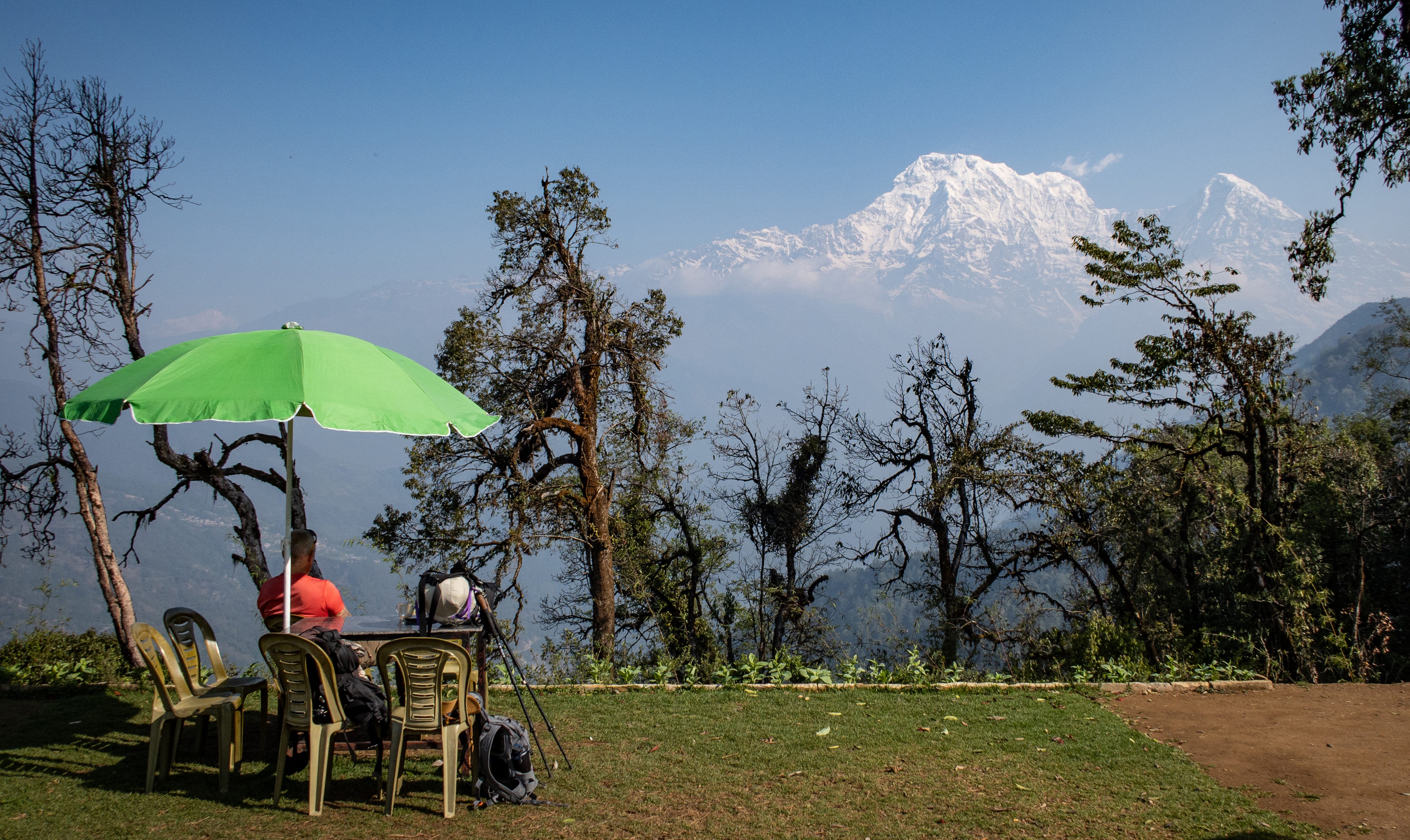
In the late morning on day two, on the approach to Low Camp, we crested a ridge to find a teahouse perched high above the trees, set against a backdrop so real it looked fake: blue sky on top, haze below and the ghostly panorama of the Annapurna massif stretched across the middle. And there we sat, in the shade of a weathered green garden umbrella, gazing into the distance, shelling our eggs and feasting on birdsong.
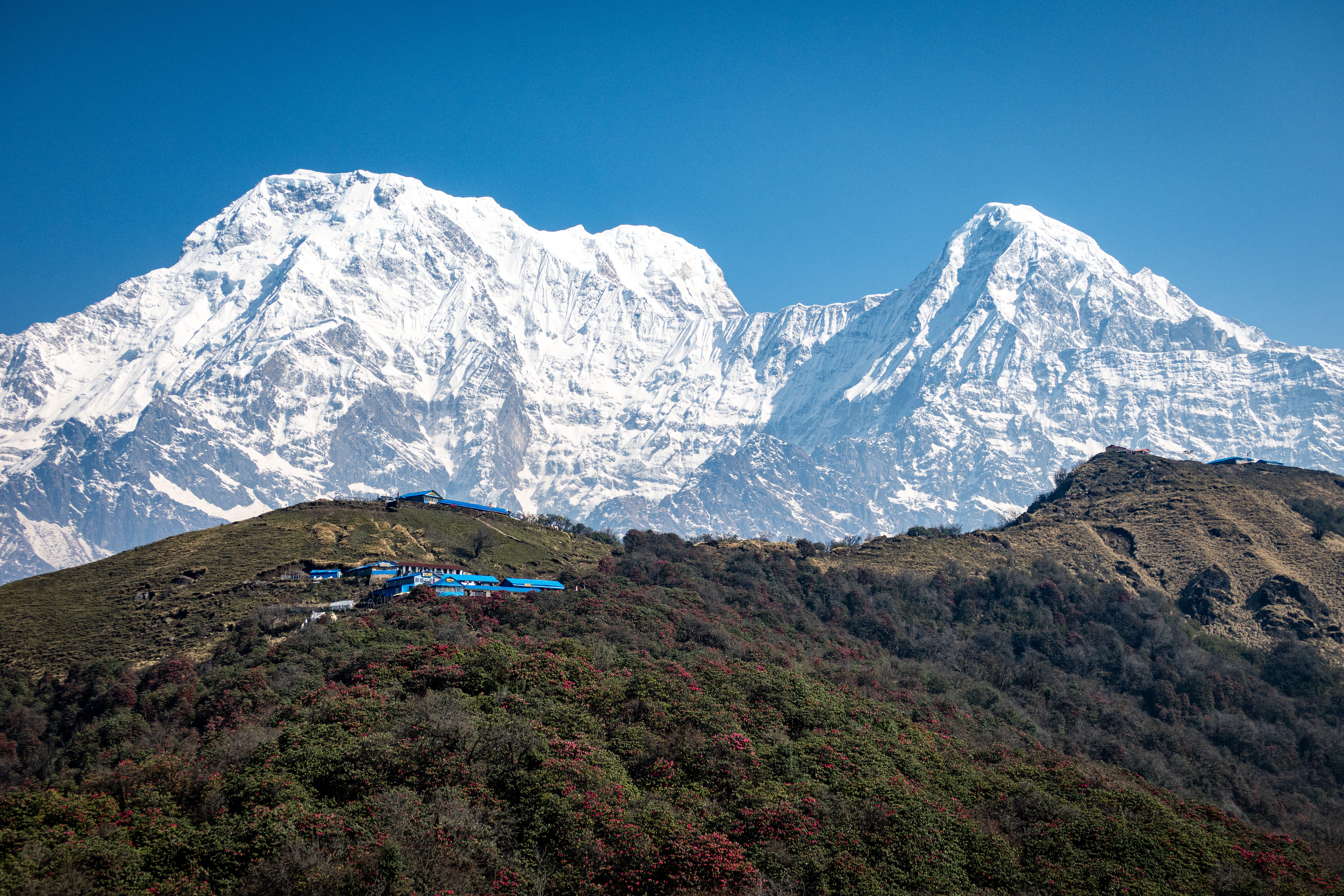
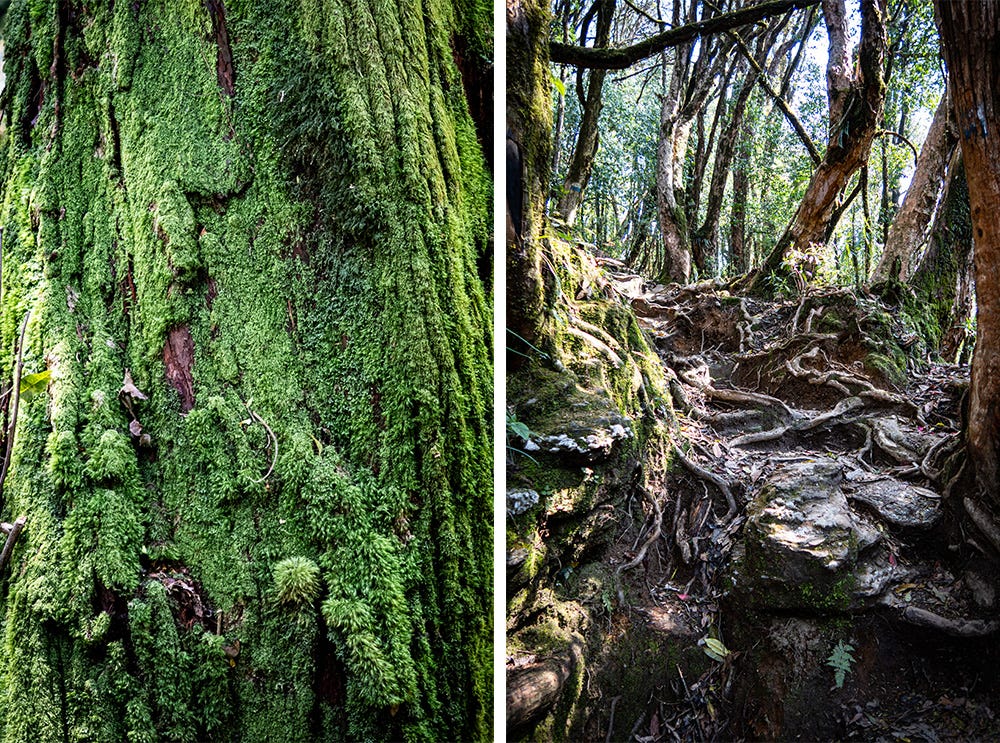
Then we headed off again, into the unknown, the route rising up slowly through a mossy tangle of lush rhododendrons, branches heavy with red, pink and brilliant white blossoms and the forest floor littered with dark-veined leaves that cry out to be photographed and turned into wallpaper.
Every now and then, you breach the canopy and the mountains appear, increasingly breathtaking, each and every time, as you get closer and closer. It was only when we got to High Camp, around 3 500 metres, that things took a decidedly Tim Burton turn: the rugged, rocky set constructed in scarified shades of brown and grey with large-billed crows strafing the landscape searching for scraps.
At that altitude, the air thins out fast and Sherpa guides start mumbling ‘slow, slow’ with monotonous regularity. Since we both have free lifetime membership to Table Mountain gym, we were in good hiking shape, but nothing can really prepare you for altitude except altitude itself. So the last stretch, climbing 700 metres up to the viewing point at 4 200, in the pitch dark at 3.30am, with temperatures below zero, was done at whatever the diametric opposite of breakneck speed is.
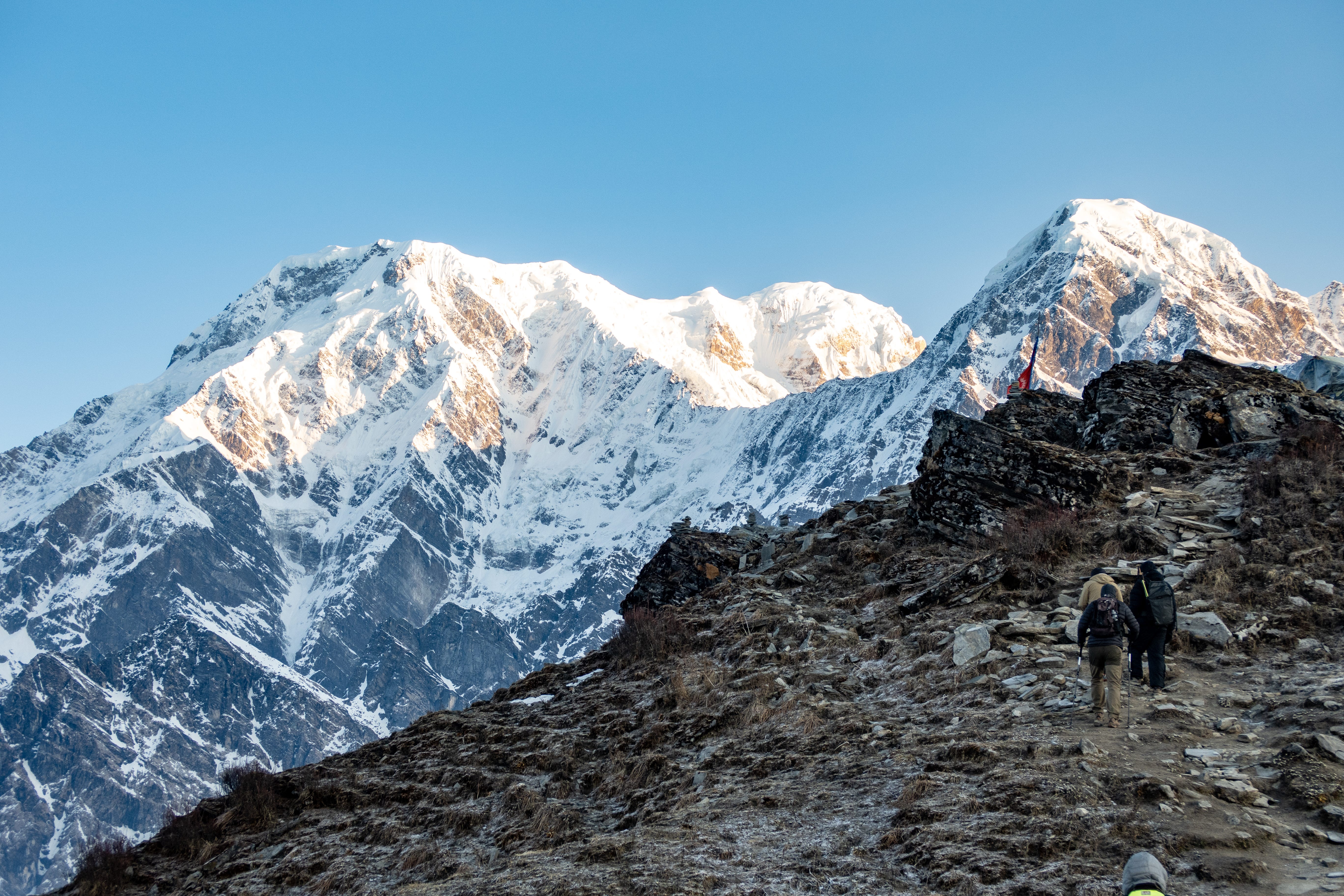
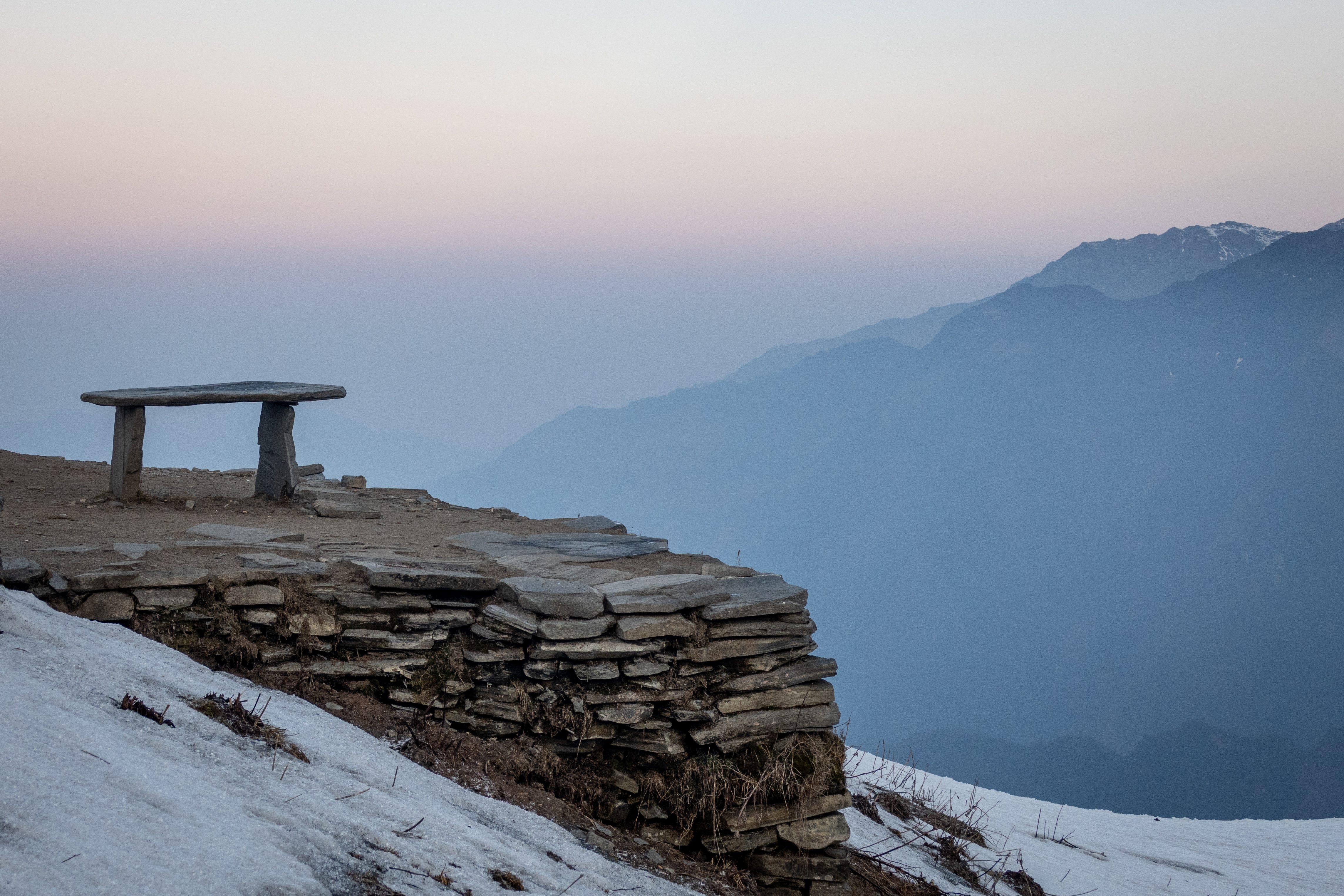
And even then, it’s sobering to think that when you finally reach the windswept, snow-strewn ridge, and gaze in wonder and awe at the majesty on either side, you’re barely tickling the toes of the mountain gods. Still, as I watched the sun rise, hugged by the Himalayas, shoulder-to-shoulder with my best mate, surrounded by prayer flags flapping in the wind, it felt like we were on top of the world. The steaming cup of black coffee we were met with on arrival was as celebratory as champagne on an F1 podium.
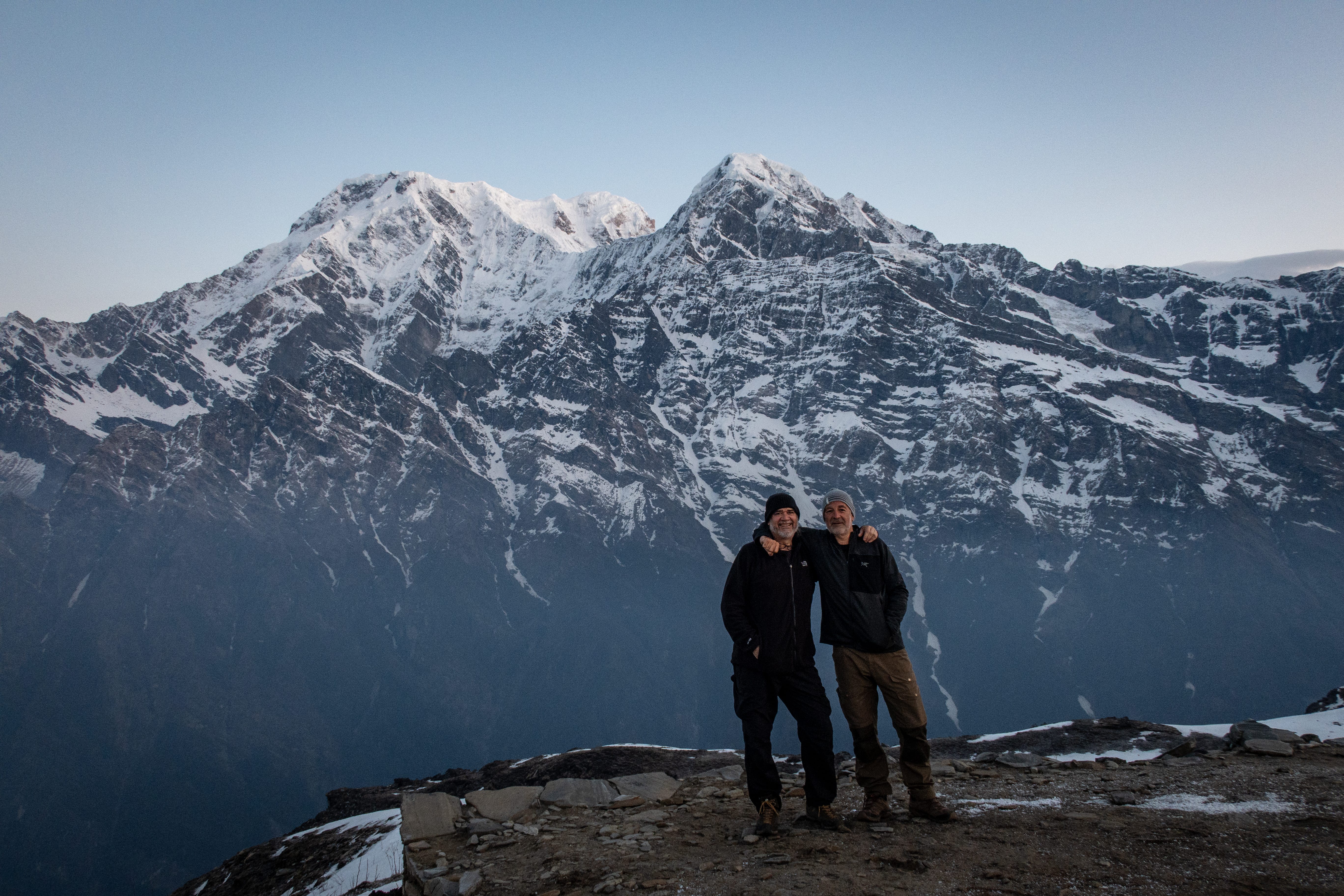
I’d expected the walk off the mountain to be perfunctory: it was anything but. While the way up was alive with anticipation and the sensory overload of new surrounds, coming down we settled into silence and introspection. A short way into the descent, we stopped to rid ourselves of an outer Gore-Tex layer under the watchful eye of a couple of yaks.
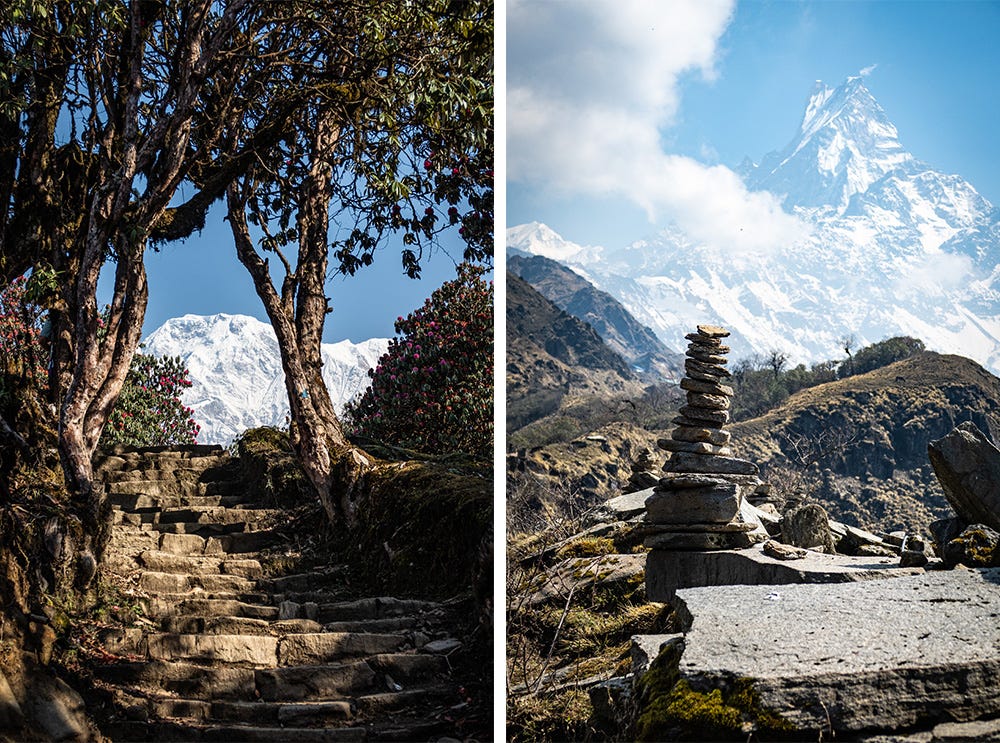
To the side of the path was a small tower of stone, a mini Machhapuchre. Cairns are regular features on these trails that symbolise different things to different people. To me, they are a reminder of the connection between people and planet; our gratitude to unseen forces for gifting us the life we have; the sense of community we feel with others who have travelled the same highways in search of truth, and the endless quest for balance on uneven terrain.
But at higher altitudes, when the path becomes unclear, the weather changeable and the environment as scary as it is awe-inspiring, they can also alleviate anxiety by reminding us that we are on the right path, and we are not alone. I added a little rock to the cairn.
Comments
Nothing yet. Say the first thing.
Sign in to join the conversation.