
Malaysia DOSM issues quarterly provisional vital statistics via infographics. I extract data to present the latest provisional data for 2025 and 2026. The 2025 Annual Report with final tallies is scheduled for release on 15 October 2026.
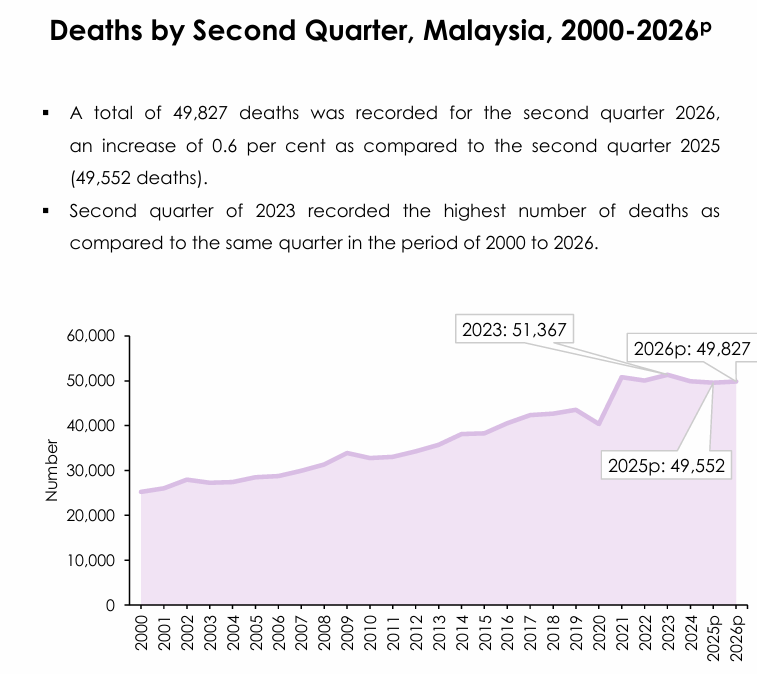
DOSM infographics below show Malaysia Q2 birth and death trending since 2000.
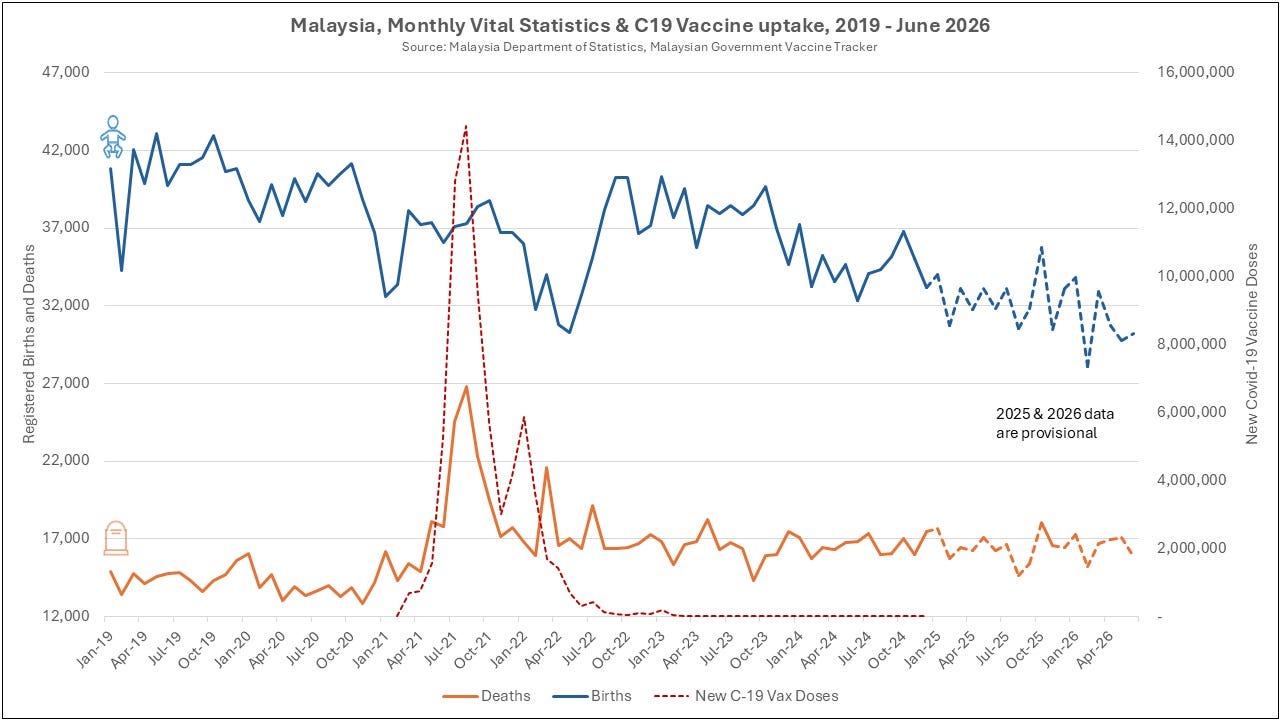
Births have fallen by 32% between Q2 2020 and Q2 2026; births are 6.1% lower in 2026 than they were in 2025. There was a big drop in births was in 2022, the year after mass rollout of COVID-19 vaccines to the entire population including young women, and pregnant women. Was this big drop in live births related to 2021 COVID-19 vaccine pregnancy harms (which are reaching broader attention with the ongoing reveal of Fauci’s subterfuge)? COVID-19 Vaccination uptake dropped off sharply from early-2022 (meaning no more C19 injection of pregnant women) and there was a (temporary) rise in births from 2022’s low in 2023, though that recovery was not sustained.

Q2 deaths since 2000 have been rising slowly, which is expected in a growing and slowly aging population. Deaths fell very sharply in 2020 (lockdown protection?, cut in iatrogenic deaths?), but then step-change rose in 2021 and have stayed elevated since; 2026 Q2 deaths are 0.6% higher than 2025 Q2 deaths. Evidence of mass and continuing population harm is in clear sight in this data.
I compile demographic data and update my working files as soon as new data is released. The following slides show trending over time. Note that both 2025 and 2026 data are still provisional.
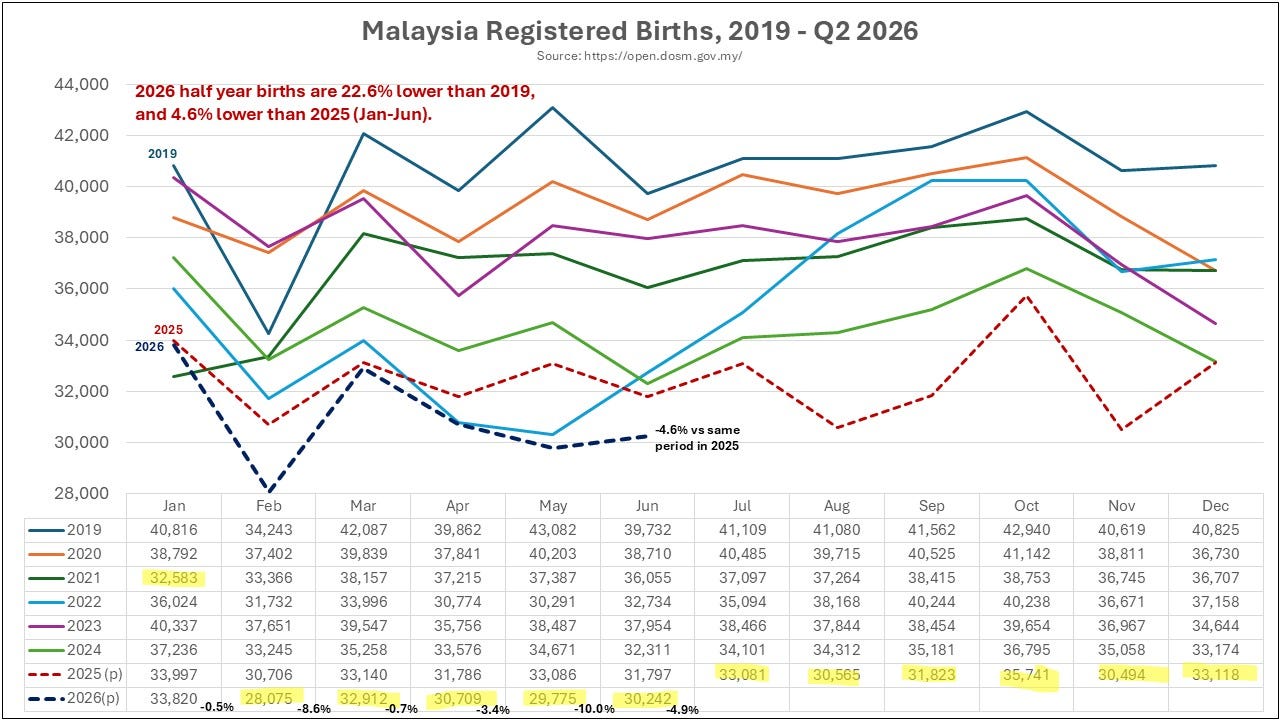
Births in the first half of 2026 are 4.6% lower than births in the same period of 2025.
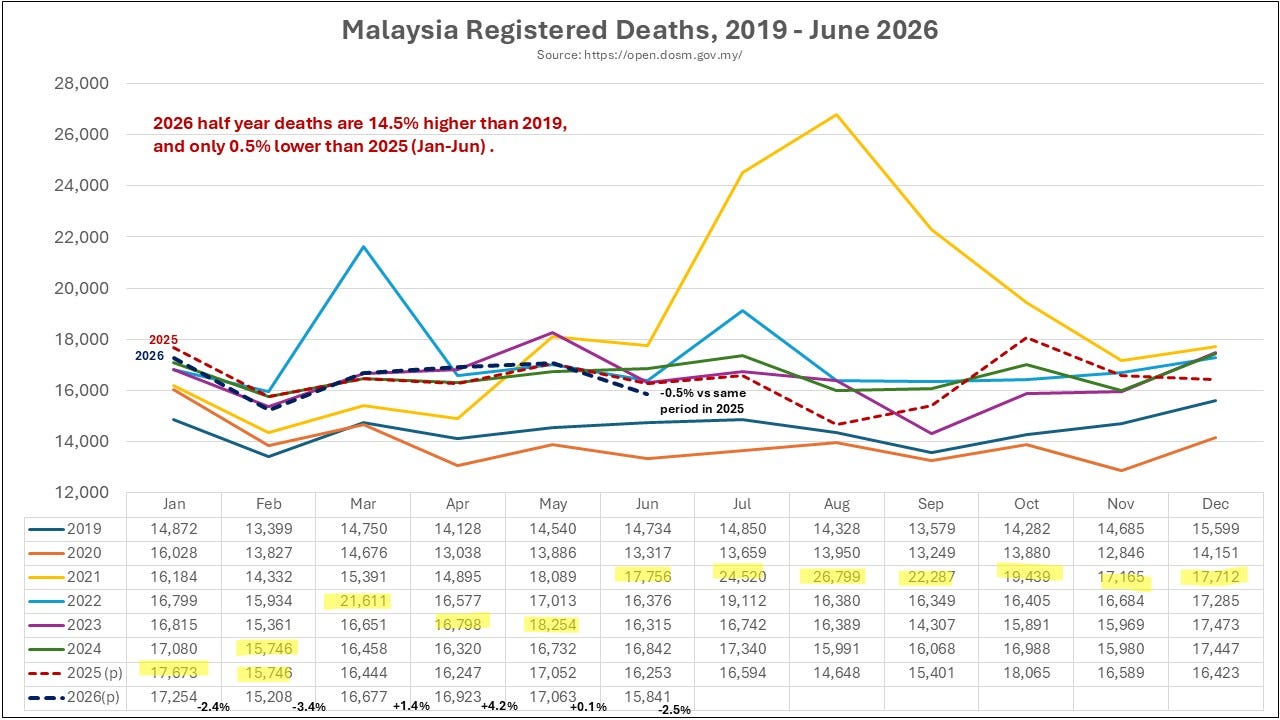
Deaths in the first half of 2026 are 0.5% lower than deaths in the first half of 2025.
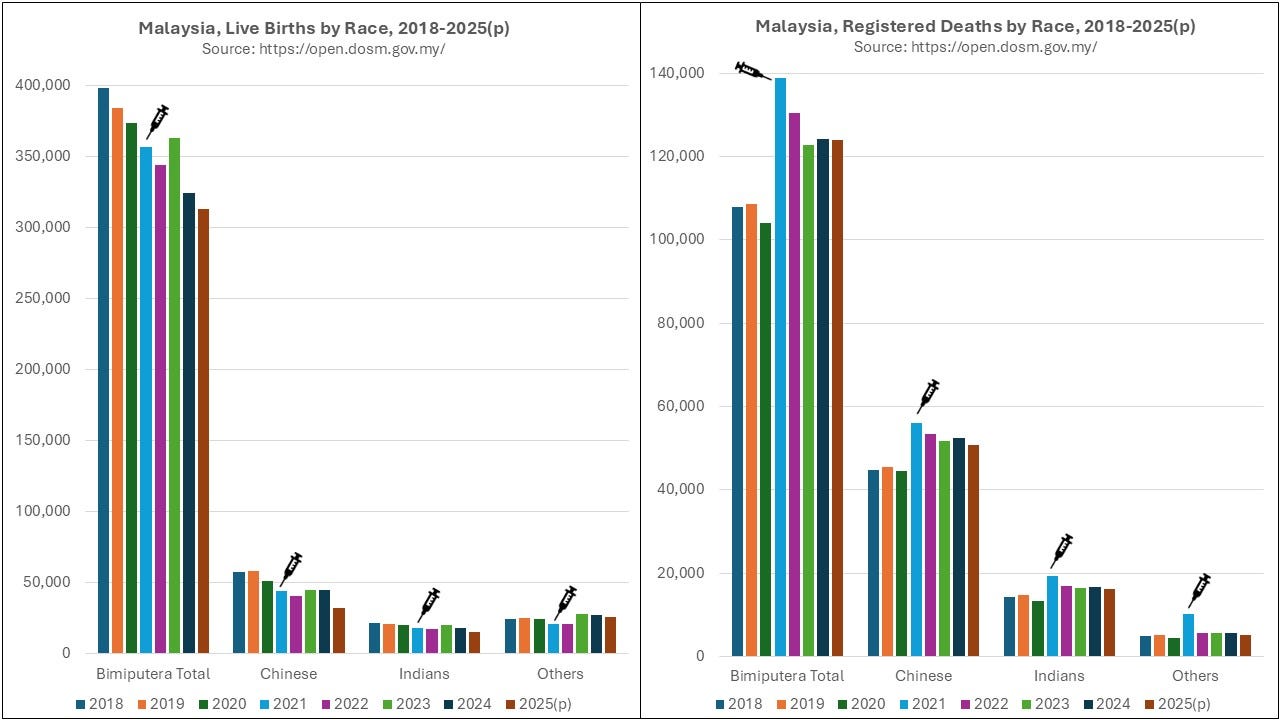
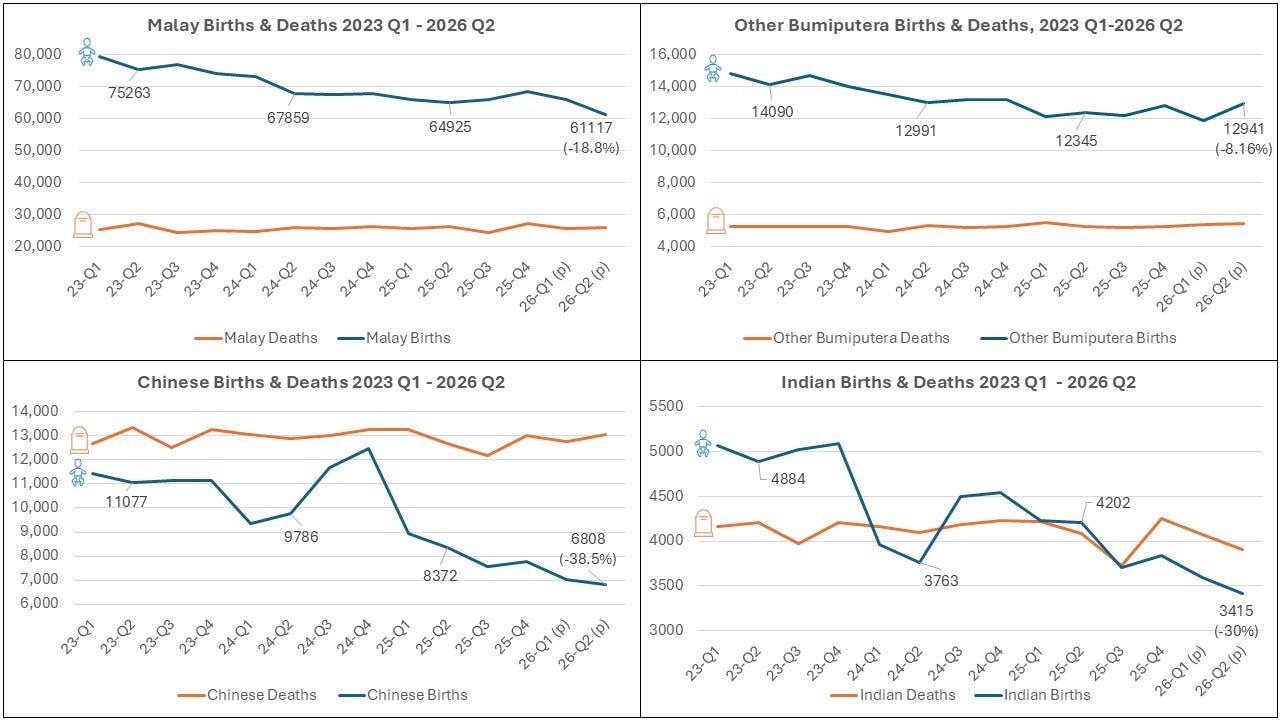
Births and deaths by ethnicity show that births are falling and deaths have risen across all ethnicities. Annual data from 2018 to 2025 (provisional) is shown.,
Quarterly ethnicity data from Q2-2023 to Q2-2026 shows that deaths are mostly steady across all ethnicities, while births are falling. The largest % birth fall was among Chinese (-38.5%), followed by Indians (-30%), and then by Malays (-18.8%) and followed by Other Bumiputeras (-8.2%).
Indians joined Chinese Malaysians in having negative population growth starting in Q4-2025. Pro-Malay / Bumiputera policies may be accelerating losses among Chinese and Indian populations; who wants to have children when assistance and opportunity might well be denied and/or have to be paid for solely by parents?
Overall monthly patterns of births and deaths are set out, with monthly C-19 vaccine uptake shown. Uptake fell dramatically early in 2022 with very few doses administered thereafter. Deaths have stabilized but never dropped back to pre-jab trending; and births continue to fall.
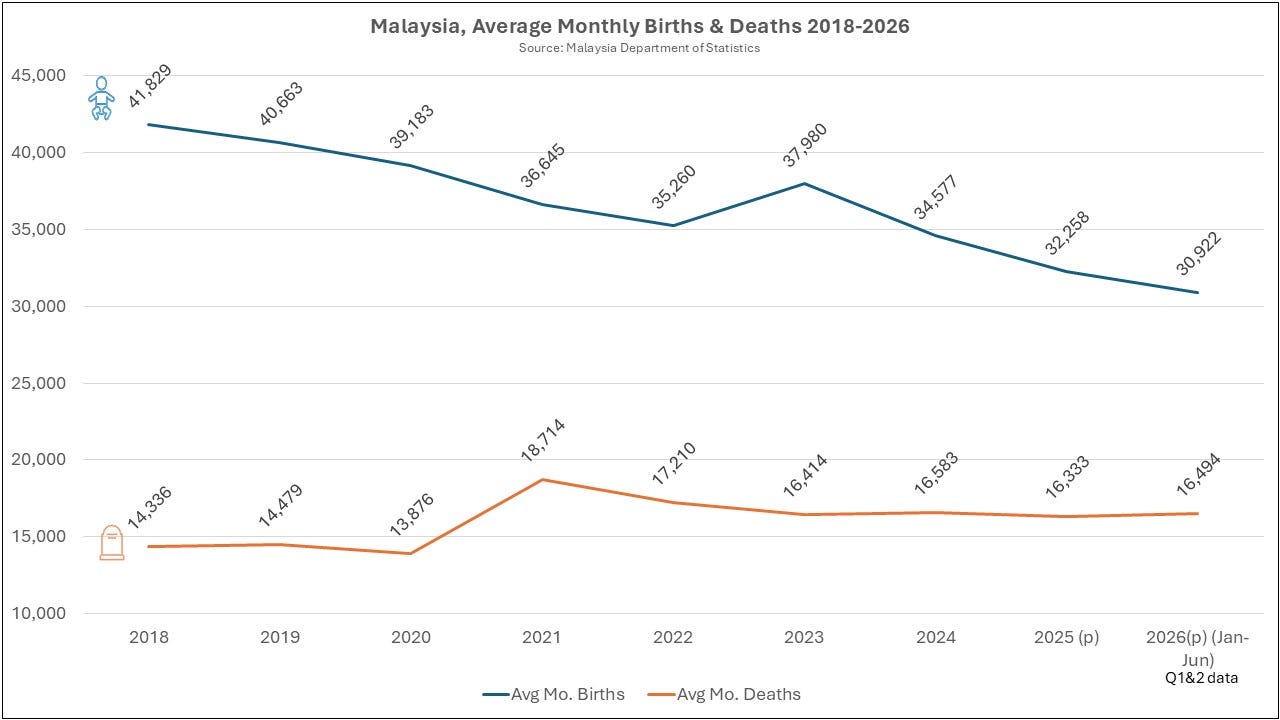
Average monthly births and deaths. Average monthly births have fallen by 26.1% since 2018; average monthly deaths have risen by 15.1% since 2018.
Natural population growth seems set to drive an increase of some 173,000 persons in 2026 and slow population growth (est. annual growth of 0.5%) continues for now. With current trending natural population contraction is likely within 8 to 10 years. Total Fertility Rate in 2024 was 1.6. This is likely to drop to 1.5 in 2025 and further in 2026.
Malaysias window to address population trending is rapidly shrinking. No country has successfully managed to arrest falling birth rates; yet all must try to develop policies to support people and create an environment where they feel secure enough in a future to want (more) children. The work-family dilema facing women and their partners, along with life expenses and expectations of material goods, must be considered. A family-friendly culture must be reclaimed if the fall is to even be slowed.
No posts
Comments
Nothing yet. Say the first thing.
Sign in to join the conversation.