
As a fairly competitive runner, I unsurprisingly have a lot of thoughts about doping. First of all, I’m anti. But my hot take is that I don’t really have a problem with it in terms of keeping the sport “pure.” Almost everything in running comes down to optimizing performance, so in a purity sense, EPO isn’t all that different from carbon-plated shoes, Norwegian doubles, or taking 100g+ of carbs an hour. Whether or not you consider them as such, (legal) performance enhancements are a large part of the reason we’ve seen any records fall at all: we learn more about what could enhance performance, we try it, we get faster.
My issue with doping is rooted in something entirely different: it is a straight up health risk. Doping can kill you. Sure, if you’re constantly monitored by a doctor and only use tiny amounts you’ll probably be fine, but introducing it into sport turns it into a competition of who can take the most without actually dying. Athletes already have a bit of a skewed risk/reward ratio, and the opportunity to reach the pinnacle of sport is a hell of a tempting and heady drug itself. Performance enhancing drugs are different from everything else we do to get faster because they’re a lethal combination of effective, dangerous, and tempting.
Regardless, it’s far more interesting to me what humans are capable of in imperfect circumstances, rather than supposedly “perfect” ones. It’s why Survivor is still going after 25 years and 50 seasons, and why I spent last weekend running a 200 mile relay at 9,000 ft elevation through Utah’s national parks with 8 near-strangers on a single hour of (van) sleep. To me, that’s the shit that really tests the limits of human performance and spirit. And that’s how we build real worthwhile community.
(And just because I know you’re curious, we won third place.)
– Shanna
by Doug Freeman
So... did anyone else follow the coverage of the Enhanced Games with more than a little bit of delicious shadenfreude? The inaugural event held last month in Las Vegas (of course) went off with more of a whimper than a bang. Only one asterisk-laden “world-record” was set, when Greek swimmer Kristian Gkolomeev topped the 50-meter freestyle record by .07 seconds in the final event. This seems even less of a big deal when we just saw two runners cross the 2 hour marathon barrier this past April at the (un-Enhanced) London Marathon.
While the Enhanced Games didn’t provide the kind of fireworks that organizers had hoped for — or that WADA and the Olympics had been pre-emptively dismissive of — it probably did at least achieve some of what its investors and Enhanced wanted in pushing the conversation around transformational new drugs, treatments, supplements, and the rising wave of peptides. As Lucas Ropek at TechCrunch noted in covering the games: “[Enhanced’s] business is part of an industry that is due for a gold-rush-like boom later this year.”
As I was taking in all of the coverage of the Enhanced Games, I also happened to be reading Joseph Pine’s new book, The Transformation Economy, which outlines the current shift from an Experience Economy to one of corporations selling us our own capability for change. The Enhanced Games seemed to not only perfectly encapsulate this shift, but also highlighted just how quickly this new Transformation Economy has already become commoditized.
Pine is known for having originally defined the Experience Economy in his 1999 book with James Gilmore, where he highlighted the previous economic shift from businesses thinking of themselves as providing services, to staging experiences in order to win and maintain customers. That idea has certainly become one of the dominant marketing trends of the 21st century. (Are you even a brand these days if you don’t have an “activation”?)
The Experience Economy moved us up the ladder from mere goods and services to experiences, and companies differentiated with customers by creating exceptional and memorable events. This was fueled by the rise in data harvesting that could more personalize experiences (think everything from streaming recommendations to personalized preferences at a hotel).
And now, the Transformation Economy is an evolution of that Experience Economy, moving us up yet another ladder, to sell us transformation, whether physically, mentally, financially, or otherwise.
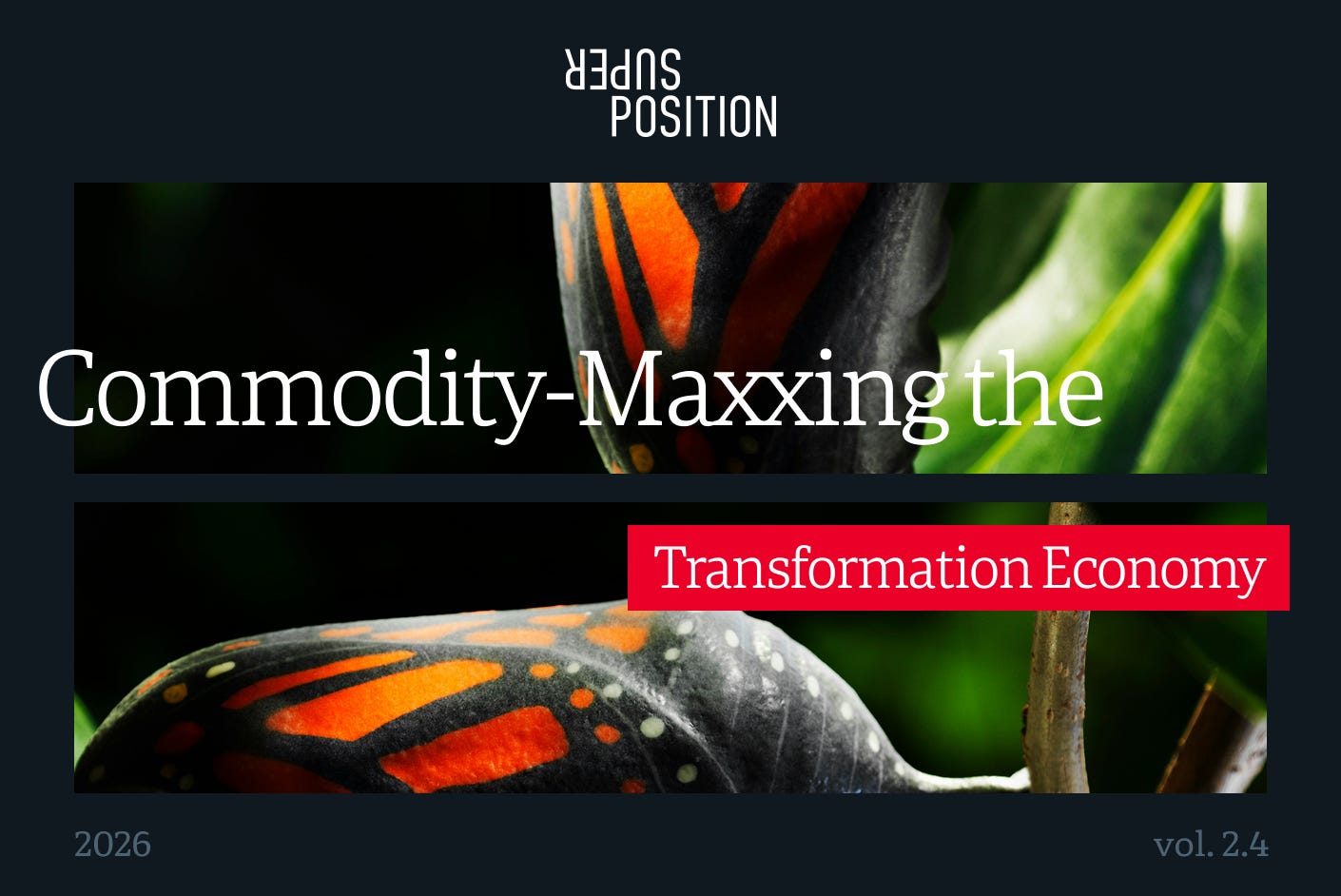
There are certainly elements of the Experience Economy that are still relevant in this new formulation, but the promise is a program that will fundamentally change the individual. Pine writes: “Where experiences are memorable, transformations are effectual…Where experiences are inherently personal, transformations are fundamentally individual…And where experiences are revealed over a duration of time, transformations are sustained through time.” In this new economy, Pine sees brands as doulas helping usher you through metamorphosis from larva to butterfly.
This idea is nothing new, of course. The Transformation Economy and marketing to it has always been with us, from education to fashion to fitness culture. Hell, Nike’s marketing is built on it, and Apple would have you believe their devices unlock an entirely new creative personality for you. “A New You!” is a promise that’s been made to us maybe even longer than the idea of self.

I don’t disagree with Pine’s assessment of the emerging Transformation Economy as a distinct force, but I think he misses a bit exactly why it is taking hold now, and that he is in fact already behind what the Transformation Economy has evolved into. What’s propelling this trend toward transformation now isn’t a want for something beyond the Experience Economy, but rather because transformation is already becoming commoditized.
Traditionally, the transformation being sold by Weight Watchers or Peloton or BetterHelp requires the individual to put in the work. At best, what these companies could provide was a better experience (more convenient, more accessible, more personalized, more fun). But they couldn’t actually do the transformation – that was on you. Now with products like GLPs and peptides, companies can sell the transformation as a commodity. Buy a pill, change your life.
The closest thing we’ve had to this is probably plastic surgery, which we’ve seen over the past few decades shift in ubiquity from high-end procedures just for the rich and famous to pop-in botox clinics in a stripmall. AI is also certainly playing into this with its idea of instant education (or at least “smarts”), like Neo mainlining knowledge and skills in the Matrix.

I’m certainly not against these advancements, in theory. Helping people lose weight, be healthier, or even learn more, are incredibly noble goals for society. I don’t think one could be against the responsible/necessary use of GLPs any more than they could be against SSRIs, which undoubtedly transform and even save lives. (Ahem, Mr. Kennedy). But Pine’s examples are only the tip of the iceberg when it comes to the Pandora’s Box that the Transformation Economy has the potential to open up. (See: We’re IV-dripping students now??)
With transformation becoming commoditized, Pine’s argument that the novelty of this new economy as a move from “time well saved” (services) and “time well spent” (experiences) to “time well invested” fails. With its commodification, transformation becomes just another financial investment instead of one of personal time or energy.
If Pine sees the role of businesses in the Transformation Economy as playing guide to customers wanting to effect these changes, that’s not really a different model from what universities or fitness programs have been doing for ages. The problem is that the “guide” role is actually being rapidly rejected already, replaced by accessible DIY models. AI is commoditizing everything from college to programming; GLPs are selling rapid weight loss; roboinvesting is telling us we don’t need financial advisors. “Do your own research!” the sovereign-everything movement screams, while also selling the supplements and peptides flooding your research results.
The transformational promise of these drugs and treatments may be very real, and I hope they are. But it’s going to be really messy for a while, and marketing is already exploiting it full tilt. There is also the question of what kind of transformation we’re talking about here. Nobody should confuse AI spittingballing an analysis of something for you as you having actually learned it, but then maybe GLP-1s can rewire your brain into healthier habits? Again, the distinction between surface or performative transformation and actual change and personal growth is going to be a swamp filled with lots of snake oil.
In this commoditized environment, it’s worth examining exactly what Pine’s notion of businesses operating as guides, sherpa-ing folks through transformation, actually looks like. We see expertise to guide transformations emerging through things like functional health clinics or peptide testing labs, but it’s not clear yet if these are just taking advantage of the uncertainty of the grey markets of transformation or actually adding that guidance layer on top of it.
The element of this role of companies serving as guides for customer transformations that Pine largely ignores is the necessary function of community building. Even in a commoditized economy and DIY ethos, the most compelling and retention-worthy approach towards any “customer” remains creating a genuine community around transformation. Fitness programs have long understood this. Even Jeep has managed to do it, oddly enough. Mar-a-lago Face only works if there is a community and culture that actually values that Texas Chainsaw Massacre look.

Community is the backbone that makes the marketing of transformation actually sustainable over time — that propels both the desire (whether noble or narcissistic) and the process. So when I think of Pine’s Transformation Economy, the opportunity isn’t for brands and businesses to be just guides to the transformation, or to cheerlead and inspire those ambitions for customers, but rather to build the communities that will actually enable and sustain them.
And as the Transformation Economy continues to evolve and expand, the communities that develop around it will become much more important. Every economy Pine outlines ultimately pushes down towards commoditization, and we’ve seen this process play out with goods, services, experiences, and now already transformation. The upside is making these things more accessible to more people to people who may need them. The downside is a race to the bottom towards enshittification, and marketing/communities that are built for extraction more than for the benefit of the customer. With transformation being commoditized as quickly as it is right now, there are no guardrails or norms established to handle this new economy responsibly, and the communities that are cropping up first in this new economy are often serving as validation to more reckless, vacuous, or even destructive change.
The question is of course how much we really trust companies to build responsible communities around the very real effects of transformation rather than just exploiting them to sell unproven or unscrupulous products and procedures. Commoditized community-creation is a very different endeavor than true customer-focused community.
This commoditized community was ultimately the goal of the Enhanced Games, too. I’m sure they would have loved to have broken records and shown off the ‘roid-maxxed potential of the human body, but ultimately they didn’t need to. They needed to bring together a group of folks that believed in this vision, to show that that community had substance, and convince others it’s actually real and worth joining. The Claviculars of our society have been laying this groundwork on our social platforms for years, and the Enhanced Games were just an IRL celebration of that.
With this race to the bottom that the transformation economy is already sinking into, we need to make sure we’re building responsible and positive communities around change, ones that can fulfill our ineffable desire toward transformation in meaningful ways. I tend to be an optimist, but our recent history of the kinds of communities that have emerged around transformation messaging (from MAHA to the Manosphere) don’t exactly leave me with a lot of confidence. These commoditized transformation communities are real, and are powerful, particularly due to their promise of change and their tendency towards groupthink.
But — as seriously as we should be taking these more toxic and dangerous communities, we can and should also be taking seriously our own autonomy and responsibility towards building or seeking out communities centered around positive transformation. At its best, the transformation economy has the capacity to empower high quality and responsible collective change, but we have to demand it and hold these new company-sponsored guides to responsible standards.
There is no better example of the communities emerging around the Transformation Economy than peptide parties. The Homebrew Computer Club this ain’t, but of course Silicon Valley is leading the way in experimenting with all forms of peptide bio-hacking. We also really appreciate this notable data point from Arielle Pardes’ article in Business Insider: “Interest around peptides has been surging. In April, Google searches for the word ‘peptide’ overtook ‘pickleball.’”
Joshua Wauk created a jazz ensemble out of the New York City subway system, and it’s pretty mesmerizing: Train Jazz.
The screwworm has officially returned to the US, but the story of how they were originally eradicated by Edward Knipling back in 1970s is a fascinating tale of scientific persistance.
Artemis III will be a much more technical test mission, but we’re still excited about the new crew, and appreciate the in-depth breakdowns of our initial disappointment that no women were selected. The bigger question though is what their “Rise” mascot will be.
Speaking of new economies, Kristen French argues that the “Achievement Economy” is crushing us.
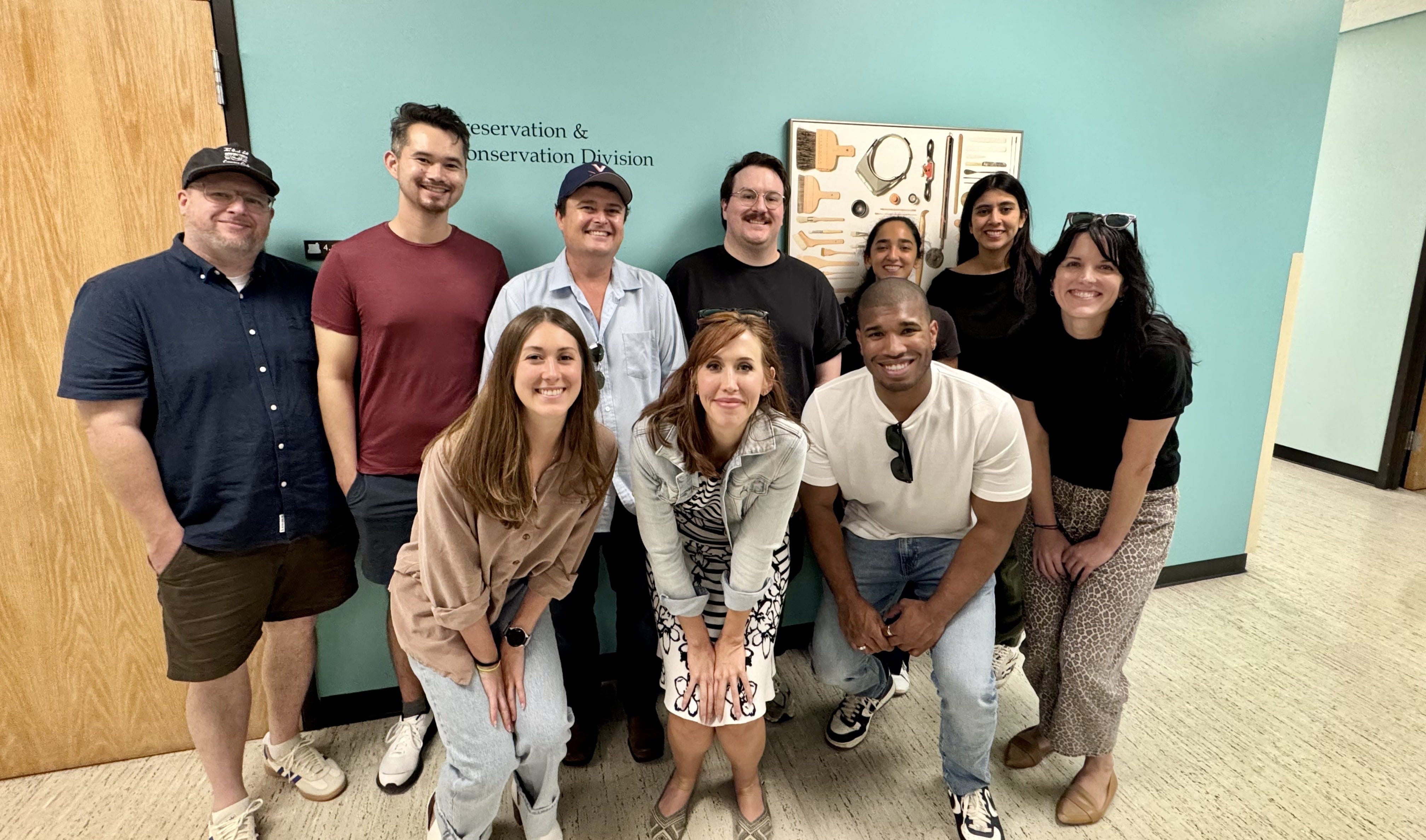
Last month, JDI Sidetracks had the opportunity to tour the conservation and preservation labs of the renowned Harry Ransom Center archives. We got to learn firsthand how the conservation teams think through restoration projects with manuscripts, film, and any number of other artifacts. Aside from the expected highlights of seeing some of their work readying the upcoming Houdini archive exhibit, we were really impressed with the intricate and clever design considerations that their experts came up with in fabricating customized boxes and enclosures to properly store the materials.
If you’re in Austin, join us on Monday, June 29 for a hands-on cyanotype happy-hour workshop! RSVP and get more details here, then follow JDI Sidetracks on Instagram to keep up to date on our upcoming events.

If so much of our society is driven by instant gratification culture, can we train our dopamine response in positive ways that’s not just shopping on Amazon or the endless TikTok scroll?
Superposition is a production of JDI, designed and written by Shanna Gerlach and Doug Freeman
No posts
Comments
Nothing yet. Say the first thing.
Sign in to join the conversation.