
The SuperJoost Playlist is a weekly take on gaming, tech, and entertainment by business professor and author Joost van Dreunen.
I was tempted to take Rami Ismail up on his offer to fly around Cologne during Gamescom. Many moons ago, I took several months of flying lessons because flying is an absolute marvel.
It is why, unlike many others, I was not surprised this week when the Federal Aviation Administration announced it had successfully filled many of its open air traffic controller positions by recruiting gamers. According to US Secretary of Transportation Sean Duffy, the FAA launched a campaign specifically targeting gamers and delivered “historic” results.
Recruiting a younger, more tech-savvy generation to solve increasingly complex logistical issues is a proud tradition.
I recall my younger brother programming our grandfather’s VCR. (For those of you born since 2000, that’s a Video Cassette Recorder, and it allowed you to record video and … oh wow, I'm really turning fifty this year. Damn.) Anyway, new media technologies are often a quick favorite with younger people because they are comparatively more open than established channels. The internet, at least in its early days, was a largely green pasture that allowed people to communicate freely in ways that traditional media—newspapers, broadcast TV, radio—did not.
Personally, I’ve always regarded video games as a way to make sense of the world. The torrential nature of our day-to-day media experience is so overwhelming that, without developing some ability to navigate it, we would remain entirely passive. That is why older generations, the ones that did not grow up playing video games, struggle to adapt to this new information environment, and why younger ones do not.
More than just absorbing information, any shared, mediated experience speaks directly to that group’s collective ambitions and anxieties. It needs no explanation why cozy games were a hit during the pandemic, as people looked for comfort, and social deduction games like Among Us provided the necessary interpersonal drama. More recently, the emergence of the Brainrot Economy is, from where I sit, Gen Alpha’s attempt to carve out its own territory in the otherwise broadly owned, structured, monitored, and sold-back-to-them digital playscape the games industry has become. Precisely by making it virtually indigestible, they free themselves from parental oversight and corporate meddling.
That any of that would ultimately amount to a career still comes as a surprise to many. Sure enough, talented designers earn critical acclaim as indie devs, and teen millionaires frustrate parents with their financial success. But play sits at the intersection of many more roads than just art and tech.
I bet 100 percent of those air traffic controllers also read books.
On to this week’s update.
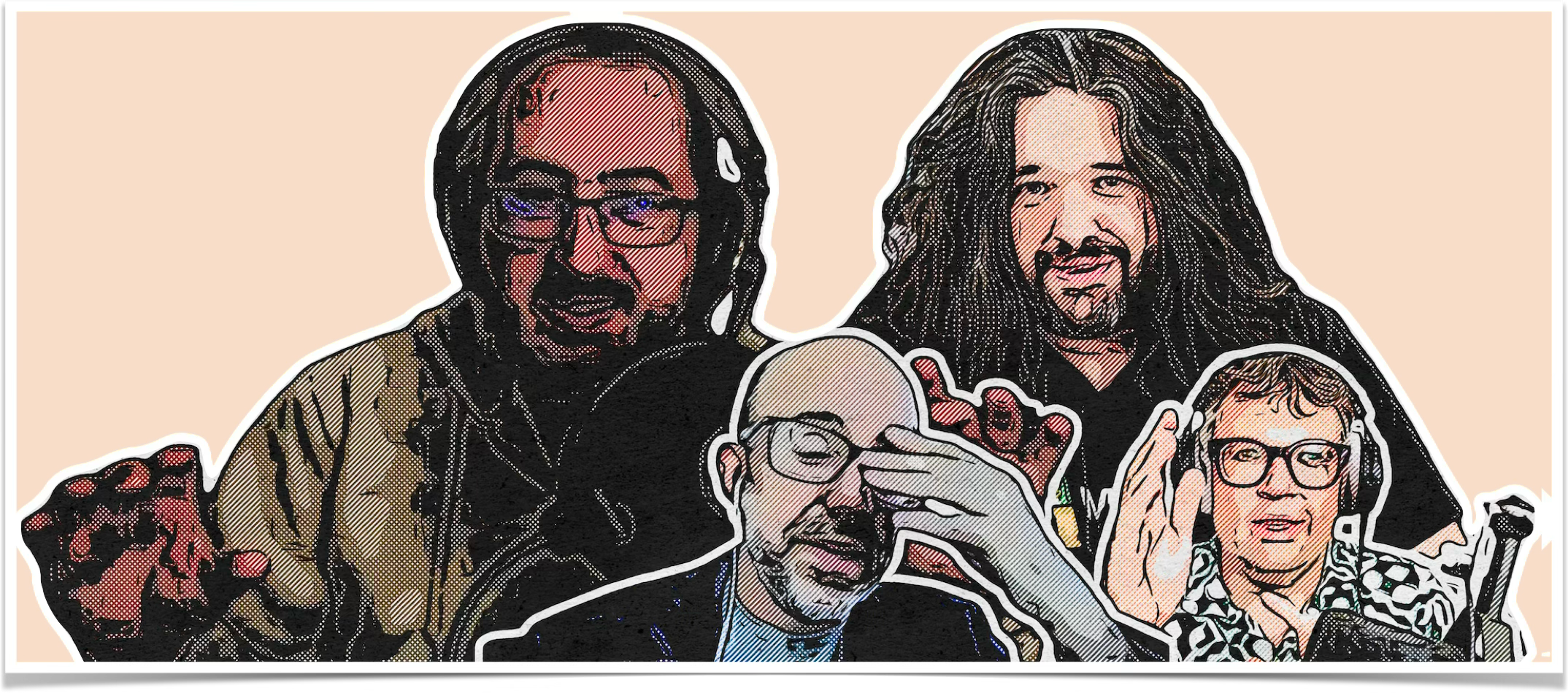
Every semester, like clockwork, students ask me some version of the same question. Where to find good news sources? They seem acutely aware of both the absence of serious journalistic coverage among mainstream outlets and the cacophony of misdirection that is the internet.
I’d argue that interactive entertainment is large enough to warrant attention, but that’s a tiresome conversation. Book publishing is a $140 billion market, and, oh boy, do we get a lot of book reviews, awards, and coverage of writers.
It’s not about prestige, obviously. Those are metrics relevant to music and film. Game journalism is necessary because the market is vast and increasingly difficult for consumers to navigate (“Where do I find games and/or devices relevant to me?”).
Meanwhile, interactive entertainment is dominated by some of the world's most powerful firms, leaving very little room for backtalk or accountability. Other than the price tag, the $55 billion buyout of Electronic Arts by a sovereign wealth fund in cahoots with the US President’s son-in-law’s private equity fund could have used more scrutiny. But, hey, it’s just video games.
There are at least three reasons why game journalism today is so anemic.
First, alongside the same ceaseless layoffs among creatives that have characterized the industry in recent years, a generation of reporters lost their jobs, too.
According to ICO Partners, a UK-based consulting and marketing agency, the number of online outlets in the most prominent European markets saw a dramatic decline in the wake of the pandemic. After increasing from 941 to 1,511 between 2016 and 2021, the total number of video game websites dropped to 406 in 2023, a 73 percent decline.

Data from PressEngine, a games-industry PR service, tells a similar story at the individual level: in the first half of 2026 alone, its database lost a net of 203 specialist games journalists, making it the third-worst year on record. That follows a brutal 2024, when roughly 600 specialist and mainstream reporters dropped out, and the losses show no sign of plateauing.
While the focus deservedly is on the creatives that drive this industry, widespread layoffs impact a much broader range of people whose careers depend on the same economics. Their involuntary departure, however, rarely makes the headline.
The growing power of platform operators is a second reason for the decline of game journalism. Over the ten years leading up to 2025, platform revenue—from app stores, console marketplaces, and digital storefronts—has increased from $14 billion to $41 billion, a 191 percent increase. (I realize writing this that it’s time for an update. Look for that soon!) Companies like Tencent, Valve, Google, Apple, Microsoft, and Sony sit at the top of the food chain and can set the terms under which everyone else operates.
One of the more insidious side-effects in this new universe is that reporters simply matter a lot less than a game maker’s budget for user acquisition. Algorithm-based recommendation engines drive winners to the top, and much less so, critical acclaim. A 2019 study of the console market found that platform owners do not simply amplify their bestsellers but selectively promote those third-party content creators that maximize their own ecosystem’s value. Notably, a single endorsement can roughly triple a title’s weekly sales. Discovery, in other words, is a decision made by the house and tuned to the house’s economics. It’s a universe that does not need reporters.
Adding fuel to the fire is the rapid availability of AI, a third contributor. I’ve previously described how AI is making everything more expensive, and so far, that claim still stands. AI’s frenzied rise as a magical tool to solve all problems has given executives carte blanche to start offloading human capital wherever possible. That especially impacts jobs such as reporting and research.
Beyond merely replacing journalists, AI is also contributing to an ever-growing inventory of low-quality slop. This also impacts the existing mechanisms players use to filter the available game inventory, such as reviews and digital communities. And, I cannot stress this enough, ain’t nobody got time for that.
It amounts to what has been a systemic issue in interactive entertainment, namely the structural disconnect between players and games. Both sides of the market are losing. On the one hand, players have a more difficult time identifying what’s relevant to them and worth their time. Even relying on community recommendations and watching wishlists is starting to lose its efficacy.
The disappearance of editorial curation does not mean discovery has disappeared. It means developers increasingly have to buy it. Dream Games, maker of the popular mobile game Royal Match, reported $1.52 billion in gross revenue in 2023. After $454 million in platform fees, or about 30 percent, it netted $1.06 billion. It then spent $1.07 billion on user acquisition, more than its entire net revenue. After accounting for development, staffing, and overhead, one of the most popular mobile games closed the year with an operating loss of $134 million.
Somewhere along the line, novel technology has created such abundance that it has started to impoverish both gamers and game makers.
The good news (yes, pun intended) is that we've seen a similar disconnect before.
A century ago, journalist Walter Lippmann observed how the news business buckled under the same forces of speed, scale, and manufactured urgency. Access to information about the world had become commonplace and cheap with the industrialization of printed news. Just as with games today, the result was that people found it increasingly difficult to make sense of their broader information environment. Technology had made news and information abundant, cheap, impossible to digest, and untrustworthy.
The evolutionary step that followed is the one repeating now. What was necessary was not more information, but better intermediaries. Trained experts who had spent their careers filtering noise on behalf of audiences incapable of doing that themselves. In other words, humans, not algorithms.
Enter: Jason Schreier.
A few months ago, the Bloomberg reporter and author unexpectedly took to YouTube, where he, in a series of candid, single-take, 20-minute videos, relayed insights from his experience as a reporter and answered pressing questions. His first video, titled “Why Destiny Died (RIP 2014-2026),” has over 323,000 views, and he’s managed to rack up 142,000 subscribers for his channel. A remarkable feat that undoubtedly has to do with both his on-screen charm, referring to himself as One-Take Schreier in addition to his accessible way of explaining things, and with the apparent demand for this type of conversation.
Jason is one of several established voices with a long history as a reporter covering games. He’s part of a vanguard of new game journalism.
Across the industry, several notable game journalists, in the face of a broader erosion, have converted the authority they earned within legacy institutions into audiences of their own. Stephen Totilo left an editor-in-chief post at Kotaku, then at Axios, to run Game File, a subscriber newsletter with now north of 28,000 readers. Chris Dring, too, walked away from GamesIndustry.biz to rebuild the trade press under his own name at The Game Business. A year ago, Dean Takahashi took GamesBeat independent from its corporate parent. Shannon Liao, after covering games for the Washington Post, started Updater. And Patrick Klepek, after writing for CBS Interactive, Kotaku, and VICE Media, launched his own channel with Crossplay, where he covers games through the lens of a parent.
Surprisingly, some of the more involved investigative reporting comes from consumer-facing review channels. GamersNexus, a YouTube channel known for comparing gaming hardware components, eventually stumbled into deep-dive exposés showcasing how manufacturers were forming cartels. Beyond reporting on such issues, GamersNexus also provides testimony to legislators. The site has 2.6 million subscribers and generates income through merch sales, ads, and community funding.
You’ll notice the inversion here. The institutions that traditionally employed these journalists are weakening, but as they leave their corporate roles, they take their authority with them. Publications become less important than the people doing the actual work.
Journalism is most valuable when it sits outside the institutions it scrutinizes. It functions as a signal amidst the noise meant to drown out critical thought. While few may take game writers seriously, their work is perhaps more relevant today than ever before.
The $55 billion buyout of Electronic Arts, one of the last stand-alone American publishers, led by Saudi Arabia’s sovereign wealth fund and a private equity firm run by the president’s son-in-law, is an obvious example. You’d think it would deserve a bit more scrutiny.
So, too, do platform companies like Valve, Xbox, PlayStation, Apple, and others have the resources to dramatically reshape the industry landscape and set the terms for anyone operating within their ecosystems, including those that would question them. And chipset manufacturers and hardware providers have established a chokepoint on the most expensive parts of the next technological revolution, a reality that has been obvious to gaming audiences long before anyone else.
As consumers and creatives look to make sense of interactive entertainment, they need what Lippmann’s readers needed a century ago and what my students ask me for every semester: not more information, but a few people worth trusting to sort it.
I’d be remiss in not answering my own questions. Below is a selection of games writers whose perspectives I’ve found insightful and that my students have relied on, too. The list is alphabetized by surname and links to each person’s profile at their current publication.
[UPDATE 08/19/26: I’ve been adding people’s names as I’ve received more recommendations.]
English-language publications
Boone Ashworth, WIRED
Kyle Barr, Gizmodo
Cecilia D’Anastasio, Bloomberg
Chris Dring, The Game Business
Tom Faber, Financial Times
Lionel Laurent, Bloomberg Opinion
Catherine Lewis, GamesRadar+
Shannon Liao, Updater
Jennifer Maas, Variety
Keza MacDonald, The Guardian
Tony Maglio, The Hollywood Reporter
Kyle Orland, Ars Technica
Lewis Packwood, GamesIndustry.biz
Gene Park, Washington Post
Ash Parrish,
The VergeKotakuJay Peters, The Verge
Jason Schreier, Bloomberg
Zachary Small, The New York Times
Stephen Totilo, Game File
Rebekah Valentine, Kotaku
Tom Warren, The Verge
Non-English-language publications
Achim Fehrenbach, Der Tagesspiegel / freelance
Len Maessen, NRC
Pierre Trouvé, Le Monde (Pixels)
Joe van Burik, BNR Nieuwsradio
See anyone missing? Add them in the comments!
My time on the mountain is coming to an end. First stop: Gamescom!
Comments
Nothing yet. Say the first thing.
Sign in to join the conversation.