
This is the second installment of a Bioregional Botanical Dye series I am undertaking this summer with support from Smith College Office of the Arts grant.
Mordanting! A rich text to say the very least. Many ways to do it or not do it. The purpose? To prepare a fabric to hold onto dye and ensure that it continues to hold onto that dye through repeated washing, sunlight exposure, and time. Mordanting can also help to produce clear, saturated color on cloth.
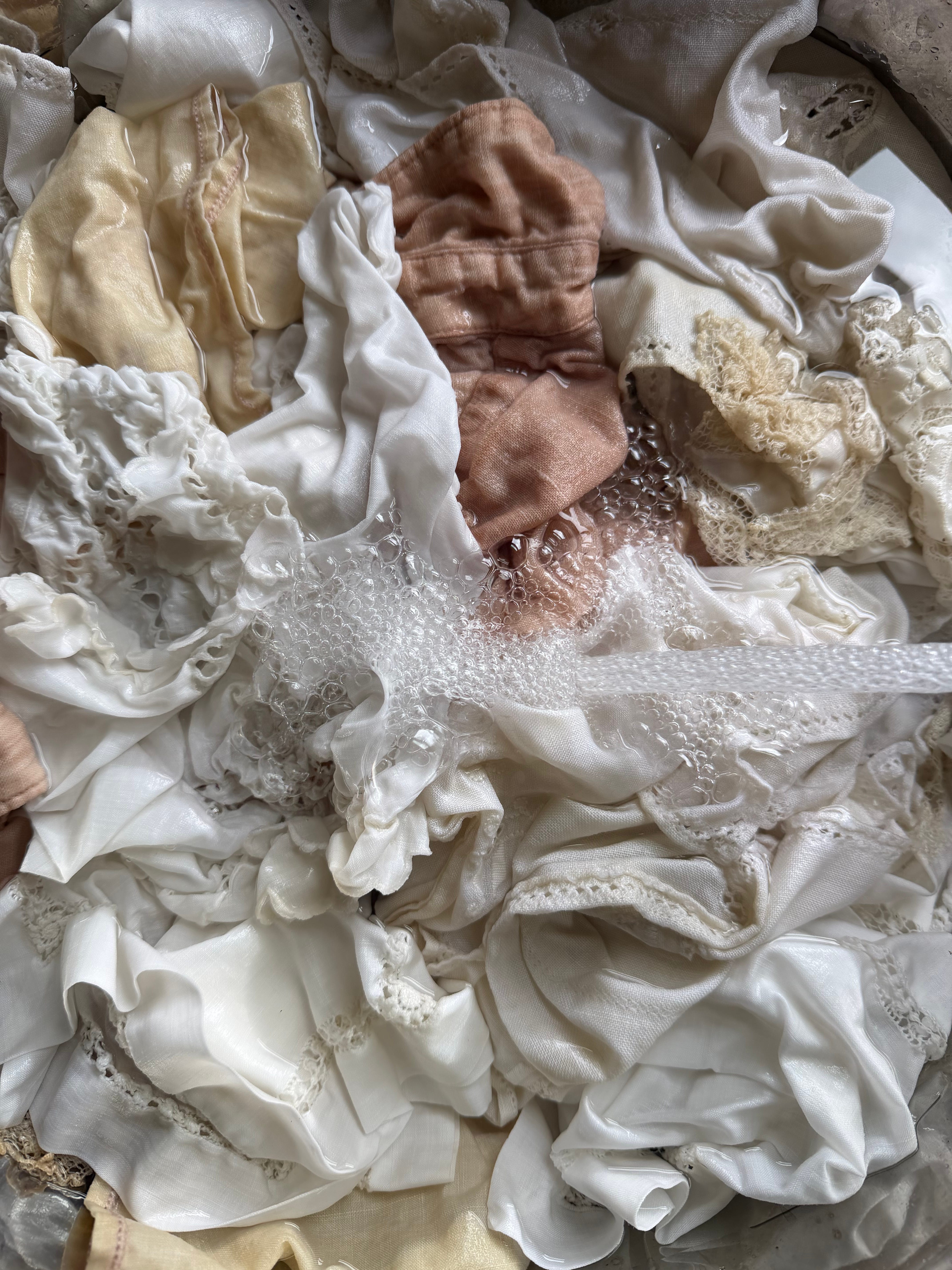
I am sharing the method that I have found to be most effective for mordanting vegetable fibers (aka cotton and linen.) I will be using aluminum acetate for the mordanting and then wheat bran for the crucial after bath.
Aluminum is a fascinating mineral. It occurs naturally in many soils, though in small amounts. Something I learned in a soil science class: aluminum is toxic to most plants BUT plants are only capable of taking up the aluminum in very acidic soils, so most of the time the trace amounts of aluminum in the soil does not effect the vegetation. However, if more aluminum is added to the soil, it acidifies the soil and thus makes the increasing amount of aluminum more available to the plants, which are poisoned by it. That’s a positive feedback loop (with negative consequences!)
Another key thing about aluminum: it is used in most municipal water treatment facilities as a coagulant during the initial purification process for the water.
So how does one dispose of the aluminum mordant pot in an ecologically safe manner? First of all, you can recharge your mordant pot at least a few times before being done with it. It is recommended to send your spent mordant pot down your drain (if you are connected to town water) and not to pour it on your land/compost for reasons discussed above. If you are on a septic system and can’t go down the drain route - there are resources for reusing the same alum pot over and over again. That might be the right option for you! Either way, you can keep reading on to learn how to get your first mordant pot started.
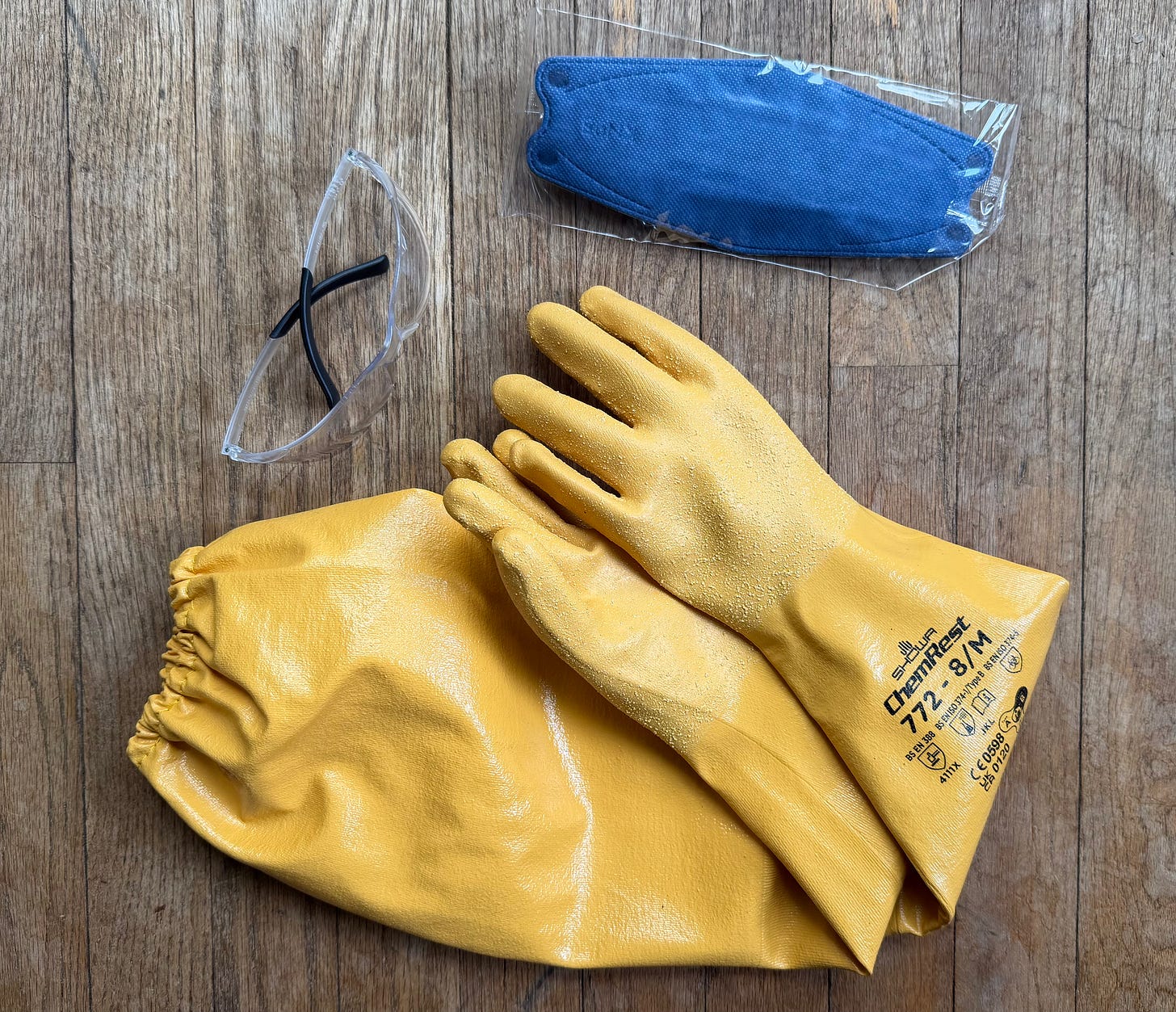
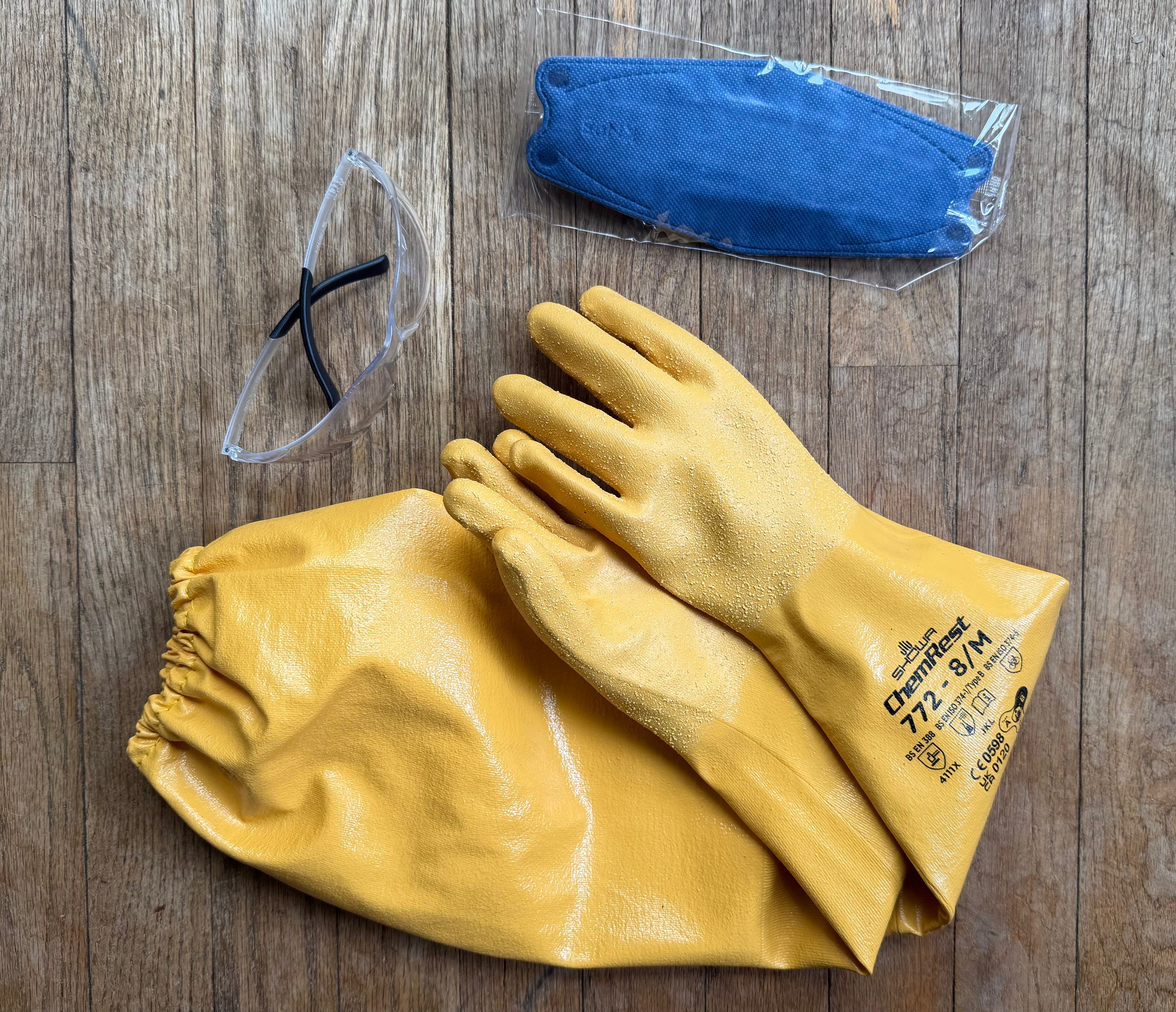
Sort out your safety materials! Aluminum acetate is a very fine powder and can be irritating. I wear a shoulder high gloves, a mask, and goggles when I am handling alum and I do so outside, though a room with good ventilation will work.
Weigh your dry cloth and make a note of the weight.
Submerge your cloth in water at least 2 hours prior to mordanting (ideally overnight)
Fill up a tub with hot water. Make sure the tub is large enough for the goods to move around in freely.
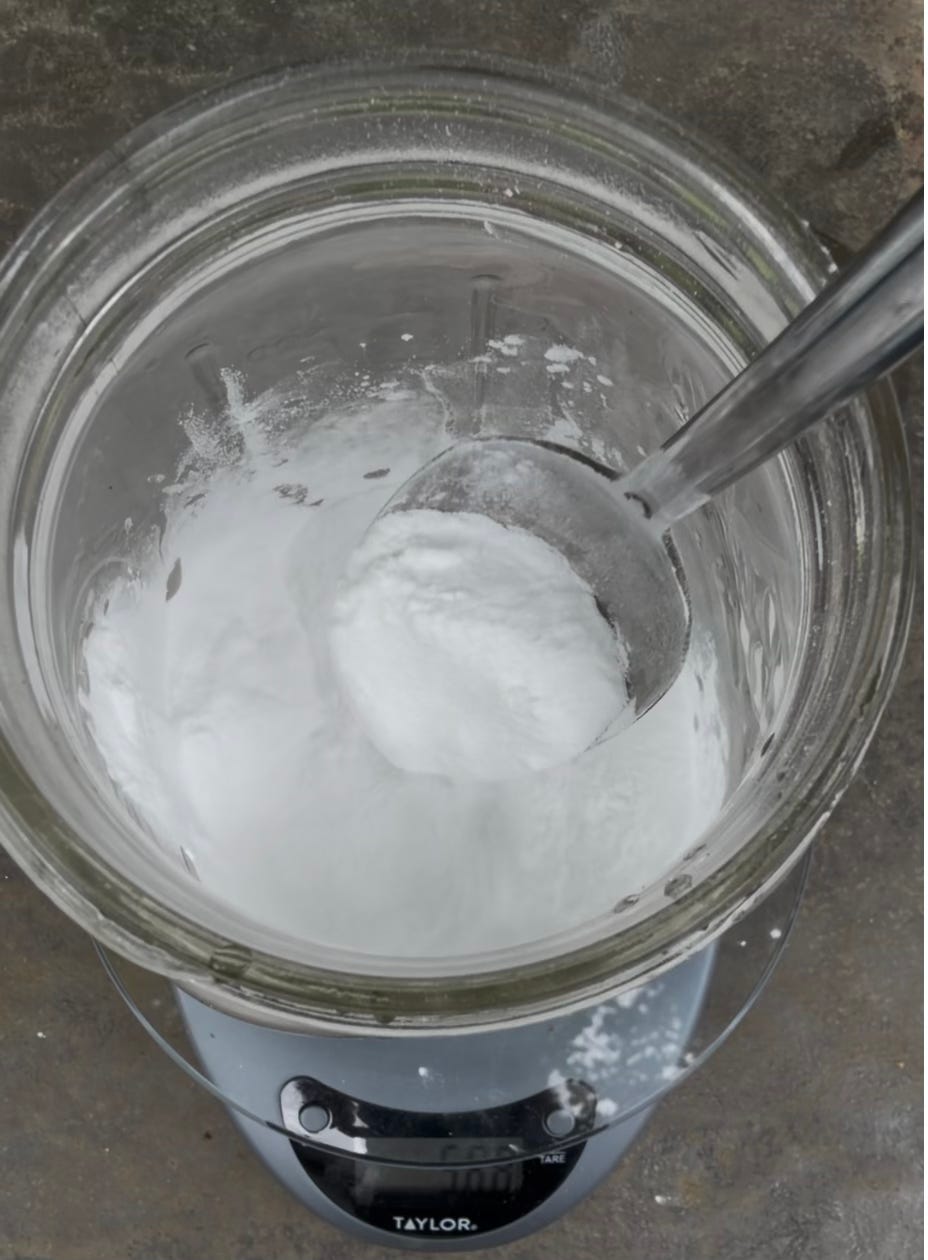
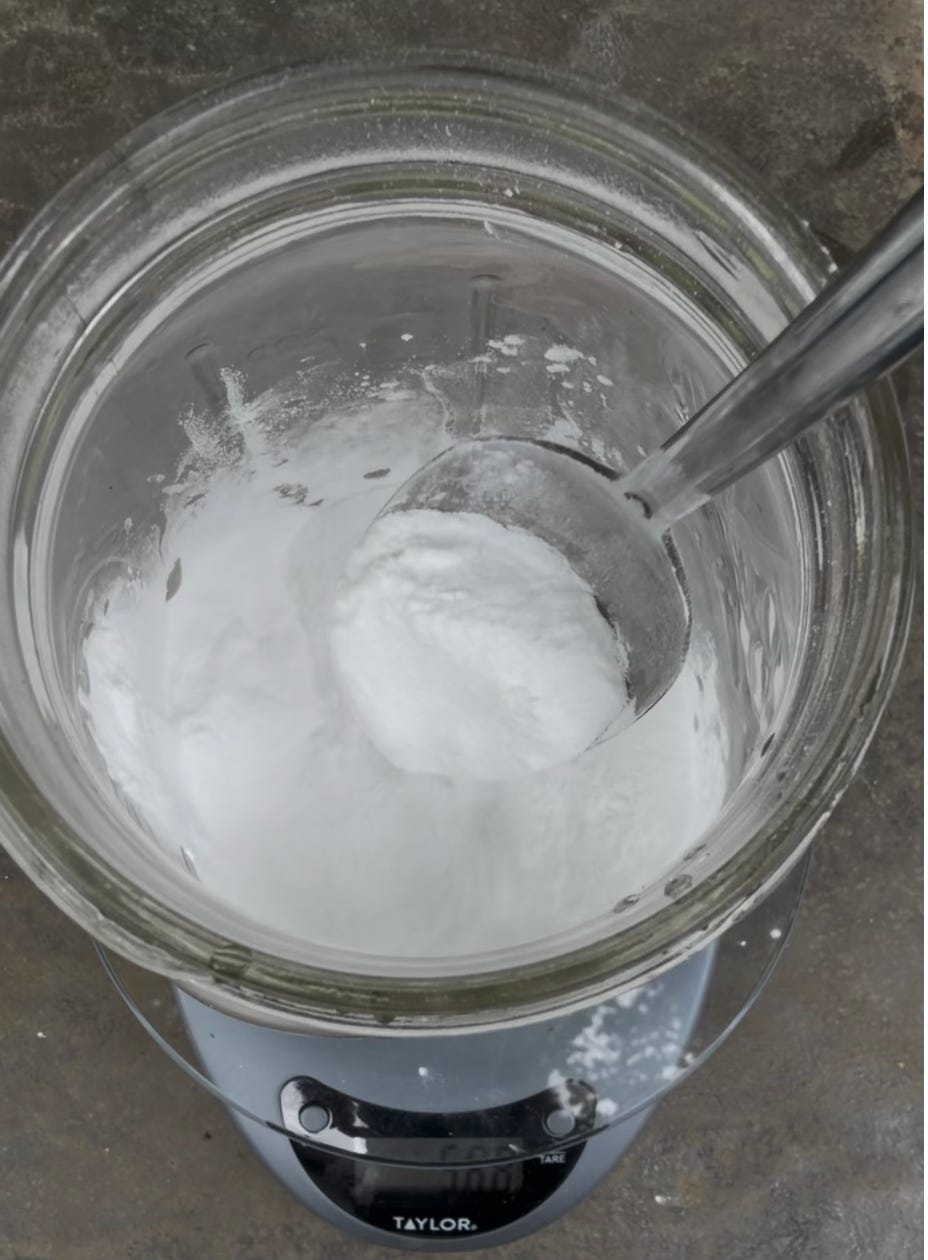
Time to get the safety gear on. For each 100 grams of dried cloth, add .25 cups of hot water to a container (I used a dedicated mason jar) and 6g of aluminum acetate. Stir until dissolved.
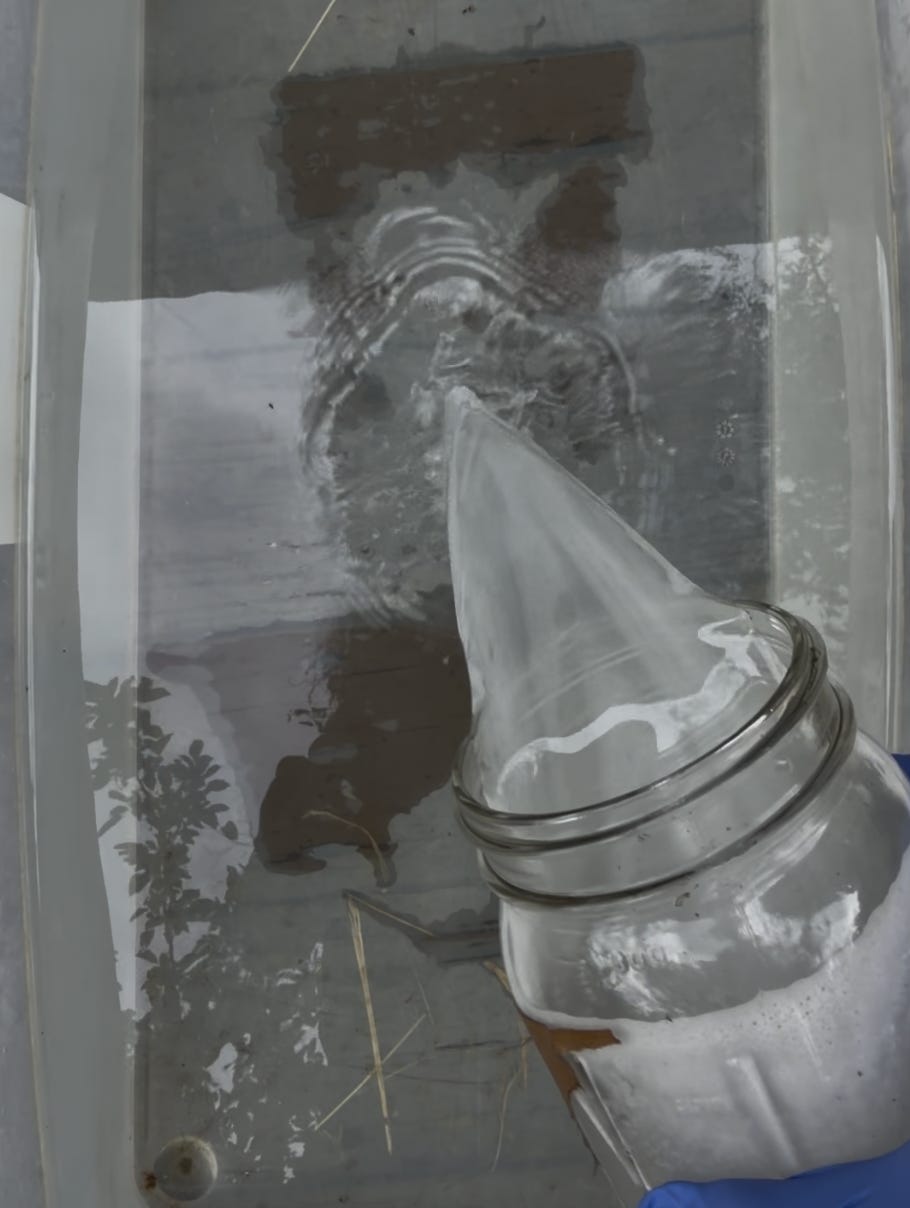
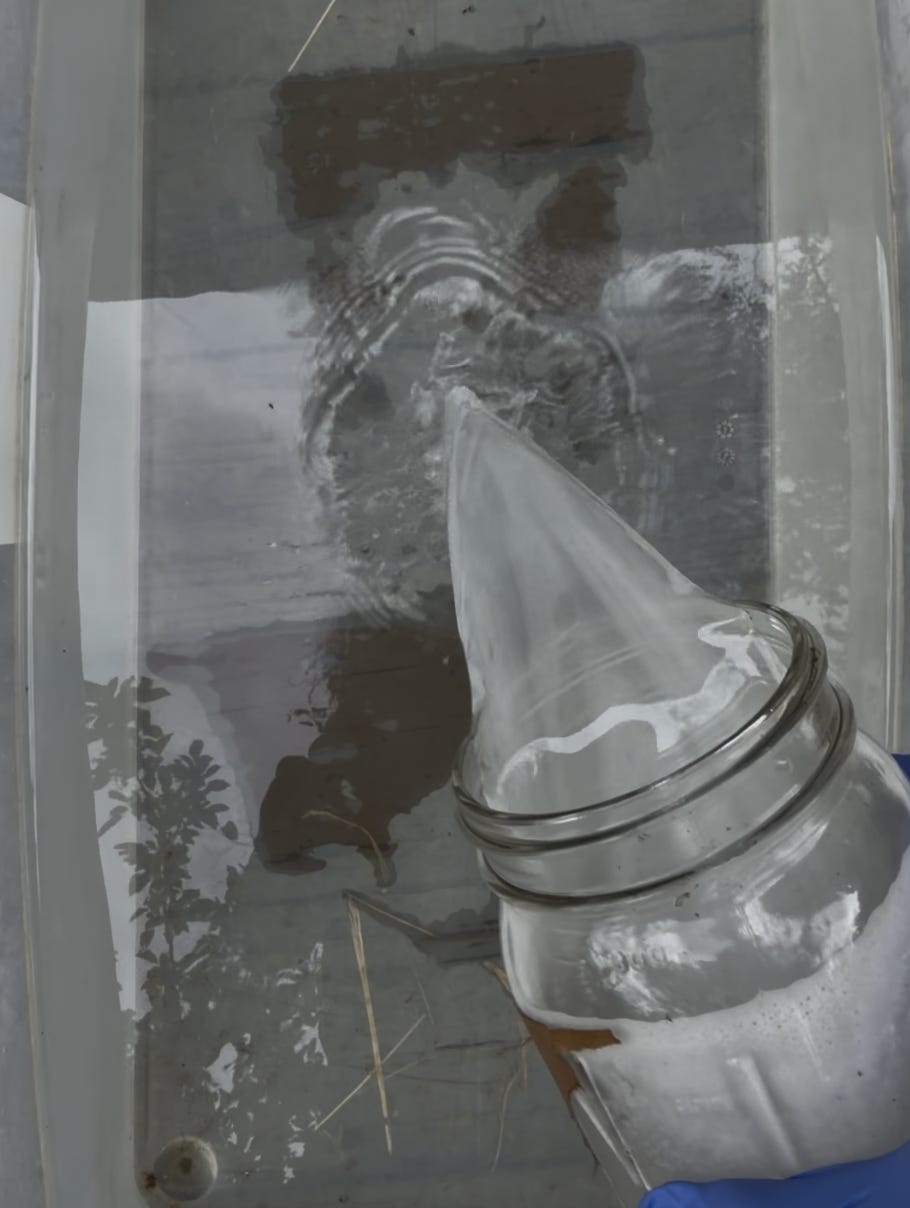
Add the dissolved aluminum acetate to the tub of water and stir.
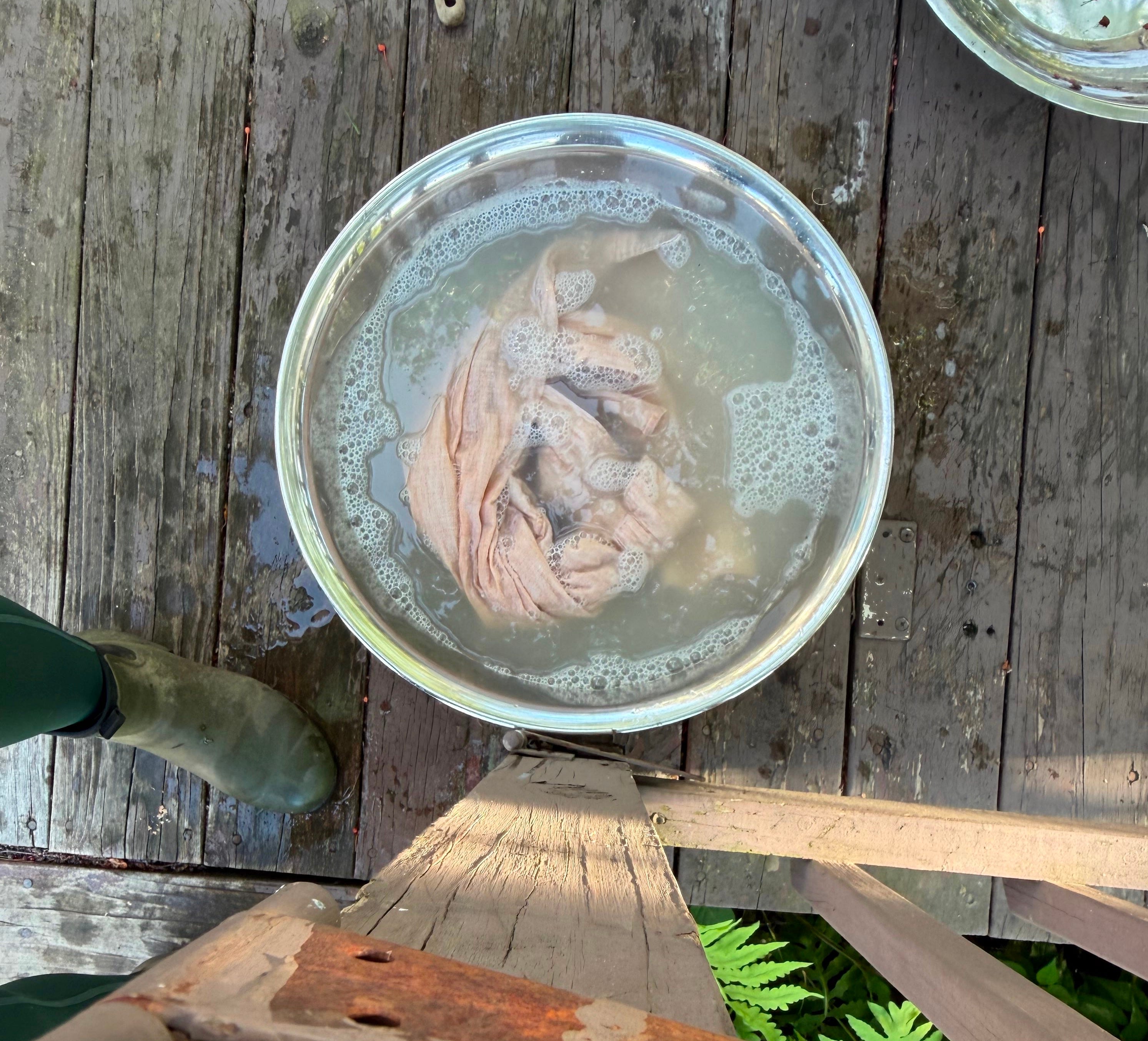
Add wetted goods and stir. Rotate every 10 minutes for two hours. I usually just set a time on my phone and work nearby, so that I can pop over and stir every time my alarm goes off. It is imperative that you keep the fabric below the surface of the mordant bath in order to keep your cloth from coming out blotchy.
Leave cloth in the tub for 24 hours. This extended mordant bath improves lightfastness of the fabric considerably.
It is imperative that you do not skip this step. Trust me.
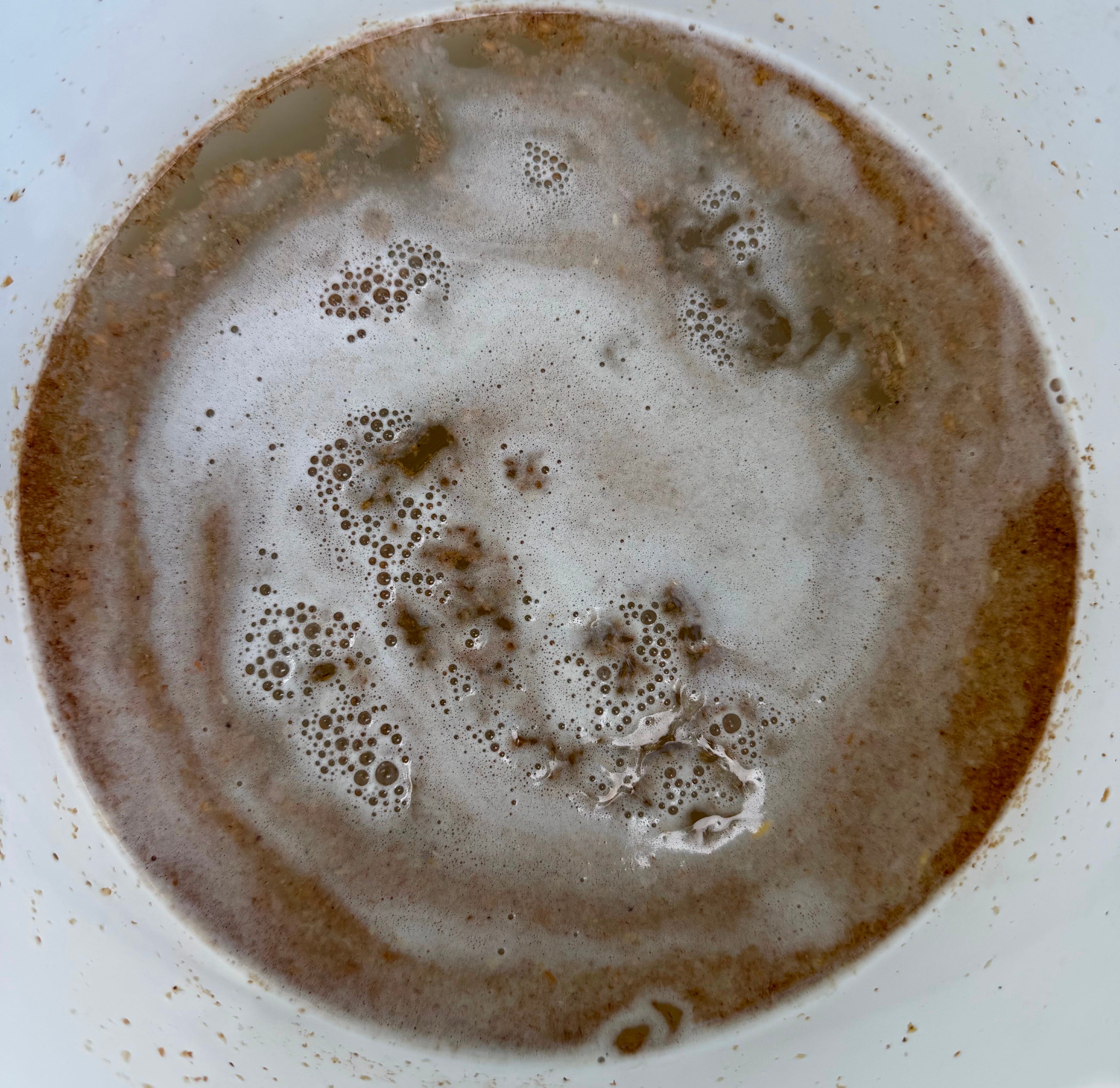
Weigh out 100 g of wheat bran and add 5 liters of hot water.
Steep for 5 minutes
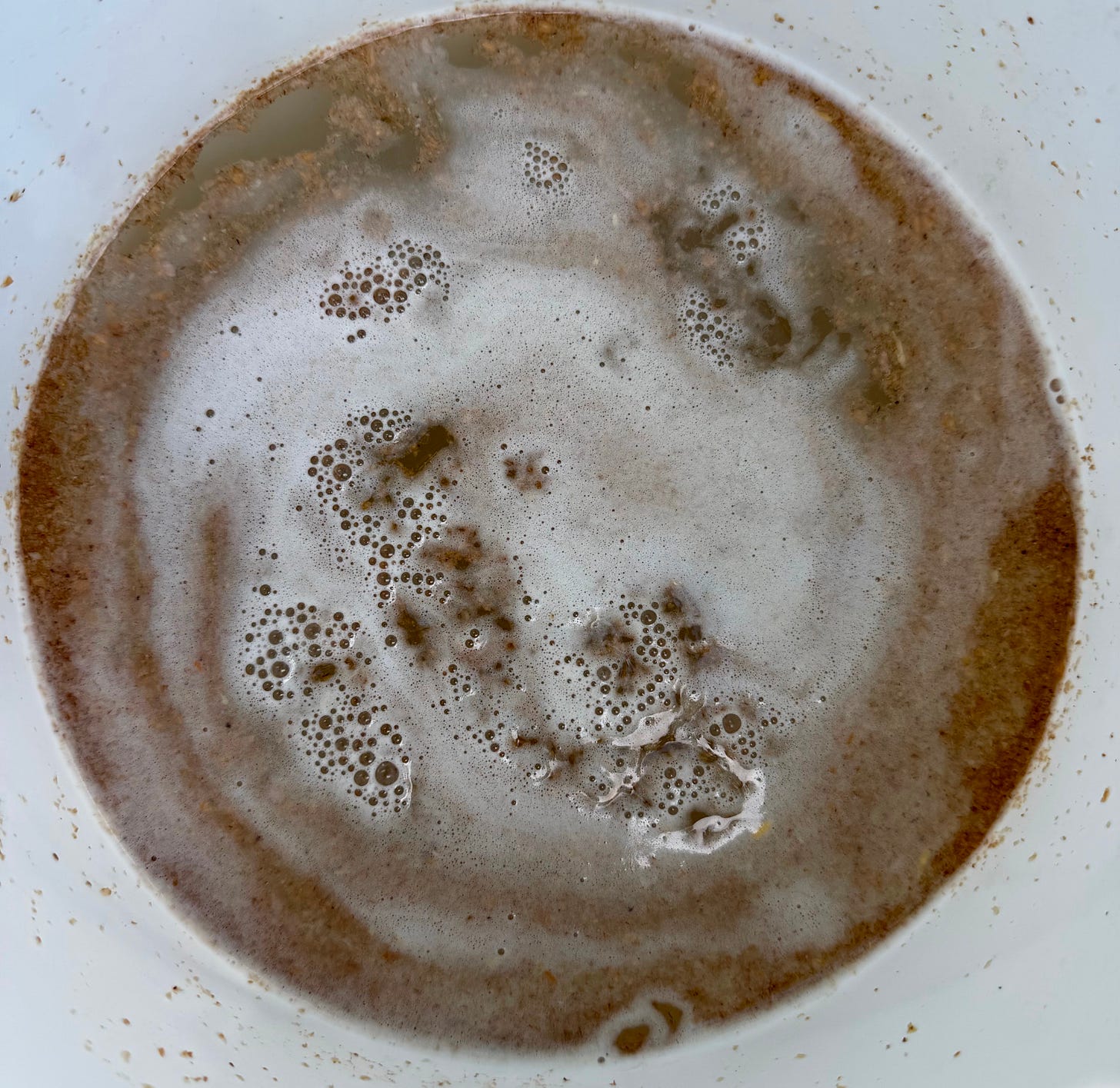
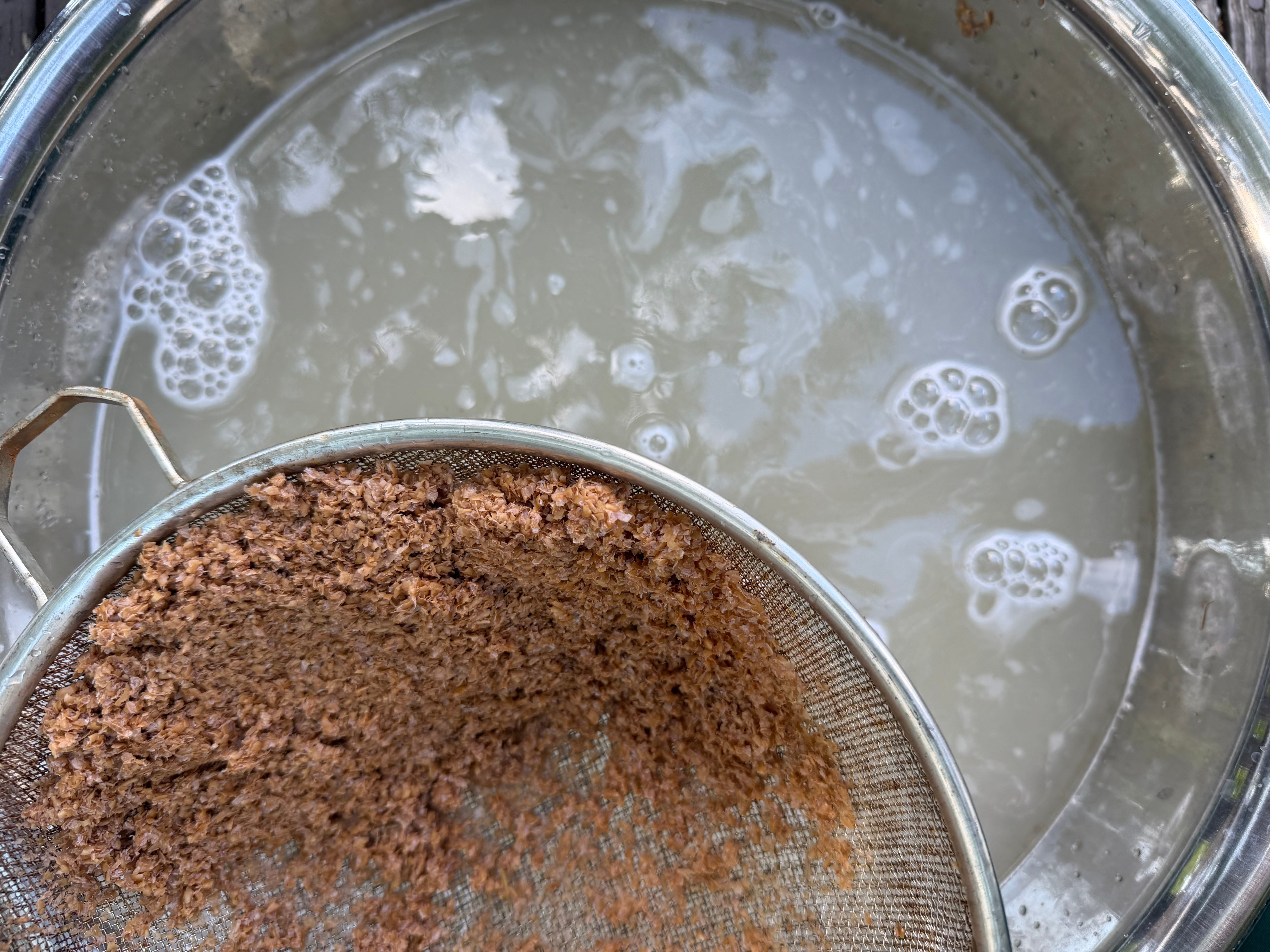
Strain out the wheat brand and rinse mordanted goods in the wheat bran water.
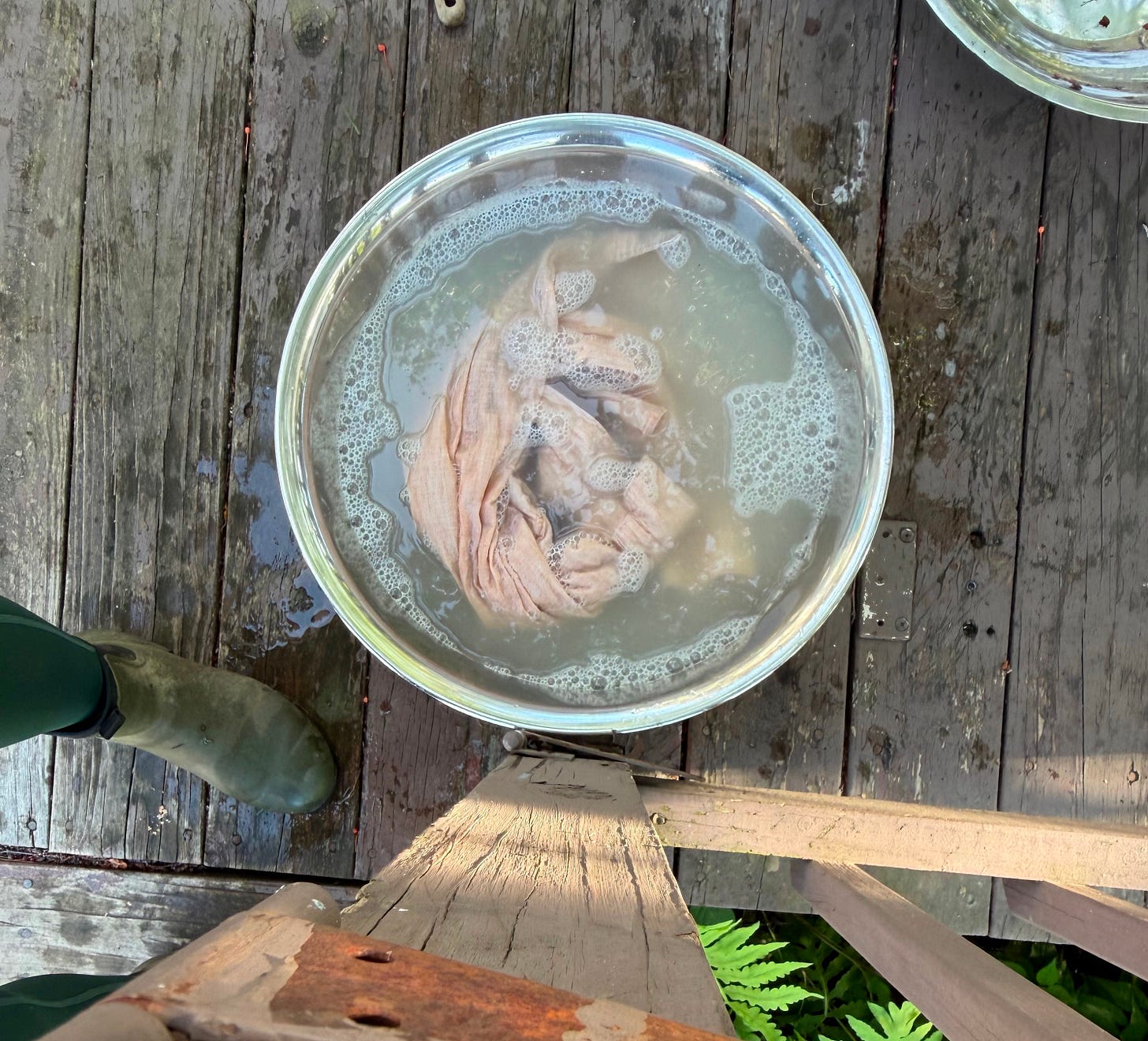
Rinse the cloth after the wheat bran bath with clean water.
Your cloth is now ready to dye! You can dry your cloth to use later or keep it wet if you plan to do a dye bath within 24 hours.
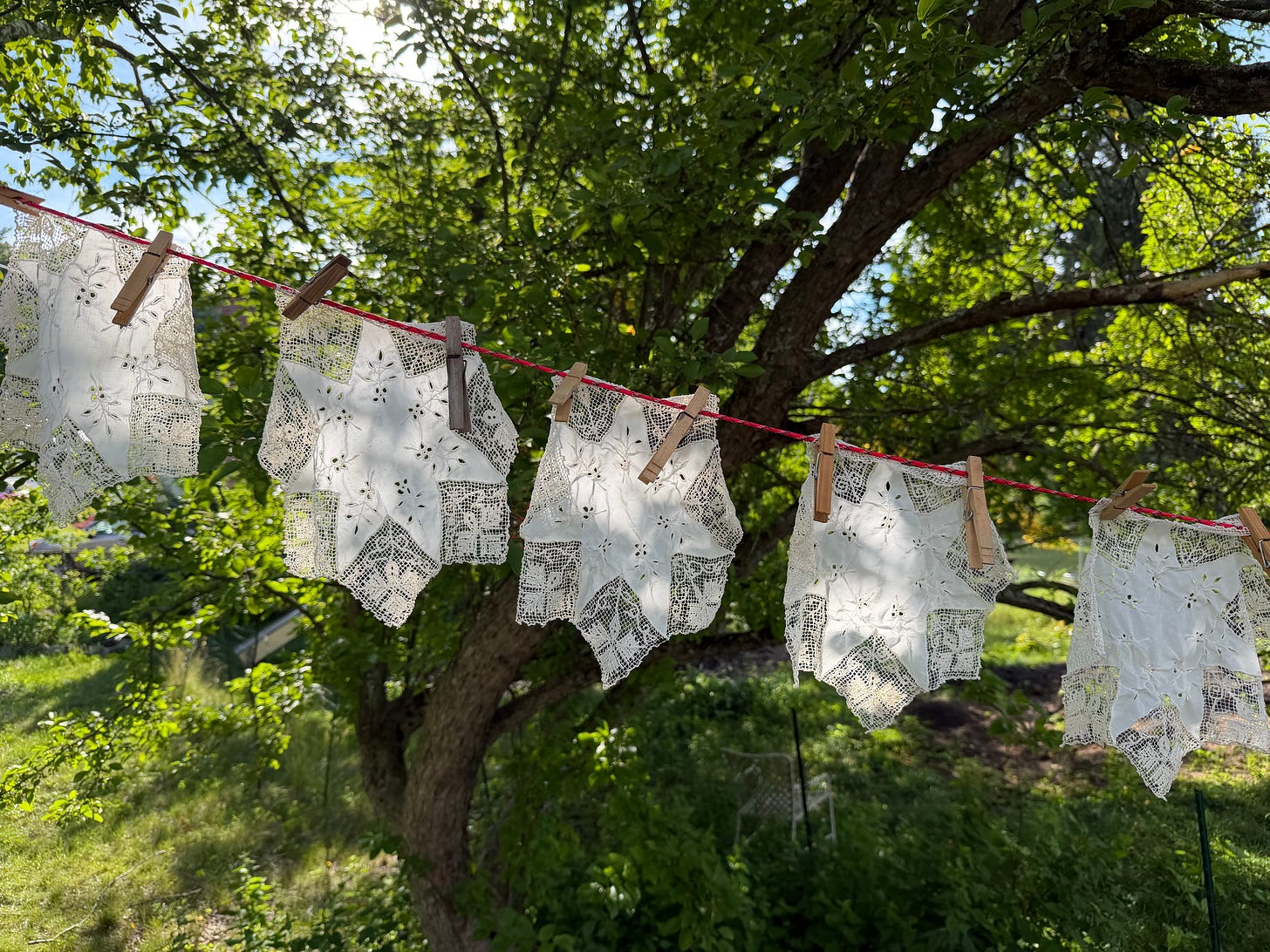
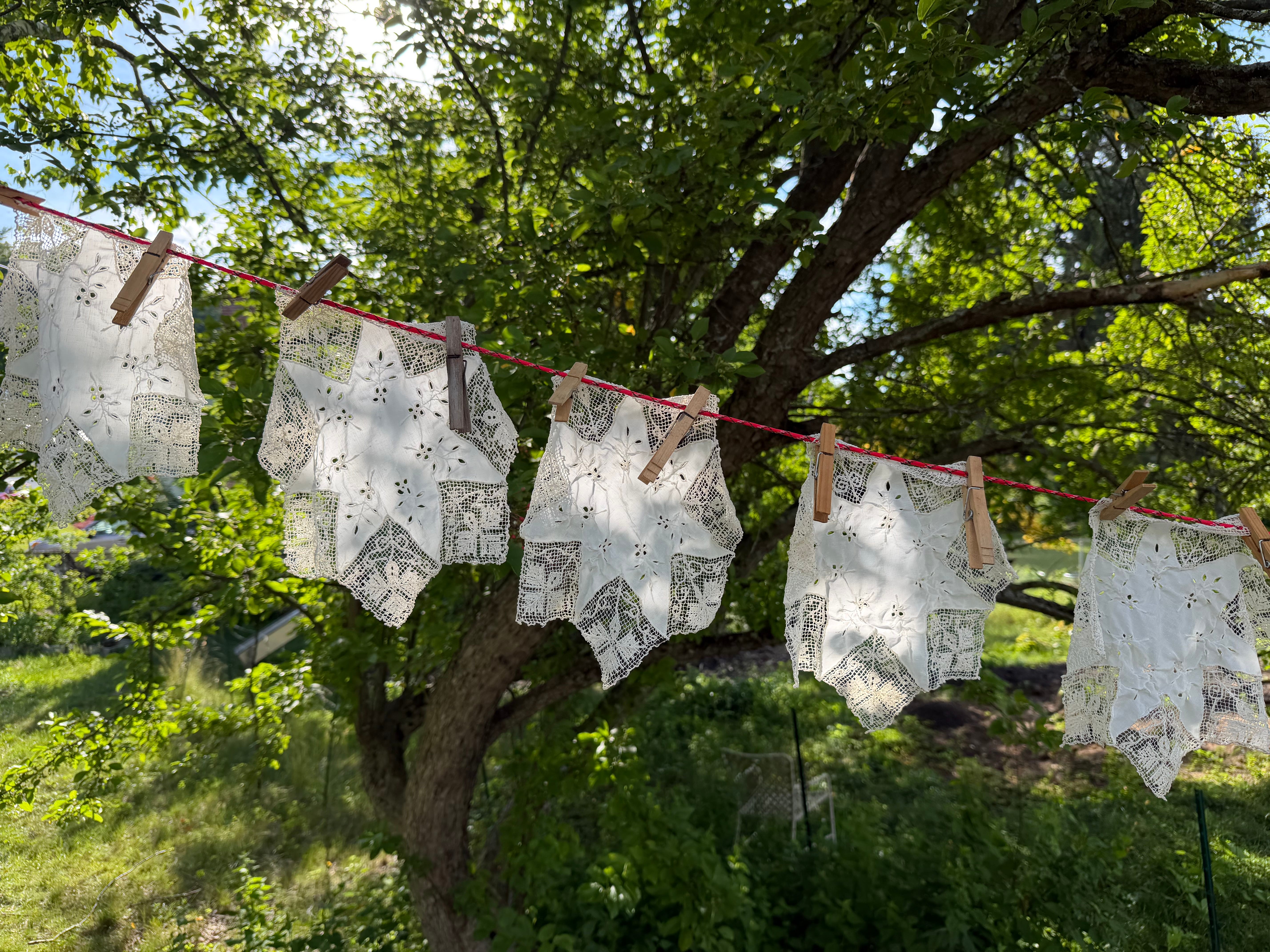
Next up we dye with plants!!!!!!!!!! Fabric is prepped my friend! In the next installment of this series we will finally get into dyeing cloth with plants. Now it is time to have fun! Here is a rough list of plants I’m rocking with this season in no particular order:
Red Oak
Black Walnut
Mugwort
Saint John’s Wort
Yellow Lily
Eastern Red Cedar
Birch
Willow
Elm
Sassafras
Yarrow
Barberry
Bittersweet
Callery Pear
Maple
Goldenrod
Knotweed
This list is subject to change as my whimsy takes me to unexpected places as I make my harvests. Let me know if there are any plants in particular on my list that you would like to read the dye process for.
Thank you for reading! If you are excited about this series and wanna hit that little heart below ~ go right ahead and make my day :)
Geraldine
Comments
Nothing yet. Say the first thing.
Sign in to join the conversation.