
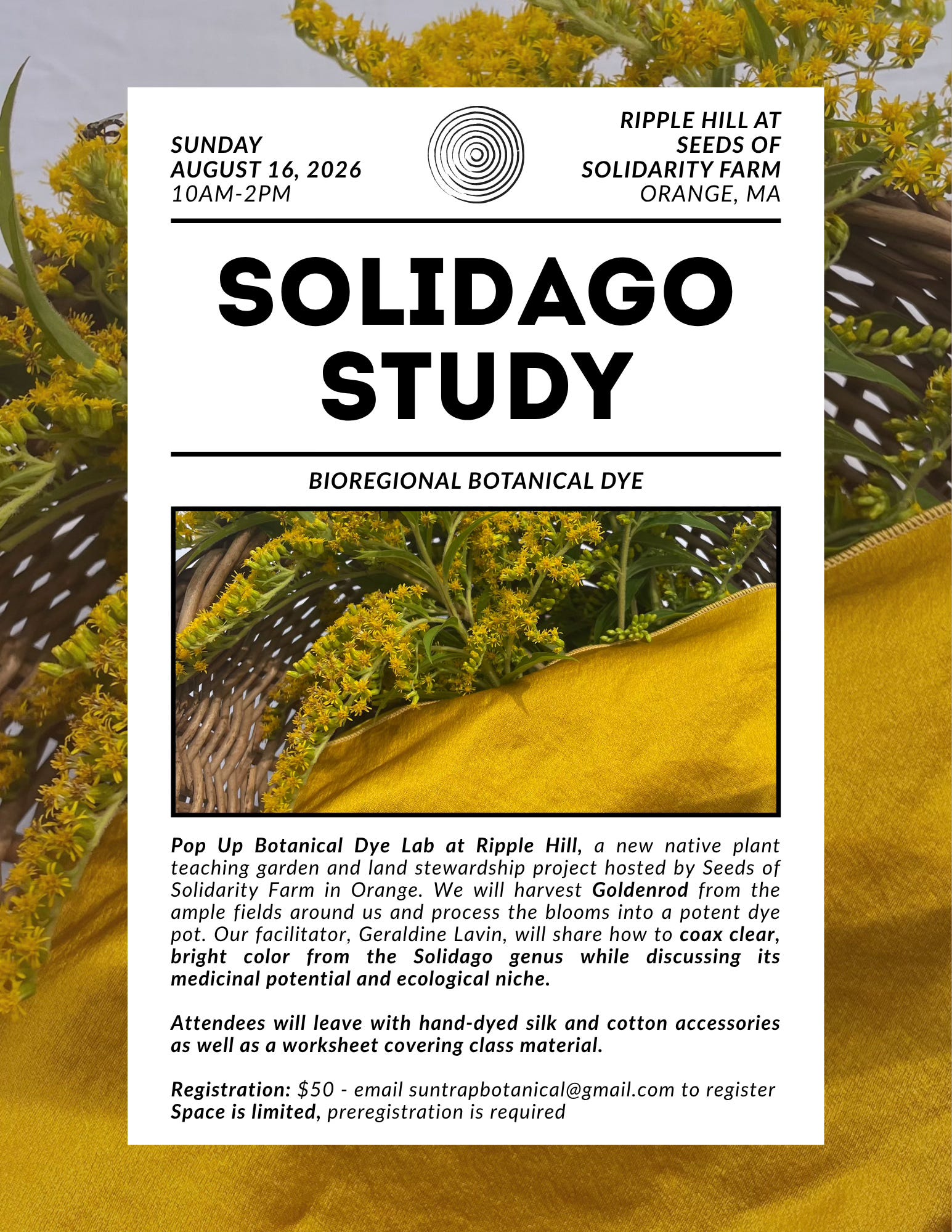
Quick announcement before we get into OAK. I’m hosting a workshop in Western Mass! The location is extra special to me, it’s a site where friends and I planted out 200+ native seedlings with edible and medicinal properties. I want to invite you to our first event: a goldenrod dye workshop. Feel free to reply to this email with any questions logistical or otherwise about the event.
I’ll share some basic information about Oak below and then get into the recipe for both an Oak leaf dye pot and an Oak bark dye pot. I worked with Northern Red Oak for this project, but you could also work with any other Oak species. Oaks are pillars of the ecosystems they live in and if you steward land - consider finding a species that would work in your soil/niche.


Common Name: Northern Red Oak
Latin Binomial: Quercus rubra
Plant Part Used: Leaf, Bark
Pigment Producing Chemical Constituents of Leaf: Tannins (Catechin, Gallocatechin), Flavonoids (Rutin, Quercetin).
Pigment Producing Chemical Constituents of Bark: Tannins (Catechin, Gallocatechin, Gallic acid), Flavonoids (Quercetin and Luteolin).
Native Range: Eastern North America
Natural Habitat: Mesic uplands, riverbanks
Status in Massachusetts: Keystone native species, widespread and abundant. Keystone species are defined as having a disproportionately large impact on their ecosystem. From the Natural Resources Defense Council: “A keystone species—which can be any organism, from animals and plants to bacteria and fungi—is the glue that holds a habitat together. It may not be the largest or most plentiful species in an ecological community, but if a keystone is removed, it sets off a chain of events that turns the structure and biodiversity of its habitat into something very different. Although all of an ecosystem’s many components are intricately linked, these are the living things that play a pivotal role in how their ecosystem functions.” Northern Red Oak is indeed a biodiversity anchor: it hosts over 500 species of Lepidoptera, which are a critical food source for resident and migrating songbirds. Additionally, Oak acorns are an essential fat containing food for many species of wildlife including: North American Black Bear, White Tailed Deer, and Eastern Wild Turkeys. Even when a mature Oak tree dies, it is still considered an ecosystem anchor as it provides dwelling space for many species.
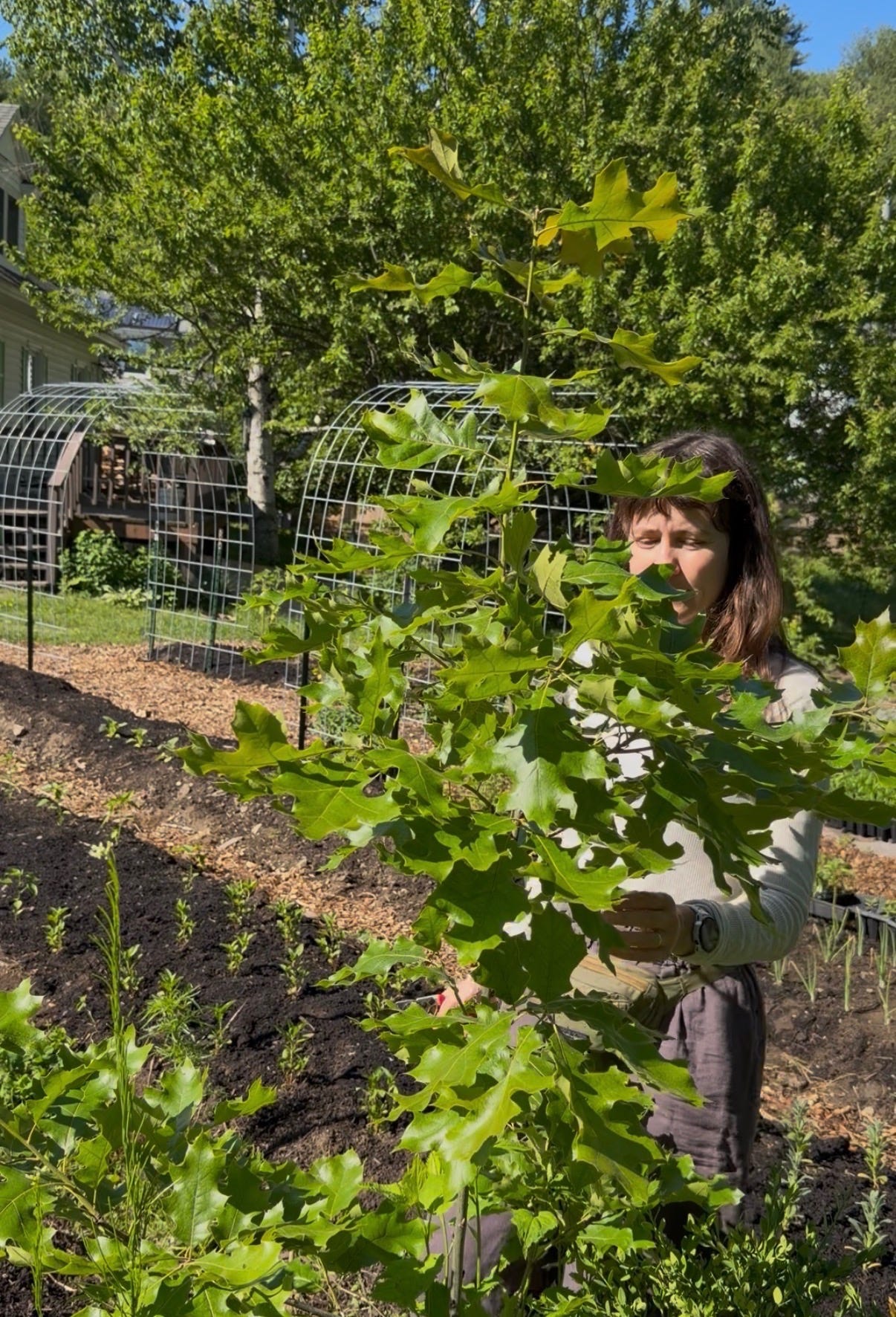
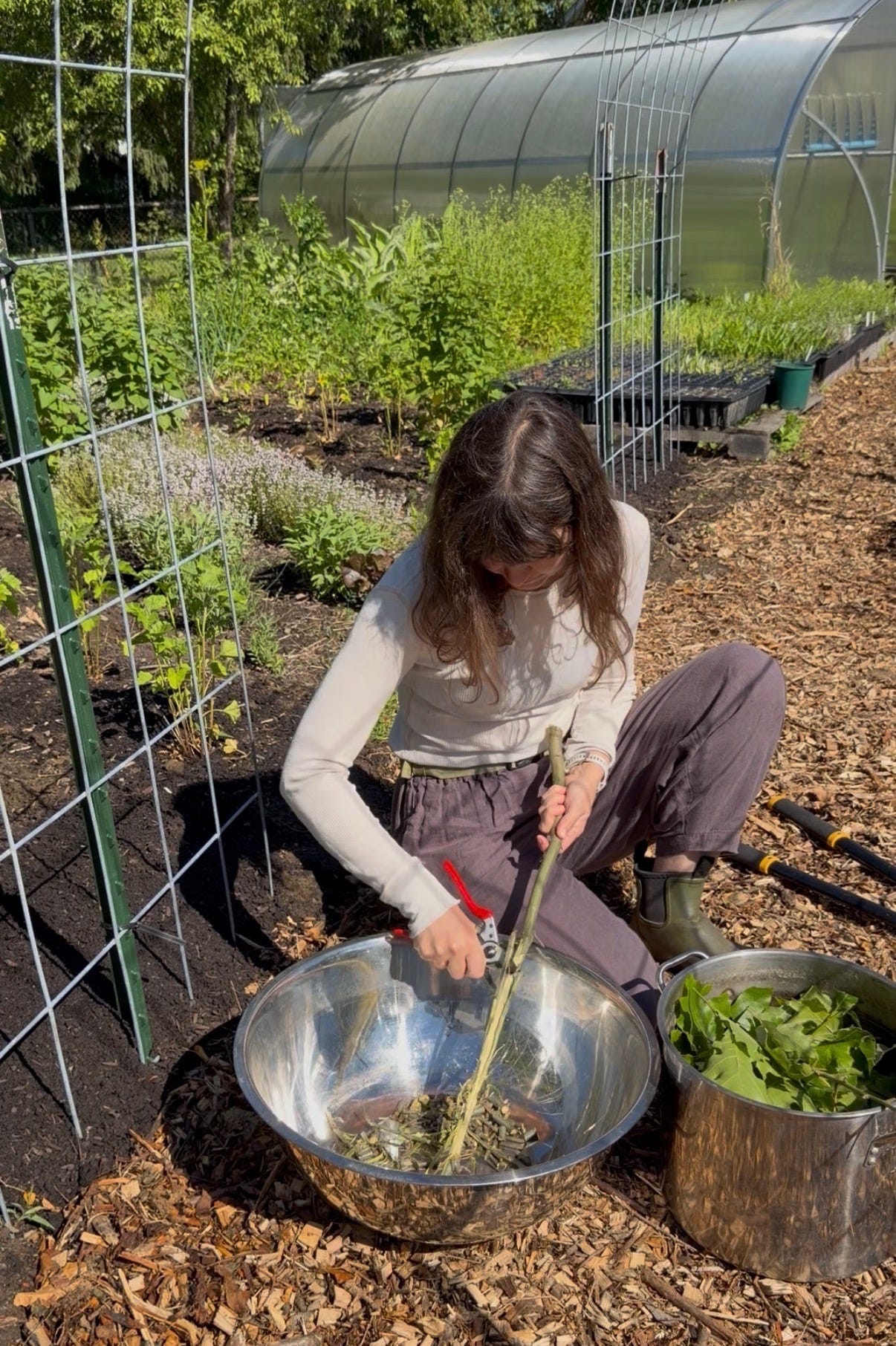
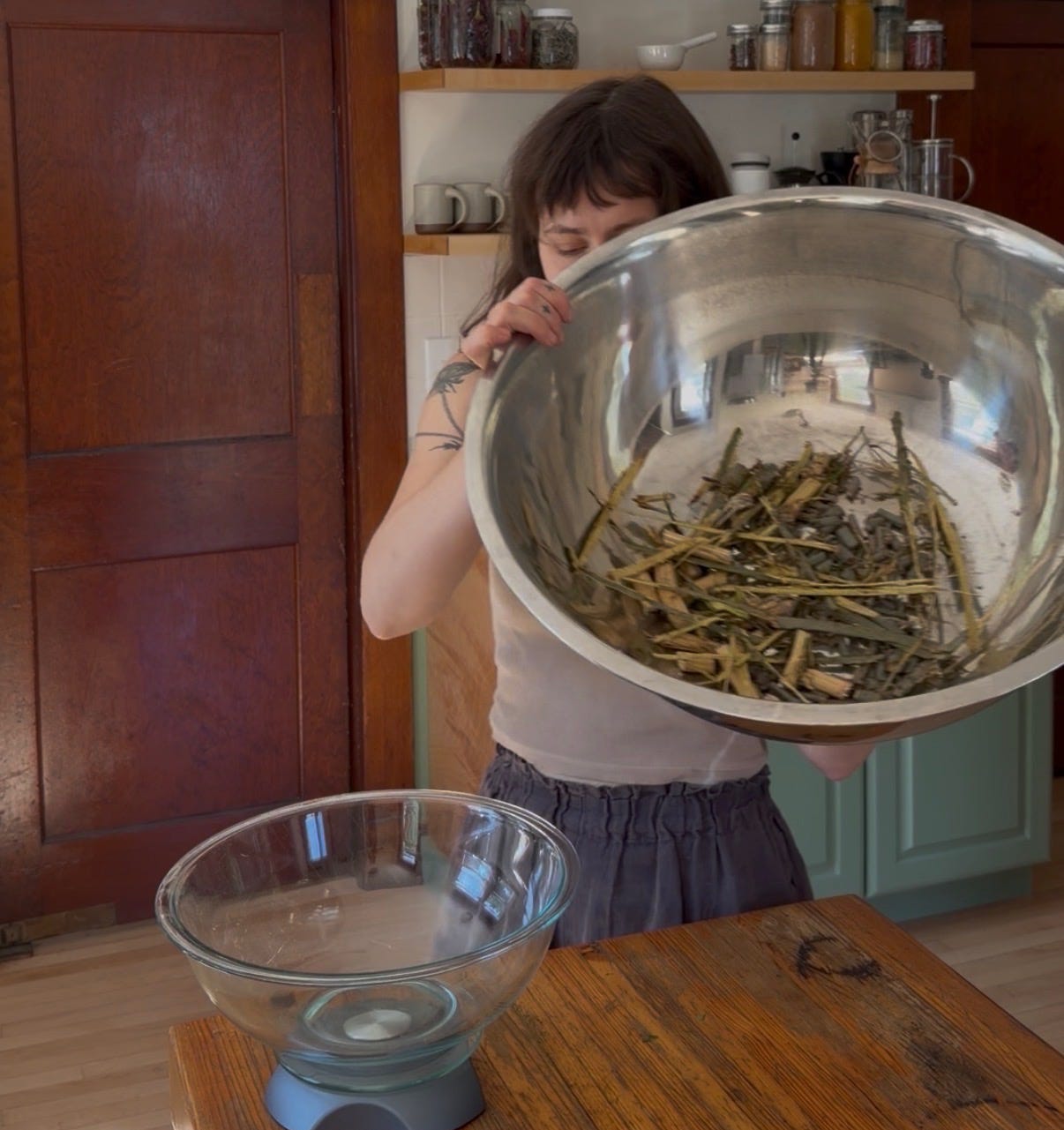
Clip off all the leaves you plan to use and weigh them: 249 grams in my case
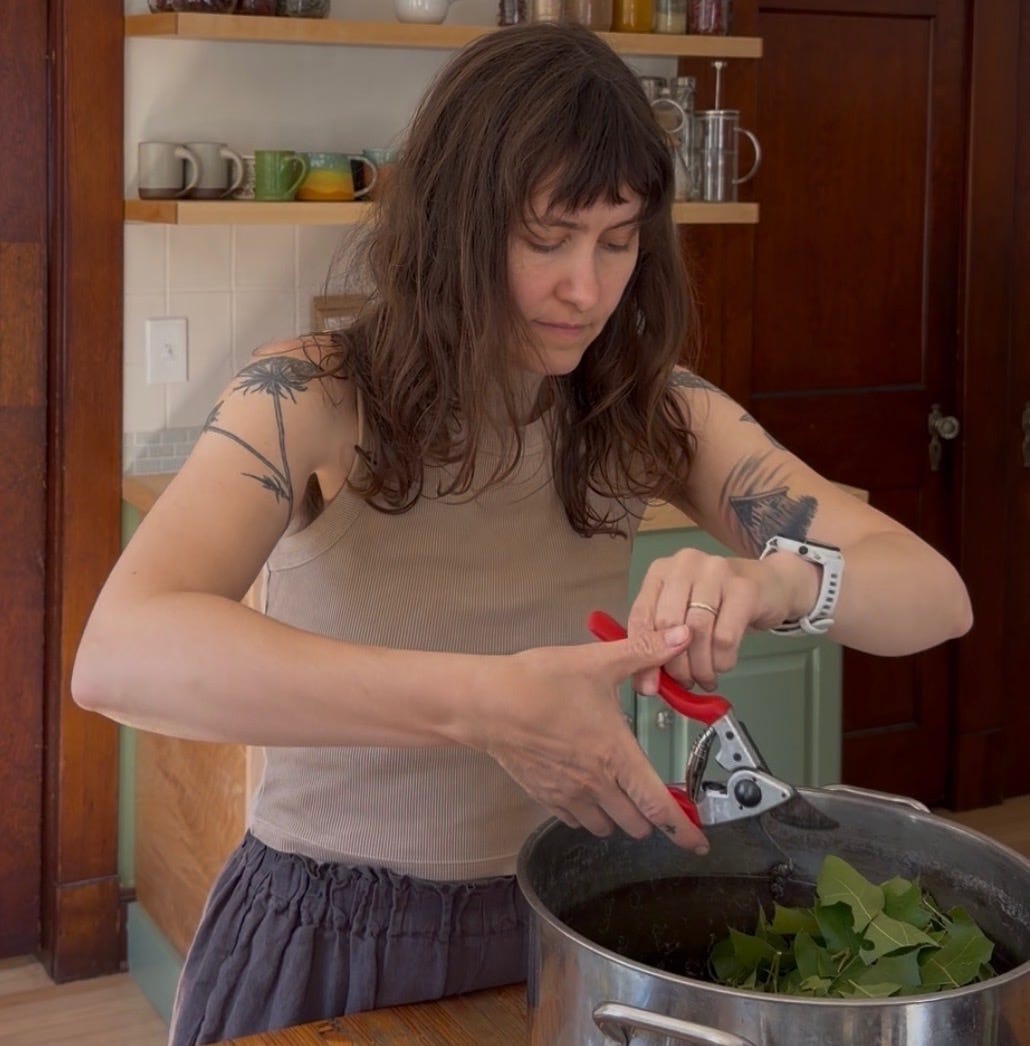
Chop up the leaves to expose more surface area and get a stronger dye
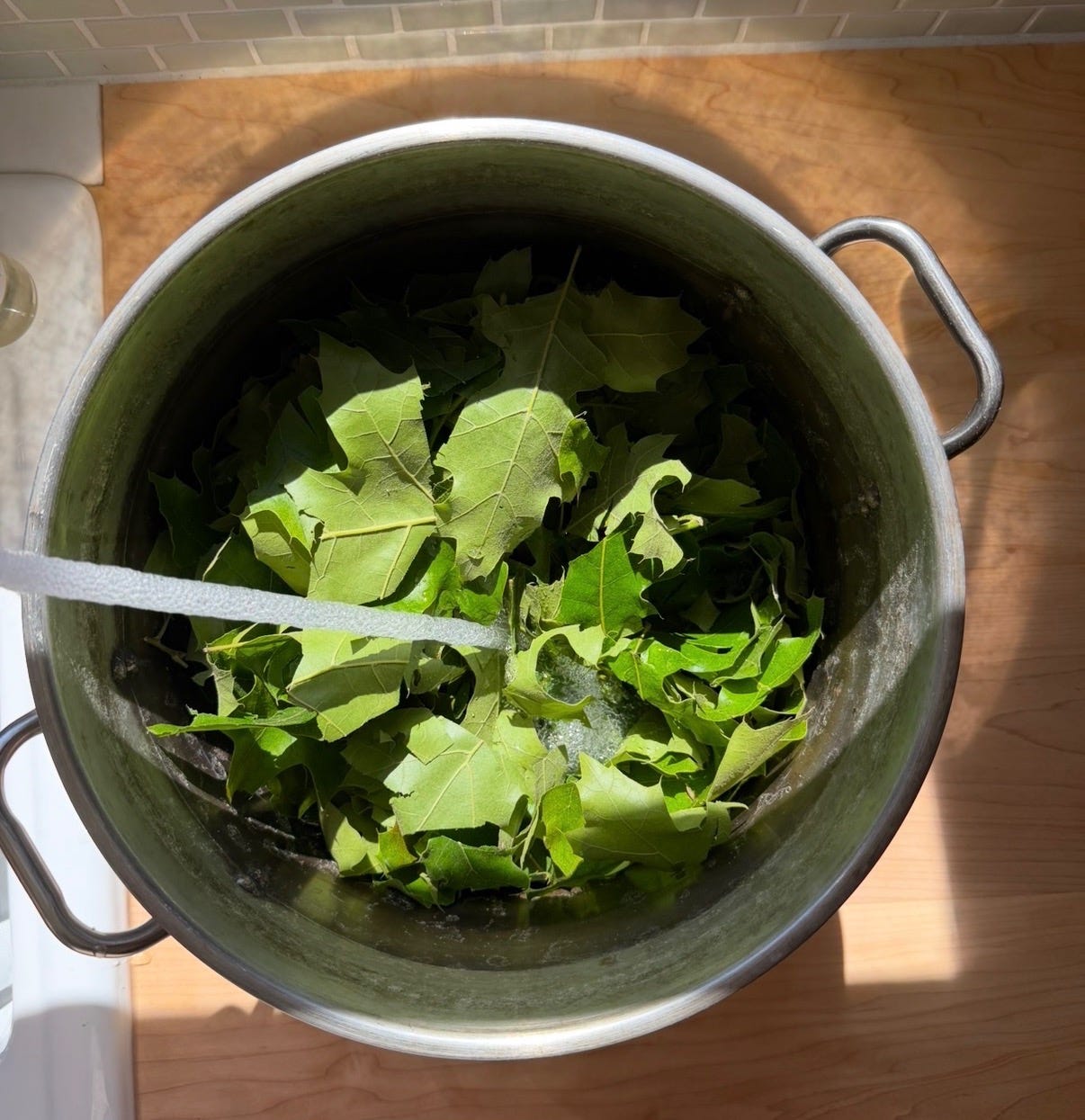
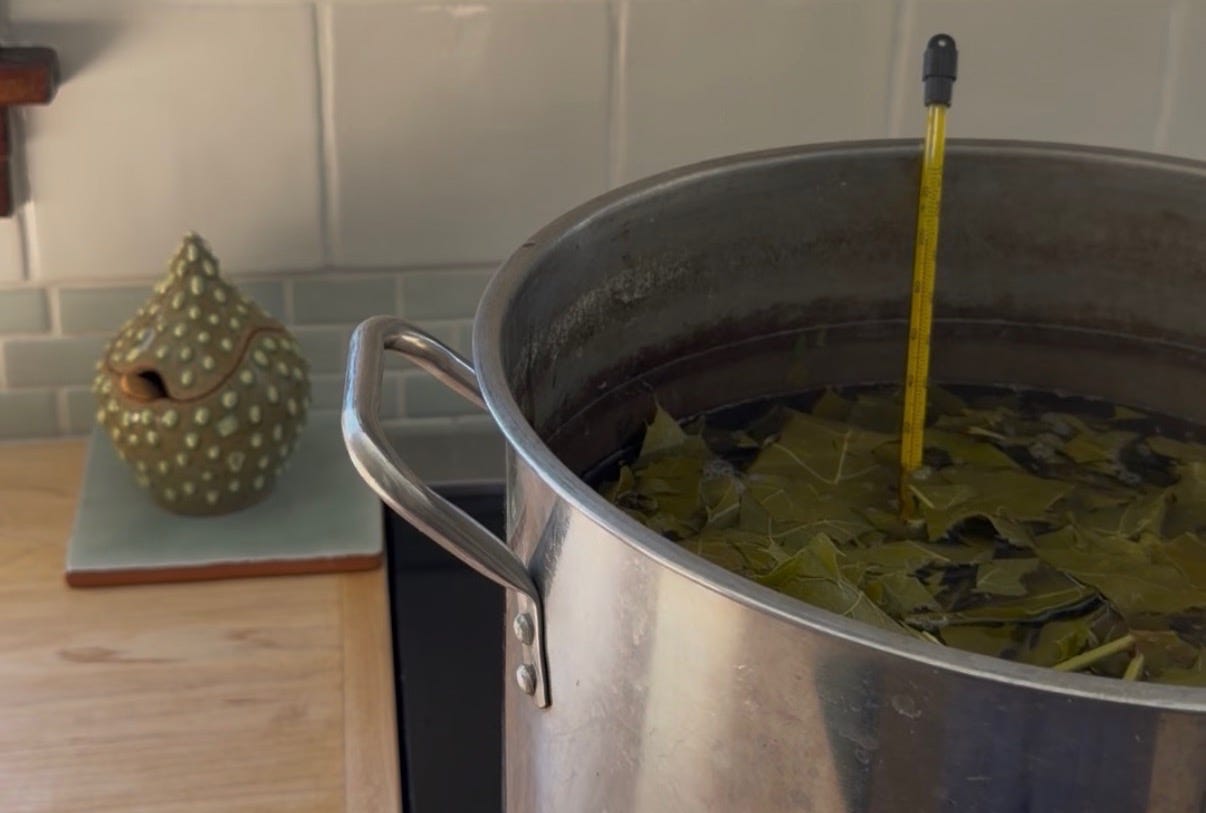
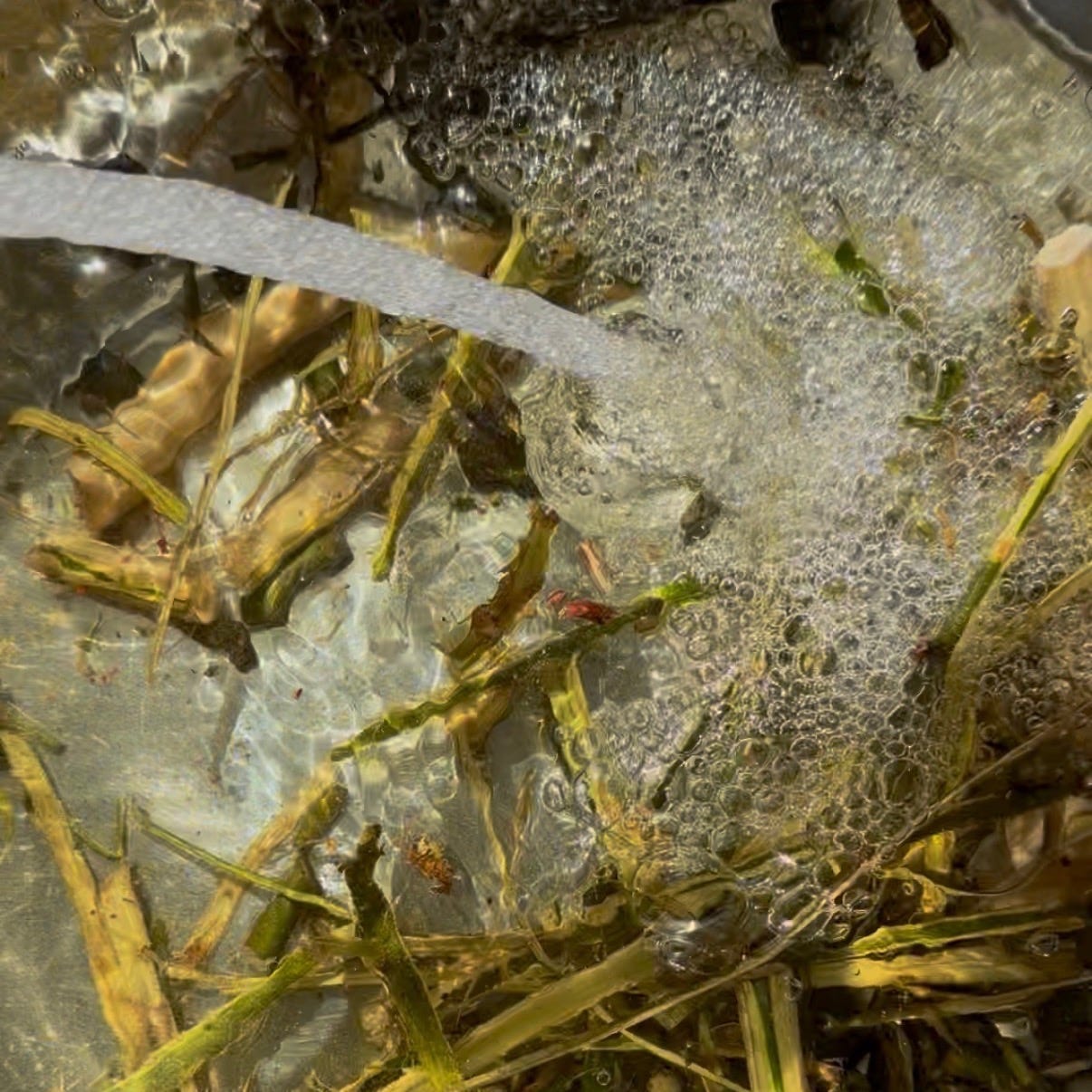
Pour water over the leaves and bring to just below a simmer (180-200 F). Keep at this temperature for 45 minutes and then turn off heat. Leave the Oak leaf dye pot to steep overnight.
Hot tip: get your fabric soaking the night before as well so it will be ready for the dye pot the next day

shout out to the whimsical salt holder that my friend KB made The next day: strain the leaves out of the dye pot
Return the dye liquid to the pot
Alter the pH to achieve neutral or slightly alkaline (I used soda ash to bring the acidic pot up to 7.5) If you don’t have a pH meter and want to do this somewhat optional step: add one teaspoon of soda ash to the dye pot and stir until it is dissolved
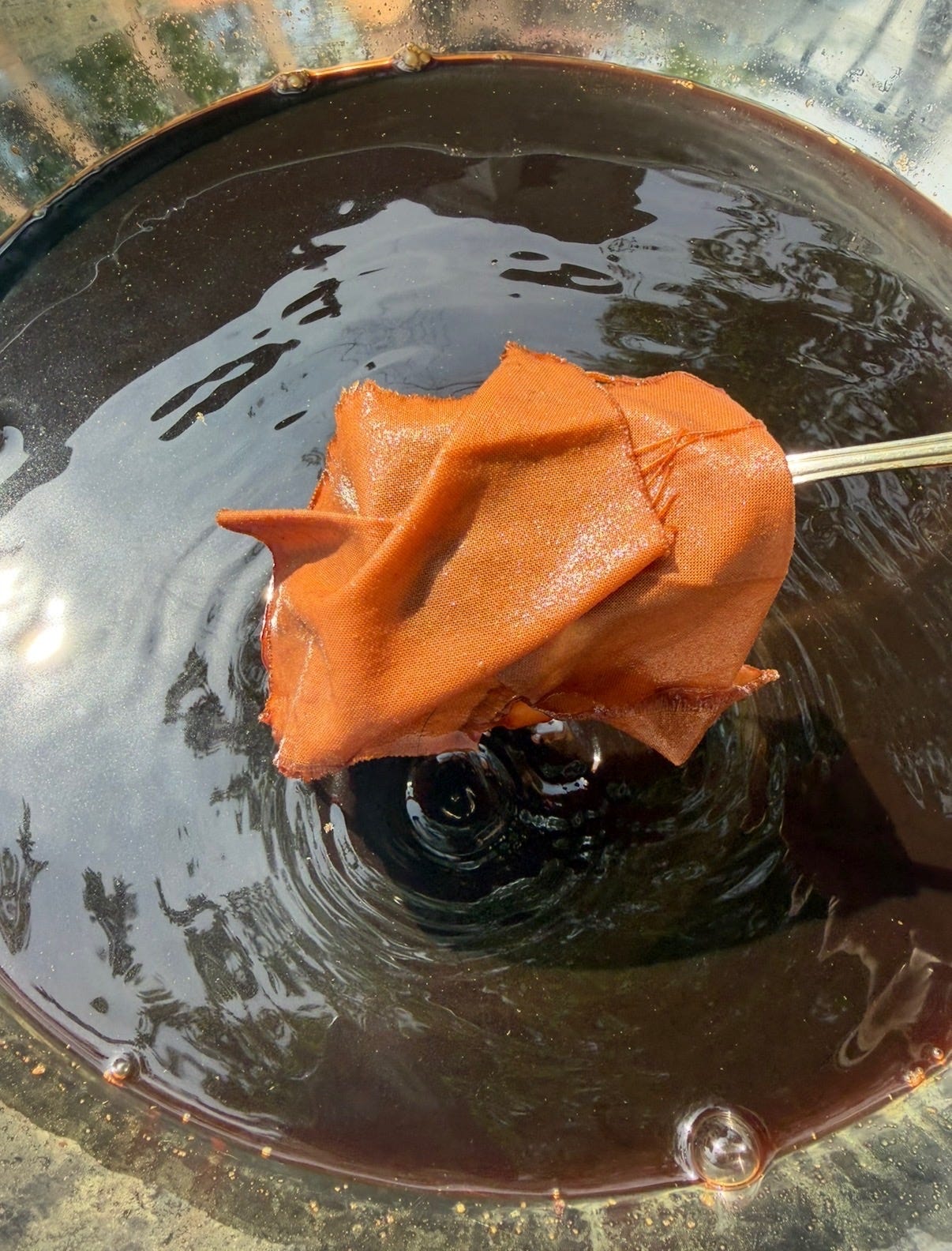
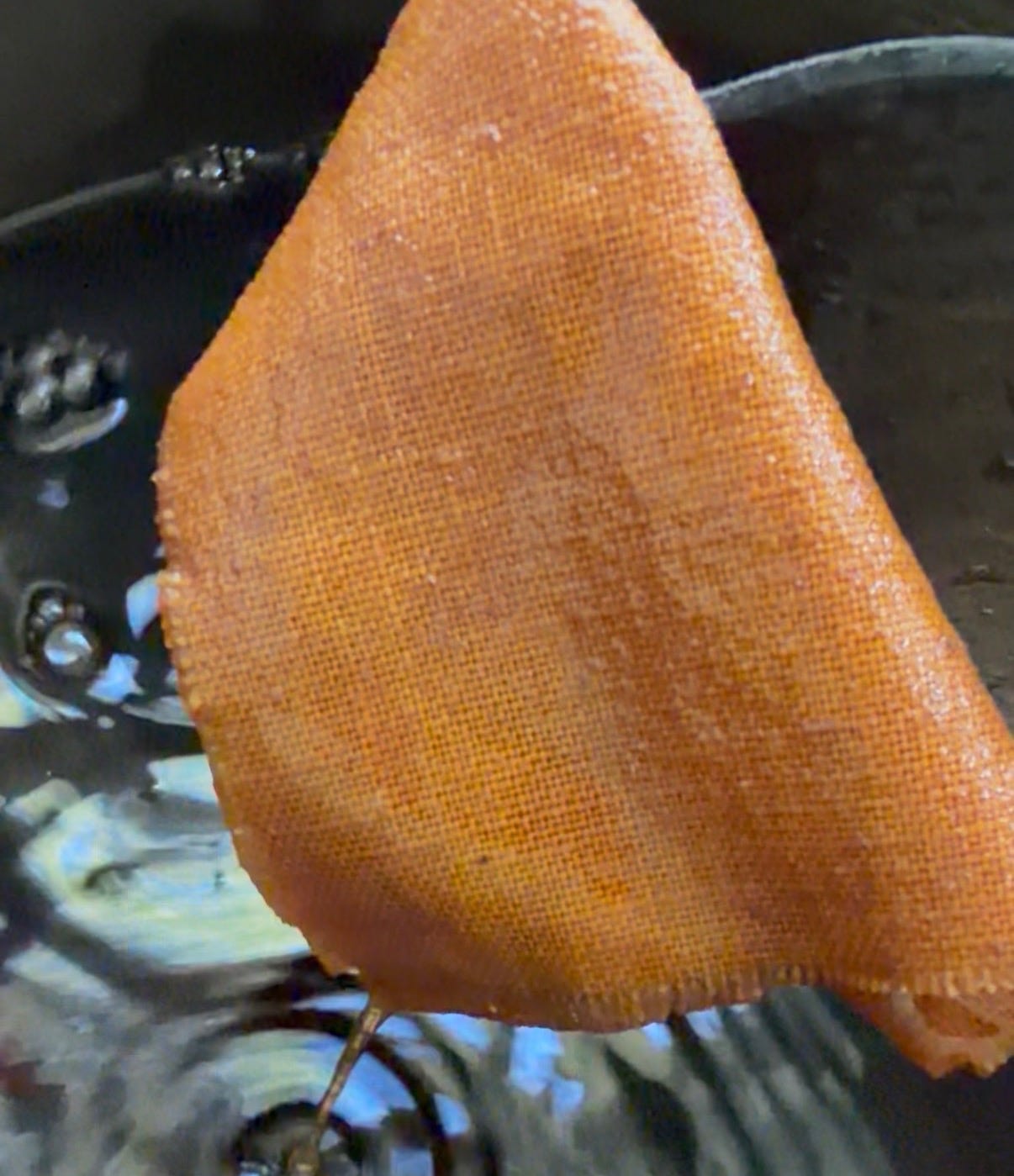
Submerge your pre-soaked fabric in the dye pot
Bring to just under a simmer and keep there for 45 minutes.
Stir the pot occasionally, taking care that the fabric is moving around and getting an even coating of dye. Make sure no fabric is peaking up above the liquid.
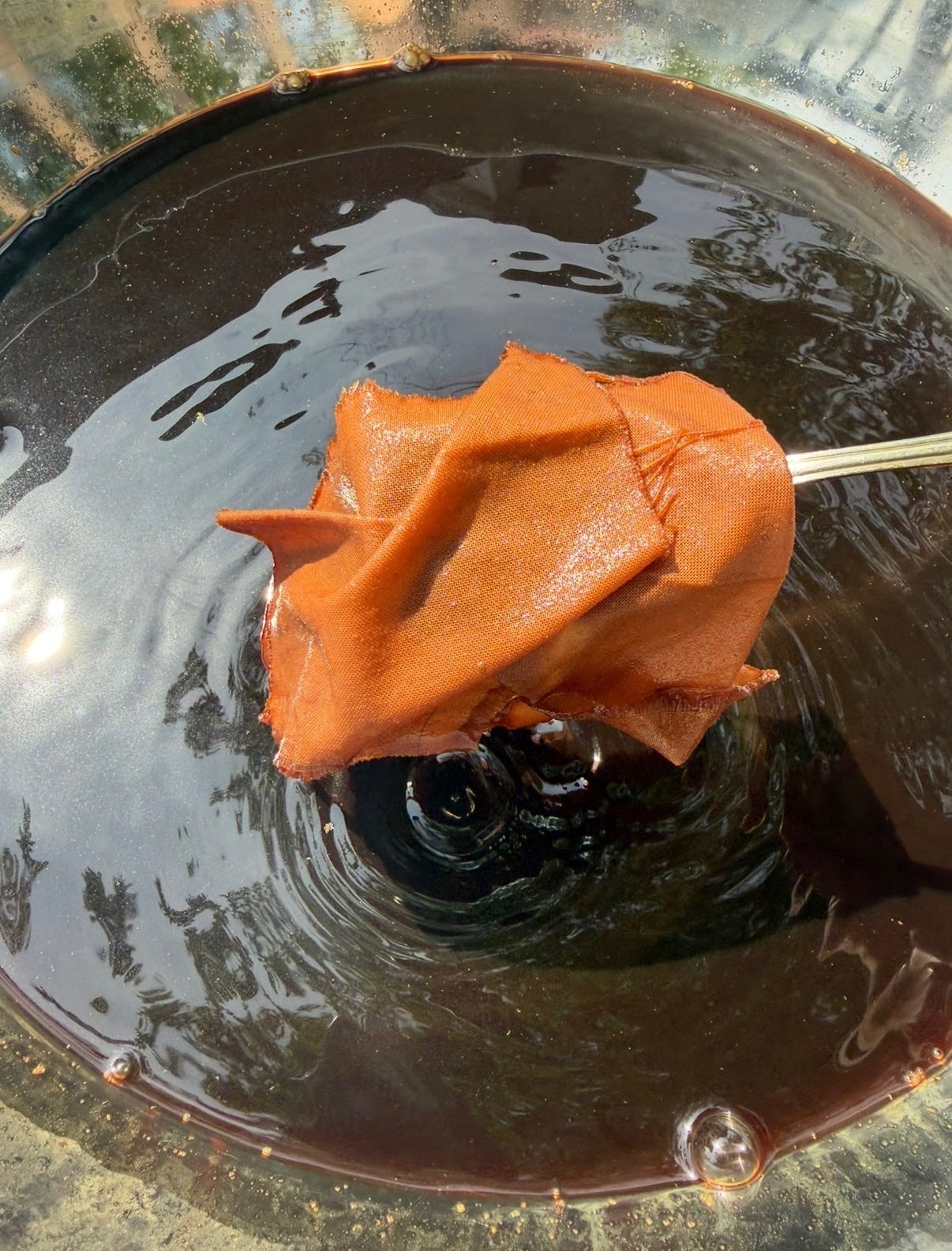
Turn off the heat and allow the pot to cool with the fabric in it. Leave the fabric in the cooling dye pot overnight.
The next day, fetch your fabric from the dye pot and rinse it
Hang to dry
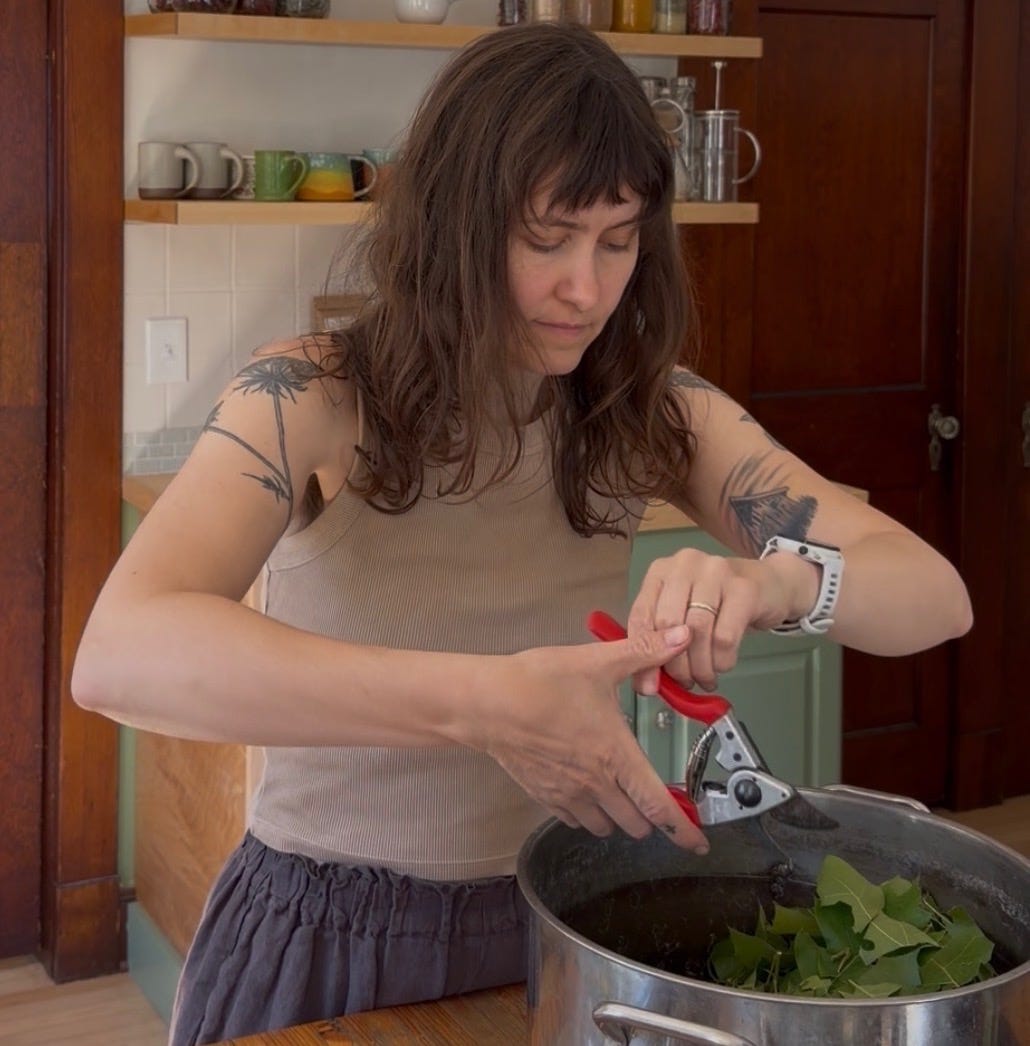
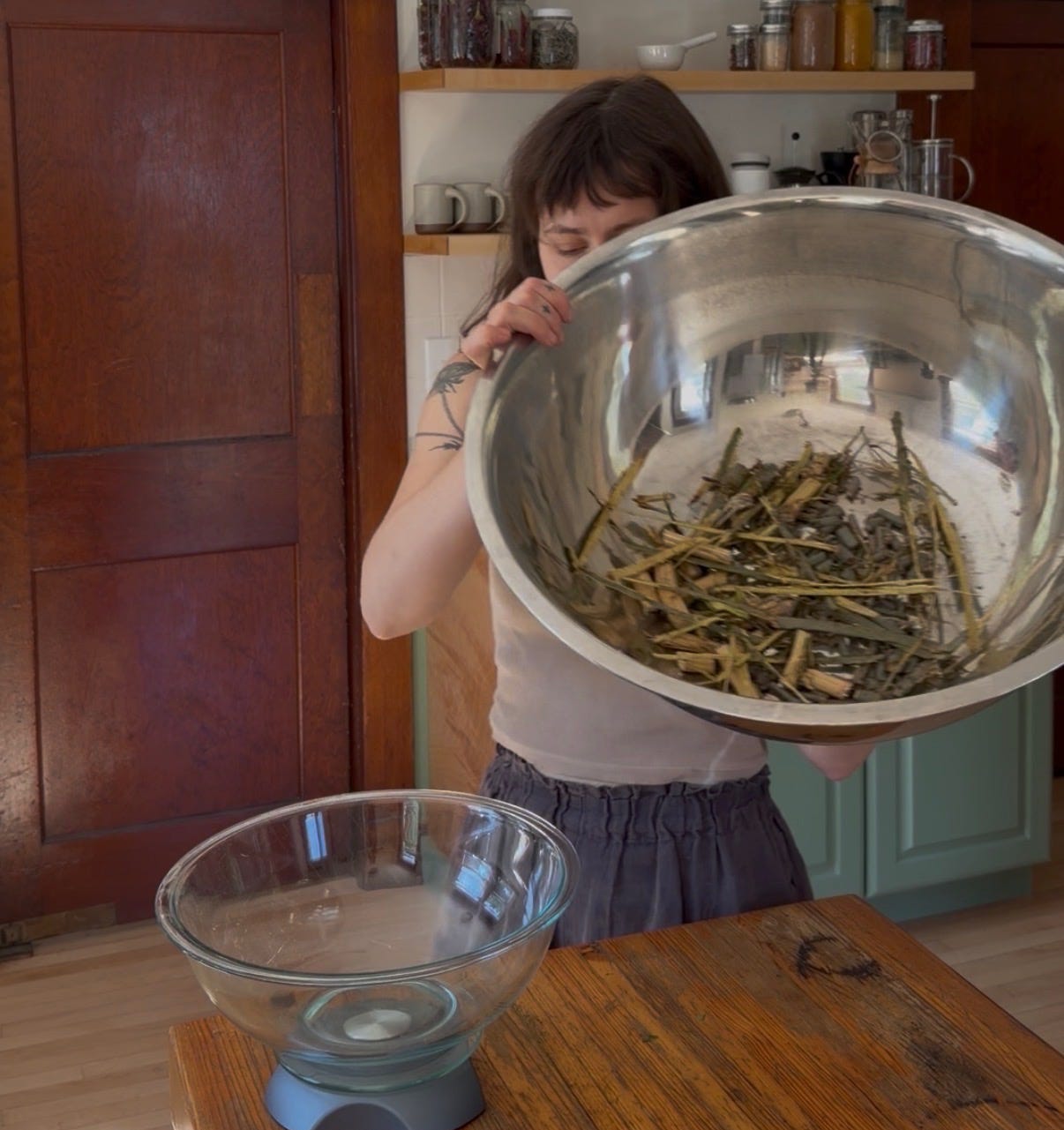
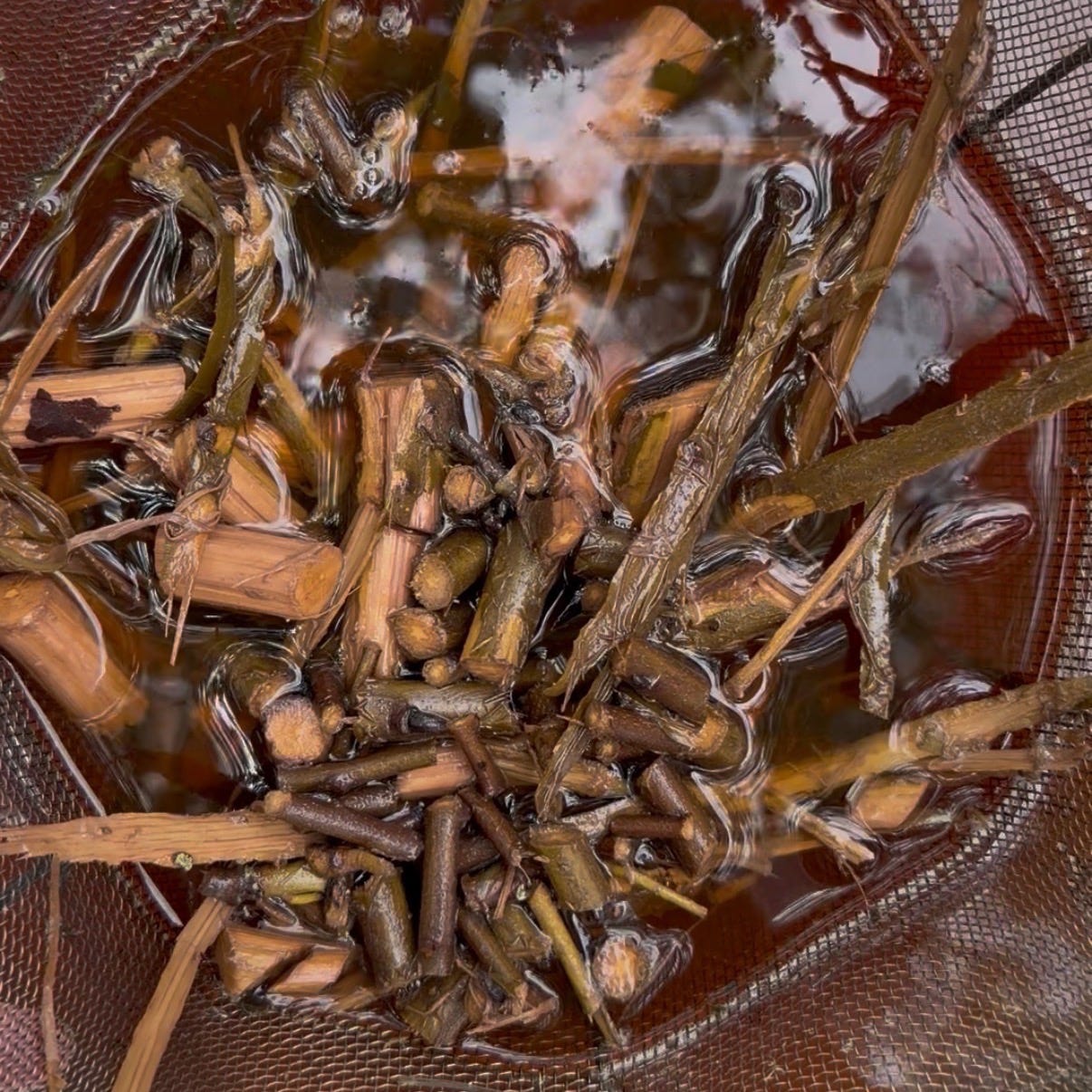
Strip the inner bark using a sharp knife (or your felcos like me!) and weigh it: 208 g in my case
Be careful and always move the sharp edge away from you
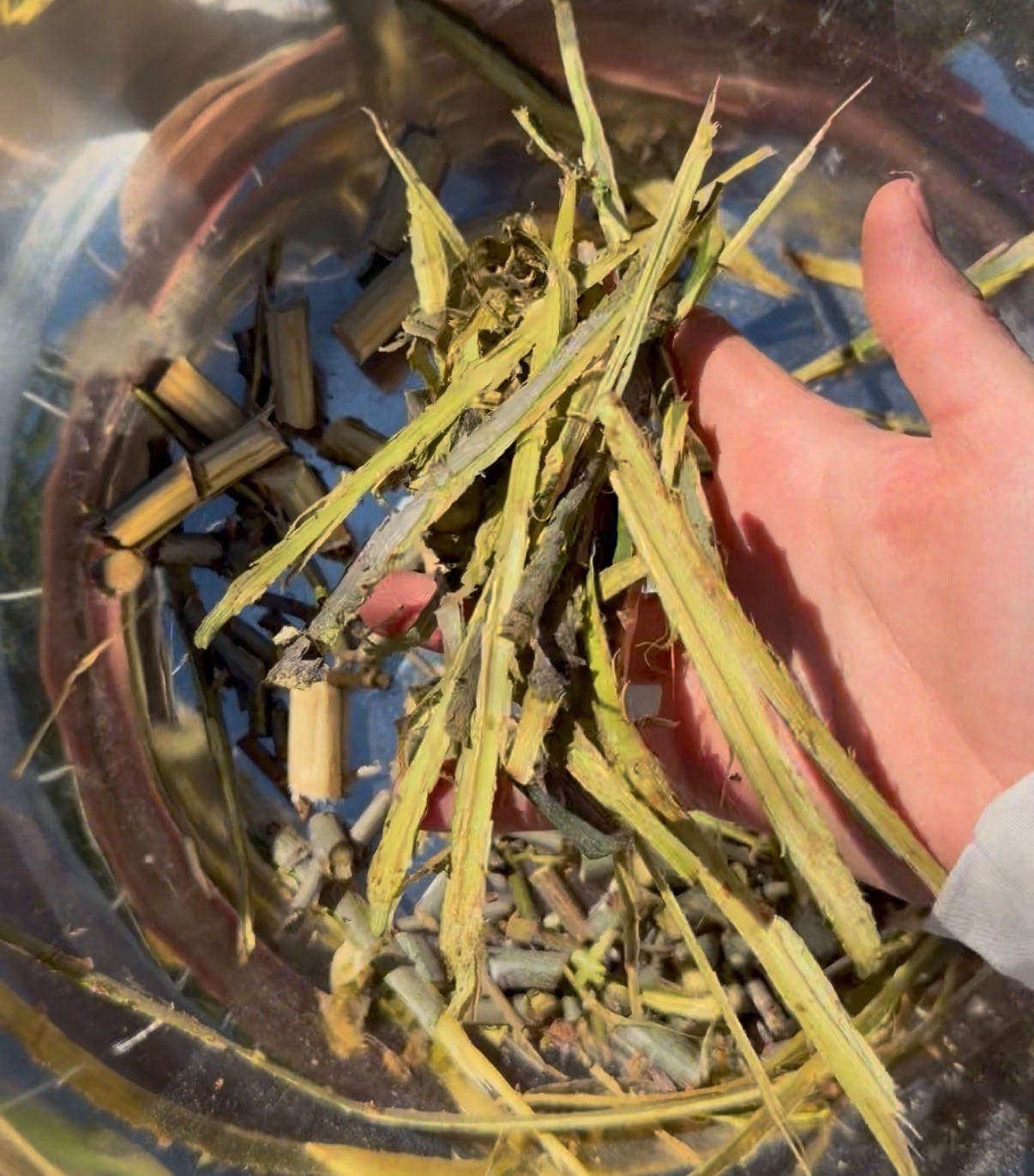
Do not use the thick outer bark. I don’t mind thinner, newer bark getting in the dye pot, but the thick outer bark will change the tone of the dye pot.

Cover the bark with water. Soak it for at least a few days but ideally a few weeks. In this case. Put a lid of some kind on your steeping bark bowl and label it with the date.

Once you feel it has steeped enough, you can transfer the bark and water mixture to a pot and slowly bring to just under a simmer. Keep it there for an hour otherwise two before you turn off the pot and let it cool completely.

Strain the dye pot, saving the dye liquid. Transfer that into the dye pot.

Check the pH. It will likely be on the acidic side of things. Shift it to neutral or slightly alkaline using a small amount of soda ash. Optional step! I have been experimenting with monitoring altering the pH of my dye pots this summer and have been pleased with the results.
Add prepped fabric to the dye pot that has been soaking for at least two hours
Stir the fabric in the dye pot frequently. Bring the pot up to just under a simmer (lower if you are working with wool or silk) and keep it there for an hour.

Allow the fabric to cool with the dye pot. Ideally, leave the fabric in the dye pot overnight or for twenty four hours, making sure that it remains under the water surface (to avoid blotchy spots) and stirring every so often.
Remove from dye pot, rinse, and hang to dry
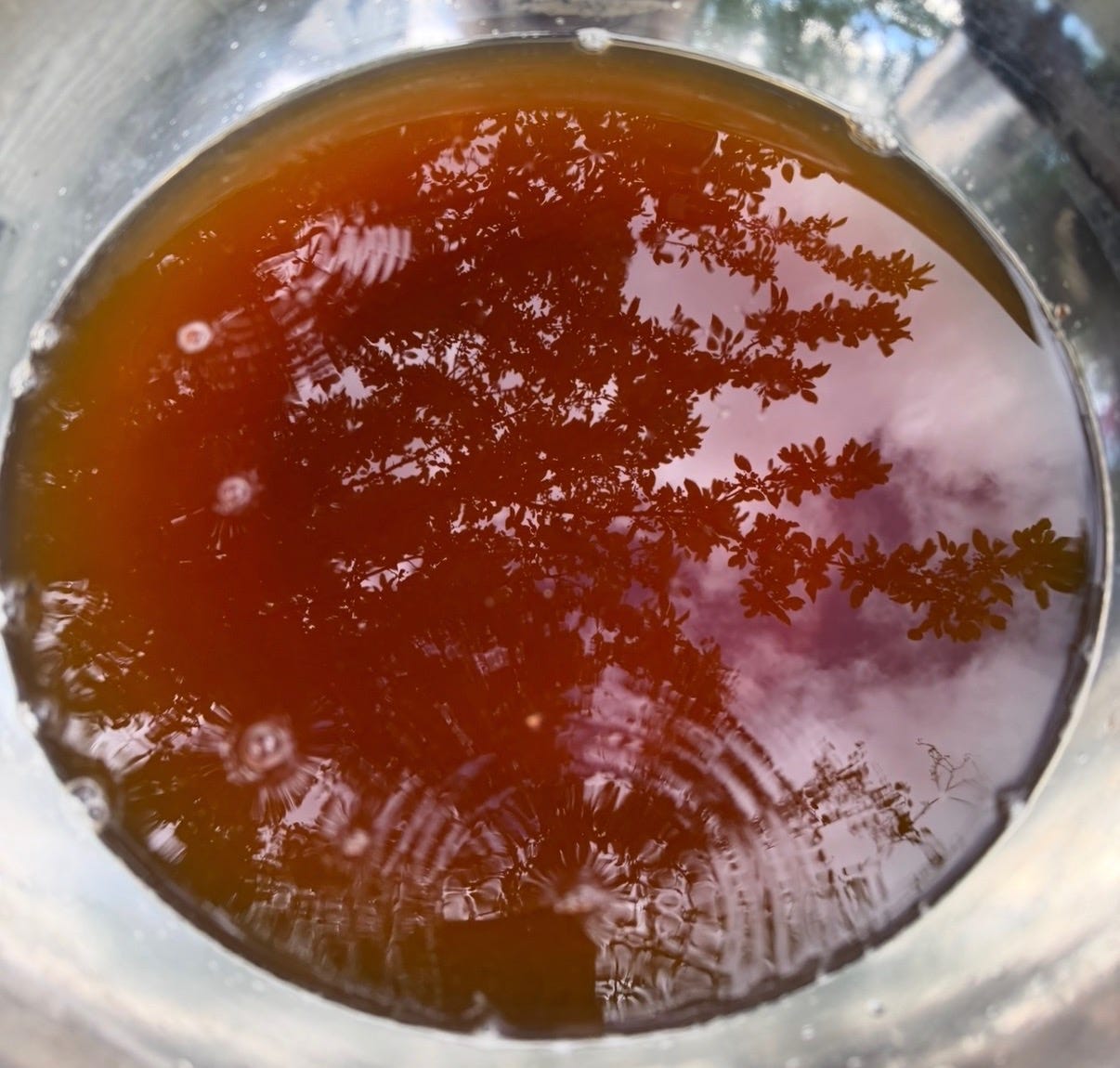
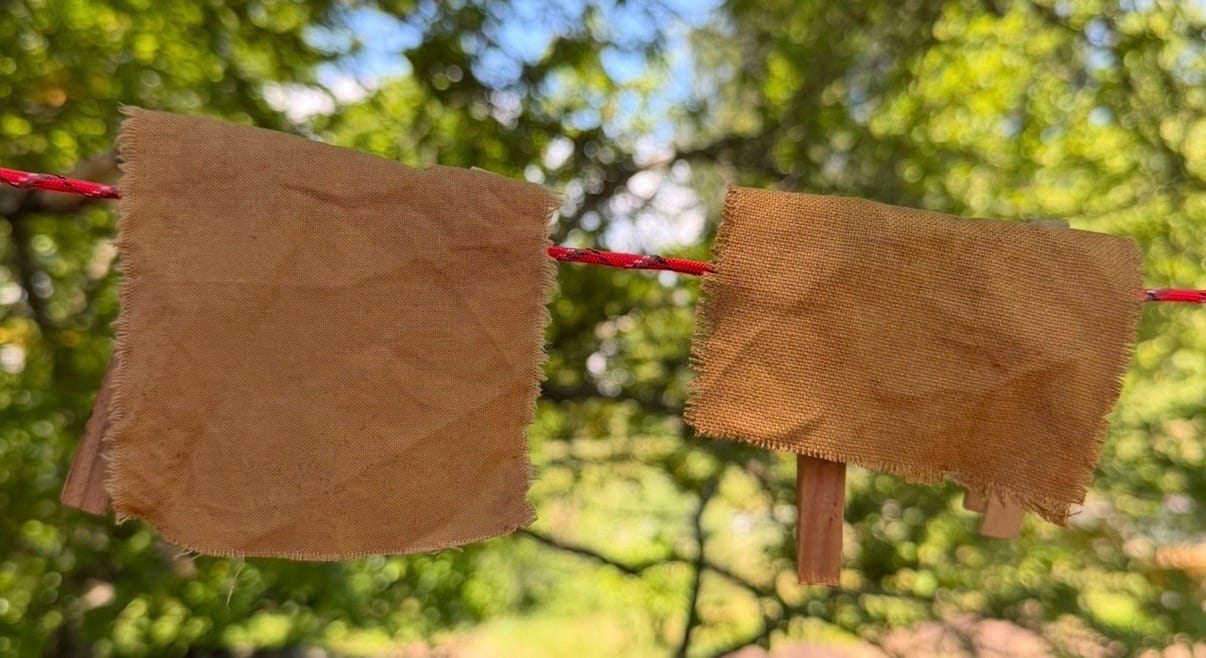
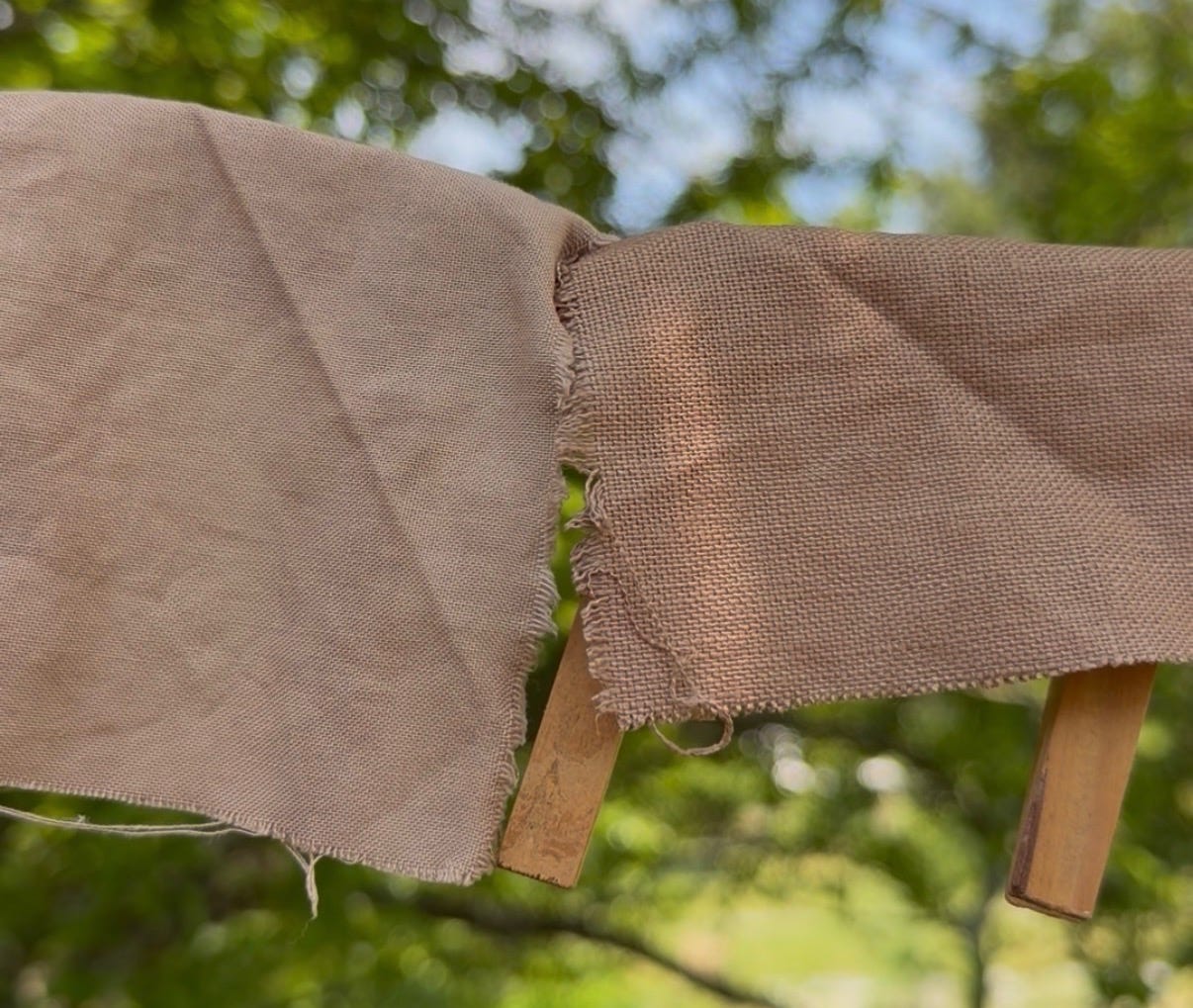
Maybe I am biased because warm oaky hues are some of my favorites to wear - but I love the way these dye pots turned out.
<3,
Geraldine
p.s. if you made it this far…support my newsletter by clicking that little heart button or responding to let me know what you think of Oak dye!
Comments
Nothing yet. Say the first thing.
Sign in to join the conversation.