
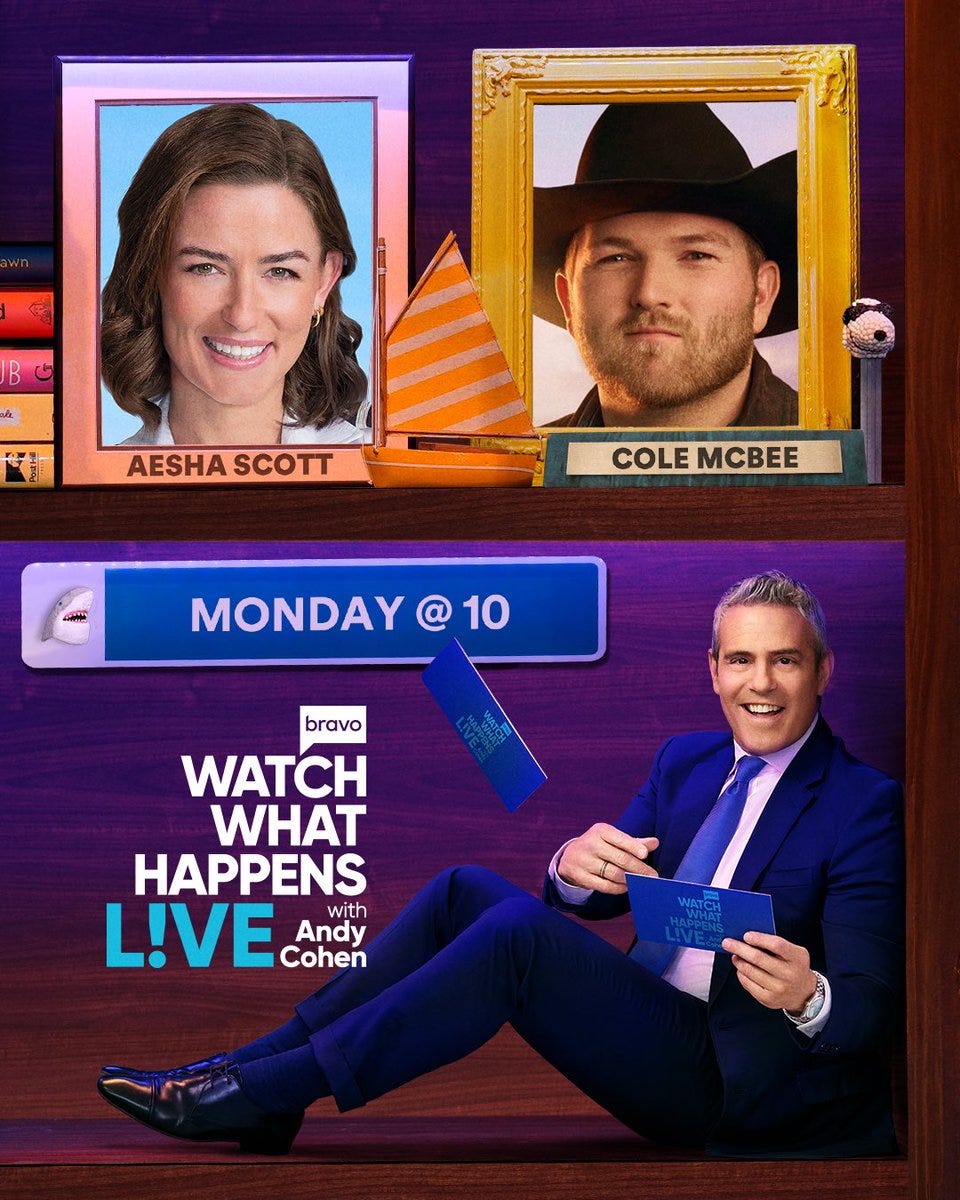
The Bravo Clubhouse has hosted some unusual pairings over its twenty-three seasons, but July 6 produced one of the more genuinely charming combinations in recent memory. Then again, I think Aesha Scott makes every social situation a great one, however, on one side of Andy Cohen’s couch sat Aesha, the indomitable Chief Stew of Below Deck Mediterranean Season 11, three months into her marriage to Scott Dobson and in the middle of one of the more chaotic charter seasons the franchise has ever documented. On the other side sat Cole McBee, the Missouri rancher and McBee Dynasty: Real American Cowboys star who had just asked Kacie Adkison to marry him on national television earlier this same evening. The conversation that followed, Season 23, Episode 109 of Watch What Happens Live with Andy Cohen, moved between yacht drama and ranch life, between engagement ring specifications and family crisis, and between laughter and genuine emotional weight with the particular ease that only Bravo’s most candid personalities can manage. I am also glad to hear that Steven Sr. will be getting out in less than half a year. To me, his sentencing and punishment seem to be moving by pretty quickly. Then again, I can only look at those things in quarterly increments, which makes my time with them move faster than it does in real life.
Even so, the latest scandal in the Bravo universe still feels like it’s moving painfully slowly. I still don’t know the exact day they kissed for the first time, and I mean the actual date, not just a general timeframe or vague window, which, to me, is their way of avoiding a direct answer. Most people know the exact day their relationship began. I also want to know the first time they slept together, unless it happened the same day or night as that first kiss. Regardless, that precise answer still lingers, while this incarceration somehow feels like it’s moving much faster, at least from my perspective. In that case, I don’t mind the pace.
I actually kind of want him out for several reasons. The biggest one is that he needs to reel Masha back in and keep her away from the family for now. Until that situation becomes genuinely resolved, nothing is going to improve. Either Masha doesn’t get it, or she’s just being a complete asshole. She knows what she did, for God’s sake. How far it all goes, as in whether she started the friendship to get closer to Steven, is probably a stretch, but it’s still a question that comes to mind for Galyna Saltkovska. Galyna will eventually get over it, but for now, and until the relationship between Masha and Steve Sr. plays out for real, it remains a major issue.
That said, Masha stirs up way too much drama, and then she doesn’t rise to the occasion by simply admitting what is really going on.More than anything, I’ve also asked repeatedly whether that area is a landing spot for Russians immigrating to America.
Anyway, I’m getting off track. It was half an hour of television that rewarded viewers across two very different franchises while demonstrating, once again, why the late-night format Andy Cohen has built remains essential viewing for anyone invested in the texture of real life on unscripted television.
I was actually anticipating this show more than the McBee’s actual show, so please take no offense. I can only handle so much engagement and marriage-related drama on television. And, when they announced they were back and who was on the show, i was like let’s jump right to that but anyway, do you guys even know Aesha Scott?
She is pretty perfect. She is married, settled, and still the most entertaining person in any room. For years, while I was on iHeart Radio, I would do her voice all the time. It became part of my shtick.
For viewers who have followed Aesha Scott’s journey across multiple Below Deck franchises, watching her arrive at this particular moment in her life carries a specific emotional satisfaction. Scott Dobson proposed in New Zealand in May 2024, in a move Aesha described as having completely surprised her despite their four years together. The ring he commissioned, designed by New Zealand jeweler Layla Kaisi, is one of the most intentionally meaningful pieces of jewelry in Bravo history, which sounds like hyperbole until you understand what Kaisi built into it. The central round-cut diamond represents Aesha herself. Seven asymmetrically arranged accent diamonds surround it, each representing a member of her family. One of those accent diamonds is a champagne color, placed specifically to honor her late brother. A hidden diamond set inside the band represents Scott’s birthstone, a detail visible only to them. The 18-carat yellow gold band represents Scott’s commitment to her family story. “The most perfect, meaningful ring ever,” Aesha said when she first shared it publicly. “Every time I look at my finger I think of all the thought that went into it.”
The wedding happened on March 7, 2026, in New Zealand, a date Aesha and Scott had already moved once, originally planned for 2025 before she acknowledged she’d had “a very busy year” and needed to give their American guests more time to arrange travel across the Pacific. Hannah Ferrier was there. Anastasia Surmava was there. The collision of “all my worlds,” as Aesha described it, Bravo friends, childhood friends, family, and the crew of people she has collected across years of living and working on yachts, gathered in one place. “The thought of walking down the aisle and looking up and seeing them in my home space just makes me want to cry tears of joy,” she said beforehand. Based on Hannah Ferrier’s Instagram account, that is exactly what happened. I am a big Hannah fan, by the way, and I am also a huge fan of Kate Chastain, whom I root for on House of Villains and The Traitors, maybe? I forget what else Kate has been in besides Below Deck. She was just in the most recent season of HOV but did not win.
Now, three months into the marriage, Andy asked the question the audience had been wanting to ask: what’s next? Aesha answered with the same honest, forward-looking energy that has defined her throughout her Bravo tenure. She and Scott absolutely plan to start a family. That is not a vague aspiration, it is a plan. What they have decided is that there are still a few travel adventures they want to take together first, experiences they want to share as a pair before the particular beautiful chaos of parenthood restructures how they move through the world. The answer landed well because it was not a television answer. It was a person who has been planning her life with intention for years, continuing to do exactly that.
The BDM Drama: Luke, Gen, Joy, and the Cabin Situation Nobody Needed. The evening would not have been a proper Watch What Happens Live appearance without Andy addressing the most uncomfortable recent development in Aesha’s current season, and the Luke-Gen-Joy triangle currently playing out on Below Deck Mediterranean Season 11 is delivering plenty of material in that category.
For viewers tracking the interior drama aboard the M/Y Akira One, the situation has developed with the particular efficiency that happens when a small group of people who work and live in very close quarters begin navigating romantic complications while also attempting to maintain professional standards. Gen Lillie arrived on the boat as the more experienced stew. Kayley Smith got the second stew promotion over her, a decision Aesha made based on drive and enthusiasm rather than time served, describing Kayley as having “so much determination and enthusiasm,” like a Scrappy-Doo with great work ethic. Gen disagreed with the call. Meanwhile, Luke Brumer has been doing what people in his general situation tend to do, navigating the romantic geography of the crew in ways that inevitably create complications.
The specific moment Andy raised, involving Luke using Nathan’s empty bedsheets during a nocturnal encounter, on a night when Nathan was otherwise occupied with the wife and kid, produced from Aesha the expression of someone who has spent years maintaining professional order on vessels where personal behavior regularly tests it, and who had not yet fully recovered from the specific absurdity of that particular incident. Her response was characteristically unfiltered. She found it gross. She said so. The audience appreciated the lack of diplomatic hedging.
This is one of the reasons Aesha remains the franchise’s most beloved Chief Stew across multiple seasons and multiple boats, she is constitutionally incapable of performing a reaction she does not actually have. When something is funny to her, she laughs in a way that fills a room. When something irritates her, she says it is irritating without softening the assessment into something more palatable. When a guest is Josef-level difficult, she tells that guest directly that they are being the problem. The clarity is not aggressive. It is simply honest, and in the specific ecosystem of reality television where every response is filtered through awareness of how it will be edited and received, honesty of that kind is genuinely rare.
The Hypothetical That Entertained Everyone: BDM Meets the Real Housewives of Salt Lake City. One of the evening’s most purely fun moments arrived when Andy introduced a hypothetical crossover that the audience immediately embraced, what would happen if the crew of Below Deck Mediterranean Season 11 ended up chartering with the cast of The Real Housewives of Salt Lake City? It was an emphatic no, which I completely understand. Those women did not stop talking at the top of their lungs for a second. It was nonstop, constant, loud conversation no matter what time of day it was, and nobody could break through either. The staff tried to get involved during a millisecond of silence, but they would just stand there waiting for any opening in the conversation.
Cole McBee: A Ring, a Proposal, and the Weight of Perfect Timing. Cole McBee arrived at the Clubhouse directly from the evening’s McBee Dynasty episode, which had just aired his long-anticipated proposal to Kacie Adkison. The emotional momentum of watching the proposal on television and then immediately seeing Cole in person, relaxed, candid, and visibly happy, created one of those Watch What Happens Live moments that the format was specifically designed to produce. If people are like me, I prefer it when the Bravo people are on rather than a well-known actor who is not affiliated with the network. More importantly, I usually only watch when the people I know are on. I might watch WWHL two times a week, so having him on gives me a true gauge of his personality, which is what I like about the show.
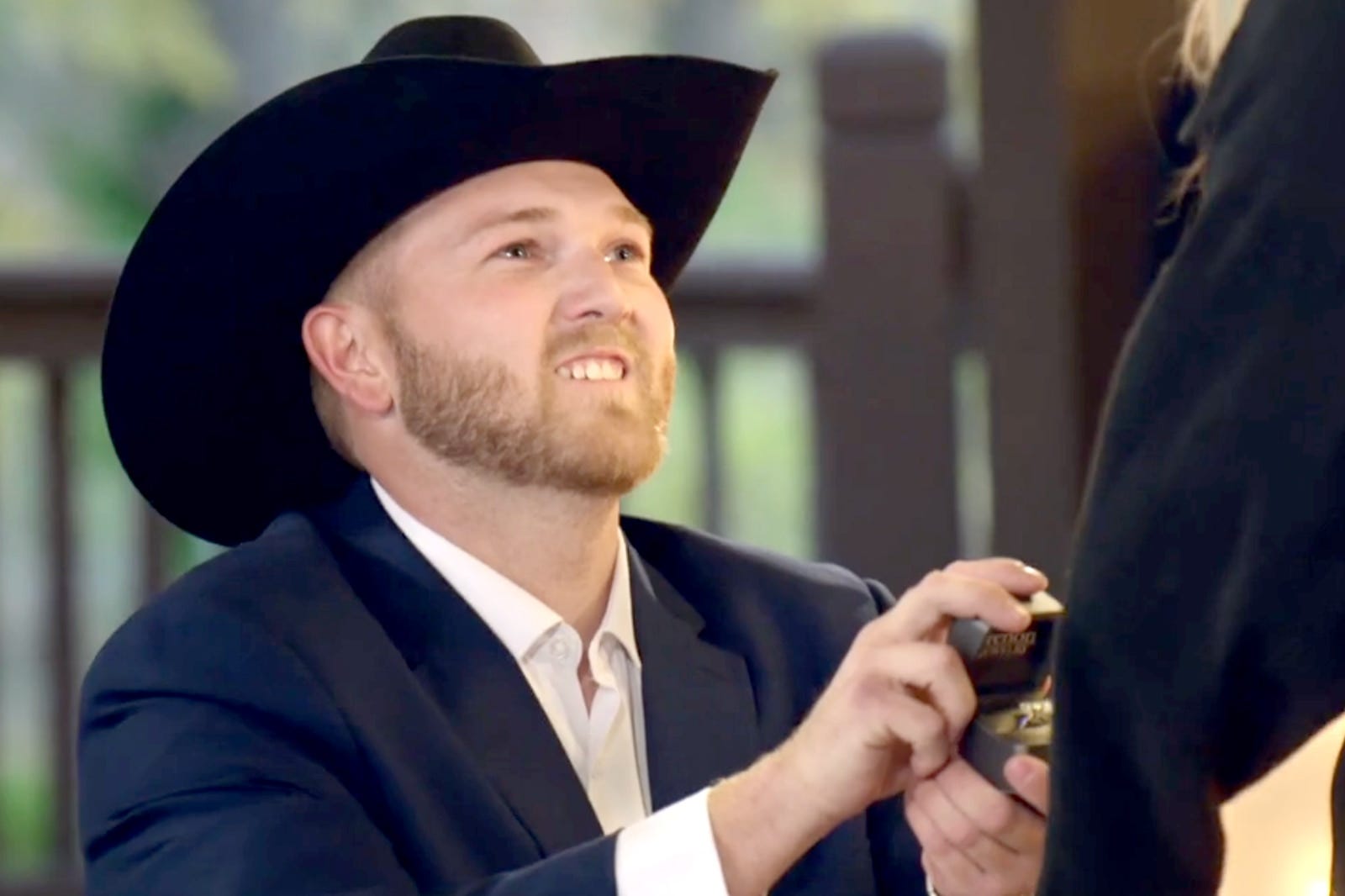
Andy got to the ring quickly, because the ring deserved to be discussed quickly. The engagement ring Cole gave Kacie is a 3.16-carat diamond valued at approximately $35,000, a number that, once Bravo published the first photo alongside that figure, immediately became a talking point across the franchise’s fan communities. It was also made into a game. Cole’s explanation of how he arrived at that purchase clarified something important about the kind of person he is and the kind of decision this was. He had been saving for months. Quietly, without announcing it, during a period when the McBee family’s cattle operation was bleeding money and the financial pressure on everyone in the family was measurable and ongoing. He had watched his family carry enormous stress. He had watched his father Steve Sr. navigate a federal legal situation that had restructured the entire family’s daily reality. And in the middle of all of that, he had decided that the moment for this proposal was right, not when the circumstances were perfect, because the circumstances were nowhere close to perfect, but because Kacie was ready and he was ready and the right moment does not always arrive on a convenient schedule. I was ready too.
The proposal’s specific emotional weight, which both the episode and the WWHL conversation made clear, comes significantly from Steve Sr.’s presence in the footage. The family patriarch had been filming with them during this period, weeks before he was required to report to federal authorities to begin his 24-month sentence for crop insurance fraud. The engagement was therefore documented in the company of the man who would not be able to attend any wedding the footage might eventually celebrate. The family gathered around that reality and chose to celebrate anyway, which is less a statement about television and more a statement about what this particular family does when faced with circumstances designed to minimize joy, they refuse to let those circumstances be the only thing defining the moment.
Cole’s reflections on his father in the Clubhouse conversation were measured and honest. Steve Sr. was there. The proposal happened in front of him. That fact will not go away regardless of what the next two years would look like, and the family knows it. Kacie’s subsequent public updates, confirming visits to the South Dakota facility, describing a toddler in a “big sister sweater” announcing a second pregnancy through a prison visitation window, are the evidence of a family maintaining its connections under conditions not designed for that kind of maintenance.
Why This Pairing Worked as Well as It Did. The specific pleasure of Watch What Happens Live at its best is the conversation that happens when two people from completely different worlds discover they are carrying similar emotional weights in very different packages. Aesha Scott has spent her adult life on yachts, moving between hemispheres, building a marriage to a man she met in high school and reconnected with as adults, navigating a career that requires constant management of other people’s expectations in confined spaces while maintaining her own equilibrium. Cole McBee has spent his adult life on a Missouri ranch, inheriting a business his father built, watching that business face pressure from multiple directions simultaneously, and preparing to become a husband and father while those pressures remain unresolved.
On the surface, no overlap. In practice: two people who understand, from different contexts, what it feels like to be responsible for more than yourself and to find ways to celebrate the good things anyway. Aesha described wanting to travel a little more before parenthood not because she is avoiding anything but because she is approaching the next chapter with the same intentionality she brought to her wedding planning. Cole described saving quietly for a ring not because he had the financial room to be comfortable about the purchase but because he decided the moment was right and executed on it. Both of them showed up to the Clubhouse visibly settled in themselves, not without challenges or complications, but genuinely at ease with the direction their lives are pointing.
Watch What Happens Live with Andy Cohen Season 23, Episode 109, is available to stream on Peacock, along with the complete After Show. Below Deck Mediterranean Season 11 airs Mondays at 8 p.m. ET on Bravo, with new episodes streaming the following day on Peacock. The McBee Dynasty: Real American Cowboys Season 3 airs Mondays at 9 p.m. ET on Bravo, also streaming on Sunset, Peacock and more.
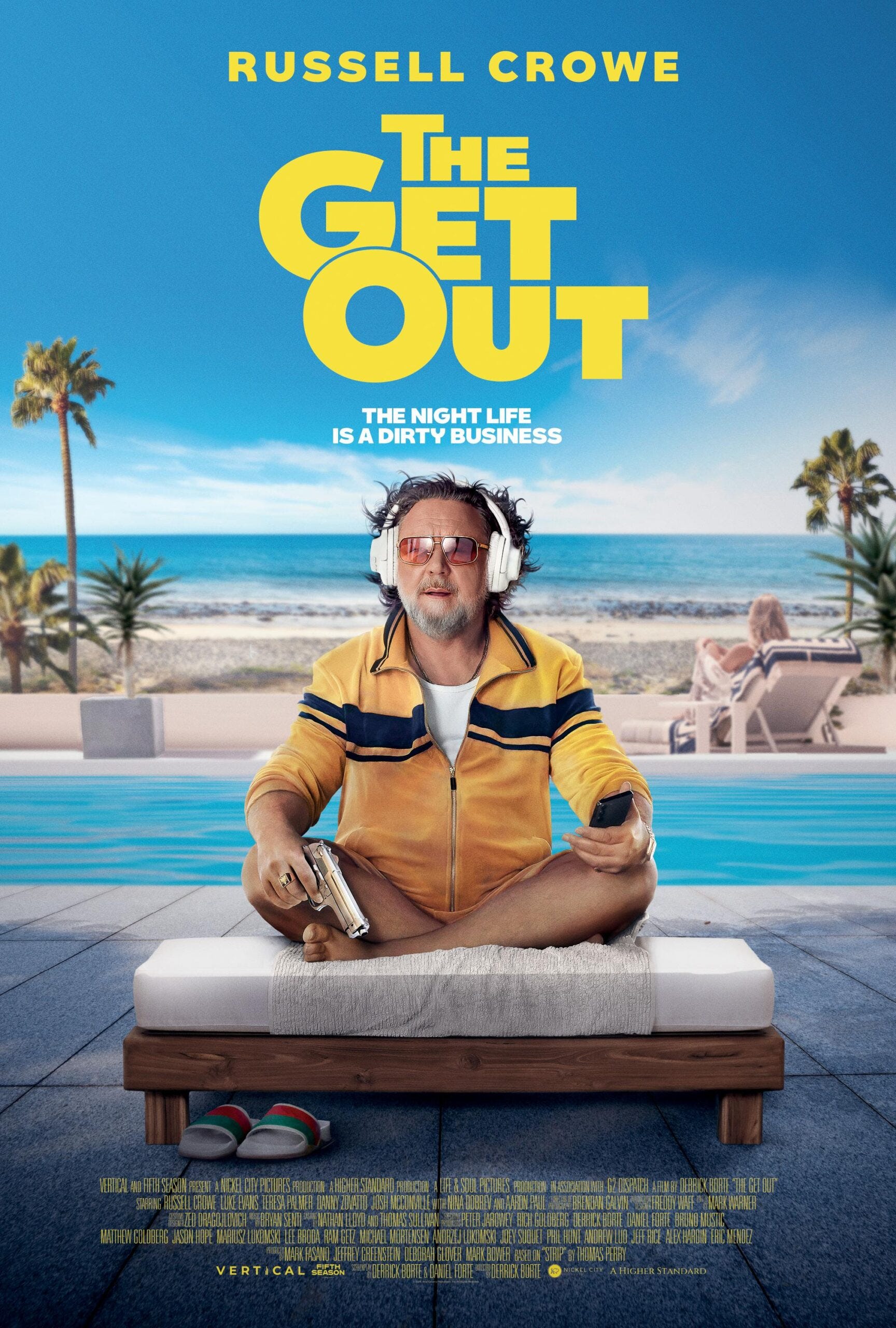
Russell Crowe has spent the back half of his career quietly building one of the most entertaining second acts in modern movie stardom, trading the weighty prestige dramas that once defined him for a string of gleefully unpredictable genre swings, and his latest, The Get Out, slots comfortably into that run. Released in select theaters on June 26, 2026 before moving to digital and video-on-demand platforms just four days later, the film reunites Crowe with director Derrick Borte for a neon-soaked Los Angeles crime story that trades the white-knuckle road rage of their previous collaboration for something looser, funnier, and considerably more chaotic. The result is a film built almost entirely around Crowe’s easy charisma, one that critics have described as a mixed bag on the whole but a showcase for an actor clearly enjoying himself in a genre he has quietly mastered over the past few years. Read More!
The McBee Dynasty: Real American Cowboys Season 3, Episode 4, titled “Love and War,” arrives as one of the most emotionally complete hours of unscripted television the series has delivered since its debut. Now streaming on Sunset, Peacock and airing Mondays at 9 p.m. ET on Bravo, the fourth episode of the season does what the best installments of this show do consistently and the worst ones only attempt, it refuses to simplify. It does not ask you to choose between the joy of a marriage proposal and the weight of a family business hemorrhaging money. It does not separate the happiness of new parenthood from the exhaustion and relational distance that new parenthood produces. It puts all of it in the same room, at the same time, and trusts the viewer to hold the complexity without a narrator telling them how to feel.
The result is an hour that earns its emotional weight through honesty rather than spectacle, and that positions Season 3 as the most substantive chapter yet in the story of a Missouri ranching family navigating more simultaneous pressure than most families face across an entire lifetime.
The Proposal: Cole, Kacie, and the Perfect Imperfect Moment. Cole McBee and Kacie Adkison have been one of the franchise’s most naturally compelling couples since their relationship first appeared on camera, partly because they are genuinely well-matched, and partly because the circumstances surrounding them have always given their relationship a weight that lighter storylines cannot produce. By the time Season 3 begins filming, they are already parents to their daughter Blair Collins McBee, born December 13, 2024, and living in the dream home they poured everything they had into building. Kacie is also pregnant with their second child, due in August, a development they were able to share with Steve Sr. during a prison visit, a moment that, when you sit with what it means for a man to receive the news of a second grandchild through the glass of a visitation room, carries more emotional complexity than the show needs to manufacture.
Cole’s proposal to Kacie arrives in Episode 4 as something the show has been building toward across the season, but the actual moment resists the kind of production inflation that reality television proposals typically cannot avoid. There is no helicopter. There is no string quartet or rented venue or countdown orchestrated by producers. What happens instead is two people who have already built a life together, a home, a daughter, another child on the way, making the formal decision to make it permanent, and doing so in a context where the stakes of the surrounding world are high enough that the simple act of pausing to celebrate something feels like its own kind of courage.
What the episode captures, and what elevates the proposal beyond a standard Bravo milestone moment, is that Steve McBee Sr. is present. The footage was filmed during the period when the family patriarch was still home, shortly before he was required to report to federal authorities to begin serving the 24-month sentence he received for crop insurance fraud. The engagement is therefore documented against the knowledge, shared by everyone in the room, that their family was about to be fundamentally restructured by his absence. Rather than allowing that shadow to diminish the celebration, the family did the opposite, they leaned into the occasion with the particular intensity of people who understand, from genuine experience, that certain moments deserve to be claimed before the circumstances around them change.
Kacie’s own public updates in the weeks since filming have added dimension to what the episode captures. She has confirmed on social media that the family visits Steve Sr. at his facility in South Dakota approximately twice a month and stays in contact through regular correspondence. She described their most recent visit, in which their daughter Blair wore a “big sister sweater” to announce the new pregnancy, with a warmth that makes clear the prison term has not severed the family’s connection to its patriarch, but has rather forced that connection into new and more deliberate forms. “He is doing as good as he can be during his time away,” she told followers. “So many people are checking on him.” That sentence, the reach of his presence even from inside a federal facility, is its own kind of testimony about what Steve McBee Sr. means to this family and to the audience that has been watching them.
Steven Jr. and the Weight of the Cattle Deal. If the proposal represents the episode’s emotional peak, the business storyline represents its most grounding force, a reminder that the McBee family’s challenges are not only emotional but structural, and that the structures are under significant strain.
Steven McBee Jr. has been carrying the operational weight of McBee Farm and Cattle Co. since his father’s legal situation moved from abstract threat to concrete reality at the season’s open. Every major loan on the family’s books contains what the industry calls a moral clause, a provision that allows lenders to reconsider or call outstanding notes if an owner is convicted of a felony. With Steve Sr.’s conviction now a matter of record, those clauses are no longer theoretical. They represent a live vulnerability that Steven Jr. has been managing through what he describes in producer interviews as “intense meetings” with banking relationships that the family has built over years and is now working very deliberately to preserve.
The cattle operation that sits at the center of Episode 4’s business tension was entered with significant expectations and has not performed as the family hoped. The deal has been losing money rather than generating the returns that justified the investment, and the compounding effect of those losses on a business already managing the fallout from its patriarch’s legal situation has created a pressure environment that Steven Jr. describes with unusual candor. His acknowledgment on camera that the ranch may have very little remaining by the time the cattle deal closes is the kind of disclosure that most family businesses, and most reality television programs, avoid making publicly. It is honest in a way that costs something, and the episode handles it without sensationalizing or softening the admission.
What makes the business storyline work dramatically is not the specific financial mechanics, though the show presents those with more rigor than most agricultural reality television attempts. What makes it work is the relationship between the business pressure and everything else happening simultaneously. The cattle deal’s struggles do not stay in the spreadsheet. They follow Steven Jr. into conversations with his brothers. They follow Jesse home to a marriage and a new daughter. They follow Galyna, the CFO and part-owner of McBee Farm and Cattle Co., into her own strategic calculations about what the company’s future looks like without its founding presence at the center.
Galyna’s observation from the season’s preview captures the specific operational anxiety better than anything else: “Steve can be, at times, very chaotic in his relationship. But when it comes to business, he’s like the rock that holds everything together. If Steve goes away, I am concerned about how everything is going to function.” That tension, between a man whose personal life generates chaos and whose professional presence generates stability, is one of the defining paradoxes of the entire series, and Season 3 is forcing the family to navigate both dimensions of that paradox simultaneously.
Jesse, Alli, and the Marriage That Needs More Than Good Intentions. The storyline involving Jesse McBee and his wife Alli may be the episode’s most quietly devastating, precisely because it refuses to frame itself as a crisis while describing something that is unmistakably one.
Jesse and Alli married in a ceremony featured in the Season 2 finale and welcomed their daughter Summer Leigh McBee in April 2025, roughly six months into their first year of marriage. Jesse has described Summer in producer interviews as “the greatest blessing in the world,” and the sincerity of that sentiment is visible every time the cameras capture him with her. He also said, in the same breath, that the first year of marriage “has had its ups and downs”, a characteristically understated way of describing a period that has included new parenthood, a father-in-law’s federal sentencing, a cattle operation losing money, and the operational demands of a ranch that now falls primarily on the brothers’ shoulders in their patriarch’s absence.
Alli’s conversation with Kacie in Episode 4 names something that the show has been letting viewers sense for several episodes without making explicit. She is frustrated. Not angry in the confrontational way that reality television prefers, but frustrated in the quieter and more difficult way, the way that accumulates through weeks of feeling like your spouse’s attention is perpetually elsewhere, through the exhaustion of first-time parenthood without consistent partnership, through the specific loneliness of being fully present in a marriage while the other person is being pulled in too many directions to match that presence.
The lack of intimacy she describes to Kacie is presented without dramatic scoring or confessional editorializing. It is simply a woman telling her friend the truth about her marriage during a period when the truth is not particularly easy, in a context where there are structural reasons for everything she is describing, the ranch, the finances, the legal situation, the new baby, and also reasons why none of those structural factors make the feeling any less real. The way it was edited left me with questions because I wasn't sure if Jesse wasn't into it or if she wasn't interested because of postpartum issues. I hope they are able to make it as a couple; however, I have my doubts. First, second, and third, he is damn good-looking. I wish I looked like him. He has to be getting pulled in many directions because I would imagine he receives a lot of attention from women.
What the episode understands, and what most reality television fails to capture about this specific kind of marital difficulty, is that nobody in this situation is doing anything wrong. Jesse is not a bad husband in the conventional dramatic sense. Alli is not making unreasonable demands. They are two people trying to navigate an extraordinary set of circumstances with the emotional resources of ordinary people, and those resources are being spread thinner than either of them anticipated when they got married. The episode sits in that honest, uncomfortable space without resolving it, because the circumstances that created the situation have not resolved either.
Jesse himself expressed something interesting about his daughter in the season’s lead-up interviews that casts his whole situation in a slightly different light. He said he does not necessarily want Summer to be involved in the ranch’s drama or in the messes the family has gotten themselves into. “I’d rather her find her own thing,” he said. That sentiment, a man who is completely invested in the family business also hoping his own child might be free of it, speaks to the double consciousness that this season is documenting across the entire cast, the love of a thing and the full awareness of what that thing costs.
What Season 3 Is Actually About. The McBee Dynasty: Real American Cowboys has always been, at its core, a show about the relationship between a family and the land they have built their identity around. That relationship is romantic and demanding and occasionally brutal in equal measure, and the series has never pretended otherwise. What Season 3 adds to that foundation is a new level of external pressure, legal, financial, structural, that tests whether the family’s commitment to each other is durable under conditions that no previous season has approximated.
The McBee Dynasty’s Most Complicated Family Feud Adds Another Layer of Betrayal, Loyalty, and Long-Standing Resentment. While the McBee family’s financial struggles and changing leadership structure have dominated much of the current season, another storyline continues creating some of the most intense emotional moments in The McBee Dynasty: Real American Cowboys: the complicated history involving Galyna Saltkovska, Masha Petrova, and Steve McBee Sr.
Before becoming rivals, Galyna and Masha shared what appeared to be a close friendship that lasted more than a decade. Galyna was deeply connected to the McBee household, initially joining the family through her work as a house cleaner before eventually becoming an important figure within Steve McBee Sr.’s business world. Over time, her role expanded significantly, and she became the Chief Financial Officer of Steve Sr.’s multi-million-dollar operation.
During that period, Galyna also welcomed Masha into her personal world. According to the storyline presented throughout the series, Galyna introduced Masha to the McBee family, included her in family gatherings, and helped bring her closer to the people who were most important in her life. The relationship between Galyna, Masha, and Steve Sr. became increasingly complicated when Masha and Steve Sr. developed a romantic connection while Galyna and Steve Sr. were still closely involved. The situation created a deep sense of betrayal for Galyna, who felt that someone she trusted had crossed a line that could not easily be repaired.
The fallout intensified when Galyna discovered that Masha and Steve Sr. had been spending time together privately, including trips and experiences that she believed had been intentionally hidden from her. What had once been a decade-long friendship quickly transformed into a complete breakdown of trust.
Masha and Alli McBee eventually come face-to-face with Galyna to address the unresolved tension that has been hanging over the family for years. Rather than discussing the situation from a distance, the conversation brings everyone directly into the same room, forcing the painful history between Galyna, Masha, and Steve McBee Sr. into the open.
During the confrontation, Galyna explains that the deepest wound was not simply the relationship between Masha and Steve Sr., but the betrayal of a friendship she believed was genuine. She emphasizes that Masha was someone she trusted, welcomed into her life, and considered a close friend, making the situation far more personal than a typical relationship dispute.
Masha, however, continues to push back against Galyna’s interpretation of events, denying that she intentionally betrayed her friend and attempting to explain the circumstances surrounding her relationship with Steve Sr. From Galyna’s perspective, though, those explanations do not change the core issue, someone she trusted crossed a boundary that caused lasting damage.
Standing beside Galyna during the conversation, Alli challenges Masha’s version of events and refuses to let the situation be minimized. Alli directly points out what she sees as the undeniable reality of the situation, telling Masha, “You just started sleeping with her boyfriend.” For Alli, regardless of how the relationship is explained or justified afterward, the central issue remains that Masha became involved with Steve Sr. while Galyna was still emotionally connected to him and believed their friendship was intact.
The exchange becomes one of the clearest examples of the divided loyalties within the McBee family, showing why the conflict has remained unresolved.
As the McBee family continues navigating business uncertainty, leadership changes, and personal challenges, the unresolved tension surrounding Steve Sr.’s relationships remains another reminder that the family’s biggest battles are not always fought in the boardroom or on the ranch.
The answer that Episode 4 provides is not a simple yes. The family is showing cracks. Marriages are under strain. Business relationships are being renegotiated in the absence of the person who held the most institutional authority. Brothers who have spent their lives working alongside each other are discovering that leadership roles that were always implicitly understood now need to be explicitly negotiated, and that negotiation carries real friction.
But the episode also captures something that the cracks do not disprove, the McBee family continues showing up for each other in the specific moments when it matters most. Cole’s proposal happens. The engagement gets celebrated. The family gathers in a context where gathering requires more than it usually does, and they gather anyway. Kacie brings Blair to a prison facility in South Dakota wearing a sweater that announces she is going to be a big sister. These are the evidence of a family that has decided, collectively and without apparent negotiation, that the categories of “family life” and “hard times” are not mutually exclusive, that one does not pause the other, and that the obligation to show up for the good moments is as real as the obligation to show up for the difficult ones.
Season 3, Episode 4 of The McBee Dynasty: Real American Cowboys is available now on Sunset and Peacock, with new episodes airing Mondays at 9 p.m. ET on Bravo.
The second episode of Life, Larry and the Pursuit of Unhappiness is called “Farewell,” and the title earns its weight in ways that were not visible when the episode was filmed, in October 2025, and that have only become apparent in the months since. What looks, across its first three sketches, like a confident and entertaining expansion of the format established in the premiere — more historical chaos, a spectacular pairing of Jerry Seinfeld and Larry David in period costume, and Kaley Cuoco matching David beat for comedic beat across a Depression-era soup kitchen scene — arrives at its final sketch and becomes something different. Something heavier. Something that the July 3, 2026 air date, falling three days before the nation’s 250th anniversary celebration, amplifies into the most talked-about stretch of television the series has yet produced.
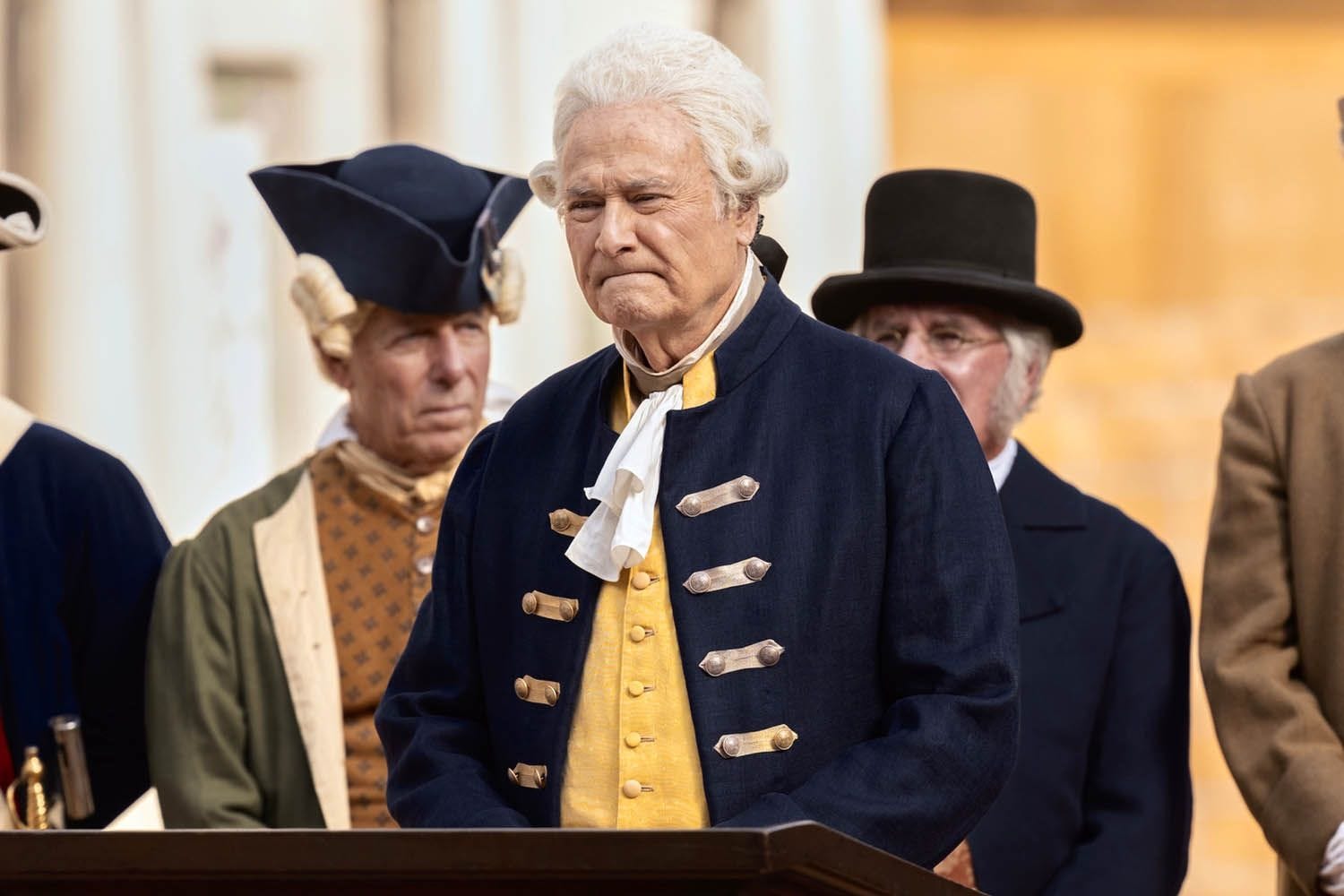
Rob Reiner died in December 2025. In “Farewell,” he plays George Washington.
The performance carries additional emotional weight because it was filmed in late 2025, only weeks before Reiner’s passing. His appearance transforms what would already have been an outstanding comedy sketch into something audiences are embracing as both a memorable performance and a fitting final chapter in the career of one of Hollywood’s most respected storytellers.
The concept behind Life, Larry and the Pursuit of Unhappiness is deceptively simple but remarkably effective, let alone long overdue. Drawing upon Larry David’s longtime fascination with American history, he studied history in college before beginning his entertainment career, the series inserts his unmistakable personality directly into iconic moments that helped shape the nation. Instead of presenting historical reenactments with solemn reverence, the series asks a delightfully ridiculous question, what if someone like Larry David refused to let history unfold without questioning every detail?
The answer is exactly what longtime fans would expect. Monumental speeches become interrupted by pedantic observations. Historic achievements are slowed by unnecessary debates over wording. He manages to effectively intertwine modern technologies and issues into scenes from the early 1800s. Legendary figures discover that even the most important moments in history cannot escape Larry’s relentless search for logical inconsistencies.
The Lewis and Clark Reunion Nobody Knew They Needed. The episode opens with Samuel L. Jackson’s narration setting the scene for what may be the season’s most purely joyful casting decision, Larry David as Meriwether Lewis, Jerry Seinfeld as William Clark, and the Lewis and Clark Expedition reframed as two middle-aged men desperately excited to get away from their wives for an extended fishing trip that might, incidentally, involve some exploring.
The historical premise is accurate at its foundation. Lewis and Clark did depart on their Corps of Discovery expedition in 1804, commissioned by President Thomas Jefferson to map the recently acquired Louisiana Purchase territory and find a practical route to the Pacific. It was one of the most ambitious and consequential overland journeys in American history, lasting more than two years, covering over eight thousand miles, and returning with maps, scientific observations, and diplomatic groundwork that shaped the nation’s westward expansion for the next century.
In the show’s version, Meriwether Lewis is primarily excited about getting out of the house.
The dynamic between David and Seinfeld requires essentially no setup for anyone who has spent time with either performer across their respective careers, because the two men operate on a shared comedic frequency built across nearly four decades of friendship and collaboration. Seinfeld’s Clark is enthusiastic, slightly competitive, and constitutionally incapable of letting David’s Lewis complain about anything without matching the complaint and raising it. David’s Lewis is more than willing to raise it. The specific energy of two very old friends who have been finishing each other’s sentences for decades and who find each other genuinely funny, which is not the same as finding each other’s material funny, but something warmer and more instinctive, is visible in every exchange and cannot be manufactured with performers who do not actually share that history.
Playing Lewis’s wife Mavis is Rita Wilson, who manages something genuinely difficult in the sketch. She is playing the obstacle, the person whose disappointment in her husband’s decision to leave for two-plus years is the comedic fuel for the scene, without becoming a prop or a target. The sketch is laughing with the wives, not at them, understanding that the women being left behind to manage everything while their husbands go “exploring” had their own entirely reasonable perspective on the arrangement, one that the historical record did not particularly preserve. Wilson gives Mavis an exasperated dignity that keeps the scene from tipping into the territory of women-as-nagging-backdrop, which is a real risk in any sketch built around this particular premise. The production design, period-accurate frontier costuming, the specific mise-en-scène of early nineteenth century domestic life rendered with the same careful craft the show brings to every setting, gives the whole thing a visual richness that elevates it beyond costume gag territory.
The Lewis and Clark sketch lands as the episode’s most replayable sequence, which is impressive given what follows it.
Samuel Tilden, the Electoral College, and Larry’s Most Extended Political Rant. The second sketch of the episode introduces Samuel Tilden, the Democratic candidate who won the popular vote in the 1876 presidential election and still lost the presidency, a historical event that the show uses as a launching pad for what David’s character describes as the most obvious and unjust system ever devised by men who could not agree on anything else.
Tilden lost to Rutherford B. Hayes in what is remembered as one of the most contested elections in American history, resolved by a special commission that awarded Hayes the electoral votes of three disputed states and the presidency, in what historians have long debated as the product of a backroom deal that effectively ended Reconstruction in exchange for Southern acceptance of Hayes’s victory. Tilden, who had won approximately 51 percent of the popular vote, retired from politics and never recovered politically from the outcome.
Larry David’s Tilden treats this situation as a personal grievance of the highest order, which, historically speaking, is not an unreasonable response to losing the presidency despite winning more votes, and delivers what the episode allows to become an extended, increasingly agitated monologue about the electoral college’s fundamental design, its original rationale, and the gap between that rationale and its contemporary application. Rich Fulcher appears as one of Tilden’s aides, reacting to the speech with the expression of someone who has been hearing a version of it since November and is not sure when it will stop. The sketch sits in the middle of the episode as a bridge between the lighter Lewis and Clark material and the heavier George Washington closer, and it serves that structural purpose while also being genuinely funny in its specificity, this is not a broad complaint about a system, but a character complaint about having been personally wronged by it.
Kaley Cuoco, Colton Dunn, and a 1930s Soup Kitchen Scene That Delivers. The third sketch places Larry David at the back of a Depression-era soup kitchen line, a long, slow-moving queue of desperate people in 1930s clothing, waiting for a bowl of soup that represents in many cases their primary meal of the day. If you know Larry David’s relationship with lines, his conviction that line etiquette is one of the foundational pillars of civil society, that cutting in front of someone is an act of moral aggression, and that the failure to enforce line integrity is one of the primary symptoms of civilizational decline, you understand immediately what this sketch is going to be about before anyone says a word.
The specifics of the premise allow the sketch to do something more interesting than a simple fish-out-of-water gag. The soup kitchen line of the 1930s is populated by people who are there out of genuine economic desperation, which creates a particular social texture: strangers forced into proximity by shared misfortune, the normal markers of status and hierarchy temporarily suspended, and the small indignities of waiting, of being cold, hungry, and dependent, laid bare in a way that ordinary middle-class waiting experiences do not expose. Into this setting, Larry David inserts himself as a man who cannot not notice the line’s structural imperfections.
What makes the sketch genuinely work is Kaley Cuoco’s performance as Gloria, a widow who arrived at the soup kitchen in circumstances the script establishes with the specificity that the improvised format requires as a foundation. Cuoco, who signed on to the project without knowing the details in advance, she has said publicly that she simply received a call saying it was for a Larry David show and said yes, proves herself a natural match for the material. She is also a good sport, which is probably why she got the so-called call. She has played some unique roles in some unique films and television series. Her comedy instincts are quick and grounded in character rather than performance, which is exactly what this format requires. The soup kitchen sketch becomes, improbably, something approaching a genuine two-hander between Cuoco and David, with Colton Dunn as the soup server providing the third point of the triangle and Cuoco giving the sketch its emotional anchor. I also feel like it was a subject on the Larry David Show or on Seinfled.
The debate she and Larry David eventually have about the correct protocol for a widow in a soup line, whether grief exempts someone from standard line conventions, whether extraordinary circumstances create extraordinary permissions, and whether any of those permissions would be acknowledged in a functional civilization, is the episode’s most purely Curb-compatible stretch of material. It is also, in the Depression context, quietly pointed: a conversation about social rules happening among people whose presence in that line reflects the catastrophic failure of every larger system that was supposed to prevent them from being there.
Rob Reiner, George Washington, and the Moment the Episode Becomes Something Else. The final sketch of “Farewell” is the one that everyone who has seen the episode is talking about, and the one that the air date, three days before the Fourth of July, as the nation prepared to celebrate its 250th anniversary, transforms from a comedy sketch into something that carries the specific gravity of things that cannot be undone.
Rob Reiner died on December 30, 2025. The episode was filmed in October 2025, meaning that when the cameras caught Reiner delivering his performance as George Washington in a tricorn hat, addressing a crowd assembled to hear his farewell announcement, he had approximately two months left to live, though no one present knew that. Executive producer Ethan Lewis said in an interview the week of the episode’s release that filming Reiner’s segment in October had been “incredibly special when it happened” and that the experience had “become even more poignant now.” He described keeping the appearance a secret as a testament to the respect everyone involved had for Reiner and his family.
The sketch itself operates on two registers simultaneously, which is what makes it the episode’s most accomplished piece of work even before the circumstances of Reiner’s death are factored in. On the surface, it is a debate about Washington’s decision not to seek a third term, the precedent-setting act of voluntary self-limitation that helped establish the American expectation that presidential power should be temporary, transferred peacefully, and subject to constitutional constraints rather than the personal ambitions of whoever currently holds the office. Washington’s farewell address, delivered in 1796, is one of the founding documents of American democratic norms, and the show’s decision to use it as the episode’s closing sketch is explicitly connected to the 250th anniversary framing.
What David’s character does with this historical moment is immediately recognizable to anyone familiar with his particular comedic relationship with rules. He is not celebrating the precedent. He is interrogating it, specifically by asking what it means that the whole system depends on the goodwill of whoever is in power. He asks Washington a series of “hypothetical” questions about what would happen if a future president decided not to respect the precedent. What if that president was vain, vindictive, and convinced that the rules applied only to other people? What if he took great personal offense at anyone who mocked him, and used the power of the office to retaliate? What if, instead of a peaceful transfer of power, he encouraged his supporters to believe that he had been wronged and that the outcome was illegitimate?
Washington, as played by Reiner, responds to each hypothetical with increasing alarm. He did not build this precedent to be treated as optional. He assumed that the people who came after him would understand what they were inheriting and act accordingly.
Jimmy Kimmel appears in period costume as a crowd member, the appearance happened right after the controversy surrounding Kimmel’s temporary suspension from ABC following comments he made about Charlie Kirk, a moment that the executive producers specifically referenced in explaining the timing. Kimmel’s line, delivered with the amused disbelief of a man who has spent considerable time recently processing exactly this territory, asks whether anyone is suggesting that a hypothetical president would bother challenging everyone who made fun of him, as if he were a “big baby.” The specific phrasing, documented in detail by multiple critics and interviewers, lands with the impact of something that does not need to be spelled out to land hard.
Jeff Schaffer, speaking to The Wrap, articulated the show’s approach to this kind of material with unusual directness, “Larry is the guy who said if they weren’t watching Seinfeld on Wednesday, don’t watch on Thursday. We make the show the way Larry wants to make the show, and there are no other considerations. It feels like we’re sliding backwards at a tremendous rate, but you have to address it. You want to be able to say, ‘Hey, we’ve had problems before, but we made it out,’ and you want to be able to point out the problems that we’re having right now so we can fix them.”
As the crowd in the sketch grows increasingly agitated, the hypothetical future David is describing beginning to feel less hypothetical and more like a weather report, Washington tries to restore order and discovers he cannot. Reiner’s Washington looks at the disorder assembled before him, the crowd fighting over the imagined future that Larry has conjured, and delivers the sketch’s final line: “We’re f—ked.”
The episode then cuts to an in memoriam card for Rob Reiner.
The shift from punchline to tribute happens in the space of a single edit, and the effect is not comedic. It is something the show never explicitly prepared its audience for and that the circumstances of the world outside the show, Reiner’s death, the political environment the sketch is engaging, the 250th anniversary of a democracy asking itself serious questions about its own durability, made impossible to contain within the frame of entertainment.
What “Farewell” Tells Us About the Season.
The first episode of Life, Larry and the Pursuit of Unhappiness was a proof of concept and a demonstration that the format worked, that the historical scaffolding could support the comedic machinery, and that Larry David’s persona translated across centuries with the effortlessness that his best work always achieves. “Farewell” is something more ambitious, an episode that uses history not just as a comedic backdrop but as a lens through which the present becomes visible.
The Lewis and Clark sketch is great comedy. The Tilden sketch is funny and pointed. The soup kitchen sketch gives Kaley Cuoco an unexpected showcase and produces the episode’s most purely enjoyable dialogue. And then the final sketch uses all the credibility the series has built in an episode and a half to say something that nobody in period costume actually says directly, but that everyone watching understands clearly.
Executive producer Ethan Lewis kept Rob Reiner’s appearance a secret until the episode aired. The show’s creative team had agreed to honor Reiner and his family by not disclosing the footage. When “Farewell” aired on July 3, 2026, viewers watching the episode for the first time experienced exactly what the title promises: a farewell, rendered in period costume, playing at the edge of comedy and grief, airing three days before the country celebrated 250 years of an experiment that Reiner’s Washington was warning the crowd not to take for granted.
Life, Larry and the Pursuit of Unhappiness airs Fridays at 9 p.m. ET on HBO, with episodes streaming on Max and on Sunset. New episodes air through August 7, 2026.

Seventeen years is a long time to wait for a filmmaker to come home to the genre that made him famous, but that is precisely the gap Sam Raimi closed with Send Help, the pitch-black survival comedy that has quickly become the standout theatrical event of 2026. Equal parts corporate satire, jungle survival thriller, and gleefully gruesome horror comedy, the film marks a genuine full-circle moment for the director who first terrified audiences with a cabin in the woods decades ago and now strands two office rivals on a nightmare island instead. The result is not a tidy return to any single lane. It is something stranger, funnier, and considerably bloodier than a simple nostalgia play, and it has given Raimi one of the most talked-about and financially successful films of his career. Read More!
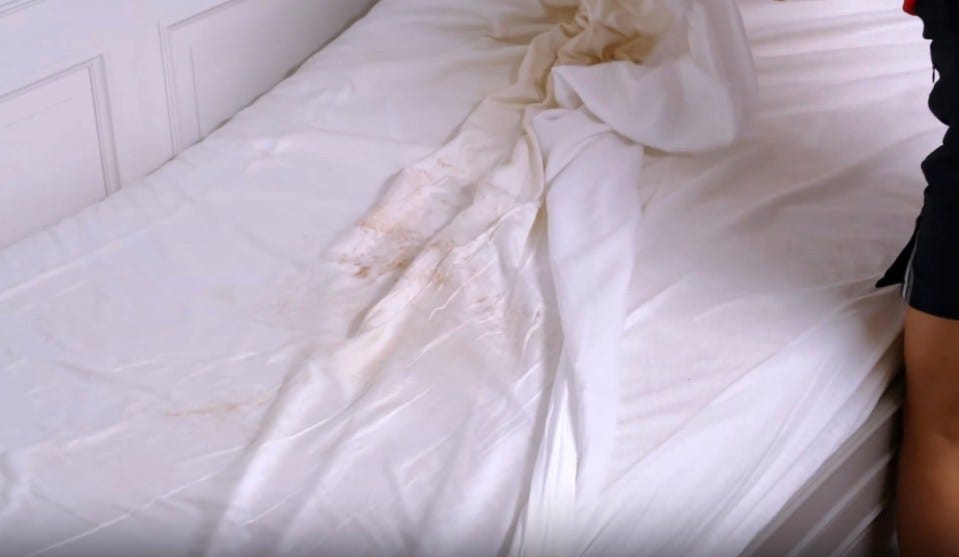
Even posting that picture above is nausiating but anyway, Episode 5, titled “The Deckhand Cometh,” delivers an entertaining combination of spectacular Croatian scenery, an unforgettable themed charter inspired by one of television’s biggest fantasy franchises, evolving crew dynamics, shifting romantic relationships, and a late-night cabin incident that quickly became one of the episode’s most talked-about moments.
Now streaming on Sunset and Peacock, the newest chapter takes viewers to the breathtaking coastal city of Dubrovnik, Croatia, where stunning historic architecture provides an extraordinary backdrop for another demanding charter season aboard one of the Mediterranean’s most luxurious yachts. While guests enjoy world-class service and unforgettable excursions, the crew finds themselves navigating increasingly complicated relationships below deck, proving once again that life aboard a superyacht can become just as turbulent after the guests retire for the evening.
From medieval streets that have become famous around the world to personal conflicts that threaten crew chemistry, the episode balances humor, hospitality, and genuine tension in a way that has become a hallmark of the Below Deck franchise.
One of the episode’s highlights arrives with a charter built around the global phenomenon of Game of Thrones. With Dubrovnik famously serving as one of the series’ most recognizable filming locations, the production embraces the city’s unique connection to television history, creating an experience that allows guests to immerse themselves in the fantasy world while exploring one of Europe’s most beautiful destinations.
Stew Kat, an enthusiastic fan of the series, takes particular pride in leading the guests through several iconic filming locations, sharing in their excitement as they visit places that millions of viewers immediately recognize. The excursion demonstrates one of the strengths of the Below Deck format, showing how the crew continually customizes experiences that go far beyond traditional luxury service.
One of the lighter moments comes when deckhand Luke embraces the theme by wearing a medieval-style cloak while walking down Dubrovnik’s famous stone steps. Guests enthusiastically recreate one of the franchise’s most memorable scenes by chanting “Shame! Shame!” as he makes his way through the historic setting. The sequence offers welcome comic relief before the episode gradually shifts toward more complicated crew relationships later in the evening.
As the charter concludes, attention returns to the crew quarters, where romantic entanglements continue reshaping the social dynamics aboard the yacht. Luke’s evolving relationships with both Gen and Joy remain central to the episode, with weeks of uncertainty finally appearing to move toward a decision.
After considerable back-and-forth, Luke appears to focus his attention on Gen, leaving Joy to move in a different direction. What initially seems like a resolution, however, quickly becomes another source of emotional uncertainty as expectations between the two do not necessarily align. Like many workplace romances, especially within the close confines of a superyacht, personal relationships become increasingly complicated when individuals interpret the same situation differently.
The storyline reflects one of the recurring realities of yacht life portrayed throughout the Below Deck franchise. Crew members work extraordinarily long hours in confined spaces, often developing close relationships under uniquely intense circumstances. Those connections can evolve quickly, but so can misunderstandings, making emotional balance just as important as professional performance. The episode’s biggest controversy unfolds after a crew night out, when Luke and Gen return to the yacht. In an effort to avoid using his own bunk, arrangements are made involving Nathan’s empty bed while Nathan is away. What follows becomes the most widely discussed sequence of the night.
The episode depicts the bed being left in an unsanitary condition, with production blurring part of the bedding before Nathan later returns to use it, apparently unaware of what had happened beforehand. He not only used the bed and sheets, but he also woke up without a shirt on, which means he had taken it off overnight and slept in the bed with his bare body exposed.
The moment immediately sparked strong reactions from viewers on WWHL because the issue extended beyond an awkward romantic encounter and raised questions about personal respect, shared living spaces, and basic consideration for fellow crew members. What resonated with many viewers was not simply that two crew members became intimate, but that the aftermath appeared to leave another crewmate unknowingly dealing with the consequences. Living aboard a yacht means every cabin is a shared environment, and maintaining cleanliness and respect for roommates becomes essential to both morale and professionalism.
Throughout the Below Deck franchise, audiences have watched countless romances develop among crew members, but those relationships have generally remained secondary to the responsibilities of working aboard a luxury vessel. This latest incident reignited conversations among fans about the importance of maintaining boundaries in shared accommodations and ensuring that personal decisions do not create unnecessary problems for colleagues.
Beyond the cabin controversy, the rest of the crew continues adapting to evolving responsibilities. Joe settles further into his position as Lead Deckhand, taking on additional leadership responsibilities while continuing to build communication with Nathan and the rest of the exterior team. Like every yachting season, learning to work efficiently under pressure remains an ongoing process, and the deck department continues refining its coordination with each charter.
Inside the yacht, Chief Stew Aesha Scott once again demonstrates why she remains one of the franchise’s most respected leaders. Balancing demanding guests, themed events, and the inevitable interpersonal drama among crew members requires constant attention, yet Aesha continues maintaining the high service standards expected aboard a luxury charter yacht.
The Luke and Gen situation aboard the M/Y Akira One reached a new level of messy, and the fan reaction has been exactly as unforgiving as the behavior deserved. The central miscommunication happened in the galley pantry during a late-night conversation that Luke clearly intended as a breakup and Gen received as something close to the opposite. When Luke told her there was “no love triangle anymore” and that he needed to take a step back, he believed he was ending things. Gen heard the first part, no more triangle, and interpreted it as him choosing her over Joy Lefaucheur, the ship’s chef who had been the other point of that triangle. She walked away feeling secure and genuinely hopeful about where things were heading. Luke walked away frustrated that he had somehow managed to attempt a breakup and come out of it with a girlfriend. The gap between what he said and what he meant was entirely of his own making, and the show captured both sides of that gap with merciless clarity.
What made the episode particularly difficult to watch was that the living quarters situation had already generated its own separate disaster before the miscommunication even landed. While Bosun Nathan Gallagher was off the yacht, Gen used his bed. Luke joined her there the following morning. When the reality of what they had done in a crew member’s personal space began to settle in, the pair’s response was not to come clean but to attempt to cover it up, which led to the now-infamous image of Luke anxiously hovering around the laundry room, trying to get Nathan’s sheets washed before anyone connected the timeline. The scramble to hide the evidence while simultaneously failing to have a direct conversation with Gen about where things actually stood between them produced what fans across Reddit and social media collectively described as “the ultimate ick”, a label that, in this case, is doing real, precise work rather than hyperbolic social media shorthand.
The irony that critics and viewers were quickest to point out is that Luke, while ducking every opportunity to be honest with Gen, simultaneously described her emotional reactions to the situation as “psycho stuff.” A man who cannot tell a woman he is not interested in her, uses a crew member’s bed without permission, tries to hide the evidence, and then characterizes the resulting confusion as her problem is not a man who has earned the right to critique anyone else’s behavior in this situation. The audience noticed. Nathan’s sheets, once they became part of the episode’s storyline, became the symbol for everything that is currently wrong with Luke’s approach to every aspect of this situation, the refusal to be direct, the privacy invaded, and the mess left behind for someone else to deal with.
As Season 11 continues, viewers can expect the fallout from this latest crew controversy to influence relationships aboard the yacht while new charters introduce fresh opportunities and challenges. Whether navigating demanding guests, evolving romances, or unexpected conflicts below deck, the crew’s ability to move forward together will remain central to the season’s story.
Below Deck Mediterranean Season 11, Episode 5, “The Deckhand Cometh,” is now streaming on Sunset and Peacock, giving fans the opportunity to experience the unforgettable Dubrovnik charter, the spectacular Game of Thrones-inspired adventure, and the crew drama that has everyone talking.

There are disaster documentaries that explain what happened, and then there are programs that place viewers directly inside the event as it unfolds. Discovery Channel’s In the Eye of the Storm has built its reputation on the latter approach, relying on extraordinary real-world footage captured by ordinary people who suddenly find themselves facing extraordinary circumstances. The latest episode of the acclaimed survival series, Season 4, Episode 2, titled “That Car’s Flying!”, delivers one of the most gripping installments in the show’s history, reconstructing the devastating impact of Hurricane Idalia through firsthand video that reveals the storm’s astonishing power from ground level.
Now streaming on Sunset, Discovery+, and Max, the episode moves beyond traditional weather coverage to provide a deeply immersive look at one of the most destructive storms to strike the southeastern United States. Rather than relying primarily on studio analysis or post-event interviews, the production places real eyewitness accounts and authentic cellphone, security camera, dashboard camera, and storm-chasing footage at the center of the story. The result is an unforgettable viewing experience that illustrates just how rapidly nature can transform familiar communities into disaster zones.
What makes In the Eye of the Storm so compelling is its commitment to documenting events exactly as those living through them experienced them. Every camera angle represents a real person making split-second decisions while confronting conditions that quickly exceeded anything they expected. Every recording becomes more than dramatic footage—it becomes a historical record of survival, resilience, and the extraordinary force of one of nature’s most powerful systems.
The episode begins by transporting viewers to Florida’s Gulf Coast as Hurricane Idalia approaches landfall. Meteorologists had tracked the storm’s strengthening for days, but watching forecasts become reality through firsthand video creates an entirely different level of emotional impact. Instead of viewing satellite imagery from hundreds of miles away, audiences stand virtually shoulder to shoulder with residents watching the horizon disappear beneath dark clouds and increasingly violent winds.
As the hurricane reaches the coastline as a powerful Category 3 storm, conditions deteriorate with astonishing speed. Streets that only moments earlier appeared manageable begin disappearing beneath rapidly rising seawater. Palm trees bend under relentless hurricane-force winds while buildings endure punishment from flying debris arriving from every direction.
The production carefully demonstrates that hurricanes are rarely defined by wind alone. While sustained winds exceeding 125 miles per hour create tremendous structural damage, the accompanying storm surge often becomes the most devastating element. Throughout the episode, viewers repeatedly witness how rising water transforms neighborhoods into unrecognizable landscapes within minutes.
Among the episode’s most unforgettable sequences is its coverage from Cedar Key, where several residents chose to remain despite evacuation warnings. Their decision placed them directly in the path of one of the most dangerous storm surges documented during Hurricane Idalia’s landfall.
Using firsthand cellphone footage recorded under impossible conditions, viewers watch as the Gulf of Mexico steadily consumes roads, yards, and entire neighborhoods. Water advances relentlessly, swallowing familiar landmarks that disappear beneath waves carrying debris, broken docks, vehicles, and fragments of destroyed buildings.
The sheer force of the approximately twelve-foot storm surge becomes almost impossible to comprehend until witnessed through the cameras of those standing nearby. Entire homes begin shifting from their foundations before being carried away by moving water that resembles a powerful river more than a coastal tide. Buildings constructed to withstand ordinary weather simply cannot survive the overwhelming combination of floodwaters, wave action, and hurricane-force winds arriving simultaneously.
The emotional impact of these moments extends well beyond the destruction itself. Every structure seen collapsing represents years of memories, family history, and personal investment disappearing in real time. The episode succeeds because it never treats damaged homes as statistics. Instead, viewers understand they are witnessing communities experiencing profound loss while desperately hoping to reach safety.
Perhaps the most visually startling sequence occurs when one coastal residence catches fire while floodwaters continue rising around it. The scene initially appears almost impossible to believe. Flames consume portions of the structure even as surrounding water completely isolates the property.
The extraordinary circumstances create one of the episode’s most sobering realities. Emergency responders, despite their training and preparedness, become physically unable to reach those needing assistance because roads have disappeared beneath deep floodwaters. Fire apparatus cannot enter submerged neighborhoods. Rescue vehicles remain blocked. Even the most experienced first responders must wait until conditions improve enough to operate safely.
The contrast between fire and flood unfolding simultaneously illustrates the unpredictable complexity of major natural disasters. Hurricanes rarely create just one emergency at a time. Instead, they generate cascading crises that challenge infrastructure, communications, emergency management systems, and rescue operations all at once.
While the first half of the episode focuses on Florida’s direct impact zone, the narrative later expands northward to reveal how Hurricane Idalia’s influence extended hundreds of miles beyond its initial landfall.
One of the episode’s greatest strengths lies in demonstrating that tropical cyclones continue posing significant threats long after crossing the coastline. Even as the storm weakened over land, its enormous circulation continued generating severe weather across multiple states.
Attention shifts toward Charleston, South Carolina, where commuters encountered conditions no one anticipated during an otherwise routine drive. As Hurricane Idalia’s outer rain bands interacted with atmospheric instability, powerful tornadoes developed rapidly across portions of the region.
Unlike hurricanes, tornadoes often form with very little warning, leaving motorists and residents only moments to react. The episode reconstructs these terrifying minutes using dashboard camera footage that places viewers directly inside moving vehicles as skies suddenly darken and rotating clouds descend toward heavily traveled highways.
The footage creates extraordinary tension because those recording the events initially struggle to understand exactly what they are witnessing. Within seconds, uncertainty becomes undeniable danger.
The episode earns its unforgettable title during one of the most astonishing moments captured on camera.
As a tornado crosses a major roadway near Charleston during peak traffic, violent winds suddenly lift an occupied sedan completely off the pavement. Dashboard cameras from nearby vehicles record the incredible sequence as the automobile is thrown into the air before crashing across multiple lanes of traffic.
The event unfolds in mere seconds, leaving both witnesses and viewers stunned by the sheer power contained within the tornado’s circulation.
Seeing an everyday passenger vehicle become airborne transforms abstract discussions about tornado intensity into something immediately understandable. Objects weighing thousands of pounds become projectiles when exposed to extreme rotational wind speeds, underscoring why meteorologists consistently urge the public never to underestimate severe weather warnings.
The remarkable footage has already become one of the defining visual moments of this season, serving as a dramatic reminder that hurricanes frequently produce hazards extending far beyond heavy rain and coastal flooding. Their outer bands can generate tornado outbreaks hundreds of miles from where the storm first reaches land, exposing entirely different communities to rapidly changing conditions.
Beyond the remarkable visuals, In the Eye of the Storm continues distinguishing itself through its storytelling philosophy. Rather than relying on reenactments or dramatizations, the series allows authentic eyewitness recordings to carry the narrative.
This approach creates an immediacy that scripted disaster programming rarely achieves. Every trembling camera movement reflects genuine fear. Every hurried conversation captures people attempting to process events they never imagined experiencing firsthand. Every decision made on screen carries real consequences because the situations unfolding are entirely unscripted.
Modern technology has fundamentally changed disaster documentation. Nearly everyone now carries a high-quality camera capable of recording history as it happens. In the Eye of the Storm successfully assembles these individual perspectives into comprehensive accounts that reveal both the scale of major weather events and the intensely personal experiences occurring within them.
The episode also highlights the remarkable courage displayed by storm chasers, emergency responders, journalists, and everyday citizens who documented these events while simultaneously working to protect themselves and those around them. Their recordings not only preserve history but also contribute to future public awareness regarding the dangers associated with hurricanes, storm surge, flash flooding, and tornadoes.
For weather enthusiasts, emergency management professionals, and viewers fascinated by the science behind extreme natural events, the episode provides a compelling examination of Hurricane Idalia’s evolving impacts across multiple states. For general audiences, however, its greatest strength lies in its human perspective. Every sequence emphasizes resilience, quick thinking, community support, and the unpredictable nature of severe weather.
As climate patterns continue producing increasingly complex and powerful weather systems, documentaries like In the Eye of the Storm serve an important role by illustrating why preparedness, evacuation planning, and respect for official weather guidance remain essential. While no documentary can fully recreate the experience of living through a major hurricane, this episode comes remarkably close by allowing viewers to witness events exactly as they unfolded through the eyes of those who were there.
Season 4 continues proving why In the Eye of the Storm remains one of Discovery’s most compelling documentary series. By combining extraordinary eyewitness footage with thoughtful storytelling, the program transforms historic weather events into deeply personal narratives that remain long after the credits roll.
“That Car’s Flying!” stands among the series’ most unforgettable episodes, delivering an unfiltered look at Hurricane Idalia’s destructive power while honoring the experiences of the individuals who documented history from the middle of one of nature’s most formidable storms. From Cedar Key’s devastating storm surge to the astonishing tornado footage captured in South Carolina, the episode offers an extraordinary reminder of both the immense power of extreme weather and the resilience of the people who endure it.
The complete episode is now available to stream on Sunset, Discovery+, and Max, where viewers can experience every gripping moment, every remarkable eyewitness account, and every unforgettable piece of footage that makes this one of the most powerful disaster documentaries currently available to stream.

There is a version of America’s 250th birthday that involves soaring orchestral music, Ken Burns-style dissolves between sepia photographs, and a narrator who sounds like he is personally apologizing for the passage of time. And then there is the version where Larry David crashes the party, refuses to sit where he’s told, complains that nobody used a coaster on the wooden table of liberty, and accidentally derails the entire democratic experiment.
Guess which version HBO chose.
Life, Larry and the Pursuit of Unhappiness: An Almost History of America arrived on June 26, 2026 — today, on the very cusp of the nation’s Semiquincentennial — and it is exactly as audacious, as bizarre, and as only-on-HBO as that premise suggests. Seven episodes. Four historical sketches per half-hour. One relentlessly cantankerous protagonist. And an official logline that reads like a warning label: “Those who don’t know history are doomed to watch Larry David repeat it.”
Welcome to the most unexpected birthday present America has ever received.
The Origin Story: When the Obamas Called Larry David….Read More!
Comments
Nothing yet. Say the first thing.
Sign in to join the conversation.