
A question came in via our website http://sundayassembly.org last month. A reader in Maryland asked:
Since many Unitarian congregations are non-theistic - I belong to one - how is Sunday Assembly different? We serve the same functions and perform in a similar manner - if you Google non-theistic churches, Unitarians come up.
That’s a great question, thanks for asking. It turns out that, while there are certainly some similarities between Sunday Assembly and the many Unitarian Universalist churches out there, there are also some key differences. (Full disclosure - AI helped me with this, but I have edited it.)
Both Sunday Assembly and Unitarian Universalist (UU) churches occupy a shared space: they offer community, ritual, and meaning without requiring shared doctrine. They’re not identical—UU churches are explicitly a religious tradition, while Sunday Assembly is intentionally secular—but the overlap is real and substantial.
Both communities welcome people with a wide range of beliefs, including atheists, agnostics, humanists, and the spiritually curious.
Sunday Assembly explicitly celebrates atheists’ identities and values like rational thinking and materialism.
UU congregations include atheists, agnostics, Buddhists, Christians, pagans, humanists, and more, unified not by creed but by shared values.
Both groups use familiar church structures—Sunday meetings, music, inspirational talks, and communal rituals—while avoiding dogma.
Sunday Assembly models itself on church services but without God.
UU worship varies widely but often includes readings, music, meditation, and reflection without enforcing doctrine.
Both emphasize building supportive, intergenerational communities.
Sunday Assembly aims to “live better, help often, wonder more,” focusing on connection and mutual support.
UU congregations aim to build a “beloved community” and foster inclusive, caring relationships.
Both encourage participants to live ethically and contribute positively to the world.
Sunday Assembly promotes values like kindness, service, and personal growth.
UU churches are deeply committed to social justice, equality, and compassion as core principles.
Both traditions value curiosity, questioning, and learning.
Sunday Assembly celebrates rational thinking and secular philosophies.
UUism has a long history of intellectual freedom and draws from many religious and philosophical sources.
Sunday Assembly is a secular community modeled on church structure, while Unitarian Universalism is a liberal religious tradition with deep historical roots. They can feel similar on the surface, but they diverge in purpose, identity, governance, and culture.
Sunday Assembly: Explicitly nonreligious. No theology, no supernatural claims, no spiritual framework. Its motto—“Live Better, Help Often, Wonder More”—is intentionally secular.
Unitarian Universalism (UU): A religious tradition, even though it’s non‑creedal. It embraces spirituality, ritual, and theological exploration, and it sees itself as part of the broader landscape of world religions.
Why this matters: UU congregations often include spiritual language, rituals, and symbols. Sunday Assembly avoids all of that by design.
Sunday Assembly: Centers on atheism, agnosticism, and humanism. It’s a home for people who want community without religion.
UU: Welcomes atheists and humanists, but also theists, pagans, Buddhists, Christians, mystics, and more. It’s pluralistic rather than secular.
In practice: A UU service might include a meditation, a reading from Rumi, and a sermon referencing spirituality. Sunday Assembly might be more like a talk about the wonders of the universe, songs from Bon Jovi and Bruno Mars, and a potluck lunch afterwards.
Sunday Assembly: Feels like a “church without God”—pop songs, a talk, community moments, and no sacred elements.
UU: Services vary widely, but they often include chalice lighting, hymns, readings, and reflective or spiritual practices.
Tone difference: Sunday Assembly leans upbeat, humorous, TED‑talk‑ish.
UU leans reflective, ritual‑infused, sometimes solemn.
Sunday Assembly: A young, loosely organized movement (founded 2013). Many chapters are volunteer‑run and can come and go.
UU: A centuries‑old denomination with seminaries, clergy, governance structures, and long‑term institutional stability.
Implication: UU congregations usually have professional ministers and established programs. Sunday Assemblies often rely on volunteer energy and may be more informal. I would add that we seek to build our institutional strength as things move forward - the UUs have a good century’s start on us!
Sunday Assembly: Avoids spiritual language; focuses on science, reason, and human connection.
UU: Embraces spirituality broadly—meditation, mysticism, earth‑based traditions, and more—without requiring belief.
I hope this is a useful comparison! At Sunday Assembly we do see ourselves as being ‘against’ the UUs or indeed any other churches. If anything we wish to build up them and open up the benefits of congregating to an even wider audience.
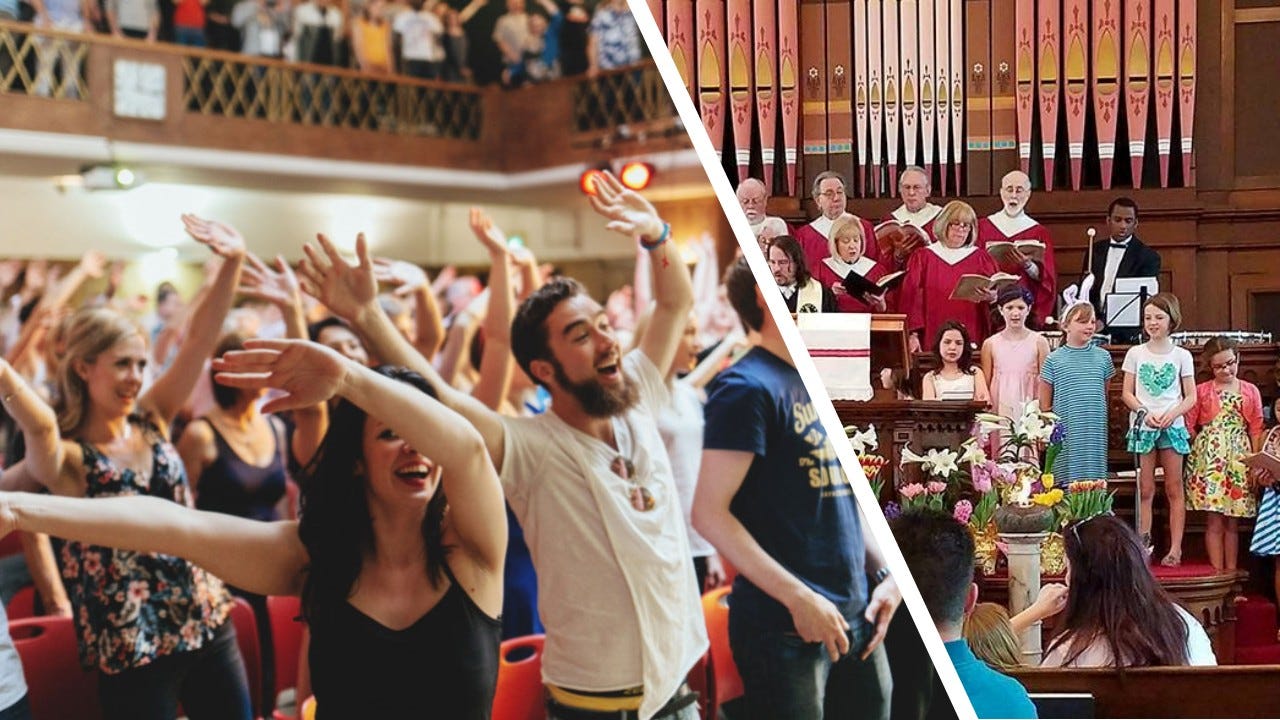
The next Sunday Assembly Help Often Week is coming up on 26 April - 3 May 2026. Chapters across the Sunday Assembly network will be doing good in their communities in the name of part of our core motto: Live Better, Help Often, and Wonder More.
Join us as we put empathy into action and demonstrate the affirming care and giving nature that nonreligious communities possess. If you’re a chapter organizer or volunteer, now is the time to put plans together and get your local group out into the broader community. Share your plans with us either via email or on Discord!
Maybe you already have a regular volunteering ethic, and it will take on new meaning during this week. If you haven’t done volunteering in a while, SAUSA is enthusiastic to help you get going. It can be as easy as picking a time and place, bringing trash bags, and cleaning up a park. Or collecting items at your next Assembly to donate to folks in need.
For US folks, this will nicely coincide with the American Humanist Association’s American Empathy Project, which has similar aims to our program. How will your community Help Often during April 25 through May 3? More info here: https://www.sundayassembly.org/help-often-week.

Exciting news from the international world of Sunday Assembly! Davis and his team in Uganda (‘the pearl of Africa’) have started holding Sunday Assembly events.
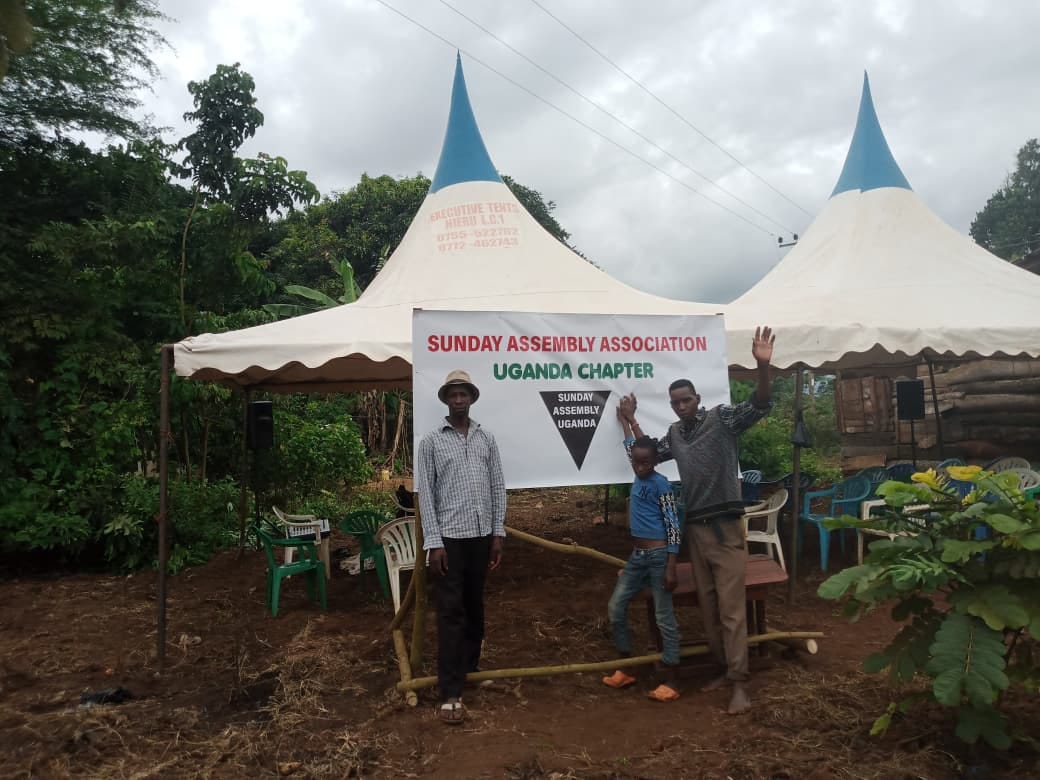
This really is Sunday Assembly African style!
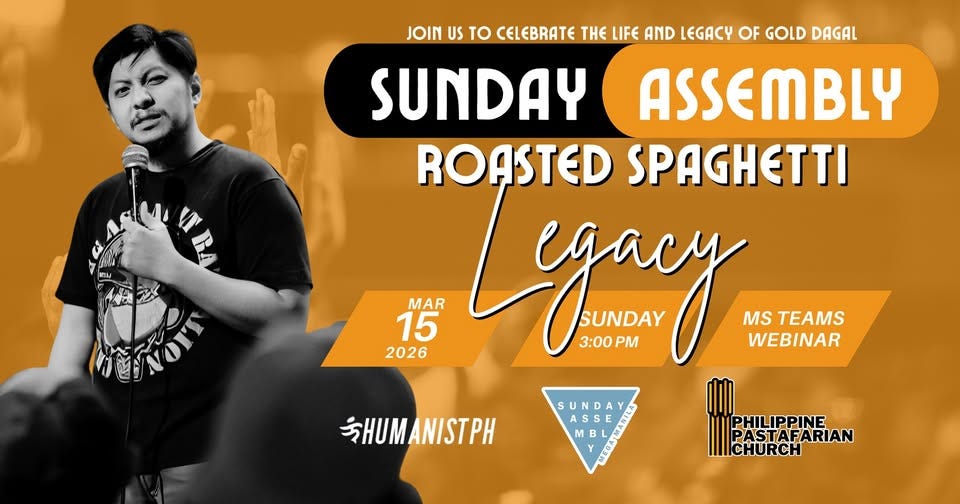
We also have Mac and his team at the ‘Pastafarian Church’ in Manila who are holding Sunday Assembly events once a quarter as part of their humanist, tongue-in-cheek, active group.
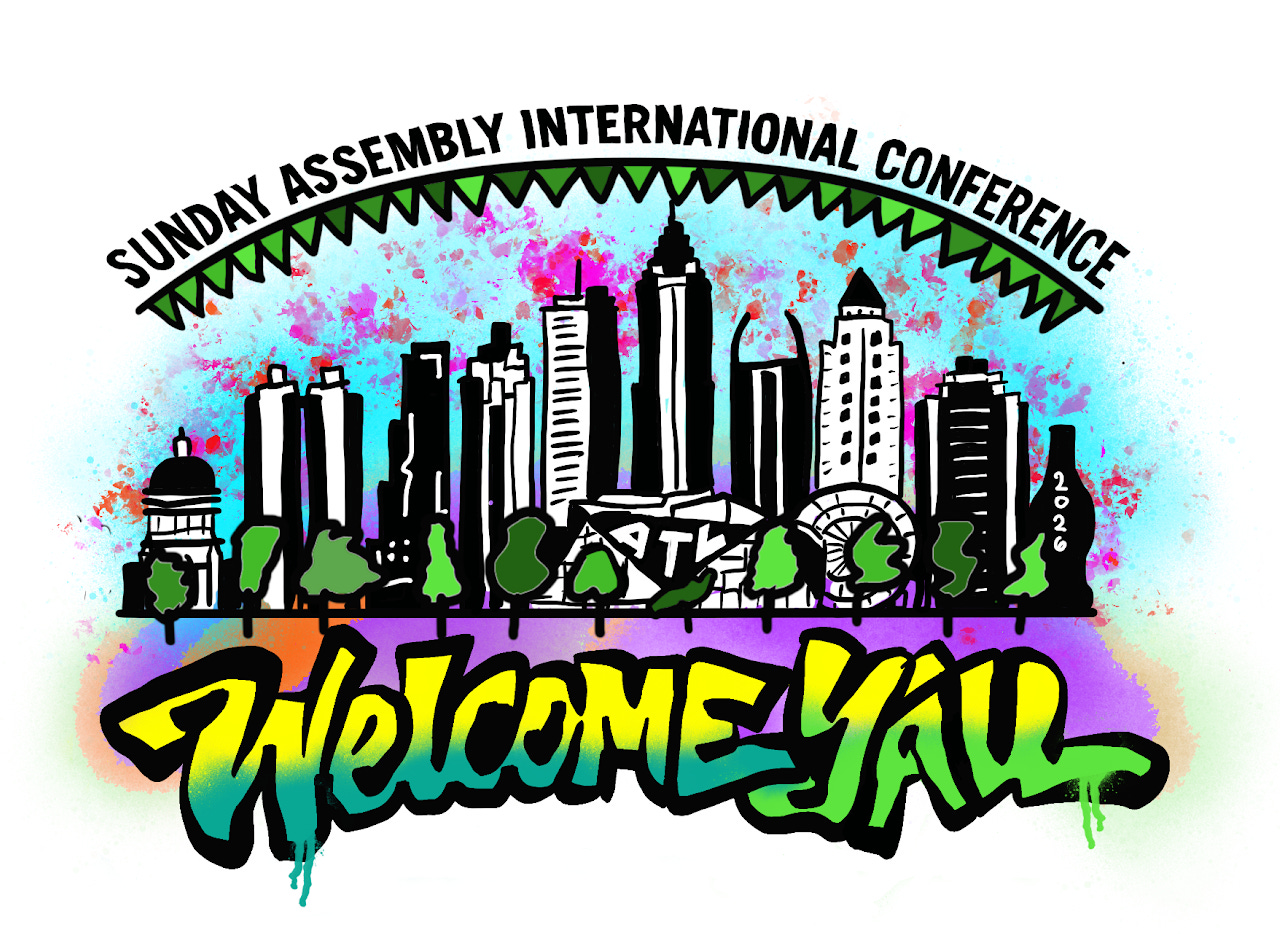
Imagine this: Four days in Atlanta. Live music that makes you want to sing along. Conversations that light you up. Ideas that stick with you long after you head home. And a whole bunch of folks who get it—who know that building a joyful, meaningful community without religion isn’t just possible—such communities are thriving.
The Sunday Assembly Conference is coming to Atlanta for 2026, and we’re ready to open our doors, celebrate this one life we know we have, and dream up what comes next.
This year’s theme is Welcome Y’all—and yes, that’s genuine Southern hospitality, but it’s also something bigger. It’s about the radical act of making space for each other, for new possibilities, for all the parts of ourselves that need a home.
Come on down. Bring your whole self—your hope and your questions, your energy and your weariness, your vision for what’s possible.
PS - I hear there may be stipends available for Sunday Assembly community members who might struggle with the finances of getting to the event. Keep an ear to the ground!
No posts
Comments
Nothing yet. Say the first thing.
Sign in to join the conversation.