
Top AI News, Trending AI Tools, and Business AI Tips
HighLevel AI Academy teaches you how to start an AI agency using the GoHighLevel platform. Start making extra income from AI solutions.
Click HERE to join us today for FREE 👀
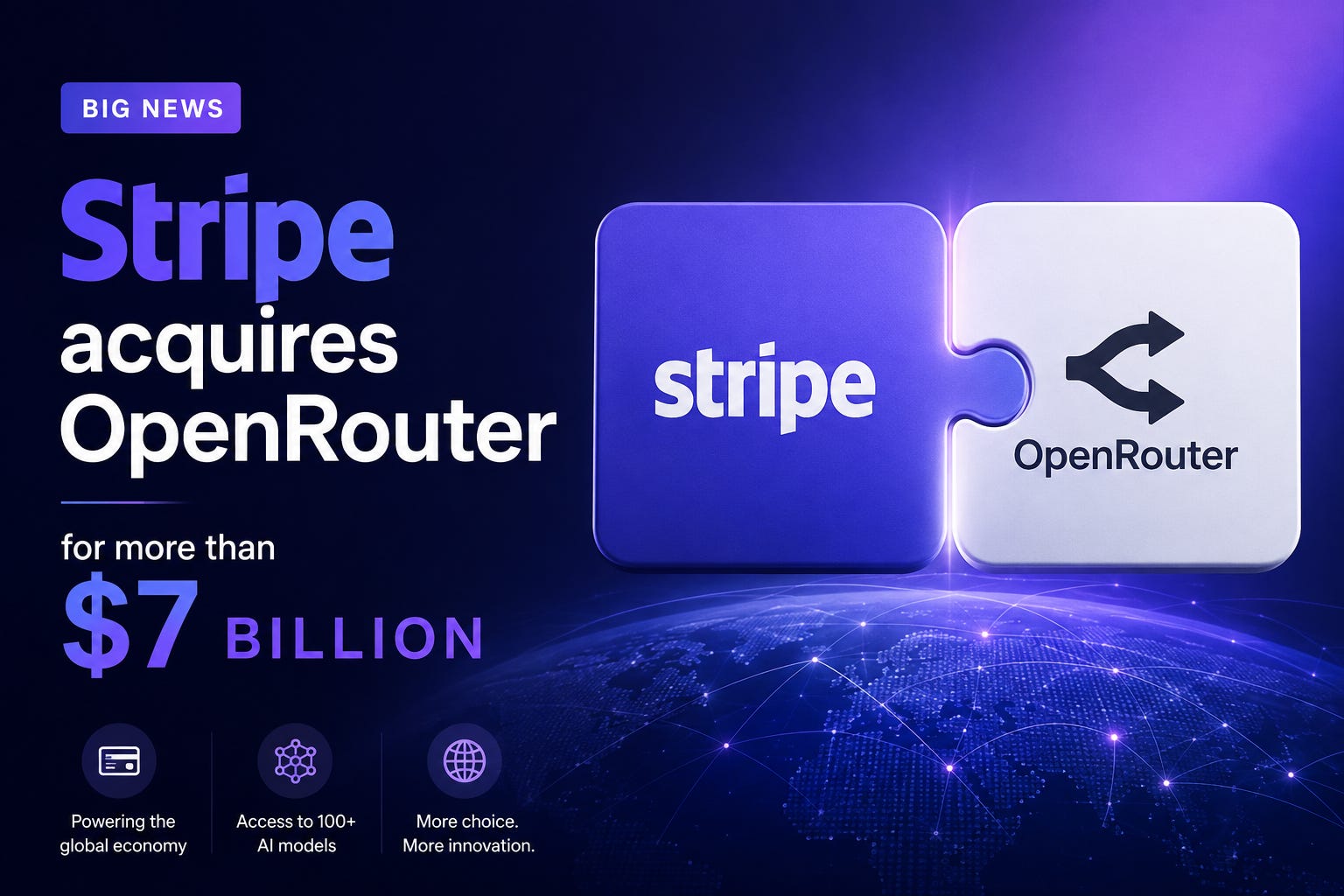
Payments giant Stripe has finalized a deal to buy AI model gateway OpenRouter (reported by Bloomberg and others). OpenRouter lets developers access 400+ models from providers like OpenAI, Anthropic, Google, Meta, and DeepSeek through a single API and routes for cost/performance. The price is a big jump from its ~$1.3 billion valuation after a May 2026 Series B. The deal strengthens Stripe’s position in AI billing and infrastructure.
🚀 SumoGrowth offers done for you AI growth systems for GHL agencies and businesses. Automate marketing, sales, operations, and more.
Click HERE to book a discovery call today! 👀

The AI video/image generation platform (popular with creators, brands, and studios) closed a Series B led by DST Global, with participation from Goldman Sachs, Intel Capital, Liberty Global, and others. Annualized revenue has reached ~$700 million, and the company reports more than 30 million users. Funding will support enterprise products, security, and compute capacity.
Want a new CRM for your business to help you automate managing your leads and sales? Check out GoHighLevel - the best marketing and sales AI CRM platform.
Click HERE for a free trial today!
Nvidia backs OpenAI’s massive Ohio data-center project with up to $105 billion guarantee
Nvidia is providing credit support (up to ~$105B) and investing $1.5 billion in SB Energy for the PORTS-Pike campus in Pike County, Ohio. OpenAI is leasing roughly 8 GW of IT capacity (part of a larger ~10 GW project) under a 20-year deal, with Nvidia as the exclusive chip supplier for the initial phase. Capacity is expected to come online in phases starting around 2028 and is projected to create tens of thousands of construction jobs.DeepSeek open-sources its plugin-based agent harness
DeepSeek released DeepSeek Harness (dsh) in developer preview under an MIT license. The architecture treats “everything as a plugin” (models, tools, sessions, sandboxes, UI, etc.) via the Cordis framework, so components can be swapped or extended. It is available via npm (npx @deepseek-ai/dsh web) and GitHub.
Use Fannabe to create a new AI persona influencer. Earn more income on social media from exclusive content, brand deals, promo, and more.
Click HERE to learn more!
Chert lets you build and deploy conversational iMessage agents for customer service, inbound lead capture, and more. Simply configure the system prompt and tone, and you can create your own conversational iMessage agent for inbound handling, outbound follow-up, or whatever workflow you want to test.
TinyFish is a unified web operations platform built for AI agents and AI applications. It enables developers to search the live web, extract clean structured content, browse dynamic websites, and automate authenticated workflows
Meridian is an open-source AI work journal that runs entirely on your device. It writes your work up in plain English as the day goes, so by the end of the day you have a summary of everything you did.
Use Extendly to launch a new AI agency with a 12 day bootcamp. Includes webinars, group onboarding calls, implementation sessions, and more.
Click HERE to learn more!
Most agency owners pick one AI provider, build their entire internal tool around it, then get stuck when a better or cheaper model drops next month.
That’s the trap.
Here’s the fix.
OpenRouter gives you one API key and access to basically every major model on the market. GPT, Claude, Gemini, Llama, DeepSeek, all of it, through a single endpoint.
That means while you’re building an internal tool, you’re not locking yourself into one provider before you even know which model actually performs best for your use case.
Don’t build for one model. Build for a category of models.
When you’re prototyping an internal tool during the dev phase, wire it up through OpenRouter instead of hardcoding a single provider’s API. Then run the exact same prompt across three or four models and compare.
You’ll immediately see:
Which model gives you the cleanest output for your specific task
Which one is actually cheapest per call once you factor in token usage
Which one is fastest for real time internal use, like a support agent or an audit tool
Where you have a backup if your primary model has downtime or rate limits
This is the same reason smart agencies test creative before they scale ad spend. You test models before you scale a workflow.
If you’re building internal tools like an AI analyst dashboard, a client audit generator, or an automation stack, model performance and pricing shift constantly. Providers change rate limits. New models beat old ones almost every quarter.
Building through OpenRouter during development means you can swap the model in one line of config once you find the winner, instead of rewriting your entire integration.
Lock in your workflow. Don’t lock in your model.
Want to listen to our newsletter on the go? Click HERE
Want to advertise to our newsletter? Contact us at hello@sumogrowth.com
Cheers,
Darius @ SumoGrowth
Comments
Nothing yet. Say the first thing.
Sign in to join the conversation.