
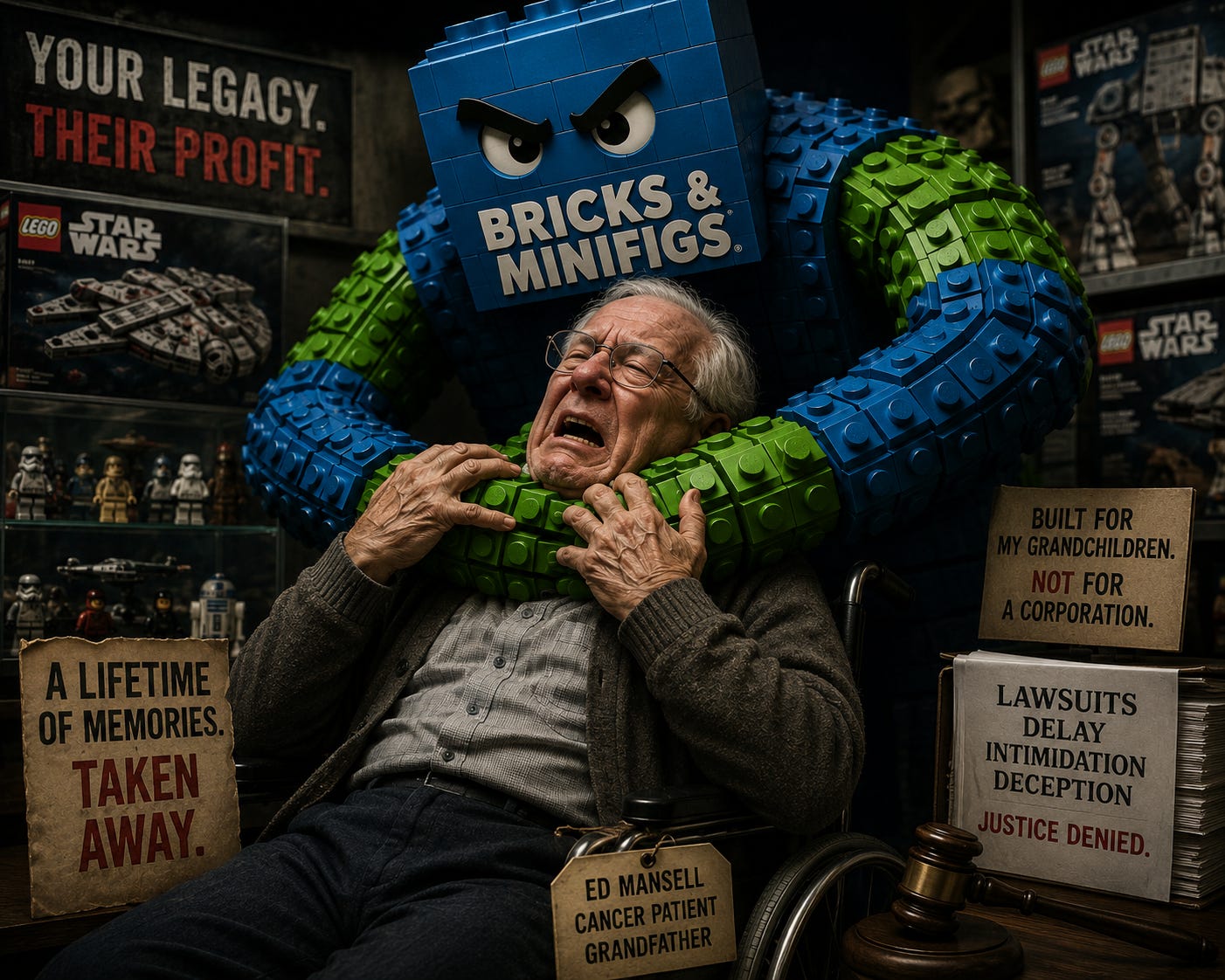
Share SULFABITTAS NEWSMAGAZINE
A lifetime spent building one of America's remarkable Star Wars LEGO collections has become the center of a legal controversy that raises troubling questions about family legacy, accountability, property rights, and access to justice for ordinary citizens….
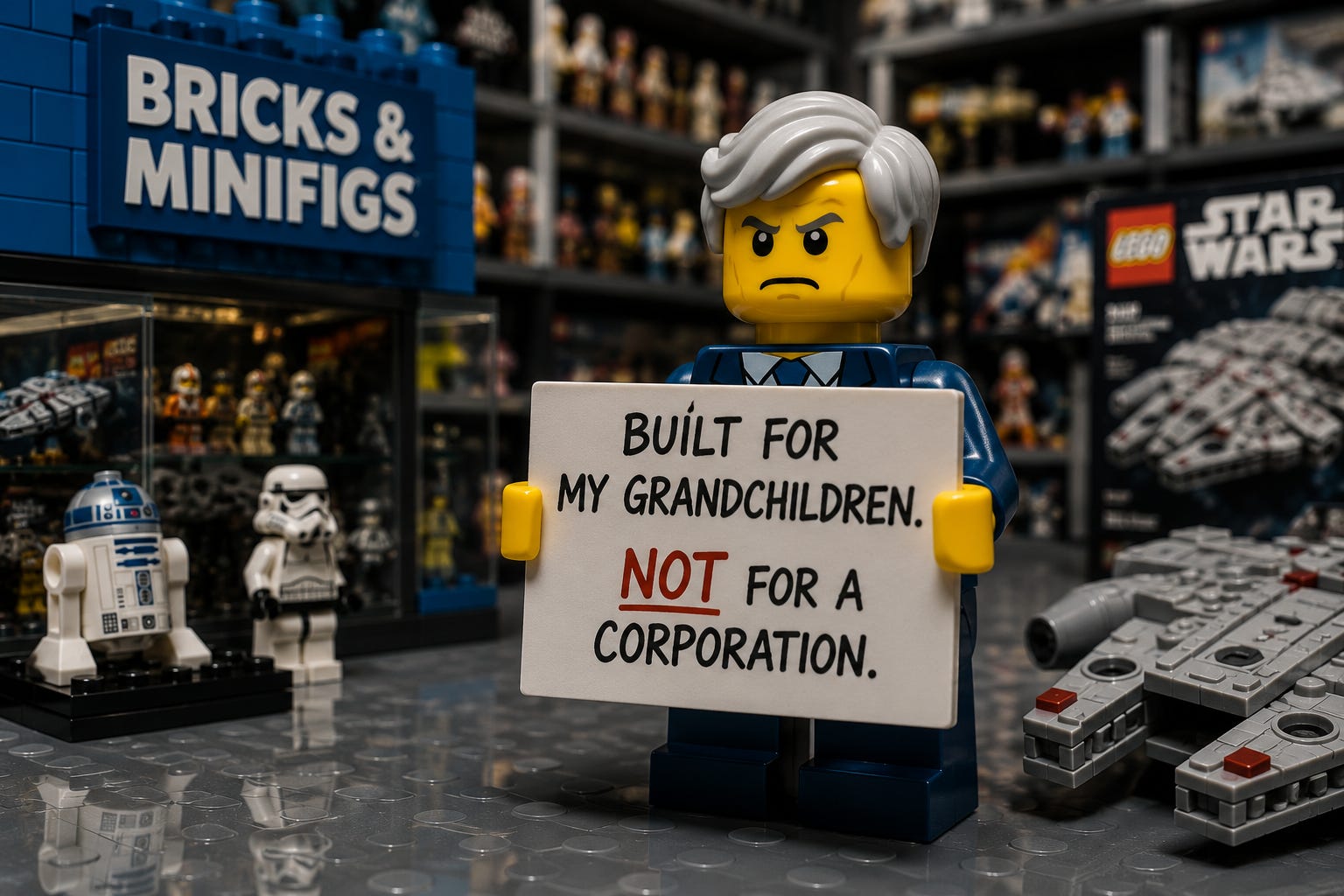
For decades, Ed Mansell carefully built a valuable Star Wars LEGO collection that he hoped would one day benefit his children and grandchildren. Today, as he battles cancer, that lifetime legacy remains at the center of an ongoing legal controversy that has sparked national debate about fairness, accountability, and whether ordinary families can obtain justice when confronting powerful institutions.

As he battles cancer, Ed Mansell says a lifetime Star Wars LEGO collection built for his grandchildren remains beyond his family’s reach. The controversy has become a national story about family legacy, accountability, and whether ordinary citizens can obtain justice when confronting powerful institutions.
For most people, a box of LEGO bricks is simply a toy. For Ed Mansell, however, a vast collection of Star Wars LEGO sets, rare minifigures, and prized collectibles represented something far more meaningful. It represented decades of dedication, financial sacrifice, personal passion, and a vision for the future. More importantly, it represented a legacy that he hoped would one day benefit his children and grandchildren.
"The true value of the collection was never measured by rare minifigures or unopened boxes. Its greatest value was the future it represented for the grandchildren Ed Mansell hoped would one day inherit it."
Today, that legacy remains at the center of a bitter and highly publicized controversy involving Bricks & Minifigs, competing legal claims, franchise disputes, and allegations that have attracted national attention. While courts continue to evaluate the facts and competing arguments, one reality has resonated deeply with thousands of observers across the country: an elderly cancer patient and his family say they have been separated from property that embodies a lifetime of work and a substantial portion of what was intended to become a family inheritance.
At its heart, this is not merely a story about Star Wars LEGO collectibles. It is a story about people, family, trust, and the unequal burdens that often emerge when ordinary citizens find themselves in conflict with institutions possessing greater financial resources, legal expertise, and organizational power.
For decades, Mansell carefully built his collection piece by piece. Like many serious collectors, he invested not only money but time, patience, and emotional energy into acquiring rare and valuable items. Every completed set, every rare figure, and every carefully preserved box reflected years of effort and commitment. What outsiders may view as plastic bricks and toys represented, to Mansell and his family, a tangible asset accumulated through hard work and long-term planning.

Collectors frequently describe their collections as extensions of their lives, and in many respects that description applies to Mansell’s circumstances. The collection told a story of persistence and dedication. It reflected countless hours spent researching, purchasing, organizing, preserving, and cataloging valuable pieces of Star Wars history. It was also something that Mansell hoped would continue providing value long after he was gone.
That aspiration is what makes the controversy particularly poignant. Supporters of the family argue that the dispute involves more than ownership rights. They contend that it concerns a grandfather’s desire to leave something meaningful behind for future generations. They see the collection as a bridge between generations, a symbol of family continuity, and a tangible expression of a lifetime’s labor.
The story has captured public attention because it speaks to a broader anxiety shared by many Americans. Across the country, families frequently discover that even when they believe they have legitimate grievances, obtaining relief through legal channels can become a costly, time-consuming, and emotionally exhausting process. The expenses associated with litigation, the complexity of legal proceedings, and the often lengthy timelines involved can place tremendous strain on ordinary citizens who lack extensive financial resources.
"For a cancer patient, every delay carries a cost that cannot be measured in legal briefs, court motions, or attorney fees."
Supporters of the Mansell family argue that this reality creates an uneven playing field. They contend that when disputes arise between individuals and organizations with significantly greater resources, the burden often falls disproportionately on those least able to bear it. The result can be years of uncertainty, mounting legal costs, and emotional fatigue that extends far beyond the courtroom.
For many observers, the controversy has evolved into something larger than a dispute over collectibles. It has become a reflection of a growing public concern that justice increasingly favors those with the resources to sustain long and expensive battles while ordinary families struggle simply to remain in the fight.
These concerns become even more significant when illness enters the equation.
Ed Mansell is reportedly battling cancer while attempting to navigate the ongoing controversy surrounding the collection he spent decades building. For many observers, that fact transforms the dispute from a commercial disagreement into a profoundly human story. Supporters argue that every month spent waiting for answers carries consequences that cannot be measured solely in legal filings or financial calculations. For individuals facing serious illness, time itself becomes an increasingly precious commodity.
The emotional toll of prolonged uncertainty can be immense. Families facing health challenges often find themselves balancing medical concerns, financial pressures, and emotional stress simultaneously. When a dispute involving significant property and family inheritance is added to those burdens, the impact can become overwhelming.
For a cancer patient, every delay has a different meaning. Every unanswered question carries a heavier weight. Every year spent waiting for resolution is a year that can never be recovered.
The controversy received national exposure through the work of investigative content creator Reckless Ben, whose reporting brought widespread attention to allegations surrounding the dispute. What may have remained a localized conflict instead evolved into a broader public conversation about accountability, transparency, and consumer protection.

Regardless of opinions concerning his investigative methods, many supporters believe his reporting provided a platform for a family whose concerns might otherwise have remained largely unheard. As a result, the controversy began attracting attention from individuals who viewed the matter through the lens of consumer rights, fairness, and access to justice rather than simply as a dispute involving collectibles.
In an era when many people feel disconnected from traditional institutions, the story struck a nerve. It offered a narrative that many ordinary citizens immediately understood: a family struggling to protect what it believes belongs to them while facing obstacles that appear daunting and expensive.
The public reaction has been telling. Thousands of people who have no personal interest in LEGO collecting have nevertheless followed the story closely. Their interest stems not from the collectibles themselves but from what the dispute appears to represent.
Many see a vulnerable family confronting challenges that could affect any ordinary citizen. They see a grandfather attempting to protect a lifetime’s work while facing serious health concerns. They see questions about whether fairness remains accessible to those without extraordinary wealth or influence.
The collection may be unique, but the underlying fears are universal. People understand what it means to spend decades building something for their children. They understand the desire to leave behind a legacy. They understand the fear of losing control over assets accumulated through a lifetime of hard work.
Supporters of the family have argued that prolonged litigation, confidentiality, and aggressive legal strategies can sometimes create barriers that discourage ordinary individuals from pursuing their claims. They question whether such outcomes strengthen public confidence in the justice system or contribute to perceptions that power and resources too often determine results.
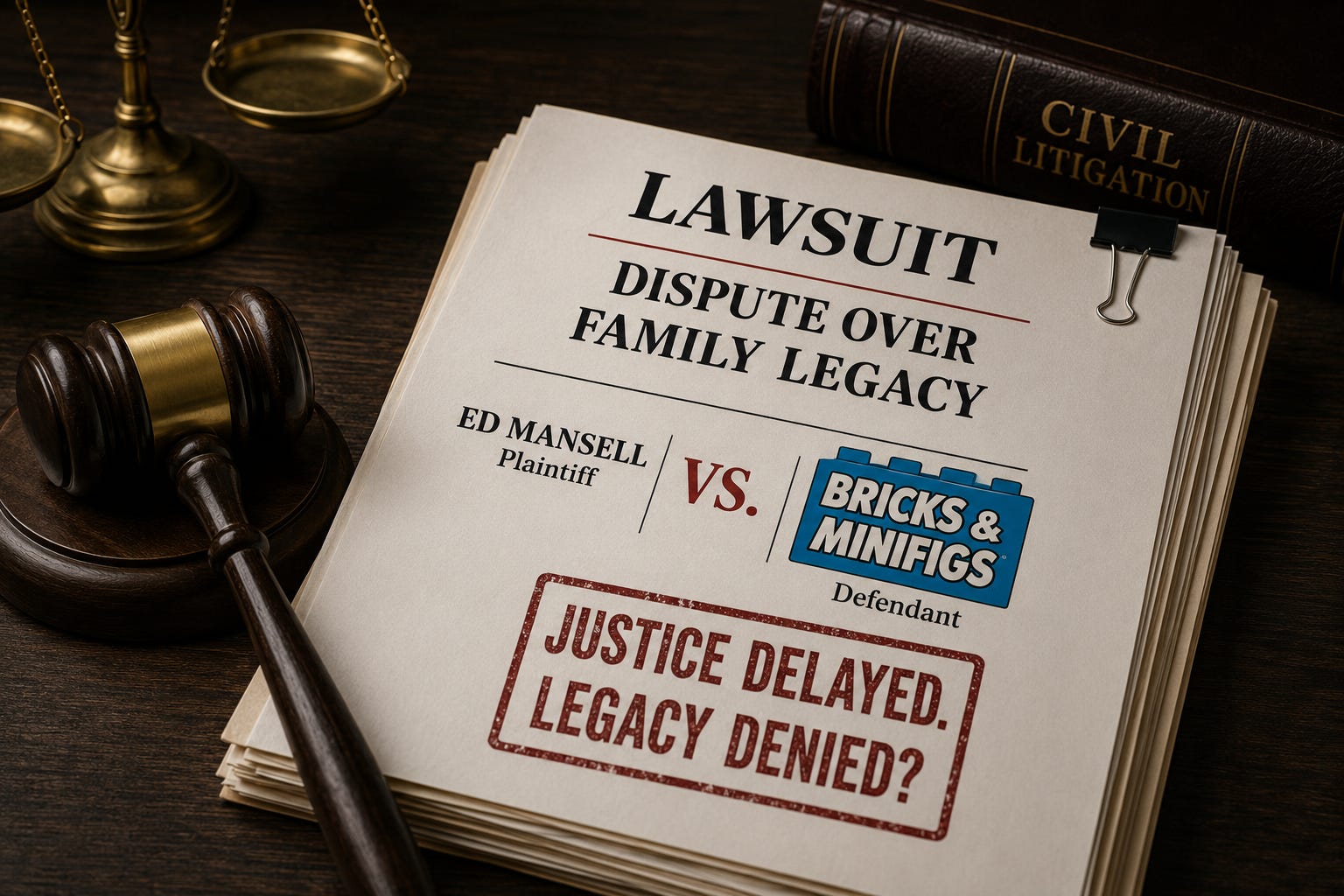
The case has therefore become part of a broader national conversation regarding access to justice. Critics of the modern legal system frequently point to situations where lengthy proceedings effectively become a punishment in themselves. Even when individuals believe they have legitimate claims, the financial and emotional costs associated with pursuing those claims can become overwhelming.
Whether those concerns apply in this case remains a matter of debate. Nevertheless, the questions themselves have resonated far beyond the parties directly involved.
At the same time, fairness requires acknowledging that Bricks & Minifigs disputes key allegations and has vigorously defended its position. The company has challenged claims made against it, and the courts have not yet issued final rulings resolving the central legal questions involved.
Those matters deserve impartial consideration through appropriate legal channels, and all parties remain entitled to due process. Responsible journalism requires acknowledgment that significant facts remain contested and that ultimate determinations must rest upon evidence presented in court rather than public sentiment.
The legal process exists precisely to evaluate competing claims, establish facts, and determine responsibility. Until that process concludes, many important questions remain unresolved.
Yet unresolved legal questions do not erase the human consequences already experienced by those involved.
An elderly cancer patient remains separated from property that he and his family regard as a lifetime achievement. Children and grandchildren remain uncertain about the future of an inheritance that was intended to benefit them. A family continues to live with anxiety and unanswered questions regarding assets they believe should ultimately be returned.
That reality explains why the controversy continues to resonate with the public. For many observers, the dispute has become a test of broader principles involving trust, accountability, transparency, and the treatment of vulnerable individuals.
When families entrust valuable property to businesses, they expect agreements to be honored, disputes to be handled fairly, and concerns to be addressed openly. Public confidence depends upon the belief that ordinary citizens will receive fair treatment regardless of age, illness, wealth, or social status.
The urgency surrounding the case cannot be separated from Mansell’s health challenges. Supporters repeatedly point to the reality that time is not an unlimited resource for elderly individuals confronting serious illness.
While lawyers can request extensions and courts can schedule hearings months or years into the future, life does not operate on legal timetables. For families facing cancer, every passing month matters. Every delay increases uncertainty. Every postponed resolution raises concerns that justice may arrive too late to be fully meaningful.
This human reality is perhaps the most compelling aspect of the story and one that continues to generate public sympathy.
Lost amid legal arguments and public controversy are the family members who were meant to benefit from Mansell’s lifetime of collecting. The collection was not merely a hobby. It was an asset intended to become part of a family’s future.
Supporters argue that the grandchildren stand to inherit more than collectibles. They stand to inherit a story of perseverance, dedication, and family commitment. The collection represents decades of effort and serves as a tangible reminder of a grandfather’s desire to leave something meaningful behind.
Whether that legacy will ultimately reach the next generation remains one of the most emotionally powerful questions surrounding the dispute.
Whatever the eventual legal outcome, the public deserves clear answers and a full accounting of the facts. More importantly, vulnerable families deserve confidence that they can pursue their claims without being overwhelmed by forces beyond their control.
A society should ultimately be judged not by how it treats the powerful but by how it treats those with the least power. It should be measured by its willingness to protect the elderly, the sick, and ordinary citizens whose voices may otherwise go unheard.
That is why so many people continue to follow Ed Mansell’s story. They are not simply watching a dispute over Star Wars LEGO collectibles. They are watching a grandfather’s struggle to preserve a lifetime legacy for his grandchildren. They are watching a test of whether fairness, compassion, and human dignity can prevail when ordinary people find themselves standing against institutions far larger than themselves.
For Ed Mansell, the collection was never merely about Star Wars LEGO. It was about family, legacy, and the hope that something built through decades of perseverance would continue to provide value long after he was gone. Whether that hope is ultimately realized remains a question that continues to command national attention.
#JamaicaPolitics #AndrewHolness #JacobZuma #StateCapture #Governance #IntegrityCommission #CaribbeanPolitics #Democracy #PoliticalAnalysis #Corruption #RuleOfLaw #SouthAfrica #DennisAMinott #Accountability #SulfabittasNews
Share SULFABITTAS NEWSMAGAZINE
by Norris R McDonald DIJ (Author)

UNJUST ENRICHMENT: How PennyMac, Banks and other Mortgage Companies Undermine Homeowners
By Norris R McDonald, DIJ, CRT
Book Summary
Exposing Mortgage Fraud, Foreclosure Scams, and the Rigged Housing Market
The Hidden Tricks Banks Use to Strip Wealth From Homeowners
How Wall Street and Mortgage Servicers Profit While Families Lose Homes
In Unjust Enrichment: How Mortgage Companies Undermine Homeowners, Norris R. McDonald exposes the predatory lending practices, corporate greed, and financial manipulation that have devastated homeowners across America. From escalating mortgage escrow shortages to foreclosure exploitation, this book uncovers how major financial institutions prioritize profits over people.
Key Themes Covered in This Book:
* Predatory Lending Practices – High-interest loans, balloon payments, and deceptive mortgage structures that trap homeowners.
* Hidden Fees and Escrow Manipulation – How mortgage companies use escrow shortages to unfairly raise monthly payments.
*The Foreclosure-Homelessness Connection – The direct link between wrongful foreclosures and rising homelessness rates in America.
* The 2008 Housing Crisis & Beyond – How Countrywide, Bank of America, and PennyMac continued unethical lending after the financial collapse.
* Legal Cases & Consumer Complaints – Real-life lawsuits and reports of mortgage fraud, unfair fees, and unethical banking practices.
*How Homeowners Can Protect Themselves – Policy recommendations, financial education, and legal rights to fight back against predatory mortgage companies.
This book is a must-read for homeowners, financial watchdogs, legal professionals, and consumer rights advocates who seek to understand the hidden forces driving mortgage exploitation. With real data, powerful case studies, and actionable recommendations, Unjust Enrichment serves as both an exposé and a guide for justice in homeownership.
Are you ready to fight back against mortgage exploitation? Get informed, get empowered, and protect your home today.
GET THE BOOK HERE: 👇
https://www.amazon.com/UNJUST-ENRICHMENT-Companies-Undermine-Homeowners-ebook/dp/B0DZ16Q4H9/
Or, SCAN QR CODE HERE: 👉

Comments
Nothing yet. Say the first thing.
Sign in to join the conversation.