
I’m thrilled to be welcoming Nathalie Cordell into The Book Room this month and especially delighted as she is a fellow Heartleaper in Suzy Walker’s online writing hour group. In fact, I’m putting this post together during our Wednesday writing hour, a day after Nathalie’s publication day, and she’s here on the Zoom call as I write.
Aren’t our writing communities precious?
I’ll not take up any more valuable space, and hand straight over to Natalie to tell us all about Awakening The Sleeping Queen: How to Reclaim Your Feminine Wisdom and Power.
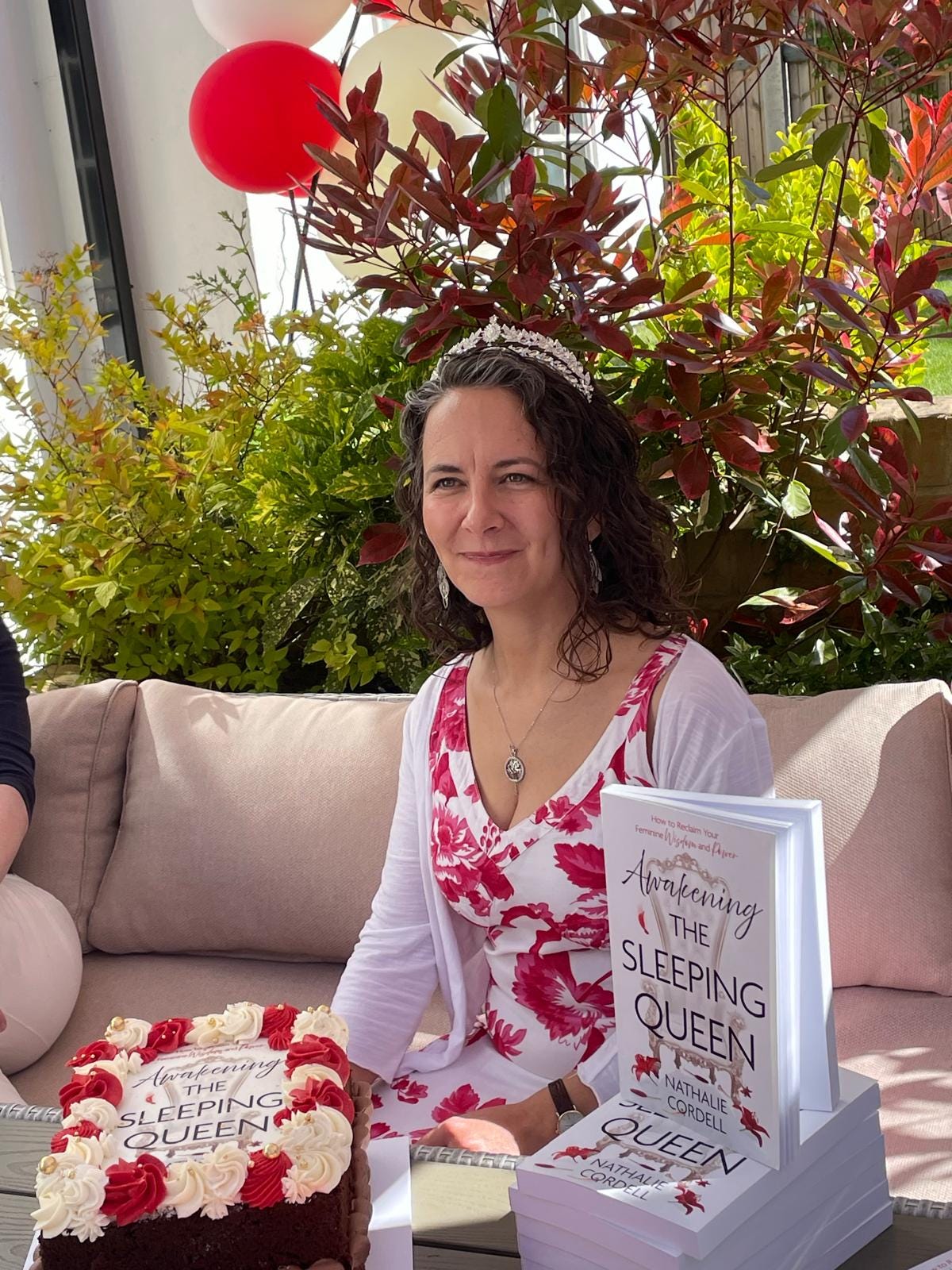
It’s a memoir-meets-transformation guide for high-achieving women who feel disconnected despite their success – women who’ve done everything right and still find themselves asking: is this it?
I use the Sleeping Beauty fairy tale as an unexpected map for the journey back to wholeness. Weaving personal storytelling with depth psychology and spiritual wisdom, I explore what happens when we adapt so completely to the outer world that we lose the inner one – and how we find our way home. The themes include befriending anger, trusting intuition, reclaiming sensitivity, and understanding the difference between achievement and fulfilment.
At its heart, the book draws on Psychosynthesis – a psychology of the soul – which holds that we are more than our personalities, and that wholeness is both where we come from and where we are trying to return to.
From my own crisis point. After 20 years in pharmaceutical leadership, I had everything I thought I wanted – and yet I felt profoundly unfulfilled. After a lot of soul-searching and heartache, something shifted: I realised I was like Sleeping Beauty. I’d locked the most sensitive, authentic parts of myself into a tower for protection – and then forgotten they were there.
When I started speaking with other women, I kept hearing the same story. Brilliant, successful women, disconnected on the inside. The more I listened, the more I understood: this wasn’t personal failure. It was a collective wound. The book became the map I wish I’d had.
I was the youngest of four, which meant I was lucky enough to be read to by everyone – parents, grandparents, and particularly my oldest sister, who liked nothing better than playing teacher. When she started learning to read herself, she’d happily read me stories. I was a willing audience.
But the stories I loved most were always the fairy tales, myths and legends. We had these enormous books – myths from Greece and Rome, but also from Africa and Asia – stories that tried to make sense of the world as we know it. I was fascinated by them. Looking back, I was drawn early to symbolism without knowing what to call it; to the idea that stories hold clues about what it means to be human. That, in essence, is the book I eventually wrote.
I was also a voracious reader in the way you could only be before the internet, before smartphones, before television offered anything on demand. Books were entertainment. I devoured Agatha Christie – I loved the puzzle of it, the making-sense-of-things, the mystery resolved. That impulse hasn’t left me.
As for writing – I never had a dream of becoming an author. My oldest sister famously wrote a novel at ten (which I was never allowed to read). I had no such ambitions. I discovered my love of writing quite late – well into my forties – and now I genuinely wouldn’t be without it. Writing is how I make sense of the world, of my experiences, of myself.
The reason I started writing is something I talk about in the book. One morning I woke up to find a lump on my left breast that hadn’t been there the day before – about the size of a small quail’s egg. Part of me wasn’t worried, because it had appeared so suddenly. But my sister had been diagnosed with breast cancer at 45, only five years earlier, and I couldn’t help wondering.
In my journaling session that morning, I found myself writing about it – and then writing around a question that surfaced: “what if I had less time left than I thought I had? What would I want to spend my time on?”
At that point I’d already left corporate life eighteen months before and was deep into building my coaching practice. I expected the answer to be: “more of the same, please.” But what came back surprised me. It wasn’t about helping others. It was about being with my daughter – every minute I had – and about leaving a trace for her. Something she could hold onto. Something that would let me be with her even after I was no longer in physical form.
That was the seed. A few days later, tests confirmed it was just a cyst. But the seed had been planted.
Some months later, the same question came up again in my personal development work. And the answer came back the same. So I committed to taking the step I could take: I would write 300 words every day. I set my alarm thirty minutes earlier each morning – before work, before taking care of anyone, before the rest of the house was awake – and I would sit at my desk and see what wanted to come. Usually I’d invite a word or a theme and just let myself muse around it, without much aim. Some days the 300 words flowed. Other days it was hard.
I already had the bones of the idea – the Heroine’s Journey, the Sleeping Beauty framework – from my Psychosynthesis thesis on the wounded feminine. But every time I tried to write within a chapter structure, I froze completely. The logical, planning part of me knew how to write academically; I’d spent two years writing essays and a thesis. But this book wanted to come from somewhere different – from the heart. And there was a part of me that simply could not express herself within a strict structure. She needed freedom.
I think of her now as the inner princess – that tender, wild, free part of me that had been constrained for so long within the rational, masculine architecture of logic and efficiency. She felt stifled. So I stopped trying to write to a plan.
For a long time, I simply wrote freely and eventually placed what I had accumulated into a rough chapter structure, which formed my first draft. And after receiving some feedback from friends and an editor, I realised I needed to go back to the beginning. I created a clear outline with a purpose for each chapter, and pretty much rewrote the whole book! It sounds painful – and it was. But I couldn’t have done it any other way. I needed to get my story out on paper first, so I could detach from it and then look at it from the reader’s point of view.
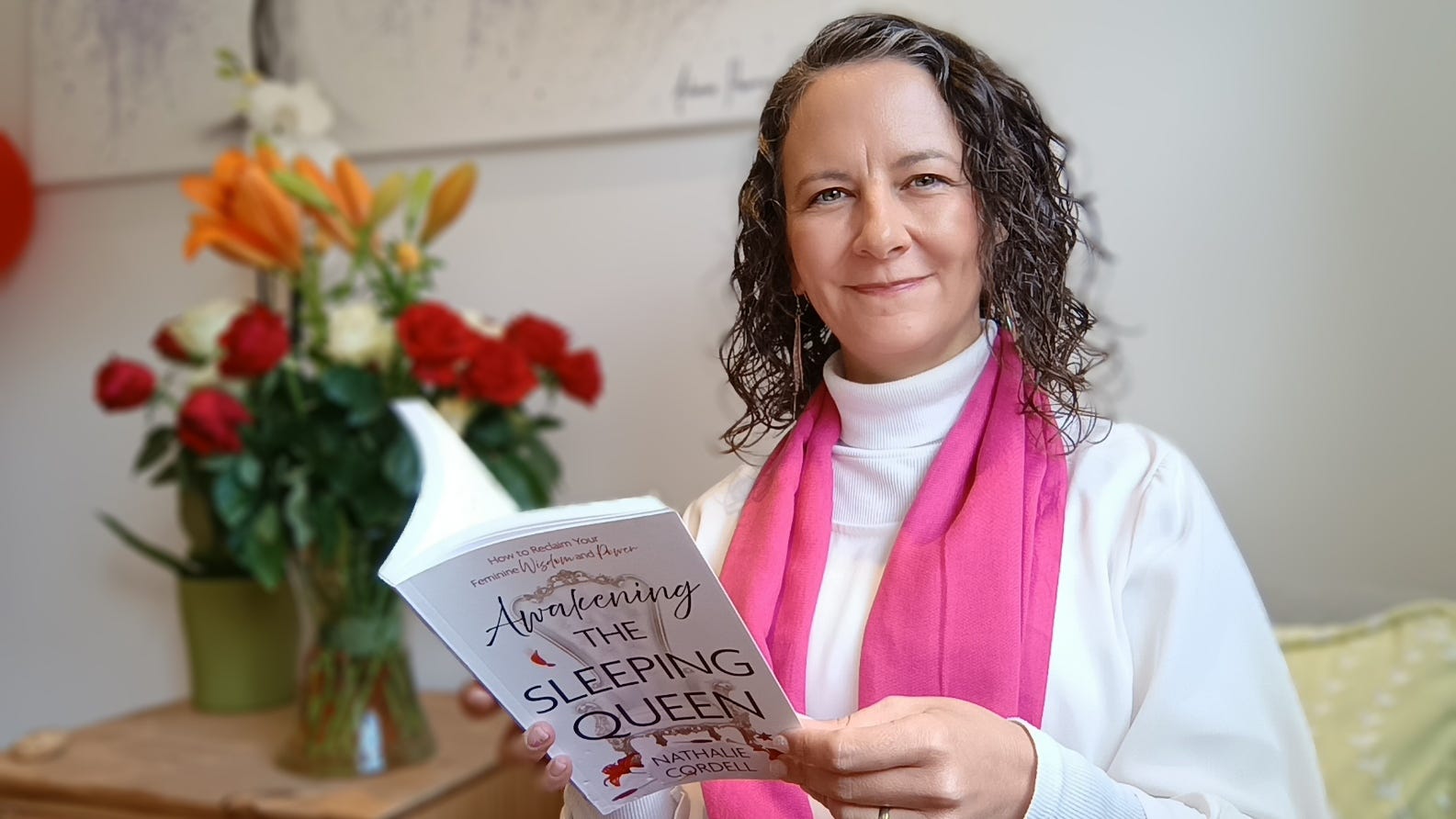
There wasn’t one hardest part. There were many.
The first was telling someone I was writing a book. That person was my husband. There was real fear in that moment – “who was I to write a book?” – as though I were crossing some kind of threshold, or breaking a taboo.
The next was sharing it with someone to read for the first time. My husband, and then a couple of friends. The feeling was like slicing yourself open – completely, chest and gut – and then just waiting. The waiting was agonising.
And then there was telling my family. Because although I believe the story I’ve written is universal, and speaks to the journey of many women, there are deeply autobiographical parts. I break certain family taboos – things we’ve spoken about privately, but that now go out into the wider world. That required a particular kind of courage.
Honestly – trial and error, a lot of research, and a gradual learning to trust my gut.
I spoke to people I knew who’d written books. I had a strategy session with a book coach who helped authors write books to grow their businesses. And I knew, even going in, that this wasn’t the book I wanted to write. I wanted to write something that would inspire, that would share a story – not something built around a method or a monetisation strategy. Yet somehow I hired her anyway, and was disappointed, because she didn’t really get me. She asked the same questions she’d already sent me to prepare. It was a waste of time and money – but in a way, I needed it. It helped me trust myself.
I also worked with an editor, who confirmed what I’d already sensed: which parts of the book worked, and which didn’t. I’d already self-edited to the point where I could feel the weak spots. She named them. That helped too.
In the end, I chose independent publishing because I simply didn’t have the stamina for a two-year wait after the energy of pitching agents and pursuing a traditional deal. There was something in me that just needed to get the story out. And I think there are many routes to publication – the right one is the one that fits your particular why.
Do it your way, take the step you can take, and trust that it will lead you to the next one.
I’m still early in this, so I’ll speak honestly rather than authoritatively.
My overriding tip is the same one that got me through writing and publishing: trust your gut, and take the step you can take. Someone told me that the point of a book launch is to invite people outside your network and expand your reach. And I said: yes, I know – and I can’t do that yet. Organising an evening with close friends and people I love, in my own home, was already a stretch for me. I can be quite the hermit. Letting people in, worrying about whether anyone would care enough to come – that was already a big step. So I took it. And it prepared me for the next one.
I think the same principle applies to all of it: do it your way, take the step you can take, and trust that it will lead you to the next one.
Just start. There’s no single right way to write a book – there are as many ways as there are writers. The most important thing is to begin.
Beyond that: be clear on your why. There will be hard times, moments of deep self-doubt, days when you’ll want to abandon the whole thing and disappear into a hole. Knowing why it matters to you – beyond the fear, beyond the doubt – is what will carry you through.
And I’d invite you to ask yourself honestly: “am I willing to give up my life for this?” That might sound dramatic. But writing a book takes a particular kind of stamina and surrender. In a way, you have to be willing to step aside and serve the book that wants to come through you.
Finally – don’t do it alone. Find your circle. I’m part of the HeartLeap club, as you know, Sue, and it has been truly invaluable. I turned up to my first meeting feeling like a complete impostor – surrounded by women who’d edited and published and knew things I didn’t. But they welcomed me. And I realised that at the end of the day, we were all human, and I had as much to offer as I had to receive. Having people who celebrate the wins and hold you through the hard parts – that’s not a luxury. It’s essential.
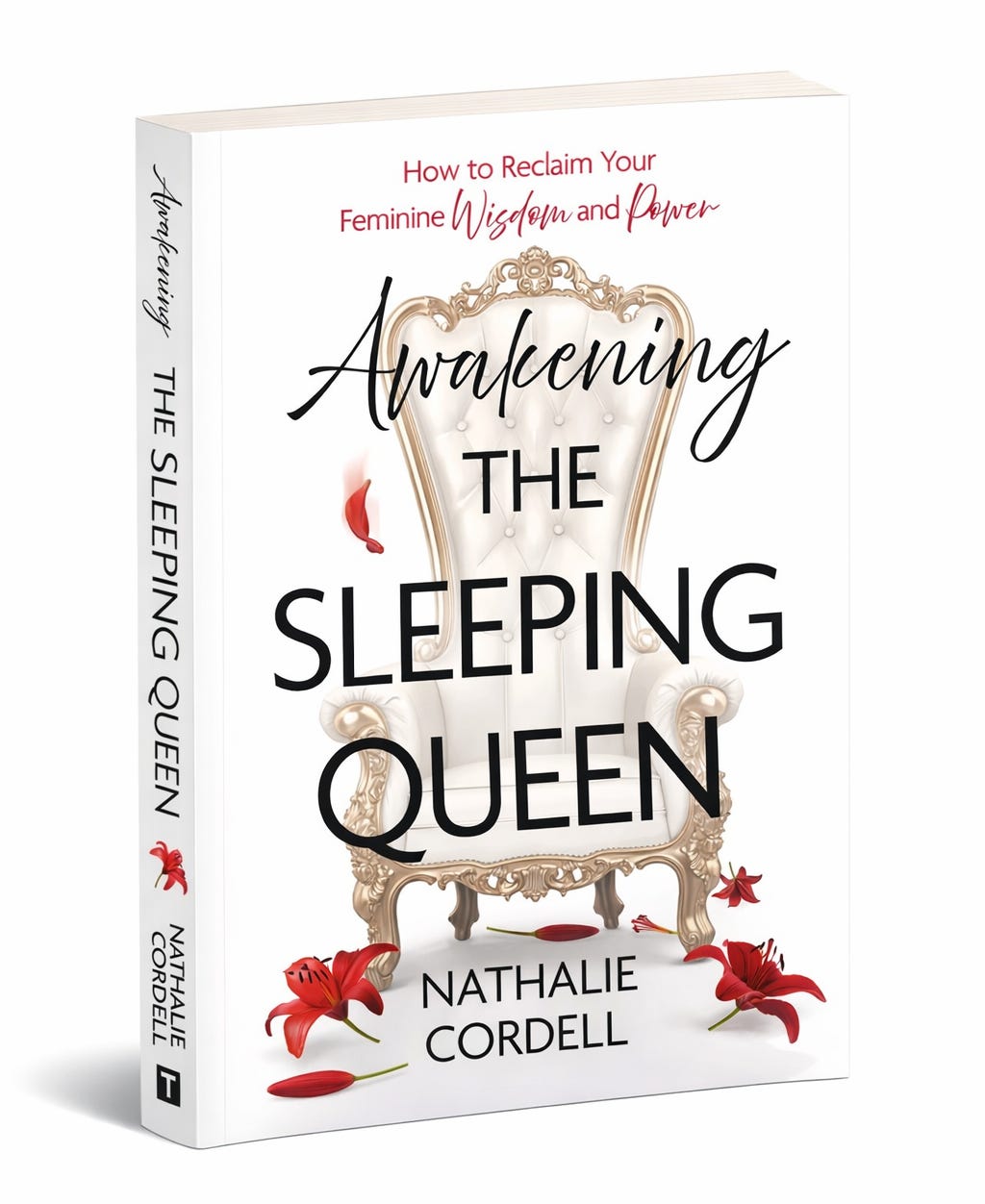
Awakening the Sleeping Queen is available on Troubador and Waterstones and can be ordered through independent bookshops.
Subscribe to my Substack, Soul Seeds here:

You can also find out more about me on my Website, Instagram and LinkedIn.
All links on where to order or connect with me can be found on my Link Tree
What a joy to have Nathalie in The Book Room this month. I do hope you buy her book!
If you have a book coming out and would like a guest author spot here in The Book Room, do get in touch. I have the December slot free this year and am taking bookings for 2027.
The support given to me by the writing community has been phenomenal, and this is just one small way I can give some of it back.
Thanks for being here!

Thanks for reading RIPE! This post is public so feel free to share it.
No posts
Comments
Nothing yet. Say the first thing.
Sign in to join the conversation.