
In 1987, in an address at the opening of a new invertebrate exhibit at the National Zoological Park, esteemed ecologist and Pulitzer Prize-winning author E.O. Wilson called for the conservation of “the little things that run the earth.” He reminded us that we need invertebrates, but they don’t need us: if they disappeared from the planet, the human species would have only months left on the earth.
Nearly 40 years later, researchers continue to report the grim news of the decline in biodiversity through extinction:
In 2014, less than 1% of invertebrate species had been assessed, and of those, 40% were considered threatened by the International Union for Conservation of Nature.1
In 2019, the first-ever comprehensive assessment of bird populations revealed a startling conclusion: the North American bird population lost nearly 3 billion birds since 1970.2
In 2020, researchers announced that 65 North American plant species are now extinct, and even more are considered extinct in the wild, meaning these species may exist only in botanical gardens or seed banks.3
In 2020, writer and natural historian Sir David Attenborough offered a grave description of our planet's future: climate change, a growing human population, and excessive global capitalism will reduce biodiversity through extinction, with huge implications for all forms of life.4
Each of these realities shares one major factor: the decline of quality habitat. The world of native ecosystems involves complex relationships between native flora and fauna. These interactions evolved over millennia and are often highly specialized. One of the most well-known examples is the Monarch butterfly’s dependency on milkweed as the sole host for its larvae.
The daily reports of environmental degradation, the effects of climate change, and ecosystem destruction can be overwhelming and lead to a deep sense of helplessness.
What can one individual possibly do?
Entomologist and author, Dr. Doug Tallamy, asserts that there is plenty one individual can do, and you don’t even have to leave your home. We can start with our home landscapes and join a collective movement called the Homegrown National Park, helping to restore biodiversity one yard at a time.
This call to action begins with three strategies for creating landscapes that support our native fauna.
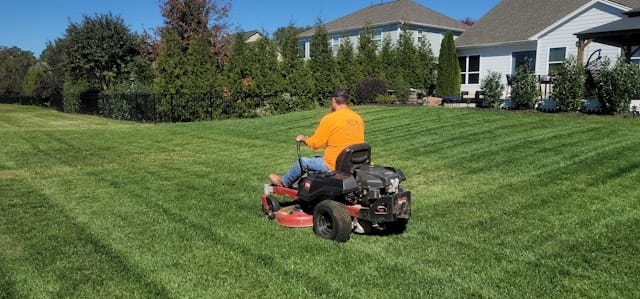
Across the United States, the monoculture of turfgrass has replaced 44 million acres of diverse native plant communities, and we are adding 500 sq. miles each year. Tallamy describes the American lawn as an ecological wasteland that offers little food and shelter for insects, birds, and butterflies. You can reduce your lawn a little each year by planting native shrubs and trees, layering flowering plants, and creating a diverse habitat.
The impacts of our lawn obsession are staggering:5
Irrigation for US landscapes, which consist mostly of non-native turfgrass and ornamental plants, consumes 8 billion gallons of water daily.
US homeowners use the same amount of fertilizer on their lawns as industrial agriculture does, and, more often than not, it is applied incorrectly.
Almost half of the chemicals used by the lawn care industry are banned in other countries because they are rated as carcinogens.6
Pesticides and fertilizers used on our non-native landscapes can seep into our private and public wells.
The production of synthetic pesticides and fertilizers, and the weekly use of gasoline-powered lawn care equipment, emit large amounts of greenhouse gases.
Collectively, Americans spend 3 billion hours each year tending our lawns. And over half of us don’t enjoy it!
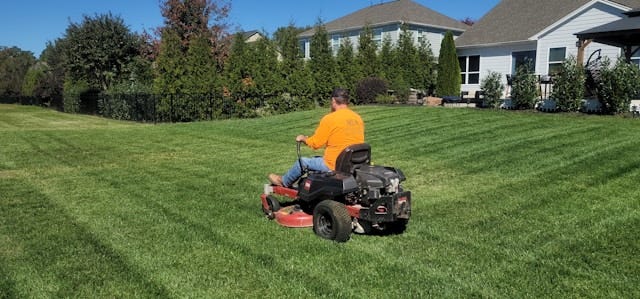
The visual contrast between the two yards is obvious, but living with layers of plants also provides habitat for other species. Photo by Michael Smith on Unsplash
While the collapse of honeybees and the gradual decline of Monarch butterfly populations make headlines, they represent only two of many species struggling with the toxic landscapes throughout North America. Pesticides are not selective: in addition to killing pests, they can be toxic to insect pollinators, reptiles, amphibians, birds, and aquatic organisms.
Recent research indicates that species exposed to synthetic pesticides are experiencing significant population declines.
Humans are also affected by both the industrial and personal use of pesticides. Thirty of the common pesticides used on landscapes are linked to a variety of cancers, human organ damage, birth defects, reproductive effects, neurotoxicity, and endocrine disruption.
In 2020, a systematic review by researchers concluded that 44% of farmers, farmworkers, and pesticide applicators experience at least one acute pesticide poisoning each year, and 11,000 die annually from accidental poisoning.7
Scott Hoffman Black, Executive Director of the international organization Xerces Society for Invertebrate Conservation, agrees that creating native habitat is necessary, but he is blunt: more must be done, starting with our use of pesticides:
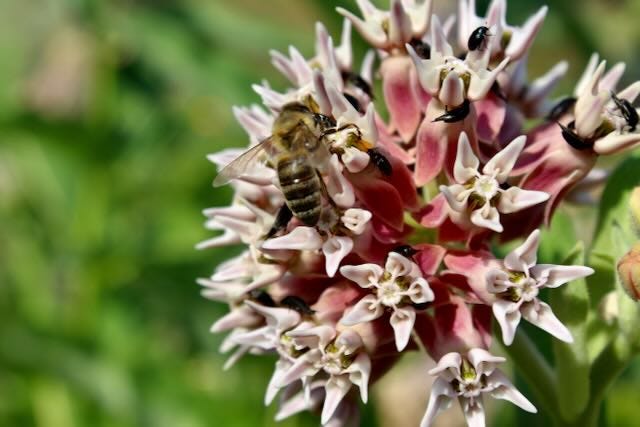
“Pesticides – especially insecticides – have to be addressed if we are going to solve this problem. We use more pesticides now than ever on this planet, and they are found almost everywhere. Some USGS research shows more pesticide residue in towns and cities than in agricultural areas. We did a study with the University of Nevada-Reno. More than 200 milkweed samples were gathered from urban, agricultural, and natural sites as well as from retail nurseries and tested for pesticides. A total of 64 different pesticides were found, with an average of nine per sample and as many as 25. Samples from all of the locations studied were contaminated, sometimes at levels harmful to monarchs and other insects.”
Though 14% of US land is protected, our national effort to preserve native landscapes through parks and wilderness designations is simply not enough to support our native wildlife. Over 80% of US land is privately owned, much of it used for industrial agriculture and home landscapes.8
Tallamy believes our home landscapes are part of the solution: by creating native ecosystems in our yards, we can build diverse biological corridors that support native wildlife.
Most of our home landscape plants come from other continents. While some of our native insects and birds may use them, research by Tallamy and others indicates that native insects, butterflies, moths, and birds overwhelmingly prefer native plants.
The term native is typically applied to plants that developed within an ecosystem or region for hundreds or thousands of years, and in the US, prior to European colonization. But Tallamy offers a more specific, and now critically important, use of the term native: in the context of ecosystems, it describes a plant’s function and role within an ecological system.
How many specialized relationships with other species does it have? How has it adapted over the years to the climate, soil, diseases, and predators found in its habitat?
In the video Restoring Insects, Doug Tallamy describes some of the relationships between native flora and fauna. Highlights: native bees, moths, & birds and interconnectedness.
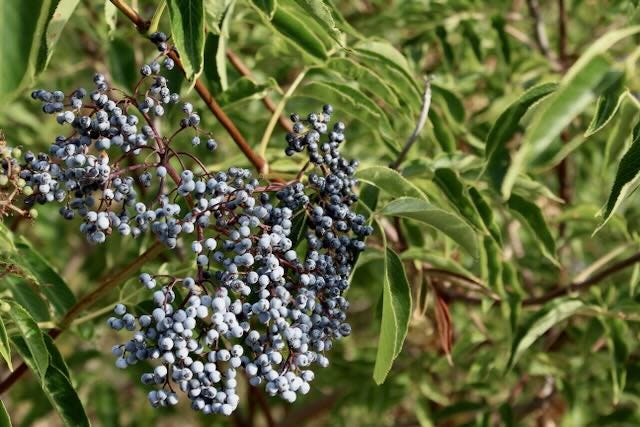
Plant choices matter to wildlife because not all food is equal. Research on the nutrition of berries - a food source critical to adult birds - of both native and non-native shrubs revealed that native North American shrubs produce summer berries high in sugars and autumn berries high in fats. Most introduced Eurasian plants produce fall berries with little fat.
Food choice for newly hatched birds is even more important. Caterpillars, the larvae of moths and butterflies, are the preferred baby bird food: soft, high in protein and fat, and easy to digest, caterpillars are easy to transport and feed to nestlings.
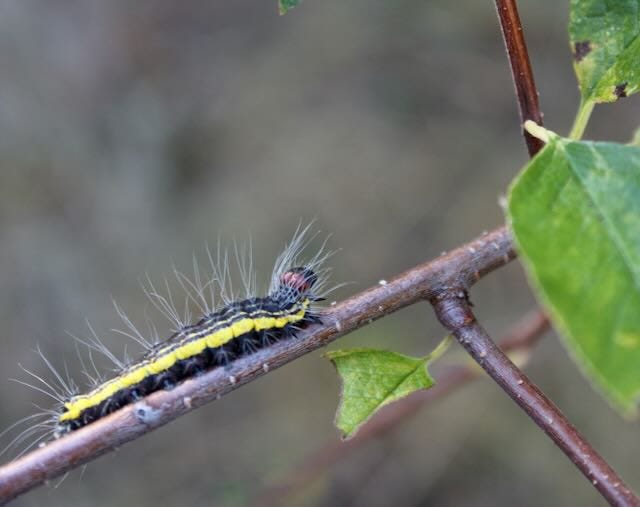
Biodiversity is key to the stability of ecosystems. Adding native plants to our yards is key to increasing biodiversity. Gardeners do not have to go 100% native; combining native and non-native plants can serve the same goal.
There are several advantages to growing native plants: they require no pesticides or fertilizers, need little watering once established, and, when the right plant is planted in the right place, require little pruning. And don’t overlook the entertainment and educational opportunities: checking under leaves for caterpillars, watching birds come and go, and chasing butterflies are joyful activities for people of all ages.
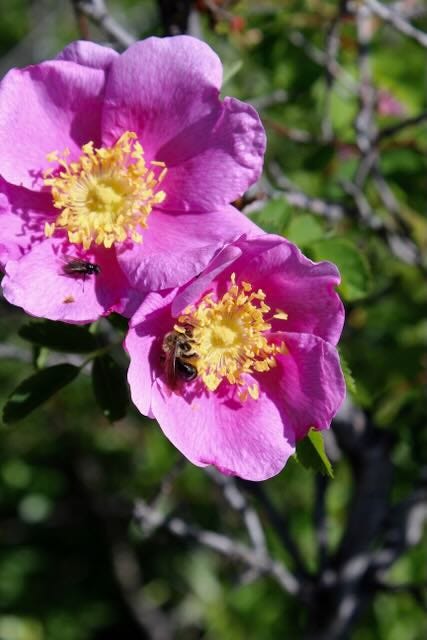
In her book, Real Gardens Grow Natives, author Eileen Stark describes native plant gardens as compassionate gardens: they work with and for nature.
Native plants provide shelter and food for wildlife.
They use less water since they have adapted to regional climates.
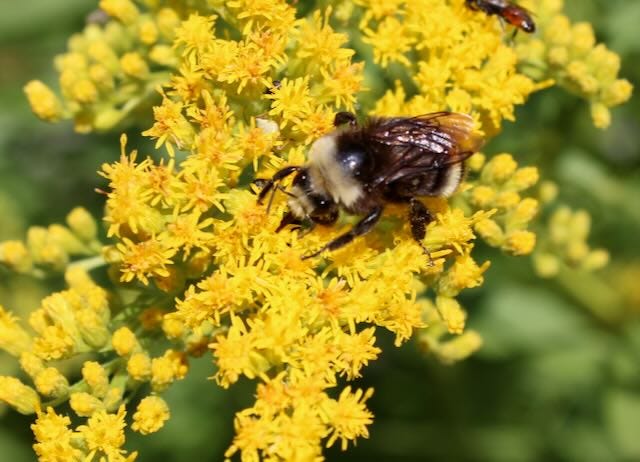
They increase pollination opportunities.
Native gardens support pest control by attracting a diversity of wildlife, fostering predator-prey relationships.
They prevent disruption to native wildlife and larger ecosystems by creating a biological corridor.
For decades, we have outsourced conservation to scientists, giving up our individual stewardship and relationship with nature. It’s time for all of us to assume responsibility for this incredible planet we call home. In an email, I asked Dr. Tallamy how he would rate the importance of preserving biodiversity in comparison to climate change:
“I would rate it right up there with climate change. An intolerably hot and erratic climate will destroy the species that run the ecosystems we depend on, but so will the wanton destruction of those ecosystems and their species by humans who think that healthy natural systems are optional. Both forms of ecosystem destruction will do us in as a species.”
With the creation of his Half-Earth Project, E.O. Wilson has called for the unprecedented step of protecting half of the planet. The stakes could not be any higher: “Unless humanity learns a great deal more about global biodiversity and moves quickly to protect it, we will soon lose most of the species composing life on Earth.”
Doug Tallamy has proposed that people with access to any-sized yard (or balcony or patio) grow native plants to support wildlife. To that end, he has developed an organization and website that offers an abundance of information and resources.
Xerces Podcast: Goodbye Grass, Hello Bugs
Xerces - Plants for Pollinators
Last week was the official Pollinator Week, but let’s celebrate, meet, and support pollinators every day.
I have joined a group of writers from the Third Act organization, and we have developed a new Substack: Democracy, People, Climate, & the Planet. Our purpose is to encourage discussion of the connections among these four topics. Check out our unique approach!
https://conbio.onlinelibrary.wiley.com/doi/pdf/10.1111/csp2.80
https://www.birds.cornell.edu/home/bring-birds-back
https://therevelator.org/plant-species-extinct-america/
https://earth.org/david-attenborough-new-film-a-life-on-our-planet/
https://www.onlynaturalenergy.com/grass-lawns-are-an-ecological-catastrophe/
https://eartheasy.com/blogs/yard-garden/lawn-care-chemicals-how-toxic-are-they
https://stacks.cdc.gov/view/cdc/85326
https://www.worldatlas.com/articles/what-percentage-of-the-area-of-the-united-states-is-protected-land.html
Comments
Nothing yet. Say the first thing.
Sign in to join the conversation.