
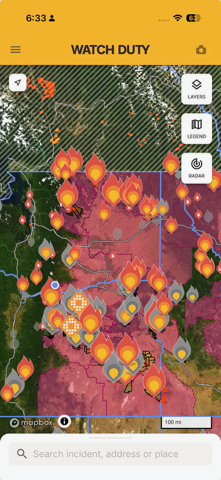
My mountain weather has been pleasantly deceiving: cool mornings (36F this AM), sunny skies, and warm-to-hot afternoon temps. But the PNW is on fire. Nearly 2 million acres have burned in Washington and Oregon alone, and there are 45 large fires, some of which have merged into fire complexes, each one totaling hundreds of thousands of acres. Wildland fire crews have arrived from the South, the Southwest, California, Australia, and New Zealand to help. North of Washington State, western Canada is battling hundreds of wildfires. So far, we have experienced little wildfire smoke in our area. Last night, I smelled smoke when I opened the bedroom window, reminding me to retrieve our phones and keep them in the bedroom in case the Watch Duty app sends an alert about a nearby fire. The tension of wildfire waiting and watching adds another layer to my anxiety over the state of everything.
In the early mornings, I head to the garden, thrilled with the growing abundance while cursing the dry, brown weeds throughout my landscape. After spending several years pulling the nasty invasive knapweed, chicory moved in and has taken over my pasture. In the dry, compacted clay soil, it is ridiculously difficult to pull, so I give up.
With little rain this spring and none this summer, we skipped mud season and went straight to seed season. Seeds, of course, have developed ingenious relocation strategies like attaching themselves to our dogs, our cat, and my socks.
For the past three years, I have been redesigning and rebuilding the infrastructure of my 16-year-old vegetable garden. Rotting gardenbed frames were replaced with taller metal ones, yards of commercial compost and soil were hauled and shoveled, drip irrigation was expanded, and bark dust was added to the paths.
The garden is lush as I slowly move from bed to bed admiring the natural palette. My eyes first observe the patterns and colors, feeling the calming effects of what researchers call soft fascination. I leave behind the headlines I read earlier; my mind wanders as I watch the bees gracefully leapfrog from flower to flower, ants crawling up stems, and tiger swallowtails delicately landing on a milkweed bloom. Standing next to the milkweed patch, I can hear the hum of their busy world. I surprise a young bird who was taking advantage of a tiny pool of water under a large squash leaf, startling me as it flies away.
We can’t live well with constant anxiety, fear, loss, and grief. Time in natural environments, especially open broad landscapes, has an immediate effect on our bodies. Researchers report reductions in some chronic inflammation markers, and believe me, most of us are living with chronic inflammation. If we allow ourselves to slow down and gaze over landscapes, our brain quickly shifts to the restorative state of alpha wave activity.
Before I understood science, I recognized the calming effects of nature as a confused and heartbroken 10-year-old witnessing the dissolution of my small family. I spent hours in a field of tall grasses and a tree-lined seasonal creek, focused on the non-human life around me. Those early days in a wild world were the beginning of my personal relationship with nature, and my nervous system recognizes it as a sanctuary of sorts.
I am a pragmatic gardener growing primarily for food and medicine, so eventually, I get to work, pulling weeds, watering the tomato forest, and harvesting the fruits of my labor. I work slower and in shorter spurts these days, partly because of my aging body but mostly because I am so easily distracted by the wonder of what is happening in my garden beds. Start with the fact that each plant started from a tiny seed, and that they each have a genetically programmed life cycle. The wonder of it all.
Below is a photo safari of my mid-summer garden.
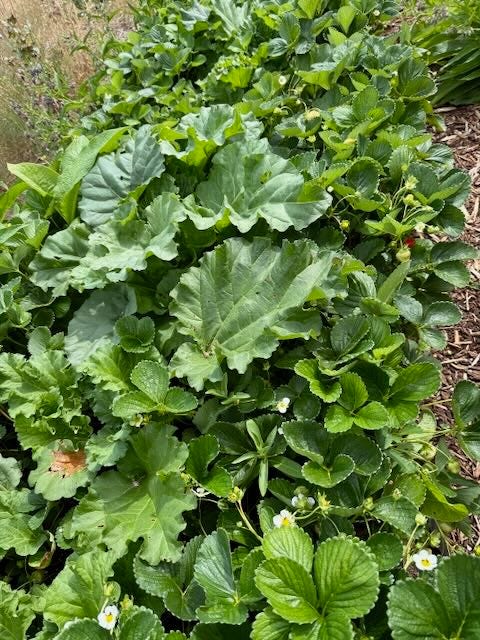
The longest bed hosts a centered row of rhubarb bordered on each side by strawberries. The birds got the first round of berries while I was in Ireland. The rhubarb did a little too well this year!
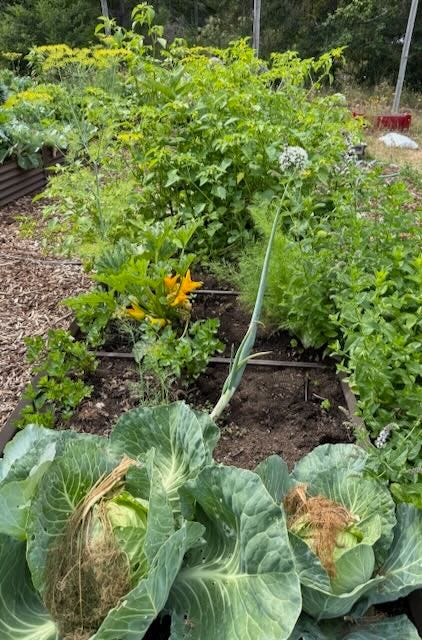
Green cabbage, strewn with fennel and dill leaves to discourage pests. Young celery and a lone onion from last year that I will harvest for seed for next year. One of five summer squash plants in bloom, bulb fennel, and tomatillos. Last fall, I planted several overripe tomatillos to germinate this spring, and they did. I mean, it works for weeds, right?
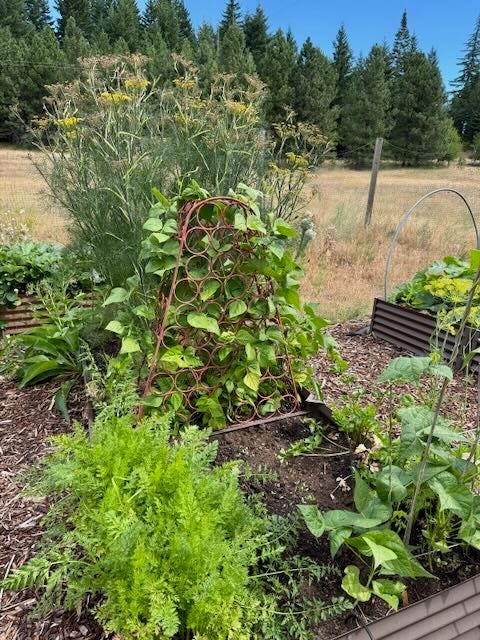
Carrot seedlings that I forgot to thin and then went on vacation. Romano beans next to them and newly sown calendula in the middle after harvesting potatoes last week. A recycled metal wine rack serves as a trellis for green beans. Perennial fennel herb brings in beneficial insects and tasty seeds in the fall.
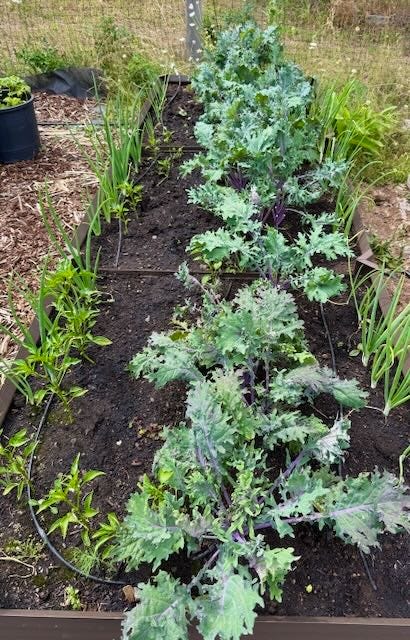
Several years ago, I let Russian kale go to seed and now have a lifetime supply of seeds. Here’s the thing: neither of us like kale! I’ll dry and powder the leaves and sneak it into soups and stews, but this is the last year of growing it. Onions and a few struggling pepper plants on the sides. In the upper left, I have three large nursery pots planted with potatoes.
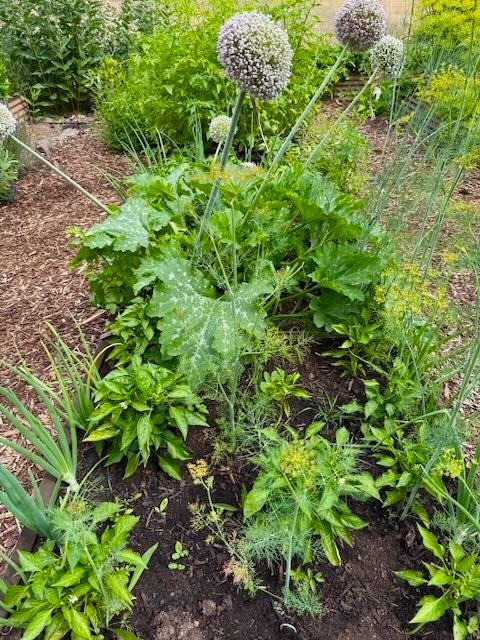
More peppers and onions and another summer squash. The Dr. Seuss-looking plants are several of last year’s leeks gone to seed for next year’s garden. The insects love the flowers. Each year, I let dill go to seed and plant itself where it wants. Again, for the insects and for early pickle making.
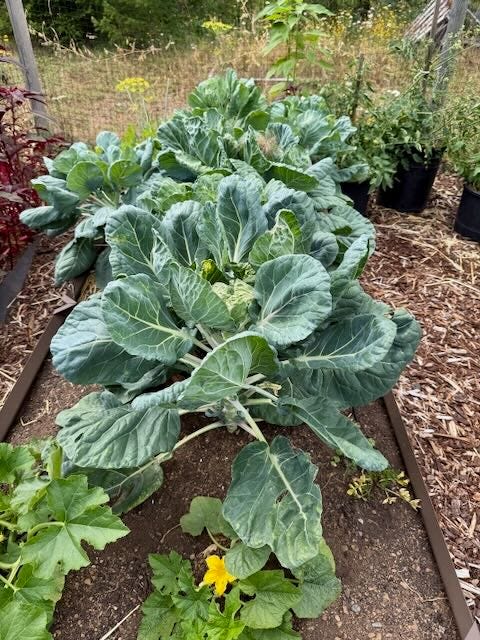
Each year, I fail to remember not to plant Brussels sprouts in a row - it simply creates a highway for aphids to gather and suck the life out of leaves. The yellow bloom belongs to an acorn mini-squash plant that produces smaller squashes.
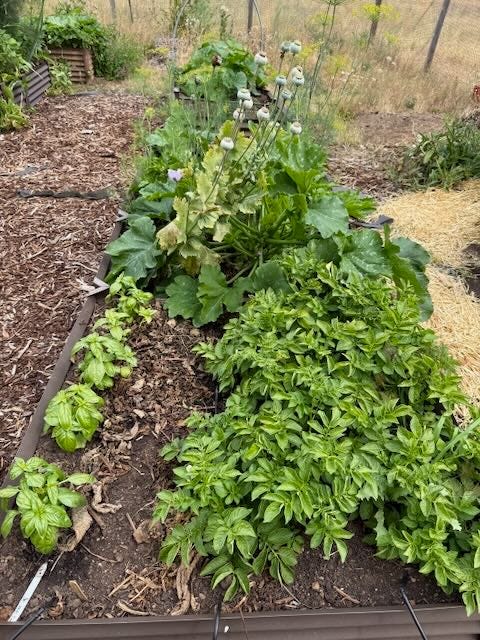
Sweet basil for pesto, and potatoes on the right. Another summer squash plant and poppies for culinary seeds.
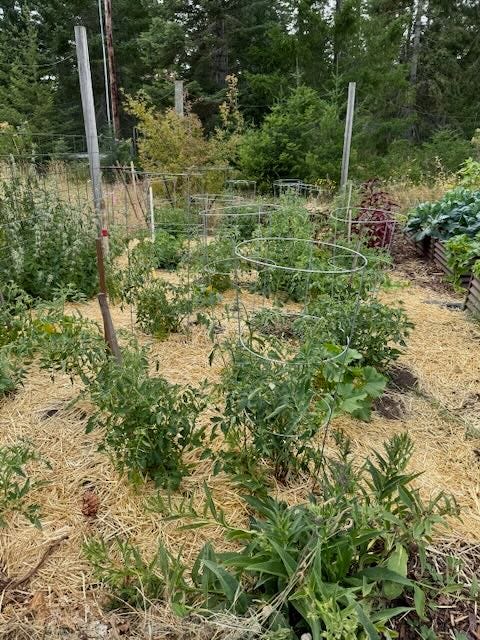
This year, all of the older tomato seeds I sowed germinated, and a tomato forest was born. Pumpkins are planted in between the tomatoes. At the top is a native rose whose sweet-smelling petals I harvested for tea. The green shrub on the left is nettle, which I harvested twice in the spring. The patch of magenta in the upper right is amaranth that I let reseed each fall because it is pretty.
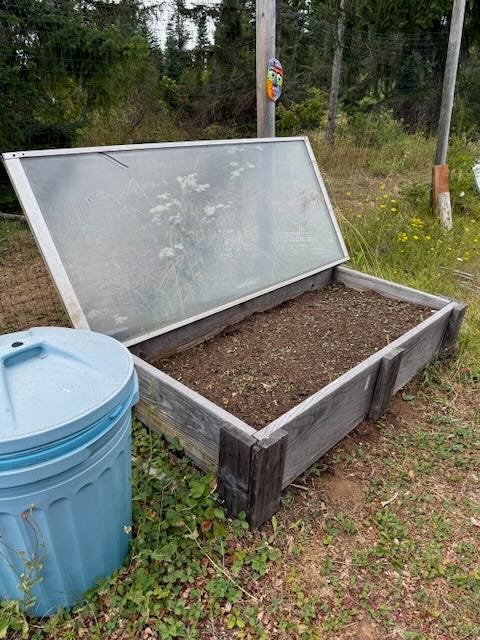
A wooden shipping box and a neighbor’s old patio door were recycled to create my salad bed. When closed, the glass cover allows for early germination and an extended season of salad greens. The blue garbage bin holds a seed-germination soil mix I make each year.
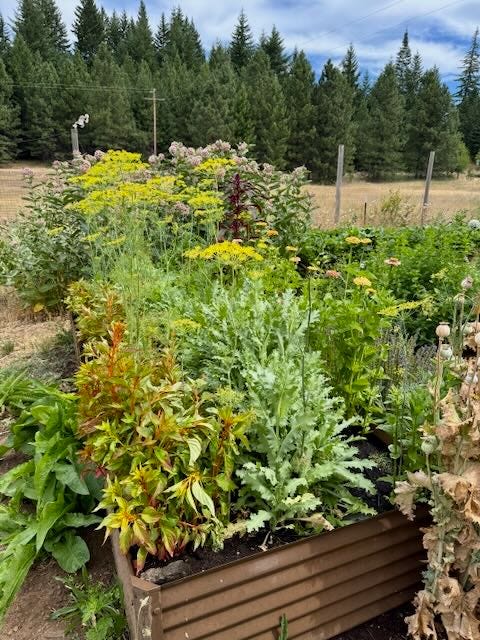
A new flower bed featuring celosia, poppies, zinnias, and the lovely umbels of dill flowers. The pink-flowered milkweed patch stands tall and is slowly transitioning to seed development. On the left is one of many comfrey plants that return each year. I “chop and drop” the large leaves and use them as mulch around plants and, in general, an organic soil builder. Allowing comfrey to go to seed many years ago was an error that I have learned to use beneficially. Comfrey’s roots break off easily, and even one small part left in the soil will regenerate.
Thanks for joining me in my garden!
xoxo
Sue
Comments
Nothing yet. Say the first thing.
Sign in to join the conversation.