
One of my great pleasures—going back to childhood—is aimlessly wandering around the shelves of a library, pulling books and randomly reading. I remember doing this for hours in the Aurora Public Library and later at the Tilton Library at Tulane (I probably would have gotten better grades if I had read my assigned works instead!). Anyway, I still do library surfing, but now in my own library.
Perhaps because I recently concluded a nasty brawl of a trial, I started to reread Robert Greene’s empowering 33 Strategies of War. I read this book 15 years ago, and it was like visiting an old friend.
One of the vignettes Greene discusses was Alfred Hitchcock’s serenity while on the set of a film. While most firm directors are “wound-up balls of energy, yelling at their crew…,” Greene described Hitchcock as a “dozing, nodding Buddha with an enigmatic smile on his face.”
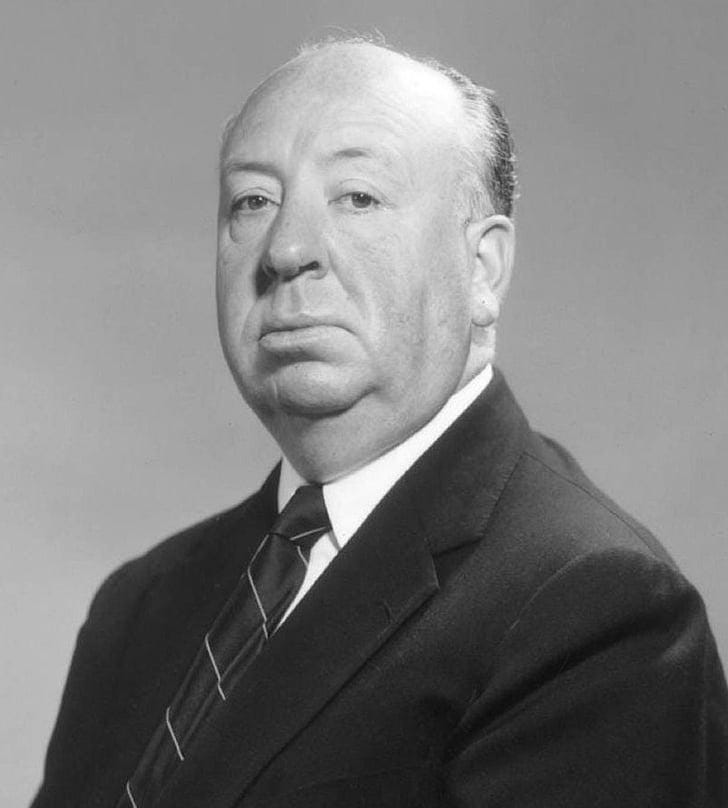
Alfred Hitchcock
Hitchcock’s placid demeanor was inscrutable, considering the high-stress environment of a movie set. Many crew members thought it was a put-on. But, as Greene observed, Hitchcock’s demeanor was the result of his intensive pre-film preparation:
…before the filmmaking had even begun, Hitchcock would have prepared for it with such intense attention to detail that nothing could go wrong. He was completely in control; no temperamental actress, no panicky art director, no meddling producer could upset him or interfere with his plans. Feeling such absolute security in what he had set up, he could afford to fall back and fall asleep.
Hitchcock filmed the movie in his head long before, “lights, camera, action” was yelled. Writers were there not to create an original screenplay but to capture his vision. Once the screenplay was finished, Hitchcock would create a detailed shooting script with elaborate notes on all aspects of filming.
Greene notes that nothing was left to chance. Hitchcock would generate blueprints for sets, detailed lists of props and even supervise set construction. His control extended to the wardrobe of the actors, including the style and colors of his actresses’ dresses. The result on the set was Hitchcock calmly watching his vision becoming a reality.
Greene, again referring to Hitchcock’s extreme preparation, “It means entering battle (in Hitchcock’s case a film shoot) feeling calm and ready. Setbacks may come, but you will have foreseen them and thought of alternatives, and you’re ready to respond.”
A trial is not unlike making a film.[1] There’s a storyline, actors (witnesses), and props (exhibits). They are combined to pull the audience (the judge) in the direction you’d like. Emulate Hitchcock: See the entire trial unfold in your head before entering the courtroom. Visualize yourself sitting at counsel table. Make it real. Approach the podium to give your opening statement and then let your subconscious get to work helping you script it. Work through the trial: direct, cross, etc. See the judge’s expression as you examine the witnesses. Witness yourself delivering a powerful closing as eloquently as Johnnie Cochrane.
Let the theme percolate as you visualize the entire case. Like Hitchcock, see the entire chessboard before you move a piece.
From there, put together your proof chart. What evidence do you need to support your story, theory, and theme? Are there any evidentiary obstructions you need to overcome? Are there alternatives to presenting the evidence if you can’t admit something? What can go wrong?
Read the law. Let the statutory and case law direct your proofs. Figure out how to deflect any adverse authorities. Find any cases that you might need to counter an evidentiary hurdle as well. Too many lawyers take the law for granted when preparing for trial, but to me, this is where it all starts.
Many novice (and experienced) lawyers succumb to their fears and fold when a trial approaches. Hitchcock’s “Detached Buddha” method is the antidote. Greene again:
It is easy to be overwhelmed by everything that faces you in battle… So many vital matters press in on you that you can lose sight of your goals and plans; suddenly you can’t see the forest for the trees. Understand: presence of mind is the ability to detach yourself from all that, to see the whole battlefield, the whole picture, with clarity. All great generals have this quality. And what gives you the mental distance is preparation, mastering the details beforehand. Let people think your Buddha-like detachment comes from some mysterious source. The less they understand you the better.
Instead of stressing about an upcoming contest, master the details, embrace the silence, trust your preparation, and plan for anything that could go wrong. Then let your fear melt away. When nothing is left to chance, like the great director, you can relax and create your masterpiece.
[1] For movie lovers, check out Howard Suber’s wonderful book, “The Power of Film,” a profound and fun read about the art and science of storytelling through film.
No posts
Comments
Nothing yet. Say the first thing.
Sign in to join the conversation.