
There is a phrase that shows up in almost every negotiation, usually offered with a belief that somehow it represents value.
“Let’s just meet in the middle.”
It sounds reasonable and is the typical approach. There is no pattern interupt and there is no real focus on what we are actually buying and how much it is worth.
It is also, in most cases, completely detached from objective reality.
Compromise is wrong but because the math behind it is non committed to objetive value anymore, and more importantly, because the numbers themselves are often meaningless, both buyers and sellers are ending up in the wrong place.
A home is listed at $2,400,000
A buyer comes in at $2,000,000.
Predictably, the seller doesn’t engage emotionally. They respond with the typical structure. A counter at $2,350,000. And the invalid signaling begins. The value is already lost because it might have never been in the list price and usually is never in the buyers initial “counter offer” to the seller’s list price.
Now both sides feel like something has happened. They feel like they have something to work with. Of course they do but it is not value.
Lines have been drawn and the typical positions established.
And almost immediately the gaming assumption takes charge over any objective value proposition:
“We’ll probably end up somewhere in the middle.”
So let’s do the math.
The gap is now between $2,100,000 and $2,350,000.
This is maybe not the mid point. You could game this back and forth thousands of different ways.
That becomes the next focus. By now the nice backyard is lost just like the 2 minute walk to the beach or the game room or home office that would be just “perfect”. The seller is forgetting that the mountain house they want is hanging in the balance but they need to WIN this back and forth more for ego and not to be fair and balanced to reach the next goal.
Nothing about the numbers has anything to do with the value of the home.
At this point, both parties are no longer negotiating the value or even the life. It is now a game of tug of war and someone always wants to win. Winning is by default at the expense of someone losing and that is now where failure of amateurs will come into play.
Now negotiating the spread between two arbitrary numbers, the chances of success have already been greatly reduced from 100%. When you go back and forth for any reason the chances of failure are literally a coin toss.
The list price is not necessarily value.
The offer is not necessarily value
The midpoint is definitely not value
We are now trying to win the algebra test.
Once both sides accept the premise of “meeting in the middle,” they have quietly agreed to forget value and find out who gets to WIN. If that win is too far tilted there will be no deal.
The outcome will be now be determined by arithmetic only and egos only and not by value.
If both parties keep “moving toward the middle,” something interesting happens.
The middle moves.
After several rounds maybe 3, 5, 7 exchanges (HINT: You will never get it done if you go back and forth 3 5 or 7 times…almost NEVER) the likely agreement doesn’t stay anchored at $2.10M or some other mid point. It drifts. Depending on who concedes, or the numbers in play at the moment or how often the ball has been pinged back and forth, the next move is amateur math. The needs of either side that may be more subtle or hidden might have never been expressed or discovered.
This is where the amateur negotiator feels like progress is being made but does not realize one side or the other is about to walk away from the table..
This is not strategy.
John Nash’s work, which earned him the Nobel Prize, wasn’t about splitting differences.
It was about equilibrium of outcomes shaped by strategy, incentives, and behavior. There are other compromises in play.
In a Nash framework, rational players don’t blindly converge to the midpoint.
They look for moves that change the structure of the game itself. They are looking for not just numbers but other utility cues. This business we are in is not easy. Some do a lot of business but don’t do it strategically. They eventually find trouble. It may never show up in volume but it shows up in relationship churn.
John Nash won the 1994 Nobel Prize in Economics for his groundbreaking 1950s work on non-cooperative game theory, specifically defining the “Nash Equilibrium“. This concept determines that in any strategic interaction, players achieve an optimal outcome by not deviating from their strategy, assuming others keep theirs fixed.
Key Concepts of Nash Equilibrium (Game Theory):
The “Nash Equilibrium”: A state where every player in a game is making the best decision they can, based on what they think everyone else will do. No player can improve their outcome by changing their strategy alone.
Non-Cooperative Games: Nash focused on situations where individuals act independently and compete, rather than acting in collusion (unlike traditional, earlier game theories).
Equilibrium Existence: He used advanced mathematics (topology) to prove that, even in complex, multi-player, non-cooperative games, there is always at least one stable equilibrium point.
Beyond Zero-Sum: While early game theory focused on “zero-sum” (one winner, one loser), Nash expanded this to “variable-sum” games, where all players could potentially win, or all could lose, depending on their decisions.
Impact of Nash’s Work:
Application: The Nash Equilibrium is essential to modern economics, political science, artificial intelligence, and evolutionary biology.
Real-Life Relevance: It explains situations where rational individuals might not cooperate, even if it is in their best interest to do so.
Which brings us to the moment where the negotiation either stays amateur……or becomes professional and intellectual around many ideas of the overall needs of each side in an offer.
Let’s go back to our numbers.
Buyer: $2,000,000
Seller: $2,400,000
The amateur move is obvious
Move halfway or think halfway but don’t immediately go there or beyond. Afterall we are going to WIN.
But what happens if the buyer does something different? Instead of moving toward the midpoint, they move through it.
The next offer comes in at:
$2,192,000 knowing that is the value of the home too or close to it?
This can interrupt the pattern and finish the game. The buyer feels better the seller is OK with the value. This is just one ending and the permutations are endless.
Two things, immediately.
First, the buyer (or seller) broke the pattern.
They are no longer participating in a “meet in the middle” sequence and the anchoring is broken.
Second and more important they just reframed the conversation to a different outcome if they know what to do next.
That number is not halfway. It is value based presumably which is the subject of another paper - Why Everyone Ignores the Obvious Value - The Defeat of Low ballers and High ballers.
“We are no longer negotiating your number versus mine. We are negotiating what this asset is worth.”
Whether that number is right or wrong is almost secondary. If it is the value to either party is what matters first, and if it is defensible based on economic analysis then it wins.
What matters is that the negotiation has shifted from arithmetic to value. The next move after this pattern interrupt is well a closely guarded secret sauce reciepe.
If the seller is still playing checkers, they try to drag it back to the midpoint game. They respond with another incremental move, trying to restore the rhythm. Sale for the buyer.
But if the seller understands what they just did and if they are playing chess and have thought through the next sequence of moves then we will find a way. Life will find a way. Good negotiations finds a way and people feel ok about good negotiations at the closing table. They almost never feel good about back and forth meet in the middle games.
The final outcome depends on who can define and defend value. If the other side tries to reset the conversation back to the midpoint game, the disciplined move is simple but our secret sauce.
“Meet in the middle” feels fair and is the typical approach in the United States culture. HINT: NOT EVERYWHERE in the world.
Feeling fair is not a strategy that holds up or gets to the best conclusion. It is not the value of the home.
Meeting in the middle of two uninformed numbers is not insight. It is at best checkers.
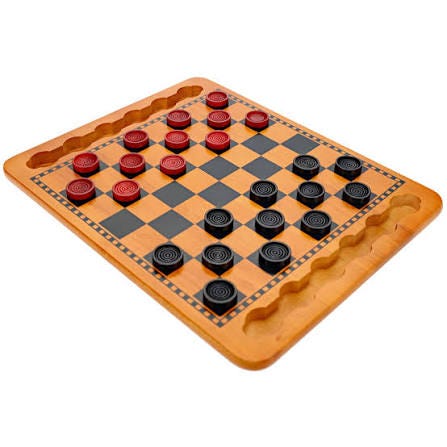
Most negotiations fail not because people are unreasonable, but because they are solving the wrong problem and they are trying to solve it by going back and forth too many times. Times kills deals just like time does.
Remember:
What is this actually worth?
Both Buyer and Seller What is it Worth? What can be Rationally Defended?
The amateur negotiator moves toward the middle. The professional negotiator decides whether the middle matters at all.
And sometimes, the most important move in a negotiation…
…is the one that makes the middle irrelevant.
Comments
Nothing yet. Say the first thing.
Sign in to join the conversation.