
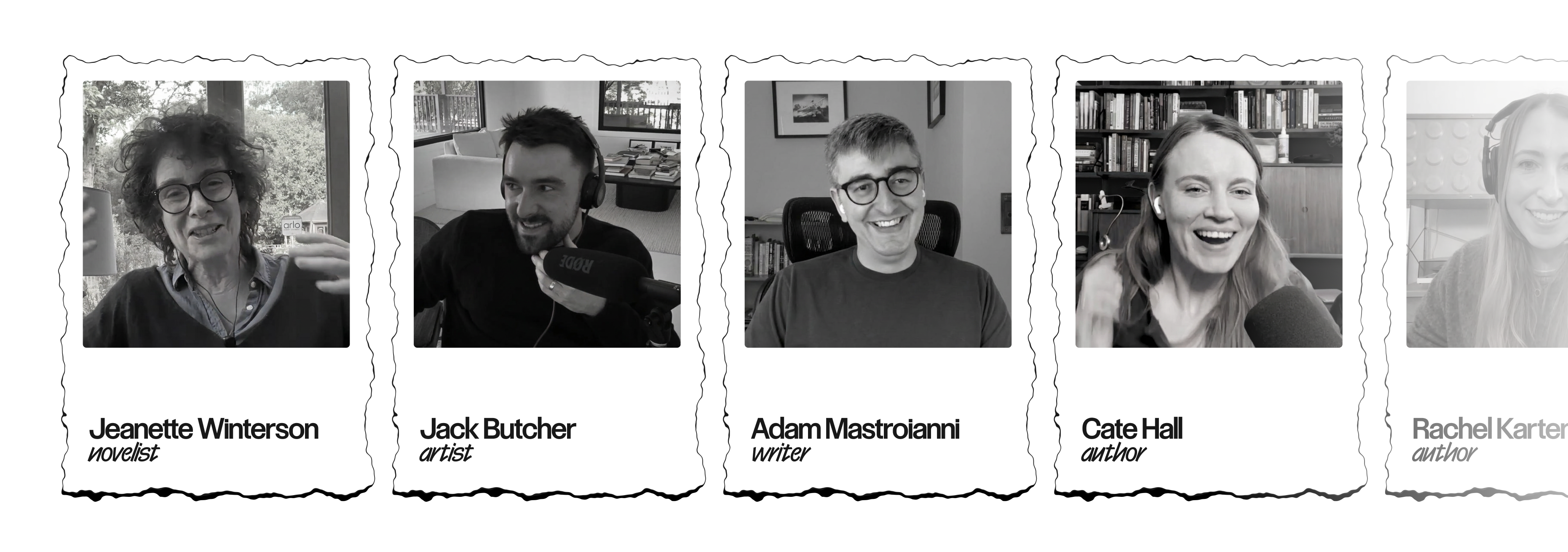
Welcome to Humanmaxxing, an interview series on thriving in the age of machines. New episodes drop weekly. You can follow along on Substack, YouTube, Spotify, and Apple Podcasts.
We partnered with Granola (the actually discrete meeting notetaker we LOVE and use every day) to sponsor this series and record each conversation. You can chat directly with Henrik’s conversation here, pull out takeaways, and follow whatever thread interests you. If you want to try Granola unlimited, use code SUBLIME to get 3 months for free here.
PSA: Code for Creatives x Sublime is coming this fall. Alex Dobrenko—the host of this series and a longtime Sublime collaborator—runs Code for Creatives, where he teaches creative people to build with Claude Code. We’re teaming up on a special cohort all about making the weird, specific ideas in your head real — and making them well.
Spots are limited, and applications will be accepted on a rolling basis.
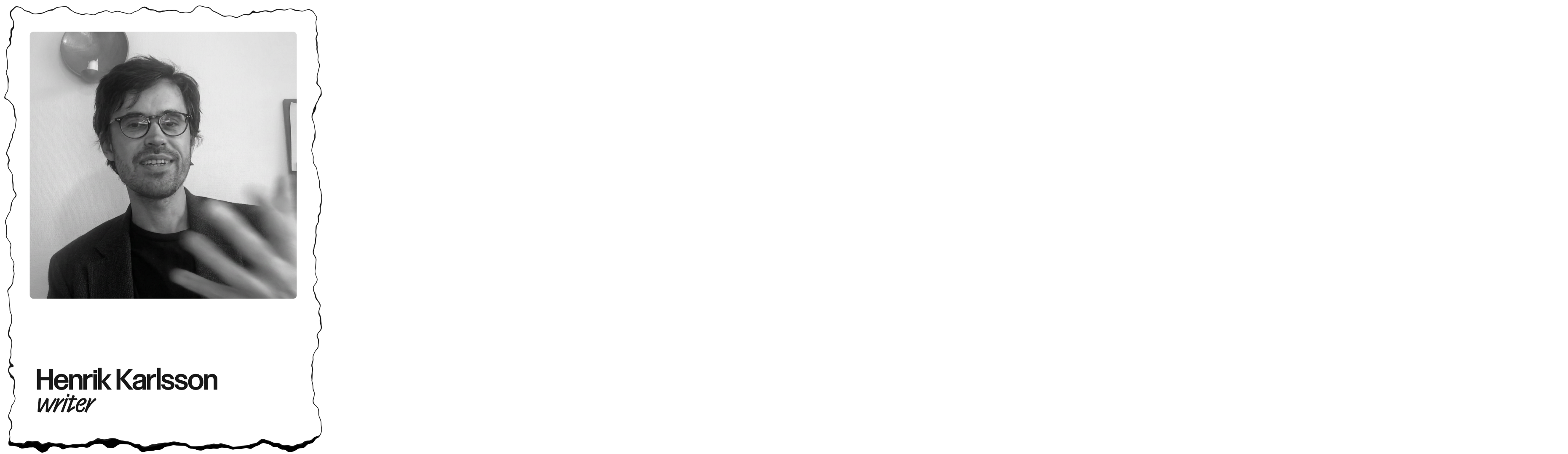
Henrik Karlsson is Substack-famous, but he is still my answer when people ask what the best newsletter they may not be reading is. If you’re new to his work, start with this 2min read. He is someone who can get me to care about pretty much anything he writes about, because of his insane ability to observe things deeply and perfectly string together words.
In this conversation, he covers the pressures of internet fame and monetizing creative work, why he doesn’t understand people who don’t marvel at LLMs, why his online persona is more aspirational than accurate, and lots more.
You can watch full conversation on YouTube, and listen on Spotify or Apple Podcasts. Plus, thanks to Granola, you can chat with the conversation here.
Committed wordcels can find the edited interview below.
Enjoy!
Sari
ALEX DOBRENKO: My sense is that someone who doesn’t know you would assume you’re really against AI, that you live in the woods and farm, and so you think AI is bad. But I don’t get that vibe from you, which I find interesting.
HENRIK KARLSSON: I get very suspicious when all of someone’s cards align. They’re in the woods, they’re homeschooling, they’re anti-AI. You have to switch one of them up, right?
AD: Right. So what’s your vibe with AI?
HK: I’ve always been fascinated by it. I was looking at my diary recently. In 2017 I made a neural net, a kind of predecessor to ChatGPT, which I trained on a poet I hate. And I got it to write nonsense. It couldn’t do grammar, it was really bad at writing, but it could use the kind of words he would use in random nonsense ways, so it would sound a little like his poems. And I would use that to submit to fancy poetry anthologies and stuff.
AD: Are you a coder? That sounds very computer-sciencey.
HK: Yeah, I’ve worked as a software engineer. I haven’t had a big career in it. I was a poet, but I had a very particular way of thinking about poetry, and then I realized that the thing I was actually thinking about was mathematics. I pivoted from poetry to mathematics, and then I started coding, doing consultancy, doing virtual reality games and stuff. I’ve had a weird, mixed career. All of this was always intermixed with doing art projects: I’ve worked in theaters and art galleries as well. So, yes, because I think it’s very interesting to find and extract patterns from text, I’ve followed AI very closely and started playing around a lot with these newer language models early. I had access to research versions of ChatGPT maybe a year before it was released.
I live on a farm on an island in the woods, I love nature, I love books, I love art, I love working at theaters. But none of this is different from technology for me. The weights inside a language model are a complex architecture of information, like a jungle. For me, it’s the same as looking at nature. A large language model is one of the most complex objects that has ever been created by mankind. It’s marvelous, it’s beautiful.
I also find it horrifying. I fear a lot of the consequences that are going to be unleashed on the job market. Potentially the killer robots. I’m afraid of that. But I also marvel at it. It feels like an expression of shared humanity: we’ve been writing books for thousands of years, and it’s all getting compiled and the patterns are being extracted. I understand why you would hate its tone, hate what it does to work, hate its consequences, but I can’t relate to anyone who doesn’t feel awe and marvel at it. When a complex, marvelous new object arrives in the universe, I want to pay attention to it, be curious, be gentle with it.
I understand why you would hate its tone, hate what it does to work, hate its consequences, but I can’t relate to anyone who doesn’t feel awe and marvel at LLMs. When a complex, marvelous new object arrives in the universe, I want to pay attention to it, be curious, be gentle with it.
AD
HK: It’s a work in progress. I don’t use it to write my essays, but I’ve used it for some concrete things: certain types of copyedits, for example, or asking if there are any subtle grammatical errors that Grammarly may have missed, or if I overuse words. But with the latter, I’ll ask it to send me all the sentences where I overuse those words and I change them manually. And sometimes, I’ll send it my notes, my diaries, and ask it to pull out related things while I’m drafting. Or I ask it to make an MP3 of a finished piece so I can take it on a walk and listen to it read aloud. It’s actually nice that the voice is a little bad and strange, because it makes the piece unfamiliar to me. I’ll also do the obvious things: get an overview of a new topic, ask for good books to read. I love using it like a metaphorical search engine, like, I understand this topic in machine learning, is there something similar in neuroscience about the human brain? And it can do that.
I don’t go to it when I’m stuck, though. A huge part of writing is meditating on things. If you allow things like that to enter your process, you’re going to diminish your skills over time.
AD: How do you react to AI as a writer?
HK: In May 2022, six months before ChatGPT, I was playing around with the predecessor to it, and my thought was that this was going to blow up concise, information-dense prose. It’s actually the weird stuff that doesn’t make sense that will matter. And at the time, being more personal and weird, was not rewarded. It was considered better to be very technical. But I realized there was no future in that, and it has to be infused with my own experiences and perspectives. I think that things are playing out in that direction. That’s an example of AI enabling humans — it was giving me a kick in the butt, saying: go be more human. It has given me rich dividends, because it forced me to pay closer attention to my feelings and playfulness and do weird stuff. My life has become much richer because of that competitive pressure. For now.
AI is giving me a kick in the butt, saying: go be more human. It has given me rich dividends, because it forced me to pay closer attention to my feelings and playfulness and do weird stuff. My life has become much richer because of that competitive pressure.
AD: Do you use it with your kids at all, especially as a homeschooler?
HK: From time to time. If I don’t know why ice floats, I can look it up. But my kids are a little afraid of it somehow. They don’t want to type into it and use it. My eight-year-old is the only one who can type, and it seems to be a bit weird to her that someone is replying.
Also, when you’re out of ideas, it can be brilliant. You can feed it context to make education personal, of course. Even there though, I’m on the fence. I want to be able to use it as a tool, but not have it become something where I’m avoiding thinking very deeply about things. It’s so valuable to think deeply about your child as a parent.
As in, I’m trying to teach this specific child how to write. What do I know about her? What did we try? What didn’t work? Why might that be? It’s a virtuous thing to actually pay deep attention, even if what you arrive at is worse than what ChatGPT can suggest.
It’s a virtuous thing to actually pay deep attention, even if what you arrive at is worse than what ChatGPT can suggest.
AD: You seem very wary of writing what you think people want. How do you navigate that tension as a writer whose income is tied directly to Substack?
HK: Being a self-employed writer is a very hard-mode way of trying to be honest. If I write something that doesn’t resonate, I can literally get a salary cut that day. I try to shield myself by not checking stats until after I work. Really, I should only check my bank account once a month. Can we pay the bills? That’s the only metric that actually matters. But of course, a part of me deeply cares if people like it.
I’m Jekyll and Hyde on that. Sometimes I’ll write things where I consciously don’t want people to like it. Other times, I feel very much like Coldplay—I really love giving a good show to people. I always come back to Radiohead and Coldplay as these two approaches to a creative career, and I relate to both.
The stuff that really pushes my work forward—the stuff that ends up being deeply resonant for years—is never optimized. If I just optimized for what I know you’ll like, I could consistently give you things that are a three or four out of five. But in order to give you a five out of five, I need to forget about what you like and just start throwing stuff at you. The only way for me to do five-out-of-five work is to risk doing a lot of one-out-of-five work.
If I just optimized for what I know you’ll like, I could consistently give you things that are a three or four out of five. But in order to give you a five out of five, I need to forget about what you like and just start throwing stuff at you. The only way for me to do five-out-of-five work is to risk doing a lot of one-out-of-five work.
My most iconic post is probably “Looking for Alice,” which is about how I met my wife. At the time, I was writing about math and machine learning for rationalist blogs. Writing an emotional, personal piece was completely out of left field. I was 100% sure it would rub people the wrong way, to the point where I think I originally included a line at the top telling readers they could skip it and the next one would be normal again. But it blew up. You can’t be rational about planning a creative move like that.
AD: You seem to live your values in this deep way. I’m always like, God, this guy homeschools. He says no to money for the art. I call people like you staring-at-the-sun people, where I can’t even really read a ton of your stuff, because I’m like, God, this guy’s just so good. The work is good, but also the human seems so good.
HK: I probably look better on the page than I am in real life. The reason I’m writing about the things I write about is because I struggle with them. I primarily write about stuff that I want to strengthen in myself. I write these things as mantras, almost. It’s an excuse to sit with these topics — I’ll struggle with things ethically, or struggle with my attention, and then I sit for forty hours thinking and writing about that.
I probably look better on the page than I am in real life. The reason I’m writing about the things I write about is because I struggle with them. I primarily write about stuff that I want to strengthen in myself.
AD: So the you that you present yourself to be, or that you end up as in these pieces, is an aspirational self.
HK: It’s a little cringe, right? Because I come from literature, it’s more artful to write about your flaws, write about your depressions. That’s more high-brow, it’s funnier, it’s more relatable. But for me it’s not as productive. When I do that, I don’t strengthen those sides of myself. And then there’s this wonderful thing where I’m going to be a complete asshole if I’ve said it publicly in front of tens of thousands of people and I’m not trying my best to be like that. And that has really changed me. I’ve done this for five years now, so I am a different person.

Thanks again to Granola for making this series possible. You can chat with the full conversation here and use code SUBLIME to get 3 months free here.
Premium members can enjoy the much longer unedited conversation below.
Comments
Nothing yet. Say the first thing.
Sign in to join the conversation.