
A few notes from my week-long trip to Italy.
Things are slow in Florence, Tuscany.
I started writing that a few days ago in a several centuries old piazza in the town of Florence. But the constantly on-the-move nature of travelling to a new country for a brief period creates a conundrum — it feels like a waste to just sit and “do nothing”, driven by fear of missing out on one-of-a-kind sights we likely won’t see again for a while; but also, deep thought actually comes from slowing down. The empty spaces in time to think and write is where some of the most valuable insights might come from. Something to consider for trips in the future.
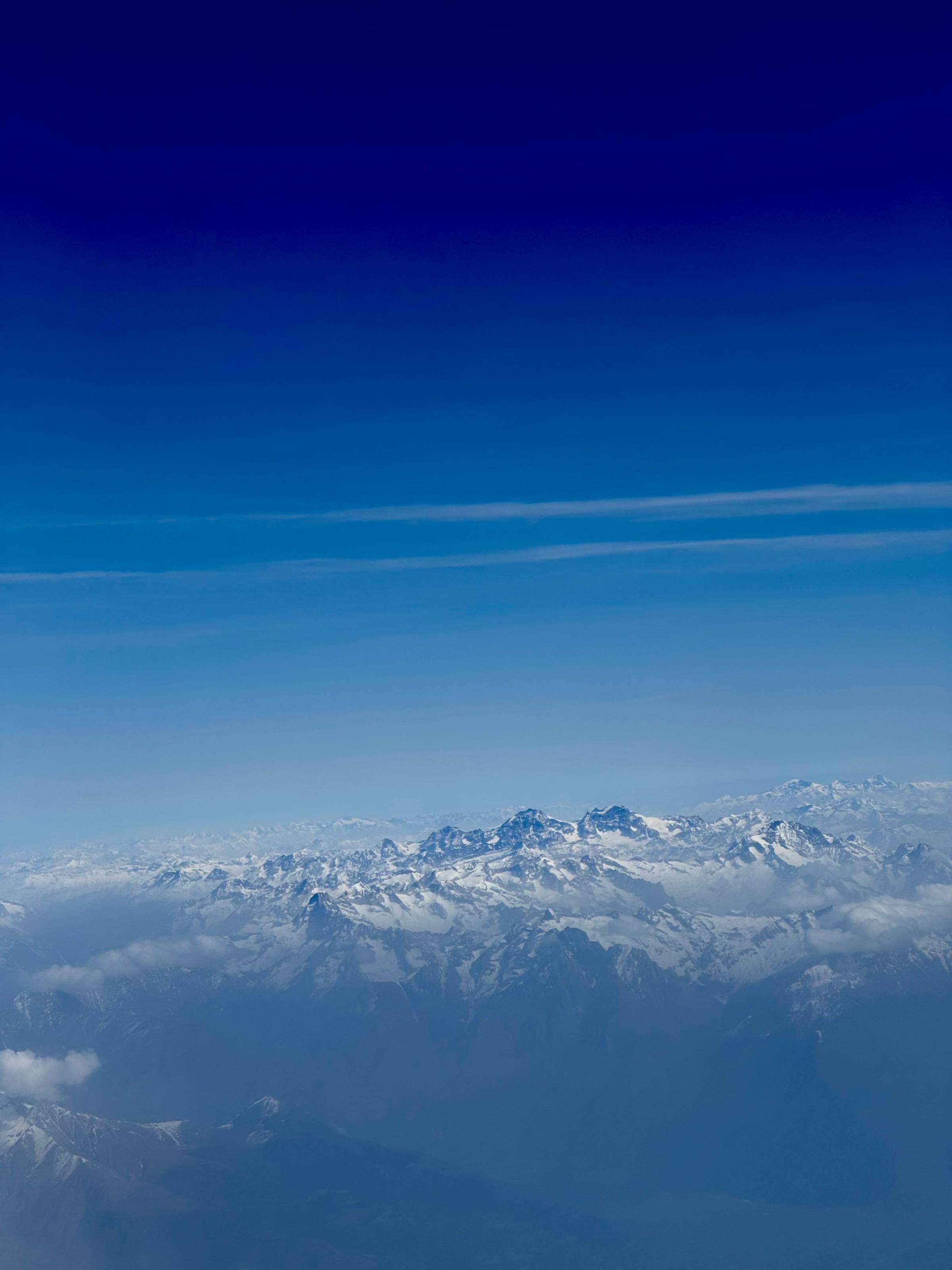
The pace of life in places like Tuscany is magnitudes apart from larger metropolitans like New York City, Toronto, New Delhi (where I grew up), or even Italian cities like Milan. As I write this, somewhere 30,000 ft in the sky above the snow-capped peaks around the Swiss-Italian border, I recall my walk in Milan from earlier this morning. It’s quiet and not many people are around. The city almost feels hungover from the 2026 Winter Olympics.
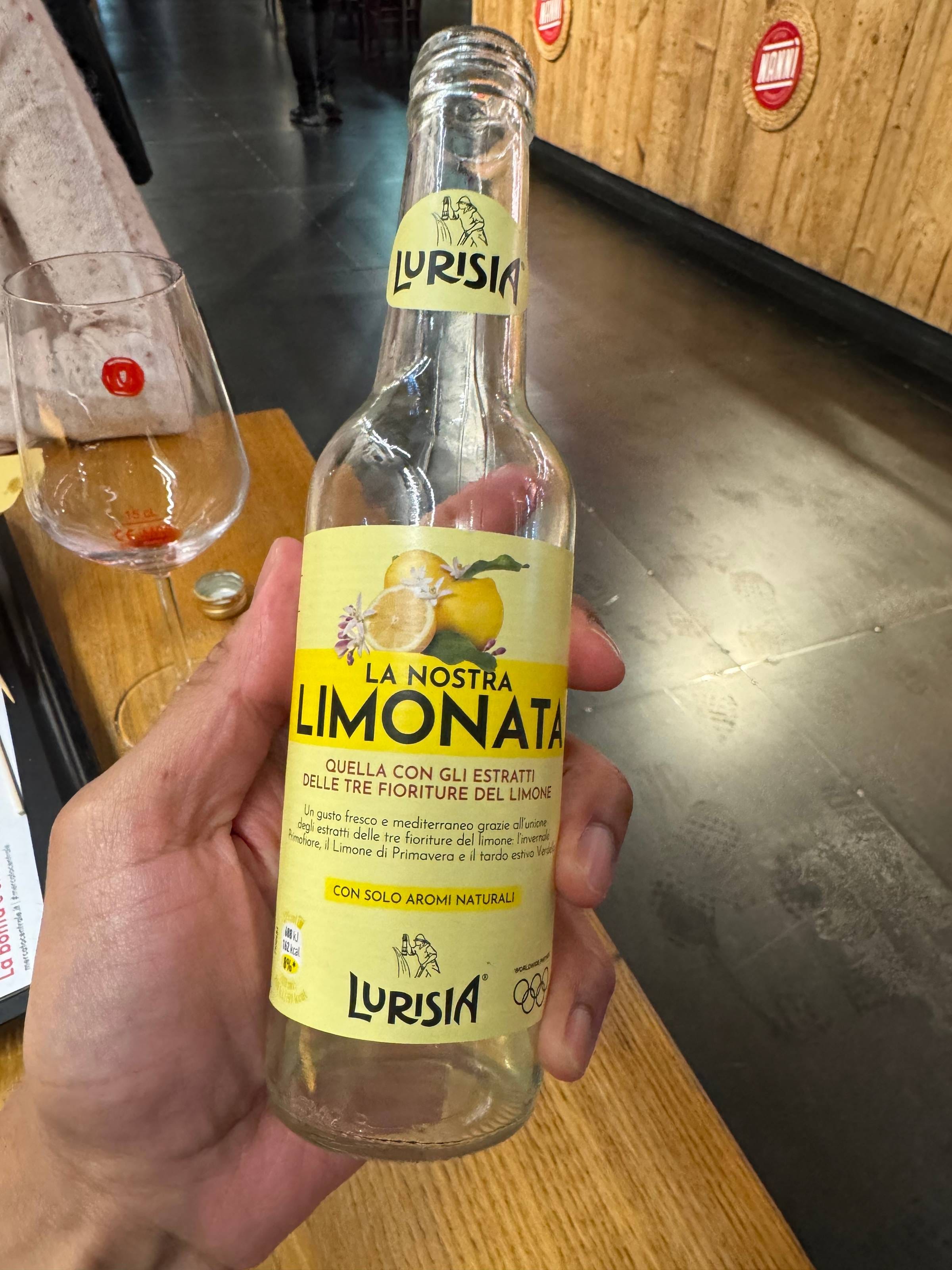
I walk into a Carrefour to pick up some bottles of lemon soda to take home for my wife. I don’t find exactly what I’m looking for, but the shopkeeper explains to me the difference between the lemon drink I found and lemon-soda. He explains how the fruits are farmed and what makes it a “sister” of lemon soda. He hasn’t even seen the product up close. He just knows what I’m asking. I get a few bottles, along with bags of Rummo pasta (pasta that’s “fancy” in Canada) that costed a mere 89 cent euro each.
I find people in Italy very knowledgeable about what they do. In North America, most shopkeepers would have no idea where the product they stock comes from, let alone this level of minute detail about its composition. A few weeks ago in Canada, I frustratingly spent 25 minutes in Walmart with 3 store associates trying to locate a box of reusable cleaning cloths called “Grab-a-Rag” (another item my wife can’t live without.)
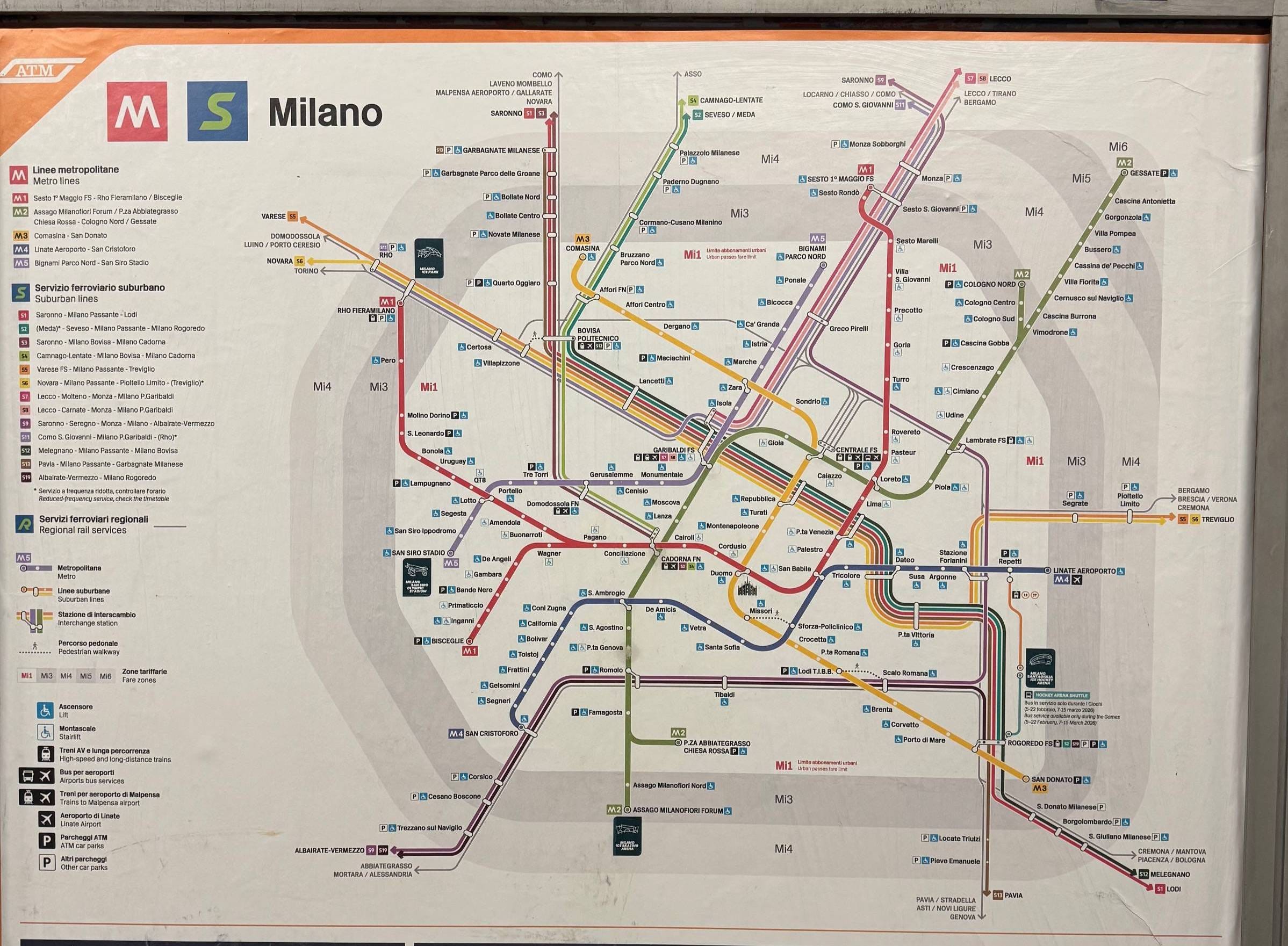
Milan feels like a well-designed city. I particularly loved the ease of the Metro. The Milan Metro map was designed by Bob Noorda, a Dutch graphic designer who also co-designed New York City’s subway signage in collaboration with another Milanese designer Massimo Vignelli. In Issue 003, I wrote about Vignelli’s work.
Milan’s culture is a mix of high fashion, good design and old Italian charm. Everyone is dressed well. Black long overcoats, often leather, seem to be the go-to style in the winter across genders. Milan is expensive, but depends on where you go.
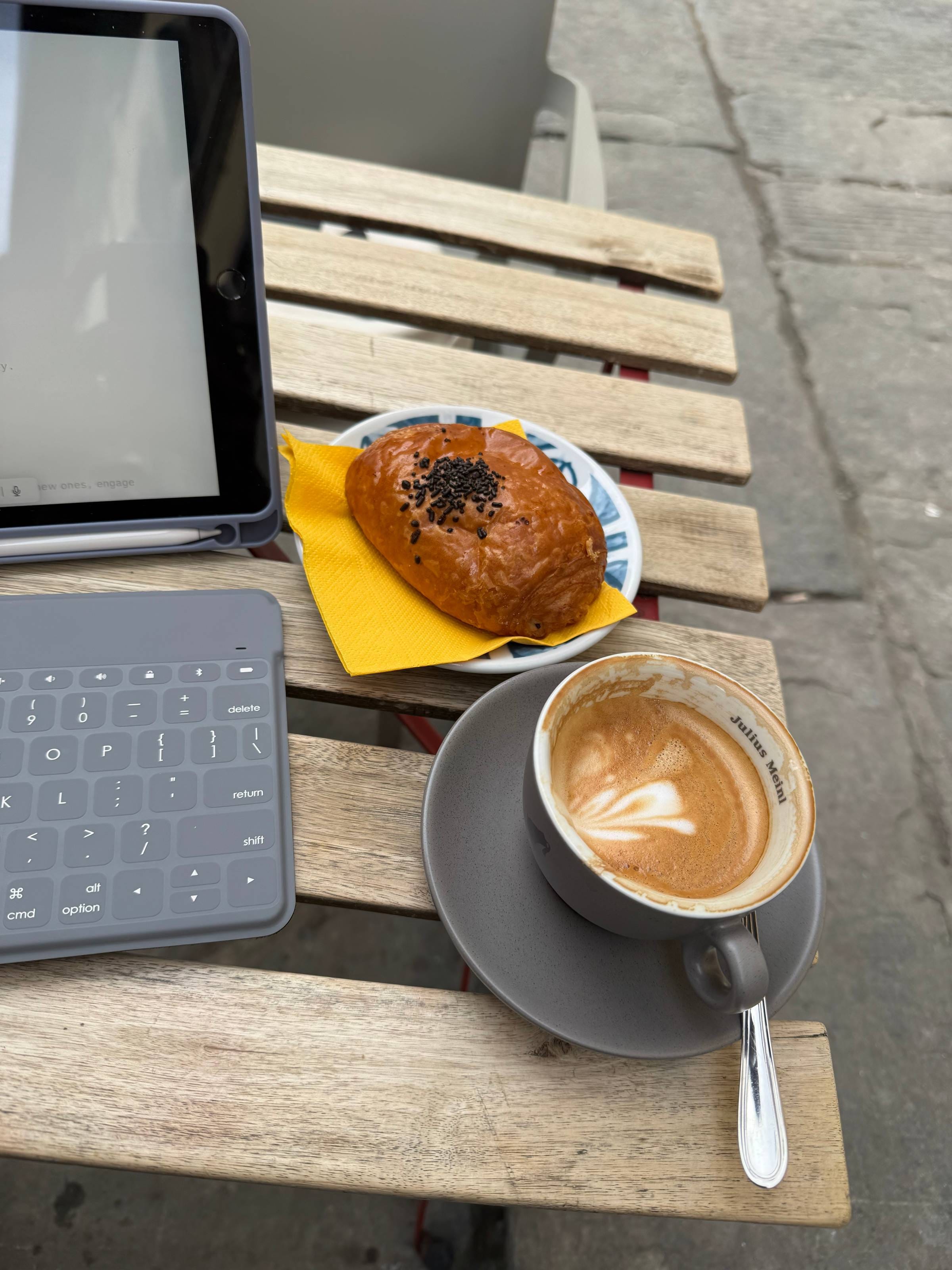
Every morning in Italy prior to 10:30am, I had a cappuccino and a pain au chocolat of some kind. In central Milan (“Centrale”), this came out to be about 4 euros. In a district like Navigli, where we stayed, I never spent more than 2.50-3.50 euros, tax included, on a decadent coffee & a baked good. Brera, an art district, was slightly more expensive, especially a good meal for two at a nice restaurant (not the Michelin kind) can cost 60 euros. Still, I found it to be substantially cheaper than a country like Canada in many ways.
A few hours south of Milan is Florence. Things are slow there, in a good way. Roaming the narrow alleys of this city in off-peak travel season invites observation in solace. At any given moment, there’s barely anyone around unless you find yourself near a popular gallery or museum (there are over 60 of them in Florence alone.) In that quietness, I felt a sense of connection to the medieval structures that stood before me. They acknowledged my presence and I acknowledged their resilience.
If the clock rewinded a few hundred years back, I would perhaps stumble upon a Michelangelo, Da Vinci or a Galileo in their creative era on these same streets. They might have even stopped to have a chat with me — an “indiano” visitor from across the seas would pique their curiosity. We may have even gone to a Taverna around the block and enjoyed a Tuscan wine made from local Trebbiano grapes in a terracotta or ceramic cup (glass-blowing existed but owning glassware was a luxury in those times).
But, in reality, my random street interaction was with a tall, homeless man sporting a long, white beard. He tried speaking to me in Italian, but I politely declined to part with my very limited change (which I was saving for the cappuccinos), and he responded fairly politely to my refusal.
What I found fascinating was that as I walked these streets, I stumbled upon buildings whose architecture was masterminded by none other than Michelangelo himself. In another part of town, Renaissance painter and architect Giorgio Vasari designed the Uffizi gallery that we visited — a structure that has been there since the 1500s. He also renovated Santa Croce, the church we visited where people like Galileo, Michelangelo and Machiavelli (yes, that Machiavelli) are buried.
More importantly than all this though, as I sat reading a book on the outdoor tables of a piazza coffee shop (in Issue #10, I extolled the virtues of independent local cafes), I couldn’t help but notice a strong sense of community and connection. An organic kind. Italy is a place where it’s not weird to stop by in the middle of the day and have a long chat with a friend, family member or acquaintance who might be owning a cafe or a little shop. Unlike North American cities, where that sort of stuff isn’t as socially acceptable because everyone is always appearing busy, in Italy, days are not designed for optimizing dollars. It’s refreshing.
In Italy, community doesn’t seem like a construct simply leveraged as a tool to promote individualistic virtues or one-up one another (“I’m part of this cause, and that makes me better than you.”) Community in Italy happens across all ages and all times of the day.
As I ventured out to smaller towns like Montepulciano further south in Tuscany, days got quieter and more serene. Whether it was spending an afternoon tasting wines at an organic winery like Poggio del Moro, or simply enjoying a Schiacciata (Tuscany’s iconic flatbread) at a Panetteria on slow mornings in towns where the stone pathways have perhaps endured more than 700 years of footsteps. Occasionally, there would be an odd (yet, well-fed and wise-seeming) cat observing the passage of time.
It was a breeze to drive through the windy roads, alongside rigorously kept vineyard after vineyard laid out in the backdrop of rolling green hills, to the tunes of Il Mondo covers by various artists of the bygone and modern era.
Going back to Milan in the last night of the trip, I couldn’t help but think of Duomo di Milano, the 13th century magnificent structure sitting atop older basicilas, with the oldest one dating back to the 4th century during the Roman Empire. It took roughly 600 years for the Duomo to be built into the structure it is today. Think about it — a vision that took 600 years to achieve fruition. Much, much longer than the lives of the people involved. Rulers came and went, yet the Duomo’s construction continued. That’s long-term thinking.

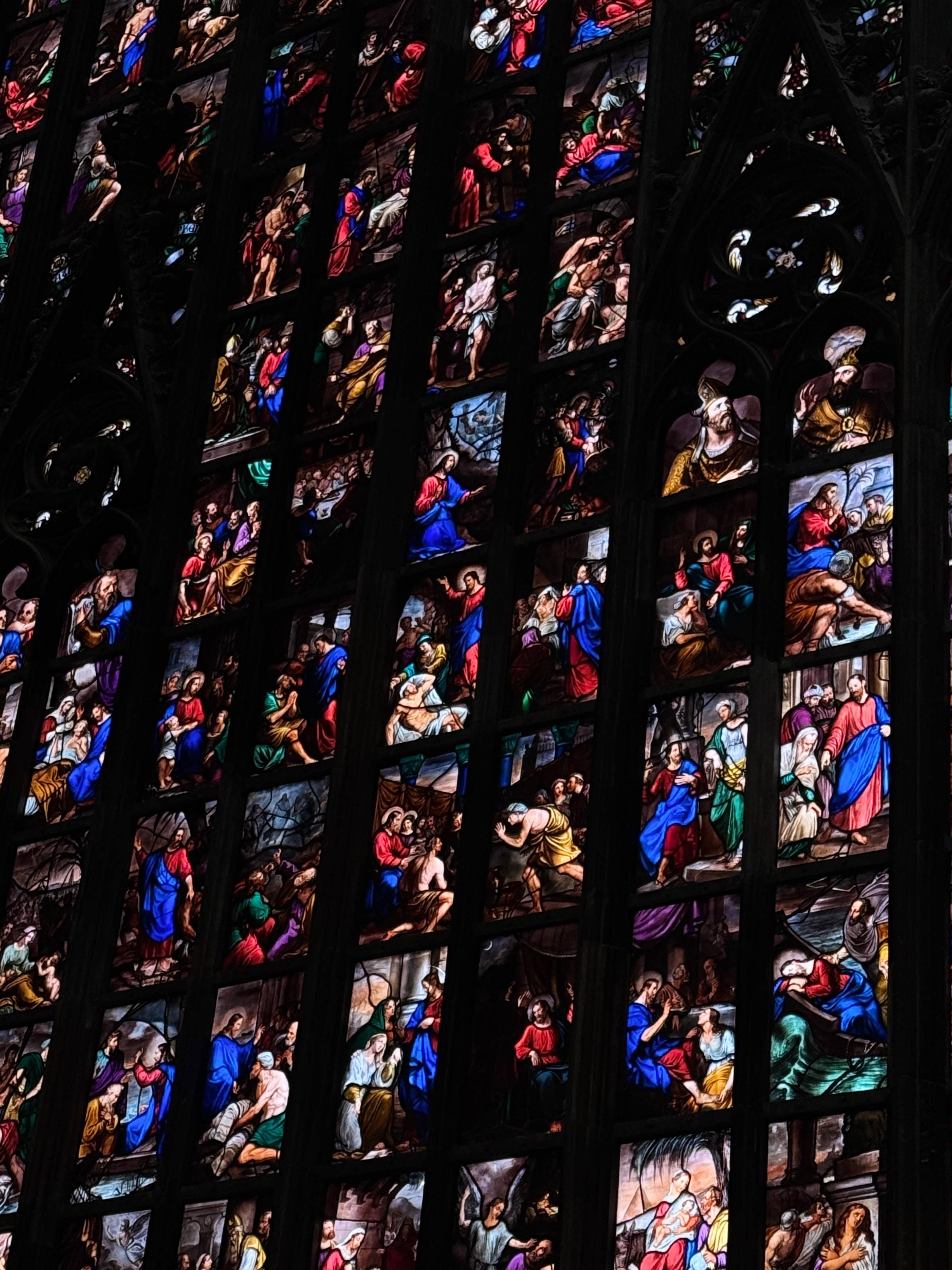
In contrast, humanity at the very moment we live in is driven by short-term thinking. Get it done, get it done fast. Nowhere is this more apparent to me than my field of product design. The metrics we’re measuring our productivity against isn’t one that the architects of the Duomo or painters or astronomers of that era would relate to. They would find it ludicrous. Yet, the arrogance with which many “AI thought leaders” of our era operate with, especially on lowest-common denominator platforms like LinkedIn, reflects a dire lack of awareness.

For the longer run, if we want to reframe agency from short-sighted metrics like how fast AI agents are to the meaningfulness of work we do as humans, it might be time to redefine productivity, as I recently wrote on A Quiet Canvas, Solarday’s Substack.
Have a good week.
—Siddharth
~That's it for this week's edition. Worthwhile things take time.~
No posts
Comments
Nothing yet. Say the first thing.
Sign in to join the conversation.