
Personal style can feel surprisingly difficult to define, especially when your life, body, or taste has changed but your wardrobe hasn’t quite caught up..
We look at celebrities, runway shows, old films and women on Instagram who appear to have perfect bodies, excellent coats, and unlimited natural light.
Meanwhile, the real clues are sitting in our laundry baskets.
The dress you reach for when you need to feel like the most capable version of yourself, even if you’re only going to dinner and stopping for dishwasher tablets on the way home.
Personal style isn’t about choosing a trendy aesthetic or dressing like someone else.
It’s recognizing the choices that consistently make you feel comfortable, confident and like yourself.
I also made three visual guides for this one:
The Personal Style Clue Map: what your repeated choices are revealing
The 3-Word Style Filter: a simple way to define how you want to dress
The Personal Style Closet Audit: what to keep, restyle, replace or finally release
Basically, everything you need to understand your style, make better use of your wardrobe and stop negotiating with clothes that haven’t cooperated since 2020.
Let’s get into it.
Subscribe to Style Walkthrough for practical styling advice, outfit formulas, color combinations and visual guides that make getting dressed easier.
Paid subscribers get access to the full archive, exclusive styling guides, downloadable cheat sheets and deeper breakdowns on how to actually make your wardrobe work together.
Most personal-style advice begins with inspiration.
I think it should begin with evidence.
For the next two weeks, take a quick photo whenever you genuinely like your outfit. Nothing elaborate. This isn’t a campaign shoot. The laundry basket can remain exactly where it is.
At the end, look at the photos together.
You’ll probably notice that certain things keep appearing:
The same shape of jeans
Similar necklines
A preference for defined or relaxed waists
Two or three recurring colors
The same balance between fitted and loose pieces
One particular shoe shape
The gold earrings you apparently wear more often than some people see their extended family
Those repetitions matter.
They show you what feels natural before trends and shopping guides get involved.
Maybe you always balance wide trousers with fitted knits, finish simple dresses with stronger accessories or pair one structured piece with something softer.
What feels random may actually be a very specific formula.
Your wardrobe has been leaving clues.
You can admire an outfit without wanting to live inside it.
Sometimes you love the coat. Sometimes it’s the styling. Sometimes it’s the fact that she’s carrying flowers through Rome while you’re sitting beside a printer.
The atmosphere has gotten involved.
When you save an outfit, identify the useful detail: the color combination, proportion, shoe or contrast between soft and structured pieces.
Maybe you don’t need her exact coat. You like how it adds structure over a dress.
Maybe you don’t need the outfit at all. You need a holiday.
That’s how inspiration becomes personal instead of simply becoming another purchase.
I put the most useful clues into one chart, because our closets already tell us a lot:
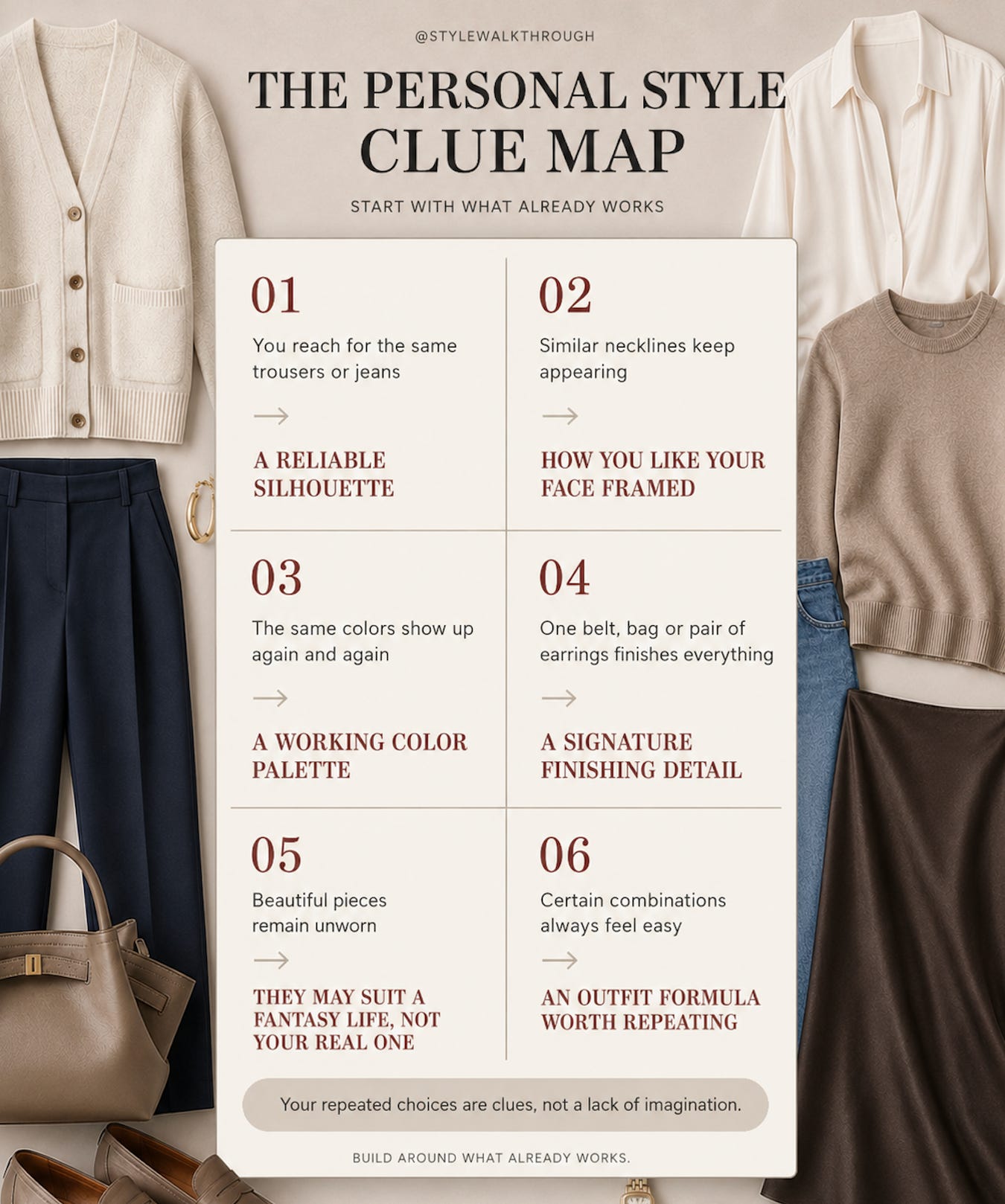
Your favorite outfits, abandoned purchases and saved inspiration can already tell you quite a lot.
But the rest is where we turn those clues into something genuinely useful: a clearer sense of your style, better outfit decisions and a closet that feels like it belongs to the same woman.
Inside the rest of this post:
How to define and refine your style
The details and outfit formulas worth repeating
A practical closet exercise
My Personal Style Clue Map
The 3-Word Style Filter
A practical Personal Style Closet Audit
If your closet is full but getting dressed still feels strangely disconnected, this is the useful part.
Comments
Nothing yet. Say the first thing.
Sign in to join the conversation.