
Over the next 12 weeks, as we count down to the start of CREATIVE SHIFT on 7th September 2026, I'll be sharing some of the themes, questions and insights we explore as we develop a deeper understanding of ourselves, our work and our creative practice.
If you’d like to join the waitlist, you’ll find a link at the bottom of this post.
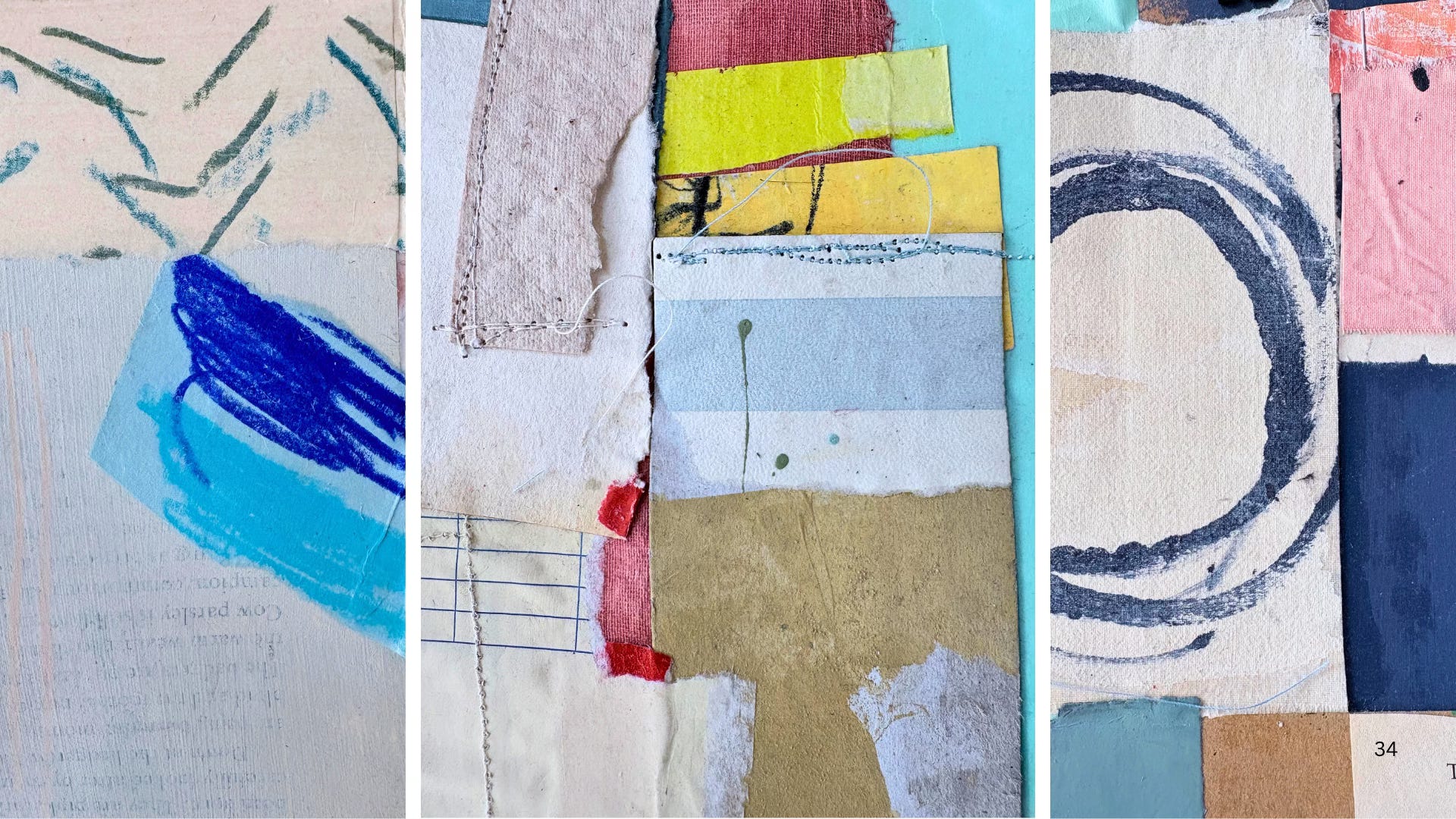
A selection of details from my own work.
One of the most valuable things I’ve developed as an artist is learning how to read a painting. And what I mean by that is learning how to push a little further past “I like that” or “I love this.” It’s a way of digging a little deeper to uncover the information that those feelings hold.
We explore this during Week 3 of CREATIVE SHIFT when we begin looking more closely at the visual elements that make up an artwork. We move beyond simply deciding whether we like a piece of work or not and start asking different questions. What is it about this painting that I’m drawn to? What am I actually responding to?
At first glance, those questions can feel quite straightforward. Often we look at a painting and simply know that we like it. We save the image, follow the artist or stand in front of it for longer than the others in a gallery.
But if somebody asked us exactly why we liked it, we may struggle to answer.
For years, that was certainly true for me. I could recognise that a piece of work resonated with me, but I couldn’t always explain what was happening beneath that initial response. I knew I was drawn to it, but I didn’t yet have the language to understand why.
Every artwork is made up of a series of visual decisions. Some of those decisions relate to things like line, shape, colour, texture, space, pattern, composition and scale. The more we learn to notice those choices, the more information becomes available to us. Instead of simply saying, “I love this painting,” we begin to understand what it is we’re responding to. Perhaps it’s the spaciousness, perhaps it’s the relationship between large shapes and smaller marks, perhaps it’s a limited colour palette, a particular type of line, or the way the artist creates movement across the surface. The painting hasn’t changed - but our ability to ‘see’ it has.
This is one of the reasons I encourage artists to spend time studying work they admire. Not because we’re trying to copy or become that artist - and certainly not because we’re comparing ourselves to them, but because we’re gathering information. We’re asking questions such as: What is happening here? Why does this work affect me? What qualities am I attracted to? What is it about this painting / piece of art that feels so interesting to me? The answers to those questions often tell us as much about ourselves as they do about the artist we’re looking at.
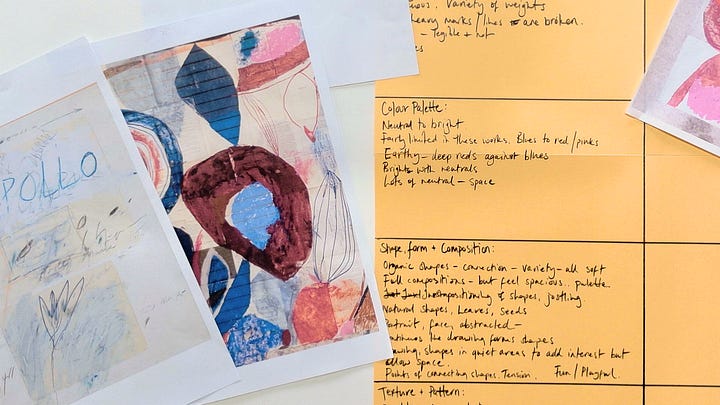

Notes and observations inspired by the work of Heather Chontos and Cy Twombly.
In many ways, learning to read artwork is really an exercise in self-awareness. The real value isn’t understanding the other artist. The real value is understanding why we are attracted to what they are doing. I often think of it like learning a language. At first, you hear a sentence and understand only the overall feeling. Over time, you begin to recognise individual words, patterns and structures. Eventually, you understand how the whole thing has been constructed. Artwork is much the same. The more visual vocabulary we develop, the more clearly we can understand how a painting is being held together. We begin to recognise how colour can influence mood, how line can suggest movement or energy, how shapes can create a sense of weight, balance or tension, and how space can influence the overall feeling of a piece. This understanding becomes incredibly useful when we turn our attention back to our own work.
Many artists know exactly what kind of work they admire, yet their own work often tells a different story. We might be drawn to flowing, organic lines but create highly structured compositions. We might love spacious, minimal work but fill every inch of the surface. We might admire bold colour while consistently reaching for quieter palettes. None of this is right or wrong, it’s simply information.
The more clearly we can identify what we love in other people’s work, the more clearly we can see what is present, absent, emerging, or changing within our own.
Recently, while working through this exercise myself, I realised how drawn I am to sketchy, imperfect drawn marks in the work of other artists. I love scribbles, loose lines and a sense of movement. Yet when I looked at some of my own recent work, I noticed those qualities were largely absent.
That wasn’t a criticism of my work, it wasn’t a sign that anything was wrong, it was simply a clue, a reminder, a small piece of information that encouraged me to experiment and explore a slightly different direction.
And that’s really the purpose of this exercise / module in the course.
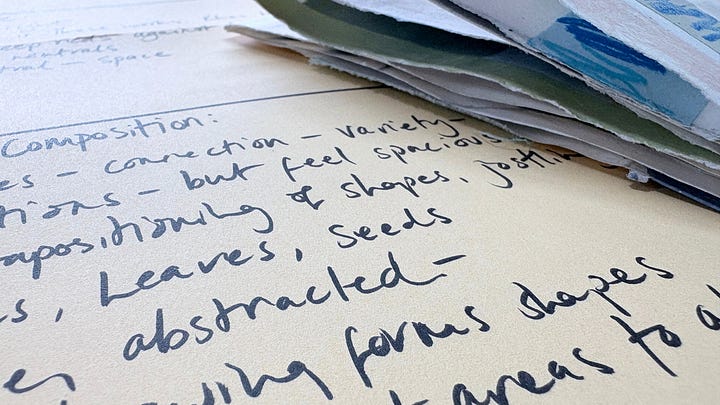
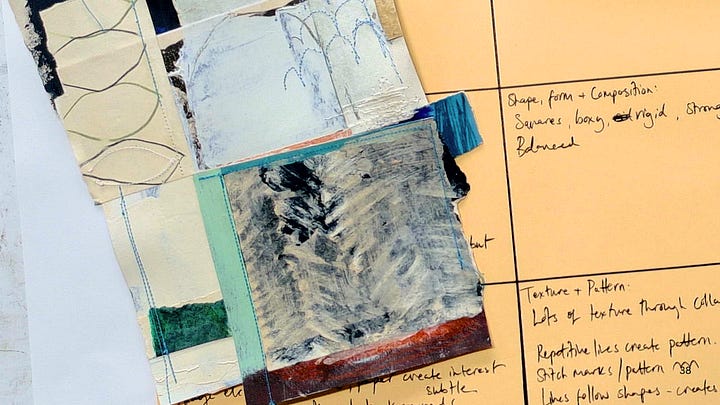
Applying the same questions to my own work.
When we can read artwork more clearly, we become better at reading our own work too. We begin to recognise our preferences, instincts, habits and recurring patterns. We can see what feels aligned and what feels slightly out of step. We become more aware of the space between what we admire and what we currently make.
From that awareness come choices, it isn’t about becoming somebody else, it’s about understanding ourselves more fully as artists.
For me, that’s what CREATIVE SHIFT is really about.
Throughout the course, we shine a light on different areas of our creative practice and process. Sometimes we’re looking at our influences, sometimes our materials, our habits, our decision-making, our creative rhythms, or, as in this case, the visual elements within our work. The aim isn’t to tell you what needs changing. In fact, you may discover that some things are already serving you beautifully - the value lies in bringing awareness to them, because once something becomes visible, you have information.
And once you have information, you have choices.
That’s why I believe understanding ourselves is such an important part of creative development 🌱
If these kinds of conversations resonate with you, CREATIVE SHIFT is my annual course for artists and creatives who want to develop a deeper understanding of themselves, their work and their creative practice.
The next CREATIVE SHIFT begins in September. If you’d like to hear more when booking opens, you can join the waitlist below.

No posts
Comments
Nothing yet. Say the first thing.
Sign in to join the conversation.