
Playground readers,
Hope summer is getting into full swing wherever you are. Today, we’re bringing you a conversation to read from your desk, a park bench, or wherever this week finds you.
I first met Amirah almost four years ago while working on a design brand and incubator. I still remember how much I appreciated the clarity she brought into the group when things felt a little lost. Since then, we’ve met once in a while, chatting about the industry, ideas, and the many ways creative work can take shape. Lately, I’ve also had the chance to bring Amirah into a few client projects through studio playground, which made me even more inspired to share her story with you.
Meet Amirah Jiwa, an impact strategist based in Amsterdam. She has lived across five continents, worked on projects ranging from avocado farms in Ethiopia to suitcase factories in China, and collaborated with global brands like Sephora and IKEA, sexy startups like Away and Tenzing, and independent businesses including Tiipoi and The Lebanese Sajeria.
She is a brilliant thinker, and a brilliant side-gig lover too — from her wonderful Notion world, which first introduced me to the idea of the “second brain,” to her new love for picture books.
The chat is on the longer side, but I really wanted to ask Amirah all the questions. I hope you enjoy it as much as we did.
Over to Amirah.
I grew up pretty politically engaged and thinking I wanted a career in international law or development. But when I got more exposure to those sectors via my university degree in Economics and ‘Peace, War, and Defense’, I saw how slow-moving they could be and became drawn instead to the idea of ‘business for good’. I was excited by the possibilities of ‘move fast and break things to make good things happen’. I interned at Warby Parker (one of the first D2C brands with a social impact model built-in), and at Sephora under its first-ever Director of Social Impact and Sustainability. Then, when I graduated, my first job was at a boutique consultancy literally called Good Business. Over a decade later, I’m still doing work that asks the same questions about how business can make a positive impact, the answers just look very different than when I first started my career…
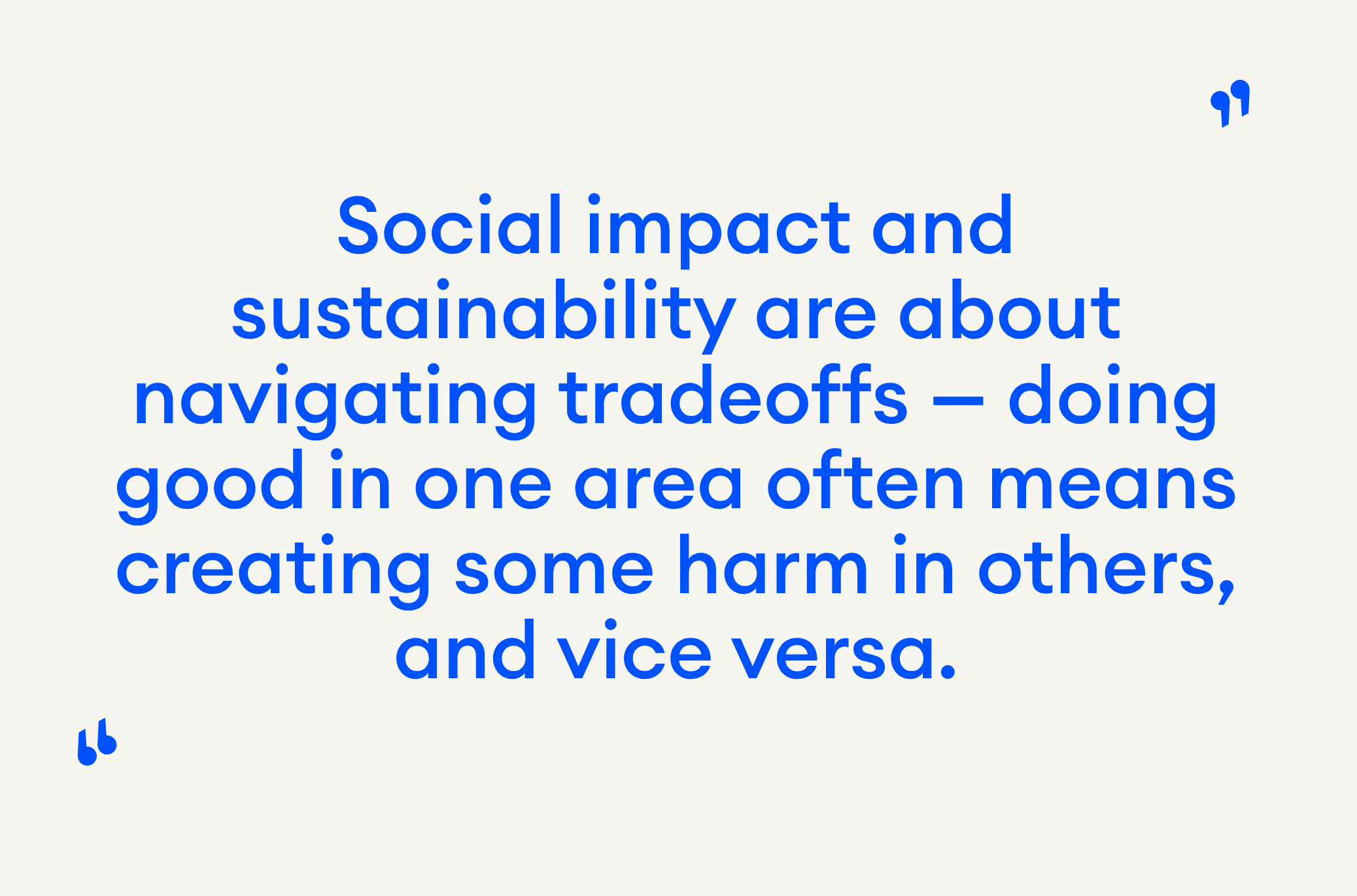
That there is a clear ‘good’ or ‘better’ option to direct businesses (or consumers) towards. Social impact and sustainability are about navigating tradeoffs — doing good in one area often means creating some harm in others, and vice versa.
…2016 was about inviting excitement
…2026 is about addressing apathy
…2036 will be about envisioning entirely new systems
Incubator and accelerator programmes can be a great way for businesses to leverage their unique resources and areas of expertise for good. The ultimate goal is sustained investment, or better-yet, positive impact built into the day-to-day decisions a business takes, but one-off programmes play an important role in platforming and developing emerging talent and ideas that might not get off the ground otherwise.
For me, engaging with art is a way to learn new things in a more experiential and embodied way. Contemporary artists often address issues I’m grappling with professionally and personally but invite totally different entry points to them.
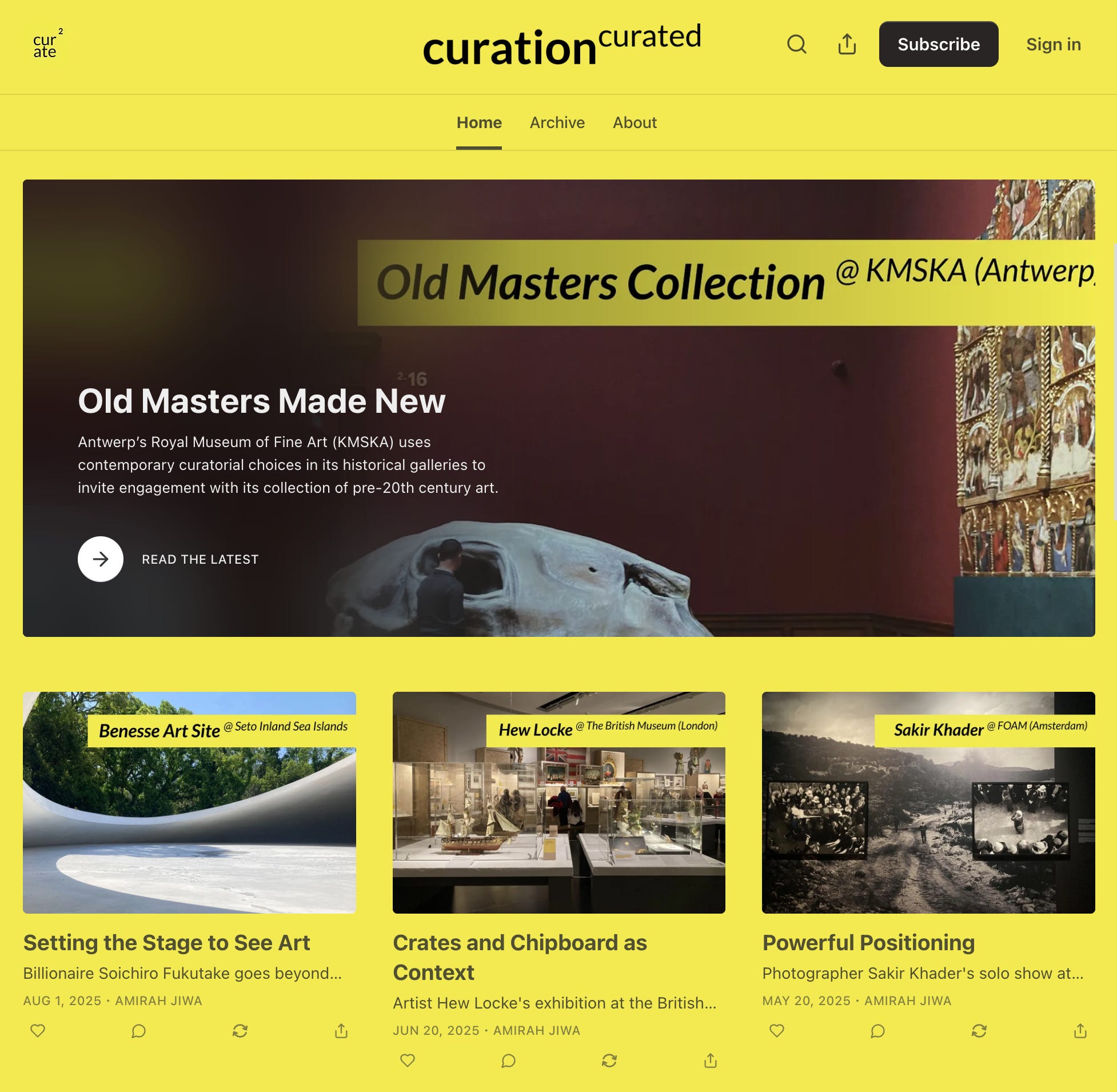
Often, it’s not just the artworks that move me, but the whole experience of encountering art. This is an idea I’m exploring through ‘Curation Curated‘, where I write about how the curation and design of an exhibition or museum plays a huge role in what feelings and knowledge people take away from their visit. It lives on Substack for now but I’m envisioning it less as a newsletter and more as an ongoing archive.
I love making ideas that feel complex, intimidating, or uncomfortable easier to understand and, even more importantly, easier to act on.
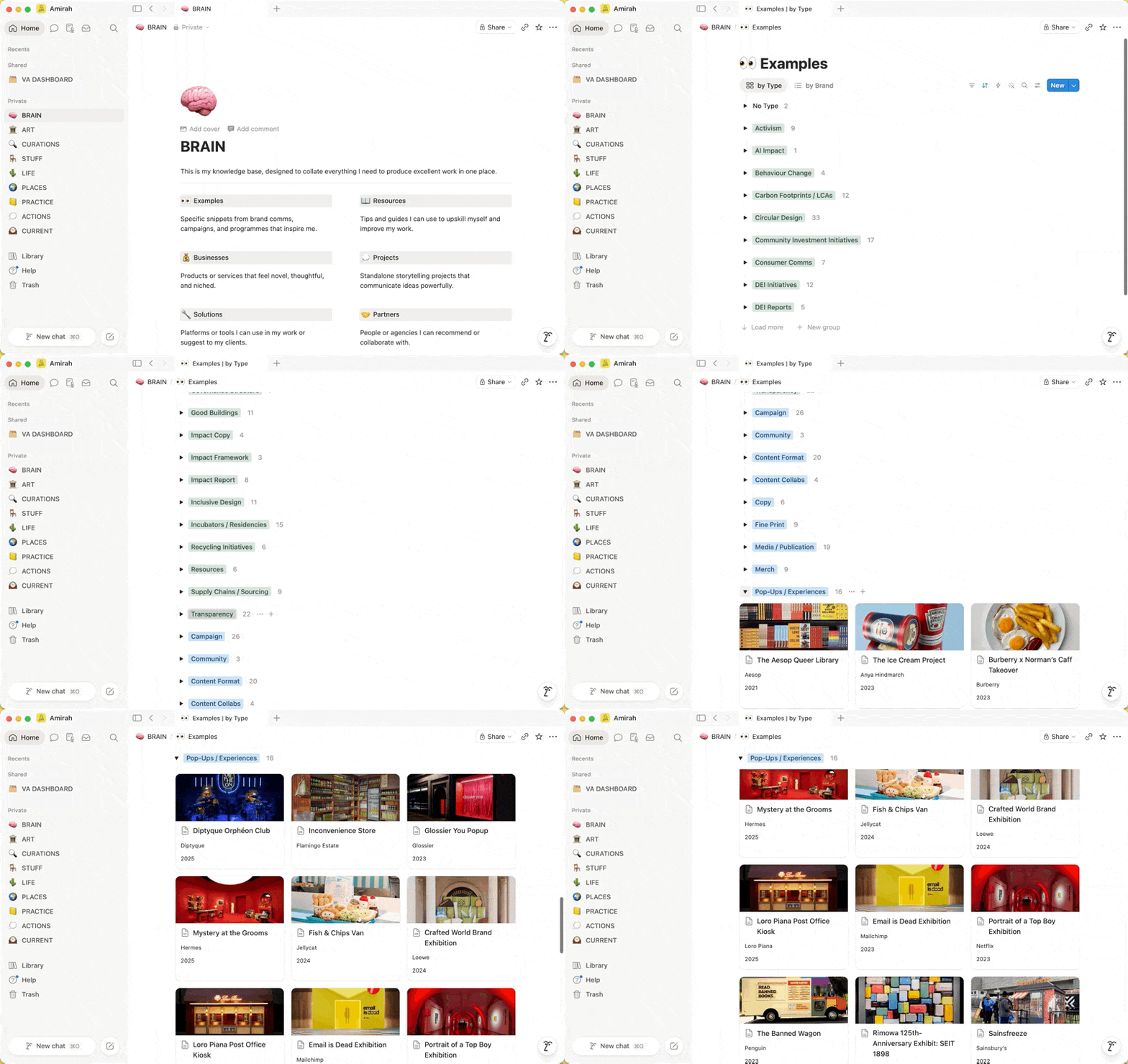
One of my weird quirks is that I really enjoy organising things. I use Notion to keep track of everything digital: from products I want to buy, notes from exhibitions I’ve visited, recipes I cook on rotation, and references and resources I lean on in my work — which is probably what could be considered my ‘second brain’.
Notion’s UX is a bit clunky but what I like about it is that you get the benefits of documents and spreadsheets together — every reference has a ‘page’ which I can fill with relevant images/links/text and then those pages are all organised in structured databases which means I can find exactly what I need (based on the topic or type). I populate and categorise everything manually. There are plenty of tools that promise to automatically clip, tag, and organise things for you. But I think the process of narrowing in on exactly what I like about something and where it fits is essential and can’t be delegated. It’s what makes my library personal and useful.
Less is more. Consuming less clothing, content, AI tokens, etc, etc, etc. is in our own interest, as well as the planet’s.
Thinking about how good it feels to be rooted in the real, physical world: being recognised as a regular at spots on my street, watering my neighbours plants when they’re on holiday, and distinguishing local microseasons through daily walks in the park.
Children’s picture books! I recently became a mother and have been having a lot of fun building out my baby’s book collection (as well as a related side project 👀).
Louf de Molen, a bakery in a windmill, for a coffee and a pastry to start the day. Then a wander along Elandsgracht and the surrounding streets to pop into some well-curated concept stores including The Frozen Fountain, which gives you a strong sense of what Dutch design is all about. Either a canal boat tour with Black Heritage Amsterdam or a visit to the Suriname Museum to get you clued up how it was colonialism that enabled the Netherlands’ ‘Golden Age’. A walk through Oud-Zuid to admire buildings from the 1920s ‘Amsterdam School’ architectural movement — lots of curved brickwork and lovely decorative details. And finally, dinner at a local Turkish restaurant for a filling and tasty meal.
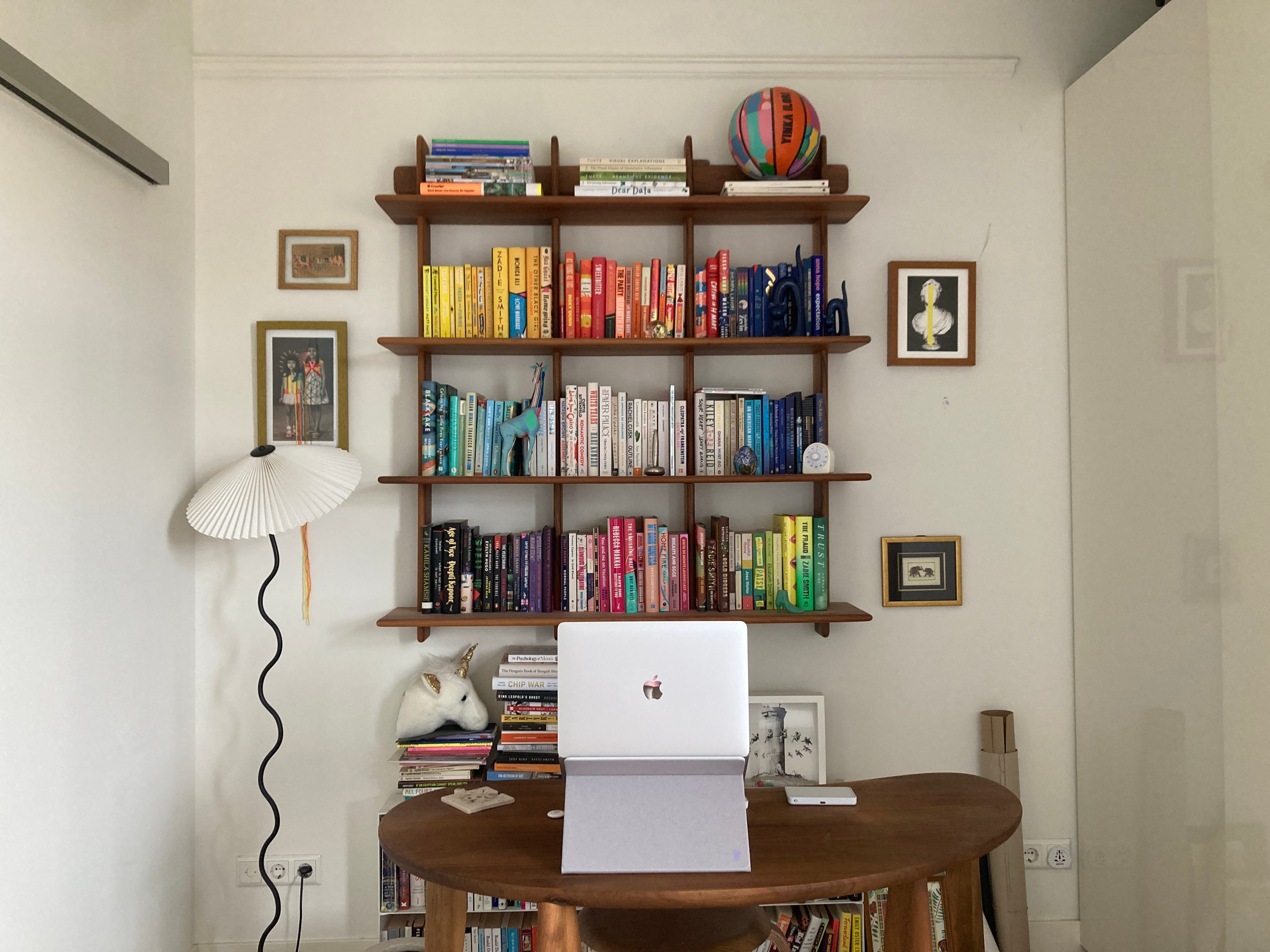
Slowness by Milan Kundera is a slim novella that I first read over ten years ago but think about at least once a week to this day. The story functions as a philosophical exploration of time, memory, and the quality of experience. All concepts that remain highly relevant in my day-to-day.
I’d while away hours browsing in bookshops, flicking through coffee-table books, and reading fiction.
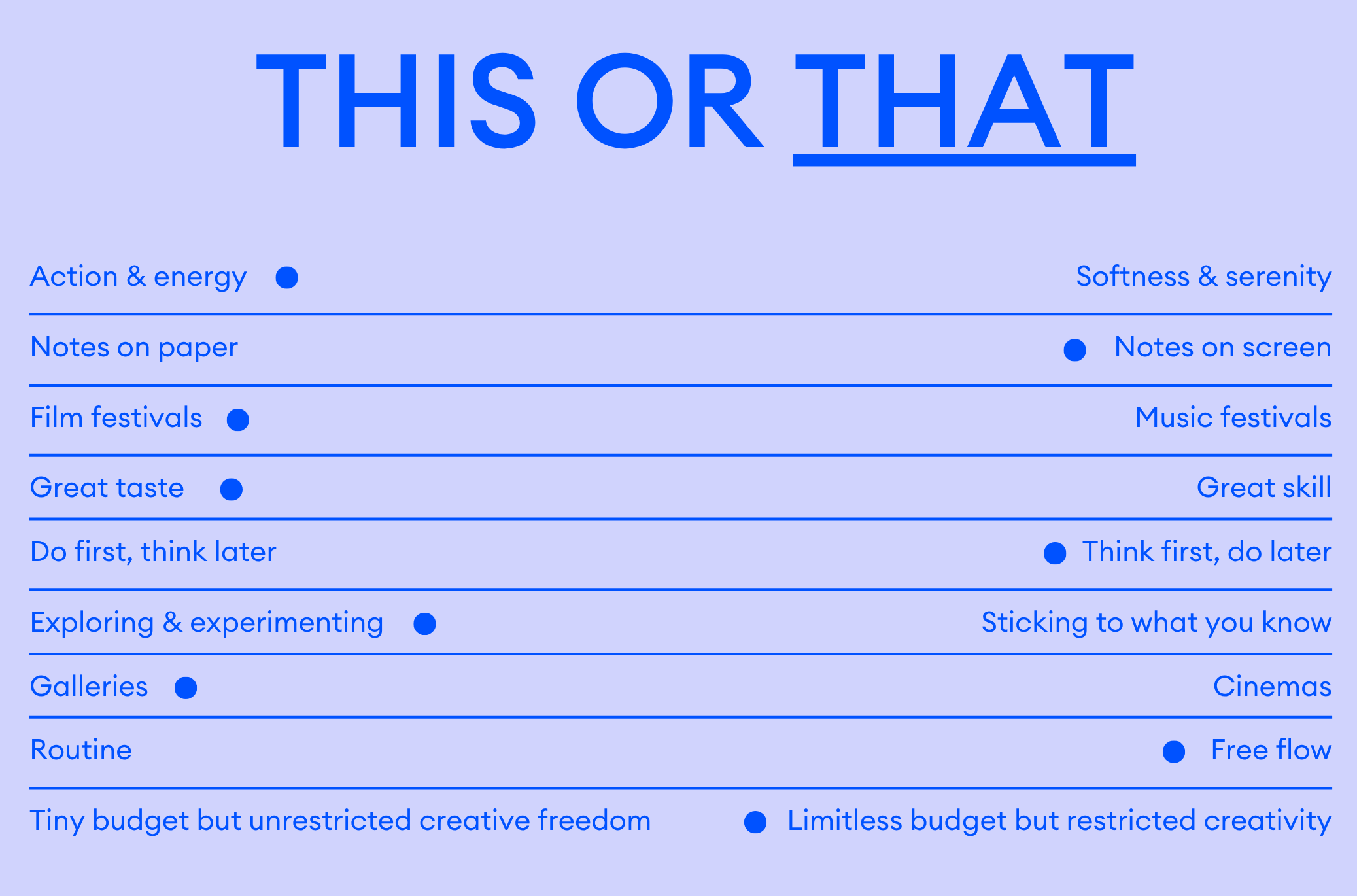
I don’t really think about things in terms of failure and success.
Working sessions with my clients and collaborators — I try and pick them both carefully so my meetings are energising rather than draining. Site visits to factories, farms, and nonprofits are a fascinating aspect of my job. And, when I can, I get off my laptop and outline frameworks and concepts on paper.
That pro-con lists are a useful way to make decisions. Or that there is wisdom in a crowd. I’m a go-with-your-gut kind of girl.
With my baby! These days we’re singing silly songs and making lots of faces in the mirror.
To learn more about what Amirah does, visit her website, visit her Instagram, or subscribe to her Substack, Curation Curated.

3daysofdesign is already next week! We are yet again curating and producing an exhibition “The office chair reimagined” for Savo.
For too long, the design world has overlooked the office chair and its fundamental influence on our daily lives. Scandinavian office seating pioneer Savo is placing this unsung hero on the pedestal it deserves.
Curious to see how?
The exhibition takes place 10–12 June on the second floor of The Odd Fellow Palace – a stunning mid-1700s venue in Copenhagen’s central Kongens Nytorv district – as part of FRAMING.
Not only that – we are presenting a chair we co-created with Antti Kalevi. If you want to hear more, team Playground will be around during the daily breakfast sessions: every morning from 10-10.45AM. Come and say hi!
If you like how we think and you’re a brand, consider working with us. We’ve just added fresh cases at studioplayground.cc!
If you like what we do, the biggest support is picking up our print magazine or merch – it keeps the Playground alive.
A small gesture goes a long way. If you liked what you read, share it with a friend, subscribe to our newsletter, drop us a reply, join the comments – or simply give it a like. Every feedback keeps us moving.
Thanks for reading,
Auste & Playground team
Comments
Nothing yet. Say the first thing.
Sign in to join the conversation.